



MUMBAI, March 25, 2026 – In a brazen display of bureaucratic overreach and utter disregard for the rule of law, the Slum Rehabilitation Authority (SRA) and local administration carried out an illegal demolition drive on March 11, 2026, at Maharashtra Nagar, Kalimata Temple Area, Bharat Nagar Road, Bandra (East), leaving 30 families destitute and stranded on the streets.
The affected settlement, bearing Cluster ID H/East – 104, now lies in rubble, while the families who once called it home are left to fend for themselves under the scorching sun, with the looming threat of pre-monsoon rains adding to their misery.
A DEMOLITION BUILT ON VIOLATIONS
The demolition, according to a detailed complaint filed by the Real Voice Foundation led by President Mr. S. M. Fanus, was not just heavy-handed but patently illegal on multiple counts. The complaint, submitted to Chief Minister Shri Devendra Fadnavis and Deputy Chief Minister Shri Eknath Shinde, lays bare a shocking litany of procedural and legal violations.
1. No Survey, No Action
Perhaps the most staggering revelation is that the demolition was carried out without conducting any survey of Cluster H/East – 104. As per the SRA Act and government norms, a survey is the foundational step to determine eligibility and establish the existence of a slum. Skipping this step renders the entire demolition null and void.
2. Government Resolutions Flouted
The administration conveniently ignored the mandatory provisions of Government Resolutions dated May 16, 2015, and May 16, 2018:
-
The 2015 GR protects slum dwellers who have existed since before January 1, 2000. Affected families possess documents (ration cards, voter IDs, electricity bills) proving their existence from before this cut-off date.
-
The 2018 GR provides for paid rehabilitation for families existing since before January 1, 2011.
Despite these clear provisions, officials conducted no document verification, no site inspection, and no computerized record preparation before swinging the bulldozers.
3. Denial of Natural Justice
The SRA had issued notices under Section 3(Z-2) of the Maharashtra Slum Areas Act, 1971. The affected residents filed their replies in a timely and proper manner. Yet, the authority conducted no hearing, issued no speaking order, and proceeded directly to demolition. This is a flagrant violation of the fundamental principle of Audi Alteram Partem – the right to be heard – repeatedly upheld by the Supreme Court of India.
4. Documents Buried, Lives Destroyed
In the haste to demolish, residents were given virtually no time to salvage their belongings. Essential documents – ration cards, voter ID cards, Aadhaar cards, bank passbooks, educational certificates – now lie buried under the debris. This has rendered the victims incapable of even proving their eligibility, creating a Kafkaesque nightmare where they are punished for a crime they did not commit and then stripped of the means to defend themselves.
5. An Attack on Faith
Compounding the injustice, the demolition was carried out during the holy month of Ramadan, a time of fasting, prayer, and reflection for the Muslim community. By forcing fasting families onto the streets during this sacred period, the administration has not only committed a legal wrong but has also hurt religious sentiments, displaying a shocking lack of basic human sensitivity.
THE HUMAN COST
The demolition has brought unimaginable suffering:
-
Medical Emergency: Medicines of tuberculosis (TB) patients were buried in the debris, putting their lives at risk.
-
Destruction of Public Assets: The local Kalimata Temple, a centuries-old place of worship, and a community gymnasium run by Real Voice Foundation for local youth were also razed.
-
Current Plight: With no shelter, the affected families are living on the streets, lacking access to food, clean water, sanitation, and medical facilities. Women, children, and the elderly are the worst affected.
DEMANDS OF THE AFFECTED FAMILIES
The Real Voice Foundation, on behalf of the victims, has put forth the following five urgent demands:
| # | Demand |
|---|---|
| 1 | Immediate Temporary Accommodation – Transit camp or hall until eligibility is verified through the Competent Authority under the 2/4 application process. |
| 2 | Permanent Rehabilitation – As per government rules once eligibility is established. |
| 3 | Suspension & Inquiry – Immediate suspension of responsible SRA and local administration officers pending a thorough investigation. |
| 4 | Compensation – Adequate financial compensation for loss of belongings, documents, business materials, and damage to religious places. |
| 5 | FIR – Registration of criminal case against officials involved under relevant sections of the Bharatiya Nyaya Sanhita (BNS) for illegal entry, housebreaking, causing mental distress, and obstruction of government work. |
📣 APPEAL TO THE STATE GOVERNMENT
A copy of the complaint has also been forwarded to local public representative Shri Varun Sardesai.
Mr. S. M. Fanus, President of Real Voice Foundation, stated:
“This is not just a demolition of structures; it is a demolition of people’s lives, their dignity, and their faith in the system. We have followed every legal procedure. We have the documents. Yet, we were treated like criminals. We urge the Chief Minister and Deputy Chief Minister to intervene immediately and ensure justice is served. We are looking at them as our last ray of hope.”
The affected families are now waiting for the state government to act. With the law on their side and the weight of Supreme Court judgments protecting the right to hearing and due process, they are determined to fight for their rights.
The protest will be led by S.M. Fanus, President of Real Voice Foundation, along with nearly 30 affected families, who have decided to stage a peaceful demonstration outside the SRA office in Bandra on March 24, 2026, at 10:00 AM.
According to the protesters, the demolition was carried out in violation of Government Resolutions dated May 16, 2015, and May 16, 2018. It is further alleged that no eligibility verification of residents was conducted, no hearing was granted, and no temporary or alternative rehabilitation arrangements were provided before carrying out the demolition.
As a result, around 30 families have been rendered homeless. The action, which took place during the holy month of Ramzan, has caused severe hardship, especially to women, children, and elderly residents.
The protesters have raised key demands, including immediate temporary shelter for all affected families, permanent rehabilitation under SRA for eligible residents, strict action against the officials responsible for the demolition, and adequate compensation for the losses suffered.
The protesters have clearly stated that they will continue their protest until their demands are fulfilled and have warned that the agitation may intensify if immediate action is not taken by the concerned authorities.
The protest is being organized under the banner of Real Voice Foundation, highlighting growing public anger against the actions of SRA and Competent Authority–2.
S.M. Fanus
President, Real Voice Foundation

Mumbai, March 12, 2026: In a controversial and allegedly illegal demolition drive carried out on March 11, 2026, hundreds of slum dwellers in the Maharashtra Nagar area of Bandra (East) have been rendered homeless. The action, conducted by the Slum Rehabilitation Authority (SRA) and local administration, has sparked outrage among residents and activists who claim the demolition violates multiple government resolutions and basic legal principles.
The affected cluster, located near Kalimata Mandir on Bharat Nagar Road (Cluster ID H/East-104), comprises families who have been living in the area for decades. According to S.M. Fanus, President of the Real Voice Foundation and the voice leading the affected residents’ struggle, most residents possess documents predating both January 1, 2000, and January 1, 2011—making them eligible for rehabilitation under Government Resolutions (GRs) dated May 16, 2015, and May 16, 2018.
Despite this, authorities proceeded with the demolition without following due process.
“This is not just illegal; it is inhuman,” said an emotional S.M. Fanos while speaking to the media. “The SRA issued a 3(2) notice, our residents submitted their replies, but no hearing was conducted. No speaking order was issued. They directly demolished our homes during the holy month of Ramadan, leaving people—including TB patients, elderly, and children—on the streets without any transit accommodation.”
The demolition has resulted in the destruction of personal belongings, essential documents, medicines, and food grains. The local Kalimata Mandir and a community gym run by the Real Voice Foundation were also razed.
Legal Violations Cited:
-
Maharashtra Slum Act 1971: Violation of Section 3(2) by not conducting a hearing or issuing a speaking order.
-
GR May 16, 2015 & GR May 16, 2018: Eligibility verification process was completely ignored.
-
Principles of Natural Justice: Residents were denied the right to be heard.
-
No Rehabilitation Provided: No alternative or transit accommodation was arranged.
Demands of the Affected:
-
Immediate suspension and inquiry against responsible SRA officials.
-
Immediate provision of transit accommodation.
-
Permanent rehabilitation under the applicable GRs.
-
Compensation for loss of property and essential items.
-
Legal action against those responsible for the illegal demolition.
Local MLA Varun Sardesai and Ambernath MLA Balaji Kinikar have been urged to intervene. The residents, led by the Real Voice Foundation, have vowed to continue their struggle until justice is served and their fundamental right to housing is recognized.

## **Executive Summary**
The escalating conflict between the United States, Israel, and Iran has sent shockwaves through global markets, disrupting supply chains, inflating energy costs, and forcing multinational corporations to fundamentally reassess their regional investment strategies. While the immediate fallout presents significant challenges for India—including rising oil prices, shipping disruptions through the Strait of Hormuz, and risks to millions of Indian expatriates in the Gulf—the crisis simultaneously catalyzes a historic realignment of global foreign direct investment (FDI) flows. As the Middle East transforms from a preferred investment hub to a contested space, India is strategically positioning itself as the primary beneficiary of diverted capital, emerging as a resilient, high-growth alternative for multinational corporations seeking stability, scale, and supply chain security.
This article examines the multifaceted implications of the Middle East crisis on India’s economic landscape, analyzing both the immediate headwinds and the substantial long-term investment opportunities across critical sectors including semiconductors, data centers, defense manufacturing, renewable energy, and advanced logistics infrastructure.
—
## **The Geopolitical Context: A Region in Turmoil**
On February 28, 2026, the United States and Israel launched coordinated military strikes against Iranian government, military, and nuclear facilities, marking a dramatic escalation in the long-simmering tensions between the Western powers and Tehran. Iran retaliated with missile and drone attacks targeting Israeli positions and U.S. military installations around the Gulf, with missile debris even reaching Dubai’s Palm Jumeirah—a symbol of the region’s prosperity that has now become a casualty of warfare Economic Times[1](https://m.economictimes.com/news/economy/finance/iran-war-for-india-much-more-at-stake-than-just-oil-this-time/articleshow/128957358.cms).
The conflict has effectively paralyzed the Strait of Hormuz, the 33-kilometer-wide passage that serves as the conduit for half of India’s energy imports and approximately 30% of global oil shipments. Insurance markets have withdrawn coverage for vessels transiting the region, while major shipping carriers have suspended or restricted transit via the Red Sea and Suez Canal. The result has been a 40-50% surge in freight rates and an extension of transit times by 10-20 days on critical India-Europe trade routes Mint[2](https://www.livemint.com/economy/india-europe-trade-shipping-crisis-red-sea-impact-costs-11772437157800.html).
—
## **Immediate Economic Impacts on India**
### **Energy Security Under Threat**
India’s vulnerability to the conflict is most immediately apparent in the energy sector. The country imports approximately 88% of its crude oil requirements, with the Gulf region serving as the primary source. Brent crude prices have already jumped by 2-3% to over $72 per barrel, and analysts warn that a prolonged closure of the Strait of Hormuz could directly shave up to 0.5 percentage points off India’s GDP due to higher energy costs Times of India[3](https://timesofindia.indiatimes.com/business/india-business/middle-east-conflict-may-deter-investment-in-india-blunt-gains-from-eu-and-us-trade-deals-bmi/articleshow/128971838.cms).
Beyond crude oil, the crisis threatens India’s liquefied natural gas (LNG) supplies, with Qatar’s production having come to a temporary halt. This disruption has immediate implications for India’s fertilizer sector, as Qatari LNG serves as feedstock for domestic fertilizer plants. When combined with other Gulf suppliers, nearly half of India’s soil nutrients are now physically or economically hostage to the region Economic Times[1](https://m.economictimes.com/news/economy/finance/iran-war-for-india-much-more-at-stake-than-just-oil-this-time/articleshow/128957358.cms).
### **Trade and Remittances at Risk**
The nine million Indian workers employed in the Persian Gulf contribute critical remittances that account for approximately 30% of India’s total remittance inflows—slightly more than 1% of GDP. A prolonged conflict in the Middle East would dent these flows significantly, impacting India’s external finances and currency stability CNBC[4](https://www.cnbc.com/2026/03/05/iran-conflict-india-impact-remittance-pipeline.html).
Furthermore, the United Arab Emirates has emerged as India’s second-largest electronics export destination after the United States. With Dubai and Abu Dhabi now within the range of missile and drone attacks, Indian exporters face soaring freight and insurance costs, threatening the viability of key export markets.
—
## **The Silver Lining: Investment Flows Redirected to India**
While the immediate economic impacts present significant challenges, the crisis simultaneously generates substantial opportunities for India to capture redirected global investment. According to FDI Intelligence, the war in the Middle East will produce three distinct consequences for foreign direct investment: disruption to existing operations in the Gulf, delay or diversion of new FDI, and accelerated restructuring of production networks around resilience rather than pure efficiency FDI Intelligence[5](https://www.fdiintelligence.com/content/2e70264f-0e7d-4cd1-9253-84c25e8cf44f).
### **The Gulf’s Loss, India’s Gain**
Over the past decade, Gulf Cooperation Council (GCC) economies have built strong positions in cross-border investment through diversification drives, infrastructure expansion, and pro-business reform. However, the war has fundamentally undermined the region’s core FDI advantages—connectivity, energy reliability, and board-level confidence. As FDI Intelligence notes, “The Gulf is moving from a preferred hub to contested investment space” FDI Intelligence[5](https://www.fdiintelligence.com/content/2e70264f-0e7d-4cd1-9253-84c25e8cf44f).
Multinational corporations are now actively seeking alternative locations for regional headquarters, manufacturing facilities, and supply chain operations. Likely beneficiaries of diverted FDI include India, Southeast Asia, North Africa, and parts of Southern and Eastern Europe. India, however, stands out due to its combination of scale, improving infrastructure, skilled workforce, and strategic positioning as a democratic alternative in an increasingly fractured global economy.
—
## **Sector-by-Sector Investment Opportunities**
### **1. Semiconductors: The $12 Billion Opportunity**
India has emerged as a critical hub in the global semiconductor supply chain, with global chipmakers pledging over $12 billion in new investments across fabrication, assembly, and testing facilities. In February 2026, India officially joined the Pax Silica initiative, a United States-led international coalition designed to secure global supply chains and reduce dependence on concentrated production geographies Economic Times[6](https://m.economictimes.com/tech/technology/indias-role-in-semiconductor-supply-chain-essential-as-others-seek-to-dominate-sector-us-envoy/articleshow/128892361.cms).
The India Semiconductor Mission has approved six semiconductor fabs with an outlay exceeding $1.3 billion, representing a shift to execution-led capacity planning. These investments are strategically positioned to serve both the burgeoning domestic market and export-oriented global supply chains seeking diversification from East Asian concentration.
### **2. Data Centers: The $200 Billion Boom**
India is experiencing an unprecedented data center investment boom, with total commitments exceeding $200 billion. This surge is driven by global technology giants seeking to establish resilient, AI-enabled infrastructure outside the increasingly unstable Middle East region The Economist[7](https://www.economist.com/business/2026/02/19/india-is-in-the-midst-of-a-data-centre-investment-boom).
Key investments include:
– **Google**: $15 billion for India’s largest AI hub outside the United States, partnering with Adani and Airtel Yahoo Finance[8](https://finance.yahoo.com/news/india-biggest-data-center-investment-143700517.html)
– **Microsoft**: $20 billion commitment for AI infrastructure development
– **Alphabet**: $15 billion for AI data center cluster in southern India
– **Adani Enterprises**: $100 billion planned investment by 2035 to build AI-enabled, renewable-powered data centers Construction Briefing[9](https://www.constructionbriefing.com/news/indian-firms-set-out-plans-to-invest-210-billion-in-data-centre-construction/8114612.article)
The India data center market is projected to grow from $9.79 billion in 2025 to $21.03 billion by 2031, representing a compound annual growth rate of approximately 13.5% Business Wire[10](https://www.businesswire.com/news/home/20260120884410/en/India-Data-Center-Market-Investment-Analysis-Growth-Report-2026-2031-Coverage-of-132-Existing-Facilities-81-Upcoming-Facilities-and-25-Locations—ResearchAndMarkets.com).
### **3. Defense Manufacturing: A $7.85 Lakh Crore Push**
The Union Budget 2026-27 has allocated a record ₹7.85 lakh crore ($90 billion) for defense, marking a sharp 15% increase from the previous year. This historic defense budget reflects India’s strategic imperative to build indigenous capabilities in the face of global uncertainty Times of India[11](https://timesofindia.indiatimes.com/defence/news/post-operation-sindoor-push-defence-budget-jumps-15-to-rs-7-85-lakh-crore-whats-in-the-pipeline-for-indias-military/articleshow/127839797.cms).
Defense production is expected to roughly double from the current ₹1.5 lakh crore in FY25 to ₹3 lakh crore by FY29, with defense exports projected to reach $5.5 billion by 2029. The sector presents significant opportunities for private sector participation in indigenous platform development, co-development models via the iDEX and RDI schemes, and exports to friendly nations seeking alternatives to traditional suppliers The Core[12](https://www.thecore.in/business/for-indias-defence-manufacturers-2026-will-be-all-about-execution-855466).
### **4. Manufacturing: The PLI Momentum**
India’s Production Linked Incentive (PLI) schemes have attracted investments worth ₹2.16 lakh crore (approximately $26 billion) across 14 sectors, generating incremental production and sales surpassing ₹18.7 lakh crore and creating over 1.26 million jobs Fortune India[13](https://www.fortuneindia.com/economy/pli-scheme-attracts-investments-worth-216-lakh-crore-across-14-sectors-govt/130593).
Key sectors attracting significant investment include:
– **Electronics and Semiconductors**: $22 billion in investments as of September 2025
– **Advanced Chemistry Cell (ACC) Batteries**: $2 billion investment planned for FY25-FY29 to localize cell production
– **Pharmaceuticals**: Approximately $2 billion PLI scheme supporting production of biosimilars, new medicines, and complex generics
– **Textiles**: PM-MITRA Parks initiative with $495 million outlay to establish seven mega textile parks
### **5. Renewable Energy: The $350 Billion Transition**
India is pursuing one of the world’s most ambitious clean energy transitions, with plans to attract $300-350 billion in renewable investments over the next five years to achieve its target of 500 GW of non-fossil electricity capacity by 2030 Outlook Business[14](https://www.outlookbusiness.com/industry/india-350bn-renewable-investment-500gw-target).
The renewable energy sector is particularly attractive for Middle East investors seeking to diversify their portfolios away from hydrocarbons. Saudi Arabia’s Public Investment Fund and UAE’s sovereign wealth funds have already made significant investments in Indian renewable projects, and the current crisis is likely to accelerate this trend as Gulf capital seeks stable, long-term returns in politically secure jurisdictions.
### **6. Infrastructure: The $133 Billion Build-Out**
The Union Budget 2026-27 has allocated a record ₹12.22 lakh crore (approximately $133 billion) for infrastructure spending, with capital expenditure increasing by 9% and effective capital expenditure rising by 11% to ₹17.15 lakh crore Times of India[15](https://timesofindia.indiatimes.com/business/india-business/budget-2026-unlocking-greater-private-capital-in-the-infrastructure-sector/articleshow/128515193.cms).
Key infrastructure initiatives supporting the investment opportunity include:
– **Sagarmala**: 32.4% of 839 projects completed, supporting port modernization, stronger hinterland connectivity, and expanded coastal/waterway logistics
– **Dedicated Freight Corridors**: 96.4% of Eastern and Western corridors operational, improving heavy freight movement and easing congestion
– **National Infrastructure Pipeline**: $1.4 trillion in planned investments across roads, ports, railways, and energy
—
## **Strategic Infrastructure: The IMEC Advantage**
The crisis has dramatically altered the calculus for India’s connectivity initiatives. The International North-South Transport Corridor (INSTC), which routes through Iran’s Chabahar Port, has effectively stalled due to the war and uncertainty regarding U.S. sanctions waivers. However, this setback has simultaneously elevated the strategic importance of the India-Middle East-Europe Economic Corridor (IMEC).
IMEC is expected to reduce logistics costs by up to 30% and transportation time by 40% compared to traditional routes via the Suez Canal. As the conflict has made maritime transit through the Red Sea increasingly perilous, the case for IMEC as a necessity has strengthened considerably CNBC[16](https://www.cnbc.com/2026/03/12/us-israel-iran-india-trade-europe.html).
The corridor has powerful international backing. U.S. President Donald Trump called it “one of the greatest trade routes in history,” while Israeli Prime Minister Benjamin Netanyahu described it as the “largest cooperation project in our history.” For India, IMEC represents not only a commercial opportunity but a strategic hedge against the region’s instability.
—
## **Trade Agreements: The Expanding Economic Architecture**
India’s investment attractiveness is further enhanced by a series of recent trade agreements that provide preferential access to major global markets:
### **India-UK Free Trade Agreement**
The India-UK FTA, expected to be implemented in April 2026, targets $120 billion in bilateral trade by 2030. The agreement is supported by an investment commitment of $20 billion over 15 years and is expected to create approximately 2,200 new jobs in the UK, particularly in aerospace, technology, and advanced manufacturing The Hindu[17](https://www.thehindu.com/news/national/india-uk-free-trade-pact-likely-to-be-implemented-in-april-2026-official/article70635228.ece).
### **India-EU Free Trade Agreement**
India and the European Union agreed in January 2026 on a comprehensive free trade agreement expected to be implemented within a year after legal ratification. The deal provides Indian exporters with preferential access to a $17 trillion market, while European investors gain enhanced access to India’s growing consumer base and manufacturing capabilities CNBC[18](https://www.cnbc.com/2026/01/27/india-eu-trade-deal-trump-tariffs.html).
### **India-US Trade Framework**
In early 2026, India and the United States agreed on a framework to finalize an interim trade deal under which Washington will reduce tariffs to 18%. This agreement, combined with the Supreme Court’s decision striking down the Trump administration’s reciprocal tariffs, has created a more favorable environment for bilateral investment Times of India[3](https://timesofindia.indiatimes.com/business/india-business/middle-east-conflict-may-deter-investment-in-india-blunt-gains-from-eu-and-us-trade-deals-bmi/articleshow/128971838.cms).
—
## **Challenges and Risks**
Despite the substantial opportunities, the Middle East crisis presents several challenges that could temper India’s investment inflows in the near term:
### **Short-Term Investment Disruption**
BMI, a Fitch Group company, has warned that the ongoing conflict could discourage investment flows into India and offset the growth benefits expected from the EU and US trade deals. The research firm has retained its FY2026/27 GDP growth projection at 7% but notes that “from March onwards, we expect uncertainty to increase sharply” Times of India[3](https://timesofindia.indiatimes.com/business/india-business/middle-east-conflict-may-deter-investment-in-india-blunt-gains-from-eu-and-us-trade-deals-bmi/articleshow/128971838.cms).
### **Inflationary Pressures**
Higher oil prices pose a significant risk to India’s inflation outlook. The rupee, already the worst-performing Asian currency with a 9% depreciation against the dollar over the past two years, faces additional pressure. Were the rupee to approach the psychological threshold of 100 to the dollar while oil races toward $100 per barrel, the Reserve Bank of India may be forced to raise interest rates, potentially delaying a long-awaited revival of private investment Economic Times[1](https://m.economictimes.com/news/economy/finance/iran-war-for-india-much-more-at-stake-than-just-oil-this-time/articleshow/128957358.cms).
### **Supply Chain Disruptions**
The closure of the Strait of Hormuz and disruptions to Red Sea shipping have increased logistics costs for Indian exporters, potentially eroding the competitiveness of India’s manufacturing sector in the short term. The electronics and pharmaceutical sectors, which rely on timely shipments to global markets, are particularly vulnerable.
—
## **Future Outlook: India as a Pivotal Geoeconomic Power**
The convergence of the Middle East crisis, global supply chain restructuring, and India’s domestic policy reforms has created a unique window of opportunity for the country to accelerate its transition from an “emerging” market to a “pivotal” geoeconomic power.
According to KPMG’s analysis, India has shifted from an emerging export market to an active alternative supply-chain hub as global firms diversify away from concentrated geographies KPMG[19](https://assets.kpmg.com/content/dam/kpmgsites/in/pdf/2026/01/shift-from-emerging-to-pivotal-india-in-the-new-geoeconomic-order.pdf). This transition is supported by:
– **Digital Public Infrastructure**: India’s Digital Public Infrastructure (DPI) is scaling globally, providing a competitive advantage in digital services and technology-enabled sectors.
– **Manufacturing Ecosystems**: The PLI schemes have converted policy intent into measurable execution, with over $22 billion in investments and 1.26 million jobs created.
– **Infrastructure Improvements**: The Sagarmala initiative and Dedicated Freight Corridors are enhancing India’s supply chain performance and connectivity.
The war in the Middle East, while inflicting significant short-term pain, is ultimately accelerating a structural shift in global FDI patterns that favors India. As multinational corporations place greater weight on inventory resilience, geopolitical alignment, and energy reliability, India stands to capture a disproportionate share of the redirected investment flows.
—
## **Conclusion**
The Iran-USA-Israel war and the broader disruption in the Middle East represent both a crisis and an opportunity for India. While the immediate impacts—rising oil prices, shipping disruptions, and risks to remittances—present genuine challenges, the crisis simultaneously catalyzes a historic realignment of global investment flows.
India’s strategic positioning as a democratic, stable, and rapidly growing alternative to the volatile Middle East, combined with its ambitious domestic reforms, infrastructure investments, and favorable trade agreements, positions the country to capture substantial diverted FDI across multiple high-value sectors. The $12 billion in semiconductor investments, the $200 billion data center boom, the $90 billion defense budget, and the $300 billion renewable energy transition represent just the beginning of what could be a transformational decade for India’s economic development.
For global investors, the message is clear: in an increasingly fractured and uncertain world, India offers a rare combination of scale, stability, and growth potential. The Middle East crisis has merely accelerated the recognition of this reality, opening the door to a new era of investment-led growth for the world’s largest democracy.
—
*This analysis is based on the latest available data as of March 2026. The situation remains fluid, and investors should monitor geopolitical developments closely.*

By PMC Akbar Jiwani
Chief Special Correspondent | Mumbai Bureau
MUMBAI — In a decisive move aimed at revitalizing the urban landscape and boosting economic growth, Chief Minister Shri Devendra Fadnavis presented a forward-looking state budget yesterday that promises to be a catalyst for the real estate sector. While the budget addresses various sectors, the heavy emphasis on infrastructure development, connectivity, and affordable housing has created a distinct window of opportunity for investors, developers, and homebuyers alike.
The budget allocation, which earmarks substantial funds for capital expenditure, signals a clear intent: the government is banking on infrastructure-led growth to propel Maharashtra toward its trillion-dollar economy goal. For the real estate market, which has been navigating a period of consolidation, these announcements serve as crucial growth drivers.
The Infrastructure Backbone: Connectivity as the Key Driver
The cornerstone of the budget is the massive outlay for transport infrastructure. The announcement of expedited funding for the expansion of Metro networks not just in Mumbai, but in Pune, Nagpur, and Nashik, is set to redefine urban peripheries. Historically, real estate values have always followed transit lines. With new metro corridors receiving financial clearance, suburbs previously considered “too far” are now poised to become prime residential hotspots.
“The budget’s focus on completing the missing links in the Metro network and the Ring Road projects in Pune and MMR region will effectively shrink travel times,” noted an urban planning expert. “This opens up vast tracts of land for development that were previously inaccessible, likely stabilizing property prices in city centers while spurring new township developments on the outskirts.”
Affordable Housing: A renewed Thrust
Continuing the “Housing for All” mandate, the state government has allocated specific funds to incentivize affordable housing projects. The budget proposes streamlined approval processes for projects falling under the affordable housing bracket, potentially reducing the gestation period for developers. Furthermore, interest subvention schemes for first-time homebuyers in the Economically Weaker Section (EWS) and Lower Income Group (LIG) categories remain a priority.
This is expected to increase demand in the sub-₹50 lakh segment, which constitutes a significant volume of unsold inventory. Developers focusing on compact, budget-friendly homes in satellite townships like Panvel, Kalyan-Dombivli, and Hinjewadi are likely to see the most immediate benefits.
Key Highlights for Real Estate Stakeholders
Stamp Duty Concessions: A continuation of the 1% stamp duty concession for women homebuyers, encouraging inclusive asset ownership.
Smart City Allocation: Additional grants for Smart City initiatives in Nagpur and Aurangabad to improve civic infrastructure, thereby boosting commercial real estate potential.
Logistics Parks: Incentives for the development of logistics parks along the Samruddhi Mahamarg, opening new avenues for industrial real estate investment.
Redevelopment Push: Special provisions and increased FSI (Floor Space Index) proposals for the redevelopment of old, dilapidated buildings in South Mumbai and suburban clusters.
Impact on Commercial Realty
The commercial sector stands to gain significantly from the proposed digital infrastructure upgrades. With the government’s push to digitalize land records and create IT-enabled zones in tier-2 cities, the demand for office spaces is expected to diversify beyond Mumbai and Pune. The budget’s emphasis on data centers and fintech hubs creates a specific niche for specialized commercial real estate developers.
Moreover, the allocation for upgrading industrial estates (MIDCs) will likely spur demand for warehousing and industrial sheds, a segment that has already seen robust growth post-pandemic.
Expert Analysis
Industry veterans have welcomed the announcements with cautious optimism. “While the capital outlay is impressive, the key lies in timely implementation,” stated a senior analyst from a leading property consultancy firm. “The focus on last-mile connectivity is the real game-changer. If the proposed feeder routes to metro stations are executed well, we will see a homogenization of real estate prices across the MMR region.”
However, some experts pointed out that while demand-side incentives are strong, supply-side challenges such as raw material costs and skilled labor shortages remain areas that the industry must navigate independently of the budget provisions.
Conclusion
The Maharashtra Budget presented by CM Devendra Fadnavis is undeniably pro-infrastructure, which by extension, makes it pro-real estate. By addressing the critical bottlenecks of connectivity and affordability, the government has laid a fertile ground for the sector’s expansion. For investors, the message is clear: the next wave of appreciation will be found along the corridors of these new infrastructure projects. As the blueprints turn into concrete reality, the “Real News” for Maharashtra is that its real estate sector is gearing up for a dynamic phase of growth.

MUMBAI: (Mar 4) Actor Rajshri Deshpande on Wednesday revealed she has been diagnosed with early-stage breast cancer and said she is now recovering well following a successful surgery.
The actor, known for her critically acclaimed work in “Sacred Games” and “Trial by Fire”, shared the news in a post on Instagram alongside a photo from the hospital.
The actor said the post comes after she found the “courage” to tell her parents that she has been diagnosed with Infiltrating Ductal Carcinoma (NOS), a Grade 1 breast cancer.

MUMBAI: (Mar 4) The Maharashtra government is striving to promote bamboo cultivation across the state, highlighting its potential to generate rural employment, preserve traditional artisan skills, and reduce reliance on plastic, Forest Minister Ganesh Naik said on Wednesday.
The minister said government procurement rates for bamboo products will be considered to stabilise markets and encourage production.
Replying during a discussion in the legislative assembly, Naik said bamboo can now be cultivated in Konkan, Western Maharashtra, Vidarbha, Marathwada and Khandesh in the north-western part of the state

LONG BEACH (US): (Mar 4) It may seem that the US and the Middle East are currently embarking on yet another forever war. But the truth is that this is just the latest instalment of an undeclared military conflict between the two nations that has been ongoing since the 1980s.
For Americans, the war began in 1979, when Iranian students seized the US embassy in Tehran and held 52 diplomats hostage for 444 days. For
Iranians, it began with US support for the Shah and its subsequent backing of Iraq throughout the 1980-1988 Iran-Iraq war.
The conflict has claimed many civilian lives. On July 3 1988, the US warship Vincennes downed Iran Air Flight 655, a civilian flight bound for Dubai. The USS Vincennes misidentified the Airbus as a military aircraft and shot it down, killing all 290 people on board. More recently, on 28 February 2026, a US-Israeli missile hit a girls’ school in southern Iran, killing over 150 civilians, most of them children.
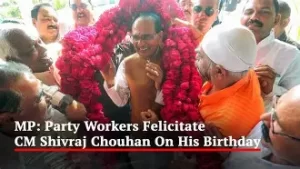
BHOPAL: (Mar 4) Union Agriculture Minister Shivraj Singh Chouhan will celebrate his 67th birthday on Thursday as ‘prem-seva sankalp diwas’ ‘, as part of which he will launch coaching classes and mobile hospitals at various places in the state.
Chouhan is popular among his followers as ‘mama’ or maternal uncle, and the coaching classes and hospitals to be launched on his birthday will have this sobriquet in their names.
The former Madhya Pradesh chief minister will take five pledges centred on environment, service, assistance, education and talent promotion, a statement issued by his office said.
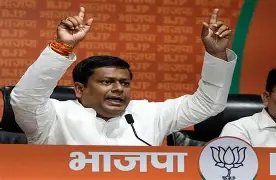
KOLKATA: (Mar 4) A political row broke out on Wednesday after senior BJP leader Sukanta Majumdar alleged that West Bengal minister Manas Bhuniya made objectionable remarks towards professors and students during a freshers’ welcome event at a college in Paschim Medinipur district.
In a post on X, Majumdar, who is also the Union minister of state for education, claimed that Bhuniya reprimanded students and faculty in an objectionable manner at the recent freshers’ programme at Sabang Sajanikanta Mahavidyalaya in his constituency. Bhuniya is also the president of the college’s governing body.
Majumdar, a former BJP state president, also shared a purported video clip showing the minister admonishing students and others.
















Recent Comments