



By Ai Powered PMC Akbar Jiwani
Special Correspondent: Realestate for Realnewsofindia.com
MUMBAI/NEW DELHI: The Mumbai Metropolitan Region (MMR) has overtaken the National Capital Region (NCR) to become India’s largest housing market, even as overall residential sales value across the country plateaued in the first half of 2026, according to the India Housing Report (January-June 2026) prepared by CRE Matrix and the National Association of Realtors-India.
THE NATIONAL PICTURE
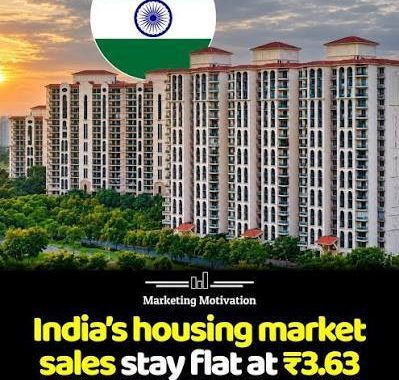
Housing sales value in H1 2026 stood at Rs 3.63 lakh crore, virtually flat against the same period last year. Units sold came in at about 2.58 lakh homes, a 2% year-on-year decline. Developers, however, remain confident: new launches rose 7% to roughly 2.98 lakh units. The average ticket size rose just 2% to about Rs 1.4 crore, the slowest rise in three years, indicating that the sharp price-led growth of recent years is cooling.
MMR TAKES THE LEAD
MMR now accounts for 26% of national sales value against NCR’s 19%. MMR recorded sales of Rs 93,800 crore (up 8%) across 83,600 units at an average ticket size of Rs 1.12 crore. Within the region, Mumbai city posted Rs 58,362 crore (up 4%), while Navi Mumbai-Raigad grew 29% to Rs 12,292 crore on the back of affordable inventory averaging Rs 71 lakh per unit.
BENGALURU AND SOUTH GAIN
Bengaluru was the standout performer, with sales value up 25% to Rs 60,875 crore across 34,600 units. The Rs 2-5 crore bracket rose from 32% to 41% of the city’s sales value, showing deepening demand for premium housing. Chennai grew 16% to Rs 13,722 crore, while Hyderabad was flat at Rs 56,966 crore.
NCR CORRECTS
NCR’s sales value fell 24% to Rs 68,217 crore across 24,600 units, with an average ticket of Rs 2.77 crore. The luxury segment saw a visible correction in Gurugram, where homes priced above Rs 5 crore fell from 66% to 52% of sales value.
POLICY WATCH: NEW TDS REPORTING RULES FROM 1 OCTOBER
Separately, new reporting rules for tax deducted on property purchases from non-resident sellers took effect on 1 October 2026. Resident individuals and HUFs buying from an NRI can now use their PAN instead of obtaining a TAN, while companies and firms must still hold a TAN. TDS rates remain 12.5% on long-term gains (held 24 months or more) and slab rates up to 30% on short-term gains, plus applicable surcharge and cess. Compliance is consolidated into Form 141. The Rs 50 lakh threshold does not apply to non-resident sellers.
WHAT IT MEANS
Analysts note the shift reflects buyers moving toward well-connected, infrastructure-led markets and mid-premium homes, while NCR’s luxury segment recalibrates. With launches rising faster than sales, developers may need sharper pricing and delivery credibility to sustain momentum in the festive season.
Sources: Business Standard (India’s housing market hits plateau: Sales flat at Rs 3.6 lakh cr in H1 2026, 28 Sep 2026) – https://www.google.com/url?q=https://business-standard.com/finance/personal-finance/india-s-housing-market-hits-plateau-sales-flat-at-3-6-lakh-cr-in-h1-2026-126092800084_1.html&source=gmail&ust=1791164633014000&sa=E ; CAclubindia (TDS on Purchase of Property: New Reporting Rules from 1st October 2026) – https://www.google.com/url?q=https://www.caclubindia.com/articles/tds-on-purchase-of-property-new-reporting-rules-from-1st-october-2026-56315.asp&source=gmail&ust=1791164633014000&sa=E

Written by Ai Powered PMC Akbar Jiwani
Special Correspondent: Realestate for Realnewsofindia.com
BMC’s first phase of the Rs 14,000-crore GMLR project is in its final finishing stage; analysts expect a lasting boost to micro-markets between Goregaon and Mulund
Mumbai, 3 October 2026 – Mumbai’s long-awaited Goregaon–Mulund Link Road (GMLR) is about to reach its first big milestone. The Brihanmumbai Municipal Corporation (BMC) is targeting October 15, 2026 for opening the Dindoshi–Film City flyover, a roughly 1.2–1.3 km, six-lane elevated stretch that will directly link the Western Express Highway at Dindoshi with Film City in Goregaon East.
According to project updates, the main civil work is complete, including all 31 piers, 30 spans, girders and deck slab. Finishing work is under way: road markings, signage, electrical poles, noise barriers, slip roads and traffic-management arrangements. A load test is planned for the second week of October. The flyover, reported to cost about Rs 300 crore, missed earlier deadlines of May and September 2026.
Why the flyover matters
The flyover is the first operational piece of the 12.2-km GMLR, a project estimated at around Rs 14,000 crore that will connect the Western Express Highway with the Eastern Express Highway. The full corridor includes twin tunnels beneath Sanjay Gandhi National Park and between the Tulsi and Vihar lakes, which are expected to open by 2027. Officials say the completed link could cut east–west travel time between the suburbs from about 75 minutes to around 25 minutes.
What it means for real estate
Infrastructure has long been the strongest driver of micro-market growth in the Mumbai Metropolitan Region, and the GMLR is no exception. Localities such as Goregaon East, Dindoshi, Malad East, Powai, Vikhroli, Bhandup and Mulund are seen as the main beneficiaries. Market commentary cited by property portals suggests that corridor values could rise by 12% to 20% over the next 24 to 36 months as connectivity improves. This is an analyst projection, not a guarantee, and actual gains will vary by project and location.
The timing is significant. Anarock data released on September 28 showed housing sales in India’s top seven cities rose 3% year-on-year to about 100,220 units in the July–September quarter, with new launches up 18% to about 114,320 units. The MMR led all cities with roughly 31,750 units sold. Developers are likely to use improved connectivity as a selling point during the upcoming festive season.
What buyers should keep in mind
Buyers should check RERA registration, project timelines and the actual commissioning status of the corridor before committing. Early price gains often reflect expectations, and the full benefit will only be visible once the twin tunnels are operational.
Opening dates for large civil projects can shift, so the October 15 target should be treated as provisional until the BMC makes an official announcement.

By Ai Powered PMC Akbar Jiwani
Special Correspondent: Real Estate, for Realnewsofindia.com
MUMBAI / NEW DELHI, October 2, 2026: India’s housing market enters its most important selling window of the year with one big question hanging over it: will the Reserve Bank of India change interest rates? The central bank’s Monetary Policy Committee (MPC) meets from October 5 to 7, just as the Navratri and Diwali festive season gathers pace, and the outcome could shape home-loan costs and buyer sentiment for the rest of the financial year.
WHERE RATES STAND
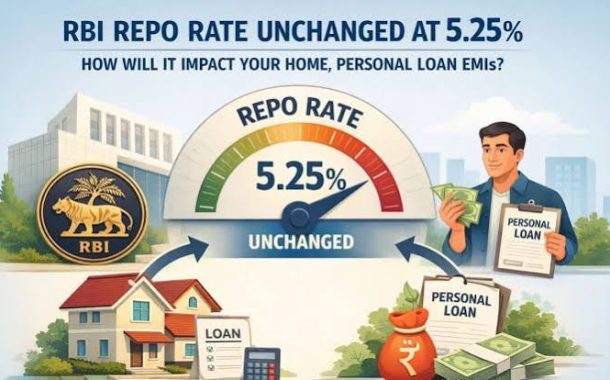
The repo rate is currently 5.25%, unchanged since August 2026. Retail inflation (CPI) rose to 4.82% in August from 4.45% in July, its fourth consecutive monthly increase, with food inflation at 5.95%. Brent crude is trading near $107 a barrel, the rupee is weak at around 96 to the US dollar, and foreign investors pulled out about $3.7 billion in September, according to market reports.
Market commentary is divided. Some reports expect the RBI to hold rates and retain its neutral stance, keeping “all options open”, while others flag the risk of a 25 basis point hike to 5.50%. Nothing is certain until the MPC announces its decision.
WHAT IT MEANS FOR HOMEBUYERS
Most home loans in India are linked to the repo rate, so a hike would feed into floating-rate EMIs, usually with a lag. As an illustration, on a Rs 50 lakh, 20-year loan, a 0.25 percentage point rise (for example from 8.50% to 8.75%) would add roughly Rs 790 to the monthly EMI. If rates are held, EMIs should remain largely stable. Analysts note that price-sensitive buyers are most likely to pause or re-think timelines if borrowing costs rise.
WHY THE TIMING MATTERS
The festive season traditionally brings the year’s highest bookings, as buyers see Navratri and Diwali as auspicious. Demand has been resilient but selective: according to Anarock data released on October 1, sales across the top seven cities rose 3% year-on-year to 100,220 units in Q3 2026, ending three consecutive quarters of decline, while new launches jumped 18% to 114,320 units. Average prices rose 7% to Rs 9,714 per sq ft and unsold inventory stands at about 6.3 lakh units. Anarock noted that buyers are becoming more selective as prices rise. PropEquity’s tracker, using a different methodology, showed a 6% decline, a reminder that data providers differ.
THE DEVELOPER VIEW
Higher rates raise the cost of servicing debt and funding construction, which can squeeze margins for developers who cannot pass on costs. Institutional investment into Indian real estate was reported at around $9.5 billion in Q3 2026, indicating that long-term capital remains confident in the sector despite near-term uncertainty.
POLICY SUPPORT IN THE BACKGROUND
On the government side, the allocation for PMAY-Urban has been raised sharply to Rs 22,025 crore in FY27, and several states have cut stamp duty and registration charges for homes built under the scheme. Industry bodies such as NAREDCO, in a KPMG-NAREDCO report, continue to press for affordable housing incentives, formal rental housing and tighter RERA-IBC coordination. Affordable housing has fallen to just 6% of new launches in Q2 2026, according to industry data, which is why such support is closely watched.
WHAT TO WATCH
Buyers should keep an eye on the MPC statement on October 7, on how banks pass on any change, and on developer festive offers. Experts generally advise buyers to budget for a modest rise in EMIs, compare lenders’ rates, and avoid stretching their EMI-to-income ratio.
Disclaimer: This article is for information only and is not financial or investment advice. Rate expectations are based on media reports and may change after the RBI’s announcement. EMI figures are illustrative.
Bengaluru Visitor Highlights Mumbai’s Cleanliness Challenge, Appeals for Stricter Action Against Littering
Mumbai: Mumbai continues to attract visitors from across India with its iconic landmarks, vibrant streets, coastline and unique city life. However, for some visitors, the city’s cleanliness remains a concern.
Razia Syed, who travelled from Bengaluru to Mumbai for a visit, shared her observations after spending time in different parts of the city. While appreciating Mumbai’s energy, diversity and numerous places to explore, she expressed concern over littering and cleanliness in crowded areas.
According to Razia Syed, Mumbai has several beautiful tourist destinations, but garbage being thrown openly in public places affects the overall experience of residents and visitors.
“Mumbai is a wonderful city with many places to visit, but cleanliness needs greater attention. People should avoid throwing garbage on roads and in public places.”
She also compared her experience with Bengaluru, where she felt that greater emphasis is placed on cleanliness and maintaining public spaces.
Razia Syed appealed to the Maharashtra Government and Mumbai civic authorities to strengthen cleanliness measures across the city and create greater public awareness about responsible waste disposal.
She suggested that, similar to strict enforcement in other major cities, fines should be imposed on people who deliberately throw garbage in public places. According to her, consistent enforcement could discourage littering and encourage citizens to use designated garbage bins.
A Call for a Cleaner Mumbai
Mumbai is known around the world for its historic landmarks, beaches, markets, heritage buildings and vibrant urban culture. Maintaining clean public spaces is therefore important not only for residents but also for tourists visiting the city.
Razia Syed’s message is simple: Mumbai should remain as beautiful and welcoming as possible, and cleanliness must become a shared responsibility.
The appeal also highlights the need for a combination of strict enforcement, adequate garbage bins, regular waste collection, public awareness campaigns and citizen participation.
A cleaner Mumbai would not only improve the daily lives of its residents but could also create a better experience for the millions of visitors who come to the city every year.

y Ai Powered PMC Akbar Jiwani
Special Correspondent: Real Estate, for Realnewsofindia.com
—
MUMBAI/NEW DELHI: India’s housing market closed the July-September 2026 quarter on a cautiously positive note, with sales across the top seven cities rising 3% year-on-year to 100,220 units, according to data released by property consultant Anarock on 28 September. The value of homes sold rose 2% to Rs 1.55 trillion.
The uptick is significant because it follows a run of declines: sales had fallen 6% year-on-year in the April-June quarter and 7% in January-March 2026, after a 14% fall in calendar 2025. On a quarter-on-quarter basis, sales were up 10% and new supply 8%. For the first nine months of 2026, sales are up 2% at 292,610 units.
CITY-WISE PICTURE
The Mumbai Metropolitan Region (MMR) recorded the highest sales at 31,750 units (up 5%), followed by Bengaluru at 16,670 units (up 12%). Together, the two cities accounted for 48% of total sales across the top seven cities. Hyderabad posted the sharpest annual jump, with sales up 15% to 12,970 units.
The other four cities saw annual declines: Pune (15,690 units, down 6%), Delhi-NCR (13,765 units, down 1%), Chennai (5,395 units, down 10%) and Kolkata (3,980 units, down 4%).
“Among the top cities, the Mumbai Metropolitan Region recorded the highest sales of 31,750 units, followed by Bengaluru with 16,670 units,” said Anuj Puri, Chairperson, Anarock Group. “Demand remains resilient, but buyers are becoming more selective as prices rise.”
DEVELOPERS TURN CONFIDENT: LAUNCHES UP 18%
New supply rose 18% year-on-year to about 114,320 units. MMR led with 37,500 units, followed by Hyderabad (18,950), Pune (18,730) and Bengaluru (17,720) – together 81% of all launches. Hyderabad’s new supply more than doubled (up 120%), with 97% of it priced above Rs 80 lakh. Launches in MMR rose 27% and in Bengaluru 17%, while NCR (down 14%), Chennai (down 9%), Kolkata (down 4%) and Pune (down 3%) saw fewer launches.
By price band, homes priced Rs 80 lakh-1.5 crore made up 34% of new supply, Rs 1.5-2.5 crore 24%, Rs 40-80 lakh 17% and below Rs 40 lakh just 14% – a reminder that the affordable segment continues to shrink as a share of new launches.
PRICES AND UNSOLD STOCK
Average residential prices across the top seven cities rose 7% year-on-year to Rs 9,714 per sq ft, with NCR recording the steepest rise at 12%, followed by Bengaluru at 8%. Unsold inventory rose 12% to about 630,590 units from 561,760 a year earlier.
“India’s residential real estate market continues to hold up well… despite higher prices and ongoing geopolitical uncertainties. The 18 per cent rise in new supply also shows that developers remain confident about demand,” said Robin Mangla, President, M3M India.
A DIFFERENT READING FROM PROPEQUITY
Not all trackers agree. PropEquity, which monitors nine cities and counts Thane and Navi Mumbai separately, reported on 26 September that sales fell 6% to 103,170 units from 109,420 a year earlier, with fresh supply slipping to 98,165 units. In its data, Hyderabad (up 11%) and Navi Mumbai (up 12%) grew, Bengaluru was nearly flat (up 1%), while Pune (down 16%), Chennai (down 17%), Kolkata (down 17%), Delhi-NCR (down 12%), Thane (down 11%) and Mumbai (down 8%) declined. The differing city coverage and methodology explain the divergence, but both reports point to a market that is stable rather than booming.
WHAT NEXT: FESTIVE SEASON AND RBI POLICY
Anarock expects the festive season, stable borrowing costs and new projects to support demand in the coming quarter. “The upcoming festive season is expected to boost residential demand, building on the momentum seen in the September quarter,” Puri said.
All eyes are now on the Reserve Bank of India’s Monetary Policy Committee, which meets on 5-7 October. The repo rate has been held at 5.25% for four consecutive reviews, after 125 basis points of cuts in 2025. With retail inflation at 4.82% in August and pressure from high crude oil prices and a weak rupee, any change in the rate stance will directly influence home-loan EMIs and buyer sentiment.
THE TAKEAWAY
After three quarters of weakness, a 3% rise is modest – but it signals that demand has found a floor, with Hyderabad, Bengaluru and MMR driving the recovery. The bigger test will be whether rising prices (up 7%) and swelling unsold inventory (up 12%) are absorbed during the festive months, and whether the RBI keeps borrowing costs steady.
Sources: Anarock Q3 2026 data via Business Standard and PTI (28 Sep 2026); Outlook Money (28 Sep 2026); PropEquity data via PTI/Business Standard (26 Sep 2026); GoPocket (29 Sep 2026) for RBI policy schedule and rate/inflation context.

By Ai Powered PMC Akbar Jiwani
Special Correspondent: Realestate, Realnewsofindia.com
MUMBAI, 30 September 2026: India’s housing market has posted a modest recovery in the July-September quarter of 2026. Sales across the top seven cities rose 3% year-on-year to 100,220 units, according to property consultant Anarock. This comes after several quarters of moderation, and the recovery came despite geopolitical uncertainty and other economic pressures.
The total value of homes sold rose 2% year-on-year to Rs 1.55 trillion. On a quarter-on-quarter basis, sales rose 10% and supply rose 8%. For the first nine months of 2026, sales rose 2% year-on-year to 292,610 units. Q1 2026 sales had fallen 7% and Q2 2026 sales had fallen 6% year-on-year. Sales fell 14% across 2025.
MMR AND BENGALURU LEAD
The Mumbai Metropolitan Region (MMR) recorded the highest sales at 31,750 units, followed by Bengaluru at 16,670 units. Together the two markets accounted for 48% of all sales in the top seven cities, said Anuj Puri, Chairperson, Anarock Group.
On annual growth, Hyderabad led with a 15% rise, followed by Bengaluru at 12% and MMR at 5%. All other top cities individually recorded a year-on-year dip in sales, Puri said.
NEW LAUNCHES SURGE 18%
New supply rose 18% year-on-year to 114,320 units. MMR led launches with 37,500 units, followed by Hyderabad at 18,950 units. Hyderabad’s new supply more than doubled, rising 120% year-on-year, while MMR rose 27% and Bengaluru 17%.
Mid-premium and premium homes dominated the new launches. Homes priced between Rs 80 lakh and Rs 1.5 crore made up 34% of new supply, and homes priced between Rs 1.5 crore and Rs 2.5 crore made up 24%.
INVENTORY AND PRICES RISE
Unsold inventory rose 12% year-on-year to 630,590 units, from 561,760 units a year earlier. Average residential prices across the top seven cities rose 7% year-on-year to Rs 9,714 per sq ft. The National Capital Region recorded the sharpest increase at 12%.
OFFICE LEASING ALSO STRONG
The commercial segment also held up. Colliers India data shows office leasing in the top markets rose 9% year-on-year to 18.7 million sq ft in Q3, up 7% from 17.4 million sq ft in Q2. Bengaluru led with 5.2 million sq ft, followed by Delhi-NCR at 3.3 million sq ft. Flexible-space operators took 4 million sq ft, up 49%. Vacancy stood at 16%, and average rentals rose 7% year-on-year. Arpit Mehrotra, Managing Director, Office Services, Colliers India, said Colliers sees 2026 potentially recording 75-80 million sq ft of office transactions.
DIFFERENT DATA SETS, DIFFERENT PICTURES
Industry trackers do not fully agree on the quarter. PropEquity, which covers nine cities, reported Q3 sales of 103,170 units, down 6% year-on-year and 4% quarter-on-quarter. Its new launches fell 15% quarter-on-quarter to 98,165 units. PropEquity said Navi Mumbai (+12%) and Hyderabad (+11%) saw sales growth, while Pune (-16%) and Chennai (-17%) declined. PropEquity Founder and CEO Samir Jasuja noted that leading cities have run at roughly one lakh units a quarter for both supply and absorption for nearly two years.
Separately, the India Housing Report (September 2026) by NAR India and CRE Matrix found that MMR overtook NCR as India’s biggest Tier-1 housing market by primary sales value in H1 2026, with a 26% share against NCR’s 19%. Gurugram’s sales value fell about 33% as the luxury segment corrected, while Navi Mumbai and Raigad sales value rose 29%.
WHAT IT MEANS
Differences in city coverage and methodology explain the gap between the trackers. The common thread across all three reports is a shift from price-led growth to volume-led, end-user demand, with Hyderabad, Bengaluru and the Mumbai region as the main drivers, while developers stay watchful on inventory levels.
Sources: Anarock and Colliers India data via Business Standard (28 Sep 2026); PropEquity via Outlook Money (26 Sep 2026); NAR India-CRE Matrix India Housing Report via Business Today (26 Sep 2026).

By AI Powered PMC Akbar Jiwani, Special Correspondent – Real Estate, Realnewsofindia.com
Sanctions now exceed 1.27 crore houses nationwide; 18.77 lakh homes approved under the new 2.0 mission as government pushes on-ground execution
New Delhi, 29 September 2026: As the extended implementation period of the original Pradhan Mantri Awas Yojana–Urban (PMAY-U) reaches its 30 September 2026 deadline, the Centre’s urban housing mission stands at a milestone moment: close to one crore homes handed over to urban families, and a second-generation scheme, PMAY-U 2.0, now carrying the mission forward.
According to Ministry of Housing and Urban Affairs (MoHUA) data as of 13 July 2026, cited in a September analysis by the Observer Research Foundation, about 127.68 lakh houses have been sanctioned under the combined mission, 121.02 lakh grounded, and 99.07 lakh completed or delivered. These totals include 16.20 lakh sanctions under PMAY-U 2.0. The Centre had extended the implementation timeline to 30 September 2026 so that houses under construction could be completed and funds released for pending projects, as stated in Parliament by Minister of State for Housing and Urban Affairs Tokhan Sahu.
PMAY-U 2.0 gathers pace
PMAY-U 2.0, approved by the Union Cabinet in August 2024, targets one crore additional urban families over five years, with an estimated outlay of Rs 10 lakh crore and central assistance of about Rs 2.3 lakh crore. It serves economically weaker sections (EWS), low-income groups (LIG) and middle-income groups (MIG) who do not own a pucca house anywhere in India, through four verticals: Beneficiary-Led Construction, Affordable Housing in Partnership, Affordable Rental Housing, and an Interest Subsidy Scheme. Under the interest subsidy, eligible households with annual income up to Rs 9 lakh receive a 4% subsidy on the first Rs 8 lakh of a home loan.
The Central Sanctioning and Monitoring Committee (CSMC) held its ninth meeting in New Delhi earlier this month under MoHUA Secretary Satendra Singh, clearing nearly 29,000 more houses for Assam, Bihar, Gujarat, Telangana, Tripura and Uttar Pradesh. Cumulative approvals under PMAY-U 2.0 have now crossed 18.77 lakh houses, up from 13.61 lakh in February 2026, when a single sitting sanctioned 2.88 lakh homes across 16 states and UTs. Officials have called for “concerted efforts to ensure the timely and effective implementation and monitoring” of the scheme.
Inclusive by design
Ministry data shows that around 96% of houses sanctioned under the mission are allotted in the name of the female head of household or jointly, with about 22% going to Scheduled Caste and 5% to Scheduled Tribe beneficiaries. Priority is also extended to senior citizens, persons with disabilities and transgender applicants.
Challenges that remain
The ORF analysis flags issues the next phase must address. Occupancy of completed houses has been a concern: a 2024 parliamentary standing committee noted that 4.6 lakh of 9.69 lakh completed ISSR and AHP houses were unoccupied, largely due to incomplete civic infrastructure and allotment delays, though the latest data shows 94.2 lakh of 96.65 lakh completed houses occupied by January 2026. Fund utilisation has also lagged, with revised 2025-26 spending of Rs 7,900 crore against a Rs 25,794 crore budget. On rental housing, the estimated shortfall of 70 lakh units compares with just over 87,000 units approved or converted so far.
What it means for real estate
For developers, the affordable and rental segments offer a steady government-backed pipeline, while the interest subsidy supports demand among first-time middle-income buyers. Industry watchers will look to see whether the Centre announces a further extension or a formal closure of the legacy scheme, and how quickly states convert sanctions into completed, occupied homes.
Note to editor: Figures vary by reporting date and tally (e.g., 122.50 lakh and 127.68 lakh total sanctions in different reports); please verify against the latest MoHUA/PIB release before publishing. Reports differ on whether the 30 Sept 2026 extension applies to the original PMAY-U or to 2.0; ORF describes it as applying to the original scheme.

By AI Powered PMC Akbar Jiwani, Special Correspondent – Real Estate, Realnewsofindia.com
Mumbai, September 28, 2026
Mumbai has secured a place among the world’s ten best-performing luxury housing markets, according to the latest Prime Global Cities Index released by international property consultancy Knight Frank, underscoring the resilience of India’s largest financial hub even as home price growth cools across much of the globe.
Data for the June 2026 quarter, covering 46 major residential markets worldwide, shows prime property prices in Mumbai rose 6.2 per cent year-on-year, placing the city eighth on the global list. The ranking puts Mumbai ahead of established markets such as Vienna and San Francisco, and comfortably ahead of its two closest domestic rivals — Bengaluru, ranked 12th with 4.5 per cent annual growth, and the National Capital Region (Delhi), ranked 17th at 3.9 per cent.
Topping the global chart was Tokyo, where prime prices surged an extraordinary 50.7 per cent over the year, followed by Manila (14.6 per cent), Dubai (10.9 per cent) and Singapore (9.5 per cent). Nairobi, Christchurch and Seoul rounded out the middle of the top ten, with Mumbai’s 6.2 per cent growth edging out both Vienna (5.9 per cent) and San Francisco (5 per cent) to claim eighth spot. Across all 46 cities tracked, the average annual growth rate was a modest 2.6 per cent, with prices rising in 32 of the 46 markets — a sign that, globally, the luxury housing boom of recent years is losing steam even as pockets of strong demand persist.
Shishir Baijal, Chairman and Managing Director of Knight Frank India, said Mumbai’s showing was particularly noteworthy given the broader slowdown. “Amid relatively slow growth in housing property prices globally, Mumbai’s inclusion among the top ten major housing markets is significant,” he said. “For investors and buyers, this shows that Mumbai’s prime housing property market is strongly linked to long-term wealth creation and limited supply.”
Baijal attributed the city’s performance to factors distinctive to its luxury segment — prime micro-markets, limited fresh supply of high-end inventory, and consistent demand from both end-users and investors seeking long-term wealth preservation. Analysts tracking the sector note that Mumbai’s south and central corridors, along with newer luxury clusters, have continued to attract high-net-worth buyers even as broader affordability concerns weigh on mid-income housing demand nationally.
For India’s real estate sector, the report offers a mixed but broadly encouraging signal. While Mumbai’s outperformance reinforces its status as the country’s premier luxury property destination, the more modest gains in Bengaluru and Delhi point to a maturing market where price growth is beginning to normalise after the sharp post-pandemic run-up. Industry watchers will be looking to see whether the momentum in India’s top-tier cities can be sustained through the upcoming festive season — traditionally the busiest period for property transactions — and whether gains in prime segments eventually filter down to the broader mid-market, where affordability remains the central challenge for homebuyers across the country.

This article has been written by AI-Powered PMC Akbar Jiwani, Special Correspondent – Real Estate, for Realnewsofindia.com)
India’s flagship urban housing programme, the Pradhan Mantri Awas Yojana-Urban (PMAY-U), has crossed a landmark milestone, with 1.25 crore houses sanctioned nationwide and more than 1 crore pucca houses already completed and handed over to beneficiaries, according to a government factsheet released this month. The figures, current as of August 9, 2026, mark one of the largest affordable housing deliveries undertaken anywhere in the world and underline the scale of the Union Government’s push to formalise and expand India’s urban housing stock.
The numbers stand in sharp contrast to the pre-2015 era. Between 2005 and 2014, only about 8 lakh urban houses were completed under earlier central housing schemes. Since PMAY-U’s launch in 2015, completions have grown more than twelvefold, a shift officials attribute to tighter monitoring, direct benefit transfers and closer coordination with States, Union Territories and urban local bodies.
A significant share of the delivery has gone toward strengthening women’s asset ownership. Of the 1.25 crore houses sanctioned, 1 crore have been allotted to women, either solely in the name of the female head of the household or in joint ownership — a mandate built into the scheme’s design. Housing sector analysts note that this is reshaping intra-household financial security and decision-making power for millions of low- and middle-income families, beyond simply adding to the housing stock.
The programme has now entered its second phase, PMAY-Urban 2.0, which runs from 2024 to 2029 and targets financial assistance for 1 crore additional urban poor and middle-class families. As of August 9, 2026, about 18.38 lakh houses have already been sanctioned under this new phase. Eligible beneficiaries receive financial assistance of up to Rs 2.50 lakh per unit to support construction or purchase of an affordable home, and the scheme also extends to affordable rental housing for eligible households.
Inclusivity has been positioned as central to the scheme’s second phase, with the government stating that PMAY-U 2.0 prioritises housing access for Scheduled Castes, Scheduled Tribes, Other Backward Classes, minorities, senior citizens, persons with disabilities and transgender persons — a framing officials say is intended to make urban growth “more equitable and accessible.”
On execution, the government has leaned heavily on digital infrastructure to keep the scheme transparent and auditable. A newly unified web portal for PMAY-U 2.0 now brings beneficiaries, urban local bodies, and State/UT implementing agencies onto a single digital platform, enabling geo-tagging of houses at various stages of construction, real-time dashboards for monitoring, and streamlined fund disbursement.
For India’s real estate sector, the milestone carries implications well beyond the affordable housing segment. Developers and industry bodies have long argued that a strong pipeline of PMAY-linked construction sustains demand for cement, steel and allied building materials, supports employment in tier-2 and tier-3 towns, and helps anchor the broader residential market even during periods when premium and luxury housing demand fluctuates. With PMAY-U 2.0 running through 2029, the sector is likely to see sustained public-sector-driven construction activity over the next several years, even as private developers continue to expand in the mid-income and affordable-for-profit categories that have gained momentum since GST rationalisation on housing inputs.
The government has not released a state-wise break-up of sanctioned or completed units alongside this factsheet, nor a consolidated national outlay figure for the scheme; both are typically disclosed separately in Parliament replies from the Ministry of Housing and Urban Affairs.

Article by AI Powered PMC Akbar Jiwani, Special Correspondent – Real Estate, for Realnewsofindia.com
Mumbai has cemented its place among the world’s most resilient luxury housing markets, with prime residential prices climbing 6.2 per cent year-on-year in the April–June quarter of 2026, according to Knight Frank’s latest Prime Global Cities Index. The growth places India’s financial capital 8th out of the 46 cities tracked globally — more than twice the 2.6 per cent average price growth recorded across all cities in the index.
The city also posted a 1.7 per cent quarter-on-quarter rise, signalling sustained momentum at the top end of the residential market even as global luxury housing growth remains comparatively subdued.
Mumbai was not India’s only representative in the global top 20. Bengaluru ranked 12th with prime home prices up 4.5 per cent annually, while the national capital, New Delhi, came in at 17th with 3.9 per cent growth. All three Indian cities featured among the world’s top 20 prime residential markets in the latest edition of the index — a strong showing that underscores the depth of high-end housing demand across the country.
Where India Stands Globally
Tokyo topped the global rankings by a wide margin, with prime residential prices soaring 50.7 per cent over the year, followed by Manila (14.6 per cent), Dubai (10.9 per cent) and Singapore (9.5 per cent). Nairobi, Christchurch and Seoul rounded out the top seven with gains of 8.5 per cent, 6.9 per cent and 6.4 per cent respectively, just ahead of Mumbai in eighth place. Vienna (5.9 per cent) and San Francisco (5.0 per cent) completed the top ten.
At the other end of the spectrum, Beijing recorded the steepest annual decline among tracked cities at 8.4 per cent, followed by Toronto (down 7.3 per cent), Wellington (down 5.4 per cent) and London (down 3.6 per cent). Globally, the overall average growth rate stood at 2.6 per cent, up from 2 per cent in the previous quarter, reflecting an uneven, two-speed recovery in prime residential markets worldwide.
“Depth of Demand at the Top End,” Says Knight Frank India Chief
Commenting on the findings, Shishir Baijal, International Partner, Chairman and Managing Director, Knight Frank India, said Mumbai’s position among the top ten global prime residential markets was significant given the more measured pace of global price growth this quarter.
“The city’s 6.2% annual growth reflects the depth of demand at the top end of the market, where location, quality, and differentiated residential offerings continue to support values,” Baijal said, adding that prime residential assets in Mumbai remained closely linked to long-term wealth creation and limited supply.
Liam Bailey, Knight Frank’s Global Head of Research, noted that the latest results pointed to a modest improvement in global luxury housing conditions overall, while cautioning that local supply dynamics, currency movements, wealth creation trends and interest rate trajectories would continue to shape the performance of individual markets in the quarters ahead.
What It Means for India’s Real Estate Growth Story
The findings add to a growing body of evidence that India’s premium and luxury housing segment continues to outperform the broader residential market, even as overall home sales growth across the country is widely expected to moderate this fiscal year amid affordability pressures at the mass-market end. Industry watchers say Mumbai’s limited land supply, continued infrastructure upgrades and sustained interest from high-net-worth and ultra-high-net-worth buyers have kept the city’s luxury corridor — spanning South Mumbai, Bandra-Worli and the western suburbs — resilient to the broader slowdown seen in entry-level and mid-income housing.
With Bengaluru and New Delhi also holding their own in the global rankings, the latest Knight Frank data reinforces India’s growing weight in the global prime residential conversation — a trend likely to draw continued attention from developers, institutional investors and policymakers tracking the health of the country’s real estate sector through the rest of 2026.















Recent Comments