
By Ai Powered PMC Akbar Jiwani
Special Correspondent: Real Estate, for Realnewsofindia.com
MUMBAI / NEW DELHI, October 2, 2026: India’s housing market enters its most important selling window of the year with one big question hanging over it: will the Reserve Bank of India change interest rates? The central bank’s Monetary Policy Committee (MPC) meets from October 5 to 7, just as the Navratri and Diwali festive season gathers pace, and the outcome could shape home-loan costs and buyer sentiment for the rest of the financial year.
WHERE RATES STAND
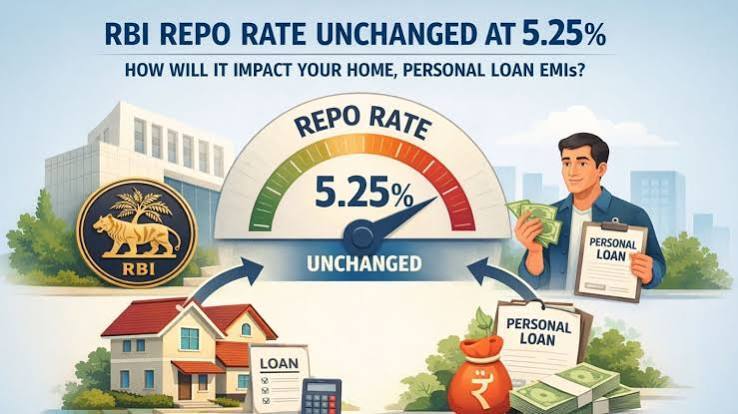
The repo rate is currently 5.25%, unchanged since August 2026. Retail inflation (CPI) rose to 4.82% in August from 4.45% in July, its fourth consecutive monthly increase, with food inflation at 5.95%. Brent crude is trading near $107 a barrel, the rupee is weak at around 96 to the US dollar, and foreign investors pulled out about $3.7 billion in September, according to market reports.
Market commentary is divided. Some reports expect the RBI to hold rates and retain its neutral stance, keeping “all options open”, while others flag the risk of a 25 basis point hike to 5.50%. Nothing is certain until the MPC announces its decision.
WHAT IT MEANS FOR HOMEBUYERS
Most home loans in India are linked to the repo rate, so a hike would feed into floating-rate EMIs, usually with a lag. As an illustration, on a Rs 50 lakh, 20-year loan, a 0.25 percentage point rise (for example from 8.50% to 8.75%) would add roughly Rs 790 to the monthly EMI. If rates are held, EMIs should remain largely stable. Analysts note that price-sensitive buyers are most likely to pause or re-think timelines if borrowing costs rise.
WHY THE TIMING MATTERS
The festive season traditionally brings the year’s highest bookings, as buyers see Navratri and Diwali as auspicious. Demand has been resilient but selective: according to Anarock data released on October 1, sales across the top seven cities rose 3% year-on-year to 100,220 units in Q3 2026, ending three consecutive quarters of decline, while new launches jumped 18% to 114,320 units. Average prices rose 7% to Rs 9,714 per sq ft and unsold inventory stands at about 6.3 lakh units. Anarock noted that buyers are becoming more selective as prices rise. PropEquity’s tracker, using a different methodology, showed a 6% decline, a reminder that data providers differ.
THE DEVELOPER VIEW
Higher rates raise the cost of servicing debt and funding construction, which can squeeze margins for developers who cannot pass on costs. Institutional investment into Indian real estate was reported at around $9.5 billion in Q3 2026, indicating that long-term capital remains confident in the sector despite near-term uncertainty.
POLICY SUPPORT IN THE BACKGROUND
On the government side, the allocation for PMAY-Urban has been raised sharply to Rs 22,025 crore in FY27, and several states have cut stamp duty and registration charges for homes built under the scheme. Industry bodies such as NAREDCO, in a KPMG-NAREDCO report, continue to press for affordable housing incentives, formal rental housing and tighter RERA-IBC coordination. Affordable housing has fallen to just 6% of new launches in Q2 2026, according to industry data, which is why such support is closely watched.
WHAT TO WATCH
Buyers should keep an eye on the MPC statement on October 7, on how banks pass on any change, and on developer festive offers. Experts generally advise buyers to budget for a modest rise in EMIs, compare lenders’ rates, and avoid stretching their EMI-to-income ratio.
Disclaimer: This article is for information only and is not financial or investment advice. Rate expectations are based on media reports and may change after the RBI’s announcement. EMI figures are illustrative.