




By AI Powered PMC Akbar Jiwani, Special Correspondent: Real Estate for Realnewsofindia.com
India’s residential real estate market is entering the festive season on firm footing, with fresh industry data showing that home prices across the country’s top eight cities have stayed above the ₹10,000 per square foot mark for a second consecutive quarter, even as sales volumes cooled slightly from a year earlier. Combined with a steady interest-rate environment and GST relief on key construction inputs, the sector is being described by analysts as “maturing, not weakening.”
WHAT THE DATA SHOWS
According to the Real Insight Residential report for Q2 2026 released by PropTiger.com (part of listed real estate technology firm Aurum PropTech Limited), the top eight cities together recorded 91,729 housing units sold against 89,161 new launches during the quarter.
Sales fell 4.4% quarter-on-quarter and were down 6.1% compared with 97,674 units sold in the same quarter last year.
New launches, however, rose 6.0% year-on-year from 84,138 units.
The sales-weighted average price across the eight cities rose 1.0% quarter-on-quarter to ₹10,153 per square foot, holding above the ₹10,000 threshold for the second straight quarter.
City-wise, the Mumbai Metropolitan Region remained the largest market by both volume and value, with 24,112 units sold and prices up 20.4% year-on-year to ₹15,422 per square foot. Bengaluru posted the steepest annual price rise among the eight cities at 26.0%, even as sales there slipped 9.2%. Pune crossed the ₹8,000 per square foot mark for the first time, up 13.7% year-on-year, while Ahmedabad remained the most affordable large market at ₹5,295 per square foot but logged the sharpest sequential price gain, up 7.0% quarter-on-quarter. Kolkata led sequential sales growth nationally with a 22.0% quarter-on-quarter rise, which the report attributes to a post-election demand recovery, and Chennai recorded a 36.0% year-on-year jump in sales even as new supply fell 43.3%. Hyderabad and Delhi-NCR were comparatively stable, with Hyderabad launches up 21.6% year-on-year.
WHY PRICES ARE RISING DESPITE SOFTER SALES
PropTiger.com chief executive Prakash Tejwani said the numbers point to a market that is stabilising rather than slowing down. “Q2 2026 confirms India’s residential market is maturing, not weakening,” he said, noting that prices have held above ₹10,000 per square foot for two straight quarters even as buyers turn more selective. He pointed to Kolkata and Chennai as showing “genuine demand-led recovery,” while Bengaluru and Pune “continue to command pricing power despite tech-sector caution.” Sanjeevini Group chairman and founder Umesh Gowda H A said Bengaluru’s market “continues to remain resilient despite a broader moderation in housing activity across India,” describing the softer sales as “a more measured pace of absorption rather than a weakening of the market.”
POLICY TAILWINDS: STABLE RATES AND GST RELIEF
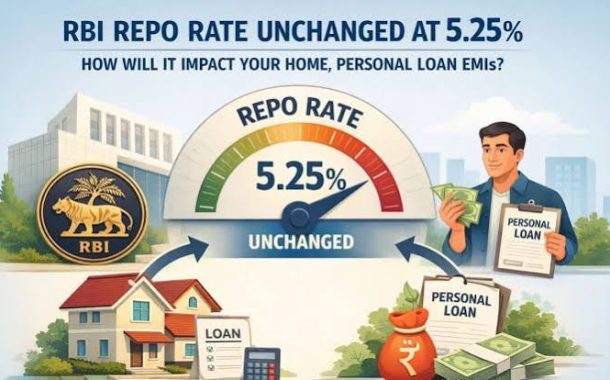
The pricing resilience comes against a backdrop of supportive government and central bank policy. The Reserve Bank of India has held its repo rate steady at 5.25%, keeping home loan borrowing costs predictable for buyers. Separately, the GST Council’s rate rationalisation earlier this year cut the tax on cement from 28% to 18% and on marble and granite from 12% to 5%, a change industry estimates suggest could offset construction costs by roughly 2–3%, offering developers some cushion against rising input and land prices even as it has yet to meaningfully lower end prices for buyers.
WHAT TO WATCH NEXT
With disciplined new supply and inventory levels still under control, developers are heading into the festive quarter — traditionally India’s strongest home-buying season around Navratri and Diwali — with pricing power intact. Analysts say affordability will remain the key variable to watch through the rest of 2026: whether launch volumes convert into fresh sales once festive-season promotions and offers begin, and whether the GST-driven cost relief eventually filters through to more competitively priced units for first-time buyers in India’s price-sensitive mid-income segment.

AI Powered PMC Akbar Jiwani, Special Correspondent: Real Estate for Realnewsofindia.com
Mumbai, September 13, 2026 — Maharashtra has laid out its most ambitious real estate and infrastructure roadmap yet, positioning the Mumbai Metropolitan Region (MMR) to become a $1.5-trillion economy by 2047 through a combination of global private capital, mega-infrastructure projects and an aggressive push to redevelop the city’s ageing housing stock.
The vision — branded “Mumbai 3.0” — has been built out in stages over the past several weeks. It began on August 7, when the Mumbai Metropolitan Region Development Authority (MMRDA) signed a set of memoranda of understanding with three Singapore-headquartered firms: Temasek Holdings, Mapletree and Surbana Jurong. Under one of these agreements, with the Raigad Pen Growth Center Limited (RPGCL), Mapletree committed to more than $1.1 billion in foreign direct investment to build a 100-acre mixed-use development within the Raigad-Pen Growth Center. Surbana Jurong, which had already authored the master and infrastructure plans for that growth centre, was appointed project management consultant for its execution.
Chief Minister Devendra Fadnavis said the talks that produced the agreements were first initiated at the World Economic Forum in Davos. “The MMR strategy is translating from planning into ground reality. With physical infrastructure work actively underway, global investors are demonstrating immense confidence in Maharashtra,” he said, adding that “Singapore’s extensive experience in master planning and urban development will significantly benefit the state.” A comprehensive master plan spanning 324 square kilometres is now meant to guide the area’s development — covering land use, transit, housing and industrial corridors — anchored by the under-construction Navi Mumbai International Airport and the Atal Setu sea bridge. State officials describe the long-term goal as knitting these together into a “Third Mumbai,” with a “Fourth Mumbai” envisioned beyond that.
The state government expanded on the plan on September 4 at the sixth edition of the Real Estate & Infrastructure Investors’ Summit (REIIS 2026) in Mumbai, where Fadnavis told developers that “Mumbai 3.0 is not a future. It has already begun.” He pointed to August 2026 property registration data — roughly 12,500 registrations in Mumbai for the month, among the highest on record — with cumulative registrations for the year crossing 1.06 lakh and generating close to ₹9,355 crore in government revenue.
On housing, the chief minister said the government’s “cluster approach” to redevelopment would make Mumbai slum-free within a decade. “The Government worked with the developers’ fraternity and today Maharashtra has the most successful regulator in India. The trade has been cleaned up and a level playing field has been created,” he said, citing MahaRERA. For the long-delayed Dharavi redevelopment project specifically, the government has set a target of handing over keys to 10,000 rehabilitation homes by January 2029.
The infrastructure list attached to the vision is extensive: a proposed 24-km Uttan–Virar sea link intended to give Mumbai signal-free connectivity from Nariman Point to Virar; a third Mumbai airport planned near Virar, with a detailed project report expected by the end of this year; and expansion of the Vadhavan deep-draft port in Palghar, which the state hopes will rank among the world’s leading ports and anchor a new freight corridor running through Nashik and the Samruddhi Mahamarg toward Jalna, Wardha and Gadchiroli. A separate initiative under Transport Minister Pratap Sarnaik — cleared by the state cabinet on July 14 — will invite tenders within three months to redevelop 140 State Transport bus depots into mixed-use “Bus Ports,” potentially unlocking 13,000-14,000 acres of MSRTC land for private development.
Fadnavis also framed the plan in demographic and technological terms, noting that roughly 65% of India’s population is young and that Maharashtra alone has close to 3 crore residents between the ages of 18 and 28. “In the next 1,000 days, the nature of 70% of jobs will change because of AI. This is an era of disruption,” he said, positioning the Mumbai-Pune corridor as a future “Quantum Corridor” for technology and global capability centres.
For an MMR real estate market still digesting the RERA decriminalisation, self-redevelopment reforms and stalled-project rescue funds that have dominated headlines this year, Mumbai 3.0 represents a shift in scale — from fixing what exists to building an entirely new economic geography around it. Whether the ₹9,355-crore registration windfall and the Singapore FDI commitments translate into delivered infrastructure on the stated timelines will be the test developers, homebuyers and investors will be watching most closely over the next few years.

By AI-Powered PMC Akbar Jiwani | Special Correspondent – Real Estate, RealNewsofIndia.com
India’s office real estate market has crossed a new institutional milestone, with the operational portfolio of listed office Real Estate Investment Trusts (REITs) surging 74 per cent year-on-year to touch 167 million square feet in the first half of 2026, up from 95.8 million square feet in the same period last year. The figures, published this week in a joint report by ASSOCHAM and Knight Frank India, show that REIT-held office space now accounts for 16 per cent of the country’s total office stock of 1.05 billion square feet — a sharp jump that underlines how quickly institutional capital is consolidating its hold on India’s commercial property landscape.
An additional 36 million square feet of office space currently under construction is earmarked for REIT platforms, indicating that the pace of institutionalisation is set to continue well into 2027 as developers increasingly package Grade-A office assets for listing rather than holding them on private balance sheets.
Bengaluru continues to lead the REIT wave by a wide margin, with 67.6 million square feet of REIT-backed office stock making up 27 per cent of the city’s total office inventory — comfortably the highest penetration of any Indian market. Hyderabad follows with 26.2 million square feet, or 20 per cent of its office stock, while Mumbai rounds out the top three with 24.6 million square feet, representing 14 per cent of the city’s inventory. The concentration in these three markets reflects sustained demand from global capability centres (GCCs) and technology occupiers, who have anchored much of the leasing activity behind REIT-grade buildings.
The institutionalisation story is no longer confined to office space. Retail REITs, led by Nexus (10.7 million square feet) and Brookfield (0.4 million square feet), now hold a combined 11 million square feet of operational mall and retail space. Notably, nearly 45 per cent of this retail REIT footprint sits outside India’s eight major metro office markets, spread across cities such as Chandigarh, Bhubaneswar, Amritsar, Udaipur, Mangaluru, Mysuru, Indore and Ludhiana — a sign that institutional ownership is beginning to reach deep into India’s tier-II consumption centres, not just its traditional commercial hubs.
A third and comparatively newer vehicle, the Warehousing Infrastructure Investment Trust (InvIT), has also gained scale, with its portfolio reaching 44.2 million square feet as of June 2026, reinforcing warehousing and logistics as the next frontier for India’s institutional real estate ecosystem.
Commenting on the findings, Shishir Baijal, International Partner, Chairman and Managing Director of Knight Frank India, said the expansion of retail REITs was “widening the geographic footprint of institutional real estate ownership beyond the established office markets,” pointing to a structural broadening of India’s REIT story beyond the usual metro-centric narrative.
On the regulatory front, Parneet S. Sachde, Chairman of the Real Estate Regulatory Authority, offered a broader reflection on where India’s real estate governance framework must head next, noting that “the first decade created a statutory architecture of trust. The second decade must create a technological architecture of trust” — a remark widely read as a call for greater digitisation and transparency in property regulation as the sector matures.
Taken together, the numbers point to a real estate market that is steadily shifting from fragmented private ownership toward listed, professionally managed platforms — a trend that analysts say improves transparency for investors, deepens capital markets, and gives retail investors direct exposure to India’s commercial property growth story. With 36 million square feet of fresh office supply in the REIT pipeline and warehousing InvITs gaining traction, India’s institutional real estate footprint appears poised for further expansion through the rest of 2026.

By AI Powered PMC Akbar Jiwani, Special Correspondent: Real Estate for Realnewsofindia.com
Tier-II Cities Fuel India’s Land-Buying Boom: Transactions Surge 132x as Developers Chase ₹16.67 Lakh Crore Revenue Opportunity
Mumbai, September 11, 2026: India’s land-buying market has entered a new phase of growth, with fresh data from global property consultancy Cushman & Wakefield showing that annual land transactions in the country’s smaller Tier-II cities have exploded 132-fold over the past five years — outpacing the traditional metro markets and signalling a structural shift in where developers see the next wave of opportunity.
According to the report, which tracked 892 land deals across 33 cities between 2021 and the first quarter of 2026, India recorded a cumulative 18,158 acres of land transactions over the period. Annual volumes rose from just 813 acres in 2021 to 6,181 acres in 2025 — a compound annual growth rate of roughly 66 per cent — with another 1,194 acres already changing hands in Q1 2026 alone. Cushman & Wakefield estimates the land parcels transacted so far carry a potential revenue opportunity of ₹16.67 lakh crore, translating into roughly 1.4 billion square feet of future built-up development.
Smaller cities lead the charge
The standout finding is the rise of Tier-II markets such as Coimbatore, Indore, Visakhapatnam, Ludhiana, Panipat and Nagpur. In 2021, these cities accounted for barely 16 acres of annual land transactions — about 2 per cent of the national total. By 2025, that figure had jumped to 2,120 acres, or 34 per cent of all transactions nationally. The average deal size in Tier-II cities also grew sharply, from 8 acres in 2021 to 53 acres in 2025, even as the average Tier-I deal size shrank from 21 acres to 10 acres over the same period, reflecting land scarcity and rising prices in the larger metros. Tier-I cities still command the lion’s share of cumulative acreage at 71 per cent, but the trend line is unmistakably tilting toward smaller urban centres.
Where the land is going
Residential development remains the single largest end-use, accounting for 45 per cent of land acquired, with potential built-up area estimated between 559 and 768 million square feet. Industrial and logistics land use has also surged, making up 27 per cent of deals in 2024-25, while office-linked land purchases have grown nearly fivefold — from 76 acres in 2021-22 to 384 acres in 2024-25 — as developers position for a broader commercial recovery. Data centre-linked land acquisition is emerging as a fast-growing new category, with potential built-up area pegged at 113-124 million square feet, while retail remains the smallest segment.
On deal structure, outright purchases continued to dominate at over 60 per cent (10,910 acres), but joint ventures and development agreements are gaining ground fast — rising from just 11 such deals in 2021 to 42 in 2025 — as land prices climb and developers look to share capital risk rather than pay upfront.
Infrastructure push and Make in India driving demand
The report attributes much of the momentum to a combination of expanding infrastructure capital expenditure, employment generation, and manufacturing growth under government initiatives such as Make in India and production-linked incentive (PLI) schemes, alongside rising e-commerce and modern retail demand and improving expressway connectivity into smaller cities.
“Economic growth, infrastructure capex and employment generation are driving the expansion in land transactions,” said Somy Thomas, Executive Managing Director, Capital Markets, Cushman & Wakefield. He cautioned, however, that the rapid price appreciation of recent years may not be sustainable everywhere: “Land prices have reached a critical level in several locations, making it harder to sustain the same rate of appreciation.” On the shift toward partnerships, Thomas added: “Once land prices become high, it is more attractive to partner rather than deploy expensive capital upfront.”
Outlook
Notably, 2025’s transaction volume was 1.6 times the previous peak recorded in 2024, underscoring how quickly the market has accelerated. With institutional debt largely unavailable for raw land purchases, domestic developers continue to dominate deal-making, financing acquisitions through internal accruals, equity and joint-development structures. Going forward, Cushman & Wakefield expects the pace of price appreciation to vary widely by micro-market, hinging on local economic activity and the pace of infrastructure rollout — with India’s expanding network of expressways and industrial corridors likely to keep pulling capital toward Tier-II and even Tier-III destinations in the years ahead.

Reported by AI Powered PMC Akbar Jiwani, Special Correspondent: Real Estate, for Realnewsofindia.com
M3M Outbids DLF to Win Rs 1,850-Crore Noida Land Parcel, Signalling Fresh Investor Confidence in NCR Realty
Noida, September 10, 2026: In one of the most closely watched land auctions in the National Capital Region this year, Gurugram-based developer M3M India has emerged as the highest bidder for a prime 12.5-acre mixed-use plot in Sector 108, Noida, offering Rs 1,850 crore — a premium of roughly 121 per cent over the Noida Authority’s reserve price of Rs 835 crore. The result, declared this week, saw M3M see off stiff competition from real estate major DLF Ltd, while a third shortlisted contender, Godrej Properties, chose to sit out the final round of bidding.
The Sector 108 parcel works out to a price of nearly Rs 147-148 crore per acre, among the steepest per-acre valuations recorded for a single land parcel in Noida in recent years. Once stamp duty and other statutory charges — estimated at close to Rs 150 crore — are factored in, M3M’s total outlay for the site is expected to approach Rs 2,000 crore, according to a Noida Authority official cited in local reports. The land is earmarked for an integrated residential-cum-commercial development that will feed into M3M’s expanding footprint along the Delhi-NCR corridor, complementing its existing portfolio of projects along the Dwarka Expressway.
The Sector 108 win was not M3M’s only move this week. The developer also secured a separate six-acre parcel in Sector 98 for Rs 414 crore, taking its combined fresh land investment in Noida to more than Rs 2,400 crore in a matter of days. Industry watchers describe the twin acquisitions as among the largest single-developer land commitments in the NCR in recent memory, underscoring how aggressively top-tier builders are now competing for well-located parcels as end-user and investor demand in the region continues to firm up.
The auction result also fits into a broader pattern of renewed institutional and corporate appetite for Noida land. It follows closely on the heels of Godrej Properties’ acquisition of a 4.95-acre residential plot in Sector 151 for Rs 331.75 crore, and comes at a time when Noida and Greater Noida have consistently featured among the top-performing micro-markets in the National Capital Region for both capital appreciation and rental yields, aided by improving connectivity via the Noida-Greater Noida Expressway, the upcoming Noida International Airport at Jewar, and sustained infrastructure push from the state government.
For the Noida Authority, the bumper realisation — well over double the base price — is also a fiscal win, adding significantly to the civic body’s revenue kitty that is ploughed back into infrastructure augmentation, road widening and civic amenities across the city. Sharp premiums of this kind in Authority-led auctions have increasingly become the norm rather than the exception this year, reflecting both scarcity of well-located, fully serviced land parcels and developers’ eagerness to build up inventory ahead of an anticipated upcycle in NCR housing demand.
For homebuyers and investors tracking the Noida market, the message from this week’s auction is unambiguous: marquee developers are willing to pay a significant premium to secure a foothold in Sector 108 and its neighbouring micro-markets, a strong signal that fresh, large-format residential and mixed-use supply — and the infrastructure investment that typically follows it — is on its way to one of the National Capital Region’s fastest-growing corridors.

By AI Powered PMC Akbar Jiwani, Special Correspondent: Real Estate for Realnewsofindia.com
India’s push to clear the backlog of stalled residential projects is entering its most consequential phase yet, as the government moves to formally operationalise SWAMIH Fund-2, a ₹15,000 crore vehicle designed to complete roughly one lakh additional housing units for homebuyers who have been waiting years for possession.
WHAT IS HAPPENING
Finance Minister Nirmala Sitharaman has told Parliament that “formal steps to operationalise the fund are under way,” with the government finalising governance arrangements, investment parameters and disbursement mechanisms before capital begins flowing to stalled sites. The fund, announced in Union Budget 2026-27, will be managed by SBICAP Ventures Ltd and structured as an Alternative Investment Fund that provides priority debt financing to RERA-registered, brownfield residential projects — largely in the affordable and mid-income segments — where construction has stalled due to financial stress, legal disputes or developer default. The finance ministry has also held coordination meetings with banks, LIC and other institutional lenders to widen the fund’s capital base and scope.
WHY THE GOVERNMENT IS DOUBLING DOWN
The case for a sequel fund rests on the track record of the original SWAMIH Fund, launched in November 2019 and also managed by SBI’s investment arm. According to government data, the first fund has:
– Raised a total corpus of ₹15,530 crore and unlocked more than ₹37,400 crore in capital across 127-plus stalled projects
– Delivered around 61,000 to 63,200 completed homes, out of a total portfolio pipeline of roughly 1,01,443 units across 145-plus projects in 30-plus cities, covering more than 90 million square feet
– Generated over ₹6,900 crore in tax revenue for the Centre and states through GST, stamp duty and other statutory payments, while returning nearly half of drawn capital to investors, including ₹3,500 crore to the government
– Created more than 36,000 jobs, with 3,520 permanent positions and 15% female workforce participation, alongside secondary demand of roughly 20 lakh tonnes of cement and 5.5 lakh tonnes of steel
Affordable and EWS (economically weaker section) housing accounted for a significant share of this delivery — government figures put affordable housing at 44% of the fund’s portfolio, with more than 7,000 EWS units handed over to buyers.
WHY IT MATTERS FOR THE SECTOR
Stalled projects have long been one of the most persistent drags on confidence in Indian real estate, tying up homebuyers’ savings for years while eroding trust in under-construction purchases. SWAMIH-2 extends a model that market participants and analysts credit with directly improving sentiment: by injecting last-mile financing rather than equity, the fund completes units without requiring distressed developers to dilute ownership, while giving homebuyers a credible, government-backed pathway to possession.
Real estate industry voices, including developers such as Hiranandani, have pointed to SWAMIH-2 alongside other recent measures — such as changes to TDS on rentals — as part of a broader set of structural tailwinds for the sector this year. Combined with the Unified RERA portal rolled out to standardise regulatory disclosures nationally, and state-level digitisation drives such as Maharashtra’s move to embed GIS-based land records in property sale deeds from October, the SWAMIH-2 rollout adds another layer to the government’s multi-pronged effort to make Indian real estate more transparent, more bankable for institutional capital, and less risky for the ordinary homebuyer.
With formal operationalisation now in progress, the coming months will be watched closely for the first tranche of SWAMIH-2 disbursements — a milestone that could determine how quickly the next wave of stalled projects, and the families waiting on them, finally get to move in.

By AI-Powered PMC Akbar Jiwani, Special Correspondent – Real Estate, for RealNewsOfIndia.com
n a fresh signal that India’s real estate growth story is expanding well beyond its traditional metro strongholds, Mumbai-headquartered developer Prime Group has announced plans to invest approximately ₹1,500 crore in Bihar’s real estate sector over the next four quarters, marking the company’s first major entry into the state and adding to a growing list of developers betting on India’s under-penetrated Tier-2 markets.
The group, which currently operates across Mumbai, Bengaluru, Kolkata and Ranchi, plans a development pipeline of roughly 5 million square feet of residential and mixed-use projects in Bihar. Explaining the rationale behind the move, the company’s Chairman said: “Bihar is entering an important phase of real estate growth, and we see significant opportunity in the market.”
Prime Group, which operates on a zero-debt balance sheet, said the financial flexibility this affords will support its scale-up plans in the new market. The company has also engaged investors from the Middle East along with overseas architects and specialist consultants as part of its Bihar expansion, with further project-level details expected to be announced in the coming months.
Why Bihar, and Why Now
The move is emblematic of a broader shift in India’s property market. For over a decade, institutional and developer capital has concentrated overwhelmingly in the National Capital Region, Mumbai Metropolitan Region, Bengaluru, Pune and Hyderabad. That pattern is now visibly changing, as improving connectivity infrastructure, rising urban incomes, a maturing regulatory framework under the Real Estate (Regulation and Development) Act (RERA), and state governments actively courting investment have made states like Bihar, Uttar Pradesh and Madhya Pradesh increasingly attractive to organised developers.
This trend has been visible through the past week alone: separate reports have pointed to Uttar Pradesh’s real estate investment climbing sharply this year, Mumbai’s property registrations touching a 14-year August high, and continued Centre-level support for stalled housing projects through the SWAMIH Fund. Taken together, these developments point to a real estate sector that is broadening its growth base geographically even as established hubs continue to perform strongly.
For Bihar specifically, a mid-sized, RERA-registered developer of Prime Group’s scale committing four-figure-crore capital is a notable vote of confidence. It suggests organised, branded real estate — long dominated by local and regional builders in the state — is now attracting pan-India players who typically enter a market only once they see durable demand, improving ease of doing business, and adequate legal and regulatory safeguards for buyers.
What It Means for Homebuyers and Investors
For prospective homebuyers in Bihar, the entry of an established, financially stable developer with a zero-debt balance sheet is likely to be a reassuring development, given how project delays and buyer disputes have historically been a concern in less-organised markets. For investors, it reinforces a wider thesis gaining currency among analysts: that India’s next leg of real estate growth will be driven as much by Tier-2 and Tier-3 cities as by the traditional metro corridors, as affordability pressures in established markets push both developers and buyers to look further afield.
As more details of Prime Group’s Bihar projects emerge over the coming quarters — including specific project locations, launch timelines and pricing — the move will be closely watched as a bellwether for whether large-scale organised real estate investment can successfully take root in one of India’s fastest-urbanising but historically under-invested states.

By AI Powered PMC Akbar Jiwani, Special Correspondent: Real Estate for Realnewsofindia.com
Mumbai, September 6, 2026 — In a move set to reshape how property is bought, sold and verified across India, the Maharashtra government has cleared a plan to embed Geographic Information System (GIS) maps directly into property sale deeds, replacing the decades-old practice of describing plot boundaries through vague landmarks and directions. The reform, submitted by the state’s Department of Land Records, will roll out from October 2026 in ten pilot districts before a phased statewide expansion, and comes even as the Centre works in parallel with states on a nationwide GIS-linked registration framework expected within two years.
Under the new system, every property earmarked for registration in the pilot districts will first undergo “Mojini” — a formal digital land measurement — using the K-Prat land-measurement platform, which will be integrated directly with the registration department’s systems. High-resolution satellite imagery accurate to roughly 30 centimetres will anchor the initial mapping, to be followed by ground-level resurveys that combine ownership records, building footprints and parcel-level data into a single verifiable digital layer.
For a real estate market that has long grappled with boundary disputes, overlapping land claims and title fraud arising from ambiguous deed language, the shift is significant. Officials associated with the initiative say GIS-linked sale deeds will “enhance transparency, improve citizen confidence, and make property transactions more secure and efficient” — language that echoes the Centre’s broader push to tie every transaction to an accurately mapped land parcel, given how large a share of the economy land and property dealings represent.
The reform builds on Maharashtra’s recent run of digitisation measures, including Aadhaar-linked registration and streamlined stamp-duty processing, and follows a string of government interventions elsewhere strengthening buyer protection this year — from the Unified RERA portal launched to bring greater transparency to project disclosures, to RERA’s tightened three-account escrow rule governing how developers manage project funds, to a Supreme Court directive requiring developers to deliver projects exactly as depicted in sales brochures. Together, these measures point to a regulatory environment increasingly focused on documentation integrity and homebuyer confidence, at a time when developers such as Max Estates, Prime Group and Brigade Group continue to announce large land acquisitions and project launches across the country.
Why it matters: Title disputes and unclear boundaries remain among the most common reasons property transactions in India stall, end up in litigation, or collapse altogether. A GIS-anchored deed gives buyers, lenders and developers a single, satellite-verified reference point for a parcel’s exact location and extent — reducing due-diligence time, lowering fraud risk, and potentially easing the flow of institutional capital into markets where title uncertainty has historically kept valuations and financing conservative. If the Maharashtra pilot succeeds and the Centre’s nationwide framework follows on schedule, digital mapping could become as central to property transactions in India as RERA registration has become over the past decade — a structural, transparency-driven tailwind for the sector rather than a one-time policy headline.

By AI-Powered PMC Akbar Jiwani, Special Correspondent – Real Estate, Realnewsofindia.com
ASK Property Fund, the real estate investment arm of the Blackstone-backed ASK Asset & Wealth Management Group, has committed ₹300 crore to two residential housing projects in Ghaziabad, in a fresh signal that investor confidence in the National Capital Region’s mid-market housing corridor continues to strengthen even as the wider Indian residential sector heads into a premiumisation-led growth cycle.
The investment is split between two established Ghaziabad micro-markets. Around 4.7 acres of the funding will go towards BRV Group’s residential project in Vasundhara, while a further parcel of 1.5 acres backs KW Group’s development in Indirapuram — both long-established, end-user-driven residential belts within the Ghaziabad-NCR corridor.
Explaining the rationale behind the deal, Bhavin Jain, Co-Head and Chief Investment Officer at ASK Property Fund, said Ghaziabad is “emerging as one of the NCR’s most compelling residential markets, supported by deep end-user demand, attractive ticket sizes and transformative connectivity through the Delhi-Meerut Expressway, Namo Bharat Rapid Rail, Metro links, the existing airport and planned connectivity to the Jewar Airport.”
Industry watchers note that Vasundhara and Indirapuram already benefit from mature social infrastructure — schools, hospitals and retail — and sit within commuting distance of employment hubs spread across Ghaziabad, Noida and Delhi. The rapid build-out of regional rail and expressway links is widely seen as the key catalyst re-rating these older NCR neighbourhoods in the eyes of institutional capital, which has traditionally favoured Gurugram and Noida.
The transaction adds to what has been a steady run of capital deployment for ASK Property Fund, which has raised roughly ₹10,000 crore since its inception in 2009 and today manages assets exceeding ₹85,000 crore, as of July 31, 2026.
Part of a broader growth story
The Ghaziabad commitment lands against the backdrop of an upbeat sector-wide outlook. Ratings agency ICRA has projected that premiumisation will drive 8-11% growth in the value of home sales across India in FY27, even as the area sold grows at a slower pace of 2-5% — underscoring a market where buyers are trading up rather than simply buying more space. Private equity and institutional investors have been following that demand upstream into Tier-2 NCR micro-markets such as Ghaziabad, betting that improved connectivity and affordability relative to Gurugram and Noida will sustain end-user absorption through FY27 and beyond.
Taken together with recent momentum in Uttar Pradesh’s real estate investment pipeline and record stamp-duty collections in markets such as Mumbai, the Ghaziabad deal reinforces a broader narrative: India’s residential real estate sector is entering FY27 on a foundation of stronger institutional capital flows, improving infrastructure connectivity, and a shift toward premium, well-located housing stock.

By AI Powered PMC Akbar Jiwani, Special Correspondent: Real Estate for Realnewsofindia.com
Government’s ₹15,000-Crore SWAMIH Fund II Set to Rescue 1 Lakh Stalled Homes, Reinforcing India’s Real Estate Recovery
NEW DELHI, September 4, 2026: In one of the most consequential government interventions for India’s real estate sector in recent years, the Centre’s SWAMIH Investment Fund II — backed by a ₹15,000 crore corpus — is progressing toward full rollout with a mandate to complete construction on nearly 1 lakh (100,000) housing units stuck in stalled, RERA-registered projects across the country. The initiative, first unveiled in the Union Budget, is being positioned by policymakers and industry leaders alike as a decisive step in restoring stalled-housing confidence and sustaining the momentum behind India’s broader real estate growth story.
What the Fund Does
SWAMIH Fund II follows the “last-mile financing” model pioneered by its predecessor: rather than funding new construction, it provides priority debt financing to complete projects where homebuyers have already paid substantial sums but face indefinite delays due to funding shortfalls, legal entanglements, or execution hurdles. Eligible projects must be registered under the Real Estate (Regulation and Development) Act (RERA) and fall largely within the affordable and mid-income housing segments — the categories where stalled inventory has hit homebuyers hardest.
Finance Minister Nirmala Sitharaman informed Parliament that the fund “is being set up to support completion of stalled housing projects” and confirmed it is “in the process of being formally launched” following extensive consultations with public sector banks, private lenders and institutional investors. The fund follows a blended-finance structure, drawing capital from the central government alongside contributions from banks and financial institutions including the State Bank of India, Life Insurance Corporation of India, Canara Bank, HDFC Bank and other major lenders, who were brought into the design process specifically to shape the fund’s structure and eligibility criteria based on lessons learnt from the original scheme. SBICAP Ventures Ltd, which has managed the programme since its inception, continues as fund manager.
A Track Record to Build On
The credibility of SWAMIH Fund II rests heavily on the demonstrated success of SWAMIH Fund I, launched in November 2019 as India’s largest real estate stress fund. As of the most recent disclosures, Fund I has secured a corpus of ₹15,530 crore, committed investments across 148 projects, and built a portfolio spanning 1,01,443 homes nationwide — of which more than 63,200 units have already been completed and handed over to long-waiting homebuyers, with thousands more slated for delivery this year.
Industry voices have welcomed the sequel fund enthusiastically. Niranjan Hiranandani, Chairman of NAREDCO, noted that “SWAMIH Fund One was very successful, and a large number of projects were started or had been cleared by that scheme,” adding that Fund II’s ₹15,000 crore central government contribution “will be further strengthened by contributions from banks and financial institutions” — a structure he believes will materially deepen its impact on the ground.
Why It Matters for India’s Real Estate Growth
Stalled housing projects have long represented one of the most persistent drags on confidence in Indian real estate, tying up homebuyer savings for years and denting sentiment in the very affordable and mid-income segments the government has prioritised under its housing-for-all agenda. By targeting last-mile completion rather than fresh construction, SWAMIH Fund II is designed to convert dead capital into delivered homes relatively quickly, unlocking both immediate relief for distressed homebuyers and a fresh wave of completed inventory that feeds directly into the sector’s overall growth numbers.
Coming on the heels of strong state-level momentum — including record project registrations and investment surges reported recently out of Uttar Pradesh and Maharashtra — the fund underscores a broader pattern in 2026: a real estate sector being propelled not just by fresh private investment, but by sustained, targeted government intervention aimed at fixing structural bottlenecks. As the formal rollout of Fund II proceeds, the coming months will be watched closely for the first tranche of project approvals and the pace at which stalled units convert into keys handed over to India’s homebuyers.
This article is written by AI Powered PMC Akbar Jiwani, Special Correspondent: Real Estate for Realnewsofindia.com
















Recent Comments