






In what happens to be a serious security lapse, a young man shot himself at Rajiv Chowk Metro station on Thursday, report ABP news.
The 22-year-old managed to carry a pistol into the station and attempted suicide. He wounded his left arm and was rushed to RML hospital.
The country made pistol he was carrying was undetected by the CISF security personnel.
The busy Rajiv Chowk Metro station is located beneath Connaught Place market in central Delhi.
The youth hails from Fatehpur, Uttar Pradesh. The motive for the suicide attempt is yet to be known.

Thousands of religious prisoners in China had their livers, kidneys and corneas ripped out while they were ALIVE to sell to ‘transplant tourists’, claims new film
Tens of thousands of people have been killed in China so their organs can be sold to ‘transplant tourists’, claims documentary
Those allegedly killed belonged to repressed Fulan Gong spiritual practice
Rumours surfaced in 2006 and investigators claim evidence is ‘very strong’
Film offers first full examination into why allegations aren’t taken seriously
China harvested livers, kidneys, corneas and even hearts from tens of thousands religious prisoners while they were still alive and the world is paying no attention, according to a new documentary.
Rumours of the live organ trade in China first surfaced in 2006, and have been supported by human rights lawyers, witnesses and even surgeons who admit having performed the operations.
But claims that supporters of the Falun Gong faith are having their organs sold to wealthy transplant tourists from all over the world are still not taken seriously.
The documentary, Hard to Believe, offers the first sustained examination into why the world is so willing to turn a blind eye to ‘one of the most catastrophic human rights violations in our time’.
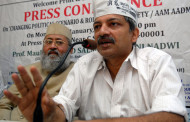
The Aam Aadmi Party today dissolved its Maharashtra unit, triggering a sharp reaction from its National Executive member Mayank Gandhi, who said the party convener and Delhi Chief Minister Arvind Kejriwal is ‘hell-bent on destroying’ the organisation by playing ‘gutter politics.
The decision, posted on AAP website, said the party’s Political Affairs Committee (PAC) has dissolved “all bodies in Maharashtra.” Reacting to the development, Gandhi, the most prominent face of AAP in Maharashtra, alleged that Kejriwal is determined to finish the party’s root in the state. “AAP people had entered politics by forming a party to clean the gutter, but unfortunately on the contrary, members got overpowered by the gutter politics,” Gandhi told PTI. He took to twitter to express his resentment and said “Beautifully functioning Maharashtra teams dissolved. Sad that politics has won!.” “Let the high command expel me from the party, but the truth is that the high command himself is hellbent to finish the party’s root in Maharashtra,” he said. Gandhi had strongly spoken against removal of founder members of AAP like Prashant Bhushan and Yogendra Yadav from the PAC in March and said he will continue to raise his voice. In a veiled reference to Kejriwal, Gandhi said, “It is now true that AAP has only one voice in the party. Whosoever, puts different voice, not matching with high command, he is kicked out.” “Two type of politics, one that works with the people on the ground and other that do chaplusi in Delhi. The second type has won. Jai ho.,” (sic) he tweeted. According to the party, the decision to disband its state body is part of its process to restructure and strengthen the unit. “In ongoing process of strengthening the organisation in various states, the PAC has decided to dissolve all bodies in Maharashtra,” it said on its website. National Secretary Pankaj Gupta will be in-charge of the state and under him a team will work on organisation building in the state. The new structure will take shape in a very short time. All party members are requested to cooperate with this team in organisation building,” it added. AAP’s Maharashtra unit president Subhash Ware was not immediately available for his comment on the development. However, party sources said the state unit has been in the grip of intense factionalism for quite some time with a section of functionaries resenting the way leaders like Prashant Bhushan and Yogendra Yadav had been forced out of the organisation by the central leadership. A state executive member, who does not want to be identified, said Kejriwal is interested only in building the party in his home turf Delhi and has no interest in helping it grow in other parts of the country. –
Like Agatha Christie’s famous whodunit, the Bihar election started with an impressive list of issues: development, susashan, jungle raj, people’s DNA, special status and economic package. But one of by one all of them dropped off, leaving just one behind: caste equations.
Every dialogue emerging from Bihar’s theatre of elections suggests that all parties have now cast jaatiwad in the lead role. On Wednesday, BJP president Amit Shah set the tone of his week-long campaign by reaffirming his party’s faith in reservation system based on castes: “Since the Constitution was drafted, the BJP has been supporting reservation. Lalu ji is saying that if the BJP comes to power here then they will remove reservation. Lalu ji is telling safed jhoot,” Shah said at Begusarai.
Just a day ago, caste was the theme of another BJP leader’s Bihar dream. “If the BJP wins the election, the CM will not be from a forward caste,” party MP and CM-aspirant Giriraj Singh said.
It is not without reason that the BJP B-listers have brought caste back in the spotlight even when Prime Minister Narendra Modi continues to talk about development. The equations in the closely-contested election are now stacked up in such a manner that minor swings on caste lines can change the outcome dramatically.
The upper caste voters are solidly behind the BJP. But they are being neutralised by the support the Mahagathbandhan is getting from Muslims, Kurmis and a sizeable portion of Yadavs. The NDA is banking also on the support of Paswans and Kushwahas, whose leaders Ram Vilas Paswan and Upendra Kushwahas are part of the alliance.
The BJP had entered the Bihar fray with its clever strategy of keeping its own vote bank intact and carving out huge chunks from that of the JD (U)-RJD-Congress alliance. With this objective in mind, it lured leaders from other communities like Pappu Yadav, Jitan Ram Manjhi and Ramkripal Yadav into its fold. The NDA appeared to be gaining initially also because of the rift within the secular front: factors like the exit of Mulayam Singh’s from the Mahagathbandhan and entry of the Left and MIM in the poll fray.
Modi’s rallies in September built the momentum further for the BJP, especially when discussions veered around development and the Rs 1.25 lakh crore package announced by the PM.
And then, caste made a comeback.
Some of the credit for making caste a major issue again in Bihar must go to the RSS chief Mohan Bhagwat. His interview to the Organiser in which the RSS chief suggested a review of the existing reservation system gave the Mahagathbandhan an opening to redraw the battle lines.
“This is a fight between backwards and forwards,” Lalu Yadav announced dramatically, daring Bhagwat to tweak the reservation system if he had any dum in his moonch.
Lalu’s plan is simple. He knows his party has no chance to make a dent in the BJP vote bank of Brahmins, Vaishyas, Baniyas, Rajputs, Bhumihars and Kayasthas, or among supporters of Ram Vilas Paswan and Upendra Kushwaha. The Mahagathbandhan can win only if the backwards, especially the politically significant Extremely Backward castes unite against the BJP and the Mahadalits remain with Nitish Kumar.
The EBCs — or the pachpaniyas, as they are known locally — are a loose coalition of castes scattered across Bihar. They are believed to be between 20 and 25 per cent of the electorate. In a deadlocked election, their support could be decisive. So, both the alliances are now vying for their votes.
At the start of the campaign, it seemed that the EBCs were tilting towards the BJP, mainly because of fear of the return of Yadavs in power, who they see as their rivals among backwards. But the OBC vs EBC narrative may have now given way to the Forward vs Backward debate.
The current direction of the political discourse, where the Mahagathbandhan is setting the caste-based agenda and the BJP is playing catch-up, suggests the equations may be changing again on the ground.
Who will win? Well, even Agatha Christie would have found it difficult to predict the outcome of this thriller.

According to a report published in a leading daily, a whooping 92 crore Indians have Aadhar card now.
Significantly, India being world’s largest democracy have 60 crore citizens with voter ID card. Compared to Aadhar card, number of people having passports and PAN card is abysmally low.
Government is trying to increase transparency by linking several social welfare schemes to Aadhar based bank accounts.Programmes like MGNREGA are now linked to Aadhar. In a landmark judgment, SC said government can’t make Aadhar mandatory, however it can be used for different government schemes.

Update: We’ve been informed that Ojha’s band was Gorkha. Listen to them here, as they’re pretty cool. Thanks to Emilio for the heads up.
We all know scientists love metal. After a long day of peering at beakers as the fluid in them changes color, anyone would need to go apeshit to some Hate Eternal, just to cool off. But though finding the heaviest of metals and naming hideous pests after Dave Mustaine is cool, rarely do metalhead scientists discover something as monumental as, say, flowing water on Mars.
But Nepalese-American grad student Lujendra “Luju” Ojha did just that. According to CNet, Ojha is one of the discoverers of recurring slope lineae, the lines of flowing salt water that were observed on Mars this week. But it’s this photo from Ojha’s website, featuring the scientist bellowing in a death metal band, that seemed to most interest the reporter interviewing him:
When asked about the photo, Ojha responded with some modesty:
“Yeah, that was an old life,” Ojha confesses with a laugh. “I was kind of in poverty with music. I wasn’t making enough money so I said screw music, let’s go to science, maybe there’s more money in it. But there isn’t money in science either.”
Aw! It’s a shame Ojha feels the need to play down his former metal glory. Then again, when you’ve made one of the most important scientific discoveries of all time, you’re probably not as concerned with people knowing how true you are.
Sadly, we can’t find any listing of a Lujendra Ojha on Encyclopedia Metallum, but if anyone knows anything about his band, let us know!
Thanks to David for the heads-up!
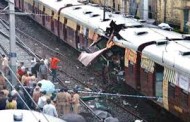
Twelve persons have been convicted for their involvement in the 2006 serial blasts in Mumbai that killed over 180 persons. The trial has been on now for the last nine years.
While initial reports said five had been convicted, reports later said that 12 of the 13 accused have been convicted while one person has been acquitted.
The accused convicted by the court are: Faisal Shaikh, Ali Bashir Khan, Mohammad Ali, Majid Shafi, Sajid Ansari, Kamal Ansari, Ethesham Siddiqui, Zameer Shaikh, Sohail Shaikh, Muzammil Shaikh, Tanvir Ansari and Naved Hussain.
The accused were convicted under the stringent Maharashtra Control of Organised Crime Act (Mcoca), special public prosecutor Raja Thakre said.
Abdul Shaikh was the only accused to be acquitted by the court, reported CNN-IBN.
“Arguments on sentencing of the accused will take place on Monday,” Thakre said.
Here’s everything you need to know about the case:
The blasts
Seven blasts in crowded Mumbai local trains took place on the evening of 11 July 2006 in which a total of 189 persons were killed. Over 820 people were injured in the blasts.
The blasts took place at Mahim and Matunga in central Mumbai and at Khar, Bandra, Jogeshwari, Mira Road and Borivali in the northern suburbs. All the blasts took place on the Western Railways line of the city’s suburban rail network.
The blasts were allegedly engineered using a mixture of RDX and ammonium nitrate. The explosive mixture was allegedly packed into seven bags which were then placed in trains leaving from Churchgate in south Mumbai for the suburbs. The bombs were planted in the first class coaches of the trains.
AFP imageAFP image
The accused and the alleged plot
The Maharashtra Anti-Terrorism Squad had arrested 13 persons for their alleged involvement in the case. The police has said that the accused were linked with terror group Lashkar-e-Taiba and banned group Students Islamic Movement of India (SIMI).
They are: Faisal Shaikh, Ali Bashir Khan, Mohammad Ali, Majid Shafi, Sajid Ansari, Kamal Ansari, Ethesham Siddiqui, Zameer Shaikh, Sohail Shaikh, Muzammil Shaikh, Tanvir Ansari, Naved Hussain and Abdul Shaikh. One of the accused, said to be a Pakistani, allegedly died in the blasts.
The police has said that the bombs were assembled at Mohammed Ali’s house by the accused, along with Pakistani nationals.
Former Mumbai police commissioner AN Roy, at the time of filing of the chargesheet, had said that there were allegedly 14 people involved in the planting of the bombs.
“They were divided into seven teams, each consisting of a Pakistani national and an Indian national. We have arrested five out of the seven Indian nationals. One out of the seven Pakistanis died at the blast site, while we have asked for the other six who are reportedly hiding in Pakistan to be externed,” Roy was quoted as saying in a Mumbai Mirror report.
All 13 have been charged under sections of the Maharashtra Control of Organised Crime Act (MCOCA), Indian Penal Code, Unlawful Activities Prevention Act, Explosives Act, Railway Act, Passport Act and Prevention of Damage to Public Property Act. They face a maximum punishment of the death penalty.
The 13 accused have been in prison for seven years already as the trial against them has proceeded.
The police has also named 15 others in the chargesheet in which Lashkar-e-Taiba’s Pakistan-based leader Azeem Cheema has been named as the prime conspirator.
Trial so far
The verdict is set to come a year after special judge YD Shinde concluded the trial. At the time he had declared that the judgement could be announced on 19 September, 2014.
The prosecuting agency, state Anti Terrorism Squad (ATS), had examined 200 witnesses in the case against 13 accused, while the defence lawyers examined a total of 40 witnesses.
The ATS has filed a chargesheet that runs into over 10,000 pages.
Special public prosecutor Raja Thakare, who appeared for the ATS in this case, said the court must be ensuring that all the evidence and arguments of both the prosecution and defence is covered in the judgment and there are no loose ends.
“During the trial, we (prosecution and defence lawyers) submit a lot of evidence and judgments in support of our arguments. All that has to be perused and considered by the judge before passing judgment. It is a huge task,” Thakare told PTI.
The controversies
The pressure cooker factor: The first controversy in the trial came thanks to a statement made well the chargesheet was filed. When announcing the arrests in the case in 2006, former police commissioner AN Roy had said that the bombs used in the blasts were packed into pressure cookers which were then planted on the trains.
However, the pressure cooker theory was later found missing in the chargesheet in the case. The police justified its absence saying that they had mentioned “household items” in the chargesheet. But at the end of the trial, the special public prosecutor told the court that pressure cookers “could have been used”. This, despite the fact, that none of shopkeepers from where the cookers were allegedly bought were examined by the prosecution during the trial.
Torture: The accused in the case have accused the police of torture in order to extract confessions. Confessions are admissible as evidence under Mcoca. Two of the accused filed an application before the court accusing the police of torture. Media outlet Gulail had released interviews with some of the accused using hidden cameras in which the Mumbai Police was accused of torture. Here’s the video:
The police has argued that the claim of torture is part of the Al-Qaeda manual on terrorism and the accused are merely following it.
The Indian Mujahideen factor: In 2008 the Mumbai police claimed to have confessions from three members of terror group Indian Mujahideen, who said they had carried out the blasts. Sadiq Shaikh, Arif Shaikh and Mohammed Saif claimed that the explosives had been procured by Indian Mujahideen chief Riyaz Bhatkal. The bombs were allegedly assembled at a house in Sewri before they were placed on trains.
Bhatkal, who was later arrested, claimed that the blasts were carried out by the group to avenge the 2002 Gujarat riots. Bhatkal allegedly claimed that explosives were brought in from Karachi, which was smuggled into India. It was then allegedly taken to Azamgarh and transported to Mumbai by two persons where the bombs were assembled. The ATS, however, stuck to its stand on the 13 accused and has not included the alleged Indian Mujahideen as accused in the case.
The call data records: The accused have claimed call data records for many of them punch holes in the police theory about the blasts. The defence has shown call data records to indicate that four of the accused were nowhere near where the police has claimed they were.

MUMBAI: The state government, in a cabinet meeting on Wednesday, decided to impose a ‘drought surcharge’ on a host of items ranging from fuel and liquor to cigarettes and jewellery to raise Rs 1,600 crore for affected farmers. The new taxes will come into effect from Wednesday midnight.
Finance minister Sudhir Mungantiwar said the new tax system will be in place for the next five months till February-end, after which the government will rationalize it.
Political experts dub it a new trend set by the BJP-led state government and fear it may continue in future too.
A surcharge of Rs 2 per litre would be levied on petrol and diesel in Mumbai. Its impact will be lower in rural areas as the local body tax (LBT) was scrapped in the remaining 27 corporations across the state on Wednesday; here, prices will rise by up to 50 paise. Sales tax on liquor, cigarettes and aerated soft drinks will be hiked by 5%, and VAT on gold, diamonds and jewellery by 0.2%.
hike in taxes, Mungantiwar sai the state has increased taxes on items such as liquor, cigarettes and aerated soft drinks that are not essential but considered a luxury.
“In the past six months, the state government has taken a decision for the welfare of the common man, especially distressed farmers. But following the hike in taxes, the government will be able to raise Rs 1,600 crore. People of Maharashtra are sensible enough to bear the hike for the sake of farmers,” said Mungantiwar.
The state had scrapped LBT for traders with less than Rs 50 crore turnover from August 1, 2015. “This had come as a relief as prices of most goods reduced. No LBT was levied on liquor, cigarettes and soft drinks. We have, therefore, decided to increase the sales tax by 5% on these items. After five months, during the budget session, we will rationalize the tax system and come up with a long-term policy on the Goods and Services Tax (GST),” Mungantiwar added.
Asked whether it was the only option left for the government, he said, “In the past six months, people had benefited from withdrawal of value-added tax on petrol as prices fell by Rs 3.41. Petrol prices later dropped further by Rs 2.11 following the international crude crisis. People have gained over Rs 1,000 crore from this reduction. Now, since the state budget is overburdened, we had no other option left but to go for a tax hike.”
The finance minister said the state had to bear a monthly revenue loss of Rs 300 crore per month due to a reduction in fuel prices. “Even after increasing the petrol prices, the rate of tax in Maharashtra—at 27%—is lower than in a few other states such as Andhra Pradesh (39.56%), Madhya Pradesh (32.3%), Rajasthan (32.68%), Punjab (36.38%), Karnataka (32.30%) and Kerala (34.24%). At the same time, LBT on petrol and diesel has been scrapped across the state.”
The state, he said, has to bear a burden of more than Rs 3,330 crore. This includes Rs 1,072 crore for loss of crop, Rs 421 crore compensation to farmers hit by unseasonal rain, Rs 20 crore for repair of their homes, Rs 690 crore for crop insurance, Rs 60 crore for interest waiver on farmers’ loans, Rs 117 crore for restructuring of loans, and Rs 950 crore for distribution of wheat and rice at Rs 2 and Rs 3 in 14 districts of drought-affected areas of Marathawada and Vidarbha under the food security bill scheme.
Meanwhile, more than 40 petrol and diesel dealers and pump owners in Navi Mumbai said they are awaiting further directions from the state government on scrapping of LBT.
“At present, there is some confusion over the fuel rates, as the Rs 2 surcharge was announced today. However, earlier this month, the state government did announce that the LBT charges would go,” said a Vashi-based dealer. B Rasal of an Airoli-based petrol pump said, “If the LBT is removed, then the prices will fall by 3.5%, which is significant. However, we are awaiting written orders.”
Currently, rates of petrol and diesel at Navi Mumbai are Rs 67.61 per litre and Rs 52.58. So, if the LBT factor is removed, the rates will fall to Rs 65.24 per litre and Rs 50.73 per litre, respectively.

MUMBAI: The city witnessed its second hottest September day in a decade on Tuesday with the IMD’s Santacruz observatory recording the maximum temperature at 36.2 degrees Celsius. The all-time record was in 2014 when the maximum temperature recorded on September 30 was 37 degrees Celsius.
But this cannot be termed as October heat since officially the monsoon has not yet withdrawn from the city . Residents said they have been feeling uneasy for the past few days with the maximum temperature rising. On Monday , the maximum temperatures recorded in Colaba and Santacruz were 31.8 degrees and 34.8 degrees respectively . But on Tuesday , the maximum witnessed a rise. It was 32.9 degrees in Colaba, which is 1.7 degrees above normal, and it was 36.2 degrees, which is 4.7 degrees above normal in Santacruz.
V K Rajeev of the Regional Meteorological Department said, “The monsoon has withdrawn in Rajasthan and parts of Gujarat, but not yet in Mumbai. The heat the city is witnessing is due to the absence of rain for a long time, and winds which are coming from the land, instead of the sea. The lack of moisture is another reason for the rise in temperature.The effects of the October heat have started to be felt.”
Mumbai has not witnessed significant rain in September.Humidity levels in Colaba were 76% and in Santacruz 62% on Tuesday . The IMD has forecast cloudy skies for the next 24 hours.
King’s Circle resident Nikhil Desai said it had been getting uncomfortably hot for two days. “Suddenly , there is a need to use the air-conditioner at home during the daytime too. But citizens are responsible for this climate change by cutting trees, causing emission of pollutants, wherein even before the monsoon has withdrawn, one is witnessing tremendous heat,” said Desai, adding that the transition from the monsoon to post-monsoon season can lead to one feeling uncomfortable as the body is not used to such high temperatures.
The monsoon this year has not been very strong throughout the four months. The rainfall recorded this year by the Colaba observatory was 1,604.8mm and in Santacruz 1,823.2mm.The deficient rainfall in the case of Colaba is 444.7mm and in Santacruz it is -403mm.

A Pakistani-origin man in Germany admitted to killing his daughter after he found out that she had shoplifted condoms from a store to have sex with her German boyfriend.
Abdullah Khan strangled his 19-year-old daughter after she continued seeing her German boyfriend whom Khan did not approve of.
The father and his wife said that their daughter Lareeb had started staying away from home for several nights and had stopped wearing her hijab (headscarf). One day they received a letter from the police saying Lareeb was caught trying to steal condoms, it is then when they decided to act on the matter.
Khan admitted to strangling his daughter with his hands. After she was dead, Khan’s wife Shazia dressed her in her clothes and then they put her in a wheelchair and took her to a secluded embankment in Germany and tipped her off it, according to reports.
The father said that he killed her because she brought ‘dishonour’ to the family by getting involved with a boy he did not approve of. Khan and his wife are originally from Pakistan and are currently on trial for murder at the State Court in Darmstadt.














Recent Comments