






People in large numbers in Pakistan-occupied Kashmir (PoK) are protesting against the Pakistani establishment and demanding freedom, in a video available with a leading news channel.
The video which is exclusively available with CNN-IBN shows people protesting in several areas including Muzaffarabad, Gilgit and Kotli, with the protesters shouting pro-india slogans.
ome protestors have also said on camera that Pakistan has no right to use force on them and even that India is better place to live. In the video, they are also heard demanding jobs and other rights.
The video shows that anti-Pakistan protests are on the rise in PoK and the Pakistani force is using brutal force to shut their voices.
The report said that the protest can’t be called sporadic, as the swelling crowd, and the police and Army presence to reign them in is a clear indicator that these agitations are not a one-off but a force to reckon with.
Pakistan recently cancelled the NSA-level talks with India claiming that no peace process can be initiated without Kashmir being discussed.
In comments likely to enhance his progressive reputation, Pope Francis has written a long, open letter to the founder of La Repubblica newspaper, Eugenio Scalfari, stating that non-believers would be forgiven by God if they followed their consciences.
Responding to a list of questions published in the paper by Mr Scalfari, who is not a Roman Catholic, Francis wrote: “You ask me if the God of the Christians forgives those who don’t believe and who don’t seek the faith. I start by saying – and this is the fundamental thing – that God’s mercy has no limits if you go to him with a sincere and contrite heart. The issue for those who do not believe in God is to obey their conscience.
Robert Mickens, the Vatican correspondent for the Catholic journal The Tablet, said the pontiff’s comments were further evidence of his attempts to shake off the Catholic Church’s fusty image, reinforced by his extremely conservative predecessor Benedict XVI. “Francis is a still a conservative,” said Mr Mickens. “But what this is all about is him seeking to have a more meaningful dialogue with the world.”
“Sin, even for those who have no faith, exists when people disobey their conscience.”
In a welcoming response to the letter, Mr Scalfari said the Pope’s comments were “further evidence of his ability and desire to overcome barriers in dialogue with all”.
In July, Francis signalled a more progressive attitude on sexuality, asking: “If someone is gay and is looking for the Lord, who am I to judge him?”
In a welcoming response to the letter, Mr Scalfari said the Pope’s comments were “further evidence of his ability and desire to overcome barriers in dialogue with all”.
In July, Francis signalled a more progressive attitude on sexuality, asking: “If someone is gay and is looking for the Lord, who am I to judge him?”

Prime Minister Narendra Modi on Sunday addressed the Indian diaspora in San Jose, California and said that there had been a change in the mindset of the people across the world as they were now saying that the 21st century belongs to India.
Here are top quotes from PM Modi’s speech
1. Your fingers created magic on the keyboard and the computer and this gave India a new identity. Your skill and commitment is wonderful.
2. I have faith in the nation because India is youthful. 65% of our population is under the age of 35.
3. We are harbingers of peace. We come from the land of Gandhi & Buddha.
4. Terrorism is terrorism. There is no good terrorism and bad terrorism.
. UN still hasn’t been able to define terrorism. If it will take so much time to define, how will we tackle it?
6. From Upanishads we have moved to Upgraha. India succeeded in its Mars Mission in the very first attempt.
7. Today, the world looks at India with hope and confidence.
8. I am trying my best to live up to everyone’s expectations.
9. Brain drain can become brain gain, did anyone ever think about this. That’s why I have a different outlook towards this. I see it as ‘Brain Deposit’, out to look for opportunities. When that comes this brain will give back to India with interests.
10. Am I working? Am I working for nation? Am I fulfilling promises?
11. Who brought this change? This change was not by brought by Modi, but 125 crore Indians.
12. We are moving ahead with ‘JAM of all’, where ‘J’ stands for Jandhan account, ‘A’ for Aadhar Card and ‘M’ for Mobile governance.
TII students have called off their relay hunger strike, although the strike in the elite institution will continue. Students are protesting the appointment of Gajendra Chauhan as chief of FTII.
The agitating FTII students on Saturday had said they would withdraw their hunger strike to pave way for a dialogue with the government if the I&B Ministry confirm a date for talks to resolve their demands including removal of actor Gajendra Chauhan from the institute’s chairmanship. Joint Secretary of I&B Ministry has now replied to the letter sent by students. A meeting has been fixed on 29th September at Films division, Mumbai. The three students have called off their hunger strike, out of which Himanshu had completed 400 hours of his strike.
The FTII students’ Association (FSA) leader Vikas Urs said on Saturday, “We have responded to the Ministry’s letter dated September 24, in which it requested us to withdraw (107 day) strike and hunger strike (17 day) to create a conducive environment for a dialogue. We have offered to withdraw our ongoing hunger strike if the government confirms a date and venue for the proposed meeting.” He said the FSA had always kept the channels of communication with the government open and expressed its willingness to have a dialogue to resolve the issues raised by them, including setting up of a transparent mechanism for appointments on the Film and Television Institute of India (FTII) governing body.
The students had been on a relay hunger strike in batches of three as part of intensification of their agitation.
Prime Minister Narendra Modi spoke at the Silicon Valley during his second visit to the US. This marked the first time an Indian prime minister has visited the IT and technology hub in thirty years.
Modi met with the who’s who of the technology world, including Google’s Sundar Pichai, Microsoft’s Satya Nadella, Apple’s Tim Cook, Qualcomm’s Paul Jacobs, Adobe’s Shantanu Narayen.
Here’s are a few quotes from Modi’s speech at Silicon Valley that show just how in-sync he is with new technology and the times.
And, I know to achieve the vision of Digital India, the government must also start thinking a bit like you.
1) I have met many of you in Delhi and New York, and on Facebook, Twitter and Instagram. These are the new neighbourhoods of our new world.
2) Google today has made teachers less awe-inspiring and grandparents more idle. Twitter has turned everyone into a reporter.
3) The status that now matters is not whether you are awake or asleep, but whether you are online or offline.
4) The most fundamental debate for our youth is the choice between Android, iOS or Windows.
5) From computing to communication, entertainment to education, from printing documents to printing products, and, now to internet of things, it’s been a long journey in a short time.
6) From cleaner energy to better healthcare and safer transport, everything is converging around the work you do.
7) In Africa, it’s helping people transfer money on phone. It has made reaching small island states no longer a journey of adventure, but a convenient click of a mouse. A young professional in San Francisco can Skype daily to comfort her sick grandmother in India.
8) The pace at which people are taking to digital technology defies our stereotypes of age, education, language and income.
9) Customers, more than creators, are defining the use of a product.
10) I see technology as a means to empower and as a tool that bridges the distance between hope and opportunity. Social media is reducing social barriers. It connects people on the strength of human values, not identities.
11) Technology is forcing governments to deal with massive volume of data and generate responses, not in 24 hours but in 24 minutes.
12) I spoke of E-Governance as a foundation of better governance – efficient, economical and effective. I now speak of M-Governance or mobile governance. That is the way to go in a country with one billion cell phones and use of smart phones growing at high double digit rates.
13) Building I-ways are as important as highways.
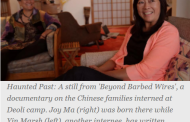
As India celebrates 50 years of the 1965 war this month, the Indian Chinese who were hauled off to Rajasthan’s Deoli camp remember the ordeal of another war
“Meresss awalon kaaaa jawab do…!” Ying Sheng Wong, 70, is doing a pretty good job of hollering that peremptory refrain from the hit film Maine Pyar Kiya in his somewhat disjointed Hindi, and the Indian Chinese gathering around him in Toronto crowds erupt in laughter and applause. But the reason they have banded together is not at all cheery.
They call themselves the Deoliwallahs, 60 men and women with some really tragic stories to tell about a tumultuous phase of Indian history. The year was 1962, and between October and November, India and China were caught in a short but intense war. So acrid was the anti-Chinese sentiment in India that a whole lot of perfectly innocent Indian Chinese, mostly in the Dooars and Assam, were surprised by its savagery. Some had married local women, and most spoke only local languages. They were more Indian than Chinese with businesses and lives firmly entrenched here. Suddenly, they became potential “traitors”. Soon, under a new ordinance, the midnight knocks began to be heard across the homes of Indian Chinese, especially those living in Darjeeling, Tinsukhia and Shillong. Entire families were bundled into trucks and transported to railways stations where began a seven-eight day train journey to an abandoned PoW camp at Deoli, Rajasthan. In some cases, the families were separated: the men deported to China, mother and children stuck in Deoli, the grandparents elsewhere, say accounts.
The war wrapped up in a month but many of those interned remained in the jail for up to five years. When the families returned, they found their homes and businesses confiscated and plundered. Some of them tried to cobble their lives back together but many left for the West, mostly Canada and the US. Now, 53 years later, these survivors and their families are trying to find some answers, and perhaps an apology for that painful episode that turned their world upside down.
On October 6, at Delhi’s India International Centre, some of these Deoliwallahs will be participating in an event recalling the events of 1962. The dramatic story of the Deoli internment and the suffering it caused has been surfacing in many forms in recent years. The survivors have formed a very active and vocal Association of India Deoli Camp Internees 1962 (AIDCI). Earlier this year, Beyond Barbed Wires: A Distant Dawn, a documentary by Indian photojournalist Rafeeq Ellias that tells the story of the internees, was released.
Another Deoliwallah, Yin Marsh, 66, an artist from California, wrote Doing Time with Nehru two years ago on her life in Darjeeling as a child before the war of 1962 and of her family’s internment at Deoli. Joy Ma, another participant at the IIC event, is writing her memoirs. And before all that, five years ago, there was ‘Makam’, the Assamese bestseller by Rita Chowdhury on the Indian Chinese community in Tinsukhia which saw many tragedies in the wake of the war.
It may all seem very distant in history, but the unfairness of being made victims of a war that wasn’t theirs still rankles. “I was just six but what I do remember is the look on my parents’ faces when we were led into the train. It was a look of disbelief, hurt, grief, fear. I didn’t know what it meant then but today, it hits me really hard,” says Michael Cheng, 59, who now runs a restaurant in North Carolina.
Cheng’s father had migrated to Darjeeling from Guangdong and set up a chain of flourishing businesses – a shoe store, a restaurant, a lodge. He was big on the horse racing circuit and owned a horse. All that came to an end for the family of 13 in 1962. When the Cheng family was released, they were simply dropped off at Chinatown in Kolkata and ordered not to return to Darjeeling. Kind relatives took the family in and Cheng recalls sleeping on an ironing board. Slowly the Chengs put their shoe business together, and by the ’70s managed to return to Darjeeling. But it was never the same again, and the Chengs migrated to the West. “My brother who still misses India often says ‘I wish this war never happened’,” says Cheng.
Wong was much older when he was taken to the camp along his six siblings, just a day after the war ended. At 17, he recalls the humiliation of the three years at the camp, the heat, the terrible food and the aftermath. His father, who came from the Wangchu in Canton, was running Attun and Sons, a popular shoe shop at GS Road in Shillong. He died a painful and mysterious death at the camp at age 48.
“After we were released, we got Rs 1.50 every day till we reached Shillong to feed ourselves and we would only spend 50 paise on food.” The shoe shop reappeared as Latest Footwear in Burra Bazar but the fear of fresh hostilities never went away and the family moved to Canada.
Journalist Joy Ma, who was actually born at the Deoli camp, says the saddest aspect of the events of 1962 was how well assimilated the Chinese community in India was. “Even today, at the family shrine, some people keep paan and beedi as offerings to ancestors like they did back home in India. They were part of local communities, married to local Indian or Nepalese women; many hadn’t even set foot in China,” she says.
Her family were prosperous furniture contractors in the Dooars, and the ignominy of having to be dependent for every little thing at the camp hurt deeply. “People were told it was a short trip and they would return soon so they didn’t take much along. The camp was not ready for so many. When they first arrived, some had put out their shirts for the dal to be ladled into,” Ma says.
The survivors and their families, still trying to make sense of the events that tore their lives apart, are hoping for a small memorial at Deoli to make sure that the episode is not forgotten.
Courtesy- Darjeeling Times
![Online [Free Watch] Full Movie Close Encounters of the Third Kind (1977)](http://www.realnewsofindia.com/wp-content/uploads/2015/09/379740-nepal-madhesi-190x122.jpg)

Close Encounters of the Third Kind (1977)
| Release | : | 1977-11-16 |
| Country | : | United States of America |
| Language | : | हिन्दी,English,Français,Español |
| Runtime | : | 135 |
| Genre | : | Science Fiction,Drama |

Synopsis
Watch Close Encounters of the Third Kind Full Movie Online Free. Movie ‘Close Encounters of the Third Kind’ was released in 1977-11-16 in genre Science Fiction,Drama.
After an encounter with UFOs, a line worker feels undeniably drawn to an isolated area in the wilderness where something spectacular is about to happen.
Streaming Movie Close Encounters of the Third Kind
(1977) Online
Incoming search term :
Watch Close Encounters of the Third Kind Full Movie Online Free Streaming In HD Quality, watch full Close Encounters of the Third Kind movie, Watch Close Encounters of the Third Kind 1977
Online Free Viooz, Watch Close Encounters of the Third Kind 1977 Online Free, Watch Close Encounters of the Third Kind 1977 Online Putlocker, film Close Encounters of the Third Kind
online, Streaming Close Encounters of the Third Kind 1977 For Free Online, streaming movie Close Encounters of the Third Kind 1977, Close Encounters of the Third Kind film trailer,
Close Encounters of the Third Kind movie trailer, live streaming film Close Encounters of the Third Kind 1977, Streaming Close Encounters of the Third Kind 1977 Online Free Megashare,
movie Close Encounters of the Third Kind streaming, Watch Close Encounters of the Third Kind 1977 For Free online, film Close Encounters of the Third Kind 1977 online streaming,
download Close Encounters of the Third Kind 1977 movie now, movie Close Encounters of the Third Kind 1977 download, watch full movie Close Encounters of the Third Kind 1977, trailer
film Close Encounters of the Third Kind 1977, Watch Close Encounters of the Third Kind 1977 Online 123movies, Watch Close Encounters of the Third Kind 1977 Online Free 123movie, Watch
Close Encounters of the Third Kind 1977 Online Free Putlocker, movie Close Encounters of the Third Kind 1977 trailer, Watch Close Encounters of the Third Kind 1977 Online Free
netflix, watch Close Encounters of the Third Kind film online now, Close Encounters of the Third Kind 1977 movie streaming, Close Encounters of the Third Kind 1977 Watch Online, Watch
Close Encounters of the Third Kind 1977 Online 123movie, download movie Close Encounters of the Third Kind, Watch Close Encounters of the Third Kind 1977 Online Free megashare, watch
Close Encounters of the Third Kind movie now, Watch Close Encounters of the Third Kind 1977 Online Free hulu, Watch Close Encounters of the Third Kind 1977 Online Viooz, live streaming
movie Close Encounters of the Third Kind 1977, Close Encounters of the Third Kind live streaming film online, movie Close Encounters of the Third Kind 1977, Watch Close Encounters of the Third Kind 1977 Online
Megashare.

Of course the Saudi Diplomat who mercilessly raped two Nepali Women along with his friends sneaked out of the country like fugitive this Prince could not do the same. After all they say it is the U.S.
A Saudi prince has been arrested on charges of trying to force a worker at a Beverly Hills estate to perform oral sex, Los Angeles police said on Thursday. Majed Abdulaziz Al-Saud, 28, was arrested on Wednesday and was released on $300,000 bond the next day, according to police and online jail records. The Los Angeles Police Department’s special consul division said the prince does not have diplomatic immunity, according to the Los Angeles Times and KCBS-TV.
The Los Angeles Times said police descended on the massive estate after a neighbour saw a bleeding woman screaming for help as she tried to scale the property’s surrounding wall on Wednesday. The $37 million home, in one of the most exclusive enclaves in the world, has been rented for weeks at a time by foreign nationals over the past year, the neighbour told the Times. The prince is expected to be in court Oct. 19, court records show. Attempts to reach him by telephone were unsuccessful and his attorney was not immediately known. A call to the Saudi embassy was not immediately returned.
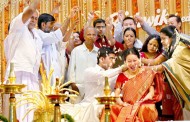
Stated below are rules to be followed by Hindus according to Sanatan Santha which is guided by the Hindu rituals.
The Sanatan Sanstha, which is accused of the murder of rationalist Govind Pansare, has laid out explicit rules and guidelines which governs each aspect of a believing Hindu’s life. From what clothes one should wear, to how one should bathe and defecate, to the right way of urinating, the Sanatan Sanstha has all the answers.
1) Urinating: The Sanatan Sanstha states on its website that Hindus must not urinate from a standing position. This is because because it “causes a flow of accumulated Raja-Tama predominant energy towards the feet. As the negative energy gets concentrated there, the distressing vibrations emitting from Hell can very quickly enter the body through the feet.” It also “activates the flow of black energy associated with the ground, charging the entire body of the individual with Raja-Tama components”.
2) Defecating: While defecating, one must not use toilet paper as it does not ‘destroy the Raja-Tama particles’ in the feaces. This is because toilet paper is not ‘sattvik’.
The rules for urinating and defecating apparently are scientific. The Sanstha claims that a French scientist has come to this conclusion, though it does not state his name.
3) Wearing clothes: Apparently, clothes are not meant only to protect us from the weather or to hide certain organs. The Sanatan Sanstha claims on its website that “Wearing clothes amounts to taking the support of Maya to attain a level of Brahman-realized state,”.
It further goes on say that, “Clothes worn by men and women as prescribed in Hindu Dharma are designed by Deities and are those that manifest the Shiva and Shakti Principles.” Using this definition, only a nine-yard saree is perfectly ‘sattvik’ and all other forms of clothes are less so. For men, the dhoti is prescribed. Sanstha claims that this knowledge comes from ‘God’.
4) Washing clothes: The Sanstha has a full article on wearing washed and unwashed clothes. It says, “In case of washed used clothes there is sweating due to the Tej waves arising from the cloth. An unwashed used garment will give an experience of heat in the body due to gross appearing sagun. A higher proportion of dirt in unwashed clothes causes greater hindrance to the flow of sattvik waves that are attracted towards it and as a result, the extent of black covering on it is higher.”.
Silk clothes are better than cotton clothes, but the best ones are made from the the bark of a tree. Some unknown person is cited as the authority for this knowledge, which also ‘comes from God’.
5) Religious marriage v/s registered marriage: The Sanstha argues that a religious marriage is more spiritual than a registered marriage. It creates a glow on the faces of those marrying. The religious rituals increase ‘sattvikta’ in the groom and bride’s bodies, and reduce the impact of ‘Raja-Tama vibrations’.
Not to be outdone by fairness cream advertisements, the Sanstha’s website then shows a picture of a woman before and after her marriage. While Photoshop may be suspected, the picture on the right is regarded as happier and more sattvik.
Moreover, we are told how to prepare a wedding invitation card. Apparently, none of the content should be in English, and the art work should be ‘sattvik’. A full picture of Ganesha must be present in a seated position. Some propaganda matter about spreading ‘Hindu Dharma’ is a necessity.
6) Bathing: The Sanathan Sanstha informs us how we should bathe, in what position, and with what utensils.
Incredibly, one cannot be nude in the privacy of one’s own bathroom while bathing Sanatan-style. One must wear undergarments. One must sit in a cross-legged posture, and chant some shlokas (prayers), which are fortunately not defined.
Only a brass tumbler should be used for bathing. “Clean all nine orifices of the body,” is the Sanstha directive.
The Sanstha provides a ‘scientific’ reason for sitting in a cross-legged posture while bathing. When sitting in a cross-legged posture, the body shape becomes triangular, thus it becoming possible for a protective sheath to be easily generated during a bath,” it says.
Interestingly, in December 2014, the Sanatan Sanstha had blasted the RSS for ‘defaming’ the organisation. Apparently, two families who were members of RSS did not allow their daughters to join the Sanatan Sanstha. This inflamed passions among the Sanstha faithful who condemned the RSS.
A few days ago, it had been reported in the media that the Sanstha had published guidelines on what hair oil to use, and the length of hair that men and women must keep.
The Sanathan Sanstha website focuses exclusively on such bizarrely detailed guidelines for the most mundane, every day things people do in life.
If you are a Sanstha fan, more power to you. If not, you may be doomed for all eternity.
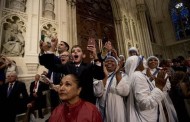
Pope Francis turned from the halls of power to the hearth on Saturday, leaving behind Congress and the United Nations on his six-day United States trip for Philadelphia and events marking the World Meeting of Families — the original reason for the timing of his visit.
The third and final leg of the pontiff’s first visit to this country will feature the week’s biggest events — organizers expect perhaps one million people each at a celebration on Saturday evening at a site along the Benjamin Franklin Parkway and at a Mass there on Sunday afternoon. Francis will most likely speak about the church’s teachings on the value of family life.
Continue reading the main story
Related Coverage
Old St. Joseph’s Church in Philadelphia, which embraces immigrants, is looking forward to the pope’s visit to the city.
Next Stop: Immigration Advocates in Philadelphia See Affirmation in Pope’s VisitSEPT. 25, 2015
Francis in America: Pope Francis, in New York, Takes On Extremism and InequalitySEPT. 25, 2015
The Spanish Mass at St. Simon Stock Church in the Bronx, which now includes the parish of the former St. Joseph’s Church. They merged this summer when St. Joseph’s was closed.
Francis in America: In the Bronx, ‘Poor Church’ Is More Than a Papal PhraseSEPT. 25, 2015
The first stop on Saturday is the Cathedral Basilica of Saints Peter and Paul, the 151-year-old seat of the Philadelphia archdiocese, to celebrate Mass for bishops and priests. Later, he will meet with seminarians at St. Charles Borromeo Seminary, and in the afternoon he will visit with Hispanic-Americans and immigrants at Independence Mall, where he is expected to speak about religious liberty and immigrants from a lectern used by Abraham Lincoln.
Photo
A banner bearing the image of Pope Francis hung outside the Pennsylvania Convention Center in Philadelphia on Friday. Credit David Goldman/Associated Press
On Sunday morning, Francis will meet with bishops attending the families meeting and will call on detainees, their families and staff members at Curran-Fromhold prison, where inmates have made him a chair, before the big afternoon Mass.
Jumbotrons flanking the parkway and placed in spots downtown will allow viewers to watch Francis live all weekend, according to planners.
He is scheduled to leave for the Vatican at 8 p.m., seen off by a delegation including Vice President Joseph R. Biden Jr. and his wife, Dr. Jill Biden; Gov. Tom Wolf of Pennsylvania; and Mayor Michael A. Nutter of Philadelphia.
Pope Francis’ Visit to U.S.
Latest news and features on Pope Francis’ visit to Washington, New York and Philadelphia this week.
New Yorkers Fast, Jostle, Wait and Cook as Pope Visits SEP 26
A Day Laborer, on His Way to See Pope Francis SEP 25
In a Void Created by Religious Violence, Pope Francis Shares Prayers for Peace SEP 25
Pope Francis’ Homily During Mass at Madison Square Garden SEP 25
Rib-Crushing Throngs Press Toward Central Park to See Pope Francis SEP 25
So far on the visit, Francis’ 10th foreign trip, the pontiff’s main themes have been protecting the environment, cherishing immigrants and appealing for dialogue, with forays into other close-to-the heart themes.
Continue reading the main story
Francis in America
But family issues have been forcing themselves to the top of the agenda at the Vatican, and the pope’s speeches capping off the families meeting here will be listened to closely for what they may say about how the church will address same-sex unions and whether it will change its rules regarding divorced and remarried Catholics.
Major changes are not expected, though in recent months, Francis has eased the path to annulments and had once said, “Who am I to judge?” regarding gay priests.
Within a week of his return, the bishops of the church will convene a major meeting, or synod, on the family at the Vatican.
The pope touched on family issues this week, but focused primarily on more secular issues, including climate change, inequality and immigration.
Continue reading the main story
Photographs: Pope Francis’ Visit to America, in Pictures
He has also as the pope of the periphery — his word for the marginalized peoples of the earth — made a point of spending time with the homeless in Washington and students in Harlem.
Philadelphia has been preparing for Francis for months. A central part of the city is in a security stranglehold. Law enforcement agencies set up 19 checkpoints overnight into Friday to create a secure zone around the parkway and seven more at Independence Mall, near the Delaware River. Passers-by must go through a magnetometer and have their bags inspected.
Streets have been closed and public transit curtailed. A stretch of Interstate 76, a major artery from the city’s northern and western suburbs, was supposed to close Friday evening. Interstate 676, which runs east-to-west through the heart of the city, was also set for closure there in both directions, while the Ben Franklin Bridge between Philadelphia and Camden, N.J., was to be closed until noon Monday. And do not think of using any exits in central Philadelphia on Interstate 95. They are closed.
The Southeastern Pennsylvania Transportation Authority, called Septa, limited service and required some passengers to buy special Papal Passes in advance. Suburban Station, one of three commuter-rail stops in central Philadelphia, was closed for the weekend. Schools, courts and city government offices were shut down for varying time periods starting Wednesday.
Still, many residents in this city of 1.6 million showed the same forbearance that New Yorkers displayed during the pope’s time there from Wednesday to Friday.
“We need this,” said Irene Perry, 59 and a Catholic, who was sitting Friday on her stoop watching people pass through security near the Benjamin Franklin Parkway. “We need help. We have homeless, and people without jobs, and I think it’s a beautiful thing that Pope Francis is coming, and he’s going to bless all of us. We need peace in the world.”
Brad Guigar, 47, a resident of the Fairmount section next to the parkway, said he accepted the inconveniences because of what he sees as the pope’s compelling message.
“This is has been something that everybody has had to change their lives for,” said Mr. Guigar, a cartoonist. “If we’ve got to not take Septa for a day in order for him to come in and talk about important things, then I’m willing to kind of shrug it off.”
Pope John Paul II started the triennial World Meeting of Families in 1994. This is the first time it has been held in the United States. Some 18,000 people from more than 100 countries attended the Vatican-sponsored event, a spokesman said. Six families from Australia, Congo, Cuba, France, Syria and Vietnam are expected to attend the families festival event Saturday evening in a group of guests that includes a musical lineup with Andrea Bocelli, Juanes, the Fray, the Philadelphia Orchestra, the comedian Jim Gaffigan and Aretha Franklin.
Mark Wahlberg is the host.
“His humility and his concern with people, how he refers to himself as the son of an immigrant — I’m most impressed with that,” Ms. Franklin said.














Recent Comments