

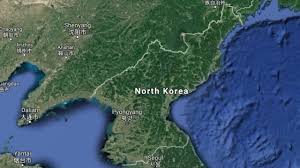
Flooding following heavy rain has killed 60 people and left over 44,000 homeless in North Korea, the United Nations said today, after the country reported that a northeastern river suffered its worst-ever flood.
Pyongyang said the Tumen river, which partially marks the border with China and Russia, experienced the biggest flood ever recorded due to a rainstorm that began four days earlier.
Nearby areas including Musan and Hoeryong were hard hit, with 60 dead and five percent of the population homeless, the UN Office for the Coordination of Humanitarian Affairs said in a statement.
It cited data from the North’s government.
“Communication with and access to affected areas remains a challenge… immediate needs have been identified as emergency shelter, food, medication, water and sanitary items,” it said.
Nearly 9,000 buildings were destroyed or damaged with 10,000 hectares (24,711 acres) of farmland flooded, it said, adding joint relief efforts involving the UN and the North were underway.
The North’s state media said Friday that 15 people were missing after over 17,000 houses were destroyed or damaged.
The impoverished nation is vulnerable to natural disasters, especially floods. At least 169 were killed by a massive rainstorm in the summer of 2012.
Its territory is largely composed of mountains and hills that have long been deforested for fuel or turned into terraced rice fields. This allows rainwater to flow downhill unchecked.
A series of floods and droughts was partially responsible for a famine that killed hundreds of thousands between 1994-98, with economic mismanagement and the loss of Soviet support exacerbating the situation.
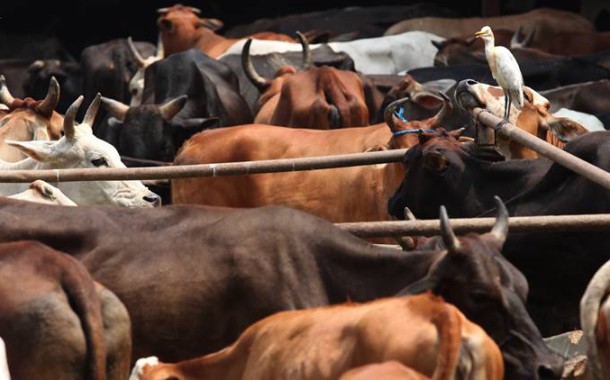
A Delhi court has refused to return a man his cattle, caught loaded in a truck, while observing that the animals were being transported for being slaughtered in “a very cruel and inhumane manner”.
The court, while dismissing Rajasthan native Jagdish Banjara’s plea for release of 25 buffaloes and calves of which eight had died, directed that the animals be kept in care and protection of Sanjay Gandhi Animal Care Centre.
“Taking into consideration entire facts and circumstances wherein it has come up that the animals were transported for being slaughtered in a very cruel and inhumane manner, the previous involvement of the same vehicle, it is possible that the animals might be subjected to more cruelty and suffering in contravention of the provisions of Prevention of Cruelty to Animals Act, 1960…the revision is dismissed.
“The animals, however, be kept in the care and protection of Sanjay Gandhi Animal Care Centre which is a recognised animal care centre cum pinjrapole working as an animal welfare and rescue facility for sick, injured and rescued animals so long as the matter is under trial,” Additional Sessions Judge Sudesh Kumar said. Pinjrapoles are home to frail and abandoned cattle.
According to the police, Banjara was caught with a truck loaded with 25 buffaloes and calves on June 22 on the complaint of an officer from Wildlife Crime and Cruelty Cell.
He was booked for offences under the Prevention of Cruelty to Animals Act 1960 and provisions of the IPC and the case is under investigation, the police said.
On July 1, the application of Banjara for the release of the animals was dismissed by a magisterial court and a revision plea was filed by him before sessions court.PTI
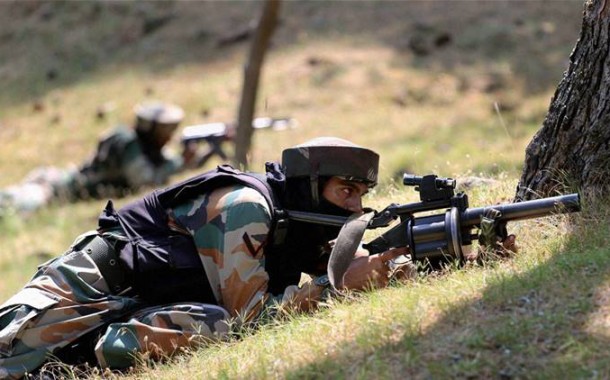
Terrorists and insurgents are getting “public support” in some parts of the country and unless this is stopped, India will continue to get hit by acts of terrorism, a report prepared by the elite counter-terror force NSG has said.
The analytical report on recent bombing incidents in the country, compiled with data from all states for the period between April and June this year, also raised concern over the possible leakage and use of ordnance factory-made explosives by terror outfits.
“Analysis of the data by the NBDC shows public was the prime target of the terrorists/militants/insurgents. Public support to terrorists/insurgents continues in some parts of the nation.
“Until and unless the public support to anti-national elements stops, the acts of terrorism will continue. Sincere efforts are required to mitigate the IED menace. A ‘Whole of Nation’ effort is the way ahead to keep the citizens of the country safe,” the report, accessed by PTI, said.
While the report did not elaborate as to how public support was rendered to ultras, it is understood that police forces and other agencies who report these incidents to the National Bomb Data Centre (NBDC) also share inputs with regard to links detected between the locals and perpetrators of such blasts.
The NBDC of the National Security Guard (NSG) is based at its garrison in Manesar near here and acts as the national repository for collection and analyses of all types of bombing incidents and attacks in the country.
Analyses of the incidents of IED recovery/blasts for the second quarter of this year, it added, reveal “in most of the incidents, explosive ordnance like grenades and other forms of explosives which are made in ordnance factories were used by terrorists, militants and insurgents of Jammu and Kashmir and North East.”
“In some incidents, Chinese made grenades were also used by militants of Jammu and Kashmir,” the report said.
It said a total of 93 blast incidents were reported in the second quarter of this year as compared to 92 last year, while 39 people were killed as compared to 60 people last year and 185 injured in comparison to 206 last year.
“There was 1 per cent increase in number of blast incidents during the second quarter of 2016 vis-a-vis second quarter of 2015. There was 16 per cent decrease in the number of casualties which took place in blast incidents in the second quarter of 2016 vis-a-vis same period last year,” it said.
Agitated farmers and activists belonging to pro-Kannada outfits today blocked Bengaluru-Mysuru Highway as protests intensified in the wake of the Supreme Court directive to the state to release Cauvery water to Tamil Nadu.
Mandya district, the nucleus of Cauvery politics, saw a bandh with protesters holding road blockades and dharnas at several places, as hundreds of security personnel, including Central forces, were deployed in the Cauvery belt to maintain law and order.
Prohibitory orders have been clamped around Krishnarajasagar Dam and entry of visitors to it prohibited till September nine, as the Cauvery row hotted up after the Supreme Court direction to Karnataka to release 15,000 cusecs of water to Tamil Nadu for the next 10 days to address the plight of the farmers there.
Protesters also mobbed and ransacked several government offices in Mandya forcing their shut down, while attendance at government offices remained thin, police said.
The Supreme Court’s direction yesterday triggered an immediate backlash with the farmers’ body spearheading the stir, calling for a bandh today in Mandya district.
Shops, hotels and other commercial establishments and theatres and hotels remained shut and schools and colleges declared a holiday in the district where state run and private buses are also not plying.
Protests are also being held in Mysuru and Hassan districts, fed by the Cauvery, demanding that Karnataka should not release water.
Venting their anger, protesters burnt effigy of Tamil Nadu Chief Minister J Jayalalithaa at several places.
Chief Minister Siddaramaiah, who is holding a meeting of senior Ministers, legal experts and officials, has also invited legislature floor leaders and MPs later today to discuss the further course of action. .
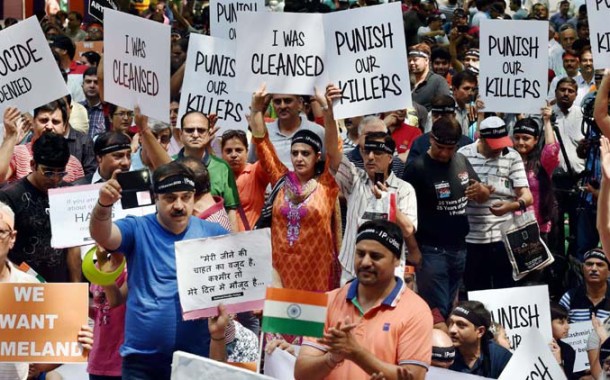
Thousands of Kashmiri Hindu employees who migrated to Jammu following mob attacks on their transit colonies in Kashmir, today held a protest rally against the state and the Central governments for “not reaching out” to the community.
As their protest entered the 54th day, they wore black bands and took out a march demanding registration of FIR and compensation to affected employees besides a high-level dialogue with both the Central and the state governments.
“Both the governments are begging the separatists to hold talks with all-party delegation but they have failed to reach out to these Kashmiri pandit employees of Valley and not even a single minister or top officer has reached out to them,” chairman of All Party Migrant Coordination Coommittee(APMCC), Vinood Pandita said.
“Kashmiri pandits cannot be made sacrificial goat by the Central government. We will not tolerate any talks with separatists,” he added.
The Kashmiri pandit employees, who were working in various government departments under the Prime Minister’s rehabilitation package in the Valley, returned to Jammu after their transit camps were attacked by stone-pelting mobs in the wake of the killing of Hizbul Mujahideen commander Burhan Wani on July 8.
The protesters demanded disbursement of their pending salaries, and forming of a comprehensive return and rehabilitation programme for entire Kashmiri Pandit community in the valley before their return resume duty.
“These employees have been sitting on protest for over 50 days. The governments are unmoved as if the Kashmiri pandit community does not exist,” said All State Kashmiri Pandit Conference President, Ravinder Raina.
“The Central and state governments failed to protect these Kashmiri pandit employees from mob attacks. They were forced to migrate from there. Instead of reaching out to them and give them confidence, they are left feeling unwanted,” he added.PTI.

Solar power generation capacity of 4.8 GW is likely to be added this year in the country as installations are picking up, says a report.
The report by Mercom Capital Group also said that power distribution companies continue to be a “drag” since they are showing reluctance to buy solar energy amid low electricity prices.
“India has reached 2.8 GW in solar installations year-to-date and cumulative installations have reached 8.1 GW as of August 2016,” it said in a release.
As per its forecast, about 4.8 GW of solar energy capacity is expected to be installed in 2016.
According to the global clean energy communications and research firm, the solar project pipeline in India is now approximately 21 GW, with 14 GW under development and 7 GW scheduled to be auctioned.
One GW (Giga Watt) is equal to 1,000 MW (Mega Watt).
“Solar installations and its share of energy generation has picked up speed but distribution companies continue to be a drag on the sector and are showing reluctance to purchase solar in light of low power demand and cheap power availability on the exchanges,” Mercom Capital Group CEO and Co-Founder Raj Prabhu said.
This is an alarming development that the central government should address immediately to restore confidence among developers and investors, he added.PTI
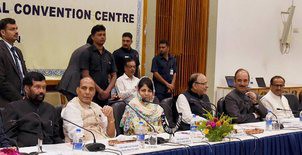
Adopting a tough stance, separatists today rebuffed attempts by five opposition MPs to talk to them even as an all-party parliamentary delegation explored ways to end the 56-day-old unrest by holding discussions with Chief Minister Mehbooba Mufti and some other mainstream leaders.
During the first day of its visit, the delegation met about 200 members in about 30 delegations from various sections of society and listened to their point of view to reach at a common solution to the current scenario in Jammu and Kashmir, a statement from the Home Ministry said.
While the delegation, led by Union Home Minister Rajnath Singh, met mainstream sections, five members of the group broke away to meet the separatists.
Four MPs — -CPI(M) General Secretary Sitaram Yechury, CPI leader D Raja, JD(U) leader Sharad Yadav and RJD’s Jay Prakash Narayan — went to meet hardline Hurriyat leader Syed Ali Shah Geelani at his residence where he is under house arrest for the last 60 days while AIMIM leader Assadudin Owaisi went to meet moderate Hurriyat leader Mirwaiz Umar Farooq at Chashma Shahi sub-jail where he is lodged.
At Geelani’s residence, the gate was not even opened for the MPs while people shouted slogans outside. Geelani saw them from the window but refused to meet the parliamentarians.
“It is our effort to show that we are ready to talk to anyone whether they agree to meet or not,” Yadav said.
The group also went to meet JKLF chief Yaseen Malik who is under detention at BSF camp in Humhama. He told the MPs that he will talk when he visits New Delhi.
Owaisi went separately to meet Miwaiz who met him briefly but only exchanged pleasantaries.
After Owaisi’s failed attempt, the group comprising Yechury, Yadav, Raja and Narayan went to meet the Mirwaiz and were with him for about 15 minutes.
The group tried to meet former Hurriyat Chairman Abdul Ghani Bhat who also refused to talk to them. Bhat welcomed the leaders but made it clear it has been decided that no talks will be held with the delegation members.
Owaisi said he also met another detained leader Shabir Shah for some time and offered ‘namaz’ along with him there.
But no separatist leader held talks with them.
“This is a futile exercise. Nothing concrete will happen until or unless India talks to Pakistan on Kashmir. We will not be able to arrive at any solution if India only talks to Kashmiris or Pakistan talks to Kashmiris. We should try and solve this issue which can otherwise result in hostilities between the two neighbouring nations,” said Ghani Bhat.
Earlier in the day, the separatists rejected Chief Minister Mehbooba Mufti’s invitation to them for meeting with all-party delegation, terming such a measure as “deceitful” and insisting that it cannot be an alternative to a “transparent agenda-based dialogue to address the core issue”.
The delegation had come here to cool the volatile situation arising out of violent protests that have gripped the Valley since the killing of Hizbul militant Burhan Wani on July 8. The clashes resulting from the protests have claimed 71 lives and injured thousands. PTI
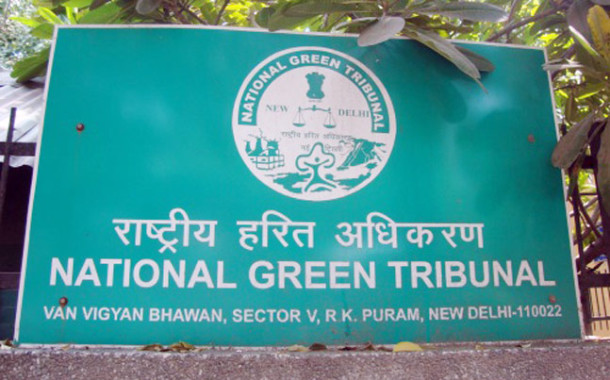
The National Green Tribunal has taken exception to non-submission of status report on quality of water supplied to households in the national capital by the Delhi government despite repeated directions.
Noting that not even a single report has been filed till date, the bench headed by NGT Chairperson Justice Swatanter Kumar summoned the Environment Secretary of Delhi government with the report on the next date of hearing – September 9.
“Vide our judgment dated December 10, 2015, orders dated May 31, 2016 and July 27, 2016 we had granted last opportunity for filing the report, no report has been filed till date. We direct Secretary, Environment, NCT of Delhi to be present in person with complete records of the Committee proceedings on September 9, 2016,” the bench said.
The appalling picture of water supply in the capital had last year prompted the tribunal to seek the response of the city government in the matter.
The green panel had taken suo moto cognisance of a newspaper report, which had revealed that the “stinking and dirty” water flowing through water supply lines and the borewells were pumping out contaminated water.
Later, it had constituted a committee comprising Secretary Environment and representatives from Central Pollution Control Board, Delhi Pollution Control Committee, Delhi Jal Board, Central Pollution Control Board and all municipal corporations and asked them to submit a complete and comprehensive report.
“The Committee will ensure that samples of the water from different areas are collected, analysed and reports be placed before it before submission of the final report,” it had said.PTI
In the wake of heavy rainfall in the basin of Barak river and its tributaries in Assam, the Central Water Commission today said the river is expected to flow in “moderate to high flood situation” in the state and neighbouring Meghalaya and Manipur over the next few days.
In its advisory, the CWC also cautioned the administration of Assam’s Cachar, Hailakhandi and Karimgunj districts, affected by the rising level in rivers following rains, to take precautionary measures.
“In view of heavy to very heavy rainfall in the state of Assam and adjoining Meghalaya and Manipur in Barak Basin, river Barak and its tributaries is rising in Assam which is affecting (its) districts of Cachar, Hailakhandi and Karimgunj,” Union Water Resources Ministry said in a statement.
“The rivers Barak, Katakhal and Kushiyara are expected to flow in moderate to high flood situation in the next two to three days. District administrations have been advised to take all precautionary measures,” it added.
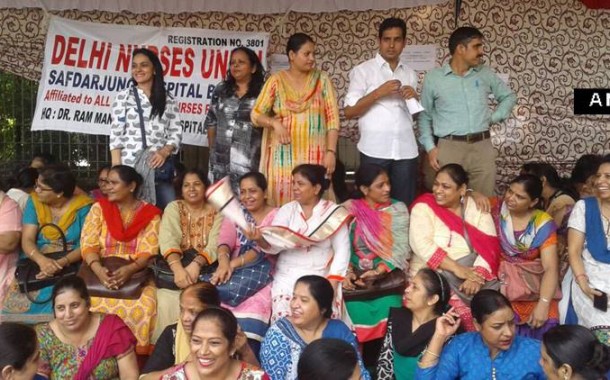
Cracking the whip, the Delhi government today invoked the stringent ESMA declaring as illegal the nurses’ stir which has severely affected functioning of state-run hospitals at a time when the city was grappling with rising cases of dengue and chikungunya.
“The LG has approved the government’s proposal to invoke ESMA against agitating nurses,” a top official said.
The Essential Services Maintenance Act (ESMA) allows the government to declare a strike illegal in public interest.
Around 20,000 nurses of various hospitals run by the Delhi and central governments went on an indefinite strike over issues relating to their salary and allowances.
All major hospitals in Delhi, swamped by patients suffering from vector-borne diseases, tried to reach a common ground with their respective nurse associations, but in vain.
All India Government Nurses Federation spokesperson Liladhar Ramchandani had yesterday said, “We are not happy with the response of the government. So we will go ahead with our proposed strike. But, we will attend to emergency and critical cases.”
Safdarjung Hospital which employs 1,100 nurses, including 160 on contract, has reported three dengue deaths in July. It has reported 263 dengue cases and nearly 250 chikungunya till August 29.
The total number of fatalities in Delhi due to dengue now stands at eight, even though the municipal authorities have acknowledged only two such deaths.
At least 487 cases of dengue have so far been reported in the national capital this season, with 368 of them being recorded last month.PTI


















Recent Comments