

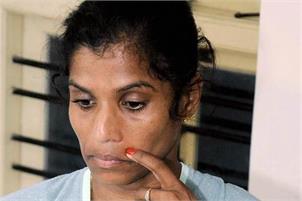
The probe into allegations of official apathy levelled by Olympian marathon runner O P Jaisha has been delayed as the athlete is recovering from Swine Flu and will need at least a week’s rest.
Jaisha, who returned from Rio with fever and body ache last week, was hospitalised yesterday after she tested positive for H1N1, two days after another athlete Sudha Singh was found to be suffering from the same disease.
“Jaisha has been hospitalised for H1N1 and at this point in time, the athlete will not be allowed to travel. She needs rest for at least six to seven days,” Sports Authority of India’s Dr Sarla told PTI here.
Since Jaisha is not permitted to travel, the probe into the allegations of official apathy levelled by her will be delayed.
The committee, which was formed a Tuesday, was supposed to submit its report in seven days from the date of its formation.
Sports Minister Vijay Goel had constituted a two-member committee consisting of Onkar Kedia, Joint Secretary (Sports) and Vivek Narayan, Director (Sports) to enquire into the allegations.
Jaisha, who had finished 89th in the marathon event, had alleged that no water or energy drinks were made available by the Indian officials during her event, leaving her completely exhausted at the end of the race. She had fainted after crossing the finishing line.
The Athletics Federation of India (AFI), however, has asserted that the athlete herself refused any such arrangement when approached a day before the event.
Jaisha, after returning from Brazil, claimed that officials from all other countries provided refreshments to their runners at designated points set up every 2.5 km.
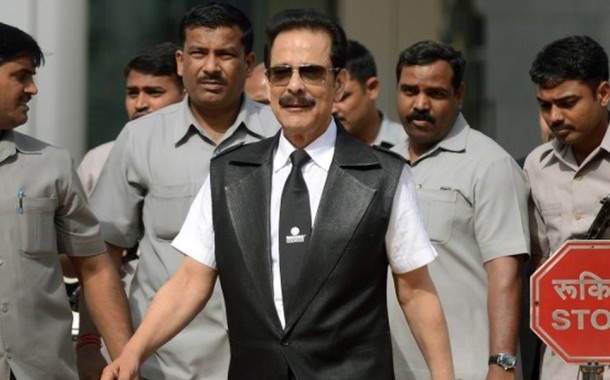
Sahara chief Subrata Roy today offered in Supreme Court to pay an additional Rs 300 crore to Security and Exchange Board of India (SEBI) but said the amount should be adjusted as bank guarantee.
A bench headed by Chief Justice T S Thakur directed that the matter be listed next week after senior advocate Kapil Sibal, appearing for Roy, mentioned the matter before it.
“I am ready to pay additional Rs 300 crore but this amount should be adjusted as a bank guarantee,” Sibal told the bench that also comprised Justices A M Khanwilkar and D Y Chandrachud.
On August 3, the Supreme Court had extended the parole of Roy till September 16 with a condition that he has to deposit Rs 300 crore with SEBI.
Roy’s parole, granted on humanitarian grounds following the death of his mother, was extended after he had deposited Rs 300.68 crores, giving him the opportunity to raise the remaining amount to secure bail in the case.
The apex court had allowed the Sahara group to go ahead with sale and alienation of their properties to raise an amount of Rs 5,000 crore as a bank guarantee which they have to deposit in addition to Rs 5,000 crore to get bail for Roy.
For Roy’s interim bail, the court had put conditions like depositing Rs 5,000 crore in cash and a bank guarantee of equal amount and tough terms, including payment of the entire Rs 36,000 crore, which includes interest, to be paid back to the investors.
The Sahara chief had earlier told the court that by December, the group would be in a position to fulfill all the conditions and talks were going on with Canara Bank for Rs 1,500 crore bank gaurantee.
The apex court had passed an order on March 29 stating that SEBI would also not sell any property owned by the beleaguered group for a price less than 90 per cent of the circle rates for the area in question without the permission of the court.
While granting parole to Roy, the apex court had said they were free to meet prospective buyers of properties and move within the country under police escort.
The apex court had earlier asked SEBI to initiate the process of selling “unencumbered” properties of Sahara group, whose title deeds are with the market regulator, to generate the bail money for release of the group chief.PTI
The ongoing unrest in Kashmir has led to a whopping Rs 6,400-crore loss to the economy of the Valley, with businesses being badly hit due to curfew and separatist sponsored strikes.
Tourist and other business activities in Kashmir have come to a halt for the past 49 days after protests erupted in Kashmir following the killing of Hizbul Mujahideen commander Burhan Wani in an encounter with security forces in south Kashmir’s Anantnag district on July 8.
Clashes between protesters and security forces have claimed the lives of 66 people and left thousands of others injured.
Shops, business establishments, private offices and petrol pumps have been shut as the separatists groups have called for a complete strike to protest the civilian deaths in the violence after Wani’s killing.
The separatists have announced periods of relaxation, but they are usually in the night which does not help the traders who allege that there have been instances of masked youths or even security forces forcing the shopkeepers to down the shutters.
“Kashmir is suffering losses of about Rs 135 crore daily. This estimates to over Rs 6,400 crore so far,” Mohammad Yaseen Khan, president Kashmir Traders and Manufacturers Federation (KTMF), said here.
Khan, however, said these figures were based on the daily business six months ago.
He said the trader community wants the Kashmir issue to be resolved permanently
The state government has suffered revenue losses close to Rs 300 crore in the past one-anda-a-half months.
“The collection of levies and taxes has come down drastically since the unrest began. The sales tax collection has been the worst hit,” an official in the Finance department said.
Similarly, tourism, considered to be the mainstay of Kashmir’s economy, has also come to a stand still.
“People are turning away from Kashmir due to the unrest,” a tourism player said here.
He said that hotels and houseboats were empty and famous tourist spots were looking desolated.
An official of the Tourism Department, who did not wish to be named, admitted that tourism in the Valley was on decline but said they were “helpless”.
“What can we do? The department is helpless. We cannot go outside the state and ask people to visit the Valley.
“How can we even expect people to visit the Valley when the situation is such,” the official said.
Till this situation is addressed and the issue resolved, the tourism would continue to be affected, he said.
The Nagaland Legislative Assembly today ratified the Goods and Service Tax (GST) Constitution Amendment Bill.
The bill was endorsed by the House by a voice vote following a brief discussion.
Introducing the bill, Minister for Parliamentary Affairs Kiyanilie Peseyie said the revenue of the state would go up as tax evasion would be checked due to transparency and broadening of tax base.
“A purely consuming state like Nagaland will benefit even more since GST is based on the destination principle,” he said, adding, tax administration would improve since most of the activity would be online.
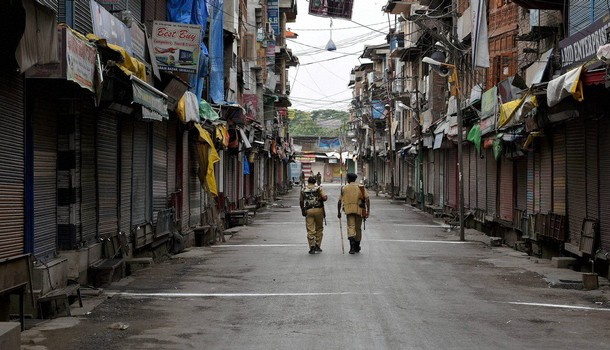
“Bhago yahan se” (go away from here)–a voice suddenly booms from a dark corner of a street in curfew-bound Srinagar as dusk falls.
This is the voice of a para-military personnel behind a concertina wire who tries to prevent movement of people on the main road here and is unwilling to listen to anyone even if one is carrying a curfew pass or has some emergency.
Srinagar like any other part of Kashmir is witnessing the longest spell of curfew since July 8 when unrest broke out in the Valley.
“This has become a daily routine. To walk just across the chowk, which is only 500 metres away, I have to take a detour of nearly two kilometres through narrow lanes and by-lanes to reach my aunt’s place,” says Mushtaq Mir, a resident of Rainawari locality in downtown city.
Mir is carrying some medicines for his aunt who has been suffering from age-related ailments.
Changing his path, Mir, accompanied by his wife, finally chose another route to reach his destination but not before a group of young boys try to block his way as he was sneaking from by-lanes.
Armed with ‘lathis’, stones and bottles filled with petrol and kerosene, youngsters will soon inquire every single detail from you and verify everything before letting you go, he said.
“The security forces at least give you a chance to retreat while with youngsters that option is also not available and you are allowed to cross only after every detail has been verified,” says his wife.
This broadly is the experience of an average Kashmiri in the Valley today who is caught between security forces and agitating youths with no end to this misery in sight.
Many such harrowing experiences of anguished residents were shared with a PTI correspondent on a quick round of the city.
“We are not inhuman but we have to act tough as a preventive measure. In case of a medical emergency, we take care and ensure that the patient reaches the hospital,” says a middle-rung paramilitary officer deployed at Rainawari chowk, who spoke on the condition of anonymity..PTI

Leading Indian actress Deepika Padukone has made her debut among the world’s top 10 highest paid actresses with earnings of USD 10 million dollars in a list alongside Hollywood heavyweights Oscar-winner Jennifer Lawrence, Julia Roberts and “Friends” star Jennifer Anniston.
Padukone, 30, is the only Indian actress and the sole newcomer in Forbes’ 2016 list of the ‘World’s Highest-Paid Actresses’, coming in on the 10th spot.
Forbes said Padukone has “scored box office gold” in Bollywood movies such as “Bajirao Mastani” and “Piku”.
While she earns less than her Hollywood counterparts for roles, Padukone “compensates with over a dozen lucrative endorsements”, which “have helped her hedge against a deep pay gap in Bollywood”.
The list shows her with earnings of USD 10 million.
Forbes said the Bangalore-bred Padukone, who made her Bollywood film debut in 2007 with Shahrukh Khan-starrer “Om Shanti Om”, has “since starred in several films that have crossed the USD 150 million or 100 crore mark a barometer for box office success in India”.
Padukone “has also become something of a style icon” launching her own label for an Indian online shopping site.
Making her Hollywood debut along “Fast and Furious” star Vin Diesel, she will be seen in 2017 in “xXx: Return of Xander Cage”.
Noting the gender pay gap in the Indian movie industry, “a discrepancy not uncommon in Hollywood” also, Forbes said though a top Indian male star might earn close to USD 5 million a movie, prominent Indian actresses rarely clear USD 1 million a film.
For the second year in a row, Oscar-winning “Hunger Games” actress Lawrence topped the list of the world’s highest-paid actresses, notching USD 46 million.
“Ghostbusters” starrer Melissa McCarthy is ranked second with earnings of USD 33 million.
The list includes “The Horse Whisperer”-starrer Scarlett Johansson on the third spot, Anniston on the 4th place followed by Chinese actress Fan Bingbing (5), Oscar-nominee Amy Adams (7) and “Pretty Woman”-starrer Roberts (8).
Forbes added that in an industry where a pay gap with male actors still exists, 90 per cent of the world’s highest- paid actresses supplement their on-screen earnings with endorsements.
Together, the world’s 10 highest-paid actresses tallied a combined USD 205 million between June 2015 and 2016, before fees and taxes.
“Though these select actresses earn more than most could dream of, their movie money is but a fraction of what many of their male counterparts pocket. While top actresses can negotiate eight figure upfront fees plus a cut of profits for leading parts in big budget movies, there are simply fewer of those roles available for women,” Forbes said.
It also noted that for women, the movie business is “notoriously ageist” but with “box office clout”, some of the highest-paid actresses have manoeuvred themselves into positions of economic power.

Congress leader Rahul Gandhi today told the Supreme Court that he had never blamed RSS as an institution that killed Mahatma Gandhi but had stated that a person associated with it was responsible for his assassination.
A bench comprising Justices Dipak Misra and R F Nariman, which was hearing the petition filed by Gandhi challenging the summons issued to him as an accused in a defamation case, said it will dispose of the petition if the complainant agreed.
The bench noted that the Congress leader had filed an affidavit in the Bombay High Court while seeking quashing of the defamation complaint against him stating that, at an election rally, he had not blamed RSS as an institution for the assassination of Gandhi but a person associated with it.
The bench, which posted the matter for September 1, asked the complainant’s counsel and senior advocate U R Lalit to seek instruction whether the complainant was ready to end the case if Gandhi’s statement is taken on record.
Senior advocate Kapil Sibal, appearing for the Congress Vice President, drew the attention of the bench to the affidavit filed in the high court.
The bench, which heard the matter for about half-an-hour, said “what we understand is that the accused never blamed RSS as an institution that killed Mahatma Gandhi but the person associated with it.
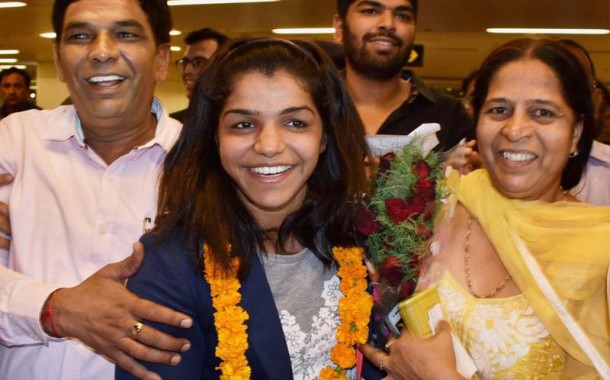
A rousing state reception was accorded by the Haryana government to the Olympic bronze medallist Sakshi Malik after she arrived this morning from Rio de Janeiro.
Sakshi touched down in the Capital in the wee hours and was received by the Ministers of the ruling Bharatiya Janata Party in Haryana. Haryana’s sports and youth affairs minister Anil Vij, who was present in Rio as head of state delegation, accompanied the wrestler on the return flight.
Sakshi then travelled to Bahadurgarh in Jhajjar district, where Haryana Chief Minister Manohar Lal Khattar along with his senior cabinet colleagues Capt Abhimanyu and O P Dhankar, among others, welcomed the star athlete.
At the grand felicitation function at Bahadurgarh, Sakshi was handed a cheque of Rs 2.5 crore by the Chief Minister.
She was also appointed as Haryana’s brand ambassador for ‘Beti Padhao-Beti Bachao’ programme.
“It is a proud moment for us that girls of the country have done so well. Our two daughters, Sakshi Malik and P V Sindhu (who won a silver medal at the Rio Games), have made the nation proud,” Khattar said.
He said that sportspersons from Haryana have once again made the country and their state proud.
“Our government is taking a number of steps for the promotion of sports. Sakshi has made everyone proud including her country, her state, besides her coaches, her town Rohtak and her family,” Khattar said in the presence of Sakshi’s family members.
The CM said Sakshi, who is employed with the Railways, would be soon promoted.
“We have also offered her a Class II job in the Haryana Government. She has said that she will think over it and decide,” Khattar said.
On the occasion, Sakshi, in her brief speech, thanked everyone for their support and best wishes.
“I want everyone to support me in future as well so that I can win more medals for my country,” she said.
Hailing ‘Beti Padhao-Beti Bachao’ scheme, Sakshi said, “Now we have added Beti Khilao (encourage girls to take up sports) to this.”
The 23-year-old was also honoured with a traditional ‘pagri’ at Bahadurgarh.
Sakshi, who opened India’s medal account at the Rio Games, will make multiple stops before she reaches her native village, Mokhra, later in the day.
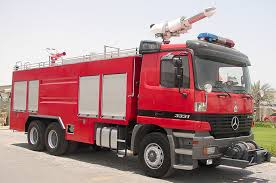
India today donated 18 fire fighting engines to Nepal to be utilised mostly by newly established municipalities in and around the Kathmandu valley.
Indian Ambassador to Nepal Ranjit Rae handed over the keys of the fire engines to Minister for Federal Affairs Hitraj Pandey at a function here.
These firefighters will be utilised mostly by newly- established municipalities in and around Kathmandu Valley for controlling fire.
One of the fire fighting engine will be used by the Kathmandu Metropolitan City.
The fire engines gifted by India will play an important role in saving life and property during the time of emergency, Pandey said while addressing the gathering at the function as he thanked the Indian government for its help.
Ambassador Rae said Nepal and India enjoy close ties and during the time of disasters they extend help to each other.PTI
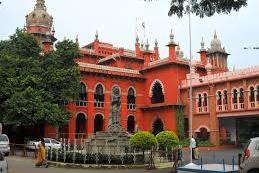
The Madras High Court today declined to grant an interim stay on suspension of 79 DMK MLAs from the state Assembly but issued notice to the state Chief Secretary on petitions filed by leader of the opposition M K Stalin and another DMK member.
The petitions challenged their en masse suspension from the Assembly and sought a direction to declare all proceedings and actions taken as illegal, ultra vires and unconstitutional.
Declining to pass an interim order, the First Bench, comprising Chief Justice Sanjay Kishan Kaul and Justice R Mahadevan, said, “Since it is a matter of function of the House and the order has been passed by the Speaker, we are not inclined to pass interim orders.
“But there will be no question of making the prayer infructuous as ultimately the validity of the resolution would have to be decided as it may have other ramifications,” it said.
The bench directed the petitioners-Stalin and DMK MLA Thiagarajan– to serve private notices to the Speaker, P Dhanapal, and the Tamil Nadu Legislative Assembly Secretary, and posted the matter for further hearing to September one.
When the matter came up, senior counsel for Stalin, Mohan Parasaran submitted that it was for the first time in the history of the Assembly that a resolution had been passed suspending en masse all opposition DMK MLAs.
In his plea, Stalin sought an interim direction to permit him and other suspended members to attend and participate in the present session.
He submitted that the blanket resolution to suspend all DMK members, who had signed the attendance register on the dat,e was without any basis or material. He said the majority of DMK members, including he himself, were not in the House when the resolution was passed by voice vote.
He submitted that the resolution was later modified to include the DMK members who had been present and those who had not signed the attendance register and alleged that the Speaker’s action was “unprecedented, motivated and biased which completely undermines democracy”. PTI.
















Recent Comments