


By AI Powered PMC Akbar Jiwani, Special Correspondent: Real Estate for RealNewsofIndia.com | August 15, 2026
NEW DELHI — India’s property sector had an eventful week, headlined by the Delhi Development Authority’s approval of the Master Plan for Delhi-2047, the Reserve Bank of India’s decision to hold the repo rate steady, and a buyer-friendly tweak to the RERA law that removes the threat of jail time for homebuyers. Here is a round-up of the developments shaping the country’s real estate market this week.
DDA APPROVES DELHI MASTER PLAN 2047, CLEARS WAY FOR 20 LAKH NEW HOMES
In the week’s biggest policy move, the Delhi Development Authority (DDA) has approved the Master Plan for Delhi-2047, envisaging roughly 20 lakh new flats across the capital to meet rising residential demand. The plan proposes land-pooling-led town planning across 105 villages, with about 69 of them brought under a new Green Development Area (GDA) policy that permits mixed residential and commercial use alongside conservation of parks, lakes, water bodies and biodiversity zones.
A major redevelopment component targets nearly 4 lakh ageing DDA flats for reconstruction, a move expected to benefit 30-40 lakh residents, subject to structural safety norms being met. The blueprint also allows regulated development along the Yamuna floodplain and opens up high-density construction within 250 metres of Urban Extension Road-2, the corridor running from Alipur through Dwarka to Mahipalpur.
The plan still requires clearance from the Union Ministry of Housing and Urban Affairs before it takes effect, but developers and analysts say it signals a substantial expansion of Delhi-NCR’s housing supply pipeline over the coming decades, along with fresh redevelopment opportunities for builders.
RBI HOLDS REPO RATE AT 5.25%, HOME LOAN EMIs STAY FLAT
The Reserve Bank of India’s Monetary Policy Committee, led by Governor Sanjay Malhotra, kept the repo rate unchanged at 5.25% in its August 2026 review, maintaining a neutral policy stance. For homebuyers, the pause means floating-rate and repo-linked home loan EMIs remain unchanged — for instance, a Rs 50 lakh loan at 9% interest over 20 years continues to carry an EMI of about Rs 44,986. While the decision offers no immediate relief through lower borrowing costs, it gives households predictability to plan big-ticket purchases without fear of a sudden rate hike, a factor real estate brokers say supports steady, if unspectacular, buyer sentiment heading into the festive season.
RERA AMENDMENT REMOVES JAIL PROVISION FOR HOMEBUYERS
Under the Jan Vishwas (Amendment of Provisions) Act, 2026, the government has amended Section 68 of the Real Estate (Regulation and Development) Act to remove the imprisonment clause that previously threatened homebuyers with up to a year in jail — or fines of up to 10% of the property’s value — for failing to comply with Real Estate Appellate Tribunal orders. Going forward, non-compliance will attract only monetary penalties. The change is being welcomed as major relief for middle-class buyers caught in builder disputes. Importantly, the amendment does not dilute accountability for the industry: imprisonment provisions for promoters and real estate agents under Sections 64 and 66 of RERA remain fully in force, as do penalties under Sections 59, 60, 61 and 63 for builder-side violations.
HOUSING SALES: MIXED SIGNALS FROM TOP CITIES IN Q2 2026
Two closely watched industry trackers have offered contrasting reads on the April-June 2026 quarter. PropEquity data shows housing sales across nine major cities rose 19% year-on-year to 1,12,458 units, with supply surging 43% to 1,17,609 units. Navi Mumbai (up 61%), Bengaluru (up 47%) and Mumbai (up 32%) led the gains, while Kolkata (down 23%) and Delhi-NCR (down 14%) lagged.
By contrast, ANAROCK’s report on the top seven cities shows sales falling 6% year-on-year to 90,715 units, with a sharper 11% sequential decline, which analysts attribute to cautious buyer sentiment amid West Asia-linked geopolitical tensions and supply-chain disruptions. New launches held up better, rising 7% annually to about 1,06,000 units, skewed heavily toward premium and luxury segments — homes priced above Rs 80 lakh accounted for nearly half of new supply, while affordable housing made up just 6%. City-wise, Kolkata (up 10%) and Hyderabad (up 2%) bucked the trend, while Pune (down 15%), Chennai (down 9%) and MMR (down 8%) saw the steepest drops.
Taken together, the divergent numbers point to a market that remains resilient in absolute terms but is increasingly bifurcated — supply is tilting toward premium and luxury housing even as affordability concerns persist for first-time buyers.
BROOKFIELD INDIA REIT, NCW FUND ACQUIRE MUMBAI BKC OFFICE SPACE FOR Rs 1,700 CRORE
In a sign of continued institutional appetite for prime commercial real estate, Brookfield India Real Estate Trust, along with the NCW fund, has agreed to acquire roughly 2.64 lakh square feet of office space in Mumbai’s Bandra-Kurla Complex (BKC) for approximately Rs 1,700 crore (about $170 million). BKC remains one of India’s tightest and most sought-after Grade-A office micro-markets, and the deal underscores the continuing flow of REIT and institutional capital into India’s commercial office segment even as global investors stay selective.
SECTOR OUTLOOK
Industry advisory Colliers has flagged infrastructure investment, sustained institutional capital and technology-led innovation as the three pillars likely to underpin Indian real estate through the rest of 2026, alongside continued momentum in Tier-1 and Tier-2 city expansion driven by metro connectivity and urban infrastructure upgrades.
Taken together, this week’s developments reflect a sector at an inflection point: expanding housing supply pipelines and stronger buyer protections on one hand, a cautious, premium-skewed sales environment on the other, and steady institutional confidence in commercial assets underpinning the broader market.
— Reported by AI Powered PMC Akbar Jiwani, Special Correspondent: Real Estate, for RealNewsofIndia.com

By AI Powered PMC Akbar Jiwani, Special Correspondent – Real Estate, Realnewsofindia.com
A new wave of investment is emerging as one of the most powerful, if underappreciated, growth engines behind India’s real estate expansion: the country’s booming data centre and AI infrastructure build-out. Where highways, metro corridors and IT parks anchored the last two decades of urban growth, industry analysts now say server farms and AI compute campuses are set to play a similar role over the next decade — and the numbers involved are staggering.
The scale of ambition was laid bare earlier this year when Adani Group chairman Gautam Adani announced a $100 billion commitment over the next decade to build AI-specialised data centres powered entirely by renewable energy, declaring that “India will not be a mere consumer in the AI age.” The plan, running through 2035, targets up to 5 gigawatts of dedicated data-centre capacity, with Adani projecting a further $150 billion in associated investment — taking the total AI infrastructure opportunity the group is chasing to roughly $250 billion. Large-scale campuses are already taking shape in Visakhapatnam and Noida, with expansion planned in Hyderabad and Pune, backed by tie-ups with global technology majors Google and Microsoft, an expanded partnership with Walmart-owned Flipkart, and a joint venture with US operator EdgeConneX that already runs 2 gigawatts of capacity. Underpinning all of it is Adani’s renewable energy portfolio, anchored by the 30-gigawatt Khavda solar project in Gujarat, with a further $55 billion earmarked for additional clean power and battery storage to keep the AI campuses running.
Adani is far from alone. India currently generates close to 20 per cent of the world’s digital data but hosts only about 4 per cent of global data centre capacity — a gap that global cloud providers, sovereign wealth funds and domestic conglomerates are racing to close as enterprise digitisation, cloud migration and AI workloads accelerate simultaneously.
For the real estate sector, the knock-on effects are now being quantified. A report by property platform Square Yards estimates that India’s data centre pipeline, currently pegged at roughly 9,030 megawatts of capacity, will generate close to 4.33 lakh jobs across the ecosystem and, in turn, drive demand for nearly 195 million square feet of residential real estate by 2030. That is a scale comparable to entire satellite townships springing up around what were, until recently, unremarkable industrial plots on city peripheries.
The demand is not expected to be evenly spread. Maharashtra is projected to see the single largest impact, with more than 54 million square feet of associated housing demand, reflecting Mumbai and Pune’s status as established data-centre hubs with power availability, submarine cable landing stations and connectivity infrastructure already in place. Karnataka, Andhra Pradesh, Uttar Pradesh, Telangana and Tamil Nadu are also flagged as major beneficiaries, tracking the same states where hyperscale campuses are being built out.
Rather than concentrating growth narrowly around the data centres themselves, the Square Yards report describes a “Golden Ring” effect — a belt spanning roughly 5 to 15 kilometres around major facilities where townships, mixed-use developments, retail and civic infrastructure are expected to flourish as ancillary employment (facility staff, engineers, logistics and support services) clusters nearby. Tier-2 and tier-3 locations such as Visakhapatnam, Noida and Gujarat’s GIFT City are being flagged as the next frontier of this trend, benefiting from improving connectivity, land availability and state-level incentives for digital infrastructure investment.
For developers and homebuyers alike, the implication is a structural one: digital infrastructure is emerging as a fresh anchor for real estate cycles, much as highways, airports and IT corridors were in previous booms. Analysts caution that translating power-and-compute investment into durable housing demand will still depend on states delivering the physical infrastructure — roads, water, schools and transit — needed to support new residential clusters at the pace capital is now flowing into AI infrastructure. But with tens of billions of dollars committed by a single conglomerate alone, and the broader industry racing to close India’s capacity gap with global peers, the data centre economy looks set to be one of the defining real estate growth stories of the second half of this decade.

This article has been written by AI powered PMC Akbar Jiwani Special Correspondent for Realnewsof India.com
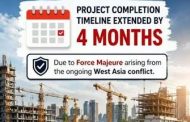
A regulatory order signed in New Delhi on the last day of July has quietly shifted the possession date on thousands of Indian homes. On 31 July 2026, the Union Ministry of Housing and Urban Affairs advised every state Real Estate Regulatory Authority to extend the registration and completion timelines of eligible registered projects by four months, invoking the force majeure provisions of the Real Estate (Regulation and Development) Act, 2016. Within a fortnight, MahaRERA, Haryana RERA and the Telangana authority had converted that advisory into blanket orders. For developers wrestling with disrupted supply chains, it is meaningful breathing room. For homebuyers already counting months, it is one more calendar page turned. Both readings are correct — and the gap between them is where the real story sits.
Background: What Section 6 Actually Permits
Section 6 of the RERA Act allows the registration granted to a project to be extended on the ground of force majeure. The statute does not leave the term to interpretation: it expressly contemplates war, flood, drought, fire, cyclone, earthquake and other calamities affecting the regular development of a project. Ordinarily the section is not self-executing — a promoter must apply to the concerned authority, project by project, and satisfy it that the disruption was genuine.
India has been here before. When the Ministry of Finance treated the COVID-19 pandemic as a force majeure event in 2020, a suo motu six-month extension followed for projects whose registration was expiring, and several state authorities — MahaRERA and Haryana RERA among them — granted extensions in the six-to-nine-month range without individual applications. That episode established both the mechanism and its limits, and its litigation legacy still shapes how tribunals read force majeure today.
Current Developments: The Chain of Orders
The current relief traces back to an Office Memorandum issued by the Department of Expenditure, Ministry of Finance, on 29 April 2026, which treated the prevailing situation in West Asia as war for the purpose of invoking force majeure. That classification was the legal hinge. Once war was formally recognised, Section 6 of RERA became available to the sector as a whole rather than to individual promoters pleading their own facts.
The Confederation of Real Estate Developers Associations of India had written to the Housing and Urban Affairs Secretary in April, seeking a blanket extension of three to six months and citing volatility in energy supplies that had disrupted production across key manufacturing clusters. The Ministry, in its 31 July advisory signed by Under Secretary (Housing) Sanjay Kumar, recorded that it had received representations from stakeholders regarding the impact of the prevailing situation in West Asia, which had adversely affected global supply chains, resulting in shortages of construction materials and impacting the timely completion of real estate projects.
The advisory sets a clear eligibility line. Registered projects whose completion date, revised completion date or extended completion date falls on or after 28 February 2026 receive four additional months. Critically, the Ministry recommended that states issue a single common order covering all eligible projects, precisely so that promoters would not have to file thousands of separate applications and authorities would not have to pass thousands of separate orders.
MahaRERA followed with a blanket order applying the extension automatically, with no separate application required from promoters — and with one important boundary: projects registered on or after 1 August 2026 are excluded, since a developer registering after the disruption was public knowledge cannot claim to have been surprised by it. Haryana RERA issued a parallel order for projects registered with it. The Telangana authority extended completion timelines for all eligible registered projects in the state on the same reasoning. In Uttar Pradesh, roughly 1,199 projects are reported to qualify, including about 301 in Noida and 148 in Ghaziabad — a useful indicator of the scale involved in a single state.
Detailed Analysis: A Section 6 Order, Not a Section 18 Amnesty
The most consequential feature of the 31 July circular is what it does not say. It addresses Section 6 alone — the extension of project registration on force majeure grounds. It does not advise authorities to grant an interest holiday for the four-month window, and it does not disturb a buyer’s entitlement to interest on refund when exiting a delayed project.
That distinction matters because Section 18 operates on a different logic. It entitles an allottee whose possession is delayed either to withdraw and receive a refund with interest, or to remain in the project and receive monthly interest for every month of delay. Nothing in Section 18 makes that liability conditional on, or subject to, a force majeure clause. The Supreme Court has said as much in unambiguous terms. In Imperia Structures Ltd v Anil Patni and in Newtech Promoters and Developers Pvt Ltd v State of Uttar Pradesh, the Court characterised the allottee’s right to interest at the prescribed rate as unqualified and indefeasible. MahaRERA’s own Model Agreement for Sale points the same way: Clause 6 does not exempt a promoter from interest liability merely because the delay arose from circumstances beyond the promoter’s control.
Promoters will nonetheless argue — not unreasonably at first glance — that if the state has declared a war, recognised force majeure and formally moved the completion date, interest cannot accrue during a period the regulator itself has excused. The counter-argument is that Section 6 governs the life of a registration while Section 18 governs a contractual and statutory obligation to the buyer, and that extending one does not extinguish the other. The honest position is that this remains legally untested. Until either the Housing Ministry issues a clarificatory circular or an appellate tribunal or High Court rules squarely on the point, it is a grey area — and grey areas in real estate are usually resolved by whoever litigates first.
Benefits: Why the Order Was Needed
The administrative case for a common order is strong. Filing individual Section 6 applications across tens of thousands of registered projects would have consumed regulatory bandwidth that authorities do not have, and would have delivered inconsistent outcomes to developers facing identical macro conditions. A single order applied uniformly is faster, cheaper and fairer than adjudicating the same fact pattern thousands of times over.
There is also a compliance benefit that is easy to overlook. A lapsed registration is not a paperwork problem — it stops marketing, complicates lender disbursements and can freeze sales in an otherwise healthy project. Keeping registrations valid keeps projects inside the regulated perimeter, where buyers retain their remedies. CREDAI president Shekhar Patel framed the extension as helping developers align completion timelines with the current market scenario while relieving them of the burden of filing separate applications, and argued that orderly execution safeguards all stakeholders, including homebuyers. NAREDCO likewise welcomed the regulatory clarity.
The macro context supports the argument that the sector is not in distress but in friction. MahaRERA approved 10,379 housing projects in FY26, with Pune and the Mumbai Metropolitan Region accounting for the largest share of new registrations — hardly the profile of a market retreating from supply. The constraint being addressed is input availability and logistics, not demand.
Challenges: The Buyer’s Objection
Homebuyer groups have not been persuaded, and their objection deserves to be stated at full strength. The Forum for Peoples Collective Efforts has argued that the advisory reflects an asymmetry in how the two sides of the transaction are treated: developers receive a one-size-fits-all regulatory accommodation issued from the top, while buyers servicing home loan EMIs and simultaneously paying rent receive no corresponding relief, no blanket protection and no automatic order in their favour.
The second and more practical concern is discrimination between projects. A blanket order cannot distinguish a developer genuinely stalled by a shortage of imported facade systems or specialised electromechanical equipment from one whose project was already running years late for reasons that predate February 2026 entirely. The 28 February cut-off is a blunt instrument, and a chronically delayed project inherits the same four months as a well-run one. Force majeure is meant to suspend obligations for the duration of the disrupting event, not to launder pre-existing default.
There is a third risk, subtler but real: precedent. Each blanket extension makes the next one easier to seek. COVID established the template; the West Asia conflict has now invoked it a second time. If sector-wide extensions become the routine answer to macro volatility, the deterrent effect of a hard RERA completion date begins to soften.
Expert Opinion
Advocate Shirish V Deshpande, chairman of the Mumbai Grahak Panchayat, has argued that the July circular concerns Section 6 alone and gives promoters no exemption from monthly interest for continuing delays in projects that were already delayed as of 28 February 2026, where buyers elect to remain. In his reading, force majeure may operate as a mitigating factor where a buyer seeks compensation over and above statutory interest, but it does not switch off the statutory interest itself. He has urged the Housing Ministry to issue a clarificatory circular stating its position, so that aggrieved parties can seek a final judicial determination on a settled record rather than litigating in the dark.
That call for clarity is, in editorial judgement, the single most useful thing that could happen next. Ambiguity here does not favour buyers or developers — it favours delay, and delay is the thing everyone claims to be trying to fix.
Future Outlook
Three developments are worth watching over the next two quarters. First, whether MoHUA issues the clarificatory circular on interest liability; its content will determine whether pending complaints settle or escalate. Second, whether appellate tribunals begin producing reasoned orders on the Section 6 versus Section 18 question — the first well-argued decision will set the tone. Third, whether the remaining states issue common orders, and whether they replicate MahaRERA’s 1 August registration cut-off, a sensible anti-gaming safeguard worth standardising nationally.
The broader signal is more encouraging than the headline suggests. A regulator that can absorb a genuine external shock through a transparent, published, uniformly applied order is functioning as intended. The failure mode would have been silence — registrations quietly lapsing, or thousands of inconsistent individual extensions granted behind closed doors.
Practical Takeaways
For homebuyers: check your allotment letter or agreement for sale against the MahaRERA portal to confirm the revised completion date now recorded for your project. The extension is automatic, so the portal date may have moved without any communication from your developer. If your project was already delayed before 28 February 2026, take written advice before assuming the extension has suspended your interest entitlement — on the current state of the law and the Supreme Court authority, it very likely has not.
For developers and promoters: no separate application is required, but the extension does not travel with the project automatically in every disclosure you make. Update your Form 3 and quarterly progress reporting, ensure sales teams and channel partners communicate the revised date accurately, and document the specific supply-chain disruption your project actually suffered. If interest liability is later contested, generic reliance on the common order will be far weaker than a project-level evidentiary record.
For cooperative housing societies in redevelopment: verify with your developer whether your project falls on the eligible side of the 28 February 2026 line, and insist that any revised timeline be reflected in a formal addendum to the development agreement rather than treated as an informal understanding. A regulatory extension does not by itself amend a contract between a society and its developer, and the two documents should not be allowed to diverge.
Conclusion
The four-month extension is a defensible administrative response to a genuine external disruption, delivered through the mechanism Parliament built into the statute for exactly this purpose. It is also, unmistakably, relief that moves in one direction. The Act’s architecture protects the buyer’s interest entitlement independently of the promoter’s registration timeline, and the Supreme Court has already said that entitlement is indefeasible. What is missing is an explicit official statement saying so. Issuing that clarification would cost the government nothing and would spare the sector a season of avoidable litigation. Until then, the sensible course for every party is the same one that has always served this industry best: read the order, read the statute, and do not assume the second follows the first.

Written by Ai Powered PMC Akbar Jiwani :Special correspondent for realestate www.akbarjiwanipmc.com
## Introduction
On 7 August 2026, the Maharashtra Real Estate Regulatory Authority did something it has done only sparingly in its nine-year history: it moved the finish line for thousands of housing projects at once. Invoking the force majeure provisions of the Real Estate (Regulation and Development) Act, 2016, MahaRERA extended the completion timelines of eligible registered real estate projects across the state by four months, citing the disruption to global supply chains caused by the ongoing conflict in West Asia.
The relief is automatic. Promoters do not have to file individual applications, and MahaRERA’s Registration and IT Cell has been tasked with updating project records and the public web portal to reflect the revised dates. For a state that accounts for the single largest concentration of RERA-registered housing supply in India, this is not a procedural footnote. It is a structural adjustment to how the market will read delivery promises for the rest of the year.
## Background: How a Distant Conflict Reached Maharashtra’s Construction Sites
The chain of causation is unusually well documented. The Department of Expenditure in the Union Ministry of Finance issued an office memorandum on 29 April 2026 treating the prevailing situation in West Asia as ‘war’ for the purposes of invoking the force majeure clause — a classification that carries weight across government contracting. That classification became the legal anchor for what followed.
On 31 July 2026, the Union Ministry of Housing and Urban Affairs issued an advisory asking all State Real Estate Regulatory Authorities to grant a four-month extension in the registration and completion timelines of eligible registered projects affected by the resulting disruption. Significantly, the Ministry recommended that state authorities issue a common order rather than process thousands of individual applications — a deliberate attempt to avoid the administrative bottleneck and litigation that piecemeal relief tends to produce. MahaRERA’s order a week later is the direct implementation of that advisory, and it sits alongside similar action by other state authorities, including Telangana’s TGRERA.
The mechanism itself is not new. Section 6 of the RERA Act permits extension of registration where completion is prevented by force majeure, and the sector has been here before. During the COVID-19 disruption, MahaRERA granted an automatic six-month extension with provision for a further discretionary three months, and treated the force majeure window as a moratorium for the purpose of computing delay. That precedent is instructive — and, as we shall see, contested.
## Current Developments: What the Order Actually Says
The eligibility test is a date test. Projects whose original completion date, revised completion date or previously extended completion date falls on or after 28 February 2026 receive the additional four months. Projects registered on or after 1 August 2026 are excluded — a sensible carve-out, since a developer registering after the disruption was already well known cannot claim to have been blindsided by it.
The scale is considerable. MahaRERA’s registry runs to tens of thousands of projects, and the Authority approved 10,379 real estate projects in FY2025-26 alone, a figure that covers new registrations, developer-requested timeline extensions and correction approvals. Nearly half of those approvals were concentrated in the Mumbai Metropolitan Region. Any blanket order in Maharashtra is therefore, disproportionately, an MMR order.
Industry bodies responded quickly and favourably. CREDAI president Shekhar Patel described the Centre’s advisory as a positive step in line with the sector’s ask, pointing to strained material and labour supply chains, and welcomed the common-order approach for ensuring uniform implementation across states. NAREDCO president Parveen Jain called it a balanced and much-needed step, urging states to implement it in letter and spirit to avoid unnecessary litigation. That last phrase is doing a lot of work, and deserves attention.
## Detailed Analysis: The Cost Curve Behind the Order
Force majeure relief is easier to justify when the underlying cost pressure is visible in the numbers, and here it partly is — though not uniformly. Material costs typically account for roughly 55 to 65 per cent of total construction cost in India, so shocks in that basket transmit quickly to project viability. Yet the picture through 2025 was mixed rather than uniformly inflationary: cement and steel prices were broadly soft, while aluminium and copper rose sharply on global demand. JLL has projected that construction costs across Indian asset classes will rise by three to five per cent in 2026.
The more persistent pressure is labour. Wage costs are expected to rise between five and twelve per cent following India’s new labour codes, which took effect in November 2025 and mandate improved social security, healthcare benefits and standardised wage structures. Read together, the picture is of a sector absorbing a slow, compounding squeeze on margins rather than a single dramatic price shock — with the West Asia disruption layered on top as an availability problem for specific imported inputs and logistics.
Financing conditions, by contrast, have been stable. The Reserve Bank’s Monetary Policy Committee, meeting on 5 August 2026 under Governor Sanjay Malhotra, held the repo rate unchanged at 5.25 per cent — the fourth consecutive pause, with elevated crude prices and global uncertainty cited among the reasons for caution. For developers, that means the cost of debt has not worsened; for buyers with repo-linked home loans, EMIs are broadly unchanged. Time, not money, is the variable that just moved.
## Benefits: Why the Order Makes Practical Sense
The strongest argument for the extension is that it substitutes an orderly, uniform administrative decision for a chaotic, case-by-case one. Without a common order, MahaRERA would have faced a wave of individual applications, each requiring scrutiny and each generating an appealable decision — consuming bandwidth that belongs to enforcement.
For developers, the relief removes the immediate threat of penalty and delay-interest exposure on projects whose slippage was genuinely attributable to supply disruption. That matters most for small and mid-sized promoters, who lack the balance-sheet depth to absorb both cost inflation and statutory interest simultaneously. Preventing distress at that end of the market is, indirectly, a homebuyer protection measure — a stalled project serves no one.
For the market as a whole, the order restores the credibility of published completion dates. A portal listing a date everyone privately knows is unachievable corrodes trust in the register itself. Resetting the dates transparently and on the record is preferable to letting a silent gap open between the register and reality.
## Challenges: The Homebuyer’s Legitimate Question
The obvious objection is that the buyer, who has done nothing wrong, absorbs the cost of a disruption she did not cause. Homebuyer groups have raised precisely this, demanding a waiver of interest on housing loans for the duration of projects granted force majeure extensions. The asymmetry is real: the developer’s clock stops, but the borrower’s EMI does not, and the rent-plus-EMI burden continues for four additional months.
There is also a real risk of over-claiming. A blanket date-based test cannot distinguish between a project genuinely dependent on disrupted imported inputs and one that was already years behind for reasons entirely unrelated to West Asia. The COVID-era experience is the cautionary precedent. Adjudicating authorities subsequently examined force majeure claims closely — in one widely discussed UP-RERA matter, the officer allowed roughly 476 days of justified delay after a detailed analysis of the actual restrictions, and then held the promoter accountable for the delay beyond it. Force majeure has been read as a shield for the period of genuine disruption, not as a general amnesty.
The legal architecture also remains intact beneath the order. Section 18 of the RERA Act continues to give an allottee the right to withdraw and claim refund with interest and compensation where possession is not handed over, or to claim monthly interest for delay if she chooses to stay in the project. The Supreme Court has also held that homebuyers may seek relief under both RERA and the Consumer Protection Act. An administrative extension recalibrates the reference date; it does not extinguish statutory rights, and NAREDCO’s warning about implementation ‘in letter and spirit’ is, read carefully, an acknowledgement that sloppy application will end up in tribunals.
## Expert Opinion
The considered view among practitioners is that the order should be read narrowly and applied honestly. The Centre’s own framing is instructive: the relief is directed at projects ‘affected by disruptions arising from’ the West Asia situation, and the date-based test is an administrative proxy for that condition, not a replacement for it. A promoter who invokes the extension while unable to demonstrate any actual supply-side impact is inviting scrutiny later, when an aggrieved allottee tests the claim before the Authority or an appellate forum.
The second observation is that documentation is now the developer’s cheapest insurance. Purchase orders, supplier correspondence on lead times, import invoices, evidence of material substitution and site-level progress records are what will distinguish a defensible force majeure position from an opportunistic one if the matter is litigated. Cooperative housing societies engaged in redevelopment — a large and growing share of MMR supply — should be asking their developers for exactly this evidence now, while it is easy to produce, rather than in three years, when it is not.
## Future Outlook
The demand side of the market gives little sign of flinching. Mumbai recorded 13,617 property registrations in July 2026, an 8.3 per cent increase year-on-year and the highest July figure in fourteen years, according to data from the Maharashtra Department of Registrations and Stamps analysed by Knight Frank India. Registrations rose from 13,413 in June, while stamp duty collections climbed from ₹1,086 crore in June to ₹1,223 crore in July — an 8.9 per cent rise over July 2025 and a 13 per cent sequential increase. Revenue growing faster than volume points to a continuing shift towards higher-value homes.
That combination — resilient demand, stable policy rates and a four-month cushion on delivery — suggests the extension will be absorbed by the market rather than disrupt it. The more interesting question is what happens at the end of the window. If supply chains normalise, the reset dates should hold and the episode will read as competent, pre-emptive administration. If disruption persists into 2027, the sector will return with a second request, and the Authority will face a harder decision: repeated extensions begin to erode the deterrent value of the deadline itself, which is the single most important thing RERA gave homebuyers.
## Practical Takeaways
For homebuyers, the first step is factual, not emotional: check the project’s MahaRERA page over the coming weeks and record the revised completion date the Authority publishes. Preserve the allotment letter and agreement for sale, which contain the contractual possession date, and note that the statutory right to interest for delay survives beyond the extended date. Where the delay predates February 2026, the extension does not retrospectively cure it.
For developers and promoters, the practical instruction is to treat the extension as a reprieve requiring evidence rather than a free pass. Update quarterly project progress reports accurately, communicate revised timelines to allottees in writing rather than letting them discover the change on the portal, and build a contemporaneous file on the specific supply disruptions the project experienced.
For managing committees of cooperative housing societies in redevelopment, this is the moment to convene the developer and reconcile three documents: the development agreement’s timeline, the MahaRERA-revised date, and the transit rent obligation. Extensions to the completion date do not automatically extend a developer’s liability for transit accommodation unless the agreement says so — and that gap is where society redevelopment disputes most often begin.
## Conclusion
MahaRERA’s four-month extension is, on balance, sound regulatory practice: a transparent, uniform, publicly recorded adjustment in response to a documented external shock, delivered through a single order rather than thousands of contested applications. It keeps the public register honest and prevents an avoidable wave of technical defaults.
Its legitimacy, however, will be determined entirely by how it is used. Applied to projects genuinely constrained by disrupted supply chains, it is proportionate relief. Applied as cover for delays that have nothing to do with West Asia, it becomes exactly the kind of dilution of accountability that RERA was enacted to end. Maharashtra’s homebuyers have every reason to accept the extension — and every reason to hold the industry to the promise implicit in it.

Written by Ai Powered PMC Akbar Jiwani :Special correspondent for realestate www.pmcakbarjiwani.com
Introduction
For four decades, redevelopment in Mumbai followed a familiar script. An ageing cooperative housing society, tired of leaking slabs and rusted reinforcement, would invite developers. A builder would arrive with a glossy presentation, a promise of extra carpet area and a corpus cheque. The society would sign. And then — in an uncomfortably large number of cases — the members would wait. Sometimes for three years. Sometimes for fifteen.
In 2026, that script is being rewritten, and the pen is increasingly in the hands of the residents themselves. Maharashtra’s self-redevelopment framework — long discussed, frequently announced, rarely operational — has finally acquired the three things it always lacked: an institution, a balance sheet and a clock. A dedicated state Authority now exists. A ₹2,000 crore corpus sits behind it. And a single-window mechanism commits the government to clearing proposals within three months.
The result is a pipeline that no one in the industry can now dismiss as a niche experiment.
Background: Why Self-Redevelopment Exists at All
The arithmetic behind self-redevelopment is simple, and it has been obvious to society members for years. When a builder redevelops a plot, the developer captures the entire value of the incremental Floor Space Index — the additional construction potential unlocked by DCPR 2034 provisions, TDR loading and fungible FSI — and returns a slice of it to members as extra area and corpus. In self-redevelopment, the society itself is the developer. It borrows against its own land, appoints a project management consultant and a contractor on fee-based terms, sells the surplus flats, and retains the developer’s margin for its members.
The scale of the opportunity is not marginal. Across Mumbai and the wider Mumbai Metropolitan Region, more than 25,000 buildings are estimated to be eligible for redevelopment, representing a pipeline valued at over ₹30,000 crore. A substantial share of Mumbai’s building stock is now five to six decades old, much of it structurally distressed and increasingly expensive to merely maintain. Around 10,000 cooperative societies across Mumbai, Thane and Pune have signalled interest in redeveloping themselves rather than waiting for a developer whose interest may never arrive.
The policy scaffolding began with a Government Resolution in September 2019, which introduced a single-window scheme for self-redevelopment of registered cooperative housing societies. It was revived and reinforced subsequently, but for most of that period the framework remained more announcement than apparatus. Societies discovered that the binding constraint was never enthusiasm. It was money, and the absence of any single office accountable for saying yes.
Current Developments: The Authority, the Corpus and the Clock
The turning point came with Maharashtra’s new state housing policy, Majhe Ghar, Majha Adhikar — the state’s first comprehensive housing reform in roughly eighteen years, framed around a target of 35 lakh affordable homes by 2030. Within it, self-redevelopment was given a line item rather than a paragraph: a ₹2,000 crore allocation, and a mandate to create a dedicated self-redevelopment cell inside the housing department.
That cell has since matured into a full state Authority, chaired by BJP MLC Pravin Darekar, offering societies end-to-end guidance across project planning, financial structuring, contractor selection and execution. Darekar has publicly urged societies to choose the government-backed self-redevelopment route over conventional builder-led projects, arguing that the model delivers greater transparency, better construction quality and materially higher benefits to middle-class members.
Several operational changes have widened the gate:
The minimum plot area threshold has been reduced from 4,000 square metres to 2,000 square metres, bringing thousands of mid-sized standalone societies into eligibility for the first time. The consent threshold remains at 51% of members, aligned with the broader redevelopment norm for buildings aged 30 years or more. The Maharashtra State Cooperative Bank has been designated the nodal financing agency, operating through District Central Cooperative Banks. Under the revised rules, societies can access loans of up to ten times the assessed value of their land, based on a government-approved valuer’s report. Stamp duty on allotment of reconstructed flats to existing members is capped at a nominal ₹100 — a meaningful saving in a city where stamp duty is a serious line item. Interest on premiums payable to planning authorities was waived for such projects up to March 2026.
Uptake has followed. Roughly 1,600 society proposals are now active within the framework. Around 46 have secured sanctioned loans, and 21 projects have reached completion — a milestone marked earlier by Union Minister Piyush Goyal and Chief Minister Devendra Fadnavis at a key-distribution ceremony for fifteen self-redeveloped societies in north Mumbai.
Detailed Analysis: Reading the Numbers Honestly
The gap between 1,600 proposals and 46 sanctioned loans is the most important number in this story, and it deserves to be read carefully rather than spun.
It is not evidence that the model does not work. Twenty-one completed projects, with keys physically handed over, establish proof of concept beyond argument. It is evidence of a funnel that narrows sharply at the financing stage — and that narrowing has identifiable causes. Reserve Bank of India prudential norms restrict cooperative banks from deploying more than a defined proportion of their advances to this category of lending, which structurally limits how quickly the nodal channel can scale. Standalone self-redevelopment projects typically require ₹50 crore to ₹150 crore; cluster-scale schemes under DCPR 33(9) can exceed ₹1,000 crore. Those are institutional-finance ticket sizes being routed through a cooperative banking system with finite headroom.
The second constraint is pre-financing. Before a society can approach a lender, it must fund feasibility studies, structural audits, architectural proposals, legal title verification and premium payments. This early-stage expenditure — often ₹25 lakh to ₹1 crore — falls on members before a single rupee of debt is available. Many societies stall precisely here.
The third is governance. The 51% statutory consent threshold is necessary but rarely sufficient in practice. Experienced practitioners consistently observe that projects running below roughly 70% genuine member alignment during construction encounter disputes that damage both timeline and quality. Consent on paper is not the same as cohesion under stress.
Meanwhile, the demand backdrop is unusually supportive. Mumbai city under BMC jurisdiction recorded 80,221 property registrations in the first half of 2026, a 6% year-on-year increase and the strongest first-half performance since 2013, generating ₹6,968 crore in stamp duty. For a self-redeveloping society, that matters directly: the surplus flats it must sell to service its debt are entering a liquid market with broad-based demand rather than a thin one.
Benefits
The advantages compound. Members typically secure significantly larger additional carpet area than a builder-led deal would offer, because the developer’s profit margin is retained within the society. Control over specifications, contractor performance and timelines rests with an elected committee accountable to residents rather than with an external balance sheet. Transparency improves because the society’s own accounts, audited under cooperative law, record every rupee. The nominal ₹100 stamp duty and premium waivers reduce hard costs. And critically, the society retains ownership of unsold inventory and any residual development potential — an asset that in a builder-led transaction is signed away at the outset.
There is a civic benefit too. Self-redevelopment converts distressed, unsafe building stock into compliant, code-current housing without requiring the state to fund construction directly. In a city where structural collapse during monsoon is a recurring tragedy, that is a public-safety outcome as much as a property one.
Challenges
None of this makes self-redevelopment easy. The society assumes every risk a developer would otherwise carry: cost escalation, contractor default, construction delay, regulatory change, and the market risk on unsold flats. Managing committees composed of retired professionals and salaried members are being asked to supervise projects of a scale most have never encountered. Transit accommodation for two to three years imposes real financial and personal strain, particularly on senior citizens. Litigation from dissenting members, unresolved title defects, encroachments and tenancy complications can freeze a project indefinitely. And political ownership of the framework — while it has clearly accelerated momentum — introduces the risk that administrative energy fluctuates with the electoral cycle rather than with project pipelines.
Expert Opinion
The consensus emerging among practitioners in the MMR redevelopment ecosystem is that 2025–26 represents the most consequential structural shift in redevelopment dynamics in recent memory — not because self-redevelopment is a new idea, but because it has, for the first time, been given institutional plumbing.
The working view among consultants advising societies is that success correlates far more strongly with process discipline than with plot size or location. Societies that commission an independent feasibility and structural audit before appointing anyone, that engage a project management consultant on a fixed professional fee rather than a revenue share, that separate the roles of PMC and contractor, and that build consent well above the statutory minimum before signing anything, complete their projects. Those that reverse this order — selecting a contractor first and validating the numbers later — are the ones that appear in cautionary case studies.
The financing bottleneck, most observers agree, will need to be addressed through instruments beyond the cooperative banking channel: participation by housing finance companies, structured debt, and eventually a secondary market for society-level construction finance.
Future Outlook
Three developments are worth watching over the next twelve to eighteen months. First, whether the single-window commitment to clear proposals within three months holds under volume — the credibility of the entire framework rests on that promise being kept when applications run into the thousands rather than the hundreds. Second, whether the financing architecture is broadened beyond cooperative banks, which is the single highest-leverage reform available. Third, whether standardised, society-friendly documentation — model tender formats, model PMC agreements, model contractor contracts — is published by the Authority, since bespoke legal drafting is both a cost and a risk multiplier for lay committees.
If those three move, the pipeline of 25,000 eligible buildings converts from a statistic into a construction cycle. If they do not, self-redevelopment remains an excellent option for well-organised societies and an aspiration for everyone else.
Practical Takeaways
Societies considering the route should sequence their work deliberately. Begin with a structural audit and an independent techno-financial feasibility study before approaching any consultant with a commercial interest in the outcome. Verify title, conveyance and deemed conveyance status early, since financing cannot proceed without clean title. Confirm eligibility against the revised 2,000 square metre threshold and the 30-year building age criterion. Engage a project management consultant on a professional fee basis, and keep that appointment structurally separate from the contractor. Build member consent well beyond 51% before committing, and document dissent transparently. Approach the Maharashtra State Cooperative Bank channel through the relevant District Central Cooperative Bank, with the valuer’s report in hand. And budget honestly for pre-financing costs and transit accommodation — these are the two line items that most frequently surprise committees.
Conclusion
Self-redevelopment in Maharashtra has crossed the threshold from advocacy to administration. An Authority exists, money has been committed, thresholds have been relaxed, and twenty-one societies have keys in hand to prove it works. The framework is not yet frictionless — the distance between 1,600 proposals and 46 sanctioned loans is a candid measure of how much plumbing remains to be laid. But for the first time, a middle-class cooperative housing society in the MMR can look at its ageing building and see a route that does not begin with surrendering its land to someone else’s balance sheet. In a city built on the leverage of land, that is not a small thing. It is a redistribution of who gets to capture the value of Mumbai’s own regeneration — and it is happening now.
8. Key Takeaways
Maharashtra’s self-redevelopment framework now has institutional form: a dedicated state Authority chaired by MLC Pravin Darekar, a ₹2,000 crore corpus under the Majhe Ghar, Majha Adhikar housing policy, and a single-window commitment to clear proposals within three months.
Eligibility has widened sharply — the minimum plot threshold has been cut from 4,000 sq m to 2,000 sq m, with a 51% member consent requirement for buildings 30 years and older.
Financing has been restructured: the Maharashtra State Cooperative Bank is the nodal agency through District Central Cooperative Banks, and societies can borrow up to ten times their assessed land value on a government-approved valuer’s report.
Around 1,600 society proposals are active, with 46 loans sanctioned and 21 projects completed — proof of concept established, but a visible bottleneck at the financing stage.
More than 25,000 buildings across the MMR are estimated eligible, representing a pipeline exceeding ₹30,000 crore; roughly 10,000 societies in Mumbai, Thane and Pune have signalled interest.
The binding constraints are pre-financing costs, RBI limits on cooperative bank exposure to this asset class, and member cohesion — 51% consent is statutory, but practitioners consider 70%+ alignment necessary in practice.
Market conditions are supportive: Mumbai recorded 80,221 property registrations in H1 2026, up 6% year-on-year and the strongest first half since 2013, with ₹6,968 crore in stamp duty collections.
Societies should sequence carefully — structural audit and independent feasibility first, title and conveyance verification second, a fee-based PMC kept separate from the contractor, and consent built well above the statutory minimum before signing anything.
9. Conclusion
Self-redevelopment in Maharashtra has crossed the threshold from advocacy to administration. An Authority exists, money has been committed, thresholds have been relaxed, and twenty-one societies have keys in hand to prove it works. The framework is not yet frictionless — the distance between 1,600 proposals and 46 sanctioned loans is a candid measure of how much plumbing remains to be laid. But for the first time, a middle-class cooperative housing society in the MMR can look at its ageing building and see a route that does not begin with surrendering its land to someone else’s balance sheet. In a city built on the leverage of land, that is not a small thing. It is a redistribution of who gets to capture the value of Mumbai’s o
Written by Ai Powered PMC Akbar Jiwani :Special correspondent for realestate www.pmcakbarjiwani.com
Two numbers, published five working days apart, capture the paradox of Indian real estate in August 2026. On 31 July, Knight Frank India reported that Mumbai had recorded 13,617 property registrations in July — an 8.3 per cent rise year-on-year and the highest July figure in fourteen years, generating Rs 1,223 crore in stamp duty for the state exchequer. On 7 August, the Maharashtra Real Estate Regulatory Authority (MahaRERA) told many of those same developers that they could have four more months to finish what they had promised to build.
Demand has rarely looked healthier. Delivery has rarely looked harder. MahaRERA’s blanket extension order is the regulator’s attempt to hold both truths at once — and it has reopened a consequential question in Indian housing law: when a war on the other side of the world slows a construction site in Thane, who pays for the delay?
Background: How the word ‘war’ entered a housing file
The chain of causation is unusually easy to trace. Following the military escalation in West Asia at the end of February 2026, the Department of Expenditure in the Union Ministry of Finance issued an Office Memorandum on 29 April 2026 formally classifying the prevailing West Asia situation as ‘war’ for the purpose of invoking the force majeure clause in government contracts. That memorandum permitted procuring entities to grant extensions of two to four months, case by case, to firms that were not already in default of their obligations as on 27 February 2026.
Once the Centre had made that classification for its own contracts, the logic travelled quickly to real estate. Developer bodies made representations to the Union Ministry of Housing and Urban Affairs (MoHUA) arguing that the conflict had disrupted global supply chains, tightened the availability of construction materials, and pushed out procurement and execution schedules. On 31 July 2026, MoHUA issued an advisory — with the approval of the Union Minister for Housing and Urban Affairs — asking every state Real Estate Regulatory Authority to consider extending registration and corresponding completion timelines by four months.
The statutory hooks are precise. Section 6 of the Real Estate (Regulation and Development) Act, 2016 permits extension of a project’s registration on force majeure grounds, and the Act expressly lists ‘war’ among the events that qualify. Section 7(3) empowers an Authority to allow a registration to remain in force, subject to such conditions as it deems appropriate in the interest of allottees, rather than revoking it outright. MoHUA also suggested that Authorities issue a single common order covering all eligible projects instead of requiring thousands of promoters to file individual applications — an administratively sensible instruction that has now been followed.
Current Developments: What the MahaRERA order actually does
MahaRERA acted on 7 August 2026. Its order extends completion timelines by four months for registered projects in Maharashtra whose original completion date, revised completion date or previously extended completion date falls on or after 28 February 2026.
Three features of the order deserve attention. First, it is automatic. Promoters are not required to file separate applications or obtain individual extension orders; MahaRERA’s Registration and IT Cell will make the necessary changes to project records and update the MahaRERA web portal to reflect the revised timelines.
Second, it is bounded at the front end. Projects registered on or after 1 August 2026 are excluded. A developer who registered knowing the supply position could hardly claim to have been surprised by it, and the cut-off closes that door before it opens.
Third — and this is the feature most commentary has skipped past — the order is an instrument under Section 6. It changes the date by which a project must be completed. It does not, on its face, change what a promoter owes an allottee for a delay that has already occurred.
Detailed Analysis: Section 6 is not Section 18
The distinction between the registration timeline and the promoter’s contractual liability is the legal heart of this story.
Section 18 of RERA gives an allottee two remedies where a promoter fails to hand over possession by the agreed date: a refund with interest if the buyer exits the project, or monthly interest for every month of delay if the buyer chooses to stay. Nothing in the text of Section 18 makes that liability conditional upon, or subject to, the absence of a force majeure event. The Supreme Court has treated the right as robust — in Imperia Structures Ltd v. Anil Patni and in Newtech Promoters and Developers Pvt Ltd v. State of Uttar Pradesh, the Court characterised the allottee’s entitlement to interest at the prescribed rate as unqualified and indefeasible. Clause 6 of MahaRERA’s own Model Agreement for Sale likewise does not exempt a promoter from interest liability merely because the delay arose from circumstances beyond his control.
The practical consequence is that a promoter whose project was already running late as on 28 February 2026 does not receive a clean slate. The registration validity moves forward; the accrued liability does not automatically move with it. For a buyer in a project already eight months behind schedule in February, the extension changes the regulatory clock but not the arithmetic of what has gone wrong.
That said, this is a genuinely untested question rather than a settled one. Promoters will argue — not unreasonably, at first glance — that if the state has declared a force majeure event and extended the completion date, the date of possession has itself shifted, and no interest can accrue over a period that is no longer, in law, a delay. The counter-argument is that the MoHUA circular of 31 July concerns only Section 6; it neither advises Authorities to grant an ‘interest holiday’ for the four-month period from 28 February 2026, nor deprives buyers of interest payable on refunds when they exit projects because of delays already incurred.
Benefits
The order does real work. An estimated 5.4 lakh housing units across India’s top seven cities were scheduled for completion in 2026 — the largest single-year delivery commitment in a decade — and much of that pipeline was exposed to input and logistics disruption. Allowing registrations to lapse en masse would have penalised builders for a shock none of them created, and destabilised projects in which lakhs of buyers hold stakes.
A blanket order is also the right administrative instrument. Case-by-case adjudication of thousands of force majeure pleas would have consumed MahaRERA’s bench capacity for months and produced inconsistent outcomes. A uniform order delivers certainty in a single step, at near-zero compliance cost.
For lenders, the extension also removes a technical trigger: a lapsed registration complicates disbursement, escrow operation and title diligence, and keeping registrations alive keeps construction finance flowing.
Challenges
The obvious risk is moral hazard. A blanket instrument cannot distinguish between a developer genuinely stranded by a shortage of imported facade systems or electrical equipment and one whose project was floundering for reasons entirely domestic — a funding gap, an approval dispute, or plain mismanagement. Both now receive the same four months.
The second risk is expectational. Buyers who read the headline as ‘four more months of waiting’ without understanding that their Section 18 rights survive may either despair or, worse, accept a promoter’s assertion that no interest is payable. The absence of an explicit clarification from MoHUA leaves that asymmetry of information exactly where a regulator should not want it — with the better-resourced party.
Third, there is a precedent question. Force majeure relief was granted during the pandemic, and is being granted again now. Each round is defensible in isolation; cumulatively, repeated extensions risk softening the delivery discipline that was the entire purpose of enacting RERA. The credibility of a completion date depends on how rarely it is moved.
Expert Opinion
Industry has welcomed the move. Hitesh Thakkar, Vice President of NAREDCO Maharashtra and Managing Partner of the Prem Group, called the MoHUA advisory ‘a significant and much-needed relief for the real estate sector,’ thanking the Ministry of Housing and Urban Affairs and the Government of Maharashtra for ‘recognising the challenges arising from global disruptions and responding with a practical solution,’ and expressed the hope that MahaRERA would implement the advisory promptly through a common order — which it has now done.
The consumer side is more measured. Advocate Shirish V. Deshpande, chairman of the Mumbai Grahak Panchayat, has argued that force majeure may operate only as a mitigating factor where buyers seek compensation over and above statutory interest, and does not extinguish the statutory interest itself. He describes the question as a legally untested grey area and has called on the Union Housing Ministry to issue a clarificatory circular stating its position, leaving any aggrieved party free to approach the courts for a final determination. That reading is likely to become the reference position for buyer associations across the state.
Market analysts, meanwhile, are watching a demand side that remains unusually firm. Shishir Baijal of Knight Frank India attributed July’s Mumbai numbers to resilient end-user demand and the city’s strong economic fundamentals, noting that stamp duty revenue rose faster than transaction volumes — the signature of buyers trading up. Collections climbed from Rs 1,086 crore in June to Rs 1,223 crore in July 2026.
Future Outlook
Three things are worth tracking over the next two quarters. The first is whether MoHUA issues the clarificatory circular on interest liability. If it does, the grey area closes quickly. If not, the question will be settled by MahaRERA benches and appellate tribunals one order at a time, over what could easily be eighteen months of avoidable litigation.
The second is the inventory picture. Knight Frank’s H1 2026 data shows unsold stock across eight markets at 525,695 units, up 4 per cent year-on-year, with accumulation concentrated at the top of the market: inventory in the Rs 2-5 crore band rose 43 per cent to 65,671 units and the Rs 1-2 crore band rose 12 per cent, even as sub-Rs 50 lakh stock fell 7 per cent to 171,363 units. Mumbai holds the largest unsold stock at 157,410 units, ahead of NCR at 103,984 and Bengaluru at 74,299. Four extra months of runway added to a premium segment already absorbing slowly is a supply-timing question worth watching.
The third is the cost of money. The RBI’s Monetary Policy Committee held the repo rate at 5.25 per cent on 5 August 2026 — its fourth consecutive pause under Governor Sanjay Malhotra, with a neutral stance. Stable borrowing costs are a large part of why demand has held up through a supply shock, and remain the most important variable for the affordable and mid-income segments.
Practical Takeaways
For homebuyers: check your project’s revised completion date on the MahaRERA portal, because the change is automatic and you will not receive individual notice. If your project was already delayed as on 28 February 2026, do not assume your accrued interest claim has lapsed — take advice before signing any addendum, waiver or supplementary agreement a promoter offers on the strength of this order.
For promoters: the extension is relief on registration, not indemnity on contract. Document the specific supply-chain causation for your project — purchase orders, shipment delays, substitution costs, revised procurement schedules — because that evidence, and not the blanket order, is what will decide a contested Section 18 claim.
For cooperative housing societies in redevelopment: check whether your development agreement’s timeline is tied to the RERA completion date or to an independent contractual milestone. If the former, your developer’s clock has just moved four months; if the latter, it has not, and obligations on transit rent, corpus and bank guarantee continue on the original schedule.
Conclusion
MahaRERA’s order is a well-designed piece of regulatory triage: fast, uniform, cheap to administer, and bounded so that it cannot be gamed by projects registered after the disruption was already known. What it is not is a settlement of accounts between developers and buyers. Section 6 has moved. Section 18 has not been touched. Until MoHUA says otherwise, those four months belong to the construction schedule — not to the promoter’s liability ledger. Buyers who grasp that distinction will negotiate from a considerably stronger position than those who do not.

Written by Ai Powered PMC Akbar Jiwani :Special correspondent for realestate www.pmcakbarjiwani.com
For a homebuyer in Thane who has been paying rent and an EMI simultaneously for three years, four months is not an abstraction. It is roughly eighty thousand rupees of additional rent, four more EMI cycles on a home she does not yet live in, and one more phone call to a landlord asking for an extension.
That is the human arithmetic behind a decision taken in New Delhi on the last Friday of July. The Ministry of Housing and Urban Affairs (MoHUA) advised every state Real Estate Regulatory Authority to extend the registration and completion timelines of eligible registered projects by four months, invoking the force majeure provisions of the Real Estate (Regulation and Development) Act, 2016. The trigger was not a domestic slowdown or a policy failure. It was a conflict in West Asia that has disrupted shipping lanes, energy prices and the availability of construction inputs across the country.
MahaRERA has already acted on the advisory. For Maharashtra — which alone accounted for 10,379 project approvals, extensions and corrections in FY26 — the order effectively moves the delivery goalposts for a very large slice of the country’s housing pipeline. Whether that is relief or reprieve depends entirely on where you stand.
— Background: What Force Majeure Means Under RERA —
The RERA Act was drafted with an unusual degree of realism about construction. Its authors understood that projects fail for reasons ranging from the culpable to the genuinely unforeseeable, and they built a narrow escape hatch for the latter.
Section 6 of the Act permits the extension of a project’s registration where force majeure conditions — expressly including war — adversely affect the regular development of a real estate project. Section 7(3) goes further, empowering a regulatory authority to allow a project’s registration to remain in force rather than revoking it, subject to such conditions as the authority considers appropriate in the interest of allottees. Together, these provisions give regulators a calibrated instrument: they can grant time without erasing accountability.
The chain of reasoning MoHUA used is worth tracing, because it explains why this extension is legally solid rather than discretionary generosity. On 29 April 2026, the Department of Expenditure under the Ministry of Finance issued an Office Memorandum treating the prevailing situation in West Asia as a “war” for the purpose of invoking force majeure clauses in government contracts. Once the Union government had made that classification for its own procurement, extending the same characterisation to the RERA framework became a matter of consistency rather than novelty.
— Current Developments: The Advisory and the First Mover —
The MoHUA advisory, issued through the Ministry’s Housing Division on 31 July 2026, sets out a clear eligibility test. Registered projects whose original completion date, revised completion date or previously extended completion date falls on or after 28 February 2026 qualify for a four-month extension.
The Ministry also did something administratively sensible. Rather than requiring thousands of individual developers to file separate applications — a process that would have swamped regulators and generated its own delays — it suggested that RERAs issue a common order or direction covering all eligible projects at once.
MahaRERA adopted precisely that approach. Its order grants the relief automatically; promoters do not have to apply. The authority also drew a firm line to prevent opportunistic registration: projects registered on or after 1 August 2026 are excluded from the four-month extension. A developer registering a new project today cannot claim disruption that predates the project itself.
The Ministry said it acted after receiving several representations from sector stakeholders documenting the impact of the West Asia situation on construction activity, particularly the disrupted availability of key building materials.
— Detailed Analysis: The Numbers Behind the Disruption —
The case for force majeure rests on input markets, and the input data is stark.
TMT steel prices in some markets rose roughly 20 per cent between February and March 2026, moving from approximately Rs 62,000 to Rs 72,000 per tonne. Cement manufacturers raised prices by Rs 10-12 per bag in April 2026, driven by costlier petcoke, diesel and polypropylene. Shipping costs climbed from about $9.80 to $12.20 per tonne within weeks in March 2026 as conflict disrupted traffic near the Strait of Hormuz.
Critically, the pain was not confined to imports. Higher energy costs and logistics disruption pushed up production costs and slowed deliveries even for materials manufactured within India — steel, cement, PVC piping, electrical components and copper wiring alike. A developer sourcing entirely domestically still felt the shock.
The exposure is concentrated where India builds most. A record 5.4 lakh homes were scheduled for completion across the top seven cities in 2026, with nearly 70 per cent of that inventory in Mumbai, Pune and Bengaluru. In Maharashtra, roughly half of MahaRERA’s FY26 approvals were in the Mumbai Metropolitan Region, with Pune second. The state’s exposure to a materials shock is therefore disproportionate — which is why MahaRERA moving early matters more than it might appear.
— Benefits: Why This Was the Right Instrument —
The strongest argument for the extension is that it substitutes an honest, documented delay for a dishonest, litigated one.
Without relief, thousands of projects would have breached their registered completion dates for reasons no promoter could control. That breach would have triggered a cascade: interest liability under Section 18, a surge of complaints before regulatory benches already carrying substantial caseloads, potential registration revocations, and lenders reclassifying accounts. None of that would have delivered a single flat faster. It would simply have converted a supply-chain problem into a legal one.
A blanket, automatic extension also protects the honest developer from the transaction costs of proving what is publicly obvious. And by issuing a common order, MahaRERA has avoided creating a discretionary approval counter — a design choice that closes off both delay and the temptations that come with case-by-case adjudication.
For homebuyers, there is a subtler benefit. A registered, revised completion date is enforceable. An informal slippage is not. The extension keeps projects inside the RERA perimeter rather than pushing them into the grey zone of expired registrations.
— Challenges: The Buyer’s Side of the Ledger —
None of this makes the homebuyer whole.
Four months of additional delay means four more months of paying rent while servicing a home loan on an undelivered asset. For buyers who had timed a lease exit, a school admission or a relocation to a promised possession date, the cost is real and uncompensated. Homebuyer representatives have made this point sharply, and it deserves to be taken seriously rather than waved away.
There is also a legitimate worry about precedent. The RERA framework has faced criticism for tilting towards promoters in practice; in February 2026, the Supreme Court was reported to have observed that RERA was “doing nothing except facilitating defaulting builders.” Every blanket extension, however justified on its own facts, adds to a pattern that erodes buyer confidence in registered timelines.
The design guards against the worst of this. The 28 February 2026 cut-off excludes projects that were already delayed for unrelated reasons before the disruption began, and the 1 August 2026 registration bar prevents fresh projects from claiming a windfall. But enforcement will decide whether those guardrails hold. If a project that was eighteen months behind schedule in 2024 uses this order as cover, the instrument will have been abused.
— Expert Opinion —
Industry bodies welcomed the advisory without ambiguity. CREDAI President Shekhar Patel described it as a positive response to the sector’s request for regulatory support. NAREDCO President Parveen Jain noted that the geopolitical situation had increased both the cost and the scarcity of construction materials, and characterised the Ministry’s recognition of these circumstances under the force majeure provisions as a balanced and timely intervention.
It is worth noting that CREDAI had sought an extension of three to six months. The Centre settled on four — closer to the lower end of the industry’s ask, which suggests the Ministry weighed buyer interest rather than simply granting what was requested.
The wider financing backdrop is comparatively benign. The Reserve Bank of India held the repo rate at 5.25 per cent in its August 2026 review, its fourth consecutive pause, retaining a neutral stance. Stable rates do not solve a materials shortage, but they do mean that developers absorbing four extra months of carrying cost are not simultaneously absorbing a rate shock — and that buyers servicing an extended EMI-plus-rent period face a predictable, not rising, monthly outgo.
— Future Outlook —
The immediate question is how uniformly the advisory travels. MoHUA advised; it did not mandate. Each state RERA must issue its own order, and states will differ in speed and in how tightly they draw eligibility. Maharashtra has set a template — automatic relief, clear cut-offs, no application burden — that other authorities would do well to study.
The medium-term question is structural. This episode has demonstrated that Indian real estate delivery timelines are exposed to geopolitical events in shipping lanes thousands of kilometres away. The rational response is not another extension the next time, but procurement resilience: longer-dated material contracts, diversified sourcing, greater use of domestically manufactured substitutes, and precast or modular construction methods that compress on-site dependency on volatile inputs.
Expect, too, a sharper conversation about compensation. If force majeure protects the developer’s timeline, buyers will increasingly ask what protects their carrying cost. Some form of structured rent-offset or milestone-linked relief in future agreements for sale is a plausible next frontier.
— Practical Takeaways —
If you are a homebuyer, log in to the MahaRERA portal and check your project’s revised completion date. The extension is automatic, so your registered date may already have moved — and you are entitled to know by how much. Retain your allotment letter, agreement for sale and every payment receipt; if the eventual delay exceeds four months beyond the revised date, your remedies under Section 18 remain fully intact.
If you are a promoter, do not treat the extension as slack. Document your material-procurement disruption contemporaneously — invoices, supplier communications, shipping records. If the delay is later contested, that file is your defence, and the extension order alone will not be.
If you are a cooperative housing society considering redevelopment, factor the current input-cost environment into your project cost estimates and your developer agreement. Build a materials-escalation clause and a realistic timeline buffer into the agreement now, rather than negotiating one under pressure later.
— Conclusion —
The four-month extension is a reasonable answer to an unreasonable situation. It is legally grounded in Sections 6 and 7(3), administratively efficient in its common-order design, and bounded by cut-offs that limit misuse. MahaRERA deserves credit for moving quickly and cleanly.
But relief is not resolution. The extension buys time; it does not deliver homes. The measure of this decision will not be the elegance of the order — it will be whether, in the last week of the extended window, keys actually change hands. India’s homebuyers have been patient. They have been asked to be patient for four months more.

For nearly 5,000 families living in some of Mumbai’s oldest MHADA colonies at Bandra Reclamation and Adarsh Nagar in Worli, the summer of 2026 has turned into a legal cliffhanger. On July 29, 2026, the Supreme Court of India stepped into a dispute that had already travelled through the Bombay High Court, directing that no work order be issued for the state’s ambitious integrated cluster redevelopment of these two layouts until at least August 13, 2026. The order, passed by a bench of Justice Vikram Nath and Justice Sandeep Mehta, is a temporary pause rather than a final verdict, but it has thrust one of Mumbai’s largest live redevelopment schemes, and the legal architecture behind cluster redevelopment itself, back into the spotlight.
The case, formally titled M.I.G. Adarsh Nagar Co-operative Housing Society Ltd. v. State of Maharashtra & Ors., is being watched closely by housing societies, developers, planners and policymakers alike because it tests the limits of the state’s power to redevelop MHADA layouts without the individual consent of every housing society involved.
Background
The Adarsh Nagar and Bandra Reclamation layouts were built between the 1950s and 1960s to house middle- and lower-income families under the Maharashtra Housing and Area Development Authority’s original mandate. Decades on, the buildings have aged into structurally weak, dilapidated stock, while the land beneath them, some of the most valuable real estate in Mumbai, sits underutilised at low-rise densities. Adarsh Nagar spans about 34.33 acres in Worli and Bandra Reclamation spans about 98.27 acres, together accounting for roughly 132 acres and nearly 5,000 tenements.
Rather than allow each of the dozens of housing societies within these layouts to pursue piecemeal, building-by-building redevelopment, the Maharashtra government opted for an integrated, planned approach. This was formalised through Government Resolutions dated April 25, 2025 and December 15, 2025, which laid out the framework for cluster redevelopment of the two layouts under the state’s broader housing policy, drawing on the cluster redevelopment provisions of Regulation 33(9) of the Development Control and Promotion Regulations, 2034 (DCPR 2034), which apply specifically to MHADA layouts and allow for consolidated redevelopment of multiple buildings in a designated area with enhanced incentive FSI.
MHADA subsequently floated a tender on April 8, 2026 for appointment of a Construction and Development Agency for the project, and Adani Properties emerged as the highest bidder in that process.
Current Developments
Several cooperative housing societies within the two layouts challenged the GRs and the tender before the Bombay High Court, arguing that they were being compelled to join a cluster scheme without the consent of individual flat owners, and that this violated their redevelopment rights. On July 2, 2026, a bench of Justices M.S. Karnik and S.M. Modak delivered a 246-page judgment dismissing the petitions and upholding the state’s policy. The court held that “the city of Mumbai has to grow and keep pace with changing times,” and that integrated planning of infrastructure such as roads, drainage, open spaces, parking and civic amenities across an entire layout served the larger public interest better than fragmented redevelopment by individual societies. It also rejected arguments over MHADA’s decision to convert its own share of the land into an FSI premium under Regulation 33(5), finding nothing contrary to law in that approach.
Crucially, the High Court accepted the state’s assurance that no work order would be issued for four weeks, giving the petitioners a window to approach the Supreme Court. That is exactly what happened. On July 29, the Supreme Court extended this protection, directing that counter affidavits be filed within a week, rejoinders within a further week, and listing the matter for final hearing on August 13, 2026, immediately after fresh matters, while keeping the “no work order” restraint alive in the interim.
Detailed Analysis
The petitioners’ challenge goes well beyond a simple planning disagreement. Their case rests on constitutional grounds, arguing that Regulation 33(9)(4)(a) of DCPR 2034 and Regulation 21(5) of the MHADA Estate Management Regulations, 1981, both of which permit MHADA to drive redevelopment without requiring the consent of every affected society, are violative of Article 14 (equality before law) and Article 300A (right to property) of the Constitution. One petitioning society has also invoked Article 19(1)(c), the freedom to form associations, arguing that compulsory inclusion in the cluster scheme undermines the autonomy of a registered cooperative society under Sections 16 and 17 of the Maharashtra Co-operative Societies Act, 1960.
A particularly pointed strand of the litigation concerns a High Income Group (HIG) society that says the cluster scheme was originally meant for ageing Medium and Low Income Group tenements, not HIG buildings whose flats were sold on full ownership decades ago. That society points to a 2009 Bombay High Court ruling that had already quashed MHADA’s attempt to demand increased prices from it as a precondition for conveyance, and says a related conveyance petition remains pending even as MHADA now seeks to fold its building into the integrated scheme. The same society disputes the transit rent of ₹75,000 a month and a corpus of ₹30 lakh fixed for it, arguing these figures were set unilaterally without any market survey and fall well short of prevailing rates in the Bandra Reclamation micro-market.
MHADA and the state, represented before the Supreme Court by Solicitor General Tushar Mehta along with senior advocates Dhruv Mehta, Mukul Rohatgi and Balbir Singh, have consistently argued that MHADA acts as the planning authority and superior lessor for these layouts, and that courts should show restraint in reviewing executive housing policy unless it is shown to be arbitrary. The Bombay High Court agreed, observing that “in areas of commerce involving financial decisions, a greater latitude is available to the executive.”
Benefits
If the integrated scheme proceeds, the potential upside is considerable. Consolidated redevelopment across a 132-acre footprint allows for properly engineered roads, stormwater drainage, open spaces, parking and fire access, something almost impossible to achieve when 40- and 50-year-old buildings are redeveloped one at a time by different developers with no shared master plan. Residents of qualifying tenements stand to move from cramped, structurally compromised flats into modern housing with better amenities, while the state secures additional housing stock and revenue through FSI premiums, redevelopment being one of the few tools available to add supply in a landlocked, infrastructure-constrained city like Mumbai.
Challenges
The other side of the ledger is just as real. Individual societies, particularly those with ownership histories or entitlements that differ from the layout’s original MIG/LIG intent, feel their specific circumstances are being flattened into a one-size-fits-all scheme. Questions over fair transit rent, corpus adequacy, timelines for possession, and whether “no consent required” redevelopment can coexist with cooperative society autonomy and constitutional property protections are exactly the kind of issues that, if left unresolved, tend to resurface in project after project across the MMR, delaying execution and eroding trust between residents, MHADA and developers.
Expert Opinion
Legal commentators tracking the matter note that the Supreme Court’s order is deliberately narrow: it neither endorses nor overturns the Bombay High Court’s reasoning, but simply preserves the status quo so the constitutional questions can be argued fully. Real estate industry voices, meanwhile, have long argued that integrated cluster redevelopment under Regulation 33(9) is one of the more efficient planning tools available for MHADA colonies, provided implementation includes transparent, market-linked rehabilitation terms so that consent frictions do not become a recurring bottleneck.
Future Outlook
The next milestone is the Supreme Court hearing listed for August 13, 2026. Whatever the outcome, this case will likely shape how future MHADA cluster redevelopment schemes across Mumbai, including comparable layouts elsewhere in the city, are structured, particularly on the questions of consent, compensation benchmarking and treatment of ownership-tenure societies within larger integrated schemes. A ruling that requires broader consultation or revised transit rent and corpus benchmarks could add time and cost to this and future projects, while a ruling upholding the state’s approach would likely accelerate MHADA’s pipeline of large-format redevelopment across the city.
Practical Takeaways
Housing societies inside MHADA layouts slated for cluster redevelopment should keep detailed documentation of their ownership history, prior conveyance correspondence and any market data on rehabilitation benefits, since these are precisely the facts driving outcomes in this case. Developers and investors evaluating redevelopment opportunities tied to government-led integrated schemes should build in contingency for litigation timelines, particularly where compensation terms have been fixed without a documented market survey. Residents awaiting redevelopment benefits should track the August 13 hearing closely, since it will materially affect both timelines and terms.
Conclusion
The Bandra Reclamation-Adarsh Nagar case has become a live test of how far the state can go in pursuing integrated, planned redevelopment of ageing MHADA colonies without individual society consent. With nearly 5,000 families and 132 acres of prime Mumbai real estate at stake, and a Supreme Court hearing just weeks away, this is a story that will directly influence the next phase of Mumbai’s redevelopment story, and one RealNewsOfIndia.com will continue to track as it unfolds.
==================================================
8. KEY TAKEAWAYS
==================================================
The Supreme Court has stayed issuance of any work order for MHADA’s integrated cluster redevelopment of the Adarsh Nagar (34.33 acres) and Bandra Reclamation (98.27 acres) layouts until at least August 13, 2026. The Bombay High Court had earlier upheld the state’s Government Resolutions of April 25, 2025 and December 15, 2025, and the April 8, 2026 tender in which Adani Properties emerged as the highest bidder. Petitioning societies argue the scheme violates Articles 14, 19(1)(c) and 300A of the Constitution and Sections 16-17 of the Maharashtra Co-operative Societies Act by not requiring individual consent. The case will test the constitutionality of Regulation 33(9)(4)(a) of DCPR 2034 and Regulation 21(5) of the MHADA Estate Management Regulations, 1981. The outcome will influence how future MHADA cluster redevelopment schemes across Mumbai are structured on consent and compensation.
==================================================
9. CONCLUSION
==================================================
As the Supreme Court prepares to hear this matter on August 13, 2026, the Bandra Reclamation-Adarsh Nagar dispute stands as a bellwether for how Mumbai balances large-scale, state-led redevelopment against the individual rights of cooperative housing societies, a question with consequences reaching far beyond these two layouts.

Special Correspondnet Realestate by Ai Powered PMC Akbar Jiwani www.youtube.com/societyredevelopment
Mumbai’s skyline is being rewritten one housing society at a time. Across the western and central suburbs, ageing cooperative buildings that have stood for four, five, sometimes six decades are being torn down and replaced with taller, denser, better-planned residential clusters. What was once a fragmented, building-by-building process has, over the past year, evolved into something far more structured and consequential: a citywide redevelopment movement now measured in acres, crores, and tens of thousands of new homes.
According to a report by Knight Frank India, cooperative housing societies signed 70 redevelopment agreements covering 52 acres in the first quarter of 2026 alone. That single quarter’s activity is a meaningful slice of a much larger story — since 2020, Mumbai has seen 1,094 redevelopment projects get underway, spanning 432 acres of the city. Knight Frank estimates these projects could collectively deliver close to 59,000 new homes by 2031, carry a market value of roughly ₹1.5 lakh crore, and generate potential stamp duty revenue of around ₹9,115 crore for the state exchequer. Notably, these figures cover only private cooperative housing society redevelopments and exclude parallel efforts by MHADA and other government bodies, meaning the true scale of Mumbai’s rebuilding is even larger.
From Building-Level Repairs to Neighbourhood-Scale Renewal
For much of the past two decades, redevelopment in Mumbai meant a single ageing building — often a cessed structure or an out-of-repair cooperative society — being handed over to a developer in exchange for larger flats and a temporary rent-free alternative for residents during construction. That model still exists, but the numbers now point to a decisive shift toward something bigger: cluster and neighbourhood-scale redevelopment, where multiple adjoining plots are combined into a single, integrated project.
The Knight Frank data captures this shift clearly. The average redevelopment plot size has grown from around 1,850 square metres in 2025 to nearly 3,000 square metres in 2026, and more than half of all agreements signed in the first quarter of this year involved plots larger than 10,000 square metres. In a city as land-starved and densely packed as Mumbai — home to roughly 30,600 residents per square kilometre, a density far higher than Tokyo, New York or Singapore — combining plots to build bigger, better-planned developments with proper infrastructure, open spaces and amenities is now seen as the only sustainable way forward.
The Policy Push Behind the Numbers
This acceleration has not happened by accident. Industry experts attribute the surge in large-format redevelopment to a combination of regulatory reforms, chief among them amendments to the Development Control and Promotion Regulations (DCPR) 2034 and Maharashtra’s self-redevelopment policy.
Regulation 33(9) of DCPR 2034, which governs the reconstruction or redevelopment of clusters of buildings under Urban Renewal Cluster Development Schemes in Mumbai’s Island City, has been recalibrated in recent revisions to make cluster projects more viable. Changes include adjustments to minimum plot-size requirements outside coastal regulation zones, eligibility for MHADA-reconstructed buildings under 30 years old, incentive FSI increases in non-CRZ areas, and simplified consent requirements that no longer mandate registration of society consent for redevelopment. Together, these tweaks have removed several of the procedural bottlenecks that historically stalled multi-building projects for years.
Running in parallel is the state’s self-redevelopment policy, first introduced via a Government Resolution in September 2019 and since expanded with further incentives. Under this framework, cooperative societies that choose to redevelop themselves — rather than handing the project to a private developer — are eligible for single-window clearance targeted within six months, an additional FSI or carpet area benefit of about 10 percent for buildings on roads narrower than 9 metres, relaxation in premium and open-space deficiency charges, rebates on Transferable Development Rights (TDR), a nominal stamp duty of Rs 1,000 in line with PMAY registration norms, and GST relief. A tripartite arrangement between the contractor, the financing bank and a monitoring committee comprising society and lender representatives has also been built into the framework to improve financial discipline and reduce project delays. As of early 2026, more than 1,600 society proposals are understood to be active under this self-redevelopment route, a sharp rise from just a handful of pilot projects when the policy was first launched.
Where the Redevelopment Wave Is Concentrated
Geographically, the boom remains heavily tilted toward the suburbs. Nearly 95 percent of all redevelopment projects since 2020 are located in suburban Mumbai, with the western suburbs alone accounting for 773 projects against 261 in the central suburbs. Borivali leads the pack with 220 projects, followed by Andheri with 115, Bandra with 75, Malad with 68 and Ghatkopar with 59. Kandivali, Vile Parle, Goregaon, Chembur and Mulund round out the list of active markets.
Interestingly, the redevelopment story is now intersecting with a separate but related trend: the rise of coastal and creek-facing micro-markets as Mumbai’s next luxury growth corridor. Real estate consultancy JLL has pointed to a coastal luxury redevelopment pipeline with a gross development value of around ₹6,000 crore, comprising 75-80 projects and more than 250 residential units expected to come to market over the next eight to nine quarters. Infrastructure upgrades are a major catalyst here — the Mumbai Coastal Road has cut travel time between Worli and Marine Drive from roughly 35-40 minutes to under 15 minutes, while the upcoming Versova-Bandra Sea Link is expected to bring travel time between Versova and Bandra down from 45-60 minutes to a similar 10-15 minute window. As connectivity improves, redevelopment interest is expected to push further north into Malad, Borivali and the extended western corridor, extending the luxury redevelopment story well beyond its traditional Bandra-Worli-Juhu core.
The Benefits: Bigger Homes, Better Infrastructure, Real Revenue
For residents, the shift to cluster and neighbourhood-scale redevelopment offers tangible upgrades over the old building-by-building model: larger carpet areas, modern amenities, structured parking, improved fire and structural safety, and a coordinated approach to roads, drainage and open spaces that individual building redevelopment could never deliver. For the state, the fiscal upside is substantial — potential stamp duty collections of over ₹9,000 crore from these projects alone represent a meaningful, recurring revenue stream tied directly to urban renewal rather than fresh land consumption. And for the city as a whole, redevelopment offers a way to add housing stock without expanding Mumbai’s already-strained geographic footprint, making better use of land that is currently occupied by structurally compromised, decades-old buildings.
The Challenges That Remain
The picture is not without friction. A large share of Mumbai’s recently completed housing stock remains unsold — property research firm Liases Foras pegs unsold inventory across the Mumbai Metropolitan Region at approximately 288,850 homes, with affordability constraints widely cited as the primary reason for slow absorption. This raises a legitimate question about whether the pace of redevelopment-driven supply, expected to add nearly 59,000 homes by 2031, will be matched by genuine end-user demand at prevailing price points, or whether it risks adding to an already substantial overhang.
Redevelopment is also reshaping the rental market in less visible but significant ways. As residents vacate ageing buildings during construction, demand for interim rental housing has risen sharply — by March 2026, redevelopment-related displacement accounted for nearly 8 percent of Mumbai’s total rental demand, according to Knight Frank’s estimates. This is pushing up rents in areas adjacent to active redevelopment sites and adding a layer of housing stress for displaced families, particularly where construction timelines slip.
Legal and procedural friction also persists. Even with DCPR reforms, cluster redevelopment under Regulation 33(9) continues to face what legal commentators describe as unresolved questions around contiguity requirements and the “arterial road proviso” that governs how adjoining plots can be clubbed. Meanwhile, MahaRERA continues to clarify the boundaries of its own jurisdiction — the authority ruled in July 2026 that it cannot direct developers on matters such as restricting tenants’ or guests’ access to society clubhouses, since such disputes fall outside the scope of the RERA Act, underscoring that not every redevelopment-related grievance has a straightforward regulatory remedy.
What Industry Voices Are Saying
Ritesh Mehta, senior director of residential advisory services at JLL India, has pointed to improving infrastructure as the single biggest catalyst reshaping demand patterns along Mumbai’s coastline, noting that markets once constrained by poor connectivity are now positioned as the city’s next residential growth corridor. Knight Frank’s research team, meanwhile, frames the shift toward larger plot sizes and cluster agreements as evidence that both societies and developers increasingly recognise the limits of piecemeal, single-building redevelopment in a city where land is this scarce. The consistent message from advisory firms tracking this space is that policy support — from DCPR amendments to self-redevelopment incentives — has been the decisive factor unlocking projects that were commercially unviable just a few years ago.
Looking Ahead
If current momentum holds, Mumbai’s redevelopment pipeline looks set to remain one of the most active drivers of the city’s real estate market through the rest of this decade. The combination of a deeper self-redevelopment ecosystem, more permissive cluster regulations, and improving infrastructure along the coast suggests that both the pace and scale of projects will continue to grow, with neighbourhood-level transformation becoming the norm rather than the exception in suburban Mumbai. The state government’s continued fine-tuning of DCPR provisions and self-redevelopment incentives will likely determine how quickly the remaining backlog of ageing, structurally unsafe buildings across the city gets addressed.
At the same time, the sector’s long-term health will depend on whether new supply is calibrated to genuine affordability and absorption, rather than simply scaling up because financing and regulatory conditions currently allow it. Balancing the undeniable urban-renewal benefits of redevelopment against the risk of oversupply in a market still working through a substantial unsold inventory will be one of the defining challenges for policymakers, societies and developers alike over the next few years.
Practical Takeaways for Housing Societies and Homebuyers
Societies considering redevelopment should evaluate whether cluster or neighbourhood-scale participation with adjoining plots offers better terms than a standalone project, given the FSI and planning advantages larger schemes now enjoy under DCPR 2034. Those leaning toward self-redevelopment should factor in the documented benefits of the state’s GR-based incentive package, including the six-month single-window clearance target, additional FSI on narrow roads, and TDR and stamp duty relief, while ensuring a properly structured tripartite financing and monitoring arrangement is in place before construction begins. Prospective buyers evaluating redeveloped or under-construction inventory should weigh the current unsold stock overhang across the Mumbai Metropolitan Region when negotiating price and possession timelines, and should independently verify MahaRERA registration, project-specific approvals, and the developer’s or society’s track record before committing.
Conclusion
Mumbai’s redevelopment story in 2026 is no longer about isolated buildings quietly changing hands between residents and developers. It has become a structural, policy-driven transformation of how the city renews itself — bigger plots, integrated planning, and a genuine push toward addressing decades of housing stock that has simply outlived its structural life. The ₹1.5 lakh crore question now is whether Mumbai can convert this construction momentum into homes that residents can actually afford to move into, and whether the regulatory scaffolding built over the past few years is strong enough to sustain the pace without compromising on safety, planning quality or resident welfare.
==========================================
8. KEY TAKEAWAYS
==========================================
Cooperative housing societies signed 70 redevelopment agreements covering 52 acres in Q1 2026, part of a broader pipeline of 1,094 projects across 432 acres since 2020 (Knight Frank India). The average redevelopment plot size has grown from about 1,850 sq m in 2025 to nearly 3,000 sq m in 2026, reflecting a shift toward cluster and neighbourhood-scale projects. Policy reforms — DCPR 2034 amendments to Regulation 33(9) and Maharashtra’s self-redevelopment GR incentives — are the primary catalysts, with over 1,600 self-redevelopment proposals now active statewide. The pipeline could add nearly 59,000 homes by 2031, carrying an estimated market value of ₹1.5 lakh crore and potential stamp duty revenue of ₹9,115 crore. Challenges include an MMR-wide unsold inventory of about 288,850 homes, rising rental pressure from displaced residents (8% of Mumbai’s rental demand by March 2026), and unresolved legal questions around cluster contiguity rules.
==========================================
9. CONCLUSION
==========================================
Mumbai’s redevelopment wave has matured from scattered, building-level projects into a coordinated, policy-backed movement reshaping entire neighbourhoods. With strong regulatory tailwinds and mounting society participation, the momentum looks durable — but its long-term success will hinge on aligning new supply with real affordability, ensuring displaced residents are not left bearing disproportionate rental costs, and closing the remaining gaps in cluster redevelopment law. Get this balance right, and Mumbai has a genuine shot at renewing itself at scale over the coming decade.

Knight Frank data shows 80,000+ property registrations in H1 2026, the best half-year since 2013, even as MMR homebuyers spend 69% of household income servicing home loan EMIs
Introduction
Mumbai’s residential real estate market has just delivered its best half-yearly performance in thirteen years, a milestone that on paper reads like unambiguous good news for developers, brokers and the state exchequer alike. Yet tucked inside the same data set is a more sobering reality: the city remains, by a wide margin, the least affordable housing market in India. The story of Mumbai real estate in the first half of 2026 is therefore not a simple tale of a booming market, but a study in contrast — record volumes built on a widening base of buyers, set against a home-ownership cost burden that continues to test the limits of household budgets. For anyone tracking the Mumbai Metropolitan Region, understanding both halves of this picture is essential to reading where the market goes next.
Background
Mumbai’s property registration numbers, compiled from stamp duty and registration data and analysed by property consultancy Knight Frank India, have long served as one of the most reliable real-time indicators of housing demand in the country, since every sale, resale and long-term lease above a threshold value must be registered and duty-paid with the state government. Over the past decade, this data series has captured the market’s slow climb out of the post-demonetisation and pre-RERA slowdown of 2016-2018, its pandemic-era volatility in 2020-2021, and its subsequent recovery, aided by stamp duty cuts, historically low interest rates and a wave of new project launches across the Mumbai Metropolitan Region. By 2025, registrations had already surpassed pre-pandemic peaks; the first half of 2026 has now pushed that recovery into genuinely record territory.
Current Developments
According to Knight Frank India, the city under Brihanmumbai Municipal Corporation (BMC) jurisdiction recorded 80,221 property registrations across primary and secondary segments in the six months to June 2026, up 6 percent year-on-year and the strongest first-half performance since 2013. Stamp duty collections from these transactions rose 4 percent year-on-year to Rs 6,968 crore. The momentum was especially visible in June 2026 alone, which logged 13,302 registrations, a 15 percent year-on-year jump and the highest figure for the month of June in fourteen years, with the state exchequer collecting roughly Rs 1,077 crore in stamp duty for the month. Registrations in June also rose 7 percent over May 2026, while stamp duty revenue for the month grew a more modest 2 percent, a gap that Knight Frank’s leadership flagged as significant.
Shishir Baijal, International Partner, Chairman and Managing Director of Knight Frank India, noted that Mumbai’s residential market “has maintained its strong momentum, with June 2026 recording the highest property registrations for the month in the past 14 years,” adding that this was achieved despite an already high base set in the previous year, underscoring what he called the resilience of end-user demand and sustained homebuyer confidence.
At almost the same time, Knight Frank’s H1 2026 Affordability Index delivered the other half of the story. The report found that the Mumbai Metropolitan Region’s affordability index stood at 69 percent in the first half of 2026, unchanged from 2025, meaning the average homebuyer must commit 69 percent of household income to service the EMI on a standard housing unit. Anything above 50 percent is generally regarded by lenders and analysts as financially unsustainable. MMR and the National Capital Region were the only two of India’s eight largest markets to remain above that threshold, making Mumbai officially the least affordable city in the country for home ownership, even after accounting for the Reserve Bank of India’s cumulative 125 basis points of rate cuts over the preceding year.
Detailed Analysis
Read together, these two data points describe a market where volume and value are moving in different directions. Registrations are climbing faster than stamp duty collections, a pattern Knight Frank explicitly attributes to a shift in the transaction mix toward the mid-market segment rather than high-value luxury deals. In other words, more households are transacting, but the average ticket size per transaction is not rising at the same pace, and in some readings is moderating. This is consistent with wider industry commentary suggesting the Rs 80 lakh to Rs 2 crore price band now accounts for the largest share of Mumbai’s residential transactions, with demand increasingly concentrated among salaried, aspirational buyers in the Western Suburbs, Thane, Kharghar and Panvel rather than solely in South Mumbai’s premium corridors.
At the same time, the Reserve Bank of India’s Monetary Policy Committee has held the repo rate steady at 5.25 percent through its February and June 2026 reviews, following an earlier easing cycle, a pause driven by caution around geopolitical tensions, energy prices and monsoon-linked inflation risks. Stable financing costs have removed one major source of uncertainty for both developers planning launches and buyers timing purchases, which helps explain why registration volumes have stayed close to post-pandemic highs even without further rate cuts. But stable EMIs on a high principal amount still translate into a high absolute affordability burden, particularly in a city where land scarcity, elevated construction costs and premium FSI charges keep base prices among the steepest in the country.
Benefits
The record H1 2026 numbers carry genuine, broad-based benefits. For the state government, higher registration volumes and steady stamp duty growth strengthen Maharashtra’s revenue base at a time when urban infrastructure spending, from Metro expansion to coastal road and redevelopment financing, needs sustained funding. For developers, sustained end-user demand across the mid-market segment provides more predictable absorption for new launches, reducing unsold inventory risk and supporting healthier project cash flows, which in turn can be reinvested into faster construction timelines. For genuine homebuyers, a market where demand is “broad-based across buyer segments,” as Knight Frank describes it, rather than concentrated in ultra-luxury deals, suggests a healthier, more inclusive growth pattern than one driven purely by high-net-worth or investment-led purchases. Homeowners who already hold property in Mumbai also benefit from a market that continues to demonstrate price resilience and liquidity, both important for long-term wealth preservation.
Challenges
The affordability data, however, is a genuine structural challenge rather than a cyclical blip. A 69 percent EMI-to-income ratio, held flat for two consecutive years despite meaningfully lower interest rates, indicates that price appreciation in Mumbai is effectively absorbing the entire benefit of cheaper borrowing before it reaches the ordinary buyer. This has knock-on effects: it pushes first-time buyers further into the suburbs and satellite towns of the Mumbai Metropolitan Region, sustains high rental demand from those unable to buy, and keeps home ownership skewed toward buyers with existing family wealth, dual incomes, or access to larger down payments. It also raises the stakes for redevelopment and affordable housing policy, since expanding supply within city limits, rather than only on the periphery, is one of the few levers available to meaningfully change the affordability equation without relying solely on interest-rate cycles that are, in any case, largely exhausted for now.
Expert Opinion
Industry voices broadly frame the current phase as one of resilience tempered by realism. Baijal’s own commentary captures this balance: strong registration growth reflects genuine end-user confidence, but he has also been clear that rising property prices have reduced some of the gains achieved through lower interest rates, and that stable employment, healthy income growth and balanced market fundamentals will be crucial to sustaining demand going forward, rather than financing costs alone. This view is echoed across the wider brokerage and consultancy community, where the consensus is that Mumbai’s market has matured beyond being purely rate-sensitive; today it responds more to job security, income growth and supply-side factors such as new project launches in the mid-segment corridors of the MMR.
Future Outlook
Looking into the second half of 2026, the near-term trajectory appears constructive but not without caveats. With the repo rate expected to stay steady in the immediate term amid global uncertainty, financing costs are unlikely to swing sharply in either direction, which should support continued stability in registration volumes. Developer launch pipelines across Thane, Navi Mumbai, and the Western Suburbs remain skewed toward the mid-segment, which should keep transaction volumes healthy even if average ticket sizes stay moderate. The bigger swing factor for affordability will be land and construction cost trends, along with how aggressively redevelopment policy in Mumbai — spanning cooperative housing societies, MHADA colonies and slum rehabilitation schemes — succeeds in adding usable housing stock within the city rather than only at its edges. Should that supply pipeline accelerate meaningfully, it could, over a multi-year horizon, begin to ease the affordability index in a way that rate cuts alone have not managed to achieve.
Practical Takeaways
For homebuyers, the current environment rewards patience and clarity of budget: with EMIs stable, the priority should be locking in a loan quantum that stays well within comfortable repayment capacity, rather than stretching to the affordability ceiling based on today’s rates alone. For end-users eyeing the mid-segment, the suburban and MMR-periphery micro-markets currently driving volume growth are worth close evaluation, both for pricing and for improving connectivity. For developers, the data reinforces that launches priced and sized for the Rs 80 lakh to Rs 2 crore band are likely to see the most consistent absorption in the near term. For policymakers, the flat affordability index despite lower rates is itself a signal that supply-side interventions, including faster redevelopment approvals and additional FSI for genuinely affordable projects, deserve renewed urgency.
Conclusion
Mumbai’s real estate market enters the second half of 2026 in a genuinely unusual position: simultaneously at its strongest in over a decade by volume, and at its most financially demanding by affordability. Both facts are true, and both matter. The record registrations confirm that confidence in Mumbai property as an asset class, and as a place to build a home, remains firmly intact. The stubborn 69 percent affordability ratio is a reminder that confidence and accessibility are not the same thing, and that the city’s next phase of growth will be judged not only by how many homes are sold, but by how many more households can genuinely afford to buy one.
8. Key Takeaways
Mumbai recorded 80,221 property registrations in H1 2026, up 6% year-on-year and the strongest first-half performance since 2013, per Knight Frank India. Stamp duty collections rose 4% YoY to Rs 6,968 crore over the same period. June 2026 alone saw 13,302 registrations, a 15% YoY jump and the highest June figure in 14 years. Despite the RBI holding the repo rate steady at 5.25% through H1 2026 following earlier rate cuts, Knight Frank’s Affordability Index shows MMR homebuyers still spend 69% of household income on EMIs, unchanged from 2025 and the highest ratio among India’s eight largest cities. The gap between fast-growing registration volumes and slower-growing stamp duty revenue points to a shift toward mid-market transactions rather than high-value luxury deals.
9. Conclusion
Mumbai’s property market closed the first half of 2026 on its strongest footing in thirteen years, driven by broad-based, end-user demand across the mid-market segment and supported by stable financing conditions. Yet the city’s affordability index, unchanged at 69% of household income for EMI servicing, shows that record sales volumes have not yet translated into meaningfully easier home ownership. The road ahead will depend on how effectively supply-side measures, from redevelopment to affordable housing incentives, can complement a financing environment that has already given the market most of the tailwind it is likely to offer in the near term.
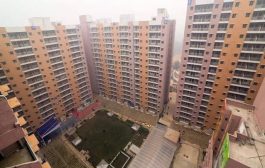















Recent Comments