


By AI-Powered PMC Akbar Jiwani, Special Correspondent – Real Estate, RealNewsofIndia.com
Mumbai, August 26, 2026
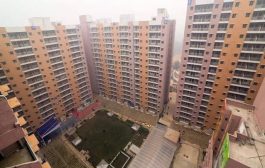
Mumbai’s Slum Rehabilitation Authority (SRA) has laid out its most ambitious housing roadmap yet, committing to deliver 5,09,873 rehabilitation homes to slum dwellers across the city by December 2030. The phased target, now formally adopted as the authority’s guiding benchmark, marks one of the largest state-led urban housing pushes in the country and signals a renewed government thrust on redevelopment as the backbone of Mumbai’s real estate growth story.
According to the roadmap, the SRA expects to hand over 90,264 homes in 2026 alone, scaling up to 1,48,219 by 2027, 2,44,356 by 2028, and 3,61,026 by 2029, before crossing the 5 lakh mark in 2030. The steep year-on-year escalation reflects the authority’s intent to compress decades of pending slum redevelopment into a single decade-end sprint, backed by faster approvals and closer coordination with allied state bodies.
Digital governance has become central to this push. Since May 2024, the SRA has rolled out 22 digital services, including online project tracking, grievance and complaint registration, and approval-status dashboards, aimed at cutting administrative delays and improving transparency for both developers and slum residents — a long-standing pain point in redevelopment projects that have historically stretched on for years.
The first wave of cluster redevelopment will focus on three high-density pockets: Behrampada in Bandra East, Majaswadi in Andheri, and Behram Baug in Oshiwara. To execute at this scale, the SRA is working in a joint-venture framework with the Mumbai Metropolitan Region Development Authority (MMRDA), the Maharashtra Housing and Area Development Authority (MHADA), and CIDCO, pooling land, funding, and planning resources across agencies that have often worked in silos.
On eligibility, the terms remain unchanged from existing SRA policy: structures established before January 1, 2000 qualify for a free 300 sq ft rehabilitation home, while those built between January 1, 2000 and January 1, 2011 are eligible for a similarly sized unit at Rs 2.50 lakh. Running alongside the citywide target, the Dharavi Redevelopment Project continues on its own separate timeline, targeting completion by 2033 and including economic rehabilitation provisions for more than 17,000 local businesses operating within the settlement.
Industry watchers, however, caution that the timeline carries real execution risk. Environmental clearances, disputed land ownership records, the cross-subsidization model that funds free rehabilitation housing through sale of surplus FSI, and the logistics of transit rent payments to displaced families remain the perennial bottlenecks that have slowed SRA projects in the past. Biometric verification of eligible slum dwellers and removal of ineligible claimants — both flagged by MHADA leadership as priorities in parallel slum-redevelopment work in Goregaon, Bandra, Kurla, and Borivali-Dahisar — will need to keep pace with the construction targets for the numbers to hold.
For Mumbai’s redevelopment ecosystem — PMCs, developers, housing societies, and legal advisors alike — the SRA’s 2030 target is a strong signal that slum rehabilitation and cluster redevelopment will remain the dominant growth engine for the city’s real estate sector through the rest of this decade. If the phased milestones are met, it would represent a step-change in how the state converts informal settlements into formal, RERA-compliant housing stock, while easing pressure on Mumbai’s chronically tight land supply.
Listed Realty Firms See Sales Bookings Slide 21% in Q1 FY27, But Godrej, Lodha, Sobha Buck the Trend
By AI Powered PMC Akbar Jiwani, Special Correspondent: Real Estate for RealNewsofIndia.com
India’s listed real estate developers reported a sharp 21% year-on-year drop in sales bookings for the first quarter of FY27, with combined pre-sales across 28 tracked companies falling to roughly ₹39,964 crore from ₹50,900 crore a year earlier, according to housing-sector data reviewed this week. The headline decline masks a sector that is bifurcating fast — a majority of developers actually grew their bookings, while a handful of large players pulled the average down sharply.
Of the 28 listed developers tracked, 19 posted growth in Q1 FY27 even as nine reported declines, underscoring that the slowdown is concentrated rather than sector-wide. Godrej Properties led the pack in absolute terms, booking sales worth ₹8,651 crore, up from ₹7,082 crore in the same quarter last year, retaining its position as the country’s largest listed developer by pre-sales value. Mumbai-based Lodha Developers also grew, to ₹4,630 crore from ₹4,450 crore, while Bengaluru’s Sobha Ltd nearly doubled its bookings to ₹3,656 crore from ₹2,079 crore.
The steepest fall came from DLF Limited, whose bookings plunged to just ₹657 crore from ₹11,425 crore a year ago — a decline directly linked to the company launching no new projects in the quarter rather than any drop in underlying demand. Prestige Estates also saw bookings roughly halve to ₹6,579.3 crore from ₹12,126.4 crore, and Gurugram-focused Signature Global slipped to ₹1,970 crore from ₹2,640 crore.
Industry consultants attribute the aggregate decline chiefly to a thinner launch pipeline among the larger developers this quarter, compounded by a high base effect from last year’s exceptionally strong bookings. Cautious buyer sentiment, stemming from global economic uncertainty tied to the ongoing West Asia conflict, has also been cited as a factor tempering big-ticket purchase decisions in the near term. Housing continued to make up the bulk of overall bookings across the tracked companies, reaffirming that residential demand — even where subdued — remains the backbone of listed developers’ revenue.
Looking ahead, most sector watchers expect a recovery from the second quarter onward, as developers who held back launches in Q1 FY27 bring new inventory to market and festive-season buying, traditionally a strong period for Indian housing sales, kicks in over the coming months. For homebuyers, the current lull could translate into a wider choice of ready and near-completion inventory in the short term, particularly in markets like Gurugram and pockets of Bengaluru where large developers have paused new launches.
The numbers land against the backdrop of a broader real estate sector that Indian policymakers and industry bodies continue to flag as a key engine of economic growth, with government initiatives around affordable housing, redevelopment of ageing housing stock in cities like Mumbai and Delhi, and reforms to project-registration and dispute-resolution norms under RERA all aimed at keeping the pipeline of new supply — and buyer confidence — intact through cycles like this one.
(This article is AI-assisted research and drafting, compiled and reviewed by PMC Akbar Jiwani, Special Correspondent: Real Estate for RealNewsofIndia.com, based on sector data and reporting current as of August 25, 2026.)

By AI-Powered PMC Akbar Jiwani, Special Correspondent:
NEW DELHI, August 23, 2026 — India’s commercial real estate sector is on the cusp of a structural shift, as the Securities and Exchange Board of India’s (SEBI) regulatory framework for Small and Medium Real Estate Investment Trusts (SM REITs) continues to open up institutional-grade office assets to retail investors. Industry estimates now peg the addressable SM REIT opportunity at over USD 60 billion by 2026, positioning fractional, SEBI-regulated ownership as one of the fastest-growing frontiers of India’s realty growth story.
THE REGULATORY FRAMEWORK
SEBI notified amendments to the SEBI (Real Estate Investment Trusts) Regulations, 2014, in 2024 specifically to bring small and medium REITs under a formal regulatory umbrella — a segment that had, until then, operated largely through unregulated fractional ownership platforms. The framework restricts SM REITs to pre-leased, income-generating commercial properties, explicitly prohibiting investment in under-construction assets, and mandates quarterly distribution of net cash flows to unitholders. The intent, regulators and industry bodies say, is to extend REIT-style investor protections — audited disclosures, custodian oversight, and mandatory distributions — to a category of real estate that was previously accessible mainly to high-net-worth individuals and institutions.
Complementing the SEBI framework, the Union Budget reduced the holding period for long-term capital gains on listed business trusts from 36 months to 12 months, a change industry executives describe as a meaningful boost to the liquidity and attractiveness of SM REIT units for retail and mid-market investors.
THE NUMBERS BEHIND THE GROWTH
According to real estate consultancy CBRE India, the potential market for SM REITs is underpinned by more than 300 million sq. ft. of completed Grade-A commercial office space across the country, with an additional 50 million sq. ft. expected to be completed by 2026. India’s total completed office stock now exceeds 800 million sq. ft., of which only about 88 million sq. ft. currently sits within listed, large-format REITs — underscoring how much headroom remains for the SM REIT category to expand.
City-wise, Mumbai leads with roughly 75 million sq. ft. of completed stock eligible for consideration, followed by the Delhi-NCR region at over 70 million sq. ft., Bengaluru at over 50 million sq. ft., and Hyderabad at over 30 million sq. ft. Pune, Kolkata, and Chennai each contribute upwards of 25 million sq. ft., with these secondary markets collectively expected to add another 14 million sq. ft. of eligible supply by 2026. Separately, Colliers has pointed to a potential float of roughly INR 4,500 billion (about USD 54 billion) achievable through the full listing of strata-owned office assets nationally, reinforcing the scale of the opportunity regulators are seeking to formalise.
INDUSTRY VOICES
“The SM REITs framework marks a pivotal moment for India’s real estate investment landscape, offering robust investor protections while unlocking access to institutional-grade assets for a wider base of investors,” said Anshuman Magazine, Chairman and CEO for India, South-East Asia, Middle East and Africa at CBRE. Rami Kaushal, Managing Director at CBRE India, added that the shortened capital gains holding period “will make SM REITs more attractive and accessible,” particularly for investors seeking steady, rent-linked income in a higher-for-longer interest rate environment.
WHY IT MATTERS FOR HOMEBUYERS AND INVESTORS
For ordinary investors, the SM REIT expansion effectively lowers the entry ticket into commercial real estate — traditionally a segment reserved for large institutional capital — to sums as low as a few lakh rupees per unit, while offering SEBI-mandated disclosure and custody standards that fractional platforms could not previously guarantee. For developers and asset owners, the framework offers a formal, regulator-backed exit and monetisation route for stabilised, leased office assets, potentially freeing up capital for fresh residential and commercial development across India’s top cities.
THE BIGGER PICTURE
Taken together with a stable interest rate environment — the Reserve Bank of India has held its repo rate steady through 2026 — and continuing reforms to the Real Estate (Regulation and Development) Act aimed at streamlining compliance, the SM REIT push adds another pillar to India’s broader real estate growth narrative. Consultancies tracking the sector expect India’s overall real estate market to approach the USD 1 trillion mark by 2030, with formalised, regulator-backed investment vehicles such as SM REITs and mainline REITs playing an increasingly central role in channelling both domestic and international capital into the country’s built environment. For a market historically dominated by informal transactions and opaque pricing, the shift toward regulated, transparent investment products marks a meaningful step in the maturing of Indian real estate as an institutional asset class.
— This article is compiled using AI-assisted research from publicly available sources.
By AI-Powered PMC Akbar Jiwani, Special Correspondent: Real Estate for Realnewsofindia.com
August 23, 2026

By AI Powered PMC Akbar Jiwani, Special Correspondent: Real Estate for RealNewsofIndia.com
New Delhi, August 24, 2026
India’s most ambitious rescue operation for stuck housing projects has crossed a defining milestone — and it is set to get bigger. The Special Window for Affordable and Mid-Income Housing (SWAMIH) Investment Fund, the Centre’s flagship distressed-housing revival scheme, has now delivered roughly 61,000 completed homes to buyers across the country, according to government data, even as authorities move ahead with a follow-on SWAMIH Fund 2 worth Rs 15,000 crore to widen the rescue net.
A scheme built for buyers stuck in limbo
Launched in November 2019, SWAMIH was designed to answer a very specific and very painful problem: lakhs of homebuyers across India who had paid for flats years earlier, only to watch construction stall as developers ran out of money or got tangled in litigation. Rather than bail out builders directly, the fund — managed by SBI Ventures, a subsidiary of State Bank of India, with backing from the Government of India, public sector banks and LIC — provides last-mile financing strictly to finish and hand over apartments that are otherwise stuck.
Government figures show the fund has now fully committed its investible corpus, backing 145-plus stressed projects spanning roughly 30 cities and more than 90 million square feet of construction. Of the homes delivered, over 7,000 units fall in the rehabilitation and Economically Weaker Section categories, while affordable and mid-income housing makes up close to 44 percent of the overall portfolio — squarely the segment that has felt the most pain from stalled construction.
The wider economic footprint
Officials point out that SWAMIH’s impact extends well beyond handing over keys. The scheme is credited with unlocking over Rs 37,400 crore in previously stuck capital and generating more than 36,000 jobs, including roughly 3,500 permanent positions, with women accounting for about 15 percent of the workforce on these sites. Completed projects have also fed government coffers directly, contributing close to Rs 6,900 crore in GST, stamp duty and other levies to the Centre and states, while construction activity under the fund has driven demand for more than 20 lakh tonnes of cement and 5.5 lakh metric tonnes of steel.
Notably, the fund is also recycling capital rather than simply spending it down. Of the roughly Rs 7,000 crore drawn from the Government of India, around Rs 3,500 crore — about half — has already been returned, with dozens of full and partial exits completed as projects are finished and units sold.
Fund 2.0: a bigger, blended-finance sequel
With the original corpus now fully committed, the government’s attention has shifted to SWAMIH Fund 2, first flagged in the Union Budget 2025-26 as a Rs 15,000 crore blended-finance facility. The Finance Ministry has since held consultations with public sector lenders and LIC on structuring and scope, with the explicit target of completing roughly one lakh additional stalled housing units — nearly double the homes delivered so far under the original scheme.
For India’s real estate sector, the significance is twofold. First, it offers direct relief to homebuyers who have waited years, in some cases over a decade, for possession — a long-standing sore point that has dogged the sector’s reputation. Second, by absorbing and completing distressed inventory rather than letting it languish, the scheme helps developers and lenders clean up balance sheets, indirectly supporting the broader housing market’s health.
Set against a resilient broader market
The SWAMIH milestone lands at a time when India’s residential real estate market is otherwise showing firm momentum. The Reserve Bank of India has held its repo rate steady through multiple policy reviews this year, keeping home loan EMIs stable for borrowers, while housing prices in markets such as the National Capital Region have risen sharply on the back of tight new supply and steady end-user demand. Listed developers have also reported strong pre-sales growth through the year, underlining continued buyer confidence even as prices firm up.
Taken together, the completion of SWAMIH’s original mandate and the impending rollout of Fund 2 mark one of the more consequential government interventions in Indian real estate in recent years — one aimed less at boosting new construction and more at making good on promises already made to ordinary homebuyers.

By AI-Powered PMC Akbar Jiwani, Special Correspondent – Real Estate, Realnewsofindia.com
India’s residential real estate market showed resilience rather than retreat in the second quarter of 2026, with the country’s top eight cities recording 91,729 home sales even as headline numbers dipped from a year ago, according to the latest quarterly market reports. The data paints a picture of a sector settling into a more mature, selective phase of growth rather than one in decline — a distinction industry watchers say matters for homebuyers, developers and policymakers alike.
THE HEADLINE NUMBERS
Across the eight major markets — Mumbai Metropolitan Region (MMR), Bengaluru, Pune, Hyderabad, Chennai, Delhi-NCR, Kolkata and Ahmedabad — developers sold 91,729 units in Q2 2026, a sequential dip of 4.4 percent and a year-on-year decline of 6.1 percent from 97,674 units in the same quarter last year. New launches followed a similar pattern, with 89,161 units introduced during the quarter, down 4.2 percent quarter-on-quarter but still up 6.0 percent compared to a year earlier.
The average sales-weighted price across these markets rose to Rs 10,153 per square foot, a modest 1.0 percent increase over the previous quarter — evidence that even as unit sales softened, pricing power held firm in most micro-markets.
A CITY-BY-CITY PICTURE
The national numbers mask sharply divergent stories at the city level.
Hyderabad was the standout performer, with home sales rising 14.6 percent year-on-year to 13,196 units, supported by a 21.6 percent jump in new launches — a sign that developers remain confident in the city’s demand fundamentals.
Chennai posted the sharpest sales growth of any major market, up 36 percent year-on-year to 7,183 units, even as new launches there fell 43.3 percent annually, pointing to pent-up demand being absorbed against constrained new supply. Prices in the city rose 4.4 percent.
The Mumbai Metropolitan Region remained the country’s largest market by volume, with 24,112 units sold, though this was down 7.0 percent year-on-year. MMR also commanded the highest average price among the eight cities at Rs 15,422 per square foot, up a striking 20.4 percent from a year ago — underscoring how affordability pressures are building even as absolute sales cool.
Bengaluru and Pune, both closely tied to the technology sector, saw sales decline 9.2 percent and 20.8 percent year-on-year respectively. Bengaluru’s average price nonetheless climbed 26 percent annually to Rs 9,931 per square foot, while Pune crossed the Rs 8,000 per square foot mark for the first time in its history, at Rs 8,084.
Delhi-NCR and Ahmedabad both saw sales fall roughly 7-20 percent year-on-year, though Ahmedabad recorded the strongest quarter-on-quarter price gain of any city at 7 percent, while remaining the most affordable major market at Rs 5,295 per square foot. Kolkata’s sales dipped 8.6 percent annually but rose 22 percent sequentially — the strongest quarter-on-quarter recovery among the eight cities.
WHAT’S DRIVING THE SLOWDOWN — AND THE RESILIENCE
Analysts point to a mix of global and sector-specific headwinds behind the softer sales numbers, particularly in technology-heavy cities such as Bengaluru and Pune. AI-led workforce restructuring across the IT and technology sector has weighed on buyer sentiment and hiring-linked home purchases, while broader global uncertainty — including the fallout from the US-Iran conflict — has added caution to big-ticket discretionary spending in tech hubs.
Yet the market has had genuine tailwinds to lean on. The Reserve Bank of India has kept its repo rate steady at 5.25 percent, providing predictability on home-loan interest rates at a time when affordability is already stretched in top-tier markets. Meanwhile, recent GST rationalisation on key construction materials has offered developers some relief on input costs, support that should filter through to project viability and, over time, to pricing.
Industry voices have been quick to frame the quarter as one of maturation rather than weakness. As one developer executive summarised: “Q2 2026 confirms India’s residential market is maturing, not weakening. Prices held above Rs 10,000 per square foot despite selective buying.”
THE GOVERNMENT’S PARALLEL PUSH ON STALLED HOUSING
The quarter’s sales data arrives alongside continued government efforts to address one of Indian real estate’s most persistent problems: stalled housing projects. The Special Window for Affordable and Mid-Income Housing Investment Fund (SWAMIH), launched in 2019 and managed by SBICAP Ventures, has now completed more than 58,000 homes across 146 projects in 20 cities and 12 states, unlocking over Rs 49,500 crore in capital and creating more than 30,000 jobs in the process. The fund is on track to deliver over 1 lakh homes in total, benefiting an estimated 2.38 lakh people.
Building on that track record, the Union Budget for 2025-26 announced SWAMIH Fund 2, a new Rs 15,000 crore blended-finance vehicle backed by the government, public sector banks and LIC, aimed at completing a further 1 lakh stalled units. Together with steady interest rates and GST relief on construction inputs, the SWAMIH initiative forms a key plank of the government’s strategy to keep housing delivery on track even as headline sales volumes moderate.
THE OUTLOOK
Taken together, the Q2 2026 numbers suggest an Indian housing market that is recalibrating rather than reversing course: sales are down from last year’s highs, but prices are largely holding or rising, government-backed liquidity support for stalled projects continues to scale up, and pockets of strong demand — Hyderabad and Chennai chief among them — point to underlying confidence that remains intact. For homebuyers and investors watching the market, the message from this quarter is one of selective opportunity rather than either euphoria or alarm.

By AI-Powered PMC Akbar Jiwani, Special Correspondent: Real Estate for Realnewsofindia.com
New Delhi, August 21, 2026 — India’s senior living housing segment is emerging as one of the fastest-growing niches within the country’s real estate sector, with developers, operators and private equity investors committing more than Rs 13,000 crore since January 2025 toward new projects, according to industry data reviewed this week. The wave of capital is expected to add roughly 75,000 new senior living units to the market over the next three to four years, more than tripling the current organised inventory of around 25,000 units.
The investment surge comes as India’s elderly population continues to expand rapidly and urban families increasingly seek professionally managed, lifestyle-oriented housing for ageing parents rather than relying solely on traditional joint-family arrangements.
A MARKET ON THE VERGE OF A TRILLION-RUPEE MILESTONE
According to research from property consultancy Colliers India, the organised senior living market — currently valued at roughly Rs 30,000 crore — is projected to nearly quadruple to about Rs 1 lakh crore by 2030. The consultancy expects the segment to grow from Rs 30,000 crore to nearly Rs 70,000 crore by 2028 en route to that milestone, with organised inventory rising from 25,000 units today to as many as 1 lakh units by the end of the decade.
Even so, supply remains well short of underlying need. Colliers estimates demand for senior housing could reach 28-30 lakh units by 2030, up from 20-22 lakh units currently, meaning the organised, professionally managed segment still covers only a sliver of the total market — penetration is expected to rise from about 1.3 percent today to roughly 4 percent by 2030.
“India’s senior living market is entering a period of accelerated growth, driven by strong demographic shifts,” said Badal Yagnik, CEO of Colliers India. “Organised senior living inventory is expected to quadruple over the next three to four years and become a trillion-rupee market by 2030.”
BEYOND METROS: TIER II, III CITIES AND SPIRITUAL HUBS LEAD EXPANSION
Unlike earlier waves of real estate investment concentrated in India’s largest metropolitan markets, the senior living boom is notably decentralised. Industry estimates suggest 30-40 percent of new senior living launches over the coming years will be located in Tier II and Tier III cities and pilgrimage destinations, including Coimbatore, Puducherry, Dehradun and Vadodara, as well as spiritual hubs such as Tirupati, Vrindavan and Ayodhya.
Developers active in the space say the shift reflects both land economics and a change in how Indian families view senior housing.
“Senior housing is emerging as a preferred lifestyle choice for seniors who value independence, community living and access to quality healthcare, rather than a last-resort option,” said Anil Godara of Gurugram-based J Estates, one of the developers expanding in the segment.
Adarsh Narahari of Primus Senior Living echoed the sentiment, noting a broader generational shift: “People are living longer, families are more spread out geographically, and there is a real conversation now about what a good old age actually looks like — that is driving demand for purpose-built communities.”
TECHNOLOGY AND HEALTHCARE INTEGRATION RESHAPING THE PRODUCT
New-generation senior living projects are increasingly bundling real estate with healthcare infrastructure, industry data shows. Developers are integrating telemedicine access, remote health monitoring and AI-enabled emergency response systems into project design, positioning senior living as a hybrid of residential real estate and managed healthcare services rather than standalone housing stock.
This convergence has attracted institutional investors and private equity players who see recurring, service-linked revenue streams — such as facility management, healthcare tie-ups and hospitality services — layered on top of traditional real estate returns, a model that has already proven successful in more mature senior housing markets overseas.
WHAT IT MEANS FOR INDIA’S BROADER REAL ESTATE GROWTH STORY
The senior living surge fits into a wider pattern of resilience across Indian real estate this year. Separately, industry data released this week showed India’s real estate sector attracted robust capital inflows in the first half of 2026 even amid global geopolitical headwinds, underscoring continued investor confidence in the country’s property fundamentals — from housing and office space to specialised segments like senior living, data centres and warehousing.
For India’s rapidly ageing demographic — and for a real estate industry looking for its next high-growth vertical — the senior living segment is fast becoming a bellwether. With committed capital already exceeding Rs 13,000 crore and mainstream developers entering what was once a niche category, the sector is on track to become a defining growth story for Indian real estate through the end of the decade.
—
By AI-Powered PMC Akbar Jiwani, Special Correspondent: Real Estate for Realnewsofindia.com

AI Powered PMC Akbar Jiwani, Special Correspondent: Real Estate for Realnewsofindia.com
NEW DELHI, August 20, 2026 — India’s real estate sector has received a significant regulatory cushion this month, with the Ministry of Housing and Urban Affairs directing Real Estate Regulatory Authorities (RERAs) across states to grant eligible housing projects a blanket extension of up to four months on their completion timelines. The move comes as the industry grapples with supply-chain disruptions triggered by the ongoing West Asia conflict, and it marks one of the most consequential government interventions in the sector this year.
A “Force Majeure” Call from the Centre
The Department of Expenditure has formally classified the West Asia crisis as a “force majeure” event, citing disrupted global supply chains, sharply higher freight costs, and shortages of key construction inputs — cement, steel, aluminium and copper — that have hit builders nationwide. Acting on this classification, the housing ministry has advised state RERAs to extend timelines for projects whose original or previously extended completion date falls on or after February 28, 2026. Developers can apply for the extension through a single, simplified application, without additional paperwork or scrutiny of individual project delays.
Haryana RERA has already acted on the advisory, granting the four-month extension to all its registered projects, following an identical move by Maharashtra RERA. Industry voices from the National Capital Region — including Signature Global’s Pradeep Aggarwal, SS Group’s Ashok Singh Jaunapuria, and Ganga Realty’s Neeraj K Mishra — have welcomed the relief, noting that construction costs have risen an estimated 15–30 percent and labour costs 15–20 percent since February 2026, driven by higher prices for steel, cement, aluminium, fuel and imported materials.
What It Means for Homebuyers
For prospective homeowners, the extension translates into a real, if unwelcome, shift in expectations: possession dates for a large number of under-construction projects are likely to move by up to four months. Property consultancy Anarock estimates that roughly 54 lakh homes across the country could see delivery pushed back this year as a result of the disruption. Buyers who had planned relocations, house-warming ceremonies, or loan-linked possession milestones around earlier dates will need to revise those plans.
Importantly, legal experts have cautioned that the force majeure extension is meant to cover timelines alone — it does not entitle developers to raise prices on units already sold, unless the original buyer agreement explicitly permits cost escalation clauses. RERA authorities have signalled they will continue to scrutinise complaints closely: Kerala RERA, for instance, recently ordered a builder to pay 16.65 percent simple annual interest over seven years for delays it ruled were not genuinely justified, rejecting the developer’s citing of demonetisation, floods and the pandemic as excuses. Homebuyers who believe a developer is misusing the extension can still file complaints online with supporting documentation, and RERA’s existing remedies — compensation, interest payments, refunds and possession orders — remain fully in force.
A Sector Holding Its Ground
The regulatory relief lands alongside broader signs of resilience in India’s property market. A fresh assessment from CareEdge Ratings this week found that the domestic real estate sector is likely to stay resilient despite the West Asia crisis, pointing to healthy underlying housing demand and steady capital inflows into Indian real estate even as global uncertainty persists. Taken together, the RERA extension and the ratings agency’s outlook suggest that while builders are absorbing real cost pressure, the sector’s fundamentals — demand, investor appetite, and regulatory support — remain intact heading into the second half of 2026.
For an industry that has spent the past several years rebuilding buyer trust under the RERA framework, this latest intervention is being read as evidence that the regulatory system can flex to protect legitimate developers from external shocks, while still holding the line against those using the crisis as cover for undue delay.
—
Written by AI Powered PMC Akbar Jiwani, Special Correspondent: Real Estate, for Realnewsofindia.com

By AI Powered PMC Akbar Jiwani, Special Correspondent: Real Estate for Realnewsofindia.com
New Delhi, August 19, 2026
The Delhi Development Authority (DDA) has cleared the Master Plan for Delhi 2047 (MPD-2047), setting the stage for the most significant reset of the capital’s urban and real estate landscape in over two decades. The plan, approved on August 12 under Lieutenant Governor Taranjit Singh Sandhu, now moves to the Union Ministry of Housing and Urban Affairs (MoHUA) for final approval and official notification — a step developers, homebuyers and investors across the National Capital Region are watching closely.
A Plan Five Years in the Making
MPD-2047 is only the fourth master plan in Delhi’s history, following the original 1962 plan and subsequent iterations in 2001 and 2021. Notably, the DDA had first cleared a draft as far back as February 2023, but the plan faced repeated delays before finally clearing this month. Its extended horizon — through 2047 — deliberately aligns with the central government’s “Viksit Bharat 2047” vision of a developed India by the centenary of independence.
What Changes for Housing
The plan’s most consequential move for the housing market is a uniform redevelopment policy for Delhi’s ageing two-storey residential colonies, many of which are more than 50 years old and structurally deficient. Under the new framework, built-up two-storey units will now receive redevelopment rights equivalent to vacant residential plots — potentially unlocking large-scale reconstruction across DDA-built housing stock that has long been considered undevelopable under existing rules.
The plan also leans heavily on Transit-Oriented Development (TOD), permitting higher-density construction along metro and rail corridors, alongside eased land-pooling norms intended to unlock fresh land parcels for housing. The urgency behind this push is stark: data cited alongside the plan shows affordable homes priced under ₹40 lakh made up 62 percent of new launches in Delhi-NCR in 2020, but had collapsed to just 11 percent of supply by 2025, even as luxury units swelled to roughly 70 percent of new launches. Officials are framing TOD and land-pooling reforms as a direct answer to that affordability squeeze.
Yamuna Floodplain Gets Protection
In a significant environmental commitment, MPD-2047 imposes a ban on concrete construction in the core Yamuna floodplain, designated the O-Zone — an attempt to permanently shield the river’s ecosystem from further encroachment after years of contested development pressure along its banks.
Regularisation and Ease of Approvals
The plan also proposes regularising 1,511 unauthorised colonies on an “as-is-where-is” basis, a move that could bring long-pending legal clarity to lakhs of residents living in such settlements. Separately, amendments to the Unified Building Bye-Laws are intended to simplify and speed up building permit approvals — a persistent grievance among both individual homeowners and developers navigating Delhi’s construction clearance process.
The Investment Number Everyone Is Talking About
Industry estimates accompanying the plan peg its potential to attract ₹25–30 lakh crore in investment over its lifecycle, spanning housing, commercial development, infrastructure and urban regeneration. The DDA has described the plan as adopting “an integrated approach towards housing, economic growth, mobility, environmental sustainability, infrastructure, heritage conservation, urban regeneration and citizen-centric governance.”
What Happens Next
MPD-2047 is not yet law. The plan now awaits final vetting and notification by MoHUA before it takes legal effect — a process that, given the plan’s own history of delay, developers are watching warily. Once notified, implementation will fall to the DDA and Delhi’s municipal bodies, with redevelopment and TOD provisions expected to be rolled out in phases rather than all at once.
Why It Matters
For homebuyers, the redevelopment policy could eventually widen supply in central and established Delhi neighbourhoods where new construction has been all but frozen for years. For developers, eased land pooling and TOD densification open fresh avenues in a market that has increasingly tilted toward premium and luxury launches at the expense of affordable stock. For the city at large, the Yamuna floodplain protections and colony regularisation address two of Delhi’s longest-running urban fault lines in a single stroke.
Whether MPD-2047 lives up to its ambition will depend on how quickly — and how faithfully — MoHUA notifies it and the DDA executes it. Realnewsofindia.com will continue tracking the plan’s progress through central government approval and its early implementation.
————————————————–
This article was researched and written by AI Powered PMC Akbar Jiwani, Special Correspondent: Real Estate for Realnewsofindia.com, based on official DDA statements and reporting from Business Standard and Business Today.

y AI Powered PMC Akbar Jiwani, Special Correspondent — Real Estate, for Realnewsofindia.com
The Reserve Bank of India’s Monetary Policy Committee (MPC) has kept the repo rate unchanged at 5.25 percent for the fourth consecutive review, a decision announced by RBI Governor Sanjay Malhotra following the Committee’s three-day meeting held August 3–5, 2026. The central bank retained its “neutral” policy stance, signalling that it will continue to watch domestic inflation trends and global economic developments before making any further move on interest rates.
For India’s real estate sector, which has increasingly come to treat monetary policy announcements as a bellwether for demand, the decision lands as welcome, if unspectacular, news: stability rather than stimulus, but stability that developers and homebuyers alike say they can plan around.
What the Rate Hold Means for Homebuyers
Because the bulk of floating-rate home loans in India are now linked to the repo rate through external benchmark lending rates (EBLR), an unchanged repo rate translates directly into unchanged home loan EMIs. Borrowers with existing floating-rate loans will see no immediate change in their monthly outgo, while prospective buyers gain a rare commodity in today’s market: predictability.
That predictability matters. With India’s GDP growth for the year projected at around 6.7 percent, real estate advisors say the combination of steady borrowing costs and continued economic momentum should keep housing demand resilient across major micro-markets, particularly in the mid-income and premium segments.
Industry Reaction: Cautious Optimism
Reaction from developers and industry bodies has been consistently positive, framing the pause as a stabiliser for a sector that depends heavily on buyer confidence and financing certainty.
Kamlesh Thakur, President of NAREDCO Maharashtra, called the decision “a prudent approach amid global uncertainties,” adding that he expects housing demand to stay strong in both the mid-income and premium categories through the rest of the fiscal year.
Kaushal Agarwal, Chairman of The Guardians Real Estate Advisory, said the continuity in policy rates gives buyers “greater predictability,” and that with GDP growth holding near 6.7 percent, demand should remain robust across the country’s major cities.
Bhavesh Kothari, Founder and CEO of Property First Realty, echoed that sentiment: “A stable interest rate environment gives greater confidence to both buyers and developers, while supporting the housing sector’s long-term growth.”
Manan Joshi, Founder of Sarvam Properties, said a steady policy environment “helps maintain affordability and reinforces buyer confidence, particularly in emerging residential markets,” while Jash Panchamia, Executive Director of Jaypee Infratech Limited, noted that stable rates combined with healthy financing options should “sustain demand, particularly in mid-income housing.”
Not every voice was unreserved. Shraddha Kedia-Agarwal, Director at Transcon Developers, acknowledged that a rate cut would have offered a more direct affordability boost, but said the unchanged rate still “reassures consumers during economic uncertainty” and supports continued momentum in the premium and luxury segments. Shilpin Tater, Managing Director of Superb Realty, described the decision as balanced — giving developers room to plan with certainty while shielding homebuyers from any immediate uptick in lending rates.
Reading the Wider Policy Signal
The RBI’s fourth consecutive pause comes against a backdrop of broader regulatory activity in the housing sector this year. Real estate market trackers note that 2026 has been marked by tighter RERA compliance enforcement and a sharper focus on grievance redress mechanisms, reflecting a wider government push toward stronger developer accountability and buyer protection — themes that regulators and industry bodies alike have flagged as central to sustaining trust in the sector.
Taken together, a steady interest rate regime and continued regulatory tightening point to a real estate market that policymakers are trying to grow on a foundation of predictability rather than short-term stimulus. For a sector that has weathered volatile rate cycles in the past, that combination — even without a rate cut — is being read by most industry watchers as a net positive for sustained, healthier growth through the remainder of FY27.

By AI-Powered PMC Akbar Jiwani, Special Correspondent: Real Estate for Realnewsofindia.com
August 16, 2026
India’s real estate sector continues its steady climb through the third quarter of 2026, buoyed by stable interest rates, strong developer presales, and a landmark regulatory relief for homebuyers. Here is today’s roundup of the biggest stories shaping the country’s property market.
RBI HOLDS REPO RATE STEADY AT 5.25%, EMIS TO STAY UNCHANGED
The Reserve Bank of India’s Monetary Policy Committee has kept the repo rate unchanged at 5.25% for a fourth consecutive review, maintaining a neutral stance. The pause brings continued relief to homebuyers and developers alike, keeping home loan EMIs stable and supporting sustained demand in the housing market at a time when several metros are seeing renewed buyer activity.
NCR RESIDENTIAL PRICES JUMP 13% YOY AS NEW LAUNCHES SHRINK
Delhi-NCR has emerged as the fastest-appreciating residential market among India’s seven major metros, with prices rising approximately 13% year-on-year in the latest quarter. Gurugram’s key corridors — Dwarka Expressway, Southern Peripheral Road and Golf Course Extension Road — led the charge. New housing launches in the region fell roughly 40% year-on-year, and tight supply is keeping price momentum firm even as raw transaction volumes soften slightly. Analysts note that despite the price rise, affordability has actually improved for the first time since the post-pandemic surge, thanks to rising incomes and steady loan rates.
NOIDA OVERTAKES BENGALURU AND GURUGRAM IN PRICE GROWTH, POWERED BY JEWAR AIRPORT
Noida has recorded the sharpest residential price appreciation among major Indian cities, with average prices climbing roughly 111% between 2020 and 2025 — from about Rs 6,300 to Rs 13,300 per square foot — outpacing Gurugram’s 86% and Bengaluru’s 66% growth over the same period. The rally is being driven by the under-construction Noida International Airport at Jewar, expanding metro connectivity, new expressways, and a growing base of IT and manufacturing jobs pulling end-users (not just investors) into the market.
In a related development, the Yamuna Expressway Industrial Development Authority (YEIDA) has launched 973 residential plots across Sectors 15C, 18 and 24A near the upcoming airport, priced at approximately Rs 36,260 per square metre and allotted through a transparent, draw-based scheme.
LISTED DEVELOPERS POST STRONG Q1 FY27 PRESALES; GODREJ EXPANDS THANE LAND BANK
Leading listed developers — DLF, Lodha, Prestige, Oberoi Realty and Godrej Properties — reported robust presales growth for the June quarter, with the broader sector recording an estimated $2.3 billion in transaction volume. Godrej Properties also acquired an 18-acre land parcel in Thane with significant development potential, while several developers continued strategic land acquisitions along the Gurugram corridor, underscoring continued confidence in India’s residential growth story.
RERA DECRIMINALISATION: RELIEF FOR HOMEBUYERS, ACCOUNTABILITY INTACT FOR DEVELOPERS
In a significant regulatory shift, the Jan Vishwas (Amendment of Provisions) Act, 2026 has amended Section 68 of the Real Estate (Regulation and Development) Act, removing the threat of criminal imprisonment for homebuyers who fail to comply with tribunal orders. Previously, non-compliance could attract imprisonment of up to one year or fines of up to 10% of the property’s value; now, only monetary penalties apply. Importantly, the amendment is narrowly targeted — criminal penalties for developers and real estate agents under Sections 59-66 for promoter misconduct and project violations remain fully intact. The change is being welcomed as relief for middle-class homebuyers who had faced disproportionate legal risk over procedural lapses, while preserving RERA’s core builder-accountability framework.
THE BIGGER PICTURE
Taken together, today’s developments point to a market finding a new equilibrium: rate stability is anchoring buyer sentiment, infrastructure-led micro-markets like Noida are redrawing the price-growth map, developers are deploying capital confidently into land and new launches, and regulators are fine-tuning consumer protections without diluting oversight of builders. With festive-season demand approaching, all eyes will be on how these trends translate into sales momentum over the coming weeks.
—
This article has been compiled using AI-assisted research from publicly available real estate news, market reports and regulatory updates, under the byline of PMC Akbar Jiwani, Special Correspondent: Real Estate for Realnewsofindia.com.
















Recent Comments