
By AI Powered PMC Akbar Jiwani, Special Correspondent: Real Estate for Realnewsofindia.com
New Delhi, August 19, 2026
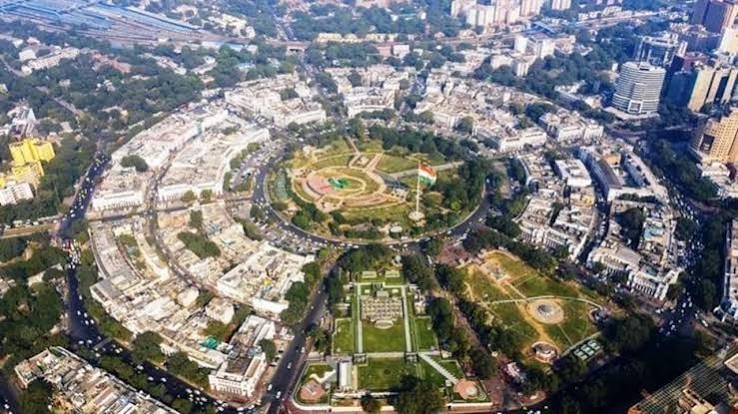
The Delhi Development Authority (DDA) has cleared the Master Plan for Delhi 2047 (MPD-2047), setting the stage for the most significant reset of the capital’s urban and real estate landscape in over two decades. The plan, approved on August 12 under Lieutenant Governor Taranjit Singh Sandhu, now moves to the Union Ministry of Housing and Urban Affairs (MoHUA) for final approval and official notification — a step developers, homebuyers and investors across the National Capital Region are watching closely.
A Plan Five Years in the Making
MPD-2047 is only the fourth master plan in Delhi’s history, following the original 1962 plan and subsequent iterations in 2001 and 2021. Notably, the DDA had first cleared a draft as far back as February 2023, but the plan faced repeated delays before finally clearing this month. Its extended horizon — through 2047 — deliberately aligns with the central government’s “Viksit Bharat 2047” vision of a developed India by the centenary of independence.
What Changes for Housing
The plan’s most consequential move for the housing market is a uniform redevelopment policy for Delhi’s ageing two-storey residential colonies, many of which are more than 50 years old and structurally deficient. Under the new framework, built-up two-storey units will now receive redevelopment rights equivalent to vacant residential plots — potentially unlocking large-scale reconstruction across DDA-built housing stock that has long been considered undevelopable under existing rules.
The plan also leans heavily on Transit-Oriented Development (TOD), permitting higher-density construction along metro and rail corridors, alongside eased land-pooling norms intended to unlock fresh land parcels for housing. The urgency behind this push is stark: data cited alongside the plan shows affordable homes priced under ₹40 lakh made up 62 percent of new launches in Delhi-NCR in 2020, but had collapsed to just 11 percent of supply by 2025, even as luxury units swelled to roughly 70 percent of new launches. Officials are framing TOD and land-pooling reforms as a direct answer to that affordability squeeze.
Yamuna Floodplain Gets Protection
In a significant environmental commitment, MPD-2047 imposes a ban on concrete construction in the core Yamuna floodplain, designated the O-Zone — an attempt to permanently shield the river’s ecosystem from further encroachment after years of contested development pressure along its banks.
Regularisation and Ease of Approvals
The plan also proposes regularising 1,511 unauthorised colonies on an “as-is-where-is” basis, a move that could bring long-pending legal clarity to lakhs of residents living in such settlements. Separately, amendments to the Unified Building Bye-Laws are intended to simplify and speed up building permit approvals — a persistent grievance among both individual homeowners and developers navigating Delhi’s construction clearance process.
The Investment Number Everyone Is Talking About
Industry estimates accompanying the plan peg its potential to attract ₹25–30 lakh crore in investment over its lifecycle, spanning housing, commercial development, infrastructure and urban regeneration. The DDA has described the plan as adopting “an integrated approach towards housing, economic growth, mobility, environmental sustainability, infrastructure, heritage conservation, urban regeneration and citizen-centric governance.”
What Happens Next
MPD-2047 is not yet law. The plan now awaits final vetting and notification by MoHUA before it takes legal effect — a process that, given the plan’s own history of delay, developers are watching warily. Once notified, implementation will fall to the DDA and Delhi’s municipal bodies, with redevelopment and TOD provisions expected to be rolled out in phases rather than all at once.
Why It Matters
For homebuyers, the redevelopment policy could eventually widen supply in central and established Delhi neighbourhoods where new construction has been all but frozen for years. For developers, eased land pooling and TOD densification open fresh avenues in a market that has increasingly tilted toward premium and luxury launches at the expense of affordable stock. For the city at large, the Yamuna floodplain protections and colony regularisation address two of Delhi’s longest-running urban fault lines in a single stroke.
Whether MPD-2047 lives up to its ambition will depend on how quickly — and how faithfully — MoHUA notifies it and the DDA executes it. Realnewsofindia.com will continue tracking the plan’s progress through central government approval and its early implementation.
————————————————–
This article was researched and written by AI Powered PMC Akbar Jiwani, Special Correspondent: Real Estate for Realnewsofindia.com, based on official DDA statements and reporting from Business Standard and Business Today.