
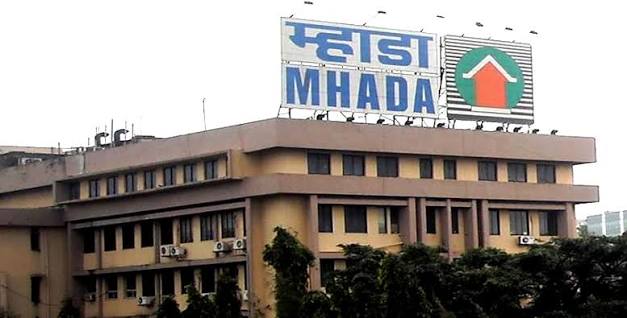
For nearly 5,000 families living in some of Mumbai’s oldest MHADA colonies at Bandra Reclamation and Adarsh Nagar in Worli, the summer of 2026 has turned into a legal cliffhanger. On July 29, 2026, the Supreme Court of India stepped into a dispute that had already travelled through the Bombay High Court, directing that no work order be issued for the state’s ambitious integrated cluster redevelopment of these two layouts until at least August 13, 2026. The order, passed by a bench of Justice Vikram Nath and Justice Sandeep Mehta, is a temporary pause rather than a final verdict, but it has thrust one of Mumbai’s largest live redevelopment schemes, and the legal architecture behind cluster redevelopment itself, back into the spotlight.
The case, formally titled M.I.G. Adarsh Nagar Co-operative Housing Society Ltd. v. State of Maharashtra & Ors., is being watched closely by housing societies, developers, planners and policymakers alike because it tests the limits of the state’s power to redevelop MHADA layouts without the individual consent of every housing society involved.
Background
The Adarsh Nagar and Bandra Reclamation layouts were built between the 1950s and 1960s to house middle- and lower-income families under the Maharashtra Housing and Area Development Authority’s original mandate. Decades on, the buildings have aged into structurally weak, dilapidated stock, while the land beneath them, some of the most valuable real estate in Mumbai, sits underutilised at low-rise densities. Adarsh Nagar spans about 34.33 acres in Worli and Bandra Reclamation spans about 98.27 acres, together accounting for roughly 132 acres and nearly 5,000 tenements.
Rather than allow each of the dozens of housing societies within these layouts to pursue piecemeal, building-by-building redevelopment, the Maharashtra government opted for an integrated, planned approach. This was formalised through Government Resolutions dated April 25, 2025 and December 15, 2025, which laid out the framework for cluster redevelopment of the two layouts under the state’s broader housing policy, drawing on the cluster redevelopment provisions of Regulation 33(9) of the Development Control and Promotion Regulations, 2034 (DCPR 2034), which apply specifically to MHADA layouts and allow for consolidated redevelopment of multiple buildings in a designated area with enhanced incentive FSI.
MHADA subsequently floated a tender on April 8, 2026 for appointment of a Construction and Development Agency for the project, and Adani Properties emerged as the highest bidder in that process.
Current Developments
Several cooperative housing societies within the two layouts challenged the GRs and the tender before the Bombay High Court, arguing that they were being compelled to join a cluster scheme without the consent of individual flat owners, and that this violated their redevelopment rights. On July 2, 2026, a bench of Justices M.S. Karnik and S.M. Modak delivered a 246-page judgment dismissing the petitions and upholding the state’s policy. The court held that “the city of Mumbai has to grow and keep pace with changing times,” and that integrated planning of infrastructure such as roads, drainage, open spaces, parking and civic amenities across an entire layout served the larger public interest better than fragmented redevelopment by individual societies. It also rejected arguments over MHADA’s decision to convert its own share of the land into an FSI premium under Regulation 33(5), finding nothing contrary to law in that approach.
Crucially, the High Court accepted the state’s assurance that no work order would be issued for four weeks, giving the petitioners a window to approach the Supreme Court. That is exactly what happened. On July 29, the Supreme Court extended this protection, directing that counter affidavits be filed within a week, rejoinders within a further week, and listing the matter for final hearing on August 13, 2026, immediately after fresh matters, while keeping the “no work order” restraint alive in the interim.
Detailed Analysis
The petitioners’ challenge goes well beyond a simple planning disagreement. Their case rests on constitutional grounds, arguing that Regulation 33(9)(4)(a) of DCPR 2034 and Regulation 21(5) of the MHADA Estate Management Regulations, 1981, both of which permit MHADA to drive redevelopment without requiring the consent of every affected society, are violative of Article 14 (equality before law) and Article 300A (right to property) of the Constitution. One petitioning society has also invoked Article 19(1)(c), the freedom to form associations, arguing that compulsory inclusion in the cluster scheme undermines the autonomy of a registered cooperative society under Sections 16 and 17 of the Maharashtra Co-operative Societies Act, 1960.
A particularly pointed strand of the litigation concerns a High Income Group (HIG) society that says the cluster scheme was originally meant for ageing Medium and Low Income Group tenements, not HIG buildings whose flats were sold on full ownership decades ago. That society points to a 2009 Bombay High Court ruling that had already quashed MHADA’s attempt to demand increased prices from it as a precondition for conveyance, and says a related conveyance petition remains pending even as MHADA now seeks to fold its building into the integrated scheme. The same society disputes the transit rent of ₹75,000 a month and a corpus of ₹30 lakh fixed for it, arguing these figures were set unilaterally without any market survey and fall well short of prevailing rates in the Bandra Reclamation micro-market.
MHADA and the state, represented before the Supreme Court by Solicitor General Tushar Mehta along with senior advocates Dhruv Mehta, Mukul Rohatgi and Balbir Singh, have consistently argued that MHADA acts as the planning authority and superior lessor for these layouts, and that courts should show restraint in reviewing executive housing policy unless it is shown to be arbitrary. The Bombay High Court agreed, observing that “in areas of commerce involving financial decisions, a greater latitude is available to the executive.”
Benefits
If the integrated scheme proceeds, the potential upside is considerable. Consolidated redevelopment across a 132-acre footprint allows for properly engineered roads, stormwater drainage, open spaces, parking and fire access, something almost impossible to achieve when 40- and 50-year-old buildings are redeveloped one at a time by different developers with no shared master plan. Residents of qualifying tenements stand to move from cramped, structurally compromised flats into modern housing with better amenities, while the state secures additional housing stock and revenue through FSI premiums, redevelopment being one of the few tools available to add supply in a landlocked, infrastructure-constrained city like Mumbai.
Challenges
The other side of the ledger is just as real. Individual societies, particularly those with ownership histories or entitlements that differ from the layout’s original MIG/LIG intent, feel their specific circumstances are being flattened into a one-size-fits-all scheme. Questions over fair transit rent, corpus adequacy, timelines for possession, and whether “no consent required” redevelopment can coexist with cooperative society autonomy and constitutional property protections are exactly the kind of issues that, if left unresolved, tend to resurface in project after project across the MMR, delaying execution and eroding trust between residents, MHADA and developers.
Expert Opinion
Legal commentators tracking the matter note that the Supreme Court’s order is deliberately narrow: it neither endorses nor overturns the Bombay High Court’s reasoning, but simply preserves the status quo so the constitutional questions can be argued fully. Real estate industry voices, meanwhile, have long argued that integrated cluster redevelopment under Regulation 33(9) is one of the more efficient planning tools available for MHADA colonies, provided implementation includes transparent, market-linked rehabilitation terms so that consent frictions do not become a recurring bottleneck.
Future Outlook
The next milestone is the Supreme Court hearing listed for August 13, 2026. Whatever the outcome, this case will likely shape how future MHADA cluster redevelopment schemes across Mumbai, including comparable layouts elsewhere in the city, are structured, particularly on the questions of consent, compensation benchmarking and treatment of ownership-tenure societies within larger integrated schemes. A ruling that requires broader consultation or revised transit rent and corpus benchmarks could add time and cost to this and future projects, while a ruling upholding the state’s approach would likely accelerate MHADA’s pipeline of large-format redevelopment across the city.
Practical Takeaways
Housing societies inside MHADA layouts slated for cluster redevelopment should keep detailed documentation of their ownership history, prior conveyance correspondence and any market data on rehabilitation benefits, since these are precisely the facts driving outcomes in this case. Developers and investors evaluating redevelopment opportunities tied to government-led integrated schemes should build in contingency for litigation timelines, particularly where compensation terms have been fixed without a documented market survey. Residents awaiting redevelopment benefits should track the August 13 hearing closely, since it will materially affect both timelines and terms.
Conclusion
The Bandra Reclamation-Adarsh Nagar case has become a live test of how far the state can go in pursuing integrated, planned redevelopment of ageing MHADA colonies without individual society consent. With nearly 5,000 families and 132 acres of prime Mumbai real estate at stake, and a Supreme Court hearing just weeks away, this is a story that will directly influence the next phase of Mumbai’s redevelopment story, and one RealNewsOfIndia.com will continue to track as it unfolds.
==================================================
8. KEY TAKEAWAYS
==================================================
The Supreme Court has stayed issuance of any work order for MHADA’s integrated cluster redevelopment of the Adarsh Nagar (34.33 acres) and Bandra Reclamation (98.27 acres) layouts until at least August 13, 2026. The Bombay High Court had earlier upheld the state’s Government Resolutions of April 25, 2025 and December 15, 2025, and the April 8, 2026 tender in which Adani Properties emerged as the highest bidder. Petitioning societies argue the scheme violates Articles 14, 19(1)(c) and 300A of the Constitution and Sections 16-17 of the Maharashtra Co-operative Societies Act by not requiring individual consent. The case will test the constitutionality of Regulation 33(9)(4)(a) of DCPR 2034 and Regulation 21(5) of the MHADA Estate Management Regulations, 1981. The outcome will influence how future MHADA cluster redevelopment schemes across Mumbai are structured on consent and compensation.
==================================================
9. CONCLUSION
==================================================
As the Supreme Court prepares to hear this matter on August 13, 2026, the Bandra Reclamation-Adarsh Nagar dispute stands as a bellwether for how Mumbai balances large-scale, state-led redevelopment against the individual rights of cooperative housing societies, a question with consequences reaching far beyond these two layouts.




















 layouts, pending an August 13, 2026 hearing.)