

Thousands of students enrolled with a new breed of private higher education colleges are not registered to take recognised exams, the government’s spending watchdog revealed on Tuesday, raising fears that huge numbers of undergraduates have been benefiting from taxpayer subsidy without undertaking meaningful study.
The National Audit Office also warned that the dropout rate among students at nine of the “alternative higher education providers” set up following reforms introduced by the former higher education minister David Willetts in 2012 was in excess of 20%. That is five times the dropout rate seen in traditional universities, with which the new colleges were designed to compete.
The NAO warns that the private institutions, which can charge students £6,000 a year in fees, have not been properly monitored and pointed out that students attending them were eligible for cheap loans and in some cases grants.
Students at “alternative providers” – organisations which the government was hoping would lead ground-breaking market reforms in the higher education sector – received £425m through the Student Loans Company in the academic year 2012-13. Most study higher national diplomas (HNDs) or certificates (HNCs).
By comparing data on those claiming student fees with those registered with exam board Pearson/Edexcel, the spending watchdog identified 2,963 students – 20% of the total studying HNDs – who accessed student funding in 2012-13 without ever being registered to sit exams. This figure excluded students who dropped out that year. In total those students could therefore have accessed over £50m.
Margaret Hodge, the chair of the Commons public accounts committee, said the report exposed the “misuse” of public money, adding that the business department “went ahead with its reforms to expand the role of private colleges without ensuring there were controls in place”.
“This extraordinary rate of expansion, high dropout rates, and warnings from within the sector ought to have set alarm bells ringing,” she added.
For two of the largest of these new institutions – London School of Business and Finance, and London School of Science and Technology – the dropout rate rose to about five times the average. Part of the problem stemmed from the rapid recruiting of foreign students, the NAO found. The auditor found that another group of 5,500 undergraduates from the EU have been unable to prove they were either living in the UK or entitled to public funding.
A separate internal government inquiry found that 1,000 of these students, most of whom come from Bulgaria and Romania, were definitely fraudulent and had already claimed £5.4m in student loans before being found out. The government has been able to recover just 7% of that money so far, the NAO said.
In 2012 Willetts said he wanted to see alternative providers take on established universities and offer students even more choice. These colleges were allowed to charge £6,000 a year in fees, which their students could draw from the government-backed Student Loans Company.
But though they were in receipt of public money, Willetts was unable to get new parliamentary powers he needed to hold private colleges to proper account with inspection regimes or demands to see their books, after Lib Dems backed out of supporting a new education bill.
Tuesday’s report was prompted by a Guardian investigation into the sector which found that lectures were teaching to empty or near-empty classrooms. Students and staff alleged that bogus students who were barely literate were using colleges as a “cash point” to access loans they believed they would never pay back.
The NAO findings highlighted that the Department for Business, Innovation and Skills (BIS) lacked basic powers to monitor publicly funded students’ attendance and their progress, even as it relaxed the purse strings to fund private sector growth. It said the department had not defined “an expectation of what might constitute an acceptable dropout rate” for the sector, let alone scrutinised whether the rates were too high.
Sally Hunt, the general secretary of the University College Union, which represents academic and other college staff, said the government failed to police the system it had created. “While we are pleased the misuse of public funds is finally being brought to light, we remain angry that it took so long to happen. We raised the issues of for-profit colleges’ access to taxpayers’ money time and again with ministers, but we were ignored at every turn.”
A spokesperson for the Department of Business said private colleges still offered “a wider choice of higher education” to students and that they would take robust action to correct failing standards. “We will continue to investigate and take robust action against any provider failing to meet the high standards expected of them. The dropout rates at a small number of alternative providers have been higher than the average among alternative providers. The NAO have made a helpful recommendation on dropout rates which we will consider as part of our ongoing strengthening of the regulation of the network.”
Thousands of students enrolled with a new breed of private higher education colleges are not registered to take recognised exams, the government’s spending watchdog revealed on Tuesday, raising fears that huge numbers of undergraduates have been benefiting from taxpayer subsidy without undertaking meaningful study.
The National Audit Office also warned that the dropout rate among students at nine of the “alternative higher education providers” set up following reforms introduced by the former higher education minister David Willetts in 2012 was in excess of 20%. That is five times the dropout rate seen in traditional universities, with which the new colleges were designed to compete.
The NAO warns that the private institutions, which can charge students £6,000 a year in fees, have not been properly monitored and pointed out that students attending them were eligible for cheap loans and in some cases grants.
Students at “alternative providers” – organisations which the government was hoping would lead ground-breaking market reforms in the higher education sector – received £425m through the Student Loans Company in the academic year 2012-13. Most study higher national diplomas (HNDs) or certificates (HNCs).
By comparing data on those claiming student fees with those registered with exam board Pearson/Edexcel, the spending watchdog identified 2,963 students – 20% of the total studying HNDs – who accessed student funding in 2012-13 without ever being registered to sit exams. This figure excluded students who dropped out that year. In total those students could therefore have accessed over £50m.
Margaret Hodge, the chair of the Commons public accounts committee, said the report exposed the “misuse” of public money, adding that the business department “went ahead with its reforms to expand the role of private colleges without ensuring there were controls in place”.
Advertisement
“This extraordinary rate of expansion, high dropout rates, and warnings from within the sector ought to have set alarm bells ringing,” she added.
For two of the largest of these new institutions – London School of Business and Finance, and London School of Science and Technology – the dropout rate rose to about five times the average. Part of the problem stemmed from the rapid recruiting of foreign students, the NAO found. The auditor found that another group of 5,500 undergraduates from the EU have been unable to prove they were either living in the UK or entitled to public funding.
A separate internal government inquiry found that 1,000 of these students, most of whom come from Bulgaria and Romania, were definitely fraudulent and had already claimed £5.4m in student loans before being found out. The government has been able to recover just 7% of that money so far, the NAO said.
In 2012 Willetts said he wanted to see alternative providers take on established universities and offer students even more choice. These colleges were allowed to charge £6,000 a year in fees, which their students could draw from the government-backed Student Loans Company.
But though they were in receipt of public money, Willetts was unable to get new parliamentary powers he needed to hold private colleges to proper account with inspection regimes or demands to see their books, after Lib Dems backed out of supporting a new education bill.
Tuesday’s report was prompted by a Guardian investigation into the sector which found that lectures were teaching to empty or near-empty classrooms. Students and staff alleged that bogus students who were barely literate were using colleges as a “cash point” to access loans they believed they would never pay back.
The NAO findings highlighted that the Department for Business, Innovation and Skills (BIS) lacked basic powers to monitor publicly funded students’ attendance and their progress, even as it relaxed the purse strings to fund private sector growth. It said the department had not defined “an expectation of what might constitute an acceptable dropout rate” for the sector, let alone scrutinised whether the rates were too high.
Sally Hunt, the general secretary of the University College Union, which represents academic and other college staff, said the government failed to police the system it had created. “While we are pleased the misuse of public funds is finally being brought to light, we remain angry that it took so long to happen. We raised the issues of for-profit colleges’ access to taxpayers’ money time and again with ministers, but we were ignored at every turn.”
A spokesperson for the Department of Business said private colleges still offered “a wider choice of higher education” to students and that they would take robust action to correct failing standards. “We will continue to investigate and take robust action against any provider failing to meet the high standards expected of them. The dropout rates at a small number of alternative providers have been higher than the average among alternative providers. The NAO have made a helpful recommendation on dropout rates which we will consider as part of our ongoing strengthening of the regulation of the network.”
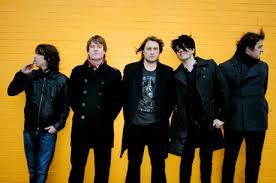
After the death of their drummer Jon Brookes, the Charlatans thought their gig at the Royal Albert Hall last year could be their last, but their new album, Modern Nature, finds them in surprisingly euphoric form
Last year, the Charlatans played a charity gig at the Royal Albert Hall in London in memory of their drummer Jon Brookes. Brookes had died a couple of months previously from a brain tumour that was first diagnosed when he had a seizure onstage in 2010. The show was, by all accounts, a huge success, one of those occasions on which the Charlatans are called on to display their famous resilience in the face of tragedy: perhaps not quite on the same scale as their appearance in front of 150,000 people at Oasis’s 1996 Knebworth concert shortly after keyboard player Rob Collins was killed in a car crash, but still a potent demonstration of the indomitable spirit that has seen the band through death, imprisonment and drug addiction.
Or at least that’s what it looked like. The reality was, apparently, slightly different. Even before Brookes’s death, the band had been struggling to come up with new songs: they were trying to make an album, because Brookes had insisted he wanted to be involved in their next record, but “he was obviously very poorly and we were all a bit distracted,” says frontman Tim Burgess. At least one member of the band thought the Royal Albert Hall show might represent the Charlatans bowing out. “It wasn’t happening in the studio, it was a mess,” says guitarist Mark Collins. “And I thought, ‘That could be the last gig we ever do.’ My daughter took a picture of me coming off stage, I’ve got my head in my hands, and, Jesus, that’s what I was thinking about.”
A year on, the three members of the Charlatans sitting in an east London cafe – Burgess, Collins and bassist Martin Blunt – do not look much like men contemplating their band’s imminent demise. Contrary to Collins’s fears, the Charlatans’ 12th album, Modern Nature, ended up being finished, with the help of three guest drummers: the Verve’s Peter Salisbury, who was Brookes’s own choice as his replacement, Factory Floor’s Gabriel Gurnsey and New Order’s Stephen Morris, the latter happy to contribute despite the prospect of being confronted with the collection of homemade New Order scrapbooks that Burgess keeps at the Charlatans’ studio. “I think he was a bit freaked out by that,” nods the singer, “but I was only 14 years old when I made them.”
Moreover, Modern Nature sounds suspiciously like a triumph, packed with great songs, occasionally flecked with disco and soul influences, and is surprisingly euphoric despite the circumstances that informed it. Although it includes a song written by Brookes called Walk With Me – the lyrics dictated to his wife three weeks before he died, the vocals from the choir of the school at which he occasionally taught – it’s not an album overshadowed by his death. The one thing it never sounds like is the umpteenth album ground out by a band 25 years into their career.
After some years working outside the traditional music industry – they gave their 2008 album You Cross My Path away for free on the internet, and Burgess set up his own label, O Genesis, in 2011 – they unexpectedly find themselves with a major label deal: “We self-funded the recording, and then our manager sent out some tracks,” says Blunt, “and, lo and behold, several labels went: ‘We just weren’t expecting this, but we want to talk to the band.’”
Perhaps understandably, the Charlatans have come to imbue the album and its making with a certain mystical significance. Gabriel Gurnsey claims to have felt someone slap him across the head while he was using Brookes’s drumkit in the studio. The title, meanwhile, comes from film-maker Derek Jarman’s journals, a title that struck Burgess in the most literal manner imaginable: “We didn’t just go round like stealing a name or anything. I’d never read the book, but a copy of Modern Nature actually fell from a bookshelf and landed on my head before it hit the floor.”
Collins and Blunt wear their years in the Charlatans a little more obviously than Burgess, who beneath a fairly majestic bottle-blond bowl-cut still looks about 24. That seems faintly unfair, given that he spent a significant proportion of his 47 years taking vast quantities o
Perhaps understandably, the Charlatans have come to imbue the album and its making with a certain mystical significance. Gabriel Gurnsey claims to have felt someone slap him across the head while he was using Brookes’s drumkit in the studio. The title, meanwhile, comes from film-maker Derek Jarman’s journals, a title that struck Burgess in the most literal manner imaginable: “We didn’t just go round like stealing a name or anything. I’d never read the book, but a copy of Modern Nature actually fell from a bookshelf and landed on my head before it hit the floor.”
Collins and Blunt wear their years in the Charlatans a little more obviously than Burgess, who beneath a fairly majestic bottle-blond bowl-cut still looks about 24. That seems faintly unfair, given that he spent a significant proportion of his 47 years taking vast quantities of drugs: as his autobiography, Telling Stories, cheerfully details, at one stage he moved in with his drug dealer and also took to encouraging people to blow cocaine up his bum. And yet, here he is, sober since 2006, now resident in rural Norfolk, a veritable ball of youthful eagerness – he enthuses about everything from his love of the American musician Arthur Russell to his forthcoming second book. He is considerably more bright-eyed than the father of an 18-month-old has any right to be.
Perhaps it’s all down to the rejuvenating powers of transcendental meditation, of which Burgess has been a devotee for several years. “It’s kind of revitalised me. It’s definitely had an effect on my day-to-day enthusiasm for things. It just gives you consistency more than anything, consistency and like … maybe a fire.” Not that his loud advocacy for the practice, including fundraising for David Lynch’s Foundation for Consciousness-Based Education and World Peace, has had much impact on his bandmates. “I have a couple of beers,” nods Collins, gruffly. “That seems to have the same effect.”
Nor have the other Charlatans followed their frontman’s lead and taken to Twitter, on which Burgess is an indefatigable presence: he’s on the social network so often, recommending music, posting videos and enthusing about record shops it seems a miracle he has any time left over to actually be in a band. “That’s another thing that re-energised me,” he enthuses. “I can go to people directly, it feels a bit more real. It took me a while to work it out, how to do it and then one morning I just said: ‘Anyone fancy a coffee?’ and I got more responses to that than having posted any kind of video or information about the band. Hundreds of people saying ‘I’ll have a flat white’ or ‘Americano with cream’, and it just became a thing.” It certainly did: his virtual coffee shop begat a real coffee shop – the Tim Peaks pop-up cafe regularly turns up at festivals – and his own brand of Fairtrade charity fundraising coffee.
Advertisement
More importantly, Burgess’s presence on Twitter seemed to shift perceptions of the Charlatans slightly: the music he posted and enthused about was of substantially more leftfield bent than you might have expected from the frontman of a band perennially labelled as either baggy or Britpop survivors. Perhaps a slightly avant-garde edge was always in the Charlatans’ music – Burgess claims that the instrumental 109 Pt 2 from their debut album, Some Friendly, was influenced by Throbbing Gristle – but it tended to get overlooked.
Either way, their links to the leftfield seem noticeably more pronounced these days: remixes come courtesy of Chris & Cosey and Grumbling Fur, the first single from Modern Nature, So Oh, was released on the record label owned by the Quietus, not a website usually known for its love of doughty Britpop survivors. “Avant garde?” frowns Collins, when the term is mentioned. “That’s a very big word.”
“I like it,” Burgess offers, quietly.
“I think between us we cross over, but there’s a lot of stuff individually. We don’t really ask ‘Where’s that from?’ when someone brings an idea in, it just sort of knits and it comes out sounding like us,” Blunt says.
They have, says Burgess with admirable understatement, “been on a bit of a journey over the past five years, and yet here we all are.” No one thinks about the band they’ve spent their entire adult lives in ending any time soon. “That’s what I was doing that night at the Albert Hall: imagining life without the Charlatans,” says Collins. “Yeah. And it’s not a nice place to be.”
- The single So Oh is out now and Modern Nature will be released on 26 January, both on BMG.
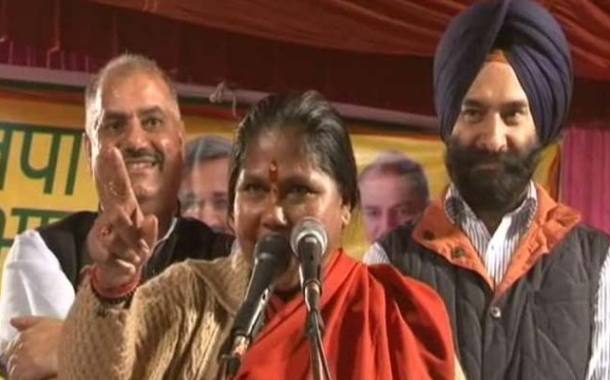
Concerned over the impasse in Rajya Sabha over Union Minister Niranjan Jyoti’s remarks, Deputy Chairman P J Kurien today directed leaders of opposition parties and the government to sit together and hammer out a solution by Monday.
Kurien adjourned the House for the day at about 3.15 PM after it failed to transact any business for the fourth consecutive day today with an agitated opposition insisting on the sacking of the Minister.
“Leaders of the opposition parties and government should sit together and work out a solution by Monday. The Chair cannot take a decision,” Kurien, who was in the Chair, observed.
His observations came after the House witnessed four adjournments before the Chair called it a day as opposition uproar continued over the demand and members insisted on a resolution to condemn the Sadhvi’s remarks.
“There is an impasse between the government and the opposition and as long as this issue is not resolved we will not allow the House to run,” said Deputy Leader of Opposition Anand Sharma when Kurien pleaded that private members’ bill be taken up.
The Congress member charged the government with forcing a stalemate in the House.
Kurien said he did not find any use in furthering the discussion before adjourning the House.
Earlier, when the House met after lunch members trooped into the Well demanding sacking of the Union Minister, forcing the Chair to adjourn it within barely 10 minutes of sitting.
Satyavrat Chaturvedi (Cong) contended, “Expression of the Prime Minister’s speech is almost identical to the resolution, we are making. What is the problem for the government?”
Minister of State for Parliamentary Affairs Mukhtar Abbas Naqvi said the issue should be “closed” as the Prime Minister himself has “strongly disapproved” of the remarks in the House.
The Minister concerned too was in the House and had apologised, he said adding that senior Ministers Arun Jaitley and Venkiah Naidu had also disapproved of it in the House.
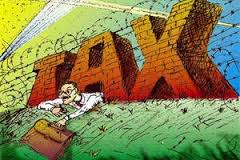
New Delhi: The government today said there is no specific tax exemption on expenses incurred by companies under the Corporate Social Responsibility (CSR) activities.
The new companies law, which came into force from April 1, requires certain class of profitable corporate to shell out at least 2 per cent of their three-year annual average net profit towards CSR works. “…no specific tax exemption has been extended to expenditure incurred on CSR,” Corporate Affairs Minister, Arun Jaitley said in the Lok Sabha today.
However, he said that several activities that are part of Schedule VII of the Companies Act, 2013, already enjoy exemptions under the Income Tax Act, 1961. These activities include contribution to Prime Minister’s Relief Fund, scientific research, rural development and skill development projects. Schedule VII of the Act pertains to CSR.
“As regards contribution made by companies under CSR towards Swachh Bharat and Clean Ganga, no specific tax exemption has so far been made,” Jaitley said in a written reply. Responding to a query on whether the government has taken note of private sector companies trying to evade CSR on one pretext or the other, the minister said that information with regard to compliance would be available only after September 2015.
“This is the first year of implementation of CSR by companies under the Act. Information on compliance by companies in this regard will be available only after statutory annual returns on CSR are filed by companies, including private sector companies, which are due after September 2015,”

|
|
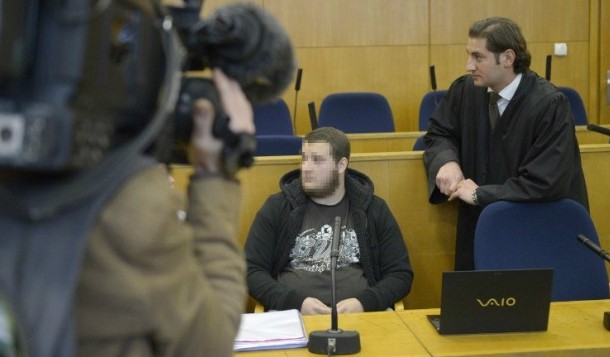
Kreshnik Berisha, 20, has been jailed for three years and nine months in Germany.
Berlin: A German court today jailed a jihadist militant for three years and nine months in the country’s first trial of a member of the Islamic State group fighting in Syria and Iraq.
Kreshnik Berisha, 20, born near the business capital Frankfurt to a family from Kosovo, was found guilty of membership in a foreign terrorist organisation, said presiding Judge Thomas Lagebier.
Berisha had admitted in court to having joined IS and taken part in fighting in Syria.
The prosecution had called for a sentence of four years and three months, while the defence had urged a lesser term of three years and three months.
Federal prosecutors had told the court that Berisha travelled to Syria via Turkey in July 2013 with other Islamists planning to join the fight to create a “Caliphate” straddling Syria and Iraq.
He returned home for unclear reasons in December 2013 and was arrested at Frankfurt airport.
The trial opened in September.
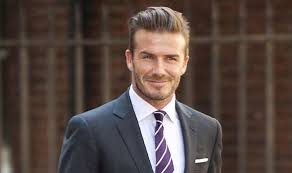
DAVID BECKHAM is following in wife Victoria’s footsteps by launching his own label with Simon Fuller. The deal is with Global Brands – a subsidiary of the Hong Kong-based consumer brands supplier Li & Fung – who are also responsible for the distribution of Calvin Klein, Tommy Hilfiger and New Balance goods among others.
Global Brands has previously talked about its interest in “creating large-scale global brands in partnership with a select number of high-profile iconic sports and entertainment stars and rights holders,” reports WWD. It cited Beckham’s “star power and status as one of the world’s most famous sports and style icons,” and Fuller’s “deep understanding of consumers, talent, and sports and entertainment rights,” as the reasons for pushing ahead with the deal, which is said to be a men’s sportswear label.
Fuller, who has been a business partner and adviser to the Beckham family since the Spice Girls’ days, has steered the Victoria Beckham label to the global success that saw it win the British Brand award at this week’s British Fashion Awards.
A fusion of Broadway and classical Indian dance styles like Chahu, Odissi and Gumar was presented at the International Ancient Arts Festival, which brought back memories of the gruesome infamous 2012 Delhi gangrape.
“In our title program ‘Antaryatra’ we have showcased through yoga how a change in our nature can bring about a change in our actions towards society and human beings to bring about peace and prosperity,” Reela Hota, Odissi dancer and festival director said.
The two-day festival began here late last evening.
The first presentation ‘Antaryatra’ was a blend of different dance styles and according to Hota was aimed at making people gender sensitive by enlightening them about the yogic ‘Chakras’ and importance of attaining a higher ‘Chakra’.
“We tried to show the Nirbhaya gangrape case. The people acted in such a inhuman way because their ‘Mooladhara’ chakra was active, and so they acted the way they did,” Hota said.
According to yogic practise, a soul evolves from chakra to chakra. Each chakra has certain attributes and a man’s nature, as well as actions are governed by them. One can elevate oneself to a higher chakra, to be a better human being, and lead a more harmonious life. And that in turn can contribute towards creating a peaceful society.
In the dance, historical and contemporary figures have been depicted to show the physical manifestations and relevance of this seemingly esoteric theme.
“Yoga says that the chakra which we have which is our inner nature we act according to it. A human being has seven subtle chakras according to yoga. It is said the people who have an active ‘Mooladhara’ the human being is selfish, violent, stressed and angry,” Hota said.
The entire dance drama comprised seven acts showcasing the rise of man to the highest chakra of divinity which helps in building a better society for peace and prosperity.
“One needs to attain a higher chakra than ‘Mooladhara’ for instance emperor ‘Ashoka’ who was depicted by one of our artists from the United States using Broadway free style was very interesting. The emperor took lives because of his ego but changes after he sees the devastation he has caused and turns into a Buddhist and inner change takes place,” Hota said.
Chloe Chevaleyre, a contemporary ballet dancer from France who plays the role of Nirbhaya, the gangrape victim said,”I would like to tell you that the ancient arts project really matter to me. I also believe in the richness of the sharing between all form of art, that’s why I am visiting India for this project.”
Artists also showcased higher chakras like ‘Visuddhi’, ‘Sahasrara’ and ‘Mokshya’ which shed light on the paths taken by Meera Bai and Lord Buddha to enable them to become better human beings.
|
||||
|
|
||||
December 4 (Thursday)
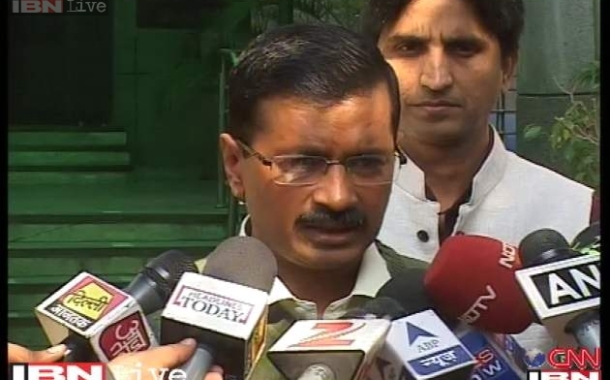
Former Delhi chief minister Arvind Kejriwal will deliver a speech at the Columbia University on Sunday (December 7).
Kejriwal has been invited to speak at the School of International and Public Affairs (SIPA). This programme is among his important engagements during the packed schedule at New York.
The AAP convenor left for a five-day trip of Dubai and New York today (Thursday) afternoon.
Kejriwal will be in Dubai till Saturday evening, from where he will proceed to New York.
The AAP reiterates that no fund raising programme has been planned or proposed for Dubai, as has been wrongly reported in a section of the media.
A needless controversy has also been created about Kejriwal’s travel.
The AAP makes it clear that entire programme details for Kejirwal’s five day trip has already been made public and the ticket for his entire tour has been arranged by his IIT batchmates and organisers.
The party is surprised at the attempts to rake up an unnecessary issue when all details are in the public domain and all details about the trip have already been provided.
The AAP puts all details about its funds and sources from where it is generated in the public domain and challenges other political parties to reveal their sources of funds. (ENDS)
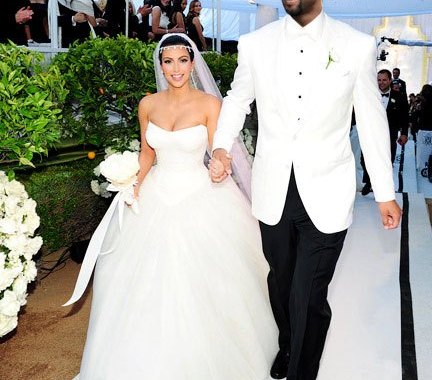
It has been the year of celebrity weddings, with superstars such as Brad Pitt and Angelina Jolie, and George Clooney all tying the knot.
However, it is Kim Kardashian and Kanye West that can say they are this year’s most ‘liked’ couple – on Instagram at least – as Kim’s snap of their Florence wedding has been named the most popular of the social media app.
The social media app revealed that the May wedding’s intimate image at 16th-century Fort Belvedere gained a staggering 2.4 million likes – the highest amount of 2014 and also the most since the picture-sharing app launched over four years ago.















)


Recent Comments