
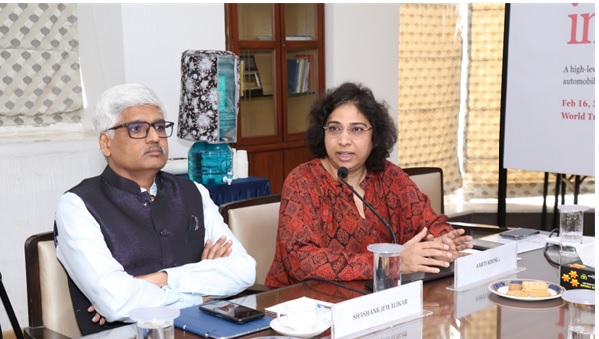


Mumbai, 16 February 2026: World Trade Center Mumbai, in association with Climate Trends, hosted a high-level roundtable on “Urban Heat Stress and Its Growing Impact on India’s Economic Sectors and Public Health” as part of Mumbai Climate Week. The discussion highlighted how rising temperatures and frequent heatwaves are increasingly affecting productivity, worker safety, electricity demand, and supply-chain efficiency across Indian cities.
Addressing the session, Vijay Kalantri, Chairman of World Trade Center Mumbai and President of the All India Association of Industries, stated that urban heat is no longer just an environmental issue but a serious development challenge. He noted that many Indian cities are already experiencing temperatures 3–8°C higher than surrounding rural areas due to the Urban Heat Island effect. With India’s urban population projected to cross 40% by 2030, rising temperatures are expected to significantly impact public health, urban liveability, and economic productivity, particularly among vulnerable communities. He also highlighted that India could lose around 5.8% of total working hours by 2030 due to extreme heat, while the World Bank has warned of potential GDP losses of up to 4.5% without adequate adaptation measures.
Aarti Khosla, Founder and Director of Climate Trends, emphasized that climate action lies at the intersection of public health and economic growth. She noted that investing in resilience is economically beneficial, as every dollar invested in climate resilience can generate significantly higher savings by preventing future losses. She also stressed the need for practical financial models that support MSMEs and protect vulnerable workers, especially those in India’s large informal workforce.
Vishwas Chitale, Head of Climate Resilience at the Council on Energy, Environment and Water (CEEW), highlighted that rapid urbanisation is contributing as much to rising urban heat as climate change itself. He stated that higher temperatures and humidity levels are already affecting productivity and industrial output, making climate-resilient adaptation measures both an environmental necessity and a sound economic investment.
The roundtable brought together representatives from industry, finance, healthcare, sustainability, and policy institutions, who agreed that urban heat is emerging as a major economic and development challenge requiring coordinated planning, integrated policy frameworks, and actionable resilience strategies for Indian cities.
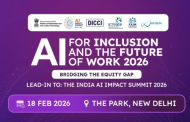
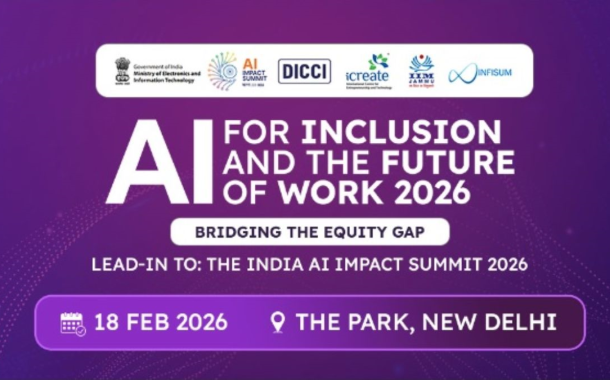
New Delhi [India], February 13: The Dalit Indian Chamber of Commerce and Industry (DICCI) will convene the International Conclave on AI for Inclusion and the Future of Work 2026: Bridging the Equity Gap on 18th February 2026 at The Park, New Delhi. The conclave is being organised in partnership with iCreate, Indian Institute of Management Jammu, Infisum and the Entrepreneurship Development Institute of India (EDII), and will serve as a precursor to the India AI Impact Summit 2026.
Supported by the Ministry of Electronics and Information Technology, Government of India, the conclave will bring together senior representatives from the Union and State Governments, global policymakers, industry leaders, economists, academic experts and social sector practitioners. Discussions will focus on aligning artificial intelligence with the goals of equity, livelihood security and inclusive economic growth.
As AI rapidly reshapes productivity, service delivery and business models, the conclave will examine emerging risks around concentration of capital, compute infrastructure and intellectual property, and their potential to deepen structural inequalities. Deliberations will explore policy and market interventions required to ensure equitable access to AI through infrastructure development, responsible data governance and inclusive skilling frameworks.
Key agenda areas include AI inequality in global development, governance frameworks for responsible AI deployment, formalisation pathways for MSMEs and informal workers, and the role of digital public infrastructure in expanding access to AI systems. Special emphasis will be placed on enabling participation of Scheduled Castes, Scheduled Tribes, women entrepreneurs, gig workers, sanitation workers, artisans and first-generation business owners in emerging AI value chains.
A key outcome of the conclave will be the Delhi Declaration on Inclusive AI and the Future of Work, which is expected to outline national principles for equity-by-design, worker transition frameworks, portable social protection mechanisms, multilingual AI skilling pathways, inclusive data governance standards and strengthened Centre–State coordination. The Declaration will inform deliberations at the India AI Impact Summit 2026.
Dr. Milind Kamble, Founder Chairman, DICCI & Conclave Chairman, Conclave on AI for Inclusion and the Future of Work stated, “Artificial intelligence will define the next phase of economic expansion. The central question is whether this growth will remain concentrated or become participatory. This conclave is anchored in six pillars — education, small business formalisation, financial literacy, future-ready agriculture, AI for speedy justice, and AI for empowering informal workers. Inclusion must be embedded at the design stage of AI systems and governance frameworks to ensure durable social mobility.”
Padma Shri awardee Mr. Ravi Kumar Narra, National President, DICCI, added, “Economic empowerment delivers impact when policy intent is matched with institutional execution. AI must be deployed with similar discipline to enhance productivity in the informal economy, expand market access for small enterprises and enable credible worker transition pathways. Inclusion must be measurable, not aspirational.”
Through this conclave, DICCI aims to institutionalise inclusion as a foundational principle within India’s evolving AI policy ecosystem, advancing structured dialogue and actionable commitments that align artificial intelligence with equity, employment and national development priorities.

New Delhi [India], February 14: Infiheal, an IIT Bombay mental health startup, has launched DuoChat, described as the world’s first AI relationship coach designed to help two people communicate together in real time and build stronger relationships.
The product was introduced at the official pre-summit hosted by Infiheal and IGAP leading up to the India AI Summit 2026 in New Delhi, where senior leaders from major technology firms, public policy institutions, healthcare systems, international organizations, academic research centers, and regulatory authorities gathered to shape the future of responsible artificial intelligence.
DuoChat’s release comes just ahead of Valentine’s Day, a time when conversations around love, compatibility, emotional connection, and relationship health naturally take center stage. While the season often focuses on celebration, mental health experts note that it also highlights communication gaps and unresolved tensions in partnerships — making early-stage support tools particularly relevant.
Over the past decade, digital mental health tools have largely focused on individuals — offering support for anxiety management, emotional regulation, and personal resilience. However, research increasingly underscores that emotional well-being is deeply relational.
A 2023 survey by the American Psychological Association found that nearly 60 percent of adults reported significant stress linked to friendships, family dynamics, or workplace communication — stressors that directly affect relationship quality.
Despite this awareness, relationship support often remains reactive. Couples therapy is frequently sought only during crises, and access barriers — including cost, stigma, and long waitlists — can delay intervention. Many individuals attempt to resolve conflict independently, without a shared framework for constructive dialogue.
Building a Shared AI-Facilitated Space
Infiheal previously launched Healo, an AI mental health companion offering guided emotional support and therapist matching. Within just over a year, Healo grew to more than one million users, with 91 percent reporting improvement in how they felt after using the platform.
During that expansion, the team observed a consistent pattern: a majority of user conversations centered on relationships — romantic, familial, and social. Users frequently uploaded screenshots of difficult exchanges, asking the AI to interpret tone and intent. While this offered individual clarity, it did not address the relational dynamic itself.
DuoChat was built to bridge that gap.
The platform creates a private, confidential chat environment where two participants engage simultaneously. The AI functions as a facilitator — not a replacement for communication. It introduces structured prompts, reflection cues, and perspective-building interventions designed to reduce defensiveness, prevent escalation, and clarify misinterpretations. Drawing from established relationship science and evidence-based therapeutic frameworks, the system intervenes selectively — primarily when conversations become heated or when guided reflection may restore empathy and understanding.
Early-Stage, Preventative Support
Globally, demand for counseling continues to outpace supply, leaving many couples and families waiting weeks or months for professional support. During these gaps, emotional distance can deepen.
DuoChat positions itself as early-stage support — not therapy, but a preventative tool aimed at encouraging healthier dialogue before disconnection becomes entrenched.
“We’ve built AI platforms to optimize productivity, entertainment, and even shopping. But we haven’t focused enough on leveraging AI to help people understand each other,” said Srishti Srivastava, Founder and CEO of Infiheal. “DuoChat is our attempt to shift AI toward strengthening human relationships, not replacing them.”
India-Led Innovation in Mental Health AI
Founded by Srishti Srivastava and Utkarsh Srivastava, Infiheal develops clinically validated AI models for mental healthcare within responsible AI frameworks, emphasizing safety and trust. The company has been recognized by Narendra Modi, in Mann Ki Baat and has showcased its work at global platforms such as the World Economic Forum in Davos.
With DuoChat launching around Valentine’s Day, the startup expands its mission to make mental health support accessible, affordable, and stigma-free — while reframing AI not just as a tool for individual optimization, but as a bridge for stronger human connection.
COLOMBO: (Feb 8) Kamindu Mendis’ scintillating 19-ball 44 and Kusal Mendis’ unbeaten half-century lifted Sri Lanka to 163 for six after a slow start in their T20 World Cup match against Ireland here on Sunday.
Wicketkeeper Kusal made 56 off 43 balls with the help of five boundaries and added 67 runs for the fifth wicket with Kamindu, who smashed four fours and two sixes, to lift Sri Lanka after they were struggling at 86 for four in the 14th over.
Sri Lanka were also helped by a few dropped catches by the Irish fielders in the floodlit R Premadasa Stadium.

THANE: (Feb 8) At least seven godowns stocked with materials like paper products and plastic items were destroyed after a fire broke out in an industrial hub in Maharashtra’s Thane district on Sunday, an official said.
No one was injured in the incident at the godown complex in Bhiwandi’s Mankoli area, said Chief Fire Officer Nitin Lad from the Bhiwandi-Nizampur Municipal Corporation.
After being alerted about the fire, which started around 2.30 pm, three fire engines were rushed to the spot, he said.

Mumbai | 3 February 2026
By: Real News of India
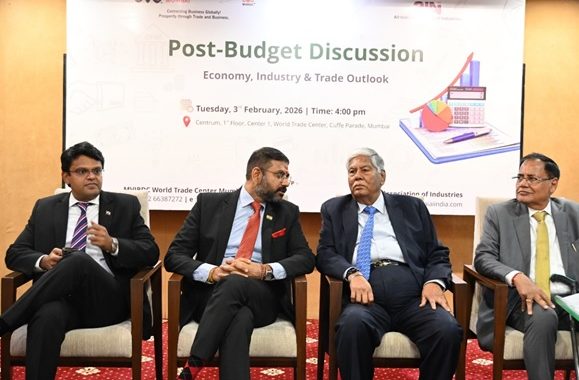
World Trade Center Mumbai, in association with the All India Association of Industries (AIAI), organised a Post-Budget Discussion Session to deliberate on the implications of the Union Budget 2026–27 for MSMEs, trade, industry, exports, and India’s long-term economic growth trajectory. The event brought together industry leaders, exporters, professionals, policy observers, and diplomats to analyse key budget announcements and their impact on the economy.
Speaking at the session, Mr. Siddhartha Rastogi, Principal Officer, Managing Director & Chief Operating Officer, Ambit Asset Management, stated that the Union Budget lays a clear roadmap for the coming years. Emphasising inclusive growth, he said that achieving a GDP growth rate of 7.2 percent requires strengthening India’s 6 crore MSMEs, which form the backbone of the economy. He highlighted that linking government spending with the TReDS platform would unlock liquidity and enhance order books for MSMEs, while promotion of digital payments and securitisation would improve credit flow and prevent capital from being stuck in the system.
Mr. Rastogi also welcomed the government’s focus on critical minerals and rare earth elements, noting that such initiatives would ensure stable supply chains, strengthen Atmanirbharta, and safeguard the economy from geopolitical risks.
Explaining indirect tax-related changes, Mr. Pranav Prakash Mehta, Partner, KJM INC and Specialist in Indirect Taxation, said that while the Budget did not introduce major taxation reforms, minor amendments would significantly improve ease of doing business. He noted that changes related to post-supply discounts would increase supplier accountability and ultimately benefit customers. He further added that clarifications on supply invoicing and invoice discounting would reduce litigation and speed up resolution of long-pending tax matters.
Sharing insights on direct taxation proposals, Mr. Arun Kumar Garodia, Former ITAT Member and Income Tax Consultant, said that the tax holiday announced for data centres would attract capital flows into new-age technology investments and strengthen India’s long-term investment climate. He added that changes in the taxation of share buybacks—now to be taxed under capital gains—would benefit both industry and shareholders. Reforms in Minimum Alternate Tax (MAT) and the decriminalisation of certain tax defaults, he said, reflect the government’s trust in the business community and promote a more collaborative growth environment.
Addressing the gathering, Dr. Vijay Kalantri, Chairman, World Trade Center Mumbai and President, All India Association of Industries, stated that the Budget provides a strong roadmap for achieving Viksit Bharat by 2047. He said that incentives for data centres, focused support for technology-driven industries, and policy clarity would help India move towards a USD 10 trillion economy by 2030. He also emphasised that simplification of taxes and resolution of legacy issues would significantly enhance ease of doing business in the country.
The annual Post-Budget Discussion at World Trade Center Mumbai witnessed participation from over 150 business leaders, MSMEs, innovators, and diplomats from several countries. The session concluded with Capt. Somesh Batra, Vice Chairman, World Trade Center Mumbai, delivering the vote of thanks.

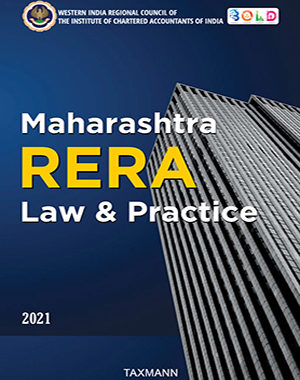
Mumbai, Sep 7 The Taxmann’s ‘Maharashtra RERA Law & Practice’ by Western India
Regional Council (WIRC) of Institute of Chartered Accountants of India (ICAI) was on Tuesday
released by MHADA chairman Dr Vinod Ghosalkar and ICAI president CA Nihar Jambusariya
and WIRC chairman CA Manish Gadia.
The huge book includes the provision of RERA Rules, Regulation, Notification, Circulars and the
relevant case authored by over 100 industry experts by forming study group, headed by CA
Ramesh Prabhu as convener and editor, and CA Kuashik Sampat as co-editor under the
guidance of MahaRERA officials.
It has also covered the peripheral and most important legal provisions affecting the real estate
transactions such as Income Tax, GST, IBC, FEMA, PMLA, MRTP, DCPR, MOFA, Transfer of
Property Act, stamp duty, registration, Consumer Protection Act, etc.
This book incorporates the perspectives of the various stakeholders including representatives of
Self-Regulating Organisations and others.
The contents of this book are from various 10 perspectives including promoter, general, agent,
allottees, professional, redressal, Income Tax, GST-Taxation, GST and Stamp Duty and
Registration, Allied Laws-Other Allied Laws like MRTP, DCPR, IBC, consumer protection,
Miscellaneous topics related to Real Estate Ruling & Redevelopment Act and Rules Act, Rules,
Notification and MahaRERA Order and circulars.
WIRC’s Maharashtra RERA Law & Practice covers the Real Estate Regulating Authority Act (RERA) along with Rules, Regulations, Notifications, Circulars & relevant Case Laws for complying with the provisions of RERA. The book aims to organise the learnings of RERA implementation (since its inception) & correlating the legal provisions (such as Circulars, Orders, etc.) to give a complete picture of the law
This book incorporates the perspectives of the following stakeholders:
Representatives of Self-Regulating Organisations
Brihanmumbai Developers Association
CREDAI-MCHI
NAREDCO
Builders Association of India
Representatives of Association of Allottees & Professional Bodies
PEATA
Bar Association of MahaRERA & MahaREAT
Members of WIRC of ICAI
Mumbai Grahak Panchayat
Confederation of Residents Welfare Association
Maharashtra Cooperative Housing Federation Ltd.
Maharashtra Societies Welfare Association
Mumbai District Cooperative Housing Federation
Women Legal Forum for CHS
Engineers Associations
This book will be helpful to the following:
Chartered Accountants
Advocates
Promoters & Investors
Real Estate Agents
Allottees (including Association of Allottees), Flat Purchasers
Policy Makers, RERA Authorities & Officials from the RERA Appellate Tribunal
Engineers
Contractors & Architects
Project Management Consultants
Developers & Development Managers
The Present Publication is the 1st Edition, authored by the study group of industry experts & representatives from all stakeholders, edited by CA Ramesh S. Prabhu & co-edited by CA Kaushik Sampat, reviewed under the guidance of Hon’ble Shri S.S. Sandhu, Shri. Gautam Chatterjee, Shri. Sumant Kolhe, Shri. B.D. Kapadnis & Shri. D.R. Hadadare, with the following noteworthy features:
[Coverage of each aspect of Real Estate Transactions] with the following:
Necessary legal provisions
Steps & prescribed procedures for compliance (Standard Operating Procedures)
The consequential risk of violation and inviting penal actions
FAQs and the Judicial Rulings have been included to make the manual relevant and practice-oriented
Covering representation aspects of appearing before the Real Estate Regulatory Authority, Adjudicating Officer, Real Estate Appellate Tribunal
[Practical Manual in Simple Language] with the discussion of the provisions along with Rules, Orders, Regulations, and applicable Circulars for each particular chapter
[Practical Ready Referencer] The various formats, drafts and specimen are included in the manual, where the practitioner may accordingly decide to change the draft considering the facts and the relief claimed
[360° Coverage] This book covers the legal and practical aspects of Maharashtra RERA along with other legal provisions affecting the real estate transaction such as:
Income-tax Act
Goods & Services Act
Insolvency & Bankruptcy Code
Consumer Protection Act
Maharashtra Ownership Flats (Regulation of the Promotion of Construction, Sale, Management and Transfer) Act
Maharashtra Apartment Ownership Act
Transfer of Property Act, Stamp Duty & Registration
Prevention of Money Laundering Act
Foreign Exchange Management Act
Monopolistic and Restrictive Trade Practices Act
Development Control and Promotion Regulation
The detailed contents of the book are as follows:
General – Applicable to all Stakeholders
Overview of RERA, 2016
Journey & Implementation of RERA
Objective and Purpose of RERA
Real Estate Sector Deficiencies Addressed by RERA
The Authorities to Implement the Act
Powers and Functions of Real Estate Regulatory Authority
Powers and Functions of Adjudicating Officers
Central Advisory Council – Establishment and Functions
Real Estate Appellate Tribunal and its Functions and Powers
Promoter – From the Promoters Perspective
Promoter under RERA
Functions and Duties of Promoter
Registration of Real Estate Project – Legal Framework
Documents Required and the Process of Registration
Operation of RERA Designated Bank Account
A Financial Planning for Real Estate Projects
Project Updates to be Done by the Promoters
Procedure to Extend the Period of the Registration
Procedure for Amendment or Modification in the Sanctioned Plans
Transfer of Real Estate Project to Third Party
The Transfer of Title
Force Majeure and COVID Impact on Real Estate Sector
Advertising and Marketing Post RERA
Importance of End Date/Completion Date and Date of Possession under RERA
Change in Process and Procedure of Real Estate Business post-RERA
Car Parking Space and MahaRERA Circular
RERA Compliance Report by Chartered Accountant
Agent – From the Real Estate Perspective
Registration of Estate Agents – Legal Framework
Process to Obtain Registration for Real Estate Agent
Functions of the Real Estate Agent
Impact of RERA on Estate Agents
Changing Business Landscape for Realtors post RERA
Allottees – From the Allottees and the Association of Allottees Perspective
Revocation of Registration of the Project
Stalled Real Estate Projects and Revival
Alternative Investment Fund for Real Estate including SWAMIH FUNDS
Rights and Duties of Allottees
Association of Allottees
Remedies for Conveyance and Deemed Conveyance
Allottee Due Diligence before Purchasing Property
Professional – From Professional Perspective for CAs, Advocates, Engineers, Architects
Title Certificate
Allotment Letter, Agreement for Sale and Sale Deed
Role and Responsibilities of Architect under RERA
The Roles and Responsibilities of a Civil Engineer and Issue of Form 2 under RERA
Quality Assurance and Defect Liability under RERA
Certificate in Form 3 by Chartered Accountant
Audit by Chartered Accountant under MahaRERA (Form 616 No. 5)
Guidance Note on Accounting for Real Estate Transactions 668 (Revised 2012) and Revenue from Contracts with Customers (Ind AS-115)
Key Audit Challenges – Real Estate Sector
Real Estate Collaborations & Significance of Corporate Due Diligence
Redressal – Redressal System: Complaint, Appeal, Second Appeal, Conciliation
Source Complaints against Unregistered Projects for Registration
Complaint Filing and its Procedure
Process of an Inquiry by the Authority or Adjudication Officer
Appeals under RERA
Second Appeal before High Court
Execution of Orders of MahaRERA and Adjudicating Officer
Execution of a Decree under Code of Civil Procedure, 1908
Complaints by Association of Allottees
Offences and Penalties
MahaRERA Conciliation and Dispute Resolution Forum
MahaRERA Conciliation Forum Role Model of ADR in Real Estate Sector
Income Tax, GST – Taxation: Income Tax, GST, Stamp Duty and Registration
Income-tax Applicable on Real Estate Transactions
Overview of GST Implications of Real Estate Sector
Stamp Duty and Registration
Allied Laws – Other Allied Laws like MRTP, DCPR, IBC, Consumer Protection, etc.
Real Estate Laws of India
Salient Features of Maharashtra Ownership Flats Act, 1963 (‘MOFA’)
Comparison between MOFA and RERA
Overview of Maharashtra Apartment Ownership Act, 1970
Development Control Regulations and MahaRERA
Consumer Protection and RERA: Best Recourse to Allottees
Draft Format/Specimen of Consumer Complaint
Landmark Judgments of the Consumer Courts
Insolvency Resolution Process in Real Estate
Interplay of PMLA, Benami, FEMA with RERA
Miscellaneous – Topics Related to Real Estate Rulings & Redevelopment
Constitutional Validity of RERA
Analysis of Judgments
Society Redevelopment and RERA
Act and Rules – Act, Rules, Notifications, MahaRERA Orders and Circulars
The Real Estate (Regulation and Development) Act, 2016
Maharashtra Real Estate (Regulation and Development) (Registration of Real Estate Projects, Registration of Real Estate Agents, Rates of Interest and Disclosures on Website) Rules, 2017
Maharashtra Real Estate Regulatory Authority, Chairperson, Members Officers and other Employees (Appointment and Service Conditions) Rules, 2017
Maharashtra Real Estate (Regulation and Development) (Recovery of Interest, Penalty, Compensation, Fine Payable, Forms of Complaints and Appeal, etc.) Rules, 2017
Maharashtra Real Estate Appellate Tribunal (Members 1405 Officers and Employees) (Appointment and Service Conditions) Rules, 2017
Maharashtra Real Estate Regulatory Authority (Form of Annual Statement of Accounts and Annual Report) Rules, 2017
Maharashtra Real Estate Regulatory Authority (Recruitment and Conditions of Service of Employees) Regulations, 2017
Maharashtra Real Estate Regulatory Authority (General) Regulations, 2017
Maharashtra Real Estate Regulatory Authority (General) (Amendment) Regulations, 2019
Maharashtra Real Estate Regulatory Authority (General) (Second Amendment) Regulations, 2019
Constitution and Operations of Real Estate Regulatory Fund
MahaRERA Orders and Circulars (Selected and Important)
Maharashtra Real Estate Appellate Tribunal Regulations, 2019
Circulars – Appellate Tribunal (Selected and Important)
Ramesh S. Prabhu
CA. Ramesh S. Prabhu is a highly qualified Mumbai-based Chartered Accountant with CISA (USA) practising for over the last 22 years and a well-known public figure. He is hailed as the Architect of Deemed Conveyance. His area of specialisation has been the Cooperative Housing sector. He has authored around 60 books on various issues on Housing society functioning like conveyance, transfer of flats, parking, repairing, collection of dues from members, income tax, service tax for housing societies etc. All of these books were released by the Ministry of Cooperation, Govt of Maharashtra, under the hand of the Cooperative Secretary at the Housing Society Expo, held in Mumbai during 2006.
CA. Ramesh Prabhu has compiled 101 Judgment Series Books for the Office Bearers and Members of Housing Societies on different topics. He was appointed as a Member of the Committee by the Govt. of Maharashtra in 2008 to frame the law pertaining to Deemed Conveyance. The Govt. has since passed the Bill on Deemed Conveyance which has been signed and endorsed by the President of India.
Kaushik Sampat
CA Kaushik Sampat has a comprehensive experience of more than three decades in all aspects of finance, accounts, commercial operations, budgeting, administration, MIS reporting, statutory compliance with astute planning & organisational skills in real estate and infrastructure companies. He has expertise in engineering construction industry with detailed knowledge of working capital management, cash flow & project management, along with handling accounting & cost control simultaneously of multiple projects of various nature and sizes.
Broadly familiar with the framework of laws governing the real estate industry, including an understanding of regulatory approvals sequence & processes, and proficient in MahaRERA.
S.S. Sandhu
Hon’ble Shri S.S. Sandhu is an administrative member of MahaREAT
Gautam Chatterjee
Shri Gautam Chatterjee is a retired IAS officer of the Maharashtra cadre and is Chairperson of the Maharashtra Real Estate Regulatory Authority (Maha RERA). A Gold Medallist in M.Sc. Mathematics from Patna University also holds a PG diploma in Urban Planning and Housing from The Netherlands. Mr. Chatterjee has held several important assignments in the Government of Maharashtra and Government of Bharat, including Joint DG of Foreign Trade in the Ministry of Commerce, CEO of Maharashtra Housing and Area Development Authority, CEO of Slum Rehabilitation Authority, and Principal Secretary of Maharashtra Housing Department.
Sumant Kolhe
Shri. Sumant Kolhe is a former Judicial Member of MahaRERA
Free Shipping in India on order Click Link
https://www.taxmann.com/bookstore/product/7138-maharashtra-rera-law-and-practice

Leading industrialists in the US have attended a ‘Make in India Week’ seminar in Chicago, during which several American companies showed interest in reaping benefits of the opportunity to invest in India.
‘Make in India’ is one of the flagship schemes of the Indian government which is aimed at transforming Indian economy from services driven growth model to intensive manufacturing-driven growth not only to increase productivity but also to promote India as an international manufacturing hub, Consul General of Indian Consulate in Chicago Ausaf Sayeed said yesterday.
There are at least 30 key economic sectors which international companies can consider for setting up manufacturing bases in India, Sayeed said, adding that the manufacturing sector in India offers investments worth Rs. 67 lakh crore (USD1 trillion).
“There is considerable synergy between states in India and those in the US Midwest and this could be effectively utilized to boost the manufacturing sectors in both countries,” he said.
The Illinois Chief Information Officer Hardik Bhatt has termed Illinois as one of the most important business partners of India as he expressed desire to collaborate with India in developing smart cities.
Mr Bhatt recently held interactions with the visiting high-level trade missions from the Indian states of Andhra Pradesh and Karnataka.
“Prime Minister Modi’s government has made steady progress to deliver on its promise of economic reforms,” Director and Legal Policy Counsel of US-India Business Council (USIBC) Amy Hariani said.
“Efforts such as lifting of FDI caps in several sectors, reducing red tape, implementing a transparent tax environment, improving the country’s intellectual property regime have sent a crystal clear message to the global investment community that India is ready and open for serious business,” she said.
Ms Hariani further added that the results of these efforts are also visible in India’s rise in the World Bank’s Ease of Doing Business Index.
The Indian Consulate in Chicago has mobilised four major business delegations, one each from the states of Minnesota, Illinois, Michigan and Missouri to participate in the ‘Make in India Week’, to be held Mumbai from February 13th to 18th.pti

New Delhi, Jan 8: Azim Premji, who donated Rs 27,514 crore for education is the ‘Most Generous Indian’ for the third year running followed by Nandan Nilekani and Narayana Murthy in the second and third place, respectively.
As per the Hurun India Philanthropy List, which is a ranking of the most generous individuals from India, 70 years old Azim Hashim Premji was named as the most generous Indian as he donated Rs 27,514 crore for education.
The Azim Premji foundation is working for empowering education in India. The foundation works in eight states and has more than 3,50,000 schools.
Nandan, Rohini Nilekani and family came in second with a donation of Rs 2,404 crore, towards the cause of urban governance, public policy and education while Narayana Murthy and family donated Rs 1,322 crore for encouraging entrepreneurship, social development and education.
Meanwhile, Mukesh Ambani of Reliance Industries is sixth in Hurun India Philanthropy List. ‘Ambani, the richest man in India, donated Rs 345 crore towards healthcare,’ the report said.
Others in the top ten include, K Dinesh ranked fourth, who donated Rs 1,238 crore, followed by Shiv Nadar at 5th spot with Rs 535 crore in donations, Sunny Varkey & Family (7th, Rs 326 crore), Ronnie Screwvala (8th, Rs 158 crore), Rahul Bajaj & Family (9th, Rs 139 crore) and Pallonji Mistry (10th, Rs 96 crore).
The donations were measured by the value of their cash or cash equivalent from November 1, 2014 to October 31, 2015. As per Hurun Research, there were 36 individuals, down from 50 in 2014, who donated Rs 10 crore or more.
Interestingly, there were 12 new entrants and 26 drop outs. With a donation of Rs 35 crore, Rohan Murthy (32) of Infosys is the youngest philanthropist on the list; oldest being Pallonji Mistry (86) of Shapoorji Pallonji who donated Rs 96 crore.
According to Charity Aid Foundation UK, as per the World Giving Index, India came down in its ranking from 93rd in 2013 to 106 in 2014, demonstrating an overall reduction in Indian philanthropy.
‘Despite weak corporate earnings in 2015 compared to last year, the increasing speed of wealth creation seems to promise a bright future for Indian philanthropy’, Hurun Report India Business Head Anas Rahman Junaid said.

Netflix is the world’s top video streaming service that allows users to watch content on screens ranging from a smartphones to a smart television. It works with a variety of other devices like PlayStation and Apple TV, letting users stream directly onto larger screen. Netflix is also the creator of a lot of original, made for the web content, much of which is now in high-resolution Ultra HD.
Netflix India has pricing similar to its primary US market and users will be able to pay as low as Rs 500 to watch shows and movies on a single screen at one time. For Rs 650, they will get access to two simultaneous screens and four for Rs 800 – this also has UHD content.
The first month is free for all users and they can pay using PayPal and credit card only at the moment. An initial fee of Rs 70 ($1) is charged during signup to authenticate the card.
During signup you have to specify if you are above 18 and this means there is not going to be a lot of censored content, while everything will be rated. However, while creating a profile Netflix lets you identify children so that they don’t get access to any adult content.
No. For now Netflix has limited Indian content, but they are working on getting more partners on board. An initial recce suggests all the popular Bollywood classics are there from Piku to Hum Aapke Hai Kaun. However, Netflix is going to be a big boost for independent cinema. which does not get much screens to show on in India.
It is best to watch on the television, provided your screen is smart or is yoked to an Android box or Apple TV. Alternatively, you can use Chromecast as the Netflix apps is supported by the streaming dongle. You can watch the shows on a laptop, tablet or smartphone, or use a MHL or HDMI cable to mirror this on your television.
Since this is the first question most people are asking, we decided to test this bit. I used the service on a MacBook Pro using a 1 mbps wi-fi connection and the streaming was quite smooth after 30 seconds or so of initial buffering. The picture quality does scale down at times, but it restores within seconds. On a iPhone 6S Plus running LTE, the picture quality was great and the streaming seamless. I switched to 3G on the same phone and the experience was more or less the same except for the initial buffering.
I did find the catalogue limiting and a lot of content is not even showing up on search. For instance, I could not search and find House of Cards, which is a Netflix production. However, all the new titles are there and there is no dearth of titles that India has never had access to.








Recent Comments