






Nobel laureate Kailash Satyarthi today asked the civil society to take collective responsibility towards eradicating child labour, a day after he dedicated the honour to the nation by presenting his medal to President Pranab Mukherjee.
“It is not an honour for me alone, but for the children in the world and an honour to the nation. But when the credit is yours, so is the responsibility,” the Nobel Peace prize winner said at a lecture organised by the Ministry of Defence here.
“I urge the civil society, leaders to do their bit, speak out on violence against children and eradicate child labour,” he said.
Satyarthi also said he has not accepted the prize money given by the Nobel committee for the Peace Prize, which was jointly awarded to him and Pakistan’s Malala Yousafzai on December 10, for their pioneering work on promoting child rights.
“I told the committee that neither I, nor my organisation will accept the prize money. This money will be spent on children,” he said.
Underlining that intolerance among children and youth was on a rise which was leading to violence, he called for concerted efforts to root out the looming moral crisis in the world.
“Every country is bothered about economic growth but what about moral crisis? We live in a world where children are sold like cattle. We cannot even give them a vision to become global citizens.
“There is growing intolerance. In the name of ethics and religion, people are being killed,” he said.
Highlighting that education was the key to development, Satyarthi called for democratisation of knowledge, the benefits of which should reach out to the maximum number of people.
Raising concerns over women’s safety in the country, the founder of Bachpan Bachao Andolan said violence was not only physical, sexual abuse but the environment of fear created for women in itself was equivalent to violence.
Child rights activist Kailash Satyarthi has dedicated his Nobel Peace Prize to the nation by presenting his medal to President Pranab Mukherjee. Visitors to Rashtrapati Bhavan will now be able to get a glimpse of the Nobel Peace Prize.
The medal was dedicated by Satyarthi to Mukherjee at a ceremony held at Rashtrapati Bhavan.
“Satyarthi is doing very good job which has been recognised by the international community and in its recognition he has been given Noble Peace Prize. I thank him on behalf of people of this country,” Mukherjee said during the ceremony.
Satyarthi and Pakistan’s Malala Yousafzai were on December 10, 2014, awarded the Nobel Peace Prize for their pioneering work on promoting child rights.
“I committed the medal to the country today. All eyes of the world are on India. It should be our collective responsibility that children’s rights are protected,” Satyarthi said.
“There is no Nobel medal in country today as those who got it, they are not here or left the country. Rabindranath Tagore’s medal was stolen. This Nobel medal is of the country, of all its people,” he said.
Satyarthi also urged the Parliamentarians to pass a legislation which seeks to ban any kind of labour by child below the age of 14 years, and also prohibits employment of children below the age of 18 years in hazardous industries.
“It was to be passed in the last Winter Session. I hope it will be done soon,” he said.
Satyarthi’s NGO ‘Bachpan Bachao Andolan’ claims to have rescued over 83,000 children from bonded labour and slavery since its inception in 1980.

Stressing the dignity of labour, Human Resource Development Minister Smriti Irani on Tuesday told a conference of state education ministers in New Delhi that she had washed utensils 15 years ago at a hotel in Mumbai.
However, she is not alone. Firstpost brings you a list of celebrities, sports persons and politicians in India who slogged and made it to the top.
Here are some of the inspiring stories.
1. Mamata Banerjee: The first woman Chief Minister of West Bengal, Mamata Banerjee’s rise to power was not an easy one. She was born in Calcutta to a lower-middle class family. Interested in politics from a young age, Banerjee joined the Congress in the 1970s. An NDTVreport says, “From the unknown worker pasting anti-CPM posters to General Secretary of the Congress’ youth wing, Banerjee had a meteoric rise in the Congress. She first contested elections in 1984.” Later in 1997 she broke away from the Congress and started her own party – the Trinamool Congress. Despite her rise to fame Banerjee still lives an austere life and is only seen in cotton sarees and rubber chappals.
2. Rajinikanth: Born Shivaji Rao Gaekwad, the actor had to see much struggle during his initial years an an actor. The Indian Express reports, “At the start of his career, he took up a number of odd jobs including being a carpenter and a coolie. He was later employed by Bangalore Transport Service (BTS), where he worked as a bus conductor.” He also used to take part in many stage plays where he was noticed by Tamil film director K Balachander, and the rest, as goes the popular saying, is history.
3. Irfan and Yusuf Pathan: The brothers were born to a poor family and grew up in a mosque in Vadodara, Gujarat. Their father was a muezzin (the person appointed at a mosque to lead, and recite the call to prayer). While Irfan made his debut for India in the 2003/04 Border-Gavaskar Trophy, Yusuf made his debut in first-class cricket in 2001/02. Irfan Pathan’s father Mehboob Khan was once quoted in an interview as saying, “In India, even the sons of billionaires play cricket, but they don’t get into the national team. What did I have? Nothing but a broom. Destiny is rewarding me.”
4. Nawazuddin Siddiqui: Before starring in critically acclaimed films like Gangs of Wasseypur and Kahaani, and also bagging a national award for his role in Talaash, Siddiqui had worked as a watchman and a chemist. He was born to a farmer in Uttar Pradesh’s Bhudana village. Here’s how Tehelka put his transition in short, “His earliest memories are of waking up at 4 am to help his father on the farm before going to school. He studied science in college and briefly worked as a chemist in a petrochemical company. The boredom of the job brought him to Delhi where he drifted towards theatre, obsessively watching plays for a year and sustaining himself as a watchman in an office.”
5. MC Mary Kom: The first Indian woman boxer to win a medal in the Olympics, Mary grew up helping raise her siblings and farming apart from studying and playing sports. Reader’s Digest in a story about the boxer says, “Inspired by Manipuri boxer Dingko Singh’s gold at the 1998 Asian Games, Mary Kom moved to Imphal, the Manipur capital, to train in athletics. Dressed in torn, shabby clothes, the teenager approached coach K Kosana Meitei at the Sports Authority of India there and asked to be given a chance.” Now she is a celebrity with a film that was based on her life.
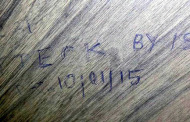
Mumbai: The Central Industrial Security Force on Wednesday is probing threat by Islamic State scribbled on a wall of the Terminal 2 of Chhatrapati Shivaji International Airport. It warned of an attack by IS on January 10.
The note written by a pen on men’s washroom wall read, “ATTECK BY ISIS 10/0/15 (sic).”
Since no CCTV footage was available, the CISF said they were analysing the footage outside the washroom.
So far investigation hasn’t revealed anything. Mumbai Police will also probe the case.
The message was first spotted by a cleaner on Tuesday evening.
Security has been tightened across the country after Pakistani boat explode near Porbandar port in Gujarat.

If you visit the betel shop of Nand Lal, do not be surprised if you are given a packet of condoms for free with you favourite ‘paan’.
From a small wooden shop tucked away in a corner of the bustling Falka Bazar of Katihar district, Lal has been handing out free contraceptives to his customers since November to spread awareness about AIDS and population explosion. “I read about burgeoning population and the increasing incidents of AIDS and realised that every Indian has to do his bit to counter them. So many adults come to my shop… I thought why not provide them condoms with a request to indulge in safe sex and try limit the family to two children,” said Lal.
As the 45-year-old shopkeeper hands a packet of condom to each of his customers, they stop, smile, and listen to his advice. “At first a few of my clients took umbrage at this, but when they understood that I meant well, they started liking it. Today I have no problem with any of them. I also realised that many people do not buy condoms out of shyness. They are very supportive of my move,” he added.
On an average, Lal distributes over 75 packets of contraceptives among the people who visit his shop to buy paan and other tit-bits. But doesn’t he feel any financial pinch over his initiative?
“At first it was difficult to maintain the momentum. Packets of condoms are not cheap. My wife termed it unnecessary expenditure and was dead against it. Lekin usko mana liya (But I placated her). I try to make up for their cost through my daily sales,” Lal added.
Once non-government organisations came to know about Lal’s unique service, they started providing him a few packets on a daily basis to be distributed among the people. The shopkeeper’s noble initiative has become so popular that not only people flock to him, but the state health department has also decided to chip in and provide him with condoms for free.
“This is a positive approach towards spreading awareness about AIDS and family planning. We are with Lal in his initiative, and have decided to provide free packets of condoms to him for distribution among people,” said health department official Dr PK Singh.
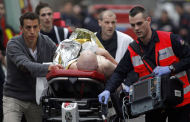
Gunmen have shot dead 12 people at the Paris office of French satirical magazine Charlie Hebdo in an apparent militant Islamist attack.
Four of the magazine’s well-known cartoonists, including its editor, were among those killed, as well as two police officers.
A major police operation is under way to find three gunmen who fled by car.
President Francois Hollande said there was no doubt it had been a terrorist attack “of exceptional barbarity”.
It is believed to be the deadliest attack in France since 1961, when right-wingers who wanted to keep Algeria French bombed a train, killing 28 people.
The masked attackers opened fire with assault rifles in the office and exchanged shots with police in the street outside before escaping by car. They later abandoned the car in Rue de Meaux, northern Paris, where they hijacked a second car.
Death threats
Witnesses said they heard the gunmen shouting “We have avenged the Prophet Muhammad” and “God is Great” in Arabic (“Allahu Akbar”).
The number of attackers was initially reported to be two, but French Interior Minister Bernard Cazeneuve later said security services were hunting three “criminals”. He said that Paris had been placed on the highest alert.
Charlie Hebdo editor Stephane Charbonnier, 47, had received death threats in the past and was living under police protection.
French media have named the three other cartoonists killed in the attack as Cabu, Tignous and Wolinski, as well as Charlie Hebdo contributor and French economist Bernard Maris.
The attack took place during the magazine’s daily editorial meeting.
At least four people were critically wounded in the attack.
People had been “murdered in a cowardly manner”, President Hollande told reporters at the scene. “We are threatened because we are a country of liberty,” he added, appealing for national unity.
French government officials are holding an emergency meeting, and President Hollande is due to give a televised address later.
The satirical weekly has courted controversy in the past with its irreverent take on news and current affairs. It was firebombed in November 2011 a day after it carried a caricature of the Prophet Muhammad.
Global condemnation
The latest tweet on Charlie Hebdo’s account was a cartoon of the Islamic State militant group leader, Abu Bakr al-Baghdadi.
Charlie Hebdo’s website, which went offline during the attack, is showing the single image of “Je suis Charlie” (“I am Charlie) on a black banner, referring to a hashtag that is trending on Twitter in solidarity with the victims.
US President Barack Obama has condemned the “horrific shooting”, offering to provide any assistance needed “to help bring these terrorists to justice”.
UN Secretary General Ban Ki-moon said: “It was a horrendous, unjustifiable and cold-blooded crime. It was also a direct assault on a cornerstone of democracy, on the media and on freedom of expression.”
UK Prime Minister David Cameron said in a tweet: “The murders in Paris are sickening. We stand with the French people in the fight against terror and defending the freedom of the press.”
The Arab League and Al-Azhar mosque, Egypt’s top Islamic institution, have also condemned the attack.
Analysis: Hugh Schofield, BBC News, Paris
Charlie Hebdo is part of a venerable tradition in French journalism going back to the scandal sheets that denounced Marie-Antoinette in the run-up to the French Revolution.
The tradition combines left-wing radicalism with a provocative scurrility that often borders on the obscene. Its decision to mock the Prophet Muhammad in 2011 was entirely consistent with its historic raison d’etre.
The paper has never sold in enormous numbers – and for 10 years from 1981, it ceased publication for lack of resources.
But with its garish front-page cartoons and incendiary headlines, it is an unmissable staple of newspaper kiosks and railway station booksellers.
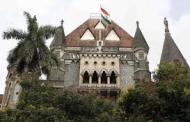
Broker Hiten Dalal and Canara Bank Mutual Fund’s former General Manager B R Acharya have been sentence to one year imprisonment and directed to pay Rs three crore compensation in a 1992 securities scam case by the Bombay High Court.
Justice Roshan Dalvi, presiding over a special court, held the duo guilty yesterday and observed that the case pertains to economic offence and causing pecuniary loss to public exchequer. However, the judge acquitted five others — a broker and four officials of the bank — due to lack of evidence.
The court ordered that Dalal may be taken into custody. He is already serving sentence in jail in another case of securities scam. The CBI had accused Dalal, Acharya and others of misappropriating shares, thereby causing losses to the bank.
Acharya was convicted of criminal breach of trust and abusing his position as a public servant, while Dalal was held guilty of receiving stolen property in the form of shares.
According to CBI, around 10,000 shares purchased by Canara Bank Mutual Fund were found to be missing. Around 9,100 of the same shares were repurchased from Dalal by the bank at the instance of Acharya.
The HC asked Acharya to pay Rs 33 lakh along with 18 per cent interest per anum from the date of transaction in 1991. Similarly, Dalal was asked to pay Rs 32 lakhs with 18 per cent interest per annum from 1992.
Before the sentence was pronounced, Acharya pleaded leniency saying he was the only earning member in his family and was sick. Besides, his son was also visually impaired. Dalal said that he is already in jail undergoing punishment in another case of securities scam.
However, the court said that the duo had caused losses to the public exchequer and will have to make good the losses by paying compensation.













Recent Comments