





The Supreme Court on Friday stayed for three weeks the trial in a sexual assault case against Tehelka founder editor Tarun Tejpal as he opposed proceeding in the case without providing him the necessary documents.
A bench led by Chief Justice H L Dattu asked the trial judge to make sure that prosecution supplies all the relevant documents to Tejpal within three weeks. It also asked Tejpal to refrain from delaying the trial on any ground in future.
The petition, filed by advocate Sandeep Kapur, had contended that the session court while passing the December 23, 2014, order was conscious of the “recklessness” shown by the prosecution to uphold statutory requirements that are obligatory to provide all necessary documents.
It also claimed that the prosecution had deviated from procedure and failed to appreciate that speedy trial was barely a facet of fair trial. The petition alleged that the court has not reprimanded the prosecution for its “deliberate non-compliance, for deviating from the statutory mandates” to the detriment of the petitioner and his right to fair trial.
“That the petitioner has established a good prima facie case on merits and the balance of convenience tilts overwhelmingly in favour of the petitioner. The impugned orders have been passed by the trial court without consideration of the cardinal principle of law. Therefore, it is just, proper and expedient that the interim relief as prayed for may kindly be granted in favour of the petitioner. Grave and irreparable harm and injury would be caused to the petitioner, in case interim orders as prayed for, are not granted,” the plea said.
The Tehelka chief has sought stay of the operation of the December 23 order of last year passed by Additional Sessions Judge, Mapusa, Goa who will go ahead with arguments on framing of charges. Tejpal has been chargesheeted for allegedly raping, sexually harassing and outraging the modesty of a junior colleague during an event at a Goa hotel in November last year.
He was arrested on November 30, 2013 and is presently out on interim bail. He has been accused of sexually assaulting the victim on November 7 and repeating the offence the next day. Before being released on interim bail, he was lodged at Sada sub-jail in Goa’s Vasco town.

A secret US cybersecurity report warned that government and private computers were being left vulnerable to online attacks from Russia, China and criminal gangs because encryption technologies were not being implemented fast enough.
The advice, in a newly uncovered five-year forecast written in 2009, contrasts with the pledge made by David Cameron this week to crack down on encryption use by technology companies.
In the wake of the Paris terror attacks, the prime minister said there should be no “safe spaces for terrorists to communicate” or that British authorites could not access.
Cameron, who landed in the US on Thursday night, is expected to urge Barack Obama to apply more pressure to tech giants, such as Apple, Google and Facebook, which have been expanding encrypted messaging for their millions of users since the revelations of mass NSA surveillance by the whistleblower Edward Snowden.
Cameron said the companies “need to work with us. They need also to demonstrate, which they do, that they have a social responsibility to fight the battle against terrorism. We shouldn’t allow safe spaces for terrorists to communicate. That’s a huge challenge but that’s certainly the right principle”.
But the document from the US National Intelligence Council, which reports directly to the US director of national intelligence, made clear that encryption was the “best defence” for computer users to protect private data.
Part of the cache given to the Guardian by Snowden was published in 2009 and gives a five-year forecast on the “global cyber threat to the US information infrastructure”. It covers communications, commercial and financial networks, and government and critical infrastructure systems. It was shared with GCHQ and made available to the agency’s staff through its intranet.
One of the biggest issues in protecting businesses and citizens from espionage, sabotage and crime – hacking attacks are estimated to cost the global economy up to $400bn a year – was a clear imbalance between the development of offensive versus defensive capabilities, “due to the slower than expected adoption … of encryption and other technologies”, it said.
An unclassified table accompanying the report states that encryption is the “[b]est defense to protect data”, especially if made particularly strong through “multi-factor authentication” – similar to two-step verification used by Google and others for email – or biometrics. These measures remain all but impossible to crack, even for GCHQ and the NSA.
The proposal for auctioning for phase III of FM channels was given a go ahead by the government today, a process that could add an estimated revenue of over Rs 550 crore to the exchequer.
The Union Cabinet, chaired by Prime Minister Narendra Modi also approved migration (renewal) of private FM Radio licenses from Phase-II to Phase-III in 69 existing cities for 135 channels on payment of migration fee according to TRAI recommendations.
As of now, with the implementation of two phases of private FM Radio — Phase I (1999-2000) and Phase II (2005-06) — there are 243 private FM channels in operation in 86 cities of the country, spanning 26 states and three Union Territories.
“The auction process will add an estimated revenue of over Rs 550 crore to the national exchequer on successful auctions of all proposed channels,” an official statement said here.
Besides, it will beget the amount realised through the migration process which is dependent on the TRAI recommended formula, where migration fee is linked with the discovery of market prices through the FM Radio Phase III auction.
The roll out of the first batch of FM Radio Phase III auction will provide more channels to listeners with richer content in 69 existing cities, the statement said.
Nagrota (J&K), January 15
Army on Thursday said there were inputs about possibility of attacks by Pakistan-based terror outfits on “soft targets” such as schools, religious places, military convoys and civilian areas in Jammu and Kashmir ahead of US President Barack Obama’s India visit later this month.
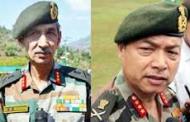
General Officer Commanding (GOC), 16 Corps, Lt Gen K H Singh said that 200 heavily-armed militants were waiting in 36 launching pads across the Line of Control (LoC) on the other side of Pir Panjal range and there is every possibility that Pakistan might try to divert the fringe elements of the home grown terrorist outfits on this side of the border.
“There are general inputs that terrorists might try to attack soft targets, including schools, religions places, army convoys and other civilian areas,” he told reporters here.
Singh said the army was fully prepared to foil any such nefarious designs of the terrorist organisations.
“There are 200 terrorists waiting in 36 launching pads across the border on the other side of the Pir Panjal range to sneak into Indian side, we have so far been able to foil their attempts,” he said.
Singh said the terror infrastructure across the border is active and terrorist organisations were receiving the support of Pakistani establishment including the army and ISI.
“There are 14 to 15 terrorists training camp active on the other side of the line of control within our area of responsibility.
“The terrorist infrastructure across the border is intact and there is every possibility that Pakistan might try to divert some of its home grown terrorists towards this side of the border,” he said.
Singh said there could be a possibility that some disgruntled elements of Tehrik-e-Taliban Pakistan might surrender to the Pakistani Army, which can be used to launch attacks against India.
He said that less than two months ago the chief of banned terror group Lashkar-e-Taiba, Hafiz Sayeed, was reported to have visited the areas along the border in Pakistan to motivate his cadre to launch anti-India attacks.
On a question whether India was ready to launch a counter attack on the terror infrastructure across the border, Singh said the army is always prepared to face any eventuality.
He said that there were 37 active militants in Jammu region, but their movements are under check by the security agencies.
“There are 80 to 90 people involved in militancy in Jammu region including 37 active militants, the rest are sleeper cells, but we make sure that we continue to dominate them so they cannot launch any operation,” Singh said.
While Pakistan-based terror outfits were trying to infiltrate militants in to the Indian side, Singh said the army has been foiling their attempts.
“Several infiltration attempts were made, but we foiled all such attempts from their side,” he added.

India’s biggest book fair in terms of a single exhibitor is till Janurary 29th at Sunderbai Hall at Churchgate Mumbai. It is the delight of book readers and intellectuals.
The exhibition has more than 1 lakh Books on display. The range of books vary from Fiction, non fiction, , Art, Interior, Health, Cookery, Fashion and Craft, Travel, Spiritual and Classics. The exhibition is displayed at a large area of 5,000 sq ft.
The percentage of readership in India is at an average of 15-20%. The highest number of readers are from Bangalore, followed by Delhi, Mumbai and Kolkata. With the large number of people hooked on the internet the percentage of readers are declining.
However looking at the spirit of buying in the exhibition was very encouraging with people randomly selecting books and putting them on their cartel. This included young, old, male and females.
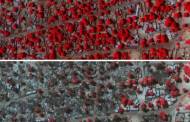
Lagos (AFP) – Leading human rights groups on Thursday released satellite images claiming to show massive destruction by Boko Haram of two Nigerian towns in what is feared to be the deadliest strike of the Islamists’ six-year insurgency
Amnesty International and Human Rights Watch published separate images of Baga and the nearby town of Doron Baga, on the shores of Lake Chad, in the far north of Borno State in northeast Nigeria.
Hundreds of people, if not more, are feared to have been killed in the attack, Amnesty said, that is thought to have targeted civilian vigilantes helping the army and that reportedly included one woman being killed while in labour.
But Nigeria’s military, which often downplays death tolls, said that 150 died and dismissed as “sensational” claims that 2,000 may have lost their lives.
HRW said the exact death toll was unknown and quoted one local resident as saying: “No one stayed back to count the bodies.
“We were all running to get out of town ahead of Boko Haram fighters who have since taken over the area.”
Satellite images from January 2 (top) and January 7, 2015 believed to show the scale of last week …
Amnesty’s images showed aerial shots of the two towns, which have been hit previously by fighting, on January 2 — the day before the attack — and January 7, after homes and businesses were razed.
The group said the images suggested “devastation of catastrophic proportions”, with more than 3,700 structures — 620 in Baga and 3,100 in Doron Baga — damaged or completely destroyed.
HRW said 11 percent of Baga and 57 percent of Doron Baga was destroyed, most likely by arson, attributing the greater damage in the latter to the fact that it houses a regional military base.
The Multinational Joint Task Force of troops from Nigeria, Niger and Chad has been involved in counter-insurgency operations against Boko Haram.
At least 16 settlements around Baga were burnt to the ground and at least 20,000 people fled, according to local officials.
A screengrab taken on October 2, 2014 from a video released by Boko Haram and obtained by AFP shows …
– ‘Killed in labour ‘ –
Harrowing testimony has been emerging from survivors about the scale and brutality of the assault in Baga.
Eye-witnesses spoken to by AFP described seeing decomposing bodies in the streets and one man who escaped after hiding for three days said he was “stepping on bodies” as he fled through the bush.
Amnesty said on Thursday that survivors have told them that Boko Haram fighters killed a woman as she was in labour, during indiscriminate fire that also cut down small children.
“Half of the baby boy (was) out and she died like this,” the unnamed witness was quoted as saying.
Rescue workers work to put out a fire following a bomb explosion that rocked the busiest roundabout …
A man in his fifties added: “They killed so many people. I saw maybe around 100 killed at that time in Baga. I ran to the bush. As we were running, they were shooting and killing.”
Another woman said: “I don’t know how many but there were bodies everywhere we looked.”
Medical charity Doctors Without Borders (MSF) said on Tuesday that its team in the Borno State capital, Maiduguri, was providing assistance to 5,000 survivors of the attack.
The UN refugee agency has said that more than 11,300 Nigerian refugees have fled into neighbouring Chad.
Amnesty said the eye-witnesses and images reinforced the view that the attack was Boko Haram’s “largest and most destructive” in its fight to establish a hardline Islamic state in northeast Nigeria.
“The deliberate killing of civilians and destruction of their property by Boko Haram are war crimes and crimes against humanity and must be duly investigated,” it added.
Some 300 women were said to have been rounded up and detained at a school, witnesses told Amnesty, adding that older women, mothers and children were released after four days but younger women kept.
The Baga attack came before presidential and parliamentary elections in Nigeria next month and an upsurge in violence apparently designed to undermine the legitimacy of the vote.
Nigeria’s electoral commission said voting was “unlikely” in rebel-controlled areas and arrangements were being made to allow hundreds of thousands of displaced people to cast their ballots.
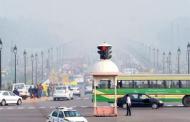
New Delhi: Delhiites on Thursday woke up to a cold morning as minimum temperature dropped to 5.8 degrees Celsius while fog continued to disrupt train traffic.
According to MeT department, the minimum temperature was two notches below normal. Yesterday, it was 11 degrees Celsius, which was three notches above normal.
An official of the department said that shallow fog was observed in the national capital in the early hours and visibility was recorded at 400 meters at 8:30 AM.
Apart from that, humidity recorded till 8.30 AM this morning was 94 per cent.
According to a Northen Railway official, 61 trains were delayed and five trains were cancelled due to inclement weather.
However, flight operations remained smooth, airport authorities said.
Weatherman has predicted a mainly clear sky throughout the day.
“There will be mainly clear sky and maximum temperature is expected to settle at 17 degree Celsius,” the official also said.
Yesterday, the maximum temperature was recorded six notches below the season’s average at at 14.7 degrees Celsius.
PTI

Pope Francis enjoyed a rapturous welcome in the Philippines on Thursday as he began a five-day trip in the Catholic Church’s Asian heartland that is tipped to attract a world-record papal crowd.
Church bells tolled across the former Spanish colony as the charismatic pontiff flew into the capital of Manila after a successful visit to Sri Lanka.
Francis smiled as he looked out the window of his plane upon touchdown, greeted by the sight of hundreds of children on the tarmac chanting: “Welcome Pope Francis”.
Francis has said his two-nation tour is aimed at adding momentum to the Church’s already impressive growth in Asia, with its support in the Philippines the benchmark for the rest of the region.
Eighty percent of the former Spanish colony’s 100 million people practise a famously fervent brand of Catholicism, and the pope is set to enjoy thunderously enthusiastic crowds throughout his stay.
“Every step he makes, every car ride he takes, every moment he stays with us is precious for us,” Archbishop Socrates Villegas, president of the Catholic Bishops’ Conference of the Philippines, said as he called on all Filipinos to make an effort to see him.
A man sweeps the blocked street near where Pope Francis will be staying in Manila on January 15, 201 …
Hundreds of thousands of people crowded the route the pope passed as he made a 35-minute trip in a “popemobile” from the airport to the Vatican’s embassy to rest overnight.
The pope stood on the back of the vehicle, which had no walls, waving and smiling constantly to the crowd.
“It’s a blessing to see the pope. That’s why we’re here,” school teacher Jeannie Blesado, 35, told AFP.
– Open-air mass –
The high-point of his trip is expected to be an open-air mass on Sunday at a park in Manila, with organisers preparing for up to six million people despite a forecast of rain and security concerns.
Pope Francis waves as he disembarks from his plane after arriving at a military airbase in Manila on …
Organisers have said that, if the crowd is as big as expected, it will surpass the previous record for a papal gathering of five million during a mass by John Paul II at the same venue in 1995.
Francis, who is the fourth pope to visit the Philippines, is also due to visit communities devastated by Super Typhoon Haiyan, which left 7,350 people dead or missing in 2013.
Church officials have said one of the main reasons for Francis wanting to visit the Philippines was to make a “mercy and compassion” trip to meet survivors of the typhoon.
On Saturday, he is scheduled to deliver a mass to tens of thousands of people in Tacloban, one of the worst-hit cities in the central Philippines, and have an intimate lunch with 30 typhoon survivors.
The main scheduled events on Friday included a state welcome at the presidential palace, a mass at Manila Cathedral and a meeting at a shopping mall with thousands of families.
Students holding umbrellas rehearse a dance hours prior to the arrival of Pope Francis at a military …
– Security concerns –
Authorities have expressed major concerns over the pope’s security in the Philippines, where attempts have been made to kill visiting pontiffs twice before.
Nearly 40,000 soldiers and police are being deployed to protect Francis in what Philippine military chief General Gregorio Catapang described as a “security nightmare”.
Potential stampedes from the giant crowds, as well as the threat of Islamic militants or lone-wolf assailants, are among the concerns.
On the first papal visit to the Philippines in 1970, Bolivian painter Benjamin Mendoza donned a fake priest’s cassock and swung a knife at Pope Paul VI as he arrived at Manila airport.
Paul VI was wounded but continued his trip without disclosing his injury.
One week before John Paul II’s 1995 visit, police uncovered a plot by foreign Islamist extremists to kill him by bombing his Manila motorcade route.
Philippine President Benigno Aquino made a nationally televised address this week specifically to highlight the security threats for the pope and call on all Filipinos to help protect him.
Adding to the concerns, the pontiff has insisted he will not travel in a bullet-proof vehicle during his big events so he can be closer to the faithful.
On Thursday night, barriers kept the crowds well away from the pope as he travelled from the airport and his vehicle passed quickly along the route.
The pope flew out of Sri Lanka on Thursday morning, a day after one million people gathered to hear him give mass in what police said was the biggest public celebration ever for the capital of Colombo.
His visit, which began on Tuesday, came days after an presidential election that exposed bitter divisions on the island and saw the surprise victory of Maithripala Sirisena over strongman leader Mahinda Rajapakse.
Archbishop Malcolm Ranjith said the pope had brought “great joy” to the island as it struggled to recover from civil war.
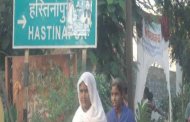
Muzaffarnagar: A local court has rejected the bail pleas of 14 accused in connection with Hastinapur sanctuary land grabbing scam here, an official said today.
District and Sessions Judge Vijay Laxmi turned down the bail plea of 14 accused including Umesh, Prem Singh, Ilam Singh, Gyani, Bharti, Nitu, Shokendra, Kunwar and Anil Kumar in connection with Hastinapur sanctuary land grab, said district government counsel Dushyant Tyagi.
The others who were refused relief were Pramod Kumar, Bijender, Anil, Toley Ram and Jasvir.
As many as 30 cases have been registered in different police stations against the alleged encroachment on government land in 27 villages in the district.















Recent Comments