





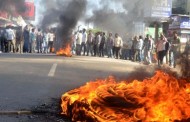
Fresh violence has been reported from Gossaigaon area of Kokrajhar district where several Bodo houses have been set ablaze.
The toll rose to 78 on Thursday in attacks by NDFB(S) and retaliatory violence in lower Assam with miscreants among Adivasis setting afire houses of Bodos as the backlash to the Tuesday massacre continued for the second day.
In worst-affected Sonitpur district, six more bodies were recovered on Thursday morning from Maitalu Basti under Zinzia police station bordering Arunachal Pradesh taking the toll in attacks by NDFB(S) to 43 in the district and overall toll to 71, a police spokesman told PTI.
Three Adivasis were killed in police firing during protests against the carnage on Wednesday.
In Kokrajhar, the other severely-affected district, retaliatory violence by miscreants among Adivasis claimed the lives of four Bodos at Manikpur and Dimapur areas.
Twenty five people were killed by militants in Kokrajhar and three in Chirang district.
Fresh incidents of violence have been reported on Thursday morning from Gossaigaon area in Kokrajhar where several houses of Bodos have been set ablaze despite the indefinite curfew clamped in the entire district, he said.
Curfew has been also imposed in the affected areas of Sonitpur and Chirang districts along with parts of Dhubri and Baksa districts as precautionary measure, he added.
Union Minister of Home Rajnath Singh accompanied by his deputy Kiren Rijiju on Thursday visited Bishwanath Chariali in Sonitpur district to review the prevailing situation and also held talks with different political and social organisations.
They had reached Guwahati on Wednesday night and held meeting with Chief Minister Tarun Gogoi.
Keywords: Assam violence, NDFB(S), Bodo militants
SHAMUKJULI, India (AP) — Hundreds of survivors of a brutal rebel attack that killed at least 63 people in northeastern India sought shelter Wednesday in a church and school while security forces imposed a curfew in a bid to contain the latest bout of ethnic violence.
Long-simmering land and ethnic disputes in Assam state erupted in bloodshed Tuesday when authorities said rebels belonging to a faction of an indigenous separatist group called the National Democratic Front of Bodoland attacked tribal settlers known as Adivasi, whose ancestors migrated to Assam more than 100 years ago. Most of them worked on tea plantations.
At least 100 people, mostly women and children, sought refuge in a church in Shamukjuli village in Sonitpur district, where 26 of the victims died. Another 200 people ran to a nearby school. The Adivasis are a mix of Hindus and Christians and many had been preparing for Christmas when the attack took place, survivors said.
Bodo rebels have been fighting for a separate homeland for their indigenous tribe, which makes up 10 percent of Assam’s 33 million people. They have staged attacks against both Adivasi and Muslim settlers in violence that has left at 10,000 people dead, most of them civilians, in the last three decades.
Many of the dead in Tuesday’s attacks included women and children, police said. The rebels may have been provoked by heavy losses they suffered recently as police intensified operations against the group, Singh said.
“We are trying to ensure that ethnic violence does not flare up,” he said, adding that a curfew was imposed in two districts and scores of police and paramilitary forces patrolled the area.
There were concerns the violence could spill over.
Following the attacks, angry Adivasis surrounded a police station in Sonitpur and attempted to attack the officers inside, said S.N. Singh, a top police official. Police opened fire, killing three Adivasis, he said.
He also said there were incidents of Bodo homes being attacked, but troops managed to control the situation.
India’s Prime Minister Narendra Modi condemned the latest attacks, and the Home Ministry rushed several thousand federal paramilitary troops to the region, junior Home Minister Kiren Rijiju said.
Dozens of rebel groups have been fighting the government and sometimes each other for years in seven states in northeast India. They demand greater regional autonomy or independent homelands for the indigenous groups they represent.
The rebels accuse the federal government of exploiting the region’s rich mineral resources but neglecting the local people.
In May, rebels from the same group shot and killed more than 30 Muslim settlers in the region.
___

Inside the ‘Christmas village’ of Yiwu, there’s no snow and no elves, just 600 factories that produce 60% of all the decorations in the world
There’s red on the ceiling and red on the floor, red dripping from the window sills and red globules splattered across the walls. It looks like the artist Anish Kapoor has been let loose with his wax cannon again. But this, in fact, is what the making of Christmas looks like; this is the very heart of the real Santa’s workshop – thousands of miles from the North Pole, in the Chinese city of Yiwu.
Our yuletide myth-making might like to imagine that Christmas is made by rosy-cheeked elves hammering away in a snow-bound log cabin somewhere in the Arctic Circle. But it’s not. The likelihood is that most of those baubles, tinsel and flashing LED lights you’ve draped liberally around your house came from Yiwu, 300km south of Shanghai – where there’s not a (real) pine tree nor (natural) snowflake in sight.
Christened “China’s Christmas village”, Yiwu is home to 600 factories that collectively churn out over 60% of all the world’s Christmas decorations and accessories, from glowing fibre-optic trees to felt Santa hats. The “elves” that staff these factories are mainly migrant labourers, working 12 hours a day for a maximum of £200 to £300 a month – and it turns out they’re not entirely sure what Christmas is.
“Maybe it’s like [Chinese] New Year for foreigners,” says 19-year-old Wei, a worker who came to Yiwu from rural Guizhou province this year, speaking to Chinese news agency Sina. Together with his father, he works long days in the red-splattered lair, taking polystyrene snowflakes, dipping them in a bath of glue, then putting them in a powder-coating machine until they turn red – and making 5,000 of the things every day.
Advertisement
In the process, the two of them end up dusted from head to toe in fine crimson powder. His dad wears a Santa hat (not for the festive spirit, he says, but to stop his hair from turning red) and they both get through at least 10 face masks a day, trying not to breathe in the dust. It’s a tiring job and they probably won’t do it again next year: once they’ve earned enough money for Wei to get married, they plan on returning home to Guizhou and hopefully never seeing a vat of red powder again.
Packaged up in plastic bags, their gleaming red snowflakes hang alongside a wealth of other festive paraphernalia across town in the Yiwu International Trade Market, aka China Commodity City, a 4m sq m wonder-world of plastic tat. It is a pound shop paradise, a sprawling trade show of everything in the world that you don’t need and yet may, at some irrational moment, feel compelled to buy. There are whole streets in the labyrinthine complex devoted to artificial flowers and inflatable toys, then come umbrellas and anoraks, plastic buckets and clocks. It is a heaving multistorey monument to global consumption, as if the contents of all the world’s landfill sites had been dug-up, re-formed and meticulously catalogued back into 62,000 booths.
The two men produce 5,000 red snowflakes a day, and get paid around £300 a month. Photograph: China Daily/Reuters
The complex was declared by the UN to be the “largest small commodity wholesale market in the world” and the scale of the operation necessitates a kind of urban plan, with this festival of commerce organised into five different districts. District Two is where Christmas can be found.
There are corridors lined with nothing but tinsel, streets throbbing with competing LED light shows, stockings of every size, plastic Christmas trees in blue and yellow and fluorescent pink, plastic pine cones in gold and silver. Some of it seems lost in translation: there are sheep in Santa hats and tartan-embroidered reindeer, and of course lots of that inexplicable Chinese staple, Father Christmas playing the saxophone.
It might look like a wondrous bounty, but the market’s glory days seem to have passed: it’s now losing out to internet giants like Alibaba and Made In China. On Alibaba alone, you can order 1.4m different Christmas decorations to be delivered to your door at the touch of a button. Yiwu market, by comparison, stocks a mere 400,000 products.
Aiming at the lower end of the market, Yiwu’s sales thrived during the recession, as the world shopped for cut-price festive fun, but international sales are down this year. Still, according to Cai Qingliang, vice chairman of the Yiwu Christmas Products Industry Association, domestic appetite is on the rise, as China embraces the annual festival of Mammon. Santa Claus, says the Economist, is now better known to most Chinese people than Jesus.
The beaming sales reps of Yiwu market couldn’t sound happier with their life sentence of eternal Christmastime. According to Cheng Yaping, co-founder of the Boyang Craft Factory, who runs a stall decked out like a miniature winter wonderland: “Sitting here every day, being able to look at all these beautiful decorations, is really great for your mood.”
It’s somehow unlikely that those on the other end of the production line, consigned to dipping snowflakes in red-swamped workshops for us to pick up at the checkout for 99p, feel quite the same way.

Bharatiya Janata Party (BJP) chief Amit Shah on Tuesday did not rule out joining hands with either PDP or National Conference saying “all options are open”.
As results showed that BJP will be second largest party in the state after PDP, Shah said “All options are open, the option of forming a BJP government is open. The option of supporting somebody is also open. The option of joining some government is also open. All three options are open,”.
BJP’s decision will also depend on initiatives taken by other parties, he said.
BJP Parliamentary Board will weigh its options in the state and also deliberate on its chief ministerial candidate in Jharkhand on Wednesday, said Shah.
While the J&K Assembly election result has returned a hung verdict, BJP with its ally AJSU is close to cross the magic number of 41 in the 81-member Jharkhand House.
In the 87-member J&K Assembly, the latest wins and lead tally of PDP, BJP and NC was 28, 25 and 15 respectively.
Amit Shah termed the results an endorsement of Prime Minister Narendra Modi‘s leadership and his government’s development work since he assumed office in May.
“The poll verdict is a lesson for those who oppose our government’s agenda of development and change,” he said, in a dig at Opposition parties who have tried to corner the government in Parliament over conversion issue.
“BJP has increased its seats from 18 in 2009 to 41 this time in Jharkhand. In J-K, our seats have increased from 11 in 2008 to 25, we have received the maximum percentage of votes in the state,” he said.

JAKARTA — Senior Indonesian officials say they are looking for an island to accommodate some 10,000 asylum seekers and refugees waiting for resettlement in the country, as they have become a “burden.”
Asylum seekers flock to Indonesia from the Middle East, Asia and Africa, hoping to reach Australia. But Indonesia’s southern neighbor has recently announced that all refugees registered at the Jakarta office of the UNHCR refugee agency from July 2014 will now automatically be banned from resettlement in Australia.
Australia’s immigration minister Scott Morrison compares the ban to “taking the sugar off the table,” and says it’s in Indonesia’s interest. “We’re trying to stop people thinking they can go to Indonesia and wait around till they get to Australia,” he told Australia’s ABC Radio late November. “This is designed to stop people flowing into Indonesia. It will help Indonesia.”
But Indonesian authorities don’t see it that way. “It’s Australia’s right, but it’s creating a burden for us,” said Indonesia’s Justice and Human Rights minister Yasonna Laoly on Australia’s ABC News. “There are 10,000 foreign citizens, which becomes a burden for us.”
As a signatory to the United Nations’ Refugee Convention, Australia is bound by international law to protect refugees. Indonesia has not signed the treaty.
Several high-ranking Indonesian officials have now reportedly suggested to president Joko Widodo that these refugees should be moved to one of Indonesia’s 17,000 islands.
“If the Australian government cannot handle them, we suggest placing them on an empty island, so they don’t disturb the public,” Coordinating Political, Legal and Security Affairs Minister Tedjo Edhy Purdijatno told local media late November.
It’s not the first time this option has been put on the table.
In the early 1980s, hundreds of thousands of Indochinese refugees were placed on Galang Island, in the northwest of Indonesia. In 2013, a plan to forcibly resettle refugees on the impoverished and isolated Sumba Island, in the eastern part of the archipelago, was finally abandoned.
“Now we have started thinking again about this policy,” Laoly told The Australian. “We only need to find the island.”
While Indonesian officials have suggested UNHCR could be involved in handling the refugees’ cost of living, the agency’s Indonesian representative Thomas Vargas told GlobalPost he hasn’t been contacted on the matter. He did not want to comment on this specific proposal, but said UNHCR would “certainly not encourage” this kind of option. Placing refugees and asylum seekers on an island “is probably the costliest and the most ineffective way” to deal with the situation, he said.
New asylum seekers arrive in Indonesia every week. Many sleep on the pavement, in front of the UNHCR gates in Jakarta. Tolosa, an 18-year-old Ethiopian, says he made it to Indonesia just two months ago, before Australia announced its new policy. But he says he would have come anyway. Like many here, he says he has nowhere else to go. Tolosa was hoping to get to Australia, but he’s happy to be resettled anywhere.
Actually, even the idea of an empty Indonesian island doesn’t seem to bother him much. “If I go back to my country I might die, so I’m OK with staying on an island,” he said. Other asylum seekers agree. Faisal, a 23-year-old Somalian who calls Australia’s policy “inhumane” and “cruel,” says even an empty and isolated island “is better than going back home and dying there.”
Ahmad, 18, is from Pakistan. He has registered in UNHCR’s office in Jakarta more than a year ago, and hopes he will still get to resettle in Australia. He worries though, as Australia has announced it will also reduce the quotas of resettlement for refugees who registered before July 2014. Soon, Ahmad won’t have any money left. He says he might present himself to one of Indonesia’s overcrowded and run-down detention centers. “Many people try to get into detention centers, even if it’s like prison, because they don’t have money,” he says.
Australian Prime Minister Tony Abbott’s anti-immigration “Operation Sovereign Borders” was launched shortly after he took office late 2013, and has created tensions with Jakarta. Indonesian authorities haven’t been happy with Australia towing back boats of migrants en route to Australia towards Indonesian waters.
Thomas Vargas says Australia, one of the only signatories of the Refugee Convention in the region, should set the example. But Australia’s current policies, he says, are “certainly not in the spirit of the Refugee Convention, and not in the spirit of regional cooperation.”
“Unilateral action by states is not going to work,” he says, calling for all affected countries to work together on a solution that meets the protection needs of refugees and asylum seekers.

Compared to other religious festivals, Christmas is quite a small festival in India, due to the number of people who are Christians (about 2.3%) compared to people who belong to other religions. Having said this, the population of India is over 1 Billion, so there are over 25 million Christians in India!
One of the largest Indian Christian Communities in a city is in Mumbai. A lot of the Christians in Mumbai (previously known as Bombay) are Roman Catholics. In India’s smallest state, Goa which is on the west of India, about 26% of people are Christians. Many of the Christians in Mumbai came from or have roots in Goa. The states of Manipur, Meghalaya, Nagaland and Mizoram (all on the very east of India) have high populations of Christians as well.
Midnight mass is a very important service for Christians in India, especially Catholics. The whole family will walk to the mass and this will be followed by a massive feast of different delicacies, (mostly curries) and the giving and receiving of presents. Churches in India are decorated with Poinsettia flowers and candles for the Christmas Eve Midnight Mass service.
Many different languages are spoken in India. In Hindi Happy/Merry Christmas is ‘Śubh krisamas’ (शुभ क्रिसमस); Urdu it’s ‘krismas mubarak’ (کرسمس); in Gujarati it’s ‘Anandi Natal’ or ‘Khushi Natal’ (આનંદી નાતાલ); in Sanskrit it’s ‘Krismasasya shubhkaamnaa’; in Bengali ‘shubho bôṛodin’ (শুভ বড়দিন); in Tamil it’s ‘kiṟistumas vāḻttukkaḷ’ (கிறிஸ்துமஸ் வாழ்த்துக்கள்); in Punjabi it’s ‘karisama te nawāṃ sāla khušayāṃwālā hewe ‘ (ਕਰਿਸਮ ਤੇ ਨਵਾੰ ਸਾਲ ਖੁਸ਼ਿਯਾੰਵਾਲਾ ਹੋਵੇ); in Kannada it’s ‘kris mas habbada shubhaashayagalu’ (ಕ್ರಿಸ್ ಮಸ್ ಹಬ್ಬದ ಶುಭಾಷಯಗಳು); in Konkani it’s ‘Khushal Borit Natala’ and in Malayalam it’s ‘Christmas inte mangalaashamsakal’. Happy/Merry Christmas in lots more languages.
Instead of having traditional Christmas Trees, a banana or mango tree is decorated (or whatever tree people can find to decorate!). Sometimes people use mango leaves to decorate their homes.
In Southern India, Christians often put small oil burning clay lamps on the flat roofs of their homes to show their neighbors that Jesus is the light of the world.
Christians in Goa to celebrate it Christmas! It has lots of ‘western’ customs as part of it as Goa has historical connections with Portugal. Most Christians in Goa are Catholics. People like to go carol singing around their neighbors for about a week before Christmas. Christmas Trees are also very popular as is a ‘traditional’ rich fruit Christmas Cake! Lots of local sweets are also eaten at Christmas in Goa. Favourite sweets include neureos (small pastries which are stuffed with dry fruit and coconut and fried) and dodol (like toffee that has coconut and cashew in it). These are other sweets are often part of ‘consuada’ when epople make sweets before Christmas and give them to their friends and neighbors. Most Christian families also have a nativity scene with clay figures in it. On Christmas Eve Christians in Goa hang out giant paper lanterns, in the shape of stars, between the houses so that the stars float above you as you walk down the road. The main Christmas meal is also eaten on Christmas Eve and is also ‘western’ with roast turkey or chicken being popular! After the meal, Christians head to Church for a Midnight mass service. After the service the church bells ring to announce that Christmas Day has arrived. Many Christians in Goa also celebrate Epiphany and remember the Wise Men visiting Jesus.
Christians in Mumbai use many Christmas traditions from Goa including the star lanterns and manger scenes (people like to make sure they have the best the nativity scene!).
In north-west India, the tribal Christians of the Bhil folk, go out night after night for a week at Christmas to sing their own carols the whole night through. They go to surrounding villages singing to people and telling the Christmas story.
In South West India, in the state of Kerala Were, 22% of the state’s 33 Million population are Christians and Christmas is important festival. Traditional Catholics fast don’t eat from 1st to 24th of December – until the midnight service. Every house will be decorated with a Christmas star. During the start of the Christmas season, almost all the stationary shops will be filled with new and variety Christmas stars. People make cribs in their homes and Churches.
In India, Father Christmas or Santa Claus delivers presents to children from a horse and cart. He’s known as ‘Christmas Baba’ in Hindi, ‘Baba Christmas’ in Urdu (both of those mean Father Christmas); ‘Christmas Thaathaa’ in Tamil and ‘Christmas Thatha’ in Telugu (both of those mean Christmas old man); and ‘Natal Bua’ (Christmas Elder Man) in Marathi. In Kerla Were state, he’s known as ‘Christmas Papa’.
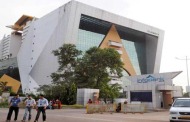
Infopark here has attracted investment worth Rs 3000 crore and generated over Rs 2350 crores of software exports revenue, Infopark CEO Shri Hrishikesh Nair has said.
The park has attained all milestones in terms of IT space, employment generation and software exports, Nair said at a function organised as part of Infopark anniversary yesterday.
“We have attracted over Rs 3,000 crore worth of investment and generated over Rs 2,350 crores of software exports revenue,” he said.
Over the last decade, the growth of Infopark has been spectacular both in terms of world-class IT space and employment generation, he said.
The park has now 4.5 million sqft technology workspace with state-of-the-art infrastructure. The 100-acre Kochi campus is currently home to 200 plus companies, including some of the big names in the industry such as TCS, Wipro, Cognizant and UST Global, he said.
The park which currently employs around 24,000 IT professionals has almost finished its Phase-I development, with the construction of IT campuses by TCS and Brigade Group nearing completion.
Work on the Rs 2500-crore Phase II project, spread across 160 acres, is progressing quickly and is expected to be ready for operations by 2020, he said.

A mother-son duo were killed when their car rammed into a stationary truck due to dense fog in Sarojini Nagar area, police said here.
Abhishek Shukla (40) and his mother Urmila (62) were seriously injured when the car in which they were travelling rammed into the truck last night due to fog near Daroga Khera, they said.
They were rushed to a hospital where doctors declared them dead, police said.

Holding that FIR is a public document and should not be kept out of public domain, Himachal Pradesh High Court today issued directions to police to upload the FIRs on its website within 24 hours from January 26, 2015.
The court was hearing the plea of a 70-year old man, retired Assistant Excise and Taxation Commissioner, who had appeared in person in the court complaint that he was not being supplied the copy of the FIR as the matter pertained to senior police officer.
Single Bench consisting of Justice Tarlok Singh Chauhan observed that the accused was entitled to get a copy of the FIR at the earliest under Section 207 of the CrPC.
“The copies of FIR, unless reasons recorded that the offence is sensitive in nature, should be uploaded on the Himachal Pradesh Police website within twenty-four hours of lodging of the FIR so that the accused or any person connected with the same can download the FIR and file appropriate application before the court as per law for redressal of his grievances,” Justice Chauhan directed.
The bench further directed that, “The decision not to upload the copy of the FIR on the website shall not be taken by an officer below the rank of Deputy Superintendent of Police and that too by way of a speaking order. A decision so taken by the DSP shall also be duly communicated to the Area magistrate.”
Further the word ‘sensitive’ apart from the other aspects which may be thought of being sensitive by the competent authority would also include concept of privacy regard being had to the nature of the FIR.
In case the copy of the FIR is not provided on the ground of sensitive nature of the case, a person grieved by the said action, after disclosing his identity, can submit a representation with the Superintendent of Police who shall constitute a committee of three high officers and to deal with the said grievance within three days from the date of receipt of the representation and communicate it to the grieved person, the order said.

BMW has agreed to demands from the government to replace driver’s-side air bags across the entire US.
The National Highway Traffic Safety Administration has been pushing companies to recall older cars with air bag inflators made by Takata Corp. They can explode with too much force and spew shrapnel at drivers and passengers. At least five deaths have been blamed on Takata inflators.
The decision affects 140,000 BMW 3 Series cars made between January 2004 and August 2006. It says no problems with BMW vehicles have been reported.
Earlier this year the company recalled 574,000 cars in the US.
Several automakers have been slow to expand the recall.
Ford Motor Co joined the list last week, and was quickly followed by Chrysler.
BMW is the last automaker to agree to replace air bags in all affected cars nationwide. About 15 million cars have been recalled in the US in total. Initial recalls were limited to states with high levels of humidity, as the NHTSA says the air bag inflator propellant, ammonium nitrate, can burn faster than designed if exposed to prolonged airborne moisture.
When that happens, the propellant can blow apart a metal canister meant to contain the explosion.
Takata has refused the agency’s request for a nationwide recall of driver’s side inflators, about 8 million in total, and it says it has tested more than 1,000 air bag inflators from other regions without a single failure. But the company will still make replacement parts for the automakers that are expanding their recalls. It hasn’t been decided whether Takata or the automakers will pay the extra costs involved.
In total, 10 automakers have models with Takata driver and passenger air bags. There could be as many as 30 million with the air bags nationwide.
(This article was published on December 23, 2014)




Recent Comments