






Nagpur, Mar 13: Even as the Modi government has come under fire from RSS affiliates over the Land Acquisition Bill, the Sangh today said the legislation was not bad but suggested that differences over it be sorted out through dialogue. “I don’t think the bill is bad after the government made some amendments to it,” RSS joint general secretary Dattatreya Hosabale told journalists at a briefing as the three-day brainstorming session of the Pratinidhi Sabha, the highest decision making body of the Sangh, kicked off here. (ALSO READ: Anna Hazare asks parties to unite in Rajya Sabha against Land Acquisition Bill)
The land bill is facing stiff resistance from RSS affiliates like Bhartiya Mazdoor Sangh (BMS) and Bhartiya Kisan Sangh (BKS), whose representatives are also attending the meet. “These (BMS and BKS) are independent entities. We have invited them here because they work with the Sangh’s inspiration. As independent entities they are free to hold their opinion and express it in the way they feel is fit,” he said.
Hosabale said RSS wanted “proper coordination” to be established between the Centre and organisations like BMS and BKS, which have opposed the bill. “RSS will try and inspire both (government and RSS affiliates). Now the goal should be to hold a dialogue to ensure that the farmers get their due. “I think the government will take care of the demands voiced by BMS and BKS and ensure the goals of the legislation are realised on the ground,” Hosabale said.

New Delhi: A school boy was killed after a DTC bus ran over him in Khanpur area on Friday, following which angry residents set the bus on fire and vandalised 12 others, police said.
A boy, wearing school uniform, was mowed down by a DTC bus while he was crossing the road in Khanpur area at around 11 am. Following the incident, residents staged a protest and set the bus ablaze and also vandalised 12 others, evoking tension in the area,” a senior officer said.
A large number of police personnel have been deployed in the area to maintain calm.
The body has been sent to AIIMS for postmortem, he said
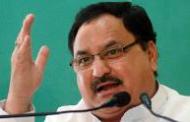
Government is actively considering changing rules and regulations relating to medical services to improve and expand health facilities in every part of the country, Lok Sabha was informed today.
“There is a need to change some rules and regulations and government is actively considering it,” Health Minister J P Nadda said during question hour.
Nadda’s response came when Lakshadweep MP Mohammed Faizal suggested that medical practitioners serving in rural areas should be trained in modern medical techniques and equipment so that the shortage of advance medical facilities in backward areas could be resolved.
“We have to discuss the issue with various stakeholders, including Medical Council of India, to arrive at a decision in this regard,” the Minister said.
In addition to the bilateral agreements between India and other countries in the field of health cooperation, he said international cooperation was also achieved through the aegis of WHO, SAARC forum and other international arrangements such as BRICS framework for strategic cooperation in health.
Nadda said international cooperation facilitated capacity building, training, exchange of information, exchange of experts, health, health manpower development, technical support in establishing laboratories and hospitals and research in mutually identified areas on the basis of equality reciprocity and mutual benefit.
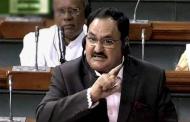
ndia has 19 health workers which includes doctors and nurses for every 10,000 people in comparison to World Health Organisation (WHO) norms which prescribe 25 health workers for the same number, the Lok Sabha was informed on Friday.
“As per the Report of the Steering Committee on Health for the 12th Five Year Plan of the Planning Commission, India has 19 health workers (doctors — 6, nurses and midwives — 13) per 10,000 people in India.
“WHO norms provide for 25 per 10,000 people. Additionally, there are 7.9 lakh AYUSH practitioners registered in the country (approximately 6.5 per 10,000),” Health Minister J.P. Nadda said in a written reply.
He said that as per information provided by Medical Council of India (MCI) and Indian Nursing Council (INC), the total number of registered doctors is 9,36,488 as on December 31, 2014.
He said that as on December 31, 2013, the number of auxiliary nurses and midwives are 7,56,937 while registered nurses and midwives are 16,73,338. Data in respect of health professionals in rural and urban areas is not maintained centrally.
He said that the government has not conducted any study or survey to ascertain the number of doctors and other medical and para-medical professionals required in the rural and urban areas of the country.
Medical Council of India (MCI), with the previous approval of the Centre, has amended the Post Graduate Medical Education Regulations, 2000, to provide 50 per cent reservation in Post Graduate Diploma Courses for Medical Officers in government service, who have served at least three years in remote and difficult areas.
The amendment has also been done to give incentive at the rate of 10 per cent of marks obtained for each year in service in remote or difficult areas as up to a maximum of 30 per cent of the marks obtained in the entrance test for admissions in post graduate medical courses, Mr. Nadda said.
Keywords: Parliamentary proceedings, Lok Sabha, J.P. Nadda, health workers, Health Ministry

The Anglo-Indian woman who hit national headlines as the Park Street rape victim in early 2012 died of encephalitis at a state-run hospital in Kolkata on Friday morning.
She was around 40 and used to live with her daughters in the southern fringes of the city.
She was admitted to Calcutta Medical College a few days ago.
According to initial reports she died of multi-organ failure.

After its three session slide, gold prices recovered slightly at the bullion market here on modest offtake from stockist and investors as well as low level jewellery buying interest on the back of improved International markets.
Silver also gained following mild speculative buying.
Standard gold (99.5 purity) rose by Rs 95 to end at Rs 25,900 per 10 grams from Thursday’s closing level of Rs 25,805.
Pure gold (99.9 purity) also went up by a similar margin to conclude at Rs 26,050 per 10 grams from Rs 25,955.
Silver (.999 fineness) moved up by Rs 85 per kg to close at Rs 36,205 as compared to Rs 36,120 yesterday.
Globally, in Europe gold firmed up after nine straight sessions of losses, as the dollar nursed losses following its biggest one-day fall in a month late yesterday.
In London, spot gold edged up 0.3 percent to USD 1,156.20 an ounce in early trade. While spot silver were down 0.3 percent at USD 15.52 an ounce.

Breaking a 28-year-long hiatus, Prime Minister Narendra Modi on Friday embarked on an important visit to Sri Lanka with the message that India favoured a life of equality, justice, peace and dignity for Tamils in its “new journey” of peace and reconciliation.
The first Prime Minister to visit the island after Rajiv Gandhi’s trip in 1987 after which the bilateral relationship had undergone several twists and turns while cash-rich China made its push, Modi met President Maithripala Sirisena and expressed his “admiration” for his efforts to build an inclusive future for Sri Lanka.
However, he made it clear that “unity and integrity” of Sri Lanka that fought a three decades of war for a separate Tamil Eelam with LTTE “are paramount” significance for India.

The family of an Arab Israeli man shown being killed by a young boy in the latest propaganda video for Islamic State (Isis) has denied he was a spy for the Israeli intelligence services.
The video, published by the group’s Furqan media outlet, shows Muhammad Musallam, 19, sitting in a room wearing an orange jumpsuit and talking about how he had been recruited and trained by Mossad. He said his father and elder brother had encouraged him.
It then shows Musallam being escorted to a field and being shot in the head by a boy, described by an older, French-speaking fighter as one of the “cubs of the caliphate”. The boy appears to be around 11.
Musallam’s mother, Hind, denied her son was a Mossad agent, saying that Isis had “brainwashed” him and was attempting to take away her son’s honour because he wanted to leave the extremist group.
“Not only have they killed our son but they wanted to destroy his image and our image. Look at our house. I work as a house cleaner and his father is a bus driver. If we were on the Mossad pay roll, I would not need to work. Honour is all we have. And they want to take that from us.”
Hind, 46, said Muhammad, who worked in the fire department in Wadi Joz, East Jerusalem, told his parents four months ago that he planned to go to Turkey with a friend.
“He packed his bag in front of me and he seemed so happy,” she said tearfully. “He asked us for money for his journey. And then he left. After that we did not hear from him.”
Advertisement
Two months after he went missing the family contacted the police, concerned that something had happened to Muhammad en route to Turkey. Then Muhammad contacted the family through Skype and said he was with Isis.
“We saw his face and he was sitting with his friend. He said he would be receiving a lot of money from Isis and that they were going to find him a house and pay for his marriage.” At that time, according to his mother, he seemed enthusiastic to be with Isis.
“I’m sure they brainwashed him. He’s just a kid. He doesn’t know better … They did not give me the chance to hug him or smell him or say goodbye. What kind of people are those. They are the devil. ”
Hind said she had spoken to her son three or four times on Skype. Last time he called he said he was afraid and wanted to come home and asked for money to come home. The family sent him $400 (£265) but did not hear from him again.
Hind used an Arabic slang expression to suggest that joining Isis was easier than leaving. The family believe that a roommate or another member of the group may have told superiors of Muhammad’s plan to leave.
Muhammad’s father, Said, a bus driver with the Israeli bus service, Eged, said: “My son was cheated and I am very sad that no one in the Israeli political leadership contacted me. The only one who spoke up for him was [Arab MP] Ahamd Tibi in the Knesset, who said this is the inevitable end of all the kids who join Daesh [Isis’s Arabic acronym].”
The authenticity of the footage, which also appeared on Twitter feeds used by Isis supporters, could not be independently verified by the Guardian.
‘Raising tomorrow’s mujahideen’: the horrific world of Isis’s child soldiers
Read more
Israeli security officials said they were aware of the video but could not confirm that it was authentic.
The man and the boy who appear in the Isis video are French citizens, an official told The Associated Press on Wednesday.
The man in the video speaks with a southern French accent and investigators are probing if he could be the step-brother of Mohammed Merah, who killed seven people in attacks on a Jewish school and paratroopers in the south of France beginning on March 11, 2012 exactly three years ago.
In the video, the man praises attacks on Jews “in your own stronghold in France” as he and the boy stand behind the man about to be killed.
Several experts, including the journalist David Thomson, who wrote a book about French jihadists, say the man is Sabri Essid, reportedly the half-brother of Merah.
Wednesday marks the third anniversary of the start of Merah’s killing spree, which ended with him dying in a shootout with police.
Natasha Underhill, a senior lecturer in international relations at Nottingham Trent University and expert on insurgency and international terrorism, said the conflicts in Iraq and Syria had made it easier for children to be exploited by Isis.
“The legacy of violence in these countries essentially means that these children have become entirely desensitised to the violence,” she said. “This in turn makes them almost immune to it and thus they can be moulded much easier into becoming killing machines.”
Underhill said the use of children in particular was likely to be a message by Isis that the group has longevity, with the ability to indoctrinate youth. “The fear with this is that these youths tend to be much more extreme as they really see no limits to their use of violence,” she said.

A full transcript of Hillary’s press conference on private use of emails:
I know there have been questions about my email, so I want to address that directly and then I will take a few questions from you. There are four things I want the public to know.
First, when I got to work as secretary of state I opted, for convenience, to use my personal email account, which was allowed by the state department, because I thought it would be easier to carry just one device for my work and my personal emails instead of two.
Looking back, it would have been better if I had simply used a second email account and carried a second phone. But at the time, this didn’t seem like an issue.
Second, the vast majority of my work emails went to government employees at their government addresses, which meant they were captured and preserved immediately on the system at the state department.
Third, after I left office, the state department asked former secretaries of state for our assistance in providing copies of work-related emails from our personal accounts. I responded right away and provided all my emails that could possibly be work-related, which totalled roughly 55,000 printed pages, even though I knew that the state department already had the vast majority of them.
We went through a thorough process to identify all my work-related emails and deliver them to the state department. At the end I chose not to keep my private, personal emails, emails about planning Chelsea’s wedding or my mother’s funeral arrangements, condolence notes to friends, as well as yoga routines, family vacations, the other things you typically find in inboxes. No one wants their personal emails made public. I think most people understand that and respect that privacy.
Fourth, I took the unprecedented step of asking that the state department make all my work-related emails public for everyone to see.
I am very proud of the work that I and my colleagues and our public servants did during my four years as secretary of state, and I look forward to people being able to see that for themselves.
Again, looking back, it would have been better for me to use two separate phones and two email accounts. But I thought using one device would be simpler, and obviously it hasn’t worked out that way

Madonna may be one the most famous singers in the world, but when it comes to being a parent, she is the same in the boat as the rest of us.
Following in her superstar mum’s footsteps, Lourdes is going to the University of Michigan but her mum isn’t allowed to cheer on her old football team.
The 56-year-old singer who is touring Australia soon, sat down with US TODAY’s Carson Daily and opened up about being a mum to a college student.
“I’m not allowed at games! You think my daughter wants me at a game?” Madonna joked.
Madonna known for pushing the envelope puts on the ‘mum hat’ when it comes to her 18-year-old living at college.
“I’m very ‘mom,’” she said of how she acts when she’s visits Lourdes.
“I’m very, you know, worried: ‘Are you okay? Are you getting enough sleep? Are you eating right?’ You know, I set up a humidifier in her room with eucalyptus oil. I was worried about the fact that she didn’t have enough towels, Q-tips.”
Madonna attended the same university back in late 1970, but dropped out to pursue her music career, yet the star had some sage advice for her daughter.
“Try to do everything in moderation! Try not to kill all your brain cells. And try to go to class





Recent Comments