






Lucknow: The population of Uttar Pradesh will reach 45 crore in the next 20 to 25 years, the Uttar Pradesh Assembly was informed today.
While replying to a question by Suresh Kumar Khanna of BJP on population control policy of the state government, Minister of State for Health and Family Welfare Shankh Lal Majhi said that the state policy was launched in 2000 on the lines of the national policy.
“As per the state policy, the birth rate by 2016 has to be brought down to 2.1 which stood at 3.4 (per couple) in 2011,” the minister said, adding that in 2012 it came down to 3.3 and in 2013 to 3.2 (per couple).
Though the fall of 0.1 looks very meagre but when translated to the number of children it is quite impressive, he said.
Going by the present rate, the population of the state will rise to 45 crore in the next 20 to 25 years, he said.
He stressed the need to control population growth, adding, that the rate at which population is growing will affect all development works.
Meanwhile, Leader of Opposition Swami Prasad Maurya asked whether government will take effective action against sadhus and sadhvis associated with a political party asking people to bear four to eight children, apparently referring to BJP MP Sakshi Maharaj’s remark that every Hindu woman should bear four children.
PTI
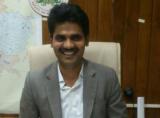
In a new twist to the mysterious death of IAS officer D K Ravi, his father-in-law today alleged that the CID probing it has deleted sensitive evidence before the case was handed over to CBI.
The CID has deleted some of the CCTV footage in the digital video recorder installed at his residence, Hanumanthrayappa claimed.
Facing rising public anger over the death of an upright IAS officer with growing clamour for a CBI probe, Chief Minister Siddaramaiah had on Monday announced the government’s decision to handover the case to the central agency, saying it had nothing to hide and was not protecting anyone.
Hanumathrayappa, a local Congress leader, said CID had taken the CCTV footage two days after Ravi’s death and returned it on March 23 and he was surprised to see some portions deleted.
“Two days after Ravi’s death, the CID took away the footage and returned it on March 23. I was shocked to see the footage recorded before 10.30 AM on March 16 was deleted,” Hanumnthrayappa told PTI.
On March 16, the IAS officer was found hanging from a ceiling fan at his Koramangala apartment.
Asked to throw light on what could be the vital contents in the deleted footage, Hanumanthrayappa said, “I would be able to tell only after I can get to see the deleted portion.”
However, Hanumanthrayappa said he has heard and read in newspapers that the deleted footage shows Ravi shouting over a telephonic conversation to someone at the other end.
Questioning the intentions of CID in deleting the footage, he said, “I want to know why did the CID delete the footage recorded before 10.30 AM on March 16? What is their intention?”
Hanumanthrayappa said he has asked his technician to help him retrieve the deleted footage, which is possible.
“My technician is not in town. He is out of Bengaluru and expected in a couple of days. He told me it is possible to retrieve the deleted video footage,” he said.
Asked whether he suspected the intentions of the state government, which allegedly is trying to give a different angle to Ravi’s death, Hanumanthrayappa said, “I do not want to comment on it for now because the investigation is on. However, I would make a comment once I watch the retrieved video footage which was deleted by the CID.”
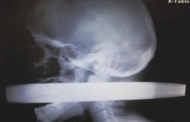
A 50-year-old man, who was battling for life after a bullet pierced through his skull, survived after undergoing a complex brain surgery at a city hospital here.
Kanpur based Hakim Singh, a katha-vachak (a narrator of scriptures) by profession, was injured during air-firing during a Shri Madbhagwat katha-vachan in Jhansi on January 10 and was rushed to a nearby hospital. Since the hospital lacked facilities to treat such a serious condition, he was taken to a bigger centre in Gwalior.
“Doctors at the hospital in Gwalior told us that father needs to be taken to a good neuro surgical centre. Thus we came to AIIMS Delhi but due absence of beds, they did nod admit my father there and suggested us to take him to Apollo hospital,” said the patient’s son Abhay Pratap.
Almost 27 hours after the incident, Singh was admitted to Indraprastha Apollo Hospital.
“He was brought in a critical state. The bullet had entered the head through one side and exited through the other side.
“The CT scan of head revealed extensive brain injury with depressed fracture in frontal region as the bone was broken at multiple places. The damage to the brain was severe as the right frontal lobe had multiple pieces of bone lying inside it along with numerous cerebral contusions,” said Dr Pranav Kumar, Senior Consultant of department of Neurology at the hospital.
In a complex surgery that lasted five hours, doctors removed the bone pieces lying inside the brain and treated the cerebral contusions. Repair of brain living membrane was carried out to to deal with dural tear.
“The patient had a long (about 13 mm) linear tear in the superior sagittal sinus which is the principal drainage channel of brain which caused heavy bleeding.
The tear was repaired through surgery and four units of blood transfusion were given to the patient during and after the surgery to make up for the intense blood loss. A tracheostomy was also carried out to allow direct access to the breathing tube,” explained Dr Kumar.
The patient was kept under intensive care and on anticonvulsant and other supportive medications. After 3 weeks of therapy and treatment, the patient was discharged from the hospital.
“His speech is close to normal with normal cognitive abilities and movement,” said Kumar.
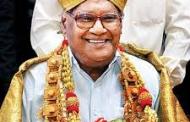
Eminent scientist CNR Rao today said the quality of science in India was “lousy”, adding if the country wants to have a future it should improve on quality.
Critical of lack of infrastructure in the scientific field, Rao, a recipient of Bharat Ratna, also rued the lack of investment in this sector.
Underlining the need for better scientific infrastructure in the country, Rao said India does not have “a single institution” that can match the best abroad even as he cited the example of China to call for more investment in science.
It was difficult to bring development in the country with the “lousy” quality of science, Rao said while delivering a lecture ‘Celebration of Science’ at Jamia Milia Islamia here.
“If India has to have a future, it has to improve in quality. The main thing in India is that everything from the corporate (sector) and education to science needs to have quality. Our Prime Minister (Narendra Modi) says development with quality improvement because with the lousy quality we have, it is difficult to have development,” he said.
Ruing the lack of investment in the scientific sphere, he said it “is so bad that it is less than one per cent of the GDP. Everyone is promising 2 per cent of the GDP (as investment), but that is not happening”.
Highlighting the example of neighbouring China, he said that for every Indian scientist, there are 100 scientists in the neighbouring country.
“This is unbelievable. They (China) invest a huge amount of money. They are producing 30,000 Ph.D students and, next year, will produce 50,000 Ph.D students,” Rao said.
“There is not a single institution in India which has facilities equal to the best institutions abroad. At least one, at least two… We don’t have even that. So, we got to have that. I think we need to have overall better infrastructure to do well in science,” he said.
Rao also emphasised the need for freedom and a better academic environment for students to excel in the country.
“Our young boys and girls go to America. They suddenly start doing good. Not because their brain is tuned in a different way after going there. What do they have? Freedom and the environment. India’s future depends on that,” he said.
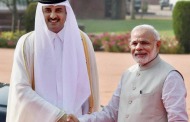
India and energy-rich Qatar today signed six agreements including one on transfer of sentenced prisoners as the two countries sought to inject a fresh momentum in their bilateral ties.
The pacts were signed after Emir of Qatar Tamim Bin Hamad Al Thani held extensive talks with Prime Minister Narendra Modi during which both the leaders discussed a range of issues including enhancing cooperation in energy sector and boosting trade and investment.
Under the provision of the pact on transfer of sentenced persons, Indian prisoners convicted in Qatar can be brought to India to serve the remaining part of their sentence. Similarly Qatari citizens convicted in India can be sent to their home country to serve jail term.
According to official figure, 96 Indians are currently languishing in various jails in Qatar which is home to around 600,000 Indians.
The other five MoUs will provide for cooperation in areas like information and communication technology, atmospheric and ocean sciences and media.
Qatar is an important country for India in the Gulf region. It supplies 86 per cent of India’s Liquified Natural Gas (LNG). The bilateral annual trade is around USD 16 billion.
The MoU in the field of information and communication technology would provide enhanced business opportunities for Indian IT industry in Qatar.
Qatar has embarked on an ambitious programme for overall development as part of its Qatar 2030 vision and has created a dedicated Ministry of Information and Communication Technology for capacity building in ICT.
Another MoU was signed between Ministry of Earth Sciences and Qatar Meteorological Department for cooperation in the field of atmospheric and ocean sciences.
A separate MoU was inked between Diplomatic Institute of Qatar’s Foreign Ministry and Foreign Service Institute of External Affairs Ministry to facilitate exchange of faculty members and experts.
The two sides also finalised a pact to encourage regular exchange of radio and TV programmes and content between Prasar Bharati and Qatar Media Cooperation.
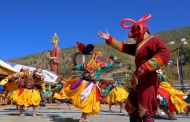
Bhutan – land of happiness, magic and myth – is now welcoming DJs, street artists and dancers, beatboxers and creative thinkers from across the world for a collaborative 10-day festival.
It’s mid-afternoon in Clock Tower Square in the Bhutanese capital, Thimphu. Prayer flags flutter in the breeze against an ice-blue sky, mountain peaks melt into the horizon and the crowd, complete with crimson-clad monks, jostles for space on the stone steps. As the sound of hip-hop fills the air, dance troupes with names like Urban Boomers and Half Dead Guys take to the stage. Bhutan’s first-ever street dance battle is under way and it’s serious stuff.
It may not be the first thing you’d expect in this remote Himalayan kingdom – a mystical Buddhist nation that famously measures gross national happiness instead of GDP – but the show is part of the brand new Annual Bhutan International Festival. A 10-day programme of art, music, film and food, held for the first time in February, it’s all about collaboration between nations and across genres. London choreographer Jade Shaw has been working with local youngsters, who had previously relied on YouTube to learn dance moves, weaving in messages about leadership and respect along the way. It’s a triumph. Rapturous laughter and applause erupt from the audience, most of whom have never seen anything like this.
Bhutan map
Landlocked between giants India and China, tiny Bhutan is one of the most intriguing countries in the world. Tourism was not permitted until 1974 (it remains tightly controlled) and the country’s ancient culture thrives almost intact. The street dance session is held on the birthday of much-loved King Wangchuck and the crowd – the men all wearing a gho, a tunic with big white sleeves, the women in colourful ankle-length kira dresses – have already enjoyed a morning of traditional celebrations, with masked dances, strong-man races and archery competitions in the town’s stadium.
But with the arrival of the internet (television was only allowed in 1999), a curious young population (60% of the country is under 25) is dipping its toe into the world outside.
Advertisement
“Bhutan hasn’t been open very long,” says festival co-founder Thinley Palden Dorji. “We’ve protected our culture, but change is inevitable. The influence of the world is there: it’s now a question of how we engage with it. The festival aims to give the youth a platform to express themselves, learn from international artists and share ideas.”
In a world saturated with festivals, this one is set apart by more than its unusual, beautiful location. It’s the first project from EdenLAB, a new creative touring initiative from Cornwall’s Eden Project. More than 100 international artists, performers and thinkers have been brought in to work alongside 200 local artists, with the aim of creating a lasting legacy, providing funding for the arts and setting up ongoing workshops and long-term relationships. Smaller events are planned throughout the year to maintain the momentum. And with Queen Jetsun Pema on board as patron, it has had a very big Bhutanese thumbs-up.
“The vision is for a world-class festival that’s unique in its focus on collaboration and community,” says co-director Ginny Galloway. “It’s about youth and legacy and the fusion of a culture that’s so intact with that of the modern world.”
February is low season for tourism, so boosting visitor numbers and injecting cash into the economy is part of the plan, too. And though lacking the colours of spring or the lushness of the late summer, it’s is a time of crisp, days and freezing, star-filled nights – and the king’s birthday and Buddhist new year celebrations are the same week.
Arriving in Bhutan was an adventure in itself. The flight into Paro airport skims the Himalayas: all faces were glued to the windows for a glimpse of Everest. Then it was an hour’s winding drive past paddy fields and lost-in-time villages to the capital.
It doesn’t take long to get the lie of the land in Thimphu, population 100,000. The Wang Chhu river skirts its western edge and, on a hilltop, a 51-metre-high gilded Buddha, one of the largest in the world, overlooks the city. This is the only capital in the world with no traffic lights: white-gloved police direct traffic from a prettily painted stand in the main roundabout. There’s an almost medieval feel about the old centre, with its wooden-shuttered buildings; the vibe is remarkably laid-back and the people gentle.
It’s a short walk between festival venues, and Coronation Park, by the river, is the site of most of the art programme. I watch sculptors from Cornwall crafting a huge snow leopard and a horse out of bamboo and paper; artists from VAST Bhutan, the country’s only contemporary arts centre painting people’s portraits; and potters from South Africa swapping techniques with local artists.
Most intriguing perhaps is Dance Spectroscopy, an art-meets-science affair which makes invisible particles in the atmosphere around you visible on a big screen, and creates a soundscape as you move. A group of children giggle and play, fascinated by the shapes and music. In a dome tent next door, British sonic artist Mileece has crafted a musical Eden, where plants play tunes when touched.
For those made peckish by all that art, Clock Tower Square is full of food stalls offering Bhutanese regional specialities (buckwheat pancakes from Haa in the west, yak skin stew from northern Gasa, jomja rice patties from Paro). Los Angeles chefs Roxana Jullapat and Daniel Mattern are here too, learning about Bhutanese fare and running workshops for local chefs.
As the days unfold, a constant stream of talent takes to the stage – monks from Majuli, in the Indian state of Assam, perform a mesmerising dance, then Bhutanese rock band Flying Kik scream out Rage Against the Machine covers. Other surprises are the beatboxers – MC Xander and Bellatrix from the UK, and Chesney Snow from the US, and rapping from BBC4 Poetry Slam champion Dizraeli.
As darkness and the temperature falls, the action moves to Mojo Park, a bar and music venue where visitors might catch musicians from the Harvard-Radcliffe Orchestra jamming with Bhutanese guitarists and beatboxers – or Indian pop star Lucky Ali and Mercury-nominated UK indie folk artist Nick Mulvey treating fans to an intimate gig before their stadium turn. Later, night owls head to Vivacity, a nearby club with guest DJs each night. In such an intimate setting it feels like one big party. There’s a constant buzz in the air – the Bhutanese hosts and artists excited to have the festival in town, visitors simply excited to be here.
Another thing that’s different from your average festival is that everyone stays in hotels. My base is the brand new Le Meridien, the biggest in Thimphu with 78 rooms, and a major festival sponsor. It’s here that the film events take place (Woodstock Film Festival is an adviser) and there are TEDx and TEDx Youth talks to coincide with the festival. Inspiring speakers muse, appropriately, on the theme of happiness, and eloquent Bhutanese children tell of the reality of life here – with, as everywhere, problems of drugs, depression and suicide.

A still-life watercolor painting of flowers by a young Adolf Hitler will be sold at auction in Los Angeles this week, organisers have announced.
The 1912 canvas, painted by the future Nazi leader when he was a struggling artist in his mid-20s, is going under the hammer at the Nate D Sanders auction house on Thursday.
Hitler moved to Vienna as a young man to try to make it as an artist. A Jewish art dealer, Samuel Morgenstern, believed in his talent and sold several Hitler paintings to wealthy Viennese Jewish clients beginning in 1911.
When Hitler swept to power as an anti-semitic Nazi leader in the 1930s, his forces seized Morgenstern’s gallery and deported the owner to the Lodz Ghetto, where he died in 1943, according to the Los Angeles auctioneers.
The painting shows a blue ceramic pitcher holding orange, red and soft pink flowers – an unusual subject at a time when Hitler was focusing more on landscapes and architecture.
Bidding for the canvas will start at $30,000 (£20,000). It measures 34.3cm by 27.3cm (13.5in by 10.75in).

David Cameron has ruled out serving a third term in Downing Street, leading to dismay among senior Tories as he laid the ground for a succession race by naming three senior Conservatives who would provide “a fresh pair of eyes”.
Live Election 2015: Cameron heckled by Age UK audience over state of NHS – live
With 44 days until polling day, follow all the twists and turns of the election campaign with Andrew Sparrow and the Guardian’s reporting team
Read more
Opponents accused Cameron of taking an election victory for granted and behaving in an “incredibly presumptuous manner” by naming Theresa May, Boris Johnson and George Osborne as likely successors in 2020.
The prime minister found himself under fire after he suggested in an unguarded interview with the BBC that it would be mad to hang onto power after 2020. Speaking to the BBC’s deputy political editor, James Landale, mostly in the kitchen of the prime minister’s Cotswolds home, Cameron said: “I’ve said I’ll stand for a full second term, but I think after that it will be time for new leadership. Terms are like shredded wheat: two are wonderful but three might just be too many.”
Asked whether he would stand for a third time, Cameron added: “No. I think I’m standing for a full second time. I’m not saying all prime ministers necessarily definitely go mad or even go mad at the same rate. But I feel I’ve got more to bring to this job, the job is half done, the economy’s turned round, the deficit is half down. I want to finish the job.”
The prime minister then took the rare step for a modern prime minister of naming his likely successors. “There definitely comes a time where a fresh pair of eyes and fresh leadership would be good. The Conservative party has got some great people coming up – the Theresa Mays and the George Osbornes and the Boris Johnsons. There is plenty of talent there. I am surrounded by very good people.”
Analysis Future leadership of Tory party thrown open after Cameron’s surprise remarks
George Osborne believe to be prime minister’s strong personal preference as successor, but naming of Theresa May and Boris Johnson suggests caution over specific endorsement
Read more
The three senior politicians are already the bookmakers’ favourites to be their party’s next leader, perhaps as soon as this year if the Conservatives lose the election. However, their ambitions have never been so publicly acknowledged by Cameron before.
Amid astonishment in the tearoom at Westminster, where Tory MPs accused the prime minister of undermining his own authority by talking of his departure, No 10 was forced to launch a damage limitation exercise.
In an unscheduled appearance on Newsnight, the Tory chief whip, Michael Gove, said the prime minister had given an honest answer to a straight question which amounted to the “bleedin’ obvious” that he hoped to serve a second term in No 10.
Gove said: “It was a statement of the bleeding obvious. I wasn’t surprised by the prime minister saying it. One of the differences between David Cameron and [his] predecessors – Margaret Thatchers, others whom you have had to prise out of Downing Street, their fingernails have been there in the door jamb – David Cameron is not interested in the office for what it can give him. He thinks at the end of two terms, ‘I will have done my job.’”
But one former minister said: “This was peculiar and unnecessary. It does not help the prime minister’s authority.”
One loyalist said: “This was an ‘Oh fuck’ moment. The best you can say is David is straight and honest.”
David Cameron confronts his own shelf-life – and its consequences
Matthew d’Ancona
Matthew d’Ancona Read more
The prime minister, encouraged by his wife Samantha, has often been heard to joke in private that he would like to leave Downing Street before he goes mad, unlike some of his predecessors. Margaret Thatcher famously said after her third election win in 1987 that she would like to “go on and on”. Tony Blair, who was conscious of the dangers of staying in office too long, said towards the end of his second term in 2004 that he would serve a third term and stand down at that election. Blair’s aides say that his declaration, prompted by a minor heart procedure, sapped his authority and emboldened supporters of Gordon Brown who eventually unseated him in 2007.
Douglas Alexander, Labour’s chair of general election strategy, said in response to Cameron’s interview: “The Tories are taking the British public for granted. It is typically arrogant of David Cameron to presume a third Tory term in 2020 before the British public have been given the chance to have their say in this election.”
David Cameron talks breasts, thighs – and third terms
Esther Addley
Read more
A Lib Dem spokesperson said: “It’s incredibly presumptuous of David Cameron to be worrying about a third term as prime minister weeks before the general election.”
Downing Street sources immediately tried to row back on Cameron’s comments, saying he was only rejecting the idea of serving a full third term. One source said: “What happens in five years’ time in 2020? Let’s cross that bridge when we get to it.”
Tory MPs suggested that other leadership hopefuls, such as Sajid Javid and Jeremy Hunt, would have long faces. Boris Johnson joked that the next Tory leader has probably not even been born when he was greeted by television cameras as he returned home. “The next leader of the Tory party is probably a babe unborn. Kids grow up fast these days, folks.”
In the BBC film, which featured the prime minister watching his son play football and preparing food in the kitchen of his Oxfordshire home, his wife Samantha said she thought her husband was “definitely, in my mind, the best man for the job”.
“I hope that me and the family help him to keep things in perspective, keep him grounded and help him pace himself over the next eight weeks,” she said.
His children were also filmed eating a meal at the kitchen table and Cameron spoke of how his daughter, Nancy, has threatened to go on hunger strike unless his friend Jeremy Clarkson is reinstated as presenter of Top Gear. The television star was suspended after allegedly hitting a BBC producer, sparking a petition for him to return.
“I told her this is not necessarily a useful intervention. It is not exactly Gandhi,” Cameron said. Samantha added: “Nancy’s hunger strike this morning lasted approximately five minutes.” The prime minister then joked: “It’s between lunch and tea is the way it works.”
Hyderabad: Amaravathi is one of the towns under the consideration of the Andhra Pradesh government for being being named as its capital in the Vijayawada-Guntur region of the state.
Amaravathi, which derives its name from Amareshwara Temple located in the historic village in Guntur district, falls under the capital region chosen by the state government.
Asked about media reports in a section of the press suggesting that the state government has finalised Amaravathi as the name of the capital city, Advisor (Communication) to the Government, Parakala Prabhakar, said the name is under consideration but no final decision has been taken on the matter yet.
Agriculture Minister P Pulla Rao had said yesterday that Amaravathi, which is located on the banks of river Krishna, has been suggested by many but a final decision is yet to be taken.
Chief Minister N Chandrababu Naidu is expected to announce the name when the foundation is laid for the construction of the capital city slated in June.
Singapore government agencies are preparing master-plan for the core capital region as a “goodwill gesture” towards the state government.
The capital is likely to have three rings — the core capital region, capital area and a larger capital region.
PTI
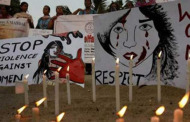
New Delhi: As the ban on the telecast of controversial BBC documentary “India’s Daughter” on the December 16, 2012, gang-rape continues, the Supreme Court on Tuesday sought response from two lawyers for making derogatory remarks against women in the short film.
While hearing the case, the apex court maintained that the matter requires consideration in view of the factual and legal argument made by women lawyers’ association.
“We have heard the argument, pleadings and grievances urged in the petition. The matter requires consideration in view of the factual and legal submissions,” a bench comprising justices V Gopala Gowda and C Nagappan said.
The bench issued notices to the two advocates, ML Sharma and AP Singh, and sought their response in two weeks.
The Supreme Court Women Lawyers Association, in its petition, had sought restriction on the entry of the two advocates in the apex court premises, alleging that their remarks in the controversial BBC documentary were “inhumane, scandalous, unjustifiable, biased, outrageous, ill-minded” and are a “direct affront to and in violation of the dignity of women”, especially those practicing in the Supreme court.
Senior advocate Vibha Datta Makhija, appearing the women’s association, submitted that the Supreme Court has to lead from the front and show zero tolerance for such views.
“We need an environment where we are fearless,” she said and added that the two advocates need to be sensitised.
Senior advocate Dushyant Dave, appearing for SCBA, submitted that there should be a meaningful and proper implementation of gender sensitisation regulation.
He said, “SCBA has taken a unanimous decision to take action against Sharma.”
The petition had sought protection of fundamental rights, guaranteed under the Constitution, of the female advocates practicing in the apex court to work with dignity and without any gender bias.
The documentary is about the gang-rape of a 23-year-old trainee physiotherapist, who was brutally assaulted on December 16, 2012 in a moving bus in Delhi. It kicked up a storm after one of the convicts Mukesh Singh was interviewed in Delhi’s Tihar Jail.
The documentary has comments from the convicts’ counsel AP Singh and ML Sharma, who allegedly made derogatory remarks against women. The banning of the telecast of the documentary in all formats caused an uproar in India.
The Centre on March 3 issued an advisory to ban the broadcast of the documentary and the trial court had on March 4 banned it until further orders.
The Supreme Court in July put on hold the execution of the four convicts in the case. As per social media, the public at large wanted to see the documentary, as within a day of it being put up on YouTube, it was viewed by more 2.86 lakh people, the pleas said.













Recent Comments