


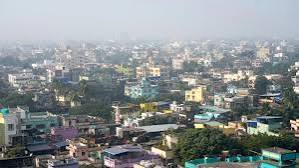

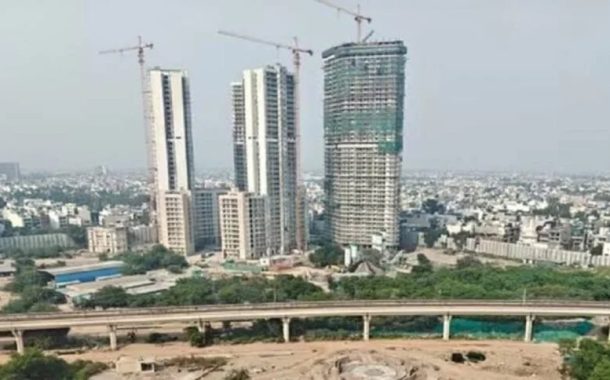


India’s real estate sector has just recorded one of its strongest funding half-years in nearly a decade, with institutional investors pouring in billions of dollars even as global capital markets remain jittery. Two of the world’s largest property consultancies, Colliers India and JLL, released independent reports in the first week of July 2026 confirming that institutional investment in Indian real estate rose sharply between January and June 2026, driven overwhelmingly by domestic money rather than the foreign funds that have historically dominated the sector. Yet buried within this good news is a curious twist for Mumbai: the very city that leads India in office space leasing has ended up at the bottom of the table when it comes to attracting that investment capital. For a portal that tracks real estate policy and market movement across Maharashtra and the Mumbai Metropolitan Region, this divergence between leasing strength and investment weakness is the story worth unpacking.
A Six-Year High, Powered by Home-Grown Capital
According to Colliers India, institutional investments in the country’s real estate sector touched USD 4.5 billion during the first half of 2026, a 50 percent increase over the corresponding period of 2025 and the strongest first-half performance in six years. A separate report from JLL put the figure at USD 4.3 billion, up 23 percent year-on-year, across a record 54 transactions. The two consultancies use different methodologies and deal classifications, which explains the gap between their headline numbers, but both arrive at the same underlying conclusion: capital is flowing back into Indian property at a pace not seen in years, and it is Indian capital doing most of the work.
Colliers found that domestic institutional investors deployed USD 2.6 billion, a 57 percent share of all inflows, while JLL calculated an even higher domestic share of 64 percent, worth USD 2.8 billion — the highest proportion of domestic participation ever recorded in the Indian market, according to JLL. JLL further noted that domestic capital grew by a striking 165 percent year-on-year, with domestic private equity funds and Real Estate Investment Trusts (REITs) together accounting for 72 percent of that domestic pool. Foreign investment told a more mixed story: Colliers recorded a 24 percent year-on-year rise in overseas capital to USD 1.9 billion, while JLL reported a 37 percent decline, attributing the caution to inflationary pressures, currency volatility, geopolitical tensions and capital repatriation concerns among global investors.
Where the Money Is Going
The office segment remains the undisputed anchor of institutional capital. Colliers data shows the segment attracting USD 1.9 billion, more than 40 percent of total inflows, with investors continuing to favour completed, income-generating “operational” assets over under-construction projects. JLL’s numbers, drawn from a narrower classification, put office investment at USD 2.3 billion across 17 transactions — a 54 percent share of total institutional capital and a 34 percent year-on-year increase — with domestic capital alone accounting for 89 percent of office investment volume in the half-year.
Beyond office space, Colliers pointed to healthy diversification: mixed-use developments and alternative assets such as data centres and industrial or warehousing hubs each drew close to USD 0.8 billion, together making up nearly two-fifths of total inflows. Hospitality also staged a comeback, with capital allocations to hotels and tourism infrastructure crossing USD 0.3 billion — more than three times the volume recorded in the same period last year. Geographically, Chennai and Bengaluru together attracted roughly USD 1.2 billion, about 27 percent of total institutional inflows, with office assets making up 85 to 95 percent of investment in those two cities. Multi-city portfolio transactions accounted for 46 percent of total deal value, reflecting a growing appetite among large funds for diversified, platform-level exposure rather than single-asset bets.
Mumbai’s Paradox: Leasing Leader, Investment Laggard
This is where the story turns instructive for readers tracking the Mumbai Metropolitan Region specifically. A separate Knight Frank analysis found that office assets accounted for 89 percent of all real estate private equity inflows in H1 2026, reinforcing the office-led narrative seen in the Colliers and JLL data. But when Knight Frank broke down office investment by city, Mumbai came last among major markets, attracting just USD 54.6 million in institutional office investment during the half-year — far behind the National Capital Region, which led with USD 363.8 million, and Pune, which followed with USD 308.8 million.
The paradox is stark because Mumbai simultaneously posted the country’s strongest office leasing performance in early 2026, recording roughly 6.6 million square feet of gross leasing in the January-to-March quarter alone — around 30 percent of leasing activity among major Indian cities. In other words, occupiers are flocking to Mumbai office space at a record pace, even as the institutional investors who fund and build that space are directing their capital elsewhere. Industry observers attribute part of this gap to Mumbai’s already-elevated land and construction costs, limited availability of large, clean-title parcels suitable for institutional-grade development, and the fact that much of Mumbai’s best-performing office stock — in areas like BKC, Lower Parel and the Western Suburbs — is already owned and stabilised within existing platforms rather than being available for fresh acquisition.
Benefits of the Domestic Capital Shift
The rise of domestic institutional capital carries real advantages for the sector’s long-term health. A market less dependent on foreign private equity is inherently more insulated from global shocks — a point JLL’s Lata Pillai underscored directly. The growing role of REITs also gives ordinary investors, not just large funds, a regulated route into commercial property returns, deepening capital markets around real estate. For developers, the diversification into data centres, warehousing and hospitality signals that institutional confidence is no longer confined to office towers alone, which should, over time, widen the pool of asset classes that can access institutional-grade financing — including, potentially, purpose-built rental housing and senior living formats that remain under-capitalised in India today.
The Challenges That Remain
The same data also flags genuine concerns. JLL noted that average deal size fell by nearly 40 percent, from USD 133 million in H1 2025 to USD 80 million in H1 2026, suggesting investors are spreading smaller cheques across more transactions rather than committing to large-ticket platform deals — a sign of continued caution even amid rising volumes. The sharp decline in foreign investment reported by JLL, if it persists, could leave the market more reliant on a narrower base of large domestic players, concentrating risk even as it reduces exposure to global volatility. And for Mumbai specifically, the leasing-investment mismatch raises a pointed question for policymakers and planners: unless supply-side constraints around land, redevelopment approvals and clear-title inventory are eased, the city risks ceding ground to Pune, the NCR and southern markets in the race for the institutional capital that ultimately funds new Grade-A construction.
What the Experts Are Saying
Badal Yagnik, CEO and Managing Director of Colliers India, framed the moment as pivotal, noting that “this balanced interplay of foreign and domestic investors will be crucial in charting the next growth phase of Indian real estate, especially during the times of uncertainty in capital deployment.” Vimal Nadar, National Director and Head of Research at Colliers India, pointed to continued momentum ahead, observing that “with office leasing anticipated to grow further in the second half of the year, institutional investors are likely to remain upbeat about the segment throughout 2026.” At JLL, Lata Pillai, Senior Managing Director and Head of Capital Markets, India, described the shift toward domestic capital as evidence that India’s investment landscape is maturing, while forecasting that foreign investors would likely increase their deployment as geopolitical conditions stabilise through the rest of the year.
The Road Ahead
Both consultancies expect the momentum to carry through the remainder of 2026, though their full-year projections differ in scale: JLL projects total institutional investment of USD 8.5 billion to 9 billion for the calendar year if current conditions hold, while Colliers’ own account of 2025 — in which institutional investment touched USD 8.5 billion for the full year — suggests 2026 is on track to match or exceed that figure given the strength of the first half alone. Office leasing is widely expected to strengthen further in the second half of 2026, buoyed by continued demand from global capability centres (GCCs) and flexible workspace operators, which should sustain investor appetite for the segment even as deal sizes normalise.
Practical Takeaways for Investors, Developers and Homebuyers
For institutional and retail investors alike, the data points toward continued strength in office and diversified commercial assets, with REITs offering a lower-entry route into that growth. Developers sitting on operational, income-generating assets in Grade-A office markets are best positioned to attract capital in the current environment, while those relying on under-construction inventory may need to demonstrate stronger execution credentials to compete for the same pool of funds. For Mumbai-based developers and cooperative housing societies pursuing redevelopment, the investment data is a reminder that unlocking institutional capital at scale will likely require larger, cleaner, more standardised project structures — the kind increasingly favoured by both domestic PE funds and REITs — rather than fragmented, single-plot transactions.
Conclusion
The first half of 2026 confirms that Indian real estate has entered a phase where domestic capital, not foreign private equity, is the primary engine of institutional growth — a structural shift that most analysts view as a sign of a maturing, more resilient market. But the same data carries a pointed message for Mumbai: leasing dominance alone is no longer enough to guarantee investment leadership. As Pune, the NCR and southern hubs increasingly compete for the same institutional dollars, Mumbai’s ability to convert its occupier demand into investment-grade, fundable supply will determine whether the city keeps pace with the rest of India’s real estate growth story through the remainder of 2026 and beyond.
8. Key Takeaways
Institutional investment in Indian real estate rose to USD 4.5 billion in H1 2026 (Colliers, +50% YoY) or USD 4.3 billion (JLL, +23% YoY), marking the strongest first half in six years. Domestic capital drove the surge, reaching a record 57-64% share of total inflows depending on the source, led by domestic private equity funds and REITs. The office segment remained dominant, capturing 40-54% of institutional capital, while data centres, warehousing, mixed-use and hospitality assets saw meaningful diversification. Mumbai posted India’s strongest office leasing volumes (about 6.6 million sq ft, 30% share in Q1 2026) yet recorded the lowest institutional office investment among major cities at just USD 54.6 million, trailing the NCR (USD 363.8 million) and Pune (USD 308.8 million), per Knight Frank. Average deal size fell nearly 40% year-on-year, reflecting a shift toward smaller, more numerous transactions. Full-year 2026 institutional investment is projected at USD 8.5-9 billion by JLL, broadly in line with the USD 8.5 billion recorded for all of 2025.
9. Conclusion
India’s real estate sector is riding its strongest institutional investment wave in six years, powered increasingly by domestic capital rather than foreign funds — a shift experts describe as a sign of a maturing market. Yet Mumbai’s inability to convert its leasing dominance into investment inflows is a clear signal that supply-side reform, larger and cleaner project structures, and institutional-grade redevelopment will be essential if the city is to keep pace with Pune, the NCR and southern India in the next phase of this growth cycle.

Mumbai’s decades-old struggle to replace its crumbling, cramped public housing stock has reached a legal and policy turning point. The Bombay High Court has upheld the Maharashtra government’s cluster redevelopment policy for Maharashtra Housing and Area Development Authority (MHADA) layouts, dismissing a batch of petitions filed by housing societies at Adarsh Nagar in Worli and the Bandra Reclamation colony that sought to pursue independent redevelopment instead of joining the state’s integrated scheme. The ruling is being read across the industry as the first serious judicial endorsement of the state’s push to redevelop entire MHADA colonies as single, planned townships rather than as a patchwork of individual society projects.
The judgment lands at a moment when Mumbai’s redevelopment pipeline is already accelerating. Industry trackers estimate that the city’s redevelopment activity could unlock close to 59,000 new homes worth roughly ₹1.5 trillion by 2031, with 1,094 housing societies currently under some stage of redevelopment across nearly 432 acres of land, and developer agreements crossing the 1,050 mark for the first time since 2020.
Background
MHADA was created to provide affordable housing to Mumbai’s middle and working classes, and many of its colonies — built through the 1950s, 1960s and 1970s — are now well past their structural lifespan. For years, redevelopment of these colonies proceeded building by building or society by society, a slow and fragmented process that often left surrounding infrastructure, roads, drainage and open spaces untouched even as individual blocks were rebuilt.
To address this, the Maharashtra State Cabinet, led by Chief Minister Devendra Fadnavis, approved a policy — through Government Resolutions issued in April and December 2025 — enabling integrated, cluster-based redevelopment of MHADA layouts spanning 20 acres or more in Mumbai and its suburbs. Under the policy, 114 MHADA layouts under the Mumbai Board’s jurisdiction have been identified for redevelopment as unified projects, to be executed by a single private developer selected through tendering, rather than through multiple independent redevelopment initiatives running in parallel. A distinctive feature of the policy is that it does not require individual consent from every resident; instead, developers appointed through the tender process must secure a resolution of consent from the concerned housing societies as a body. An empowered committee, chaired by the Additional Chief Secretary of the Housing Department, has been constituted to oversee implementation.
Current Developments
The policy’s first real test came from residents of two of MHADA’s largest Mumbai layouts: Adarsh Nagar in Worli, spanning about 34.33 acres, and the Bandra Reclamation colony, spanning roughly 98.27 acres. Several housing societies in these layouts moved the Bombay High Court, arguing that they were being compelled into a cluster scheme despite preferring to redevelop independently through their own developers.
In its ruling, the Bombay High Court dismissed the petitions, holding that the larger public interest in planned urban development outweighs individual societies’ preference for separate redevelopment. The bench observed that an integrated approach allows for proper planning of shared infrastructure — internal roads, open spaces, parking, drainage and water supply — across an entire layout, rather than piecemeal upgrades that leave civic infrastructure disjointed. Following the judgment, the state informed the court that no work order would be issued for four weeks, giving the affected societies a window to appeal to the Supreme Court if they choose to.
Detailed Analysis
The ruling is significant for reasons that go beyond the two layouts named in the case. It effectively tests the constitutional and policy soundness of removing individual consent as a precondition for redevelopment — a marked departure from the consent thresholds long embedded in cooperative housing society redevelopment, self-redevelopment and even SRA frameworks, where resident or member consent percentages are typically central to how a project proceeds.
By upholding the cluster model, the court has implicitly endorsed the state’s view that MHADA colonies, many of which sit on prime, large contiguous land parcels in locations like Bandra and Worli, are better redeveloped as single master-planned townships than as a series of disconnected towers. This dovetails with the broader direction set by DCPR 2034 and the Self-Redevelopment Policy, both of which have already been nudging Mumbai’s redevelopment market toward larger land parcels — data for 2026 shows land parcels above 10,000 square metres now account for more than half of all redevelopment area in the city, a notable shift from the smaller, single-building projects that dominated a decade ago.
For developers, the judgment reduces one major source of execution risk: the possibility of hold-out societies stalling a project indefinitely. For residents, it raises a genuine trade-off between the promise of better-planned, amenity-rich townships and the loss of the ability to choose their own developer or negotiate independently.
Benefits
Proponents of the cluster model point to several advantages. Redeveloping an entire 20-acre-plus layout in one go allows for coherent planning of roads, drainage, water and sewage networks, rather than repeated retrofitting as each building is redone separately. Residents are expected to receive larger carpet areas than under typical one-to-one redevelopment ratios, along with modern amenities such as lifts, dedicated parking, gardens, gyms, community halls, CCTV surveillance and, in some layouts, schools and healthcare facilities. Because the state facilitates land assembly and tendering, project timelines for the layout as a whole can, in theory, be more predictable than a scenario where dozens of individual societies negotiate separately with different developers over many years. The policy also opens the door to genuinely mixed-use townships, with green zones, civic amenities and commercial space integrated into the master plan rather than added as an afterthought.
Challenges
The dismissed petitions themselves capture the central challenge: some residents feel the removal of an individual consent requirement erodes a safeguard that cooperative housing law has traditionally provided, even if a society-level resolution of consent is still required. Cluster and integrated projects, almost by definition, take longer to reach completion than a single building redevelopment, since design, approvals and construction must be sequenced across a much larger footprint — residents may face extended timelines in transit housing or rental accommodation. There are also execution risks inherent to any large-scale public housing redevelopment: the capacity of the selected developer to fund and deliver a project of this scale, the pace of the empowered committee’s oversight, and the possibility of further litigation, including a Supreme Court appeal, all remain open questions. Smaller societies within a cluster may also feel their specific concerns get diluted within a layout-wide plan governed by a single developer and tender process.
Expert Opinion
Urban planners and real estate consultants tracking the case broadly view the ruling as consistent with the direction Mumbai’s redevelopment ecosystem has been moving in since DCPR 2034 — toward larger, better-integrated projects rather than isolated towers shoehorned into old plot boundaries. At the same time, several practitioners caution that the real test of the policy will not be the legal outcome but the execution: whether the empowered committee can move tenders and approvals fast enough, and whether developers selected for 20-acre-plus layouts have the balance-sheet strength and experience to deliver townships of this scale without the delays that have historically plagued large redevelopment projects in the city.
Future Outlook
With the Bombay High Court’s endorsement now in place — subject to any Supreme Court appeal within the four-week window — the state is likely to move more of its 114 identified MHADA layouts toward tendering over the coming months. If executed well, this could meaningfully accelerate the broader Mumbai Metropolitan Region redevelopment story, adding to the roughly 59,000 homes and ₹1.5 trillion in value already projected from the city’s redevelopment pipeline by 2031. It may also encourage the state to extend similar integrated, cluster-based thinking to other ageing public housing stock beyond MHADA’s Mumbai Board layouts, and to cooperative housing societies considering cluster redevelopment under DCPR 33(9) more broadly.
Practical Takeaways
Housing society members living in MHADA layouts above 20 acres should watch for empowered-committee notifications and tender announcements affecting their specific colony, since project terms will now be set at the layout level rather than negotiated independently. Developers evaluating these opportunities should factor in the four-week appeal window and the possibility of further litigation before committing significant capital. Legal and compliance teams advising cooperative societies should study the judgment closely, as its reasoning on consent thresholds could influence how similar disputes are argued in other large-scale redevelopment and cluster schemes across the state.
Conclusion
The Bombay High Court’s decision to uphold Maharashtra’s MHADA cluster redevelopment policy marks a meaningful milestone in the state’s long effort to modernise its ageing public housing stock through planned, large-scale redevelopment rather than fragmented, building-by-building projects. Whether this translates into faster, better-delivered townships at Adarsh Nagar, Bandra Reclamation and MHADA’s other 114 identified layouts will depend on execution — but the legal groundwork for the state’s preferred model of redevelopment now looks considerably firmer.
Key Takeaways
The Bombay High Court has upheld Maharashtra’s cluster redevelopment policy for MHADA layouts of 20 acres or more, dismissing petitions from Adarsh Nagar (Worli) and Bandra Reclamation societies that wanted independent redevelopment. The policy, approved via Cabinet GRs in April and December 2025, covers 114 identified MHADA layouts in Mumbai and removes the requirement for individual resident consent, though society-level consent resolutions are still required. The state has agreed to withhold work orders for four weeks to allow an appeal to the Supreme Court. The ruling reinforces a broader shift in Mumbai’s redevelopment market toward larger, integrated land parcels, consistent with DCPR 2034 and the Self-Redevelopment Policy.
Conclusion
This judgment is likely to accelerate tendering across MHADA’s Mumbai layouts and could shape how future cluster and integrated redevelopment disputes are argued across the state, even as questions of execution capacity, timelines and potential Supreme Court appeal remain unresolved.

By Special Correspondent – Real Estate
AI Powered PMC Akbar Jiwani
For The Real News of India
Mumbai has entered a new era of co-operative housing governance. In one of the most significant reforms in decades, the Government of Maharashtra has unveiled a comprehensive housing policy alongside sweeping amendments to the Maharashtra Co-operative Societies Rules, 1961. These reforms are aimed at making housing societies more transparent, accountable, digitally enabled and redevelopment-friendly while empowering millions of flat owners across the State.
For nearly six decades, housing societies were governed under general provisions of the Maharashtra Co-operative Societies Rules, with no exclusive legal framework dedicated to their unique needs. The 2026 reforms have fundamentally changed that position by introducing an entirely new chapter exclusively for co-operative housing societies.
A Landmark Reform
The Maharashtra Co-operation Department has inserted a dedicated Chapter XI-B into the Maharashtra Co-operative Societies Rules, creating a separate legal code exclusively for housing societies. This marks a historic departure from the earlier framework where housing societies were merely one category among various co-operative institutions.
The reforms provide clarity on:
Registration
Membership
Redevelopment
Governance
Financial management
Meetings
Elections
Documentation
Legal compliance
For over 1.25 lakh housing societies and millions of residents in Maharashtra, this represents a structural legal transformation rather than a routine amendment.
Housing Policy Focus: Housing for All
The broader Maharashtra Housing Policy complements these reforms by targeting affordable housing, faster redevelopment, sustainable urban planning and improved housing infrastructure. The policy envisages construction of millions of affordable homes by 2030 while encouraging redevelopment of ageing buildings, digital governance and private sector participation.
The government’s vision is to ensure that every citizen has access to safe, affordable and well-managed housing while improving the quality of urban living.
Major Changes Every Housing Society Must Know
The new Rules introduce several path-breaking provisions.
Separate Legal Chapter
Housing societies now enjoy an independent statutory framework rather than depending on scattered Government Resolutions and circulars.
Recognition of Housing Associations
The Rules now formally recognise:
Co-operative Housing Associations
Associations of Housing Societies
This enables multiple societies to work collectively for common infrastructure, redevelopment and civic issues.
Transparent Registration
Registration procedures have been standardised with defined timelines, prescribed forms and fee structures, making the entire process more transparent.
Four Categories of Membership
Earlier only nominal and associate members were recognised.
The Rules now recognise:
Nominal Members
Associate Members
Joint Members
Provisional Members
This provides greater clarity in ownership and succession matters.
Digital Governance
Video conferencing for General Body Meetings and redevelopment meetings has received statutory recognition, bringing societies into the digital era.
Mandatory Video Recording
Important meetings, particularly redevelopment meetings, must now be video recorded to improve transparency and reduce future disputes.
Nomination & Legal Heirs
The Rules introduce detailed procedures for nomination, family arrangements and succession planning, significantly reducing litigation after the death of members.
Standardised Documentation
The old J-series and M-series forms have largely been replaced by a new Y-series of statutory forms to simplify compliance.
Big Relief for Members
Among the most welcomed reforms is the reduction in the rate of interest on maintenance arrears.
Previously many societies charged interest up to 21% annually.
The new Rules cap the interest at 12% simple interest, providing substantial financial relief to flat owners.
Major Boost for Self Redevelopment
Perhaps the biggest beneficiary of these reforms is self redevelopment.
The Rules now:
recognise redevelopment procedures within the statutory framework,
prescribe meeting procedures,
strengthen member participation,
improve documentation,
increase transparency,
reduce disputes.
In parallel, the State has also simplified several redevelopment-related processes and continues to encourage timely execution of housing projects.
Mandatory Education and Training
One of the most progressive reforms is compulsory co-operative education and training.
Every housing society is expected to organise annual education programmes for members, office bearers and employees through recognised training institutions. This reflects the Government’s recognition that informed members lead to better governance and fewer disputes.
Greater Accountability
The amended Rules significantly strengthen the role of the Registrar and authorised officers in ensuring statutory compliance.
They introduce:
clearer timelines,
mandatory record keeping,
structured approvals,
greater supervision,
improved governance.
These measures are expected to reduce administrative ambiguity and improve confidence among society members.
Impact on Redevelopment Projects
The reforms are likely to accelerate redevelopment across Maharashtra by:
reducing procedural ambiguity,
improving transparency,
encouraging digital meetings,
strengthening member confidence,
simplifying approvals,
improving legal certainty.
Separately, the State leadership has also emphasised timely completion of housing and redevelopment projects, with strict accountability for delays and construction quality.
Expert View
According to AI Powered PMC Akbar Jiwani, Project Management Consultant specialising in redevelopment of co-operative housing societies:
“These amendments represent the most comprehensive reform in Maharashtra’s co-operative housing sector in several decades. By introducing a dedicated legal framework, strengthening governance, recognising digital administration, and supporting transparent redevelopment, the Government has laid the foundation for a more accountable and future-ready housing ecosystem. The real beneficiaries will be millions of society members who will now enjoy greater legal certainty, better governance and smoother redevelopment processes.”
Conclusion
The Maharashtra Government’s new housing policy and the 2026 amendments to the Maharashtra Co-operative Societies Rules signal a decisive shift towards modern, transparent and citizen-centric housing governance.
While implementation will require awareness, training and professional guidance, these reforms have the potential to transform the functioning of housing societies across the State.
For housing societies contemplating redevelopment, self redevelopment or governance reforms, the message is clear: the regulatory landscape has fundamentally changed. Understanding and implementing these new provisions will be essential for every managing committee, office bearer and society member in Maharashtra.

U.S. Legislative Delegation Visits WTC Mumbai to Boost India–U.S. Trade Relations
Mumbai | June 23, 2026
A high-level seven-member legislative delegation from the United States visited the World Trade Center (WTC) Mumbai to explore opportunities for strengthening trade, investment, innovation, and economic cooperation between India and the United States.
The delegation was led by Sen. Wayne Harper, President Pro Tempore of the Utah Senate, USA, and included distinguished members Ms. Kristin Kahalooa, Mr. Dan Saddler, Mr. Ron Winterton, Mr. Chase Blasi, Mr. Bryan Thomas, and Mr. Chris Lee.
The meeting was jointly hosted by World Trade Center Mumbai and All India Association of Industries, bringing together key stakeholders to discuss future opportunities in trade, technology, advanced manufacturing, renewable energy, higher education, and innovation.
Speaking on the occasion, Sen. Wayne Harper emphasized the strong democratic values shared by India and the United States and highlighted the vast potential for collaboration in emerging sectors such as Artificial Intelligence (AI), advanced technologies, renewable energy, and higher education. He stated that the proposed India–U.S. trade agreement could significantly enhance bilateral trade, investment, and business partnerships.
Dr. Vijay Kalantri, Chairman of World Trade Center Mumbai and President of the All India Association of Industries, noted that bilateral trade between India and the United States has already crossed USD 230 billion. He expressed confidence that both nations can achieve the ambitious target of USD 500 billion in bilateral trade by 2030 through stronger state-level partnerships, business exchanges, investment promotion, and sector-specific collaborations.
Dr. Kalantri further highlighted that the United States’ strengths in innovation, aerospace, advanced manufacturing, life sciences, and entrepreneurship complement India’s capabilities in information technology, pharmaceuticals, engineering, manufacturing, and start-ups. He stressed that enhanced business linkages can be fostered through trade delegations, B2B meetings, institutional partnerships, and focused industry collaborations.
The World Trade Center Mumbai reaffirmed its commitment to promoting stronger India–U.S. economic engagement and supporting new opportunities for trade, investment, technology collaboration, and innovation-driven partnerships between the two nations.
The event marks another important step in strengthening the strategic and economic relationship between India and the United States, paving the way for greater cooperation and mutual growth in the years ahead.

Mumbai | Borivali East A serious controversy has emerged at Borivali Education Society School in Borivali East, Mumbai, where parents of 15 children have alleged that their children were denied admission to First Standard despite having completed Junior KG and Senior KG in the same institution.
According to the parents, no call, notice, or official communication was issued by the school regarding the admission process for First Standard during January and February 2026, when admissions were reportedly being conducted.
Parents argue that it was the responsibility of the school administration and teachers to inform them and facilitate the admission of students who had already been studying in the institution. However, they claim that no such effort was made.
The issue escalated when, on April 27 and 28, 2026, parents reportedly received phone calls from the school asking them to seek admission for their children in another school, stating that admission in Borivali Education Society School would not be possible. Parents further allege that their children’s academic results were sent only through WhatsApp, while no hard-copy report cards were provided.
The affected group consists of approximately 15 children, around 80% girls and 20% boys, all belonging to Muslim families. This has led several parents to raise concerns about possible religious discrimination.
According to the families, while their children were denied admission, other students from outside the school were allegedly granted admission to First Standard. Parents question why children who had already completed their KG education in the same school were excluded.
Most of the affected families reportedly reside within approximately 1 to 1.5 kilometers of the school and had expected a smooth transition into First Standard. They fear that the delay may result in the loss of an entire academic year for their children.
When approached regarding the matter, the school principal reportedly stated that the decision was not within her authority and advised parents to contact the school management. However, parents claim that the management has been difficult to access and has not met them despite repeated requests.
Several local political representatives have also raised concerns about the issue. Parents have approached local corporators and MLAs and submitted written representations, but they claim that no satisfactory resolution has yet been achieved.
What Does the RTE Act, 2009 Say?
The Right of Children to Free and Compulsory Education (RTE) Act, 2009 guarantees free and compulsory education to every child between the ages of 6 and 14 years. The law aims to ensure that no child is denied access to education and that all children receive equal educational opportunities without discrimination.
Parents argue that the school’s actions are contrary to the spirit and objectives of the RTE Act. They believe that children who successfully completed Junior KG and Senior KG in the institution should have been given a fair opportunity for admission to First Standard.
ACPR Steps In
In response to the growing concerns of the affected families, the Association for Protection of Civil Rights (ACPR) has taken up the matter and is assisting parents in their efforts to secure admissions for their children.
Discussions are reportedly ongoing between ACPR representatives and the school administration. The principal has stated that the final decision rests with the management, and all eyes are now on the management’s response.
Key Questions Remain
Will the 15 Muslim children receive admission and justice?
Will they be allowed to continue their education in the same school where they completed KG?
Or will they be forced to seek admission elsewhere after the admission season has already ended?
The answers to these questions now depend on the decision of the school management and the response of the education authorities.
Sayed Fanus, Chief Reporter of Real News of India, spoke to the affected parents and attempted to highlight their concerns, allegations, and demand for justice.
The coming days will determine whether these children receive their educational rights and whether the authorities intervene to ensure that no child’s future is jeopardized.

Mumbai, Dadar East | June 6, 2026 Real Voice Foundation successfully organized a grand Kinner Day 2026 Celebration in Dadar East, Mumbai, to honor and recognize the contributions of the transgender and kinner community. The event witnessed the participation of social workers, NGO representatives, journalists, community leaders, and distinguished guests from various sectors of society.
Under the leadership of Mr. S.M. Fanus, President of Real Voice Foundation, and Mr. Mehndi Ali, Secretary, a large number of transgender individuals were felicitated with respect and dignity for their contributions to society. The foundation also honored several social activists, NGO members, reporters, and individuals who have been actively working for the welfare, rights, and empowerment of the transgender community.
During the event, the prestigious “Best Social Worker Award” was presented to deserving individuals for their outstanding service to society and their continuous efforts in supporting the transgender community.
- The program was graced by Aadya Jagadguru Shankaracharya Trikal Bhawanta Saraswati Ji Maharaj as the Chief Guest. Also present was Dr. Salma Khan, President of Kinnar Maa Trust, who shared inspiring thoughts on equality, dignity, and social inclusion for the transgender community.
The organizers expressed their gratitude to VNS Entertainment, Arzoo Homes, Java Electronic, Lion Neeraj Mahesh Abhichandani, Charter President 2025 – 2027 Lions club of Mumbai Shelter* Nasreen Biryani Pali Naka,
and other supporting organizations and NGOs whose cooperation played a vital role in making the event a grand success.
Special appreciation was extended to the dedicated volunteers and team members of Real Voice Foundation, including Mohammad Nazir Hussain, Zoya Ansari, Jannat agvi, and Daljit Singh, Archana mohan Sharma whose hard work and commitment contributed significantly to the successful execution of the program.
Media support for the event was provided by Real News of India reporters Ashiq Jaffri, Salim Saiyed, and Akbar Jiwani, Mr Vijay Kumar Soans Social Media Executive REAL NEWS OF INDIA*
who helped spread awareness and highlight the positive message of the celebration through their coverage.
Speaking on the occasion, Mr. S.M. Fanus stated that society must come together to ensure equal rights, respect, and opportunities for transgender individuals. He emphasized that in the coming years, Transgender Day and Kinner Day should be celebrated collectively on a larger scale across the country to promote social harmony, inclusion, and human dignity.
The event concluded with a strong message of unity, equality, and empowerment, leaving a lasting impact on all attendees and reinforcing the importance of recognizing and respecting the transgender community in society.

Mumbai, 2 June 2026:
In a significant step towards improving citizen services, the Mumbai Suburban District Administration organized a special training program aimed at ensuring the efficient and timely delivery of government services under the Maharashtra Right to Public Services Act, 2015.
The training was conducted under the guidance of the Mumbai Suburban District Collector and involved government officials, staff members, Setu Center operators, and Aaple Sarkar service center representatives. The primary objective was to enhance service delivery mechanisms and address technical challenges that often delay public services.
During the session, officials discussed various technical issues that had been affecting the processing of applications and certificates. Participants were provided with practical guidance and updated procedures to ensure that these obstacles are removed and that citizens receive services without unnecessary delays.
According to district officials, several improvements have been implemented in the system to streamline service delivery. As a result, many government services and certificates are expected to be processed and delivered within 2 to 6 days, significantly reducing waiting times for citizens.
The administration emphasized that the training will help create a more transparent, efficient, and citizen-friendly governance system. Officials and service center operators were trained on updated digital processes, service standards, and best practices to ensure smoother operations and better public satisfaction.
The Mumbai Suburban District Collector’s Office stated that this initiative reflects the government’s commitment to providing fast, reliable, and accessible services to the public. By strengthening the capabilities of frontline service providers and resolving technical bottlenecks, the administration aims to make government services more responsive and convenient for all citizens.
Reported by:
Mumbai Suburban Bureau
S.M.Fanus Real News of India


VNS ROYAL AFFAIRS ORGANIZES A UNIQUE WELLNESS EVENT IN MUMBAI “Aaj Khud Ke Liye… Pause… Breathe… Begin Again…”
Mumbai is set to witness a powerful and inspiring wellness evening as VNS Royal Affairs proudly presents an exclusive event titled “Aaj Khud Ke Liye… Pause… Breathe… Begin Again…” on Saturday, 30th May 2026 from 5:00 PM to 8:00 PM at Nanavati Max Super Specialty Hospital Auditorium, Vile Parle (West), Mumbai.
This extraordinary event is being organized with a mission to spread awareness about mental health, emotional healing, stress management, and life-saving cardiac knowledge. In today’s fast-moving and stressful world, the organizers aim to encourage people to take a pause from their busy lives and reconnect with themselves mentally, emotionally, and spiritually.
The program will feature an impactful Cardiac Awareness (CPR) Session by renowned CVTS Surgeon Dr. Gulshan Rohra, where attendees will learn important life-saving techniques and understand the importance of heart health. The session is expected to educate the public about emergency response and the importance of timely CPR in saving lives.
Another major attraction of the evening will be the Mental Detox Session conducted by Dr. Kumar Hemant Singh, former NASA Scientist, who will guide participants through emotional wellness, positive thinking, mental clarity, and stress release techniques. The session is expected to inspire people struggling with anxiety, pressure, and emotional exhaustion in modern-day life.
Adding energy and positivity to the atmosphere, the audience will also experience De-Stress with Djembe Jamming, a unique African drumming therapy session by the African Art of Drumming Group (AAOD Group). The musical therapy session is designed to help participants release stress, improve emotional balance, and experience collective healing through rhythm and music.
The event is being led by the co-founders — Dr. Vaishnavi, Neeraj Abhichandani, and Sohini Zunzunwala — who believe that wellness is not a luxury but a necessity in today’s society. Their initiative has already started receiving appreciation for promoting mental health awareness and community healing.
Speaking about the initiative, the organizers shared that the event is not just a seminar but a movement encouraging people to prioritize themselves, breathe deeply, heal internally, and begin life again with positivity and strength.
Citizens, social workers, medical professionals, students, youth groups, wellness enthusiasts, and families are warmly invited to become part of this meaningful and life-changing evening.
Event Details:
- Event: “Aaj Khud Ke Liye… Pause… Breathe… Begin Again…”
- Date: Saturday, 30th May 2026
- Time: 5:00 PM – 8:00 PM
- Venue: Nanavati Max Super Specialty Hospital Auditorium, Vile Parle (W), Mumbai
- Organized By: VNS Royal Affairs – Events & Entertainment
The organizers have appealed to the public to attend in large numbers and support the message of mental wellness, emotional healing, and healthy living.
“Take a Pause. Breathe Deep. Reconnect with Yourself… Because You Matter.”
Real News of India Reporter S.M. Fanus
MUMBAI, May 2026 — When names like Adani Properties, Reliance 4IR Realty, Lodha Developers, and JSW Realty converge on the same bidding table, the market pays attention. The Maharashtra Housing and Area Development Authority’s (MHADA) decision to float tenders for three major housing colony clusters — Bandra Reclamation (98.27 acres), SVP Nagar in Andheri West (73.89 acres), and Adarsh Nagar in Worli (34.33 acres) — spanning a combined 206+ acres is not merely a redevelopment exercise. It is, in my professional assessment, a seismic structural shift in how Mumbai’s legacy housing stock will be repositioned in the next decade.
As a Project Management Consultant with over 35 years of active engagement in Mumbai’s redevelopment landscape — and having guided societies through the complex corridors of DCPR 2034, MHADA regulations, SRA frameworks, and cooperative housing law — I want to offer a grounded, practical perspective on what this development truly signals.
The C&DA Model: Why It Matters More Than the Names Bidding
MHADA’s Construction and Development Agency (C&DA) model is architecturally distinct from the conventional developer-driven redevelopment model that most housing societies encounter. Under C&DA:
The developer does not own the land — MHADA retains land title and acts as the sovereign authority.
The developer is appointed as a construction and rehabilitation agency, not a beneficiary.
Rent compensation, corpus fund, and maintenance support are guaranteed during the transit period.
The free-sale component is the developer’s commercial upside — a carefully metered incentive, not a windfall.
This is a critical distinction that residents and cooperative housing societies must understand. The C&DA model is, at its core, a public-private partnership with MHADA holding the moral and legal high ground. The competitive bidding process — with financial capability, past project experience, and eligibility norms as screening criteria — ensures that only technically and financially qualified developers proceed to the financial bid stage. The most competitive proposal wins. This is urban governance working as it should.
Bandra Reclamation: The Prime Piece
At 98.27 acres, the Bandra Reclamation cluster is the crown jewel of this tender tranche. Located in one of Mumbai’s most sought-after micro-markets — sandwiched between the Western Sea Link, Bandra’s commercial district, and proximity to BKC — this land parcel commands extraordinary development potential.
The participation of Lodha, Adani, and JSW in the Bandra bid is unsurprising. Any developer who wins this cluster will effectively rewrite the skyline of Bandra West’s northern coastline. The redevelopment will generate significant free-sale inventory in what is arguably Mumbai’s most globally recognised residential address. Finished product here — post-redevelopment — could command anywhere from ₹35,000 to ₹60,000+ per sq. ft. in premium configurations.
For the existing residents of the Bandra Reclamation colony — many of whom are MHADA allottees living in ageing structures — this represents a once-in-a-generation transformation: from dilapidated decades-old construction to modern, amenity-rich housing with upgraded civic infrastructure.
SVP Nagar, Andheri West: The Infrastructure Play
The Sardar Vallabhbhai Patel Nagar cluster at 73.89 acres in Andheri West sits in the heart of Mumbai’s western suburban business corridor. With proximity to the metro network, JVLR, and the film and media industry ecosystem, SVP Nagar’s redevelopment carries a different value proposition — transit-oriented, mixed-use densification.
Reliance 4IR Realty’s bid here is strategically coherent. As a developer with a clear mandate around technology-integrated real estate, their participation signals that this cluster may see smart infrastructure, green building compliance, and digitally managed residential ecosystems. Adani and Hanura Realty’s presence adds competitive depth.
The SVP Nagar redevelopment, when completed, will substantially increase the formal housing supply in a corridor that is currently under intense pressure from RERA-registered projects. This has macro-implications for rental yields, resale values, and the absorption of mid-income housing demand in the western suburbs.
Adarsh Nagar, Worli: The Prestige Address
At 34.33 acres in Worli — the epicentre of Mumbai’s luxury residential market — the Adarsh Nagar project is the smallest in area but arguably the most consequential in terms of per-acre value creation. Worli’s proximity to the Bandra-Worli Sea Link, the upcoming Coastal Road, and its adjacency to South Mumbai’s premium catchment makes this a high-stakes redevelopment.
Adani, Lodha, and JSW bidding for this cluster is textbook strategic positioning. The winner here gains not just construction rights but brand equity in one of India’s most photographed skylines.
Far-Reaching Effects on Real Estate Development: My Assessment
Having worked extensively on feasibility modelling, PMC appointments, and society-side advisory across Mumbai’s redevelopment spectrum, here is what I believe the 206-acre MHADA tender truly unlocks:
1. Benchmarking Developer Accountability
The C&DA tender process creates a transparent, documented record of developer capability and commitment. When large-format corporate developers submit to MHADA’s scrutiny — financial capability, past project performance, eligibility norms — it raises the bar for all redevelopment in Mumbai. Smaller societies negotiating with mid-tier developers can now cite MHADA’s due diligence standards as a reference benchmark.
2. Supply Pipeline for Mid-Income and Affordable Segments
MHADA’s mandate includes ensuring that existing residents receive safe, modern, spacious homes. The rehabilitation component of these three clusters will inject thousands of upgraded dwelling units into Mumbai’s housing stock. This is not luxury supply — it is structured, rehabilitated, middle-income housing with corpus support and maintenance guarantees. For a city chronically short of quality mid-income inventory, this matters enormously.
3. FSI Utilisation and Urban Form
Projects of this scale under DCPR 2034 will utilise significant FSI, TDR, and fungible FSI components. The free-sale component across 206 acres will generate substantial new inventory, applying moderate price correction pressure in these micro-markets as supply increases. Developers who have held surrounding land or inventory should factor this into their pricing and absorption timelines.
4. Template for Future MHADA Cluster Tenders
MHADA currently manages 11 C&DA projects spanning approximately 925 acres across Mumbai. The success or failure of this three-cluster tender will directly influence how MHADA — and by extension, the state government — approaches the remaining legacy housing stock. A well-executed outcome here could accelerate the next tranche of cluster tenders, potentially unlocking hundreds of additional acres for structured urban renewal.
5. Confidence Signal for Housing Society Redevelopment
For the thousands of cooperative housing societies across Mumbai contemplating self-redevelopment or JV redevelopment, MHADA’s active role as a land-owning, quality-assuring authority in large-format projects sends a powerful signal: organised, regulated, publicly accountable redevelopment is viable and scalable. This should embolden society members who have been paralysed by fear of exploitation, delays, or developer default.
A Word of Caution: Governance Must Match Ambition
I would be remiss as a PMC if I did not flag the challenges that projects of this scale invariably encounter:
Transit period management across hundreds of displaced families is a logistical and administrative challenge that will test MHADA’s institutional bandwidth.
Legal encumbrances, occupancy disputes, and legacy title issues within these colonies must be resolved proactively — not reactively.
Elected Managing Committee alignment within the colonies is essential before any binding redevelopment commitments are executed. Governance vacuums are the single largest source of redevelopment delays and disputes in Maharashtra.
Construction timeline discipline must be enforced through milestone-linked payment structures and robust PMC oversight — a lesson that hundreds of SRA and MHADA projects have learned the hard way.
Conclusion: Mumbai Is Redeveloping Itself — Strategically
The entry of India’s largest real estate and infrastructure conglomerates into a publicly tendered MHADA cluster redevelopment process is a watershed moment. It signals institutional confidence in Mumbai’s urban renewal framework, validates the C&DA model as commercially viable for marquee developers, and sets in motion a supply-side transformation that will reshape three of the city’s most strategically located micro-markets.
For residents, it promises dignity, modernity, and security. For investors, it signals value creation at scale. For the broader real estate ecosystem, it is a masterclass in how organised, policy-backed, competitively tendered urban renewal can deliver outcomes that neither pure developer-driven nor pure government-executed models can achieve alone.
Mumbai is not just redeveloping its buildings. It is redeveloping its relationship with its own urban future.
Akbar Jiwani is the Founder and Principal Consultant of Universal Buildtech Development, an MSME Ministry Certified Project Management Consultant (PMC), Government of India, based at Bandstand, Bandra West, Mumbai. He specialises in cooperative housing society redevelopment, DCPR 2034 compliance, feasibility advisory, and project finance under MHADA, SRA, and self-redevelopment frameworks.
Views expressed are professional opinions based on 35+ years of active engagement in Mumbai’s real estate and redevelopment sector.
© RealNewsOfIndia.com | Powered by AI-Driven Real Estate Intelligence


















Recent Comments