


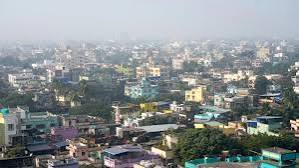

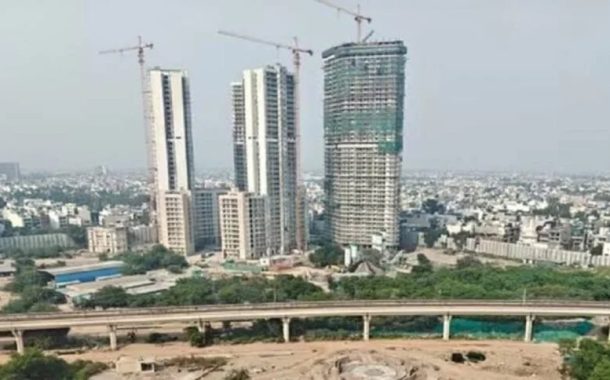


Residents of Golibar, particularly in the Muzaffar Chowk area of Santacruz East, Mumbai – 55, are facing severe civic and health problems due to clogged gutters, overflowing drainage lines, and illegal encroachments built over public drains.
According to local residents, the area has remained in an unhygienic condition for more than a month, with no proper cleaning or maintenance work being carried out. Streets and narrow lanes are flooded with dirty water every morning, making daily life difficult for families, senior citizens, and children.
Residents allege that several unauthorized structures and encroachments have been illegally constructed over drainage and gutter lines, blocking the natural flow of wastewater. Because of this obstruction, sewage water frequently overflows onto public roads and residential lanes, creating foul smells and unsafe living conditions.
The worsening sanitation crisis has also raised serious public health concerns. Locals fear the rapid spread of diseases such as Malaria, Dengue, and other mosquito-borne infections due to stagnant dirty water and increasing mosquito breeding in the locality.
Citizens have expressed disappointment over the lack of attention from civic authorities and elected representatives. Many residents claim that despite repeated complaints, no effective action has been taken by the concerned departments.
The residents have now demanded immediate intervention from the Brihanmumbai Municipal Corporation Commissioner and the H/East Ward Maintenance Department. They are urging authorities to:
- Remove all illegal encroachments constructed over drainage lines.
- Carry out urgent desilting and cleaning of clogged gutters.
- Conduct regular sanitation and anti-mosquito drives.
- Take strict action against negligent officials and violators responsible for illegal construction activities.
Locals warn that if immediate action is not taken, the situation may turn into a major health emergency in the Golibar area. Residents are also considering approaching higher authorities and launching public protests if the issue continues to be ignored.

Kinnar Diwas 2026 to be Held in Mumbai on June 6
Mumbai | RNI Reporter
Real Voice Foundation will organize “Kinnar Diwas 2026” on June 6 in Mumbai. The event aims to promote dignity, equal rights, and better opportunities for the transgender (Kinnar) community.
India’s first transgender Shankaracharya, Himangi Sakhi, will attend the event as the Chief Guest. During the program, individuals from the transgender community who have made notable contributions to society will be honored.
S.M. Fanus, President of Real Voice Foundation, along with social worker Mehendi Ali, has been actively working for several years toward the welfare and upliftment of the transgender community. According to them, the objective of this event is not limited to celebration but to bring long-term positive change in society.
They highlighted that the transgender community continues to face challenges such as social discrimination, lack of employment, housing issues, and social exclusion. These conditions often make life difficult for many individuals.
The organization is working on a comprehensive social and economic model that focuses on skill development, employment generation, small business integration, and linking the community with service sectors to promote self-reliance.
The event will also feature a Social Awards ceremony, where community leaders and contributors will be recognized. Several social workers, advocates, and distinguished guests from different sectors are expected to attend.
The foundation has appealed to corporates, business groups, and individuals to support this initiative and contribute toward building a more inclusive society.
Contact:
Real Voice Foundation
Phone: +91 8080830888
MMR and Pune Lead India’s Largest State Housing Surge as Thane Tops District Rankings; MSME Ministry Certified PMC Expert Calls It a Turning Point for Structured Real Estate Governance
By: Special Correspondent | Expert Commentary: Akbar Jiwani, MSME Ministry Certified PMC | [email protected]
Published: Tuesday, 22 April 2026 | Updated: 08:30 IST
10,379
Total Approvals FY 2025–26 5,494
MMR Region Projects 3,566
Pune Region Projects 4,204
Fresh Registrations
Mumbai, April 22, 2026 — The Maharashtra Real Estate Regulatory Authority (MahaRERA) has cleared a record 10,379 housing projects across the state during the financial year 2025–26, according to data released this week. The Mumbai Metropolitan Region (MMR) and Pune emerged as the twin engines of this growth, together accounting for the overwhelming majority of new approvals, with Thane district leading the pack within the MMR.
This milestone — the highest single-year approval count in MahaRERA’s history — underscores Maharashtra’s increasingly central role in India’s urban housing narrative and signals a maturing regulatory ecosystem that is compelling developers to align with structured compliance timelines.
REGIONAL BREAKDOWN: MMR DOMINATES, PUNE SURGES
With 5,494 approved projects, the Mumbai Metropolitan Region remains Maharashtra’s most active real estate market by a wide margin. Pune follows with 3,566 projects, while Vidarbha records 563, Marathwada 520, and Khandesh 203 — reflecting the geographic concentration of organised real estate activity in Maharashtra’s western belt.
Within the MMR, Thane district emerged as the undisputed leader with 1,696 approvals, reflecting the continued westward and northward expansion of the metropolitan footprint. Mumbai Suburban District recorded 1,714 projects, while Raigad logged 939, Palghar 568, and Mumbai City 375 — a number that reflects the capital-intensive nature and land scarcity of the island city’s development pipeline.
PUNE LEADS DISTRICTS: A SINGLE DISTRICT, OUTSIZED IMPACT
Within the Pune region, the Pune district alone contributed 3,150 of the region’s 3,566 projects — an extraordinary concentration that makes it the single highest-performing district across all of Maharashtra for FY 2025–26. This dominance reflects the sustained demand driven by IT corridor expansion, educational institutions, and infrastructure upgrades in and around Pune city and its peripheral areas.
PROJECT TYPE COMPOSITION: FRESH VS. EXTENSIONS VS. MODIFICATIONS
The 10,379 total approvals are composed of three distinct categories, each with separate compliance implications under the Real Estate (Regulation and Development) Act, 2016:
▸ 4,204 Fresh Registrations — new projects entering the MahaRERA framework for the first time, the largest category by volume
▸ 3,687 Timeline Extensions — existing registered projects receiving regulatory approval for revised completion deadlines
▸ 2,488 Plan Modifications Requiring Approval — amendments to sanctioned plans, requiring fresh MahaRERA clearance before work proceeds
The significant volume of extensions (35.5% of all approvals) points to ongoing post-pandemic and supply-chain pressures on construction timelines, while also reflecting improved developer awareness of the necessity of seeking formal regulatory sanction rather than defaulting into lapsed status.
REGULATORY FRAMEWORK: WHAT DEVELOPERS AND BUYERS MUST KNOW
Under the Real Estate (Regulation and Development) Act, 2016 — the foundational statute governing MahaRERA — several obligations govern both developers and buyers. All projects exceeding 500 square metres in development area or comprising more than eight residential or commercial units must compulsorily register with MahaRERA before launch. Developers are statutorily prohibited from advertising, marketing, booking, or selling any unit in such projects without a valid registration number.
Timeline extensions and plan changes — even if internally approved by the builder — require express MahaRERA approval before implementation. Critically, any project that exceeds its registered completion date without obtaining a formal extension risks automatic classification as a lapsed project, which carries serious consequences for allottees and may trigger refund obligations under Section 18 of the RERA Act.
▌ EXPERT INSIGHT
“The 10,379 approvals in a single financial year are not just a number — they are a structural signal. Maharashtra’s real estate market is entering a phase where regulatory compliance is no longer a burden to be managed at the last moment, but a fundamental pillar of project viability. Developers who have proactively registered, sought timely extensions, and maintained MahaRERA compliance are now reaping the credibility dividend with both institutional lenders and end-users.”
— Akbar Jiwani, AI-Powered Project Management Consultant (PMC) | MSME Ministry Certified PMC, Govt. of India | [email protected]

Mumbai, April 4, 2026: In a commendable initiative, Mumbai Police’s Zone-8 successfully returned stolen and recovered property to its rightful owners during a special event held at the BKC Police Station.
According to official sources, a total of 287 items worth ₹84,43,479 were handed back to citizens. The recovered property included mobile phones, gold and silver ornaments, two-wheelers, four-wheelers, and cash.
These items were seized in connection with various criminal cases registered across multiple police stations under Zone-8, including BKC, Kherwadi, Nirmal Nagar, Vakola, Vile Parle, Sahar, and Airport areas. Notably, 277 mobile phones were traced and recovered using the CEIR (Central Equipment Identity Register) system, showcasing the effective use of technology in policing.
The distribution program was conducted in the presence of the Deputy Commissioner of Police (Zone-8), along with other senior police officials and staff. All items were returned following proper legal procedures.
Citizens expressed immense relief and happiness upon receiving their lost belongings and appreciated the efforts of Mumbai Police. The initiative has further strengthened public confidence in law enforcement.
Conclusion:
This action by Mumbai Police highlights their efficiency, transparency, and commitment to serving the public, reinforcing a sense of safety and trust among citizens.
Reporter S.M.Fanus
Real News of India
By Akbar Jiwani | MahaRERA-Registered Project Management Consultant | Special Correspondent Universal Buildtech Development | Bandra West, Mumbai
Introduction: The Invisible Cost Spiral
The sharp rise in Brent crude oil prices — from USD 70–75 per barrel in early February 2025 to over USD 105 per barrel in recent weeks — is sending quiet but significant tremors through India’s real estate and construction ecosystem. While the first-order impact on steel and cement appears muted for now, it is the second and third-order cascading effects that experienced Project Management Consultants (PMCs) and developers must brace for with urgency and precision.
As someone who has stewarded projects exceeding ₹38,660 crores across 3,010+ buildings in Maharashtra’s complex DCR/DCPR 2034 regulatory landscape, I write this not as an alarmist, but as a practitioner who has navigated multiple such cycles — and who firmly believes that forewarned is forearmed.
The Indirect Cost Equation: Why PMCs Must Pay Close Attention
The real estate and construction sector does not consume crude oil directly. It consumes its derivatives — diesel for machinery, petrochemical-linked inputs like pipes, cables, PVC conduits, aluminium composites, sealants, waterproofing compounds, and tile adhesives. It relies on logistics networks that are entirely crude-sensitive.
When fuel and logistics together account for 8–12% of total construction cost, a sustained 40% spike in crude prices does not merely affect transportation invoices. It ripples through:
Façade and finishing works — aluminium prices have already risen 6–10%, with cladding, window systems, and ACP panels directly exposed to Gulf import disruptions.
On-site machinery operations — tower cranes, concrete pumps, batching plants, and excavators run on diesel. A ₹5–8/litre diesel price increase on a large-scale redevelopment project adds millions to operational costs within a single project cycle.
Supply chain fragility — intermittent supply constraints in segments like tiles, PVC products, and finishing materials directly affect delivery timelines, which in turn affect MahaRERA-registered project schedules and the obligations of developers to allottees.
For societies currently evaluating redevelopment proposals — particularly under DCR 33(5), 33(7), 33(9), and 33(11) schemes in Mumbai — this is a critical moment to reassess cost assumptions embedded in feasibility reports.
The Redevelopment Context: Impact on Feasibility Models
From my current engagement across multiple active redevelopment projects — including DCR 33(9) feasibilities in Powai and Versova, and a DCR 33(11) model in Bandra West — I can confirm that construction cost estimates are the single most sensitive variable in any viable redevelopment model.
Most feasibility presentations prepared for housing societies are built on base construction costs ranging from ₹3,500 to ₹5,500 per sq.ft depending on specification grade, location, and structure type. These base costs typically embed a fuel and logistics component of 8–12%, as the NAREDCO data confirms.
A 10% escalation in this component alone — which is entirely plausible under sustained high crude — translates to:
₹28–66 per sq.ft increase in base construction cost, depending on specification.
On a 2,00,000 sq.ft construction project, this means ₹56 lakhs to ₹1.32 crores in additional cost per project — before accounting for inflation in aluminium, PVC, and finishing materials.
In projects where the break-even is already finely calibrated — as in the Jal Vayu CHSL (Powai) model where our break-even is benchmarked at ₹28,170/sq.ft — even a 3–4% construction cost escalation can erode developer margins and threaten corpus commitments.
This is not speculation. This is arithmetic that every society member, managing committee, and PMC must factor into their due diligence.
Six Risk Flags for Societies in Active Redevelopment Negotiations
Drawing on ground realities and the current crude-linked cost environment, I flag the following six risk areas that housing societies and their PMCs must proactively address:
1. Fixed-Price Construction Contracts Without Escalation Clauses Many Development Agreements (DAs) and construction contracts presented to societies contain fixed-price commitments. Developers who have not built in material escalation clauses will be under significant margin pressure. Societies must ensure that the DA protects member corpus, rental compensation, and timelines irrespective of developer cost escalation.
2. Corpus Fund Adequacy Reassessment If feasibility models were prepared 6–12 months ago and crude has since risen 30–40%, the corpus fund projections may no longer hold. Societies should request an updated sensitivity analysis from their PMC before executing any DA.
3. Timeline Extension Risk Under MahaRERA Supply chain disruptions in tiles, PVC, and finishing materials — directly linked to crude price volatility — can legitimately trigger project delays. Societies must understand MahaRERA’s force majeure provisions and ensure adequate contractual protection against arbitrary timeline extensions.
4. Aluminium-Intensive Façade Specifications Projects with high ACP cladding, aluminium window systems, or glass curtain walls are most exposed. Societies should request that their PMC conduct a material substitution analysis to identify equivalent specifications using less crude-sensitive materials.
5. Developer Financial Stress Testing A developer who has simultaneously committed to multiple projects and is now facing a cost escalation environment may deprioritise or delay individual projects. PMCs must include developer financial health assessments as a mandatory due diligence step.
6. GST and Input Tax Credit Implications Fuel and diesel used for construction machinery is specifically excluded from GST Input Tax Credit under the current framework. Rising diesel costs are therefore a direct, unrecoverable expense for developers — which further compresses margins and may create downstream contractual tensions.
The Opportunity Within the Crisis
It would be professionally incomplete to present only risk without recognising opportunity. The current environment, while challenging, offers PMCs and well-organised societies a decisive advantage.
Developers in a cost-stress environment are more amenable to negotiation. Societies that approach negotiations with rigorous, independently verified feasibility models — rather than accepting developer-prepared numbers — are in a position to extract better corpus, better specifications, and more protective contractual terms, precisely because developers value certainty of land and regulatory approvals over margin optimisation in an uncertain cost environment.
The NAREDCO chairman’s own words are instructive: the industry has navigated similar cycles before. Experienced PMCs have seen crude at USD 140 (2008), at USD 28 (2016), and at every point between. The structural demand for urban redevelopment in Mumbai — driven by aging building stock, FSI incentivisation, and the MahaRERA regulatory push — does not disappear with a crude oil spike. It recalibrates.
What changes is who gets the deal, and on what terms. Societies with professional PMC representation will get better deals. Societies that proceed without independent PMC guidance — particularly in this cost-volatile environment — will bear the residual risk.
My Recommendations: Practical Steps for Housing Societies
Request an updated feasibility sensitivity analysis from your PMC that stress-tests construction costs at current and projected crude-linked input prices.
Do not execute a Development Agreement based on feasibility numbers prepared more than six months ago without a material cost revision.
Insist on a Construction Cost Escalation Clause in the DA, with a clear formula tied to published indices (e.g., CCI — Construction Cost Index) rather than developer discretion.
Ensure corpus fund is held in an escrow account with disbursement linked to construction milestones, not developer cash flow requirements.
Appoint a MahaRERA-registered PMC as your independent technical and financial watchdog — not as a formality, but as an active governance mechanism throughout the project lifecycle.
Conclusion: Vigilance Is the Fiduciary Duty
The crude oil price surge of early 2025 is a reminder that real estate feasibility is never a static document — it is a living financial instrument that must respond to macroeconomic signals. The developers who survive and deliver are those who have built resilient cost models. The societies that secure just, timely redevelopment outcomes are those who have engaged independent, experienced PMC oversight.
As India’s urban housing renewal accelerates — driven by policy, demography, and structural necessity — the role of the PMC has never been more critical. It is not enough to facilitate a transaction. A PMC’s fiduciary duty is to protect the long-term interests of members, anticipate risk before it materialises, and ensure that every commitment made on paper can be delivered on the ground.
The crude oil cycle will turn. Societies that are professionally guided through this period will emerge with stronger projects, stronger protections, and stronger communities.
Akbar Jiwani is a MahaRERA-Registered Project Management Consultant (Reg. No. A51800001057) and Managing Director of Universal Buildtech Development, Bandra West, Mumbai. He specialises in housing society redevelopment under DCR 33(5), 33(7), 33(9), and 33(11) schemes, project finance advisory, and cooperative housing governance. He can be reached through Universal Buildtech Development, Bandra West, Mumbai.
Views expressed are the author’s own professional assessment and do not constitute legal or financial advice.
© 2025 | Universal Buildtech Development | UrbanReach360 — AI-Powered Marketing. Human-Centered Connections.
By Akbar Jiwani | Special Correspondent | AI-Powered PMC |Published: April 1, 2026 | Urban Affairs & Infrastructure Desk
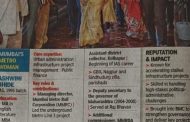
MUMBAI: In a landmark moment for India’s financial capital — and indeed for urban governance across the nation — IAS officer Ashwini Bhide has been appointed as the first woman Municipal Commissioner of the Brihanmumbai Municipal Corporation (BMC), the country’s richest civic body with an annual budget exceeding ₹80,000 crore.
As a professional deeply embedded in Mumbai’s built environment — from DCR-compliant redevelopment projects to infrastructure-linked real estate feasibilities — I write this not merely as a correspondent, but as a practitioner who understands, firsthand, the extraordinary complexity of the city this remarkable officer now helms.
A Historic Appointment, A Momentous Mandate
The appointment of Bhide, an IAS officer of the 1995 batch, follows a pre-appointment meeting between Chief Minister Devendra Fadnavis and Deputy Chief Minister Eknath Shinde, with Fadnavis understood to have actively backed her candidacy. The decision reflects not just political confidence but professional recognition of a career marked by decisive execution of stalled, complex, and politically sensitive infrastructure projects.
For the urban real estate and infrastructure ecosystem, this is not merely a symbolic milestone. It is a signal: Mumbai’s development pipeline — long bottlenecked by slow clearances, monsoon-season regulatory fatigue, and fiscal management challenges — may now find renewed administrative velocity.
From Metro Lines to the Commissioner’s Chair
Ashwini Bhide’s credentials in the urban infrastructure space are formidable. As Managing Director of the Mumbai Metro Rail Corporation (MMRC), she led the execution of the underground Metro Line 3 (Aqua Line) — one of the most technically demanding and politically fraught infrastructure projects in post-independence Mumbai. Her core expertise spans urban administration, infrastructure project management, and public finance — a trifecta of competencies that the ₹80,000-crore BMC machine urgently demands.
As Additional Municipal Commissioner, BMC, she spearheaded the Mumbai Coastal Road Project, a transformative arterial intervention reshaping Western Mumbai’s connectivity. Earlier assignments as Deputy Secretary to the Governor of Maharashtra, CEO of Nagpur and Sindhudurg Zilla Parishads, and Additional Commissioner, MMRDA have built in her a rare ability to navigate across tiers of governance — from Mantralaya corridors to on-ground civic delivery.
The Challenges Ahead: A PMC’s Reading
Speaking as a Project Management Consultant with over 25 years of experience across ₹38,660 crore worth of Mumbai’s development projects, I can assert with professional authority that Commissioner Bhide steps into a role with four defining pressure points:
1. Pre-Monsoon Readiness — The Annual Reckoning
Mumbai’s monsoon preparedness is perpetually under scrutiny. Nullah desilting, stormwater drain augmentation, and flood-resilience infrastructure must be completed before June. Bhide has already committed publicly: “I will review the work and ensure it is completed at the earliest.” In BMC governance, this is not a platitude — it is a deliverable with a hard deadline measured in weeks.
2. Capital Project Execution — Clearing the Pipeline
The BMC’s capital expenditure now accounts for nearly 60% of the total budget — an extraordinary proportion reflecting Mumbai’s ambitious infrastructure expansion. From road resurfacing and flyover construction to sewage treatment plants and coastal zone developments, the execution calendar is dense. Bhide’s known track record of accelerating stalled projects makes her appointment particularly strategic.
3. Fiscal Stewardship of ₹80,000 Crore
Managing the country’s largest municipal budget in a politically plural environment — with the BJP governing BMC in alliance with the Shinde-led Shiv Sena, and opposition represented by UBT Shiv Sena corporators — demands both financial discipline and political dexterity. Bhide has explicitly acknowledged the need for collaboration: “Even in government roles, we work closely with elected representatives.”
4. Long-Standing Civic Issues
From the perennial crises of illegal construction, OC amnesty demands, deemed conveyance disputes, and housing society redevelopment permissions — to the broader challenge of aligning BMC’s development plan approvals with the DCPR 2034 framework — the Commissioner’s office is the apex arbiter. For practitioners like myself working across DCR 33(5), 33(7), 33(9), and 33(11) schemes, the quality of BMC’s administrative leadership directly impacts thousands of redevelopment projects and lakhs of Mumbai’s residents.
A Historic Convergence: Women at Mumbai’s Civic Helm
What makes this moment doubly significant is the broader landscape in which it sits. BMC’s newly elected civic body — barely two months old at the time of Bhide’s appointment — already features women in multiple key positions:
Mayor Ritu Tawde (BJP Corporator from Ghatkopar)
Opposition Leader Kishori Pednekar (Shiv Sena UBT Corporator)
Chairpersons of the Improvement and Education Committees — Sandhya Doshi and Rajeshree Shirwadkar
The Municipal Secretary’s post is also held by a woman — Manjiri Deshpande
This is not coincidence. It is a structural shift — a consolidation of female leadership at the apex of India’s most complex civic institution. As Opposition Leader Pednekar rightly observed, this is a “matter of immense pride” for Mumbai — not merely an administrative milestone, but a city-wide affirmation of women’s empowerment.
A Voice from the Ground: What the Real Estate Ecosystem Expects
From where I stand — advising housing societies across Bandra, Versova, Powai, Cuffe Parade, and Kandivali on redevelopment, conveyance, and infrastructure compliance — the appointment of a seasoned infrastructure administrator to the Commissioner’s chair sends an unambiguous message:
Process integrity, project velocity, and professional governance will be the hallmarks of this administration.
For the thousands of housing society members navigating BMC approvals for SRA, MHADA, and self-redevelopment schemes; for developers awaiting Occupation Certificates, Commencement Certificates, and plan sanctions; for urban planners and PMCs seeking clarity on DCPR interpretations — a competent, execution-oriented Commissioner is not a luxury. It is a necessity.
Commissioner Bhide herself has framed her mandate with characteristic precision: “The role remains the same, regardless of gender.” It is this clarity — unencumbered by symbolism, anchored in delivery — that gives the real estate and infrastructure ecosystem reason to be cautiously optimistic.
Conclusion: Mumbai Deserves This Moment
Mumbai is a city of extraordinary ambitions and equally extraordinary administrative complexity. Its housing crisis, infrastructure backlog, climate vulnerability, and fiscal scale demand leadership of the highest caliber. In Ashwini Bhide, the city may well have found a Commissioner equal to the challenge.
As a MahaRERA-registered PMC, I have long advocated that Mumbai’s development pipeline succeeds or stalls not on the strength of its regulations — which are among the most detailed in the world — but on the quality of their execution and the integrity of their administration.
Today, that administration has a new face. A historic one.
Mumbai is watching. And for once, with genuine hope.
Ai Powered PMC Akbar Jiwani is a MSME Govt -certified Project Management Consultant ( Founder of Universal Buildtech Development, and Managing Principal of Apex Proptech Legal and UrbanReach360. He writes on urban governance, real estate law, housing policy, and infrastructure development. Views expressed are his own.
© 2026 | UrbanReach360 | AI-Powered Marketing. Human-Centered Connections.
Tags: #BMC Commissioner | #Ashwini Bhide | #Mumbai Infrastructure | #Urban Governance | #Real Estate | #DCPR 2034 | #Women in Leadership | Mumbai Development

In the Picture (L to R): Ms. Sangeeta Jain, Senior Director, All India Association of Industries; Ms. Priya Pansare, Director, Trade and Investment Promotion, WTC Mumbai; Shri Jaykumar Rawal, Minister of Marketing and Protocol, Maharashtra State; Smt. Nidhi Choudhary (IAS), Director – National Gallery of Modern Art, Ministry of Culture, Government of India; Dr. Megha Phansalkar, Founder of Tisser Artisan Trust; Smt. Shwetali Thakare, Chairperson, Maharashtra Water Resources Regulatory Authority, Government of Maharashtra at the event.
Mumbai, 25 March 2026: In a significant initiative to strengthen women-led enterprises and integrate them into global trade ecosystems, World Trade Center Mumbai, in association with the All India Association of Industries (AIAI) and the Government e-Marketplace (GeM), hosted a high-impact event titled “Empowering Women, Empowering Business – From Grassroots to Export Markets.” The event brought together senior government officials, industry leaders, women entrepreneurs and MSME’s on a common platform to address the critical gap in the country’s growth story enabling women-led businesses to scale beyond local markets and participate meaningfully in global trade.
In his address, Shri Jaykumar Rawal, Minister of Marketing and Protocol, Maharashtra State, said “from MSMEs to large-scale industries, Maharashtra has made a significant contribution to the nation’s economy. Women are increasingly becoming a driving force across manufacturing, services, and agriculture, thereby promoting inclusive development.”
“Under the leadership of Hon’ Chief Minister Shri Devendra Fadnavis ji, the Government of Maharashtra is fully committed to strengthening women entrepreneurship. We are focused on improving market linkages, expanding digital access, enhancing financial inclusion, and building skills that enable women to scale their enterprises.” said Shri Rawal.
Shri Rawal added “Initiatives such as Umed Malls under the Maharashtra State Rural Livelihood Mission are creating permanent, district-level retail ecosystems that provide assured, year-round market access for women Self-Help Groups. By eliminating intermediaries, these platforms empower women directly ensuring no middlemen, no barriers, only opportunity. Our vision is to build a strong enabling ecosystem where women entrepreneurs can confidently participate, compete, and lead in both domestic and global markets.”
Dr. Vijay Kalantri, Chairman, World Trade Center Mumbai and President, All India Association of Industries, said “It is truly encouraging to see how women are becoming an integral part of India’s growth story. Today, female labour force participation has crossed 42%, nearly doubling over the past six years, while literacy among women has risen from about 53% in the early 2000s to over 75% today. With more than 20% of MSMEs now led by women, their contribution is both visible and impactful. As we move towards the vision of Viksit Bharat, women will undoubtedly be at the heart of this transformation.”
“The future of India’s economic growth is closely linked to the empowerment of women entrepreneurs. The presence of over 150 women here reflects their strong commitment not only to manufacturing, but also to go global. By connecting grassroots enterprises with global opportunities, we are fostering inclusive growth while strengthening India’s position in international trade,” added Dr. Kalantri.
Shri Satya Narayan Meena, Additional CEO, Government e Marketplace (GeM), “GeM has brought transparency, efficiency, and inclusivity to public procurement, enabling over 2 lakh women-led enterprises to directly access government buyers and scale their businesses nationwide. With procurement exceeding ₹5.4 lakh crore last year, GeM is not just a digital platform, but a powerful engine driving growth, opportunity, and national recognition for MSMEs and women-led enterprises.” He added that through technological advancements and a transparent marketplace, GeM is strengthening India’s public procurement ecosystem and contributing to the nation’s economic progress.
Smt. Nidhi Choudhary (IAS), Director – National Gallery of Modern Art, Ministry of Culture, Government of India, said “The numbers clearly reflect the growing strength of women in India’s entrepreneurial ecosystem. Over 2 crore MSMEs are owned by women, contributing nearly 21% of the sector, and more than 45% of startups today have at least one-woman director. Initiatives such as PMEGP, CMEGP, Mudra Yojana, and the Women Entrepreneurship Platform by NITI Aayog are playing a vital role in supporting this growth.
In Maharashtra, the State Innovation Mission’s dedicated women’s wing is also further empowering women to scale their ventures. When women-led enterprises grow, the impact goes far beyond economics; it drives meaningful social change.” added Ms. Nidhi.
Smt. Shwetali Thakare, Chairperson, Maharashtra Water Resources Regulatory Authority, Government of Maharashtra said, “India represents nearly 18% of the world’s population and today stands around a $4 trillion economy. Even amid global uncertainties, India continues to be one of the fastest-growing economies. In this journey, it is essential that women have equal access to opportunities, resources, and platforms to grow because when women progress, the nation leads with purpose.”
Ms. Wang Awei, Deputy Consul General of the People’s Republic of China, highlighted the growing role of women in global economic development and said “Technology is profoundly transforming the world, and e-commerce has opened new opportunities for women to grow and scale their businesses. With greater collaboration and shared learning, there is immense scope to further empower women entrepreneurs globally.”
Dr. Megha Phansalkar, Founder of Tisser Artisan Trust, emphasized that the challenge lies not in empowerment, but in access. “Our vision is not just to break barriers ourselves, but to enable thousands of women to rise alongside us. The real issue lies in access to markets, opportunities, and platforms. Once these barriers are overcome, it will unlock immense progress for the nation,” she remarked.
Ms. Priya Pansare, Director, Trade & Investment Promotion, WTC Mumbai, said, “Enabling women entrepreneurs to access global markets is critical for India’s growth. This requires structured support through policy, capacity building, and stronger international linkages. Empowering women-led enterprises will not only drive inclusive development but also contribute significantly to sustainable economic growth,”
Ms. Sangeeta Jain, Senior Director, All India Association of Industries, said “Women are playing an increasingly important role in shaping India’s economic progress. Strengthening their participation requires greater focus on digital platforms, financial inclusion, and skill development to help women-led enterprises scale effectively. Enhancing women’s participation is essential to accelerating the nation’s growth trajectory.
The program also saw participation from representatives of the Ahilyarani Women’s Development and Educational Organization. The event reinforced the need to move beyond participation towards global competitiveness, and highlighted how aligning government initiatives, institutional support, and international partnerships can help build a robust ecosystem where women entrepreneurs successfully transition from grassroots enterprises to global exporters.

MUMBAI, March 25, 2026 – In a brazen display of bureaucratic overreach and utter disregard for the rule of law, the Slum Rehabilitation Authority (SRA) and local administration carried out an illegal demolition drive on March 11, 2026, at Maharashtra Nagar, Kalimata Temple Area, Bharat Nagar Road, Bandra (East), leaving 30 families destitute and stranded on the streets.
The affected settlement, bearing Cluster ID H/East – 104, now lies in rubble, while the families who once called it home are left to fend for themselves under the scorching sun, with the looming threat of pre-monsoon rains adding to their misery.
A DEMOLITION BUILT ON VIOLATIONS
The demolition, according to a detailed complaint filed by the Real Voice Foundation led by President Mr. S. M. Fanus, was not just heavy-handed but patently illegal on multiple counts. The complaint, submitted to Chief Minister Shri Devendra Fadnavis and Deputy Chief Minister Shri Eknath Shinde, lays bare a shocking litany of procedural and legal violations.
1. No Survey, No Action
Perhaps the most staggering revelation is that the demolition was carried out without conducting any survey of Cluster H/East – 104. As per the SRA Act and government norms, a survey is the foundational step to determine eligibility and establish the existence of a slum. Skipping this step renders the entire demolition null and void.
2. Government Resolutions Flouted
The administration conveniently ignored the mandatory provisions of Government Resolutions dated May 16, 2015, and May 16, 2018:
-
The 2015 GR protects slum dwellers who have existed since before January 1, 2000. Affected families possess documents (ration cards, voter IDs, electricity bills) proving their existence from before this cut-off date.
-
The 2018 GR provides for paid rehabilitation for families existing since before January 1, 2011.
Despite these clear provisions, officials conducted no document verification, no site inspection, and no computerized record preparation before swinging the bulldozers.
3. Denial of Natural Justice
The SRA had issued notices under Section 3(Z-2) of the Maharashtra Slum Areas Act, 1971. The affected residents filed their replies in a timely and proper manner. Yet, the authority conducted no hearing, issued no speaking order, and proceeded directly to demolition. This is a flagrant violation of the fundamental principle of Audi Alteram Partem – the right to be heard – repeatedly upheld by the Supreme Court of India.
4. Documents Buried, Lives Destroyed
In the haste to demolish, residents were given virtually no time to salvage their belongings. Essential documents – ration cards, voter ID cards, Aadhaar cards, bank passbooks, educational certificates – now lie buried under the debris. This has rendered the victims incapable of even proving their eligibility, creating a Kafkaesque nightmare where they are punished for a crime they did not commit and then stripped of the means to defend themselves.
5. An Attack on Faith
Compounding the injustice, the demolition was carried out during the holy month of Ramadan, a time of fasting, prayer, and reflection for the Muslim community. By forcing fasting families onto the streets during this sacred period, the administration has not only committed a legal wrong but has also hurt religious sentiments, displaying a shocking lack of basic human sensitivity.
THE HUMAN COST
The demolition has brought unimaginable suffering:
-
Medical Emergency: Medicines of tuberculosis (TB) patients were buried in the debris, putting their lives at risk.
-
Destruction of Public Assets: The local Kalimata Temple, a centuries-old place of worship, and a community gymnasium run by Real Voice Foundation for local youth were also razed.
-
Current Plight: With no shelter, the affected families are living on the streets, lacking access to food, clean water, sanitation, and medical facilities. Women, children, and the elderly are the worst affected.
DEMANDS OF THE AFFECTED FAMILIES
The Real Voice Foundation, on behalf of the victims, has put forth the following five urgent demands:
| # | Demand |
|---|---|
| 1 | Immediate Temporary Accommodation – Transit camp or hall until eligibility is verified through the Competent Authority under the 2/4 application process. |
| 2 | Permanent Rehabilitation – As per government rules once eligibility is established. |
| 3 | Suspension & Inquiry – Immediate suspension of responsible SRA and local administration officers pending a thorough investigation. |
| 4 | Compensation – Adequate financial compensation for loss of belongings, documents, business materials, and damage to religious places. |
| 5 | FIR – Registration of criminal case against officials involved under relevant sections of the Bharatiya Nyaya Sanhita (BNS) for illegal entry, housebreaking, causing mental distress, and obstruction of government work. |
📣 APPEAL TO THE STATE GOVERNMENT
A copy of the complaint has also been forwarded to local public representative Shri Varun Sardesai.
Mr. S. M. Fanus, President of Real Voice Foundation, stated:
“This is not just a demolition of structures; it is a demolition of people’s lives, their dignity, and their faith in the system. We have followed every legal procedure. We have the documents. Yet, we were treated like criminals. We urge the Chief Minister and Deputy Chief Minister to intervene immediately and ensure justice is served. We are looking at them as our last ray of hope.”
The affected families are now waiting for the state government to act. With the law on their side and the weight of Supreme Court judgments protecting the right to hearing and due process, they are determined to fight for their rights.
The protest will be led by S.M. Fanus, President of Real Voice Foundation, along with nearly 30 affected families, who have decided to stage a peaceful demonstration outside the SRA office in Bandra on March 24, 2026, at 10:00 AM.
According to the protesters, the demolition was carried out in violation of Government Resolutions dated May 16, 2015, and May 16, 2018. It is further alleged that no eligibility verification of residents was conducted, no hearing was granted, and no temporary or alternative rehabilitation arrangements were provided before carrying out the demolition.
As a result, around 30 families have been rendered homeless. The action, which took place during the holy month of Ramzan, has caused severe hardship, especially to women, children, and elderly residents.
The protesters have raised key demands, including immediate temporary shelter for all affected families, permanent rehabilitation under SRA for eligible residents, strict action against the officials responsible for the demolition, and adequate compensation for the losses suffered.
The protesters have clearly stated that they will continue their protest until their demands are fulfilled and have warned that the agitation may intensify if immediate action is not taken by the concerned authorities.
The protest is being organized under the banner of Real Voice Foundation, highlighting growing public anger against the actions of SRA and Competent Authority–2.
S.M. Fanus
President, Real Voice Foundation

Mumbai, March 12, 2026: In a controversial and allegedly illegal demolition drive carried out on March 11, 2026, hundreds of slum dwellers in the Maharashtra Nagar area of Bandra (East) have been rendered homeless. The action, conducted by the Slum Rehabilitation Authority (SRA) and local administration, has sparked outrage among residents and activists who claim the demolition violates multiple government resolutions and basic legal principles.
The affected cluster, located near Kalimata Mandir on Bharat Nagar Road (Cluster ID H/East-104), comprises families who have been living in the area for decades. According to S.M. Fanus, President of the Real Voice Foundation and the voice leading the affected residents’ struggle, most residents possess documents predating both January 1, 2000, and January 1, 2011—making them eligible for rehabilitation under Government Resolutions (GRs) dated May 16, 2015, and May 16, 2018.
Despite this, authorities proceeded with the demolition without following due process.
“This is not just illegal; it is inhuman,” said an emotional S.M. Fanos while speaking to the media. “The SRA issued a 3(2) notice, our residents submitted their replies, but no hearing was conducted. No speaking order was issued. They directly demolished our homes during the holy month of Ramadan, leaving people—including TB patients, elderly, and children—on the streets without any transit accommodation.”
The demolition has resulted in the destruction of personal belongings, essential documents, medicines, and food grains. The local Kalimata Mandir and a community gym run by the Real Voice Foundation were also razed.
Legal Violations Cited:
-
Maharashtra Slum Act 1971: Violation of Section 3(2) by not conducting a hearing or issuing a speaking order.
-
GR May 16, 2015 & GR May 16, 2018: Eligibility verification process was completely ignored.
-
Principles of Natural Justice: Residents were denied the right to be heard.
-
No Rehabilitation Provided: No alternative or transit accommodation was arranged.
Demands of the Affected:
-
Immediate suspension and inquiry against responsible SRA officials.
-
Immediate provision of transit accommodation.
-
Permanent rehabilitation under the applicable GRs.
-
Compensation for loss of property and essential items.
-
Legal action against those responsible for the illegal demolition.
Local MLA Varun Sardesai and Ambernath MLA Balaji Kinikar have been urged to intervene. The residents, led by the Real Voice Foundation, have vowed to continue their struggle until justice is served and their fundamental right to housing is recognized.












Recent Comments