








Hardly in the spotlight for good reason, the Delhi Police’s Special Cell has been damned again in a new report that exhaustively investigates and details the cases of the many young men, mostly Muslim, detained by the agency on charges of terrorism only to be acquitted by court due to “fabricated” and “planted” evidence, procedural lapses and false cases. The Jamia Teachers’ Solidarity Association released the second edition of Framed, Damned, Acquitted, in New Delhi on Wednesday, where the organisation pointed out the blatant communal agenda of the police, which caused several young men to lose years of their lives; most of them from Kashmir, a few from the north eastern states.
The first edition of the report was released in 2012, with 16 cases documented. The new edition takes the cases up to 24, once again minutely examining court documents and judgments to show how exactly these trails in cases of terrorism accused fall apart under scrutiny.
Take for example, case number 22 of the report, State versus Md. Ameen Wani alias Khalid and Luthfur Rahman alias Haroon, in which the police claimed to have seized 1.5 kg of PETN, a highly explosive substance and stored it in their malkhana. The PETN was the crucial piece of evidence on which the accused guilt or innocence depended. When the court asked for it to be produced as evidence, the Special Cell replied that the malkhana had caught fire and in this fire, this material, one of the most powerful explosives known, had evaporated.
In case number 20, of Pervez Ahmed Radoo, a graduate in chemistry lost seven years to jail just when he was about to start his Ph.D. The police failed to present any mobile phone usage or call detail records during the time he was put under surveillance on the suspicion of being a Jaish-e-Mohammad member.
Witnesses for the prosecution have repeatedly failed to back up their stories under cross examination, with many later admitting the police made them sign blank sheets of paper, or that they had never seen the accused in the first place, as in case number 22, State versus Mohd. Iqbal and Mushtaq Ahmad Kallo.
When the first report came out in 2012, the police responded to the scathing attack on its competence and objectivity by saying that it was tough to prove guilt beyond reasonable doubt in such cases, public witnesses did not come forward, and still the rate of conviction was high. This report demolishes these claims, by using court documents that have time and again indicted the Special Cell, saying that any effort to enlist independent witnesses “was omitted by the police deliberately”
It also pointed out that rarely were convictions under charges of terrorism. Sentences handed out by sessions courts, even for the death penalty had been overthrown by higher courts, and convictions, if at all, happened under other laws pertaining to, say, the Explosives Substances Act.
Speaking at the release, Bombay based advocate Yug Mohit Chaudhary pointed out that this behaviour was not limited to Delhi. The Mumbai police ATS, too, behaved similarly with young Muslim men arrested for Malegaon blasts and the 2006 train blasts. In the latter case, the CDR was a crucial bit of evidence that the police refused to present, until the High Court ordered it. Then it claimed to have destroyed the data. Chaudhary also pointed out the systematic hunting down of these men, as two of the boys who had been let off for Malegaon case, were picked up against by the same officer for the train blasts.
Human rights activist Ravi Nair and legal scholar Upendra Baxi too denounced the “communal and politicised” nature of the police, as the panelists pointed out the insidious section 197 of the CrPc, that protect these policemen from prosecution.The Special Cell members have, therefore, been safe from the consequences of their punitive reign, while their victims, who leave prison after years of physical and psychological damage, often in dire financial condition have never even been offered compensation by the state.

National Convener of AAP Preeti Sharma Menon, in Maharashtra has sent a press release for the media to publish, which Real News Of India obliges to publish the entire content.
The Shiv Sena Wednesday forced the cancellation of a concert by Pakistani ghazal singer Ghulam Ali, who was scheduled to perform at Mumbai’s Shanmukhananda Hall Friday as a tribute to Jagjit Singh on his fourth death anniversary. – See more at: http://indianexpress.com/article/india/india-others/sena-protests-ghulam-alis-show-in-mumbai-opposes-cultural-relation-with-pakistan/#sthash.so6TEvjU.dpuf
Aam Aadmi Party exposes Shiv Sena’s hypocrisy & condemns CM Devendra Fadnavis’s failure to allow Ghulam Ali’s concert in Mumbai
Home to Bollywood, India’s prolific movie industry, Mumbai is the capital of performing arts in India. The ruling BJP – Shiv Sena state government have put an unforgivable blot on Mumbai’s metropolitan, all inclusive nature by not allowing Ghulam Ali to perform in India.
Ghulam Ali Stands for Harmony
Ghulam Ali is an emblem of all that is good in India and Pakistan, he stands for the harmony that exists in our two countries, despite the hate spread by certain vested interests. He spreads the message of peaceful co-existence – “Diwali mein Ali aur Ramzan mein Ram”. It is an unspeakable shame that the state government is now promoting the elements of hate by cancelling his show in Mumbai. Aam Aadmi Party condemns this vicious divisiveness being spread by the BJP and Shiv Sena.
The Hypocrisy of Shiv Sena exposed
All of us have seen photographs of the Thackeray family with Pakistani cricketers. What is even more ironic in that on September 20th 2015 Aditya Thackeray spoke at event at Taj Land’s End in Mumbai where Pakistani singer Rahat Fateh Ali Khan performed. And today, less than 20 days later he gives statements that there can be no cultural ties with Pakistan. We request the media to ask Aditya Thackeray if it is okay for Pakistani artists to perform at private/corporate functions attended by the Thackeray family but not at shows where the common man can attend? This blatant hypocrisy goes to show that these bans & threats are only ploys used by Shiv Sena to divide people and appease their vote banks.
Morevoer, the Shiv Sena only has the courage to pick on soft targets like singers and artists. If it really had such serious issues with pro Pakistan elements, it should have raised its voice against the BJP PDP alliance in Jammu & Kashmir.
Who runs that state – Devendra Fadnavis or Uddhav Thackeray?
The AAP believes that this act of Shiv Sena has shown that the Maharashtra Chief Minister Devendra Fadnavis is incapable of leading a state. Why did the organizers of the show visit Uddhav Thackeray? Who is the Chief Minister of this state – Fadnavis or Thackeray? If the Chief Minister of Maharashtra does not have the courage and the wherewithal to ensure a peaceful concert, how will he ensure safety for the citizens? How will he promise safety for international businesses which he is allegedly wooing?
AAP stands for harmony, invites Ghulam Ali to perform in Delhi
The BJP Governments, both in the centre and the state, blame fringe elements for the dastardly attacks on the tolerant, secular fabric of India. But the reality is that these fringe elements are flourishing as they have the protection and support of the BJP government. The Aam Aadmi Party exhorts the people and the thought leaders of India to raise their voice against this divisive agenda of the BJP and its associates before they plunge the nation into complete anarchy and violence.
The AAP government in Delhi invites Ghulam Ali to perform in Delhi. We have immense respect for his talent, and his spirit of universal love and would like him to give India a chance to atone for the insult caused by the small minded, political opportunism of the Shiv Sena and BJP.

Taking a dig at an American media report that ‘India replaces China as next big frontier for the US tech companies’, an article in a state-run Chinese daily said India was “not even close” to where China was five years ago.
Commenting on the New York Times report that ‘India replaces China as next big frontier for US tech companies’ after meetings of Prime Minister Narendra Modi and Chinese President Xi Jinping with the executives of US tech companies during their recent visits to the US, an article in the Global Times pointed to the inability of the BJP government to get the GST legislation through the Parliament.
“For instance, the states of India all have set their own varied taxes and multiple payments have to be made when commodities circulate between states. Unifying the taxes of commodities and services has been called on for years, but this is always blocked in the parliament. Even Modi cannot overcome this. In this circumstance, it is hard to forge ahead with developing an Internet economy,” the article said.
“The development of the Internet cannot be separated from the level of the overall economy. India’s Internet economy will not advance rapidly, let alone become the main driving force for India’s economy unless the country enhances the openness and competitiveness of its overall economy, integrates markets effectively, and builds a base for primary and intermediate manufacturing,” it said.
“If this cannot be done, Modi’s plan of making ‘Digital India’ will be just empty talk. From this perspective, India is not even close to where China was five years ago,” it said.
It is the development of China’s manufacturing that has laid a foundation for the rapid expansion of Internet economy, the daily said.
“Shopping online after all requires the provision of commodities. What India needs is an all-round and multi- layered manufacturing industry that can adapt to changes and be competitive,” it said.
“India lags behind China in the fields of manufacturing, logistics and infrastructure by more than five years. Apart from the hardware, the key actually lies in the integration and openness of markets and in this respect China is more accomplished than India,” it said.
“Undisputedly, India has huge potential in terms of population and Internet use. But the development of the Internet economy doesn’t solely depend on large population, and it is not decided simply by factors like the number of mobile phones in use and Internet surfers,” it said.
India has 243 million Internet users of which 35 million shop online. In China, the numbers were 649 million users and 361 million online shoppers.
“The data can prove that the number of Internet users is important for Internet economy, but is just one of the factors,” it said.
“To develop, the Internet economy cannot build castles in the air or take off regardless of a frail economic foundation.
It depends on the maturity of the market economy and the development of other sectors like business, finance, logistics, transport, manufacturing, Internet infrastructure and public education,” it added.

Two sets of human remains have been discovered in the Afghan presidential palace, a spokesman said on , rekindling memories of the bloody fate of some of the war-ravaged country’s leaders and their families.
A pair of skulls and other bones were discovered during construction work in the kitchen in one of the palaces of the presidential compound, an oasis of calm cut off from the choking traffic of Kabul by blast walls and a maze of pristine gardens.
Their identities, including gender, as well as the cause of the deaths were not immediately known, but a commission has been set up by President Ashraf Ghani to investigate.
“The president has tasked a commission of forensic experts and representatives of Afghanistan’s Independent Human Rights Commission to examine the bodies and prepare them for proper burial in accordance with Islamic rites,” a statement said.
That quest could prove difficult given the fact that Afghanistan has been in a near-permanent state of war for the past 35 years.
From the struggle against Soviet occupation in the 1980s, through the civil war of the 1990s which was followed by five years of Taliban rule, to the militants’ present day insurgency, Afghanistan has grown accustomed to constant battles.
Several leaders met grisly ends throughout this turbulent period. When the Taliban captured Kabul in 1996, one of their first acts was to string up the castrated corpse of former president Najibullah on a signpost. He was later buried in the eastern province of Paktia.
Burial rites were denied to the country’s first president Mohammad Daud Khan, who was assassinated in a coup d’etat in 1978 along with 18 members of his family in the presidential palace. His body was discovered in a mass grave in 2008 along with 15 other victims of the massacre, and was reburied in 2009.
Daud Khan himself seized power in a 1973 coup that deposed his cousin, King Zahir Shah, to proclaim the first republic.
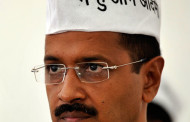
Delhi Bharatiya Janata Party (BJP) chief Satish Upadhyay on Tuesday questioned the priority of the Aam Aadmi Party (AAP) following the recommendation that the salary of the MLAs be increased by four times and said the ruling party has in true sense become the ‘khaas aadmi’. ‘The AAP should decide what their priority is’ Is their priority to hike the salary of the MLAs or to tackle dengue, price rise, contractual employee problem and other problems of Delhi” he asked. He also criticised the AAP for not releasing funds for the ‘Swacch Bharat’.
They don’t have funds to pay the MCD employees for Swacch Bharat. They have to decide their priorities,’ he said. Upadhyay also alleged that the common man has not got anything in the last seven months of the AAP’s rule.
‘AAP is showing their true colours. There is a huge gap between their words and actions,’ he said. ‘They are not ‘aam aadmi’ they are definitely ‘khaas aadmi’ as they seek everything, from cars, big offices, and even four times the salary. They want everything,’ he added.
An independent panel has recommended a hike in the salary of the MLAs of Delhi. The panel has recommended that the MLAs’ salary should be increased to Rs. 50,000 from the current Rs. 12,000 and Rs. 70,000 for assistance. It has also recommended for a conveyance hike from Rs. 6,000 to Rs. 30,000.
‘We have gone into various aspects relating to the expenses and there are so many other considerations, on the basis of which we have decided that they should get this salary on these levels of allowances,’ Expert Committee member Rajiv Malik told the media.

Chhattisgarh Chief Minister Raman Singh on Tuesday ordered probe and seizure of self-styled godman Asaram Bapu’s book on sex tips to students.
His book was being taught in some government schools in Kondagaon of Chhattisgarh. There is furore in the state over the book, which is being used to teach the students. The state government had put a ban on using this book in 2012, but the education department in many districts ignored the notice and continued to teach from the book to students in high school and higher secondary school.
As soon as the government came to know about this, it issued a new notice and ordered to take action on the education officers.

A class X girl was allegedly gangraped by her friends on the pretext of taking her to a birthday party at Kopri on September 30 between 2.30pm and 6pm.
The girl was initially not aware of what had happened with her, but when she recollected the incident, she realised that the accused along with his sister and friends forced her to drink alcohol after which she fell unconscious.
The she was beaten up and allegedly raped.
The 15-year-old met the main accused, identified as Kaustub, a year back through one of her school friends. On the day of the incident, Kaustub went to Hiranadani Meadows area, where the victim stays, and asked her to come along with him as it was his birthday and he was treating his friends.
He took the girl near Bharat college in Kopri (west) and later to his home. The accused sister, identified as Dipali, was with one of Kaustub’s friend Mandar, at home.
All the three accused are adults and they were produced in court on Tuesday. They will remain in police custody till October 10.
Investigation officer Sadhan Ingle said, “The accused and victim have been sent for medical test and we are waiting for the reports.”

All summer long, the streets and bars of Tel Aviv, Israel’s hippest city, have been filled by what may be a bit of an unexpected tune: three women belting out the Yemeni dialect of Arabic with a heavy darbuka beat behind them.
The surprise hit Habib Galbi – performed by a band of three Israeli sisters of Yemeni background named A-WA – managed to rise to the top of this country’s music charts, shattering records and all expectations. The song has also proven a major success abroad, with the music video amassing 1.2 million hits and attracting thousands of fans from across the Middle East.
The song is actually based on a tune that the group’s grandmother – who was born in Ibb, Yemen, but moved to Israel in 1949 – taught them, and for sisters Tair, Liron and Tagel singing it was the most natural thing in the world.
But this summer marks the first time in Israeli history that an Arabic-language song has managed to top the charts, and its positive reception across borders in countries Israel has been at war with for nearly 70 years has many experts wondering if the song is a sign of a cultural thaw and hope amid the increasingly bleak political landscape across the region.
Yemenite music
Born in the tiny desert town of Shaharut in the Arava Valley just north of Eilat, the three Haim sisters that comprise A-WA began singing Yemenite songs from a young age. Tair, the oldest member at 32, told Middle East Eye that at home the family listened to many different kinds of music but that Yemenite music was always present at the weddings, henna celebrations and other parties they grew up attending.
“Yemenite music was something very special for us, something overwhelming. The first time I remember hearing Yemenite music, I was five years old and attending a henna celebration for my uncle. There was a singer on a tin drum, singing with such a unique voice that it caught my ears and I started imitating her.”
From then on, Tair began singing in the Yemenite style, and her younger sisters soon followed suit. The entire family would sit down to watch the weekly Arabic movie shown on Israeli television throughout the 1960s and 70s, and the sisters gradually learned other styles of Arabic music as well.
“We’d put a scarf around our hips and belly dance while watching the movie, imitating the music. We always loved it, and we always felt like it was okay, and even more than okay – that it was a beautiful culture and language,” middle sister Liron, 30, told the Middle East Eye.
Despite the fact that Arabic language and culture has been widely denigrated in Israeli society since its founding in 1948, Liron noted that at home, “the music we grew up with was in both Hebrew and Arabic. Arabic wasn’t something foreign to our ears”.
Habib Galbi is from a genre of songs traditionally sung by women back in Yemen. While the most famous Jewish Yemenite music is Hebrew religious hymns called piyutim, secular music – especially women’s music – is sung in the community’s native Arabic.
Although many singers of Middle Eastern origin in Israel remake traditional songs from the Arab countries they came from, they often translate them into Hebrew, or else pick religious tunes that were originally Hebrew.
But the A-WA sisters explained that they never considered the idea.
“It was natural for us to choose Arabic. It’s more authentic and it felt right … We never even thought of translating the songs. We wanted to preserve them as they are and only give them our own twist,” Liron told MEE.
The sisters’ bet paid off. After releasing their video Habib Galbi, in the spring, it quickly went viral. The group’s debut album, meanwhile, premiers this month. “We are three sisters singing Yemenite music. It is very rare that women from Israel, especially young women, sing this kind of music, because these days you only hear it at private gatherings, and usually performed by older women,” Liron told MEE. “But we take it front of stage and give it a modern twist that opens the ears of many young people as well.”
Arab-Jewish culture’s troubled history in Israel
But while the story may at first seem simple – three sisters reviving their grandmother’s songs – A-WA’s story is wrapped up in the dark history of the suppression of Arabic culture in Israel.
About 50 percent of Israelis are Mizrahim, or Jews who trace their ancestry to the Middle East, compared to the 30 percent who are European-descended Ashkenazim. A large percentage of Mizrahim are Arab Jews, i.e. originally from Arabic-speaking countries like Yemen, Morocco, Iraq, and many others. On top of those, around 20 percent of Israeli citizens are Palestinians, and thus Arabic-speaking as well.
On the surface, the commercial success of an Arabic-language hit seems a given in Israel, considering the fact that a majority of the population is Arabic-speaking or of Arab origin, regardless of religion.
But there is a reason that Habib Galbi is the first chart-topping Arabic song in Israeli history. For decades, Arabic music – and Mizrahi music more broadly – was banned on Israeli radio, in what is seen as part of a larger cultural suppression.
Since the years following Israel’s creation in 1948 that saw the arrival of nearly 700,000 Arab Jews – a result of both voluntary migration as well as persecution in Arab countries that followed the expulsion of Palestinians from their homes in what became Israel – the government largely sought to de-Arabise them and assimilate them into a Eurocentric idea of Hebrew Israeli culture.
This process included the intense stigmatisation of the Arabic language and a process forcing migrants to adopt Hebrew as their home language.
Uri Horesh, an Israeli linguist who studies the relationship between Arabic and Hebrew in modern Israel, told MEE that as a result of the language suppression of that period, “many older Arab Jews in Israel just stopped speaking Arabic, even those who were native speakers.”
Their children, meanwhile, largely avoided the tongue as well, particularly as it became associated with “the enemy”. Historically, Arabic culture might have been the shared heritage of Muslims, Christians and Jews, but with the rise of Zionism and the idea of a distinct “Jewish state,” a dividing line between “Jew” on one side and “Arab” on the other emerged. In this climate, “Arab Jewish” identity became increasingly difficult to maintain, and many first-generation immigrants refused to pass on their language to later generations.
In the 1970s, the Ashkenazi monopoly on Israeli culture was slowly broken as the music of Mizrahim began to enter the public airwaves for the first time after being restricted to private gatherings for decades. But these songs were always in Hebrew – albeit often Arabic-accented Hebrew – and their association with Arabness waned.
Members of the second generation of Israelis slowly began exploring their cultural roots in the Arabic world, and in the late 1980s a few Israeli performers began singing in Arabic occasionally as well. Most famous of these was Ofra Haza, a Yemeni artist who brought to life many old songs that were increasingly being lost with the passing of the first generation and the Israelisation of the second and third.
In the Middle East, but not of the Middle East?
Even as Israel lurched to the right beginning in the 1990s and the occupation and apartheid system against Palestinians became institutionalised and strengthened, Israeli popular culture increasingly gravitated toward Middle Eastern forms.
“There is this anomaly where on the one hand, Israelis recognise that they are in the Middle East, and that at least half of the (Jewish) population originated from the Middle East,” Horesh told MEE. “They recognise that factually. But on the other hand, people say, ‘well actually we’re a Western country; we’re more like Europe.’”
But Horesh pointed out that the success of Habib Galbi points to a darker truth regarding racism in Israeli society. While the idea of Mizrahim embracing their historic cultures is increasing, this does not point to an atmosphere of increased tolerance.
“There has been shift among Jews. While the Ashkenazi elite back in the 1950s or 60s looked down on people of Mizrahi descent … these days it is very much taboo to say anything racist against any Jew,” Horesh said.
“There is of course racism on the streets, but in public discourse you don’t encounter it and it is very much condemned. This is, of course, unlike racism against Palestinians, Muslims or any non-Jew. But it’s okay to be prejudiced against Palestinians in Israeli society.” ”
Associating anything within the broad spectrum of Jewish culture as being Arab is frowned upon, especially now when it’s okay again to be racist against Arabs,” he added.
Bleak economic realities facing Mizrahim
Smadar Lavie, a Mizrahi feminist activist and scholar based at the University of California, Berkeley, told MEE that she had “mixed feelings” regarding the current boom in Mizrahi culture and the interest from the historically Ashkenazi mainstream.
“In Israel’s public sphere there has been a complete disappearance of any attempt to talk about any peaceful solution to the Palestine-Israel conflict. The Jewish everyday is lived through a complete denial of what goes on in the West Bank and Gaza. At the same time, however, there is a renaissance of Judeo-Arabic culture among Mizrahim, after decades of suppression by the Ashkenazi ruling hegemony. Paradoxically, this Arab renaissance goes hand in hand with the Mizrahi majority vote for ultra-nationalist parties,” she told MEE.
While the use of Arabic by Mizrahim might appear to be a kind of cultural “resistance” after decades of Ashkenazi hegemony and discrimination in Israel, Lavie argued that the phenomenon “actually deepens the Mizrahi-Ashkenazi status quo with regard to control over governance, while simultaneously having the Zionist project of obtaining further control over maximum land with minimum non-Jews on it progress without any interruptions.”
She argued that the emphasis on Arab culture devoid of Arab politics functions as a “numbing mechanism,” as Israel’s constant wars against Palestinians enlist Mizrahim against the Palestinians and thus discourages them from fighting intra-Jewish racism.
Culture, on the other hand, “is safe and successful as long as it does not touch on Israel’s relations with its Arab neighbours.” This allows Israel to claim itself as tolerant and multi-cultural while at the same obscuring the realities of its political policies, she argued.
While she said she was pleased Mizrahi culture had penetrated the “bastions” of elite Ashkenazi culture in Israel, “in the end, this does not lead to any improvement in the daily lives of Israel’s Mizrahi majority. Israel’s neoliberalism mostly benefits the Ashkenazi industrial and managerial elites. The class gap is widening, and achieving residential and nutritional stability is getting harder and harder for many Mizrahi households. Poetics or Arabic pop tunes sung by Mizrahim do not remedy such problems,” she added.
Beside cultural suppression, Mizrahim have been relegated to the lowest rung of Israeli Jewish society since they arrived in Israel, when they were forced to live in development towns in the peripheries or urban ghettos and denied access to jobs and education.
Even today, Mizrahim are five times as likely to be unemployed as Ashkenazim and around half as likely to attend university, and in general the average incomes of Mizrahi Jews are around one-third less than their Ashkenazi counterparts. For Lavie, these economic realities – and the six decades of institutionalised racism they reflect – overshadow any talk of a “Mizrahi renaissance” that the success of songs like Habib Galbi have inspired.
Despite politics, cultural connections persist
But while the reasons for pessimism are clear, not everyone is ready to give up hope.
Ted Swedenburg, an anthropologist at the University of Arkansas who has studied the relationship of Israeli music to the Arab world, told MEE that he considered the song’s success “exciting”. He said that A-WA’s rise points to the fact that “despite 70 years of terrible politics and violence,” cultural connections between Israel’s Mizrahim and the Arab world persist.
“On the other hand,” he cautioned, if the politics don’t change, then it won’t go any farther. We shouldn’t overestimate the hope that (the song) gives us.”
Strangely, much of the media hype regarding the band has focused on the fact that an “Israeli” band has scored success in the “Arab world,” even going so far as to suggest that young Arabs are warming up to Israel. But the realities of this Arabic-singing Yemeni trio are much more complex, as the history of Mizrahi artistic production in Israel shows.
However, for the Haim sisters that comprise A-WA, their success around the world has been a blessing that allows them to connect to a wider world from which most Israelis remain closed off. “People who see us online and like us often don’t even know where we come from. Some people from Baluchistan have even contacted us, asking if we’re Baluchi because we wear Baluchi scarves in the video,” Tair told MEE.
“People ask us: Are we from Yemen? From Israel? We love the mystery around it, because the music becomes the focus, and we think that’s better. We’re all people and we all eventually want the same things. Music is clean from politics. It’s a common ground, and that’s the beauty of it.”

Aligarh Muslim University Vice-Chancellor Lt Gen (retd) Zameeruddin Shah has reportedly asked Muslims to look at how they treat their women. Speaking at a felicitation function of AMU Old Boys at Lucknow on Sunday, Shah was quoted as saying Muslims lagged behind in the development race because they enslaved their women.
According to The Indian Express, Shah said, “You have not utilised half of your population. Women remained enslaved. They remained inside home. Muslims have no one else to blame. You enslaved women and the result is you are enslaved. I stayed in Saudi Arabia, the situation remains the same. Women are confined. Except Turkey and Iran, women remained enslaved in all Muslim world. That is the reason they are backward.”
These remarks come just a few months after Shah did not allow undergraduates girls to use library of AMU stating it would attract boys.
He also lashed out at Muslims for their work ethic. According to the report, he said, “Muslims work for 11 months in a year. During Ramazan they do not work. Also, in any normal week, they do not work for two-and-a-half days. On Friday, they make preparations for Namaaz. This is followed by the weekend.”

The visitors were wasteful with their opportunities and were made to pay dearly with Sanli leading the charge for Platt’s side.
David Platt’s sojourn in the Indian Super League (ISL) with Deccan side FC Pune City began with a 3-1 win over Nicolas Anelka’s Mumbai City FC. Tuncay Sanli (12′) opened the scoring before Frederic Piquionne (34′) levelled proceedings. Sanli (56′) got his second after the break which was followed by a third for the hosts courtesy of Israil Gurung (68′).
The English coach sprung a few surprises by electing to field a 4-5-1 formation without some of his Indian stalwarts who are away on international duty. Steve Simonsen started in goal, whilst Gouramangi Singh and Diego Colotto began in central defense. The veritable Nicky Shorey began on the left wing.
The attack, bereft of Adrian Mutu, on the bench for the start of the campaign, was led by Tuncay Sanli alongside Israil Gurung and Maithani on the wings.
Anelka started Ashutosh Mehta, Pavel Cmovs , Juan Aguilera and Keegan Pereira started in defence with the goalkeeper on the night being Albino Gomes. Sony Norde helmed the attack while accompanied by Andre Moritz and Fredrick Piquionne.
Good work by Piquione down the right early on in the game saw him cut a ball across for Gabriel Fernandes in the middle. The Goan midfielder however could do no better than warm the keeper’s gloves with a shot straight at him.
Sanli popped up with the goal to settle Pune City down in the 11th minute. A dominant Mumbai dozed off at the back and allowed Gurung too much space. The winger delivered the ball to the back post where Sanli made no mistake with the header.
Mumbai sought an immediate reply and nearly had one. Norde effortlessly shanked past his defender and was clear down the left side of the box. However, instead of passing to his teammate who was unmarked, he opted to shoot and only managed to have his effort blocked.
Norde was a handful and the Haitian repeatedly kept fizzing shots from outside the box towards goal, one which was particularly difficult for Simonsen to handle.
Fernandes was causing all sorts of problems for Gurjinder and the Goan once again managed to wriggle himself free of the defender’s grasp. His ball in was acute, but Diego Colotto somehow managed to get back in time.
A great run down the right by Gabriel was followed by a cross that found itself all the way to Norde at the far post. The attacker, with an empty net to aim at, managed to crash his shot against the post.
However, Mumbai maintained possession and Ashutosh delivered a sublime cross onto head of Fredrick Piquione who finished into the bottom corner as Anelka’s men drew level.
Chances were coming fast for the Blues, with Gabriel blasting a great counter wide and Juan Aguilera soon missed an opportunity to head Mumbai into the lead as Ashutosh Mehta’s dink to the Spaniard was hit straight to an alert Simonsen.
A superb cross into the box saw Piquine grapple for it, inadvertently setting up Norde for a shot he should’ve had on target, yet the Mohun Bagan forward blasted it over and the teams went into the break level at 1-1.
Yendrick Ruiz was brought on at the start of the second half in place of James Bailey.
Moritz then had a great chance to double Mumbai’s lead but he blasted the ball wide. He would go onto regret it as the Orange and Purples scored again.
It was the Gurung-Sanli combination for a second time as a sumptuous cross from the right found its way to the far post where the forward headed in again.
On the hour mark, goal scorer Sanli was withdrawn for marquee player Mutu. Minutes later, Moritz who looked to have a match he was likely to forget, was replaced by Selim Benachour .
Norde wasted a free-kick with a poor delivery which was won by Mehta down the right.
A fairly speculative cross by Gurung in the 68th minute took a massive deflection off Juan Aguilera and the ball looped past the outstretched hands of Gomes to plonk itself in the corner of the net to give Pune a 3-1 lead.
A last-ditch interception by the captain on the night for Mumbai City, Bertin, certainly prevented the score-line from getting embarrassing for the away side as Ruiz was on hand to convert.
The team from the commercial capital then threw on Nicolas Anelka as a last resort.
The 8734 strong crowd were stunned however when Lenny Rodrigues limped off with a suspected hamstring injury. Sushanth Mathew, a former Blaster took his place. Anelka was dropping deep as his side sought a way back intpo the game, but the creative had evaporated. Mumbai gained a series of corners as the referee indicated four minutes. Gurung too went down with suspected cramps as he had to be stretchered off.
The game however was closed down effectively by Pune City as the home team recorded their second straight Maha Derby victory.







Recent Comments