


Paris Hilton seemed to be heaping praise on the Bollywood’s hottest man Hrithik Roshan. The two met at the restaurant launch in Dubai and it seems, they got along really well. They even posed for pictures which both Hilton and Hrithik shared. In fact, Paris is so bowled over by Hrithik that she is keen to work with him in a Bollywood film.
Sheeraz Hasan asked Paris on Twitter after the gala night if she would want tobe Hrithik’s love interest in Bollywood film. Hilton answered with a big Yes and even called Hrithik Roshan hot. She went ahead and praised Hrithik a lot. She found him to be very charming and gentlemanly. She’s heard a lot about Bollywood and Hrithik is a romantic representation of the same.
Hrithik Roshan too seemed pretty taken in by Paris’ warmth when he tweeted, “With d extremely gentle n kind hearted Paris Hilton at Cle dubai. Now that’s a spot dubai needs to celebrate! Amazing.”
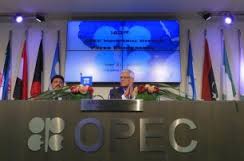
NEW YORK (AP) — A sudden plunge in the price of oil is sending economic and political shockwaves around the world. Oil exporting countries are bracing for potentially crippling budget shortfalls and importing nations are benefiting from the lowest prices in four years.
The global price of oil is near $83 per barrel, down about $32, or 28 percent, from its high point for the year. Oil consumption globally is 91 million barrels per day. That means the world’s oil producing countries and companies are bringing in as much as $2.8 billion less in revenue every day — and consumers, shippers and airlines are saving a comparable amount on gasoline, diesel and jet fuel.
“The problem is that countries get accustomed to a certain level of income, and then spend,” says Edward Chow, a senior fellow at the Center for Strategic and International Studies. “It seems like a windfall at first but when it lasts long enough you get used to it.”
The global price of oil was relatively stable for nearly four years, averaging $110 per barrel. Increased production in the U.S., Canada, Iraq and elsewhere made up for declining supplies in nations such as Iran and Libya and helped meet rising global demand.
That delicate balance has been upended by a weaker global economy. Demand is slowing while production, particularly in the U.S., continues to surge.
Consumer-driven economies benefit. For example, drivers in the U.S. are paying the lowest gasoline prices since 2011, giving them more money to spend.
In general the plunge in prices is good for those who have to buy fuel, and bad for those who sell it. But it has far wider and more complex effects on economies around the globe that are only starting to be felt.
— MAJOR EXPORTERS
OPEC countries and other major exporters will feel the biggest impact. The cash-strapped governments of Russia, Venezuela and Iraq are among the most vulnerable.
Oil is cheap to produce in these countries, so they still make money at lower prices. But their government budgets are based on expectations of oil prices of $100 or more.
On Tuesday, Russian President Vladimir Putin expressed concern that lower oil prices could force the government to cut spending. Researchers at the state-owned Sberbank, Russia’s largest bank, estimate that the country needs an oil price of over $104 per barrel to balance its budget next year.
In Venezuela, the government leans heavily on oil revenue to fund spending on housing projects, community organizing and other social programs. Now, oil production is falling at a time when the country desperately needs cash. This month, the analysis firm Stratfor Global estimated that Venezuela needs oil at $110 to continue meeting its obligations.
Last week, Venezuelan Foreign Minister Rafael Ramirez called for an emergency OPEC meeting to allow member countries cut production to keep prices above $100.
Saudi Arabia, the world’s largest exporter and OPEC’s most influential member, might not rush to cut production, however, even though it would start running a deficit with oil at $85 per barrel, according to Merrill Lynch. With a large reserve fund — estimated to be $700 billion — it could withstand a longer period of lower prices.
Saudi Arabia may be interested in using lower prices to force Western oil companies to cut back on some less profitable production in an effort to secure market share.
Iraq is counting on rising revenue both from high oil prices and increasing production to help it fight the insurgency gripping the country and recover from war. Revenue may now fall instead.
— ASIA
The picture is reversed in Asia, where most countries are major importers and some subsidize the price of fuels.
China is the second-largest oil consumer and on track to become the largest net importer of oil. Falling prices will provide China’s economy some relief, according to Huang Bingjie, professor from the School of Economics and Management at China University of Petroleum. But lower oil prices won’t fully offset the far wider effects of a slowing economy.
India imports three-quarters of its oil and analysts say falling oil prices will ease the country’s chronic current account deficit. Samiran Chakraborty, head of research in India for Standard Chartered Bank, also says the cost of India’s fuel subsidies would fall by $2.5 billion during its current fiscal year if oil prices stay low.
Japan imports nearly all of the oil it uses. Following the accident at the Fukushima Dai-Ichi nuclear power plant in 2011, Japan has turned more to oil and natural gas, which is priced based on oil, to generate electric power. But the lower prices are a mixed blessing. Rising energy prices have helped to push inflation higher — a key aim of Prime Minister Shinzo Abe’s deflation-fighting “Abenomics” growth strategy.
— NORTH AMERICA, SOUTH AMERICA, AND EUROPE
Low prices could eventually threaten the boom in oil production in such countries as the U.S., Canada, and Brazil because that oil is expensive to produce. Investors have dumped shares of energy companies in recent weeks, helping to drag global stock markets lower.
For now, lower crude oil and fuel prices are a boon for consumers. In the U.S., still the world’s biggest oil user, consumer spending accounts for two-thirds of the U.S. economy, and lower energy prices give consumers more money to spend on things other than fuel.
The same is true in Europe. Christian Schulz, senior economist at Berenberg Bank, says that a 10 percent fall in oil prices would lead to a 0.1 percent increase in economic output. That’s meaningful because the 18-country currency union didn’t grow at all in the second quarter.
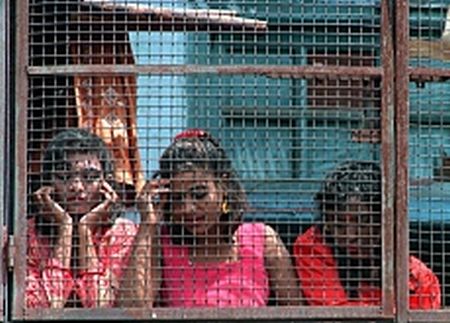
The trafficking of young girls from countries like Nepal and Bangladesh into India for forced prostitution shows no signs of abatement, even as three million women are estimated to be sucked up into flesh trade.
This alarming figure comes via a study conducted by the Global March Against Child Labour, led by child rights activist Kailash Satyarthi.
The study titled ‘Economics Behind Forced Labour Trafficking’, which was spearheaded by the Nobel Peace Prize winner, found that the sex trade in India has flourished over the years.
ILLEGAL BUSINESS
The Ministry of Women and Child Development’s statistics, meanwhile, reveal that while this estimate is based solely on women employed in red-light areas, the number stands at nearly six to nine million if other illegal businesses such as dance bars and massage parlours are taken into consideration.
“The figures are shocking. Younger girls are sold at a higher price in the market primarily because they can work for longer as compared to the older women. In India alone, the money generated through sex trade so far stands at a whopping $343 billion.
“Research confirms that several agencies such as traffickers, brothel owners, money lenders, law enforcement officials, lawyers, judiciary and to a certain level even the victims of CSE (commercial sexual exploitation) eventually receive money for participation,” Satyarthi said in the study.
EXPLOITATION
As per the study, law enforcement officials have gained nearly $24 billion through child sexual exploitation. Similarly, lawyers and the judiciary in India have gained $51.5 billion.
While the total potential cost of the child sexual exploitation industry stands at $309 billion, its potential gain is pegged at $34 billion.
Nearly 3.6 million children have been forced into child domestic labour by placement agencies in India, the study says. Delhi alone is reported to have nearly 3,000 placement agencies.
“If, assume on a very conservative level, that the total market for child domestic labour in India is 2.5 times the market in NCR, then the illegal money in circulation could be anywhere between $35 to 361 billion,” the report said.

Few people in the US are more successful than Bill Gates. But that doesn’t mean the 58-year-old billionaire knows everything.
There are still important business lessons to be learned by America’s richest man — and who better to learn them from than Gates’ friend and fellow billionaire Warren Buffett?
In 2013, Gates traveled to Omaha, Nebraska, for Berkshire Hathaway ‘ s annual shareholders meeting. “It’s always a lot of fun, and not just because of the ping-pong matches and the newspaper-throwing contest I have with Warren Buffett,” Gates writes in a LinkedIn post. “It’s also fun because I get to learn from Warren and gain insight into how he thinks.”
Gates outlined the three most important lessons he learned from Buffett. Here are the highlights:
Look At The Big Picture
When Gates first met Buffett, his immediate instinct was to focus on the surface of his success: picking and investing in stocks. But Gates quickly learned that key to Buffett’s success ran much deeper — it’s about the big picture of a business. “He has a whole framework for business thinking that is very powerful,” Gates writes.
Instead of focusing on the day-to-day details of the market, Buffett looks at overall growth. “He talks about looking for a company’s moat — its competitive advantage — and whether the moat is shrinking or growing,” Gates says. “He says a shareholder has to act as if he owns the entire business, looking at the future profit stream and deciding what it’s worth.”
Be Honest With Shareholders
Buffett famously takes time every year to send a letter to his shareholders, a practice that inspired Gates to start doing the same. While Buffett’s letters offer business and investing insights, Gates believes Buffett’s candor is what makes them stand out. “He’s been willing to speak frankly and criticize things like stock options and financial derivatives,” Gates says. “He’s not afraid to take positions, like his stand on raising taxes on the rich, that run counter to his self-interest.” Gates’ key takeaway: transparency is highly appreciated.
Value Your Time
“No matter how much money you have, you can’t buy more time,” Gates reminds us, noting that Buffett understands this better than anyone. Buffett makes an effort to be available to his close advisers and always finds time to personally answer phone calls from them. “He’s very generous with his time for the people he trusts,” Gates says.
However, Buffett knows how valuable his time is, and doesn’t waste it in useless meetings, Gates says. Buffett prioritizes his time and spends it in ways that matter most to him.

Aishwarya Rai Bachchan declared the 16th edition of Mumbai Film Festival and looked stunning. Gone are those ugly flab bulging out from every corner and have been replaced by a dazzling Aishwarya. Silencing one and all, she managed to make people drop their jaw in awe of her presence.
Clad in a beautiful blue saree with red border, Aishwarya looked ravishing. She is back looking the world’s beautiful woman who’s married to Abhishek Bachchan. The desiring and dreamy Ash is back and managed to stun everyone.
This could be her preparation for her comeback film which will be Sanjay Gupta’s Jazba. Given the intense film that it is, it is important for Aishwarya to look lithe and swift and what we saw yesterday is anything to go by, she is going to look spectacular in the film.
It is really amazing to see her so fabulous but we wonder why did it take a film offer to bring her back in shape. Being fit and healthy should be a habit not a necessity. Don’t you think so Aishwarya?
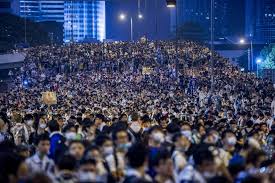
Police in Hong Kong, armed with chainsaws and bolt cutters, removed barricades at Admiralty on Tuesday (Oct 14), one day after they were rebuilt by protesters
HONG KONG: Hundreds of police armed with chainsaws and bolt cutters made a fresh assault on protest barricades in Hong Kong Tuesday (Oct 14), a day after a similar attempt backfired as demonstrators reinforced their defences.
Officers made a dawn raid at one rally site in the financial hub’s bustling shopping district and hours later moved on a second set of barricades at the edge of the main protest encampment near the city’s government headquarters
Vast crowds have rallied against China’s insistence that it will vet candidates standing for election as the city’s next leader in 2017 – a move protesters have labelled a “fake democracy”.
While the activists have been praised for their civility and organisational skills they have also brought widespread disruption to an already densely-populated and congested city usually renowned for its stability. Angry and sometimes violent scuffles have broken out between demonstrators and government loyalists, sparking accusations that authorities are using hired thugs to sow trouble.
Police had been keeping a low profile at the three protests sites in Admiralty, Causeway Bay and Mongkok after a decision to fire teargas at peaceful demonstrators on Sep 28 caused outrage and encouraged tens of thousands to turn out on the streets.
But in the last two days, officers have begun probing protester defences in raids aimed at clearing some roads to ease traffic, while allowing the bulk of protesters to remain in place. Around 150 police dismantled metal barricades at the Causeway Bay site before dawn Tuesday, an AFP journalist at the scene saw, freeing up traffic in one direction but leaving the protest camp there largely intact.
Hours later another contingent of officers hit barricades at the main Admiralty site, using chainsaws to slice through bamboo poles that had been used to reinforce protest cordons following a similar attempt to remove them on Monday.
Moments before the operation at Admiralty, police had told Apple Daily that the barricades, built using sharp bamboo poles and cement, could endanger the safety of the people. But they insisted that they were not trying to disperse the protesters.
SOBS AND DEFIANCE
Some protesters were seen sobbing. “We are only residents and students,” one tearful young woman shouted at police. “We will leave as we are unable to fight you, but we will not give up.” At both Causeway Bay and Admiralty, protesters put up little resistance
Police told reporters that the operation was limited to removing barricades along key traffic routes and that the democracy campaigners would still be given space to express their views.
A similar operation on Monday at the edges of the sprawling Admiralty protest camp prompted activists there to swiftly regroup. They laid down cement foundations and built up bamboo pole barricades blocking both lanes of a highway, using everything from steel chains to plastic ties and sticky tape to strengthen the structures, even enlisting sympathetic construction workers for help with their building work.
But police Tuesday appeared well prepared for the myriad of obstacles in their way.
Protest leader Alex Chow rallied supporters at Causeway Bay, and called on the city’s chief executive Leung Chun-ying – whose resignation protesters are demanding – to restart stalled talks after the government abruptly pulled out last week.
“The Occupy movement will not retreat, there is no way to retreat right now… as long as Leung doesn’t give a concrete solution, all the occupiers will not leave,” said Chow, president of the Hong Kong Federation of Students.
The renewed police offensive comes a day after masked men rushed the rebuilt barricades in Admiralty, sparking accusations that thugs and suspected triads were being used to harass demonstrators and serve as a pretext for police to act.
Demonstrators, who have come under attack from organised crime gangs at another flashpoint demonstration site in Mongkok, shouted: “Weapons! Weapons!” and “Arrest the triads” as police struggled to impose order.
On Monday, embattlwanted the protests to end. “Under the appropriate situation we hope to allow society to return to normal as quickly as possible,” he said on the sidelines of a trade meetinged leader Leung told reporters in the Chinese city of Guangzhou that he
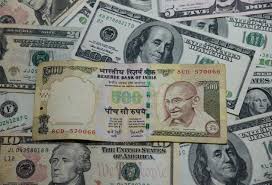
Moving in line with equity market, the rupee trimmed its initial gains against the dollar, but was quoted still higher by 8 paise to 61.02 on mild selling of the US currency by banks and exporters.
The rupee opened higher at 60.94 per dollar as against the last closing level of 61.10 at the Interbank Foreign Exchange market on initial selling of dollars by banks.
However, it trimmed its initial gains and was quoted at 61.02 per dollar at 10am on some dollar demand from banks and importers. It moved in a range of 60.94 and 61.03 per dollar during the morning trade.
In New York market, the dollar continued to weaken against its rivals yesterday on a day devoid of major data releases out of Europe and the US.
Meanwhile, the benchmark Sensex moved up by 46.64 points or 0.17% to 26,428.71 at 10am.

: Los Angeles Actress Cameron Diaz has revealed that she was terrified of her role in ‘Annie’.
The 42-year-old actress said she had to overcome her fear of singing in front of people for her part as Miss Hannigan in Will Gluck’s modern adaptation of the musical, reported Digital Spy.
“It’s not very often you get to do a musical. Even though I was terrified of doing it, I kind of had to. The two things I’m most terrified of are heights and singing in front of people.
“I’ve jumped out of airplanes and scaled sides of cliffs – not to get over my fears, but to address them. I just felt like this is something that needed to be addressed. I cried uncontrollably.
Everybody was so supportive and having fun with it because I was so pathetic, but the only way to get through scary things is to have a sense of humour about it,” she said.

After starting her career with Farah-Shah Rukh Khan‘s joint production ‘Om Shanti Om’ seven years ago, actress Deepika Padukone feels her upcoming project ‘Happy New Year’ is like a homecoming.
‘Happy New Year’, releasing this Diwali, is again co-produced by Farah and Shah Rukh and the actor will be seen romancing Deepika in it.
“‘Happy New Year’ is a homecoming for me. The way they (Shah Rukh and Farah) made me feel has brought back the memories of ‘Om Shanti Om’. Even the way she calls me ‘Baby’ and I call her ‘Maa’.
“Farah takes certain liberty with me and so do I. The way we talk to each other is special. In fact, a lot of time we would sit together and remember old times. They are family,” Deepika said in a group interview.
The film is directed by Farah and has ensemble cast of Abhishek Bachchan, Sonu Sood, Boman Irani and Viaan Shah apart from Shah Rukh and Deepika.
Deepika says she feels her career is safe in the hands of the choreographer-filmmaker and SRK, both 49.
“They gave me such a beautiful launch in the industry and presented me so well. They took the responsibility and understood that this girl’s career is in our hand,” she said.
Deepika, 28, said she was the last one to join the multi-starrer.
“When I just finished ‘Chennai Express’ I got a call from Farah Khan and she asked me for ‘Happy New Year’. The film happened at the last moment and my dates were free I am happy that I fit because at that time even Imtiaz Ali’s film also shifted,” she said, adding that she is happy to be a part of ‘Happy New Year’ even though the role was initially not offered to her.
In the film, Deepika plays a Marathi bar dancer in the film.”Mohini Joshi is the character’s name who is a bar dancer. She enjoys dancing and she worships dance. She and Abhishek’s character Nandu have grown up together. I become the teacher of the gang and I teach them to dance once they come together. Mohini is the only member of her family who earns,” she said.
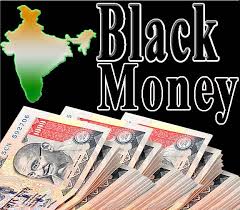
A high-level delegation of tax and revenue officials is set to soon travel to Switzerland in order to pursue cases of black money and secret accounts held by Indians in banks in the Alpine nation.
Sources said that the delegation, which will lay special focus on a number of pending requests, will be led by Revenue Secretary Shaktikanta Das and will have CBDT Chairman KV Chowdary and two other officials of the finance ministry’s foreign taxation wing as its members.
The official visit, sources said, was set up in quick time after the Supreme Court-appointed Special Investigation Team (SIT) was taken into confidence by investigative agencies that a one-on-one visit between the officials of the two countries was necessary to take the probe in these cases forward.
“The meeting will happen during this week,” sources said.
Officials said that the decision to send the team has also been cleared by Finance Minister Arun Jaitley and the officials would be armed with legal documents, dossiers and the charter of the SIT to satisfy the Swiss authorities as to how much “importance India is giving to unravelling the facts in these cases keeping in mind public sentiments and the government’s commitment to unearthing black money“.
The upcoming meeting will be the first high-level one between the officials of the two countries after the Narendra Modi government came to power at the Centre with a poll-time promise that it would probe all cases of illegal funds stashed away abroad and ensure legal action in them.
The visit comes against the backdrop of Switzerland refusing to share details on names obtained by Indian authorities through other countries, namely France and Germany, saying they figured in lists stolen by certain ex- employees of the banks concerned and no details can be shared on the basis of illegally-obtained information.
India has been asking Switzerland to cooperate in these cases under obligations of the bilateral Double Taxation Avoidance Agreement (DTAA) and the policies and guidelines framed by OECD, of which both countries are active members.
Sources said the delegation will meet top Swiss banking and government officials in a span of two days.
The last time the two sides met over these issue was in February this year in New Delhi. Finance Minister Jaitley had in July informed Parliament that Switzerland has raised some legal issues with regard to providing the details of Indian citizens who have parked illegal funds in Swiss banks.
Despite repeated requests from India, including through at least four letters written by former Finance Minister P Chidambaram, Switzerland has maintained that its local laws prohibit administrative assistance in matters where information has been sourced illegally, including through stolen lists.
















Recent Comments