
By Ai Powered PMC Akbar Jiwani, Special Correspondent: Realestate for Realnewsofindia.com
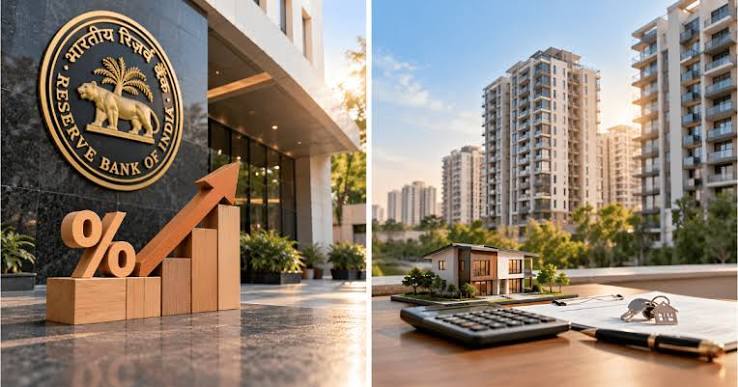
New Delhi/Mumbai, 10 October 2026: India’s housing market has entered the festive season with two developments pulling in different directions. Sales are at a healthy quarterly high, while the Reserve Bank of India (RBI) has raised interest rates for the first time in almost four years.
RBI turns to “calibrated tightening”
On 7 October the RBI’s Monetary Policy Committee raised the repo rate by 25 basis points to 5.5%. This is the first hike since February 2023. The committee also changed its stance from “neutral” to “calibrated tightening”. The rate decision was unanimous, but the stance change passed 4–2.
The central bank cited consumer inflation of 4.8% in August, above its 4% target for a third straight month. It also pointed to volatile crude oil prices linked to renewed US–Iran tensions. It raised its full-year inflation forecast to 5.2% from 5%. It projects GDP growth of 7.1% for the year, after 7.8% growth in the April–June quarter.
What it means for home buyers
More than 68% of floating-rate rupee loans at scheduled commercial banks are linked to external benchmarks that track the repo rate. At private banks the share is above 90%. Floating-rate home loan borrowers can therefore expect a 25 bps rise in rates, which means a higher EMI or a longer loan tenure. Fixed-rate loans will not change immediately but will reprice when their lock-in periods end.
Anuj Puri, Chairman of ANAROCK Group, warned that “even a modest increase in EMIs will result in deferred purchase decisions” among affordable housing buyers. He said commercial real estate is unlikely to see a direct impact, though some new mall projects “could potentially be deferred until there is greater clarity on demand.”
Developers were divided. Ramani Sastri, MD of Sterling Developers, said the hike “would definitely impact housing affordability” and could bring a short-term dip in demand. Rayan Munawer, CEO of Terray Realty, said he does not expect the increase alone to significantly disrupt housing demand. JLL’s Lata Pillai described the move as pre-emptive, aimed at inflation peaks later in the year.
Q3 numbers show a resilient market
The timing matters because the market came into the hike on solid footing. ANAROCK data for July–September 2026 shows the following for the top seven cities:
Sales: about 1,00,220 units, up 3% from 97,080 a year earlier. Sales value was about ₹1.55 lakh crore, up 2%.
New launches: about 1,14,320 units, up 18% from 96,690.
Prices: average residential prices rose 7% year on year. The NCR rose 12% and Bengaluru 8%.
Unsold inventory: about 6.31 lakh units, up 12% from about 5.62 lakh.
City trends varied widely. The Mumbai Metropolitan Region sold about 31,750 units (+5%), Bengaluru 16,670 (+12%) and Hyderabad about 12,970 (+15%, the fastest growth). Pune (−6%), NCR (−1%), Kolkata (−4%) and Chennai (−10%) declined. MMR and Bengaluru together made up 48% of sales.
Hyderabad’s launches more than doubled (+120%) to about 18,950 units. By price band, 34% of new launches were in the ₹80 lakh–₹1.5 crore range and 24% in ₹1.5–2.5 crore. Only 14% were priced below ₹40 lakh. This shows how thin the supply of entry-level homes remains.
The road ahead
Rising inventory, higher prices and costlier loans together mean buyers are likely to stay selective. Analysts say the pace of any further rate action will matter more than this single hike. Developers are expected to lean on festive-season offers and flexible payment plans over the coming weeks. Home buyers are advised to check how their lender’s rate reset works, and to compare fixed and floating options before committing.