







External Affairs Minister Sushma Swaraj on Thursday said that religious conversions in the country will continue till a central law against the practice comes into force.
Such a law can come into existence if all political parties agree to it, the Union Cabinet minister said. She was responding to a question on whether events like Ghar Vapasi (reconversion ceremonies organized by right-win g organizations across the country) were proving a hurdle in the Narendra Modi government’s development and good governance agenda.
Defending anti-conversion laws in BJP-ruled Gujarat and Madhya Pradesh, the Lok Sabha member from Vidisha insisted that they did not ban voluntary conversions.
Mumbai: A civil suit has been filed in a Pune court against Akhil Bhartiya Hindu Mahasabha seeking a ban on its forthcoming film ‘Desh Bhakt Nathuram Godse’, slated for release on January 30.
The suit filed by activist Hemant Patil alleges that Mahasabha general secretary Munna Kumar Sharma had said in a section of media that “the film would show that Nathuram Godse, the assassin of Mahatma Gandhi, was a patriot while Gandhi was anti-Hindu”.
Civil Judge S S Nair has placed the suit for hearing tomorrow, said advocate Wajid Khan, the petitioner’s lawyer.
According to the suit, the film was being released on the same day when Godse had gunned down Mahatma Gandhi in 1948. “As the film has the potential to incite people on communal lines”, the petition has prayed for a ban on its release.
The suit’s main prayer is to stop the release of the film until the producer satisfies the court that it would not in any way flare up communal issues or cause disharmony among people.

A founder of the low-cost Indian airline SpiceJet has asked the government for more time to financially resuscitate the struggling airline. SpiceJet, India’s fourth-largest carrier, has been in a severe financial mess for most of the year. Earlier this month, thousands of SpiceJet passengers were stranded when unpaid suppliers refused to provide fuel, forcing it to cancel over 1,500 flights in the span of a week. Flights resumed only after the airline started the fuel in cash.
Ajai Singh who owns nearly 5% in the troubled airline is attempting a rescue and is reportedly in discussions with a few U.S.-based private equity funds. SpiceJet’s majority owner is media billionaire Kalanithi Maran (#38 on Forbes’ list of Indian rich) of the Sun Group who belongs to a prominent political family in southern India. Maran has refused to extend a helping hand but new reports indicate that Singh is inclined to buy his stake.
Meanwhile, amid falling fuel prices and a generally upbeat economic scenario, the Tata Group- Singapore Airlines joint venture, a premium full-service airline called Vistara, is set to launch on January 9. In ads, the airline promised personalized touches and seamless service.
Inventively, the airline is offering over half-a-dozen seat categories including business flexi, premium economy and supersaver economy.
But SpiceJet owes hundreds of millions of dollars in fuel dues, airport fees, taxes and salaries and it seemed imminent to become the second Indian carrier, after Kingfisher Airlines, to crash land within the span of two years.
No domestic investor or global airline has shown interest in bailing out SpiceJet. But the national carrier Air India is staying airborne thanks to government largesse in the form of billions of taxpayer dollars.
All but one Indian carrier, Indigo, are making losses as high airline fuel costs, steep operating costs and frequent fare wars have kept them in the red in an extremely competitive market. If SpiceJet is unable to revive, it will mean a setback for India’s airline industry. It will make the market a virtual monopoly of Indigo as competitors are too new or too small.

San Francisco: Google and Microsoft have joined forces with Sony, using their online might to release “The Interview” film to online audiences despite threats from hackers.
“Of course it was tempting to hope that something else would happen to ensure this movie saw the light of day,” Google chief legal officer David Drummond said in a blog post yesterday.
“But after discussing all the issues, Sony and Google agreed that we could not sit on the sidelines and allow a handful of people to determine the limits of free speech in another country — however silly the content might be.”
The Japanese entertainment giant began contacting Google and other companies a week ago to pursue potential for “The Interview” to be made available for streaming to viewers on the Internet, according to Drummond.
“A cyber-attack on anyone’s rights is a cyber-attack on everyone’s rights, and together we need to defend against it,” Microsoft general counsel Brad Smith said in a blog post. “After substantial thought, we decided to stand up with Sony and work with others to ensure that freedom of expression triumphs over cyber-terrorism.”
Using their platforms as online stages for the film is expected to make Google and Microsoft targets for hackers who hit Sony’s film unit with a devastating cyber attack.
Late yesterday morning in California, “The Interview” became available for rent in high-definition streaming at Google Play, YouTube Movies, Microsoft’s Xbox Video service and at a dedicated seetheinterview.com website for a price of USD 5.99.
Digital copies of the film could be purchased for USD14. “It was essential for our studio to release this movie, especially given the assault upon our business and our employees by those who wanted to stop free speech,” Sony Entertainment chief executive Michael Lynton said in a release.
“I want to thank Google and Microsoft for helping make this a reality.”
“The Interview” outraged North Korea by lampooning dictator Kim Jong-Un.
The madcap comedy became available for rent in the United States from 1800 GMT on several platforms, one day before its December 25 limited theatrical release. The future of the film had been in doubt after Sony said last week that it was cancelling the release following a hacking attack on its corporate network and threats against moviegoers.
The US government blamed the attack on North Korea, reportedly angry at the film’s cartoonish portrayal of Kim’s communist regime, and President Barack Obama threatened reprisals.

e several Bodo houses have been set ablaze.
The toll rose to 78 on Thursday in attacks by NDFB(S) and retaliatory violence in lower Assam with miscreants among Adivasis setting afire houses of Bodos as the backlash to the Tuesday massacre continued for the second day.
In worst-affected Sonitpur district, six more bodies were recovered on Thursday morning from Maitalu Basti under Zinzia police station bordering Arunachal Pradesh taking the toll in attacks by NDFB(S) to 43 in the district and overall toll to 71, a police spokesman told PTI.
Three Adivasis were killed in police firing during protests against the carnage on Wednesday.
In Kokrajhar, the other severely-affected district, retaliatory violence by miscreants among Adivasis claimed the lives of four Bodos at Manikpur and Dimapur areas.
Twenty five people were killed by militants in Kokrajhar and three in Chirang district.
Fresh incidents of violence have been reported on Thursday morning from Gossaigaon area in Kokrajhar where several houses of Bodos have been set ablaze despite the indefinite curfew clamped in the entire district, he said.
Curfew has been also imposed in the affected areas of Sonitpur and Chirang districts along with parts of Dhubri and Baksa districts as precautionary measure, he added.
Union Minister of Home Rajnath Singh accompanied by his deputy Kiren Rijiju on Thursday visited Bishwanath Chariali in Sonitpur district to review the prevailing situation and also held talks with different political and social organisations.
They had reached Guwahati on Wednesday night and held meeting with Chief Minister Tarun Gogoi.

Alibaba ramped up its efforts to remove counterfeit goods before its initial public offering in September, the company said during a press conference today. Chief risk officer Polo Shao states that Alibaba took down 90 million suspicious listings from its marketplaces.
The Chinese e-commerce giant also works with law enforcement as well as brand owners to identify and remove counterfeit goods on its sites. The open nature of its marketplaces, especially Taobao, China’s largest C2C platform, however, often make it difficult to enforce intellectual property laws.
But as Alibaba prepared for its record-setting $25 billion IPO, it invested heavily in removing knock-offs from its sites.
In a company report (PDF link) that was also published today, Alibaba says that from the beginning of 2013 to the end of November 2014, it spent over one billion RMB ($160.7 million) to identify and remove counterfeit goods from its platforms. It also cooperated with law enforcement agencies in over 1,000 counterfeiting cases this year, which resulted in the arrests of 400 suspects from 18 counterfeiting rings, and the closure of 200 brick-and-mortar stores, factories, and warehouses.
According to the company’s research, 90 percent of all counterfeit goods in China were distributed from 10 regions, with the top three being the Pearl River Delta region, Yangtze River Delta region, and Southeast China.
“By using transaction data and mapping technology Alibaba Group found that more than 60 percent of counterfeit watches and jewelry originate from Southern China, while 60 percent of counterfeit outdoor sporting goods are from Southeast China region and 50 percent of counterfeit apparel originates from Eastern China,” it said.
“This year we increased our information sharing initiatives with various Chinese government agencies and continued to work with brands to bring about effective enforcement against counterfeiters who operate offline. Additionally, we continue to refine and harness technological tools at our disposal to track and trace counterfeiters who sell on our platforms, in order to assist enforcement authorities in tackling the problem at its source,” said Alibaba in its report.
These tools include data mining technology that lets Alibaba analyze and track transactions involving counterfeit goods and find where they originate; an online complaint platform for brand owners to report knock-offs; and random third-party checks to look for fake goods on its platforms.
These efforts have gradually paid off. In 2012, for example, Taobao was removed from the U.S. government’s “notorious markets” list.
At the same time, the company acknowledged that the problem will be difficult to completely eradicate.
“A report issued by China’s State Administration for Industry and Commerce showed that counterfeiting is still rampant offline, constituting the majority of trademark-infringing and counterfeit cases investigated. According to the report, of the 83,000 counterfeit and trademark-infringing cases investigated by the SAIC last year, online counterfeit cases constituted about 300 cases.”

Fresh violence has been reported from Gossaigaon area of Kokrajhar district where several Bodo houses have been set ablaze.
The toll rose to 78 on Thursday in attacks by NDFB(S) and retaliatory violence in lower Assam with miscreants among Adivasis setting afire houses of Bodos as the backlash to the Tuesday massacre continued for the second day.
In worst-affected Sonitpur district, six more bodies were recovered on Thursday morning from Maitalu Basti under Zinzia police station bordering Arunachal Pradesh taking the toll in attacks by NDFB(S) to 43 in the district and overall toll to 71, a police spokesman told PTI.
Three Adivasis were killed in police firing during protests against the carnage on Wednesday.
In Kokrajhar, the other severely-affected district, retaliatory violence by miscreants among Adivasis claimed the lives of four Bodos at Manikpur and Dimapur areas.
Twenty five people were killed by militants in Kokrajhar and three in Chirang district.
Fresh incidents of violence have been reported on Thursday morning from Gossaigaon area in Kokrajhar where several houses of Bodos have been set ablaze despite the indefinite curfew clamped in the entire district, he said.
Curfew has been also imposed in the affected areas of Sonitpur and Chirang districts along with parts of Dhubri and Baksa districts as precautionary measure, he added.
Union Minister of Home Rajnath Singh accompanied by his deputy Kiren Rijiju on Thursday visited Bishwanath Chariali in Sonitpur district to review the prevailing situation and also held talks with different political and social organisations.
They had reached Guwahati on Wednesday night and held meeting with Chief Minister Tarun Gogoi.
Keywords: Assam violence, NDFB(S), Bodo militants
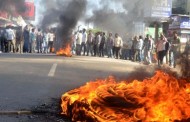
SHAMUKJULI, India (AP) — Hundreds of survivors of a brutal rebel attack that killed at least 63 people in northeastern India sought shelter Wednesday in a church and school while security forces imposed a curfew in a bid to contain the latest bout of ethnic violence.
Long-simmering land and ethnic disputes in Assam state erupted in bloodshed Tuesday when authorities said rebels belonging to a faction of an indigenous separatist group called the National Democratic Front of Bodoland attacked tribal settlers known as Adivasi, whose ancestors migrated to Assam more than 100 years ago. Most of them worked on tea plantations.
At least 100 people, mostly women and children, sought refuge in a church in Shamukjuli village in Sonitpur district, where 26 of the victims died. Another 200 people ran to a nearby school. The Adivasis are a mix of Hindus and Christians and many had been preparing for Christmas when the attack took place, survivors said.
Bodo rebels have been fighting for a separate homeland for their indigenous tribe, which makes up 10 percent of Assam’s 33 million people. They have staged attacks against both Adivasi and Muslim settlers in violence that has left at 10,000 people dead, most of them civilians, in the last three decades.
Many of the dead in Tuesday’s attacks included women and children, police said. The rebels may have been provoked by heavy losses they suffered recently as police intensified operations against the group, Singh said.
“We are trying to ensure that ethnic violence does not flare up,” he said, adding that a curfew was imposed in two districts and scores of police and paramilitary forces patrolled the area.
There were concerns the violence could spill over.
Following the attacks, angry Adivasis surrounded a police station in Sonitpur and attempted to attack the officers inside, said S.N. Singh, a top police official. Police opened fire, killing three Adivasis, he said.
He also said there were incidents of Bodo homes being attacked, but troops managed to control the situation.
India’s Prime Minister Narendra Modi condemned the latest attacks, and the Home Ministry rushed several thousand federal paramilitary troops to the region, junior Home Minister Kiren Rijiju said.
Dozens of rebel groups have been fighting the government and sometimes each other for years in seven states in northeast India. They demand greater regional autonomy or independent homelands for the indigenous groups they represent.
The rebels accuse the federal government of exploiting the region’s rich mineral resources but neglecting the local people.
In May, rebels from the same group shot and killed more than 30 Muslim settlers in the region.
___
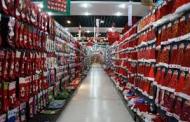
Inside the ‘Christmas village’ of Yiwu, there’s no snow and no elves, just 600 factories that produce 60% of all the decorations in the world
There’s red on the ceiling and red on the floor, red dripping from the window sills and red globules splattered across the walls. It looks like the artist Anish Kapoor has been let loose with his wax cannon again. But this, in fact, is what the making of Christmas looks like; this is the very heart of the real Santa’s workshop – thousands of miles from the North Pole, in the Chinese city of Yiwu.
Our yuletide myth-making might like to imagine that Christmas is made by rosy-cheeked elves hammering away in a snow-bound log cabin somewhere in the Arctic Circle. But it’s not. The likelihood is that most of those baubles, tinsel and flashing LED lights you’ve draped liberally around your house came from Yiwu, 300km south of Shanghai – where there’s not a (real) pine tree nor (natural) snowflake in sight.
Christened “China’s Christmas village”, Yiwu is home to 600 factories that collectively churn out over 60% of all the world’s Christmas decorations and accessories, from glowing fibre-optic trees to felt Santa hats. The “elves” that staff these factories are mainly migrant labourers, working 12 hours a day for a maximum of £200 to £300 a month – and it turns out they’re not entirely sure what Christmas is.
“Maybe it’s like [Chinese] New Year for foreigners,” says 19-year-old Wei, a worker who came to Yiwu from rural Guizhou province this year, speaking to Chinese news agency Sina. Together with his father, he works long days in the red-splattered lair, taking polystyrene snowflakes, dipping them in a bath of glue, then putting them in a powder-coating machine until they turn red – and making 5,000 of the things every day.
Advertisement
In the process, the two of them end up dusted from head to toe in fine crimson powder. His dad wears a Santa hat (not for the festive spirit, he says, but to stop his hair from turning red) and they both get through at least 10 face masks a day, trying not to breathe in the dust. It’s a tiring job and they probably won’t do it again next year: once they’ve earned enough money for Wei to get married, they plan on returning home to Guizhou and hopefully never seeing a vat of red powder again.
Packaged up in plastic bags, their gleaming red snowflakes hang alongside a wealth of other festive paraphernalia across town in the Yiwu International Trade Market, aka China Commodity City, a 4m sq m wonder-world of plastic tat. It is a pound shop paradise, a sprawling trade show of everything in the world that you don’t need and yet may, at some irrational moment, feel compelled to buy. There are whole streets in the labyrinthine complex devoted to artificial flowers and inflatable toys, then come umbrellas and anoraks, plastic buckets and clocks. It is a heaving multistorey monument to global consumption, as if the contents of all the world’s landfill sites had been dug-up, re-formed and meticulously catalogued back into 62,000 booths.
The two men produce 5,000 red snowflakes a day, and get paid around £300 a month. Photograph: China Daily/Reuters
The complex was declared by the UN to be the “largest small commodity wholesale market in the world” and the scale of the operation necessitates a kind of urban plan, with this festival of commerce organised into five different districts. District Two is where Christmas can be found.
There are corridors lined with nothing but tinsel, streets throbbing with competing LED light shows, stockings of every size, plastic Christmas trees in blue and yellow and fluorescent pink, plastic pine cones in gold and silver. Some of it seems lost in translation: there are sheep in Santa hats and tartan-embroidered reindeer, and of course lots of that inexplicable Chinese staple, Father Christmas playing the saxophone.
It might look like a wondrous bounty, but the market’s glory days seem to have passed: it’s now losing out to internet giants like Alibaba and Made In China. On Alibaba alone, you can order 1.4m different Christmas decorations to be delivered to your door at the touch of a button. Yiwu market, by comparison, stocks a mere 400,000 products.
Aiming at the lower end of the market, Yiwu’s sales thrived during the recession, as the world shopped for cut-price festive fun, but international sales are down this year. Still, according to Cai Qingliang, vice chairman of the Yiwu Christmas Products Industry Association, domestic appetite is on the rise, as China embraces the annual festival of Mammon. Santa Claus, says the Economist, is now better known to most Chinese people than Jesus.
The beaming sales reps of Yiwu market couldn’t sound happier with their life sentence of eternal Christmastime. According to Cheng Yaping, co-founder of the Boyang Craft Factory, who runs a stall decked out like a miniature winter wonderland: “Sitting here every day, being able to look at all these beautiful decorations, is really great for your mood.”
It’s somehow unlikely that those on the other end of the production line, consigned to dipping snowflakes in red-swamped workshops for us to pick up at the checkout for 99p, feel quite the same way.
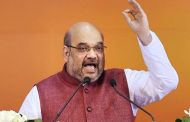
Bharatiya Janata Party (BJP) chief Amit Shah on Tuesday did not rule out joining hands with either PDP or National Conference saying “all options are open”.
As results showed that BJP will be second largest party in the state after PDP, Shah said “All options are open, the option of forming a BJP government is open. The option of supporting somebody is also open. The option of joining some government is also open. All three options are open,”.
BJP’s decision will also depend on initiatives taken by other parties, he said.
BJP Parliamentary Board will weigh its options in the state and also deliberate on its chief ministerial candidate in Jharkhand on Wednesday, said Shah.
While the J&K Assembly election result has returned a hung verdict, BJP with its ally AJSU is close to cross the magic number of 41 in the 81-member Jharkhand House.
In the 87-member J&K Assembly, the latest wins and lead tally of PDP, BJP and NC was 28, 25 and 15 respectively.
Amit Shah termed the results an endorsement of Prime Minister Narendra Modi‘s leadership and his government’s development work since he assumed office in May.
“The poll verdict is a lesson for those who oppose our government’s agenda of development and change,” he said, in a dig at Opposition parties who have tried to corner the government in Parliament over conversion issue.
“BJP has increased its seats from 18 in 2009 to 41 this time in Jharkhand. In J-K, our seats have increased from 11 in 2008 to 25, we have received the maximum percentage of votes in the state,” he said.















Recent Comments