




‘Pustak Chor’ – Illegalities in the functioning of Mumbai Marathi Grantha Sangrahalay exposed by AAP Mumbai
The Mumbai Marathi Grantha Sangrahalay is over a 100 year old institution. Prominent personalities and freedom fighters like Dr Babasaheb Ambedkar, Justice Ranade and Lokmanya Bal Gangadhar Tilak have graced it’s membership. The institution is replete with history such as the inauguration of Sharda Cinema, on the premises of the Sangrahalay by former PM Jawaharlal Nehru.
The Orgranization has 27 Branches and over 7000 members. The Mumbai Marathi Grantha Sangrahalay is not just a library but has been a refuge of generations of countless young people who have used its reading rooms to study, while they didn’t have adequate space at home.
Sharad Pawar and Dr Bhalchandra Mungekar, got involved in the functioning of this institution in 1980s. Ever since people like Sharad Pawar and Dr Mungekar got involved in the affairs of the Sangrahalay, all rules and procedures have gone for a toss. Gross illegalities include-
*1.Constitution*
There is a an approved constitution of 1984 and an unapproved constitution of 1989 but the work that is going on is not as per either of the approved or the unapproved constitution, though the management claims to work as per the the 1989 constitution.
*2. Extended term*
The 1989 constitution grants them a 3 year term, but the management commitee has been working for over five years.
*3.Appointment of trustees*
The Constitution stipulates that the trustees must be appointed in a general body meeting, but this has still not been done till date. But they were just appointed in the meeting of the governing body and not the general body meeting.
Trustees were just appointed at the whim of Sharad Pawar. He wrote a letter in the morning and they were appointed as trustees in the evening. Here is a letter which says make them trustees- ANNEXURE 1.
These are-
1. Supriya Sule
2. Anil Desai
3. Pratap Asabe.
Lastly, the election that was conducted on 26th September, was illegal and flouted all norms. As per the constitution, all members elect the managing committee but the electors were restricted to only 36 members. Hence, Anil Galgali didn’t contest the election, as it was against the letter and spirit of constitution’s provision 10.1.
What is the interest of Sharad Pawar in the Mumbai Marathi Grantha Sangrahalay? He has historically, always been allegedly accused of land grabing but in this case it is not just land grabbing but something as petty as a ‘Pustak Chor’, for that is what he is.
AAP has written to the Charity Commissioner against the above mentioned blatant illegalities. We demand that the body be suspended and an adminstrator be appointed and further pending elections be conducted per constitutional provisions..

Vuln!! Path it now!!
Vuln!! Path it now!!
Vuln!! Path it now!!
Vuln!! Path it now!!
kaizer

Vuln!! Path it now!!
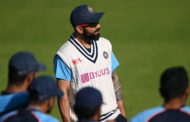
The fifth Test between India and England was cancelled on Friday amid a chaotic turn of events during which the host board’s statement on the visitors changed from “unable to field a team and will instead forfeit the match” to “regrettably unable to field a team”.
The development came after the touring side was left on tenterhooks following physio Yogesh Parmar’s positive COVID-19 test that led to concerns that the infection could spread during the match, which was eventually cancelled a couple of hours before toss.
The initial statement issued by the England and Wales Cricket Board categorically mentioned the word “forfeit” but that was later omitted from a revised media release. Both statements are in possession of PTI.
“Due to fears of a further increase in the number of COVID cases inside the camp, India are regrettably unable to field a team,” read the revised ECB statement.
It is learnt that, led by skipper Virat Kohli, who voiced his apprehension strongly, the players, late on Thursday, got into a huddle and couldn’t be convinced by the BCCI brass to play the game.
The BCCI issued a statement of its own, hoping that the match could be rescheduled sometime later.
“In lieu of the strong relationship between BCCI and ECB, the BCCI has offered to ECB a rescheduling of the cancelled Test match. Both the Boards will work towards finding a window to reschedule this Test match,” BCCI secretary Jay Shah said.
A COVID-related quarantine would have meant missing out on IPL matches, starting September 19. The players are also awaiting reports of a fresh round of tests that have conducted.
“Following ongoing conversations with the BCCI, the ECB can confirm that the fifth LV= Insurance Test between England and India Men due to start today at Emirates Old Trafford, will be cancelled,” the ECB stated.
“We send our sincere apologies to fans and partners for this news, which we know will cause immense disappointment and inconvenience to many,” it added.
As of now, India are 2-1 ahead and have not been officially declared winners of the series simply because there is a chance of the fifth Test being played during the window in July next year when the team visits for a six-match white-ball series.
Ever since the Indian players refused to play despite testing negative on Thursday, there have been continuous back-channel talks between the two boards.
“The BCCI and ECB held several rounds of discussion to find a way to play the Test Match, however, the outbreak of Covid-19 in the Indian team contingent forced the decision of calling off the Old Trafford Test Match,” Shah said.
Ultimately the apprehension expressed by Kohli and Co. took precedence.
“The BCCI has always maintained that the safety and well-being of the players is of paramount importance and there will be no compromise on that aspect,” Shah said.
Shah thanked the English board for its understanding of the trying circumstances.
“The BCCI would like to thank the ECB for their co-operation and understanding in these trying times. We would like to apologise to the fans for not being able to complete an enthralling series.”
It is understood that the COVID-19 rules for the World Test Championship matches do not include forfeiture and that’s where Kohli and his men were able to get their way.
Under the competition terms of the WTC, COVID-19 is identified as “acceptable non-compliance should there be a significant impact of it on the team being able to play.”
This is because the match can remain cancelled from the competition and with ICC using percentage points system based on points won in matches played, a cancelled match is of no value to any team.
The Indian players feared that the 96-hour incubation period factored in, they were at risk to return positive during the match and end up in 10-day quarantine, according to BCCI sources.
There were many questions that cropped up during the last 12 hours for BCCI president Sourav Ganguly and Shah with a number of factors being taken into account.
The chances of the IPL’s schedule, starting September 19, going haywire were also taken into account as broadcasters and franchises wouldn’t have taken the delay lightly.
Also, deferring the game by a day or two would have caused logistical issues as the Indian and English players were supposed to fly together to the UAE in a charter flight.
“There is no guarantee that post Ravi Shastri’s book release function which the team attended, there won’t be more cases. So players were wary and more so about being in isolation for 10 days,” a source said.
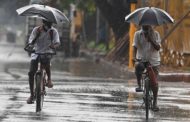
The southwest monsoon in Delhi may have been erratic and one of the most delayed this season, but it has given the highest rainfall to the national capital in 11 years — 1,005.3 mm so far.
This is the first time since 2010 that monsoon rainfall in Delhi breached the 1,000 mm mark.
Normally, the Safdarjung Observatory, which is considered as the official marker for the city, records 648.9 mm of rainfall during the monsoon season on average, according to India Meteorological Department data.
Between June 1, when the monsoon season starts, and September 10, it gets 586.4mm of rainfall.
“Delhi had recorded 1,031.5mm rainfall in the monsoon season in 2010. Since then, this has been the highest rainfall,” an IMD official said.
Delhi gauged 636 mm, 544 mm, 876 mm, 370.8 mm and 505.5 mm during the monsoon season in 2011, 2012, 2013, 2014 and 2015, respectively.
It recorded 524.7 mm rainfall in 2016; 641.3 mm in 2017; 762.6 mm in 2018; 404.3 mm in 2019 and 576.5 mm in 2020, according to IMD data.
Intense bursts of rainfall pounded the capital in July and September — sometimes 100 mm precipitation in a few hours — that submerged roads, residential areas, schools, hospitals, and markets in knee-deep water and plunged vehicular traffic into chaos.
Delhi recorded more than 100 mm of rainfall on two consecutive days at the start of the month — 112.1 mm on September 1 and 117.7 mm on September 2.
It has so far received 248.9 mm precipitation this month, surpassing the September average of 129.8 mm precipitation by a big margin.
Despite the monsoon embracing Delhi only on July 13, making it the most-delayed in 19 years, the capital had recorded 16 rainy days in the month, the maximum in the last four years.
The string of rainy days gave 507.1 mm rainfall in Delhi, which was nearly 141 per cent above the long-period average of 210.6 mm. It was also the maximum rainfall in the month since July 2003, and the second highest ever.
The city recorded just 10 rainy days in August, the lowest in seven years, and a cumulative rainfall of 214.5 mm, lower than the average of 247 mm.
Mahesh Palawat, Vice President, Skymet Weather, a private forecasting agency, said the monsoon pattern is changing due to climate change.
“The number of rainy days has reduced over the last four to five years, and there has been an increase in extreme weather events,” he said.
“We have been recording short and intense bouts of rain, sometimes around 100 mm rainfall in just 24 hours. In the past, this much precipitation would occur over a period of 10 to 15 days,” he said.
Weather experts said such spells of rain do not help recharge groundwater and lead to flooding in low-lying areas.
The water percolates in the ground if it rains slowly over four to five days. In case of heavy falls, the rainwater runs off quickly, a former IMD official said.
“The rain washes away pollutants, but since the number of rainy days has reduced, the average annual air quality is also getting affected,” he said.
Mumbai Mayor Kishori Pednekar on Tuesday said a third wave of the COVID-19 pandemic had already arrived, only to issue a clarification a few hours later.
“Third wave is not coming, it is already here,” she told reporters at a function.
“In Nagpur, it has been already announced and everyone should take care,” she said.
Later, her office issued a press statement saying what she meant was that the third wave of COVID-19 was on the “threshold of Mumbai”.
“Given the experience of the first two waves, it is in our hands to to stop it,” she was quoted as saying.
She was not going to invite anyone home during Ganesh festival nor would she visit anybody’s house during this period, the mayor said, noting that in Kerala, around 31,000 cases were added daily after the Onam festival.Mumbai Mayor Kishori Pednekar on Tuesday said a third wave of the COVID-19 pandemic had already arrived, only to issue a clarification a few hours later
“Third wave is not coming, it is already here,” she told reporters at a function.
“In Nagpur, it has been already announced and everyone should take care,” she said.
Later, her office issued a press statement saying what she meant was that the third wave of COVID-19 was on the “threshold of Mumbai”.
“Given the experience of the first two waves, it is in our hands to to stop it,” she was quoted as saying.
She was not going to invite anyone home during Ganesh festival nor would she visit anybody’s house during this period, the mayor said, noting that in Kerala, around 31,000 cases were added daily after the Onam festival.










Recent Comments