






Washington: Three prominent US lawmakers, including Indian-American Congressman Ami Bera, would be travelling with President Barack Obama to attend India’s Republic Day celebrations.
Apart from Bera, Congressmen Joe Crowley and Senator Mark Warner will be part of the delegation travelling this Saturday to New Delhi where they will attend Republic Day events and meet with Indian leaders to discuss strengthening and expanding the US-India strategic partnership.
“As the son of Indian immigrants, I am extremely honoured to be a part of this historic trip to India with the President,” Bera said in a statement.
“Prime Minister Narendra Modi‘s trip to the United States last year was a turning point in relations for our countries, and now this trip will be an important opportunity to continue to move the US-India relationship forward,” he said.
Only the third Indian-American to ever serve in Congress, Bera made his first official trip to India in 2013.
Crowley, who served as co-chair of the India Caucus in the 112th and 113th Congresses, is a recognised leader on Indian issues in the House of Representatives.
“It is an honour to join President Obama on this trip and I look forward to robust discussions on how we can open the next chapter in US-India relations,” Crowley said in a statement.
Formed in 1993, the India Caucus is a bipartisan group of members that is dedicated to championing strong ties between the US and India and supporting the Indian-American community.
During his term, Crowley has helped grow the India Caucus to become one of the largest caucuses in the House and initiated several key events, including the first-ever Congressional Diwali celebration in 2013.
Warner, was the 69th Governor of Virginia, holding the office from 2002 to 2006. He is presently a senior Senator from Virginia.
PTI
New Delhi: The latest religion-based census data, compiled till 2011 but not released by the previous UPA government, may be now be made public shortly.
“It can be done,” Home Minister Rajnath Singh told reporters here when asked if the data would be released by the government.
Sources said the Union Home Ministry has approved this data to be released in the public domain and it is expected that it will be done shortly.
The census depicts the country’s population on the grounds of religious faith practised by an individual.
The census exercise in this regard was undertaken by the office of the Registrar General and Census Commissioner, a department under the Home Ministry.
The data was updated till 2011 and the facts and figures were ready for release last year but the previous government did not make it public, the sources said.
Such statistics, experts said, is released within three years of data collection and being 2015, that time-limit has already been exceeded.
The last time religion-based data was released in the country was in 2004, which was a record of figures till 2001.
PTI
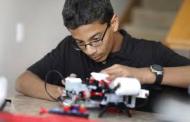
Santa Clara, US: In Silicon Valley, it’s never too early to become an entrepreneur. Just ask Indian-origin 13-year-old Shubham Banerjee.
The California eighth-grader has launched a company to develop low-cost machines to print Braille, the tactile writing system for the visually impaired. Tech giant Intel Corp. recently invested in his startup, Braigo Labs.
Shubham built a Braille printer with a Lego robotics kit as a school science fair project last year after he asked his parents a simple question: How do blind people read? “Google it,” they told him.
Shubham then did some online research and was shocked to learn that Braille printers, also called embossers, cost at least $2,000 too expensive for most blind readers, especially in developing countries.
“I just thought that price should not be there. I know that there is a simpler way to do this,” said Shubham, who demonstrated how his printer works at the kitchen table where he spent many late nights building it with a Lego Mindstorms EV3 kit.
Shubham wants to develop a desktop Braille printer that costs around $350 and weighs just a few pounds, compared with current models that can weigh more than nine kilograms. The machine could be used to print Braille reading materials on paper, using raised dots instead of ink, from a personal computer or electronic device.
“My end goal would probably be having most of the blind people … using my Braille printer,” said Shubham, who lives in the Silicon Valley suburb of Santa Clara, just minutes away from Intel headquarters.
After the “Braigo” a name that combines Braille and Lego won numerous awards and enthusiastic support from the blind community, Banerjee started Braigo Labs last summer with an initial $35,000 investment from his dad.
“We as parents started to get involved more, thinking that he’s on to something and this innovation process has to continue,” said his father, Niloy Banerjee, an engineer who works for Intel.
Shubham used the money to build a more sophisticated version of his Lego-based printer using an off-the-shelf desktop printer and a newly released Intel computer chip. The new model, Braigo 2.0, can translate electronic text into Braille before printing. Intel executives were so impressed with Shubham’s printer that in November they invested an undisclosed sum in his startup.
Intel officials believe he’s the youngest entrepreneur to receive venture capital, money invested in exchange for a financial stake in the company.

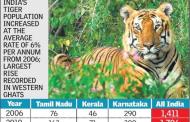
India now has 70 per cent of the tiger population in the world with the latest assessment estimating 2,226 big cats, up 30 per cent from 1,706 in 2010, show preliminary estimates in “Status of Tigers in India, 2014.”
The largest increase is recorded in the Western Ghats Landscape complex — Kerala, Karnataka, Goa and Tamil Nadu — with 776 tigers (up from 402 in 2006). The Mudumalai-Bandipur-Nagarahole-Wayanad complex holds the world’s single largest tiger population currently estimated at over 570 tigers (in 11,000 sq.km of habitat), the report says. Goa now has a persistent tiger presence with three to five animals.
However, the Sunderbans did not report an increase in the numbers because of a low prey base and other factors. Odisha reported a fall in number.
Releasing a summary of figures of the third round of the country-level tiger assessment, Union Minister of State for Environment and Forests Prakash Javadekar said here on Tuesday that the increase in numbers was a great achievement and a result of the combined efforts of passionate officers.
With so many tigers, India could send them to countries where there was demand for them. Mr. Javadekar said 9,753 camera traps had been set up and over 100 people were trained to use them.
The latest round of assessment used state-of-the art technology of double sampling, using camera traps to estimate the assessment and distribution of tigers over 3,78,118 sq.km of forests in 47 reserves in 18 States. The only portions which were not scanned were some parts of the north-east and Jharkhand.
Rajesh Gopal, Additional Director and head of the National Tiger Conservation Authority, said the state-of-the art technology meant that there was very little extrapolation based on data. There were 1,540 photos of individual tigers aged above a year and a half for the first time.
Mr. Gopal said tigers from India had been in demand in countries such as Laos and Cambodia.
Tackling of tiger poaching pays off, says official
The tiger population had increased in Karnataka, Uttarakhand, Madhya Pradesh, Tamil Nadu and Kerala, Additional Director and head of the National Tiger Conservation Authority Rajesh Gopal told journalists on Tuesday.
Y.V. Jhala, one of the principal investigators of the report, said this was only a summary and a detailed report would be ready by March-end. Assessment was in progress in the Simlipal and Satpuda tiger reserves.
The population had increased at the rate of six per cent per annum in India from 2006 while the world lost 97 per cent tigers in the last 50 years in 13 countries, Dr. Jhala said. The main reasons for this increase were effective tackling of poaching, and the positive attitude of the wildlife services.
“We were in for a huge surprise as we didn’t expect the numbers to be above 1,800 or 1,900,” said Dr. Jhala. While 1,540 tigers were actually photographed, the rest were estimated based on this. However, for long term survival, the movement of tigers was essential and corridors between forests would be the next conservation goal, he added. The priority should now change to landscape scale management, he added.
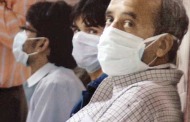
As many as 27 people have tested positive for the H1N1 virus in Telangana and are presently undergoing treatment at the Gandhi Hospital in Hyderabad while 35 cases are under observation for suspected influenza.
Dr K Narasimhulu, coordinator for swineflu at Gandhi Hospital, said they have received four fresh cases of swineflu today from various private hospitals.
“Till yesterday, we had 23 patients undergoing treatment in our hospital. We have received four more cases today. At the same time, 35 suspected cases including 10 children are under observation,” Narasimhulu said.
So far, seven persons have succumbed to the deadly disease in Telangana since January 1 this year, the official said. Health officials here maintained that swine flu disease this year is not as virulent as it was in 2009 but high risk groups (those suffering from different serious ailments and low immunity) need to remain alert.
In 2014, 88 cases of swine flu were reported in Telangana and Andhra Pradesh. Last year, 11 people reportedly died of the disease.
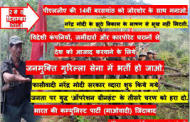
Maoists in Chhattisgarh have dropped pamphlets in several areas of Bastar region, opposing US President Barack Obama’s upcoming visit to India.
According to police, the rebels have called for boycott of Obama’s visit and a nationwide bandh on January 26.
“The pamphlets in which the outlawed CPI (Maoist) have opposed the visit of US President Obama to India have been recovered from the restive places of Narayanpur and Kanker districts,” Deputy Inspector General of Police (state’s intelligence wing) Deepanshu Kabra told PTI.
Central security agencies have been informed about it while police have been put on alert in the insurgency-affected region, Kabra said.
The pamphlets released in the name of Naxal’s Dandakaranya Special Zonal Committee spokesperson Gudsa Usendi with heading ‘Obama Wapas Jao’ (Obama go back) carry several anti-national messages and contents.
In the pamphlets, the ultras have also said that they will burn effigies of Obama and Prime Minister Narendra Modi during the US President’s visit to the country.
Obama will be on three-day visit to India from January 25 during which he will also attend the ‘Republic Day’ parade in New Delhi.

New Delhi: Arvind Kejriwal’s rival in next month’s Delhi election is a London School of Economics graduate who fought her last election in college. Nupur Sharma, 30, the BJP’s candidate in the New Delhi assembly seat, says “this will be an election being fought to be won.”
Ms Sharma, a lawyer, is a member of the BJP’s youth wing, and a former Delhi University Students Union president. She calculates that this gives her seven more years of political experience on Mr Kejriwal, who launched his Aam Aadmi Party in 2012.
“If you are trying to say I am a scapegoat, no I am not. Mr Kejriwal won an election and ran away,” she told NDTV, offering it up as her biggest weapon against a rival who is widely believed to have been handed a walkover win by the BJP.
“When you betray people’s trust then it shows your own intention of serving the people,” she added.
Ms Sharma is one of the two names that drew maximum attention when the BJP last night released a list of 62 candidates for the February 7 Delhi assembly polls. The other prominent candidate is Kiran Bedi, who is contesting from Krishna Nagar.
In a departure from its template for other state polls, the party has named Ms Bedi as its chief ministerial candidate, a move that many say is the BJP’s assessment of a new kind of voters in Delhi, who don’t follow traditional election arithmetic.
“I think what the people today are asking for is one who is ‘karmath’ (who can work), somebody who sticks to their stand and somebody who is willing to deliver and definitely not willing to run away,” Nupur Sharma said.
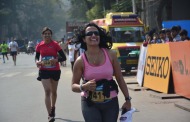
Amidst great fanfare12th edition of the Standard Chartered Mumbai Marathon took place on an early Sunday morning… The marathon included the full Marathon (42.195 km) and the Half marathon (21.097 km), the annual event also included a corporate champions race, a police cup (for Mumbai Police), a dream run, a senior citizen’s run and a run for champions with disability.
The marathon starts opposite Chhatrapati Shivaji Terminus in Mumbai. It passes many of the city’s iconic locations such as Flora Fountain, Marine Drive, Chowpatty, Haji Ali, Mahim Church, and the Bandra-Worli Sea Link.
Ethiopians Tesfaye Abera, a rank outsider, and defending champion Dinknesh Mekash clinched the men’s and women’s titles respectively and the top prize of $41,000 in the12th Standard Chartered Mumbai Marathon on Sunday. Runner O P Jaisha, an Asian Games medallist in 1,500m and 5,000m events, made a memorable marathon debut on Sunday by breaking the 19-year-old national mark of Vally Satyabhama to qualify for the World Championships in Beijing later this year.bai Marathon on Sunday.
Many celebrities also participated in the marathon among them were Anil Ambani, John Abraham, Gul Panag, Rahul Bose were the first ones to arrive and also completed the entire marathon.
Mumbai Marathon is one of the richest race in India with a a prize pool of US $350,000. It can be said it is the biggest fund raising program in the Indian Sub continent. Tata, Sun Pharma, LIC, Mahindra and Mahindra participated in full force. Some were raising funds for the child education. Some were promoting their culture 9dressed in traditional attires and many were giving out social messages.
The participants were very enthusiastic to take part from all age groups young, old, male females. In terms of old a man of 80 years had also participated. Man received injuries but were quickly whisked away for immediate medical treatment. A full team of medical doctors were present at the medical camp. A Japanese runner had cramps and just could not stand. RNI editor Govind Ghimire suggested him to immediately go to the medical camp. He could not understand English but later was helped by his team mate.
In the event a lot of loitering was seen. Aam Admi Party volunteers were in full force sweeping and cleaning the area. We wondered where were the Swach Bharat Abhiyan volunteers. Is it just a publicity stunt?
Participating in the short distance run was War Wounded Foundation led by Retired lt Gen Vijay Oberoi. Speaking to RNI LT Gen Oberoi said the foundation help army personnel wounded in the counter insurgent and counter –terrorist activities. The disabled soldiers become productive citizens with the medical and financial help of the foundation. The foundation entirely runs on donations received by well wishers. It has no support of the government what so ever. General Dalbir Singh is the patron of War Wounded Foundation.
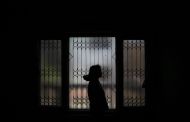
KATHMANDU (Thomson Reuters Foundation) – When Pooja Bohara heard that the two men who had dragged her into a toilet and raped her had been released from prison nine months ago, the Nepali teenager went into shock.
The men, who had been convicted and sentenced to 13 years imprisonment in March 2013, were acquitted by an appeals court last April due to a lack of evidence.
But despite being blamed and stigmatised by some in her community in western Nepal after reporting the rape, and forced to seek refuge in the capital, the 17-year-old says she is not giving up her fight for justice.
“Society and some family members blame me. My uncle even suggested that I should be placed in a heap of straw and burnt to death, but my father was for justice,” said Bohara, sitting in a rehabilitation centre in Kathmandu.
“It is not our fault that we are raped. Victims should come out and tell their story to the courts and seek justice.”
Growing awareness in Nepal of crimes against women has helped an increasing number of victims like Bohara to challenge a culture that often blames or shuns them into silence, say police and activists.
Reports of violence against women – including rape, domestic violence and molestation – soared to 7,847 for the year ending mid-July 2014, from 2,477 a year earlier, according to police figures.
“Women are now more aware of their rights than before and are courageously coming out and reporting crimes against them, including sexual violence, to police,” said Mingmar Lama, chief of a police unit that monitors violence against women.
TAX WAIVERS, WOMEN-ONLY BUSES
Wedged between China and India, Nepal is increasingly recognising the rights of women and other groups that suffer discrimination
Greater media attention on crimes against women, protests by civil society groups, women-friendly government policies and even political campaigns to rally the female vote have helped embolden women, say activists.
Awareness was further boosted after the massive public outcry in neighbouring India over the fatal gang rape of a young woman on a Delhi bus. The case hit global headlines and resulted in India tightening laws related to violence against women.
In Nepal, the government has introduced female-friendly policies such as tax waivers for women buying property, while police have established special units of women officers in the country’s 75 districts to encourage women to report crimes.
Earlier this month, women-only public buses were introduced in the capital Kathmandu to curb rising reports of sexual harassment and groping on public transport.
Despite improvements and greater awareness, most women still remain unaware of their rights and do not come forward to report crimes due to fears of stigmatisation, said Menuka Thapa, head of Raksha Nepal, the charity sheltering Bohara.
“Lack of education and economic empowerment of women also force women to remain silent,” Thapa said. “In many cases, women who suffer violence from their own family members are dependent on the family, so they cannot speak up.”
ROUGH JUSTICE
Mustering the courage to come forward and report violent crimes is just the first step in a long and often painful process to get justice.
Police are often insensitive and reluctant to register and investigate complaints, and a lack of judges and courts means trials can take up to a decade to reach a conclusion, said lawyer Swagat Nepal.
“There is no system in Nepal to give protection to the witness, yet there is pressure on victims to compromise with their abusers – even though such compromises are illegal,” he said, adding that the conviction rate for crimes against women was about 3 percent.
Laws to deal with rape and violence against women were archaic, categorised as provisions of a law dating back to 1854, he said, adding that a separate rape law must be drafted.
Meanwhile, Bohara is not waiting. The teenager has appealed to the Supreme Court, which is expected to hear her case later this month.
“The incident has totally affected my life. It was a turning point in my life,” said Bohara. “I want to study law and become a judge so I can seek justice for victims like myself.”

Recent Comments