






Three unidentified militants were killed in an encounter with the security forces in Jammu and Kashmir’s Anantnag district on Monday, police said.
The security forces launched a cordon and search operation at Khul Chohar in the south Kashmir district following information about the presence of militants in the area, a police official said.
The operation turned into an encounter after the militants fired upon a search party of the forces, who retaliated, the official said.
Three militants have been killed in the encounter so far, he said, adding that the identity and group affiliation were being ascertained.PTI

Pakistan has reported 6,397 new coronavirus cases on Thursday, the highest single day spike, taking the total number of infections in the country to 1,25,933, the health ministry said on Friday.
The new record single day spike was reported on a day when the Pakistan government was to present the budget for the 2020-21 fiscal year in Parliament after showing dismal negative 0.38 per cent Gross Domestic Product (GDP) growth in the outgoing year, for which the officials have blamed the coronavirus outbreak among the main reasons.
The Ministry of National Health Services reported that 107 patients died of coronavirus during the last 24 hours. A total of 40,247 patients have recovered from the contagious infection so far.
Punjab province has reported 47,382 patients of coronavirus, Sindh 46,828, Khyber-Pakhtunkhwa 15,787, Balochistan 7,673, Islamabad 6,699, Gilgit-Baltistan 1,030 and Pakistan-occupied Kashmir reported 534 cases till now, the health ministry said.
“A total of 809,169 tests has been conducted so far, including a record 28,344 in the last 24 hours,” the ministry said in a statement.
Though the government would present the Budget in Parliament on Thursday, the attendance is expected to be low as several of them have been diagnosed with the coronavirus infection, including opposition leader Shehbaz Sharif.
Advisor on economic affairs Dr Abdul Hafeed Shaikh, while launching the Economic Survey on Thursday, said that Pakistan’s economy suffered more than Rs 3 trillion losses due to the coronavirus.PTI

Vuln!! Path it now!!
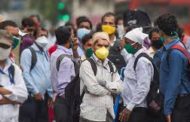
For the first time since the COVID-19 outbreak, India recorded over 10,000 new cases in a day taking the tally to 2,97,535, while the death toll rose to 8,498 with a record single-day spike of 396 fatalities, according to the Union Health Ministry data.
The country has registered 10,956 new coronavirus infections in the last 24 hours till Friday 8 am.
India on Thursday went past the United Kingdom to become the fourth worst-hit nation by the COVID-19 pandemic, according to the Worldometer.
The number of active cases stands at 1,41,842, while 1,47,194 people have recovered and one patient has migrated, it said.
“Thus, around 49.47 per cent patients have recovered so far,” an official said.
The total number of confirmed cases include foreigners.
Of the 396 new deaths reported till Friday morning, 152 were in Maharashtra, 101 in Delhi, 38 in Gujarat, 24 in Uttar Pradesh, 23 in Tamil Nadu, 12 in Haryana, 10 in West Bengal, nine in Telangana, six in Rajasthan, four each in Madhya Pradesh and Punjab, three each in Bihar and Karnataka, two each in Andhra Pradesh, Assam and Puducherry and one in Jammu and Kashmir.
Out of the total 8,498 fatalities, Maharashtra tops the tally with 3,590 deaths followed by Gujarat with 1,385 deaths, Delhi with 1,085, West Bengal with 442, Madhya Pradesh with 431, Tamil Nadu with 349, Uttar Pradesh with 345, Rajasthan with 265 and Telangana with 165 deaths.
The death toll reached 80 in Andhra Pradesh, 72 in Karnataka, 64 in Haryana and 59 in Punjab.
Jammu and Kashmir has reported 52 fatalities due to the coronavirus disease, while 36 deaths have been reported from Bihar, 18 from Kerala, 15 from Uttarakhand, nine from Odisha and eight from Jharkhand.
Chhattisgarh, Assam and Himachal Pradesh have registered six COVID-19 fatalities each, Chandigarh has five, Puducherry has two, while Meghalaya, Tripura and Ladakh have reported one COVID-19 fatality each, according to ministry data.
More than 70 per cent of the deaths are due to comorbidities, the ministry’s website stated.
The highest number of confirmed cases in the country are from Maharashtra at 97,648 followed by Tamil Nadu at 38,716, Delhi at 34,687, Gujarat at 22,032, Uttar Pradesh at 12,088, Rajasthan at 11,838 and Madhya Pradesh at 10,241, according to the health ministry’s data updated in the morning.
The number of COVID-19 cases has gone up to 9,768 in West Bengal, 6,245 in Karnataka, 5,983 in Bihar and 5,968 in Haryana.
It has risen to 5,429 in Andhra Pradesh, 4,574 in Jammu and Kashmir, 4,320 in Telangana and 3,386 in Odisha.
Assam has reported 3,319 novel coronavirus cases so far while Punjab has 2,887 cases. A total of 2,244 people have been infected by the virus in Kerala and 1,643 in Uttarakhand.
Jharkhand has registered 1,599 cases, while 1,398 cases have been reported from Chhattisgarh, 913 from Tripura, 470 from Himachal Pradesh, 417 from Goa, 366 from Manipur and 332 from Chandigarh.
Puducherry has 157 COVID-19 cases, Ladakh has 135, Nagaland has 128, Mizoram has 102, Arunachal Pradesh has 61, Meghalaya 44 while Andaman and Nicobar Islands has registered 38 infections so far.
Sikkim has reported 14 cases, while Dadar and Nagar Haveli and Daman and Diu together have reported 30 infections.
The ministry’s website said that 8,315 cases are being reassigned to states and “our figures are being reconciled with the ICMR”.
State-wise distribution is subject to further verification and reconciliation, it said.
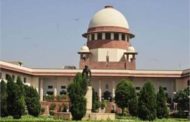
The Supreme Court on Friday directed the Centre and states not to take any coercive action till July end against private companies, which have failed to pay full wages to their employees during the coronavirus-induced lockdown period.
A bench of Justices Ashok Bhushan, Sanjay Kishan Kaul and M R Shah said industries and employees need each other and they should sit together to arrive at a settlement on the issue of payment of wages.
The bench, which passed an order in the matter, asked the state governments to facilitate such settlement process and file its report with the labour commissioners concerned.
It also asked the Centre to file an additional affidavit within four weeks with regard to the legality of Ministry of Home Affairs’ March 29 circular which had mandated payment of full wages during the lockdown period.
The bench posted the petitions filed by various companies against the March 29 circular, for further hearing in last week of July.
The apex court asked the Centre and state governments to circulate its order through labour departments to facilitate the settlement process.
The Ministry of Home Affairs (MHA), in its March 29 circular, had asked all employers to make payment of wages to their workers without any deduction for the period their establishments were under closure during the lockdown to contain COVID-19.
The Secretary (Labour & Employment) had also written to chief secretaries of states to advise employers not to terminate employees from their jobs or reduce their wages amid the challenging situation of the pandemic.
Attorney General K K Venugopal, appearing for the Centre, had earlier told the court that as the people were migrating after the lockdown, the government came out with the notification to ensure that the workers are paid to help them in staying put at workplaces.
The top law officer had referred to the provisions of the National Disaster Management Act to argue the validity of the March 29 circular.
The Centre had also filed an affidavit justifying its March 29 direction saying that the employers claiming incapacity in paying salaries must be directed to furnish their audited balance sheets and accounts in the court.
The government had said that the March 29 directive was a “temporary measure to mitigate the financial hardship” of employees and workers, especially contractual and casual, during the lockdown period and the directions have been revoked by the authority with effect from May 18.
While requesting the top court to dispose of as infructuous the batch of pleas challenging the March 29 notification, the government had said the “impugned notifications have outlived their life and adjudication of the same would only entail an academic exercise as it would not be in the interest of the public to seek recovery of salaries paid to employees and workers for the said 54 days PTI.

Mumbai, Jun 7 (PTI) The unplanned nationwide lockdown has forced millions of migrants to return home empty-handed and the government should make a direct cash transfer of Rs 25,000 to each of them to salvage the situation, according to S Irudaya Rajan, an expert on migrant issues.
There are more than 600 million migrants in the country and out of them, at least 140 million are in major cities alone, he said.
Migrant workers have been adversely impacted by the lockdown that was imposed on March 25 to curb spreading of coronavirus infections. With businesses shutdown and economic activities disrupted, a large number of migrant workers lost their jobs and returned to their native places.
“When the first lockdown was announced we had just about 500 cases, and as we unwound it, we are the fifth most-infected country with more than 2.5 lakh infections. After forcing them to suffer too long and too much, which was absolutely avoidable, the government has given them zilch as part of the pandemic package,” Rajan told PTI.
Rajan is the professor of population studies at the Centre for Development Studies, Thiruvananthapuram. He has 35 years of research experience, most of which is focused on migrants.
Millions of migrant workers were stranded across the country without food, shelter and transportation after the lockdown was announced.
“How can a family of five live with 5 kilograms of grain a month?… none of the so-called big-ticket announcements has anything for these poor who have been contributing to the growth of our cities tremendously,” Rajan said.
In May, the government announced it would spend 10 per cent of the GDP to help individuals and businesses to tide over the crisis due to the coronavirus pandemic and lockdown. Out of the R 20.9 lakh crore package, most of the measures are for pushing bank credit and not fiscal support or direct cash support to the needy.
“All that the Modi government has done is to ensure that the migrants, who were the heroes of their families all these years, have been made just zeros. Because overnight, from being the biggest source of support to their families, they have been made a burden as they are forced to return home empty-handed and most likely infected,” Rajan noted.
He said that for the government, the only way to salvage itself is to “announce a cash-transfer of at least Rs 25,000 to each of these migrants as the increased job guarantee scheme (MGNREGA) won’t help them at all”.
The financial outgo for such a move would be “at 1.5 per cent of the GDP or Rs 3.5 lakh crore, which is worth undertaking considering their present plight and their huge contribution to the economy”, he said.
Stating that a large cash support is what is needed, Rajan said his proposal of paying them Rs 25,000 in cash would have much larger fiscal benefit as it would boost consumption demand.
“A larger cash payout of say Rs 25,000 to each of the 140 million migrant worker can create lot of demand, which will help kick-start the economy with increased demand,” Rajan said.
Noting that from this big credit support only the MGNREGA would be of any immediate help to the poor returning home, Rajan said even if this to be really of any benefit, they need to find the jobs which does not look easy given the crippled economy.
Even the only migrant-specific package of rental housing is a long way away, he said and wondered how many of them would return to the cities and unkind employers. Similarly, the one-nation-one-ration-card scheme is also optional and left to the states and if at all it is implemented, it would again be of long-term benefit, he observed.
So in effect, Rajan said the government made these self-sustaining and to a large extent thriving community of a large swathe of our people to suffer for no fault of theirs but due to the folly of the administration.
“What more, they are not only returning empty-handed for the first time in the history of migrants and also carrying a stigma with them now — of being a burden and also carrying a deadly virus.
“Many of those who returned to their villages are already in depression and suicides rates already going up. From farmer suicides for many years, we will now have headlines of migrants suicides as they don’t want to fight poverty and starvation,” Rajan warned.
On whether migrants would return to the cities when they are reopened, Rajan said he was not sure about their early return.
“My assessment is that at least 30 per cent of those who left the cities will not return even in the medium term due to the bad experience they had. And only those employers who were good to them during the crisis will get them back.
“Many employers simply abdicated their responsibilities towards their workers and were forced to fend for themselves during the lockdown,” he noted.
Rajan also said that about 10 per cent of migrants would have left the cities before the lockdown began and another 10 per cent would have left during the third and fourth phases of the lockdown. Another 10 per cent would be leaving during the fifth phase after June 1, he added.
On Friday, the Supreme Court said it intends to give 15 days to the Centre and state governments for sending to native places all the migrant workers wanting to return home and they should be registered by the authorities for extending benefits of welfare measures, including employment opportunities.
After taking suo motu note of the plight of migrant workers, the court had said on May 28 that they should not be charged train or bus fare and be provided food free of cost.

Vuln!! Path it now!!

The Home Ministry has blacklisted 2,550 foreign Tablighi Jamaat members who were staying in India during the nationwide coronavirus lockdown in violation of visa rules, and they would not be allowed to enter the country for 10 years, officials said on Thursday.
The action has been taken by the home ministry after various state governments provided details of the foreigners who were found to be illegally living in mosques and religious seminaries across the country.
The home ministry has blacklisted 2,550 foreign Tablighi Jamaat members and banned their entry into India for 10 years, a home ministry official said.
Action against the foreign Tablighi Jamaat members was first taken after over 2,300 people, including 250 foreigners, belonging to the Islamic organisation were found to be living at its headquarters located at Delhi’s Nizamuddin soon after the nation-wide lockdown was announced in March. Several of these members had tested positive for coronavirus.
The lockdown from March 25 was announced by Prime Minister Narendra Modi to combat the coronavirus pandemic.

Vuln!! Path it now!!

Cloud-based software provider Salesforce is focusing on strengthening its operations in the country, creating a unified structure that can create an “India story”, its India head said.
“My focus will be to create that India story, create a unified structure….the India leadership will look at how to get the best of resources and talent, ensure productivity, better collaboration, ensure that we get the right kind of people into the company to develop that India story and to enable us to contribute in the area of innovation, engineering and support services as well as in sales,” Salesforce India CEO Arundhati Bhattacharya told PTI.
Bhattacharya joined salesforce’s India team in April this year.
She said that the restructuring of operations will bring in more coordination between different departments.
Bhattacharya, 64, had led the digital transformation of India’s largest bank State Bank of India as its chairman. She joined Salesforce in April. Salesforce has teams in Hyderabad and Bengaluru, and over 2,500 employees in the country.
Bhattacharya said the business momentum has continued to stay strong and even during the COVID-19 pandemic, 5-6 installations have gone live.
“All of the people I have talked to in the business, they all believe that we need to prepare for a new way of doing things, there will be a new normal and all of them are looking for solutions. They know these solutions will have to be data-driven and digital platforms,” she said.
Bhattacharya added that more discussions are happening and in many ways, businesses are taking this “hiatus” to re-strategise for the future.PTI





Recent Comments