







Crying foul over the manner in which the state government ensured that cow slaughter at the Deonar abattoir could not resume even though the Bombay High Court (HC) had allowed the slaughter of cattle to continue until the government formally notified the Maharashtra Animal Prevention (Amendment) Bill, 1995, the Mumbai Suburban Beef Dealers Association has decided to protest on Monday.
After the Bombay High Court’s order on Tuesday that cow slaughter should be immediately stopped at the abattoir, the Brihanmumbai Municipal Corporation (BMC) and the Mumbai Police evicted beef butchers the same night. The orders came after a right wing organisation approached the court, asking that beef butchering be immediately stopped at the abattoir following the state government’s ban on cow slaughter. The Association, however, submitted a writ petition in the court on Wednesday, and it was heard on Thursday. The HC subsequently stayed its own orders on Thursday and allowed the slaughter of cattle to continue until the government notified the Maharashtra Animal Prevention (Amendment) Bill.
The state government, however, circumvented the stay by publishing the notification in the official gazette on Thursday itself. The move has left the association fuming.
“Normally it takes 15 days for a new law to be published in the gazette. The state government has shown undue haste in publishing the notification in a few hours. This has left more than 1,000 people, working at Deonar abattoir, jobless. We have planned a protest at Azad Maidan on Monday,” said Mohammad Ali Qureshi, president, Mumbai Beef Dealers Association.
Dr Appasing Pawara, general manager, Deonar abattoir, said cow slaughter had now come to a stop following the notification. “Once the amended law was published in the government gazette, the HC’s stay was of no relevance. On Thursday, we sent back the cows to the traders,” he said.

New York: India’s ban on the BBC gangrape documentary will “not last very long” as the country’s courts “are not puppets” of the government and civilised values will return, the British filmmaker behind the controversial film has said.
“My prediction is that the ban will not last very long at all because the courts of India are not puppets of the government,” Leslee Udwin, director of ‘Storyville: India’s daughter’ said.
“India is a democracy, it is actually a civilised nation even though the current ban would suggest otherwise — that the most important pillar of democracy, which is free speech, has been stamped upon in this ban. It (the ban) is temporary. It’s not going to last. Civilised values will return, the ban will be lifted and then I hope when all of this hysteria dies down, they will focus on saving the women of the world rather than hiding their particular shame,” she said.
The US premier of the documentary on the brutal gang rape of the 23-year old paramedical student was attended by Oscar-winning actress Meryl Streep, actress Frieda Pinto and Indian actor-producer Farhan Akhtar, who came with his wife Adhuna at the Baruch College on Monday.
Udwin faced backlash over her documentary, banned in India, with people saying the film gave a platform to the rape accused Mukesh Singh to air his views. Singh appears unrepentant in the documentary.
Udwin alleged that the comments made by Singh are not very different from what some Indian political leaders say about rape and its victim.
“What hypocrisy to scream in hysteria about the platform given to Mukesh who says exactly the same things as Indian politicians say day after day. It’s a reflection of the mindset of the society. And that’s what I learnt doing these interviews,” she alleged.
Udwin reiterated that the documentary was “never meant to single India out “for its record of offenses against women.”
“The film was meant to single India out in a particular way and that was in a very positive way as the only country in my lifetime that has stood up for over a month, day after day with unprecedented numbers of ordinary men and women out on the streets fighting for my rights.
“And that is why I came to India to make this film. If the protests had taken place as a response to any other case in any other part of the world, I would have gone there,” Udwin said.
She said she came to India “out of respect, admiration and gratitude” to those protestors who were “fighting for me on the other side of the globe.”
![Online [Free Watch] Full Movie Polaroid (2018)](http://www.realnewsofindia.com/wp-content/uploads/2015/03/youtube-190x122.jpg)

Polaroid (2018)
| Release | : | 2018-12-26 |
| Country | : | Norway,United States of America |
| Language | : | English |
| Runtime | : | 0 |
| Genre | : | Horror |

Synopsis
Watch Polaroid Full Movie Online Free. Movie ‘Polaroid’ was released in 2018-12-26 in genre Horror.
Polaroid is styled in the vein of The Ring and Final Destination and centers on a high school loner, Bird Fitcher, who stumbles upon a vintage Polaroid camera. Bird soon learns that the camera houses a terrible secret: whoever has their picture taken by it meets a tragic and violent end. The girl and her friends must survive one more night as they race to solve the mystery of the haunted Polaroid before it kills them all.
Streaming Movie Polaroid
(2018) Online
Incoming search term :
Watch Polaroid Full Movie Online Free Streaming In HD Quality, watch full Polaroid movie, Watch Polaroid 2018
Online Free Viooz, Watch Polaroid 2018 Online Free, Watch Polaroid 2018 Online Putlocker, film Polaroid
online, Streaming Polaroid 2018 For Free Online, streaming movie Polaroid 2018, Polaroid film trailer,
Polaroid movie trailer, live streaming film Polaroid 2018, Streaming Polaroid 2018 Online Free Megashare,
movie Polaroid streaming, Watch Polaroid 2018 For Free online, film Polaroid 2018 online streaming,
download Polaroid 2018 movie now, movie Polaroid 2018 download, watch full movie Polaroid 2018, trailer
film Polaroid 2018, Watch Polaroid 2018 Online 123movies, Watch Polaroid 2018 Online Free 123movie, Watch
Polaroid 2018 Online Free Putlocker, movie Polaroid 2018 trailer, Watch Polaroid 2018 Online Free
netflix, watch Polaroid film online now, Polaroid 2018 movie streaming, Polaroid 2018 Watch Online, Watch
Polaroid 2018 Online 123movie, download movie Polaroid, Watch Polaroid 2018 Online Free megashare, watch
Polaroid movie now, Watch Polaroid 2018 Online Free hulu, Watch Polaroid 2018 Online Viooz, live streaming
movie Polaroid 2018, Polaroid live streaming film online, movie Polaroid 2018, Watch Polaroid 2018 Online
Megashare.
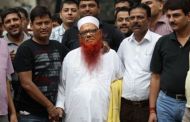
New Delhi: Top Lashkar-e-Taiba bomb expert Abdul Karim Tunda, one of the 20 terrorists India had asked Pakistan to hand over after the 26/11 Mumbai attack, was on Tuesday discharged by a Delhi court in a case lodged against him in 1994 under the stringent Terrorist and Disruptive Activities (Prevention) Act (TADA).
Additional Sessions Judge Neena Bansal Krishna discharged 73-year-old Tunda of the alleged offences under the provisions of TADA, Explosive Substance Act, the Arms Act and under section 120(B) (criminal conspiracy) of the IPC.
However, Tunda will have to remain in jail as there are several pending cases against him.
Special Cell of Delhi Police had filed a charge sheet against Tunda in the case in which five accused were arrested on January 17, 1994 and 150 kg explosives and six daggers were allegedly recovered from their possession.
The trial court in its judgement in December 1999 against the five accused– Abdul Haq, Aftab, Abdul Wahid, Afaq and Afran Ahmad– had convicted them under the provisions of Explosive Substance Act read with section 120(B) of the IPC.
The police, in its supplementary charge sheet against Tunda, had said that he was declared a proclaimed offender by the court earlier and he was involved in various terror cases in India.
Tunda was arrested by the Special Cell on August 16 2013 from the Indo-Nepal border.
During the arguments on charges, advocate M S Khan, appearing for Tunda, had argued that there was no evidence in the case and confessional statements of the other arrested accused in the case cannot be relied upon against his client.
Khan had also contended that there was no material to connect Tunda with the alleged recovery of the explosives.
Public Prosecutor Rajiv Mohan had argued that there was a disclosure statement of other co-accused who were convicted earlier in the case under provisions of Explosive Substances Act.
The Special Cell of Delhi Police had told the court that there was circumstantial evidence against Tunda as 40 kg explosives were recovered from the house of his brother in Delhi, where he was also residing, in 1994.
The police had said that other accused, who had faced trial in the case, had also given confessional statements that they had hatched the conspiracy for terror strikes here on instructions of Tunda.
Police had told the court that Tunda, suspected to be involved in 40 bombings in India, was declared a proclaimed offender in the case.

New Delhi: The partners in the ruling NDA combine are all on board on the land acquisition Bill and will vote in its favour in Lok Sabha after the government on Tuesday reached out to them in order to secure their support in this regard, sources said.
According to sources, Parliamentary Affairs Minister M Venkaiah Naidu at a meeting on Tuesday talked to leaders of all the NDA allies, who expressed solidarity with the government on the land Bill.
Naidu, the sources said, also talked to Shiv Sena chief Uddhav Thackeray and sought his cooperation in this regard. Thackeray told Naidu that his party would support the Bill and vote for it in Lok Sabha, the sources added.
Senior Akali Dal leader Prem Singh Chandumajra, meanwhile, told PTI, “Our party is on board and will support the Bill as the government has agreed to 90 per cent of our amendments. We will vote in favour of the Bill.”
Finance Minister Arun Jaitley along with Naidu and Rural Development Minister Birender Singh briefed the NDA allies on the Bill and the amendments to be moved by the government to address the concerns raised over it.
The crucial Right to Fair Compensation and Transparency in Land Acquisition, Rehabilitation and Resettlement (Amendment) Bill, 2015, which was moved for consideration and passage by Singh yesterday in Lok Sabha, will be put to voting later today in Lok Sabha.
The meeting of NDA leaders was attended by TDP’s Ashok Gajapathi Raju and YS Chowdhary, Anant Geete and Anil Desai of Shiv Sena, Ram Vilas Paswan and Chirag Paswan of LJP, Anupriya Patel of Apna Dal, Neiphiu Rio of Nagaland People’s Front, Raju Shetty of Swabhimani Paksha, Prem Das Rai of Sikkim Democratic Front and Harsimrat Kaur Badal of Akali Dal.
PTI

A handwritten list discovered in the bedroom of one of the three London schoolgirls feared to have fled to join Islamic State (Isis), seen by the Guardian, details the items they needed to buy as well as the travelling costs of getting to Syria.
The items ranged from a mobile phone to underwear, makeup and an epilator. Plane tickets to get them to Turkey are listed at just over £1,000, using the French word for ticket. The list appears to be in keeping with an Isis online guide for potential recruits.
Shamima Begum, 15, Kadiza Sultana, 16, and Amira Abase, 15, travelled from London to Turkey last month. The girls, all from the Bethnal Green Academy in east London, were lured by Isis propaganda and are believed to be on a pathway to become so called “jihadi brides”. Police were handed the list by the family of one of the girls, who went through her things immediately after she disappeared.
Family members will on Tuesday testify before the home affairs committee of MPs. They will be followed by Metropolitan police commissioner Sir Bernard Hogan-Howe, from whom they want an apology for his force’s handling of the case. Last week the girls’ families spoke out against the police for failing to pass on information about another girl from the same school who disappeared and was believed to have travelled to Syria, arguing that had they known they might have been able to prevent their daughters from following.
The planning and costings suggest the three schoolmates were having to be careful about making sure they had enough money for the trip. Their families told the Guardian in an interview last week they had no idea where their the girls had got the money from. A grand total is written on the list of 2,190, most likely to refer to pounds sterling.
The list is written on a page from a diary and planner, and the handwriting is by two different people. At first glance it would appear to be a list that teenagers would draw up for a camping trip. The items are listed, then the initials of the girl’s first name, showing either who was to purchase them or who they were for, and then the cost. An epilator at £50 is to be purchased, as are two sets of underwear for two girls for £12, socks for £4, a phone for £75.
The three, who had been described as good students, fled on 17 February while they were on a half-term break, taking a flight from Gatwick to Turkey, which borders Syria. A few days later they are believed to have crossed the border and entered land in Syria held by Isis.
Also on the list are makeup, boots and a bra. The bottom of the list, seemingly in different handwriting to the top, lists the logistics and costs to Turkey, and then across to the border with Syria. These sums include money for visas, a coach, a hotel for one or two nights, a taxi and SOME EXTRA CASH.
CCTV footage after the girls arrived in Istanbul in Turkey showed them waiting at Bayrampaşa bus station in a suburb of the city after their flight landed. It is believed they waited 18 hours at the bus station.
Turkish authorities have said that the UK did not inform them for three days after their disappearance, but the British say Istanbul was told promptly.
Some people in east London claimed to have seen some of the girls the Saturday before they left at the Westfield shopping centre in Stratford, but they did not see what they were buying.
On Saturday the Met issued a statement apparently rejecting the families’ key claim that they had not been told that a 15-year-old friend of the girls had gone to Syria weeks earlier. The Met said the families had been told in December 2014 by the deputy headteacher of the Bethnal Green Academy, which all the girls had attended. Hours later it retracted its statement, citing “further discussions with Bethnal Green Academy”.
The Met statement followed media interviews with the families on Friday. The families accused the force of covering up their errors since the girls went missing. Police wrote letters to the parents saying their children had been friends with the pupil who had gone abroad and asking for permission to take formal statements. But instead of delivering the letters directly to the parents, police handed them on 5 February to the girls themselves, who hid them in their school textbooks in their bedrooms. The families only found the letters after the girls left.
The Met statement did appear to show some contrition, stating: “With the benefit of hindsight, we acknowledge that the letters could have been delivered direct to the parents.”

Amul’s stick ice-cream will be available in most stores in the city; Mother Dairy will be more selective in its approach.
After an eventful entry into Delhi last month, Gujarat Co-operative Milk Marketing Federation (GCMMF), the owners of Amul, one of the country’s best-loved food brands, will launch its premium stick ice-cream, Epic, in the city this week.
The Mumbai leg will be Epic’s second city-specific launch, after it created a stir in Delhi last month by launching the product a day ahead of Magnum, rival Hindustan Unilever’s stick ice-cream, which was slated for rollout on February 18 in the capital.
R S Sodhi, managing director of GCMMF, confirmed the Mumbai launch and said the product would be taken to Bengaluru, Kolkata and Chennai after that.
Meanwhile, rival Mother Dairy, which quietly rolled out its high-end stick ice-cream, called Belgiyum, in Delhi around the same time that Epic and Magnum were launched in the capital, will take it to five more metros, says Subhashis Basu, head of dairy products. “The metros include Mumbai, Bengaluru, Chennai, Kolkata and Hyderabad and it will happen in the next one month,” he says.
Mini-metros such as Pune and Ahmedabad are also on Mother Dairy’s radar but a launch there is expected a little later, he says.
Both Epic and Belgiyum compete head-on with Magnum, and are made of Belgian chocolate like the latter. However, Epic has been priced at less than half of Magnum at Rs 35-40 a stick. Belgiyum is available for Rs 80 a stick and Magnum for Rs 90 a stick.
Sodhi says GCMMF will also continue with its Creme Rich brand of Belgian ice-creams in cups and tubs, launched last summer. “While Creme Rich did help us make inroads into the premium ice-cream market, we needed something strong to compete with the likes of Magnum, which is why Epic. Our price points are competitive because we are not importing Epic (HUL imports Magnum into India). This allows us to keep our costs low,” he says.
The move to fortify its premium ice-cream portfolio comes as Amul is looking to trade up as consumer preferences change. It has 40-41 per cent share of the Rs 2,000-crore organised ice-cream market and has achieved this largely on the back of mass-market products, typically priced at a discount to rivals. Amul has always defended this pricing strategy, saying its co-operative model allows it to economically source raw materials, especially milk, , permitting it to pass on these savings to consumers. The strategy has been no different in other dairy categories such as fresh and flavoured yoghurts, milk-based beverages where it operates.
The premium ice-cream market, in particular, has been expanding on the back of growing disposable incomes and consumers’ desire to try out better products, says Basu of Mother Dairy.
Pegged at Rs 250-300 crore within the overall ice-cream market, the premium segment has in the past few years seen the entry of international brands such as Häagen Dazs, CocoBerry and London Dairy.
While Epic will be available in most stores in Mumbai, Belgiyum will be retailed at select outlets to ensure its premium profile and imagery stays, Basu says. GCMMF is expected to begin marketing activities around Epic in the next few weeks to increase hype as summer sets in. Magnum and Belgiyum could also get its share of voice in the summer, experts tracking the market say.
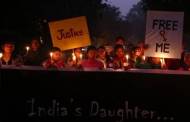
The Indian government is up in arms. It has banned a documentary, India’s Daughter, which includes a reconstruction of the notorious gang rape and murder of a young woman on a bus in Delhi. Ministers can’t stop Leslee Udwin’s film being shown elsewhere – you might have seen it on BBC Four last week – but they would like it to be consigned to oblivion. It reflects badly on India, you see.
The rape of the 23-year-old student took place just before Christmas 2012, bringing thousands of people on to the streets to demand greater protection for women. All of this happened before the current prime minister, Narendra Modi, took office, but he would like the entire subject to just go away. Last month, his government shelved a plan drawn up after the Delhi gang rape to set up 660 rape crisis centres across India; the figure has been slashed to 36 because the Prime Minister believes that the Indian police are “sensitive enough” to deal with rape cases. His confidence in the authorities isn’t universally shared, leading to a dreadful incident in north-east India last month when a suspected rapist was dragged from jail and lynched.
According to some estimates, a rape takes place in India every 20 minutes. The documentary explains why the figure is so high: the quiet dignity of the victim’s parents contrasts with the chilly detachment of Mukesh Singh, who drove the bus and shows not a shred of remorse for the sexual torture and murder of their daughter. The Minister for Parliamentary Affairs believes that the film is an “international conspiracy to defame India”, but what it really does is expose the profoundly misogynist culture that creates men such as Singh. The fact that ministers are more concerned about the country’s reputation than the safety of half the population does the same.
READ MORE: DELHI BUS RAPIST BLAMES DEAD VICTIM FOR ATTACK
INDIA TO INVESTIGATE TV CREW’S INTERVIEW WITH RAPIST
HOW INDIA ATTEMPTED TO SUPPRESS THE BBC DELHI GANG-RAPE DOCUMENTARY
“Honour” is at the heart of this problem, whether it’s that of a country or an individual woman. According to the driver, the student shouldn’t have been out at night with a male friend; once the rape started, she shouldn’t have struggled with her attackers. “A girl is far more responsible for rape than a boy,” he declares in the film. One of the defence lawyers backs him up, making the astounding claim that he would burn his own daughter alive if she “disgraced herself” by going out at night. (The victim, by the way, was returning from an early-evening showing of The Life of Pi when she was targeted.)
India is not the only country with a rape problem. In South Africa, some estimates have suggested that there could be half a million rapes each year, many of them by multiple perpetrators and characterised by extreme violence. In Mexico, rates of rape and murder involving female victims are so high that they have been officially described by the UN as a “femicide”. Similar attitudes can be found in all these countries, proposing that it’s up to women to modify their behaviour if they want to avoid being attacked. When Singh claims in the film that a “decent” girl wouldn’t be out at nine o’clock at night, it brings to mind the Grand Mufti of Australia, who, in 2006, compared women to a plate of uncovered meat. If they would only stay indoors, he argued, nothing bad would happen to them.
It’s easy to dismiss such views as pre-modern, a relic from a period of history before gender equality emerged as one of the most basic rights. Feminists and human rights activists have challenged them in country after country, including India, where the Delhi bus attack is one of a series of gang rapes that are almost too awful to read about. But the reality is that rape culture – an outdated set of ideas about how women should behave – exists everywhere in the world. An integral feature is the habit of disbelieving victims or dismissing their experience as not “real” rape.
Only last week, a serious case review was published into the sexual abuse of hundreds of girls in Oxfordshire. It’s clear that the perpetrators, who were from a predominantly Asian background, thought they could do what they liked because no one would listen to their victims. They were right: the authorities repeatedly failed to recognise that they were dealing with serial rape, falling back on the ludicrous notion that girls of 12 or 13 were making “lifestyle choices” when they had sex with men twice their age. Almost exactly the same thing happened in Rotherham, where at least 1,400 girls were abused.
Then there’s the Ched Evans case. The footballer has been convicted of rape by a jury and hasn’t even finished serving his sentence. (He was released from prison last year after serving half of his five-year tariff and remains on licence.) None of this has discouraged a vile campaign by some of his supporters, who have broken the law by identifying the victim and vilifying her on social media. It’s a classic piece of victim-blaming: she was drunk, she went back to his mate’s HOTEL ROOM, what did she expect?

GUWAHATI: -The Nagaland government had failed to appreciate the gravity of last week’s protests in Dimapur, which ended with a mob breaking into a prison, dragging out a rape accused and lynching him, sources in the Union home ministry told NDTV. So far, 42 people have been arrested in the case.
The state police had given permission for the protests to Naga Students’ Federation, NGOs and associated front organisations on Thursday. But the state government asked for additional forces only when the situation had gone out of hand, sources said. The request came in at 3 pm, but within half-an-hour, Syed Sarif Uddin Khan was dead.
In its report to the home ministry, the state government said a large crowd had started moving towards the jail at 1 pm. But though reinforcements were rushed, the police were unable to open fire due to the presence of minors in the crowd.
Curfew, lifted for this morning after three days, has been imposed again in the city. Internet services – which were blocked after videos of the lynching were found to have been widely shared on the web – will be in place till at least 6 pm tomorrow. Phone text message services, which were stopped at the same time, have been resumed
There has been tension in the city after it was rumoured that Khan was an illegal immigrant from Bangladesh. That has been proved wrong. Khan’s brothers are in the Indian Army and his father was in the Air Force.
There are also question marks over the rape case filed against him. The police said the report of the medical test of the woman is still awaited.
The issue found echo in Parliament today, with Congress members from Assam calling the matter a failure of the Nagaland government. Gaurav Gogoi of Congress said the Central forces deployed at the jail failed to protect the accused.
Shiv Sena, an ally of the NDA, said the mob fury reflects people’s anger towards sexual crimes against women. An editorial in Sena mouthpiece Saamna said it would be a mockery to term the incident as a law and order failure, since, the government “does not think of the deteriorating law and order situation when women are raped, but thinks about it when a rape accused in punished in public”.
On Thursday, thousands broke into the Dimapur Central Jail, dragged out Khan, stripped him, beat him up, tied him to a motorcycle and dragged him for 7 km. He died on the way. The mob then hung his body at a roadside roundabout.
Widespread protests took place across Nagaland since, and at Mr Khan’s hometown Karimganj in neighbouring Assam, where his funeral was held on Sunday. Over 10,000 people attended the funeral.
Twenty people were arrested for the crime this morning, taking the total number of arrests to 42. But Khan’s brother Jamal Khan has alleged that most of his killers are still roaming free.

ihadi” is in fact an Australian teenager who converted to Islam, a report said Monday.
A photo of the meek-looking youth, holding a rifle and sitting in between two jihadists with a black IS flag in the background, emerged on Twitter in late December.
At the time the militant group, which has run rampant through swathes of Iraq and Syria, hailed his recruitment as “a major coup” with the British media dubbing him “Britain`s white jihadi”.
Doubts about the authenticity of the picture subsequently emerged after a blogger claimed he had fabricated the image to hoax the British press.
But Australia`s Fairfax Media said the photograph had now been positively identified by friends of the teenager and members of two mosques in Melbourne.
It identified him as a former high-achieving 18-year-old student called Jake, declining to reveal his full name at the request of a family member.
He was described as a maths whiz who attended the Craigieburn Secondary College in Melbourne but dropped out in the middle of last year after converting to Islam and buying a one-way ticket to Istanbul en route to Iraq and Syria.
His identification came after Australia stopped two teenage brothers at Sydney airport believed to be heading to the Middle East to fight, amid growing concern in Western countries over young people joining jihadist groups.
That case followed three British schoolgirls leaving their London homes to join IS in Syria in February.
“He used to come here when we had a big lecture,” Abu Zaid, a committee member of the Hume Islamic Youth Centre in Coolaroo, told Fairfax Media of Jake.
“He was a very quiet guy, he stuck to himself. We weren`t close to him. I didn`t see any of the people (getting) close to him.”
The newspaper said the youth now goes by the Islamic names Abdur Raheem or Abu Abdullah.
It said that two months after his disappearance, he contacted his family to tell them he was in Iraq training for a “martyrdom mission” with a suicide vest.
He later called again to say he was “too scared to do it and he prefers being a soldier” and was planning to travel to Syria.
Around 140 Australians have travelled to fight with IS and other terrorist groups in Syria and Iraq, with another 150 supporting them at home, the government has said.
Prime Minister Tony Abbott said indoctrination was happening in unexpected places and that the government was dealing with the issue.
“Too many Australians, it seems, are being brainwashed online by this death cult,” he said, referring to IS.
“Very importantly, we are about to begin a very big campaign to try to counter the influence that the death cult has, particularly online on vulnerable Australians.”
Abbott did not provide further details, but last month flagged changes to immigration laws to allow the government to revoke or suspend Australian citizenship for dual nationals implicated in terrorism.
There are also plans for returning foreign fighters to be prosecuted or monitored under control orders, while Canberra has pledged a crackdown on organisations that incite religious or racial hatred.
AFP















Recent Comments