





New Delhi: Miffed over the visit of a Delhi Police official to the party office here seeking details of Rahul Gandhi’s physical appearance, the Congress on Saturday criticised the government and said that the party will take up the issue in Parliament.
The Delhi Police, however, said it was a routine security enquiry. As the news surfaced, the Ministry of Home Affairs asked for a report from the Delhi Police in this regard.
Rejecting the allegation of snooping on Gandhi, the Delhi Police said the visit by policemen to his office was a routine practise of being in touch with the dignitaries and there was no malafide in it.
Congress spokesperson Abhishek Singhvi told reporters here that a Delhi Police Assistant Sub Inspector identified by him as Shamsher Singh had enquired about the colours of Rahul’s hairs, eyes, age, height, the shoes he wears and his father’s name and the places he visits.
Singhvi said the Delhi Policeman ASI was “found snooping” and making “unnecessary and weird” enquiries.
The policeman was stopped and accosted by the staff of Special Protection Group, who guard Rahul, at the residence of the Congress vice president, Singhvi said.
The incident gave ammo to Singhvi to launch a sharp attack on the government, saying it is a case of “political espionage and snooping” on rivals.
In a veiled reference to the snooping of a young woman in Gujarat during the tenure of Narendra Modi as chief minister, Singhvi, without naming Modi, said “espionage and surveillance” of political rivals may be a Gujarat model but not Indian model.
“The track record shows this kind of espionage was perfected in Gujarat for political opponents,” he said.
Singhvi added: “India is a proud democracy, not a police state. We are a vibrant democracy. This kind of political espionage is condemnable.”
Senior Congress leader PC Chacko termed it as a “breach of privacy and highly unacceptable.”
Related Videos
Delhi Police enquires about Rahul Gandhi’s appearance
“It is intruding into the privacy of the citizen by Delhi Police without any valid purpose and is highly unacceptable,” he said.
“Who has done this and under whose instructions, we would like to know. If it is true, then senior officials should explain who authorised them to come. Rahul Gandhiji is an MP, all the details are available on Parliament’s website and there is nothing which is secret about him,” he said.
“Every individual has the right to his privacy. They have now started intruding into the private lives of the citizens also….This is highly objectionable,” he added.
Later, Delhi Police Commissioner BS Bassi clarified that such surveys were conducted at the offices of all protected persons from time to time owing to prevention and detection of crime and maintaining of law and order.
“Rahul Gandhi was not targeted by the police. It was a routine activity which is done to keep records of vulnerable personalities. Police also visited houses of Veerappa Moily, LK Advani, K Chandrasekhar Rao among others. There was no malafide intension behind seeking details about Gandhi,” Bassi told reporters here.
The Police Commissioner said police was never asked either by Prime Minister Office or Home Ministry to visit Rahul’s residence and asserted that there was no political pressure on police.
“Two cops went to Rahul Gandhi’s residence. Our beat officer Rameshwar Dyal went to his house on March 12 and sought details about him. As beat officers are not able to directly meet such persons, they contact their office staff and leave performa pertaining to required details,” Bassi said.
According to Bassi, on the same day, Dayal went to the houses of MP Krishan Pal Gujjar, Naresh Agarwal, M Veerappa Moily and Telengana Chief Minister K Chandrasekhar Rao.
Beat officers are instructed to meet the staff of important people living in the area falling under their jurisdiction and keep a personal information about them, he also said.
Bassi added that police keeps details of all vulnerable leaders like Amit Shah, Sonia Gandhi, 7, Race Course Road.
“Such details are also important in many cases… For instance, if there is any protest outside house of any important leader, cops may face problem in locating the house and identifying their staff without any such information,” Bassi said.
Earlier in the day, a Delhi Police team earlier this morning visited the residence of Gandhi to enquire about the incident.
A team, led by Additional Deputy Commissioner of Police (New Delhi) Jatin Narwal, visited Gandhi’s Tughlak Lane residence to enquire about the sequence of events.
The team also checked the pictures of the policemen who had visited Rahul Gandhi’s residence a couple of days ago and enquired about the colour of Congress leader’s eyes and hairs.
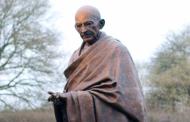
Gandhi is the first Indian and the only person never to have been in a public office to be honoured with a statue at the Square.
A historic bronze statue of Mahatma Gandhi was unveiled at the Parliament Square in London on Saturday, standing adjacent to iconic leaders such as Britain’s war—time Prime Minister Winston Churchill and anti—apartheid icon Nelson Mandela.
A galaxy of political leaders led by British Prime Minister David Cameron and Finance Minister Arun Jaitley were joined by Bollywood legend Amitabh Bachchan and the Mahatma Gandhi’s grandson Gopalkrishna Gandhi at the ceremony to unveil the 9—foot statue of the Father of the Nation.
Gandhi is the first Indian and the only person never to have been in a public office to be honoured with a statue at the Square.
The statue was unveiled jointly by Cameron and Jaitley as chants of “Raghupati Raghav Raja Ram,” a popular bhajan that was Gandhi’s favourite, reverberated in the air.
“This statue is a magnificent tribute to one of the most towering figures in the history of world politics and by putting Mahatma Gandhi in this famous Square, we are giving him an eternal home in our country,” said Cameron.
Quoting some of Gandhi’s famous words, Cameron highlighted how his teachings remain as potent today.
“This statue celebrates the incredibly special friendship between the world’s oldest democracy and its largest, as well as the universal power of Gandhi’s message,” Cameron said.
“Our ties with India have remained close throughout history and continue to go from strength to strength —— through mutual respect as equals, cooperation and trade, and of course through the one—and—a—half million Indians who do so much to make Britain the country it is today, bringing our two countries closer, to the benefit of both,” he said.
Jaitley, invited to the UK especially for the unveiling, said the statue was a tribute to the British sense of civility that they now choose to honour someone who was conventionally regarded as their adversary.
“It is a great tribute to both British liberalism and British democracy that they have now chosen Gandhi to share what is the most prominent public space in this country. It is a great day when two adversaries and contrarian viewpoints converge to appreciate each other,” Jaitley said.
“The statue will help ensure that the legacy of Gandhi lives on for future generations. It also marks an important, historic moment celebrating the strong bond between our two nations. India and the UK share the same values and we are a partnership of equals. This lasting friendship is just one of many legacies left by Gandhi, which I am keen that we work hard to strengthen further,” he said.
NEW DELHI: The mission of ‘Make in India’ can not become a reality unless we have adequate skilled manpower in the country, Union Minister Rajiv Pratap Rudy said today.
“Students need to be taught entrepreneurial skills to gain confidence and become job creators,” the Minister of State (Independent Charge) for Skill Development and Entrepreneurship Rudy said at the India Today Conclave.
As the market for quality plumbers, electricians and carpenters continues to expand, there is a growing need for vocational and skill training,” he added.
Rudy also said that there should be more emphasis on holistic education rather than on only promoting sciences.
The government is currently in the process of revising the National Skill Development Policy, which had been devised by the erstwhile Congress-led UPA government in 2009.
The skilled workforce in South Korea is 96 per cent, 80 per cent in Japan, 75 per cent in Germany and 70 per cent in Britain. Compared to this, the skilled workforce in India is only two per cent.
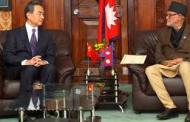
Nepal’s Foreign Minister will visit China next week to hold talks with Chinese leaders on a host of bilateral issues, including efforts to increase trade and investments, a senior official said here today.
Mahendra Bahadur Pandey will visit China from March 17 to 21 at the invitation of his Chinese counterpart Wang Yi, Foreign Ministry spokesperson Hong Lei told reporters here.
Pandey’s upcoming visit is part of activities to celebrate the 60th anniversary of China-Nepal ties, Hong said.
During his visit to Nepal last year, Wang proposed the two sides widen pragmatic cooperation in trade, investment, agriculture, infrastructure, science and technology, interconnectivity and intercommunication, tourism, culture, people to people exchanges, security and law enforcement.
Hong said China hoped to further enhance comprehensive cooperative partnerships through Pandey’s visit.

Imphal: Life remained unaffected despite a 48-hour bandh call by the All Manipur Minorities Students’ Union (AMMSU) in Manipur from midnight Thursday night.
Shops, markets, offices, schools and colleges functioned normally and vehicles plied as usual, officials said.
The bandh was called to air protest against the death of college student Salman Khan (20) in the bomb blast at Imphal Market Complex on Wednesday last.

Nagpur, Mar 13: Even as the Modi government has come under fire from RSS affiliates over the Land Acquisition Bill, the Sangh today said the legislation was not bad but suggested that differences over it be sorted out through dialogue. “I don’t think the bill is bad after the government made some amendments to it,” RSS joint general secretary Dattatreya Hosabale told journalists at a briefing as the three-day brainstorming session of the Pratinidhi Sabha, the highest decision making body of the Sangh, kicked off here. (ALSO READ: Anna Hazare asks parties to unite in Rajya Sabha against Land Acquisition Bill)
The land bill is facing stiff resistance from RSS affiliates like Bhartiya Mazdoor Sangh (BMS) and Bhartiya Kisan Sangh (BKS), whose representatives are also attending the meet. “These (BMS and BKS) are independent entities. We have invited them here because they work with the Sangh’s inspiration. As independent entities they are free to hold their opinion and express it in the way they feel is fit,” he said.
Hosabale said RSS wanted “proper coordination” to be established between the Centre and organisations like BMS and BKS, which have opposed the bill. “RSS will try and inspire both (government and RSS affiliates). Now the goal should be to hold a dialogue to ensure that the farmers get their due. “I think the government will take care of the demands voiced by BMS and BKS and ensure the goals of the legislation are realised on the ground,” Hosabale said.

New Delhi: A school boy was killed after a DTC bus ran over him in Khanpur area on Friday, following which angry residents set the bus on fire and vandalised 12 others, police said.
A boy, wearing school uniform, was mowed down by a DTC bus while he was crossing the road in Khanpur area at around 11 am. Following the incident, residents staged a protest and set the bus ablaze and also vandalised 12 others, evoking tension in the area,” a senior officer said.
A large number of police personnel have been deployed in the area to maintain calm.
The body has been sent to AIIMS for postmortem, he said
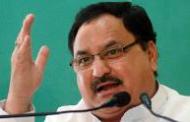
Government is actively considering changing rules and regulations relating to medical services to improve and expand health facilities in every part of the country, Lok Sabha was informed today.
“There is a need to change some rules and regulations and government is actively considering it,” Health Minister J P Nadda said during question hour.
Nadda’s response came when Lakshadweep MP Mohammed Faizal suggested that medical practitioners serving in rural areas should be trained in modern medical techniques and equipment so that the shortage of advance medical facilities in backward areas could be resolved.
“We have to discuss the issue with various stakeholders, including Medical Council of India, to arrive at a decision in this regard,” the Minister said.
In addition to the bilateral agreements between India and other countries in the field of health cooperation, he said international cooperation was also achieved through the aegis of WHO, SAARC forum and other international arrangements such as BRICS framework for strategic cooperation in health.
Nadda said international cooperation facilitated capacity building, training, exchange of information, exchange of experts, health, health manpower development, technical support in establishing laboratories and hospitals and research in mutually identified areas on the basis of equality reciprocity and mutual benefit.
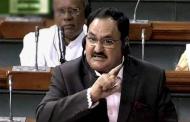
ndia has 19 health workers which includes doctors and nurses for every 10,000 people in comparison to World Health Organisation (WHO) norms which prescribe 25 health workers for the same number, the Lok Sabha was informed on Friday.
“As per the Report of the Steering Committee on Health for the 12th Five Year Plan of the Planning Commission, India has 19 health workers (doctors — 6, nurses and midwives — 13) per 10,000 people in India.
“WHO norms provide for 25 per 10,000 people. Additionally, there are 7.9 lakh AYUSH practitioners registered in the country (approximately 6.5 per 10,000),” Health Minister J.P. Nadda said in a written reply.
He said that as per information provided by Medical Council of India (MCI) and Indian Nursing Council (INC), the total number of registered doctors is 9,36,488 as on December 31, 2014.
He said that as on December 31, 2013, the number of auxiliary nurses and midwives are 7,56,937 while registered nurses and midwives are 16,73,338. Data in respect of health professionals in rural and urban areas is not maintained centrally.
He said that the government has not conducted any study or survey to ascertain the number of doctors and other medical and para-medical professionals required in the rural and urban areas of the country.
Medical Council of India (MCI), with the previous approval of the Centre, has amended the Post Graduate Medical Education Regulations, 2000, to provide 50 per cent reservation in Post Graduate Diploma Courses for Medical Officers in government service, who have served at least three years in remote and difficult areas.
The amendment has also been done to give incentive at the rate of 10 per cent of marks obtained for each year in service in remote or difficult areas as up to a maximum of 30 per cent of the marks obtained in the entrance test for admissions in post graduate medical courses, Mr. Nadda said.
Keywords: Parliamentary proceedings, Lok Sabha, J.P. Nadda, health workers, Health Ministry

The Anglo-Indian woman who hit national headlines as the Park Street rape victim in early 2012 died of encephalitis at a state-run hospital in Kolkata on Friday morning.
She was around 40 and used to live with her daughters in the southern fringes of the city.
She was admitted to Calcutta Medical College a few days ago.
According to initial reports she died of multi-organ failure.













Recent Comments