





Asserting that a new “atmosphere of trust” has developed in India since he took over 10 months ago, Prime Minister Narendra Modi has vowed to “clean up” the mess left behind by the others.
“There is a new atmosphere of trust in our nation… We say ‘jan gana man adhinayak’ — that ‘Jan Man’ has changed,” Modi said addressing in Hindi an estimated over 10,000-strong Indian diaspora at Ricoh Coliseum in Toronto, early Thursday morning.
Modi is in Canada on the last leg of his three nation tour.
Thanking the Canadian people for the welcome they have given him, the PM said the honour wasn’t for Narendra Modi but for the 125 crore people of India.
It was a repeat of the Madison Square Garden atmosphere in North America as Modi spoke at length to an admiring audience in Toronto on Wednesday evening (Canadian time) during a community reception.
What made this event different was that for the first time for such a diaspora gathering, Modi was accompanied on stage by the head of government of the nation he was visiting – in this case, Canadian Prime Minister Stephen Harper.
Even as a uranium supply deal with the Canadian company Cameco Corporation had been signed earlier in the morning in Ottawa, Modi referred to that and developments in the civil nuclear energy sector by linking it to India’s efforts against climate change, pitching it as part of his Government’s clean, green energy mix that includes solar, biomass, wind energy as well as energy saving.
He said, “We used to ask for reactors for nuclear energy from every country, every one used to no, fearing we will make bombs. Now we have a MOU with a company in France for making the reactors and the best thing is that these will be built in India. And the uranium needed for nuclear energy will be given by Canada.”
As in his previous trips abroad, attacking the previous governments, Modi said, “Jinko gandagi karni thi, gandagi kar ke chaley gaye, hum safai karke jayengey (Those who had created a mess, they have done so and left. We will go after cleaning it up).”
He said India is a large country, the problem is old and it will take time to clean.
“India will provide the workforce to power global growth. Our mission is ‘skill India’, not ‘scam India’,” he added.
The crowd of nearly 8,000 at the Coliseum were more enthused by the folksy connect he has established with the diaspora. As the Prime Minister told them to cheers: “Last year when it was election time in India, slogans were being raised here. When the results came there, sweets were being distributed here. People celebrated in the day there and here in the middle of the night.” He also repeated several times that the mindset in India had changed since his government had taken charge.
“10 months ago, only the government had changed but now people’s mindset is also change
Modi also reiterated the decision announced earlier in the day for electronic visa clearance for Canadian visitors to India. Mostly, it was a sort of report card to an adoring constituency, amid shouts of “Modi, Modi” which turned to “Harper, Harper” when his Canadian counterpart came in for praise, as he often did.
Speaking at a venue that stages ice hockey matches, Modi stood upon a special gradually rotating stage that ensured he faced and addressed each section of the audience.
He stressed on “Skill India” and said that skill development can lead any country towards development.
“There is only one solution to all the problems and that is development.”
He said that India’s biggest treasure is its youth and his aim was to see them as “job creators”.
“Eighty crore youth population, 80 crore dreams, 160 crore strong hands. What can we not achieve?” he said, adding that he wants the youth to be job creators not job seekers.
Talking of his visits to Toronto in past as an ordinary worker, there was also a nod in the direction of Canadian PM Harper. Modi pointed out to the crowd that Canada was the first country to partner with Gujarat after the Vibrant Gujarat Summit was launched. Describing Harper as his “friend”, Modi said Indo-Canada relations” were in for the long-haul.
Harper made a similar point. As he spoke before Modi, the Canadian PM said pointedly: “We had extended our hand of friendship long before the others.” Harper was accompanied on stage by his wife, Laureen. He, in fact, even quoted Vivekananda in the context of revitalized Indo-Canadian relations, as he said, “Stop not until the goals are reached.”
Modi appeared about 45 minutes after the scheduled time and spoke for over an hour to the audience which had gathered at the venue, at least six hours earlier amidst heavy security. A cultural programme, capped by a performance by singer Sukhwinder kept them somewhat entertained, but the real performer of the evening was certainly Modi.
Wearing a T-shirt emblazoned with Modi’s visage, 10-year-old Alark Vyas from Etobicoke in the Greater Toronto Area said he “really enjoyed” the speech despite its length. Teenaged Prachi Patel said she appreciated that it “was easy to understand.” Moiz Khambatti from the suburb of Missisauga described his experience as “awesome”, adding that he “was pleased to be in the audience.”

Continuing the deflationary trend for fifth month in a row, wholesale inflation touched a record low of (-)2.33 per cent in March on cheaper manufactured goods and food items, prompting industry to renew its demand for further rate cut by the Reserve Bank.
Inflation in manufactured items slipped in to the negative territory, reflecting poor offtake of goods.
Wholesale Price Index (WPI) based inflation has been in the negative zone since November 2014 mainly on account of cheaper food and fuel products.
It was at (-)2.06 per cent in February, (-)0.39 per cent in January, (-)0.50 per cent in December and (-)0.17 per cent in November. It was 6 per cent in March 2014.
Dr Jyotsna Suri, President, FICCI
Both WPI and CPI data for the month of March 2015 report inflation remaining at ease. The latest numbers indicate moderation in food prices even though possibility of upside risks from unseasonal rains remains imminent. However, this most likely will be counterbalanced with subdued demand conditions and soft commodity prices. As for tackling food inflation, an improved supply side response would be more appropriate. Further, the IIP numbers released last week reported a significant improvement in February 2015, which is encouraging. Going ahead, it will be imperative to support this buoyancy to assure a sustainable turn around in the industrial sector. We look forward to another round of downward revision in the repo rate in June 2015 or perhaps earlier.
Deflation in the manufactured products category was at (-)0.19 per cent, the lowest in over five years. Last time the rate of price rise in manufactured items had contracted in July 2009 at (-)0.2 per cent.
Inflation in food articles category stood at 6.31 per cent, and for fuel and power, it was (-)12.56 per cent.
With the decline in both wholesale and retail inflation, industry chambers have renewed their demand for further rate cut by the RBI to give a boost to manufacturing sector.
“Going ahead, it will be imperative to support this buoyancy in factory output to assure a sustainable turn around in the industrial sector. We look forward to another round of downward revision in the repo rate in June 2015 or perhaps earlier,” Ficci President Jyotsna Suri said.
Retail inflation, based on Consumer Price Index released last week fell, to a 3-month low of 5.17 per cent in March on the back of easing food prices.
Industrial output growth jumped to nine-month high of 5 per cent in February on better performance of manufacturing sector and higher offtake of consumer and capital goods.
The Reserve Bank, which has reduced repo rate by 0.5 per cent since January, refrained last week from further cut in its first bi-monthly monetary policy review in the current fiscal. The next review is due on June 2. MORE PTI JD CS SA 04151615
The January WPI inflation data has been revised downwards to (-)0.95 per cent as against the provisional estimate of (-)0.39 per cent.
Experts said the central bank is likely to place greater emphasis on retail inflation numbers, than the path charted by the one based on WPI.
“The sub-zero print for core-WPI inflation in March would have a limited impact on the timing and magnitude of rate cuts by the RBI. We continue to expect repo rate cuts to be limited to 0.50 per cent in the remainder of this calendar year,” ICRA Senior Economist Aditi Nayar said.
As per government data released today, inflation in onions, milk and protein-rich items like egg, meat and fish inched upwards, vegetables and fruits saw the rate of price rise decline during the month.
The rate of price rise in potato saw the steepest fall at (-)20.66 per cent in March, while for wheat it was (-)1.19 per cent.
Inflation in vegetables was 9.68 per cent in March, as against 15.54 per cent in February.
Inflation at record low, rate cut chorus gets louder
With deflation persisting for the fifth straight month on account of cheaper food and fuel products as well as manufactured items., corporates today said the trend is a clear pointer to the RBI to slash key rates further to revive consumer confidence and boost investment, crucial to kickstart growth.
“It is a clear pointer for the Reserve Bank and the Finance Ministry to shift focus completely towards growth.
Easing of interest rates and a host of other variables are needed to ensure India achieves the kind of growth as projected by the World Bank and IMF,” Assocham President Rana Kapoor said.
“The key challenge is revival in consumer confidence and restoration of investment appetite. The credit offtake remains subdued against the backdrop of high interest rates, slower pace of product demand and global benign economic environment.”
Inflation measured as the wholesale price index (WPI) stood at (-) 2.06 per cent in February, (-) 0.39 per cent in January, (-) 0.50 per cent in December and (-) 0.17 per cent in November. It came in at 6 per cent in March 2014.
Deflation was also visible in the manufactured products category where the rate of price rise dropped to a record low of (-) 0.19 per cent.
Inflation in food article category stood at 6.31 per cent, and for fuel and power, it was (-) 12.56 per cent.
“Continuous deceleration in WPI inflation is welcome and we expect disinflationary momentum to continue and macro-economic situation is strengthened further in coming times,” PHD Chamber President Alok B Shriram said.
The decline in inflation and a positive industrial output data would give room to the Reserve Bank to consider a cut in interest rates.
the Summit of the Americas last week. Photograph: Mandel Ngan/AFP/Getty Images
Sabrina Siddiqui in Washington
@SabrinaSiddiqui
Wednesday 15 April 2015 09.55 BST
Share on Facebook
Share on Twitter
Share via Email
Share on LinkedIn
Share on Google+
Shares
3,183
Comments
429
Barack Obama will remove Cuba from a list of state sponsors of terrorism, the White House said on Tuesday, marking the president’s biggest move yet towards the resumption of diplomatic ties with Havana.
Obama in historic talks with Castro but Cuban leader in no mood for a love-in
Read more
The White House confirmed that Obama had notified Congress of his intention to remove Cuba from the list, reversing a designation that has been in place since 1982. The announcement came days after a historic meeting between Obama and Cuban president Raúl Castro on the sidelines of the Summit of the Americas in Panama, in the first formal talks between the two countries’ leaders in more than 50 years.
In his letter to Congress, Obama wrote that the Cuban government “has not provided any support for international terrorism” in the past six months, and has “provided assurances that it will not support acts of international terrorism in the future”.
White House press secretary Josh Earnest said the US would continue to have differences with the Cuban government, “but our concerns over a wide range of Cuba’s policies and actions fall outside the criteria that is relevant to whether to rescind Cuba’s designation as a State Sponsor of Terrorism.
“That determination is based on the statutory standard – and the facts – and those facts have led the President to declare his intention to rescind Cuba’s State Sponsor of Terrorism designation,” Earnest said in a statement.
Cuba welcomed the move, adding that it “rejects and condemns” all acts of terrorism. A statement by Josefina Vidal, the Cuban foreign ministry’s chief of US affairs, said: “The Cuban government recognized the fair decision made by the president of the United States to eliminate Cuba from a list that it never should have been included on, especially considering our country has been the victim of hundreds of acts of terrorism that have cost 3,478 lives and maimed 2,099 citizens.”
Obama’s decision was made after a State Department review of Cuba’s presence on the terror list – one of several steps the president announced in December as part of his administration’s new policy toward the island nation. The slow pace of the review had been one of several sticking points among Cuban diplomats, thus holding up diplomatic progress and the possibility of reopening embassies in Havana and Washington after a 50-year estrangement.
The future of Cuba’s socialist ice-cream cathedral
Read more
Cuba was placed on the list in 1982 for training and supporting communist rebels in Latin America and Africa, but the country has long since renounced direct military support for foreign militants and the US has not accused the island nation of actively supporting terrorism for years.
Recent State Department reports have criticised Cuba for offering safe haven to members of the Revolutionary Armed Forces of Colombia, Farc, and the Basque separatist group ETA. But Cuba has distanced itself from ETA, and is currently hosting peace talks between Farc and the Colombian government.
The only countries that will now remain on the US terror list are Iran, Sudan and Syria.
Cuba’s removal from the list will also alleviate some of the economic sanctions on the island, thus opening up avenues to access US banking facilities that Cuban officials have said are necessary to reopen an embassy in Washington.
Ben Rhodes, the US deputy national security adviser, tweeted: “Put simply, POTUS is acting to remove Cuba from the State Sponsor of Terrorism list because Cuba is not a State Sponsor of Terrorism.”
Secretary of state John Kerry said the department’s review focused on whether Cuba provided any support for international terrorism over the past six months, and whether the US has received assurances from the Cuban government that it will not support future acts of international terrorism.
Advertisement
“Circumstances have changed since 1982 … Our Hemisphere, and the world, look very different today than they did 33 years ago,” Kerry said in a statement. “Our determination, pursuant to the facts, including corroborative assurances received from the Government of Cuba and the statutory standard, is that the time has come to rescind Cuba’s designation as a State Sponsor of Terrorism.”
Lawmakers on Capitol Hill have 45 days to respond to Obama’s action, but it is unlikely they will seek to block the president from taking Cuba off the list. The move does not end other commercial, economic and financial restrictions under the US embargo on Cuba, as only Congress has the authority to end the freeze.
Senior administration officials told reporters in a conference call Tuesday that they remain optimistic about opening an embassy in Cuba, but acknowledged that obstacles remain. “We’re still not quite there yet,” one official said.
Although Republicans have sharply criticized Obama’s overtures to Cuba, polls show that nearly two-thirds of Americans support the reestablishing of ties. A broad majority of Americans are also in favor of lifting travel restrictions and ending the trade embargo, according to several surveys over the last few months.
Specialists on Latin America agreed that lifting the terror designation was a major step in the normalisation of relations between Washington and Havana.
Richard Feinberg, a senior fellow at the Brookings Institution – and an architect of the first Summit of the Americas – said that the move was part of a process which would culminate in the re-opening of embassies in the the two capitals. Feinberg added: “It also suggests that the White House now sees the opening to Cuba as a political winner.”
Dr. Gregory Weeks, a Latin America expert who heads the political science department at the University of North Carolina at Charlotte, said that removing Cuba from the list was “symbolically a demonstration that the two countries were moving beyond the Cold War.”
“It’s a common sense move given the changing realities of global terrorism — that’s just not something that Cuba’s involved in,” he said. “It was obviously also a major obstacle to normalization of relations. Cuba has not been a security threat to the United States for many years.”
The news had not yet filtered out to the public in Havana, where the vast majority of people have little or not access to the Internet. But hopes in the Cuban capital had already been raised by Saturday’s meeting between President Raul Castro and Barack Obama.
“The relationship is getting better. I think it will take more time, but in one or two years I feel improved ties will make a big difference in our lives,” said fencing coach Eduardo Delgado, as he chatted with friends in a suburb of the city.
The group of youngsters were quick to credit Obama for the improvement in relations. “He is very intelligent, a real source of hope,” said 22-year-old legal student Dyron Hernandez. “Among Cubans, I think Obama is the most popular world leader right now.”
That view was widely echoed. “Obama is the best US president of my lifetime,” said 67-year-old Fria Nieve. “We must not expect too much because presidents alone do not make decisions, but we can hope for change once trade and travel picks up with a country that less than 100 miles away.”
The benefits of the rapprochement are already apparent. Foreign tourist numbers this year are already at the level of the whole of 2014. In Havana, local say almost all the hotels were booked out for the Easter holiday.

Pohela Boishakh – Bengali New Year: The Nabo Barsho of Bengal and Bohaag Bihu (Assam) is celebrated with great deal of enthusiasm and energy during the mid of April. This is the day of cultural programs, shopping, prayers and also considered as auspicious time for marriages. Pohela Boishakh celebrated by tribal people in hilly areas of Tripura and also in cities of other countries.
The hilly district of Darjeeling was filled with activity. People could be seen in their traditional attires dancing through the streets. In Assam Aflong, it was very special as Rewati Chetri went through the top ten finalist. The Grorkha community of Haflong Assam are very proud of her. In her Facebook Rewati has sent Greetings to all the Gorkhali community. Acccording to Gorkhali Calendar it enters Bikram Sambat 2072.
A
The Delhi High Court today said it will not grant bail for the time being to two of the three convicts serving life term in a 1984 anti-Sikh riots case in which five members of a family were killed.
A bench of justices Pradeep Nandrajog and Mukta Gupta said it will first hear arguments on their appeals against their conviction before passing any order on suspension of sentence.
“We have to deal with the appeals related to death of five persons here, so we need to go through the evidence throughly, we will not give bail today,” it said.
The court’s observation came while hearing the bail pleas of convicts Girdhari Lal and ex-councillor Balwan Khokar who have also challenged their conviction and award of life sentence by the trial court in May last year.
The court also noted that the bail plea of co-convict Balwan Khokar, who was also awarded life term in the case, has already been dismissed by it and hence, it will not grant the relief at this stage.
It, however, said that two other convicts, ex-MLA Mahinder Yadav and Kishan Khokkar, who were awarded three years jail term in milder penal provisions, will remain out.
Meanwhile, the court asked the prosecution to provide the copies of testimonies of prosecution witnesses, including that of complainant Jagdish Kaur. The trial court has relied upon them while convicting the accused.
It also directed the prosecution to provide the copy of the affidavit filed by Kaur before the Rangnath Misra Commission within two days.
The court said it will hear the bail pleas on October 10.
Besides Girdhari Lal, the trial court had also awarded life term to two others, Balwan Khokar and retired naval officer Captain Bhagmal, in the case.
Senior Congress leader Sajjan Kumar was acquitted in the case.
Girdhari Lal and Balwan Khokar, in their appeals, “The trial court has been pleased to reach the conclusion that the statement of prosecution witness (PW-1) Jagdish Kaur is untrustworthy, unreliable, contradictory and full of improvements while deciding the involvement of co-accused Sajjan Kumar.
“But while deciding their case and others (Gridhari Lal, Balwan Khokar and Bhagmal), the trial court took a different view and wrongly appreciated the statement of PW-1 to be credible and trustworthy against them.”
The case, in which the five persons were held guilty, relates to the killing of five Sikhs – Kehar Singh, Gurpreet Singh, Raghuvender Singh, Narender Pal Singh and Kuldeep Singh – by a mob in Raj Nagar area in Delhi Cantonment. They were members of the same family.

An inter-ministerial committee, headed by Cabinet Secretary Ajit Seth, has been set up by the government to look at the possibility of declassification of all files related to death or disappearance of Netaji Subhash Chandra Bose nearly 70 years back.
The first meeting of panel, which consists of representatives of the Ministries of Home and External Affairs, RAW, and Intelligence Bureau, is likely to take place tomorrow, official sources said on Wednesday.
The NDA government’s move came amidst growing demands for declassification of nearly 90 files which are yet to be made public. Interestingly, grandnephew of Bose, Surya Kumar Bose, had met Prime Minister Narendra Modi in Berlin on Tuesday and requested him to declassify all files related to events since his death or disappearance in Taiwan on August 18, 1945.
The issue of Netaji related files came to the fore last week when a controversy broke out following reports that his family was kept under surveillance by the Intelligence Bureau for 20 years, much of it during the tenure of Prime Minister Jawaharlal Nehru.
Sources said among nearly 90 classified files relating to Bose, around 27 are with the Ministry of External Affairs while rest with the Prime Minister’s Office.
There is no file related to the freedom fighter with the Home Ministry as all have already been declassified and handed over to the National Archives.
The committee will examine whether the declassification of the files will in anyway hamper India’s relations with some foreign countries and also review certain provisions of the Official Secret Act, sources said.
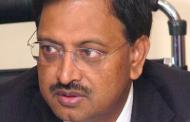
The founder of Satyam ComputerBSE 0.00 % Services, Ramalinga Raju, who was found guilty in an accounting fraud case and sentenced to seven years’ imprisonment last week, has filed an appeal to challenge the court’s verdict.
Uma Maheshwar Rao, a lawyer for Raju, said the appeal was filed in a sessions court to “question the very finding of the case,” but did not give other details.
On Thursday, a court in Hyderabad pronounced Raju, a management graduate from Ohio University who founded Satyam in 1987, guilty of forging documents and falsifying accounts in what was among country’s biggest corporate frauds.
Raju admitted in January 2009 in a five-page letter that Satyam’s profits had been overstated for years and assets falsified in a fraud allegedly worth over $1.5 billion, bringing the company to the brink of collapse.
Read more at:
http://economictimes.indiatimes.com/articleshow/46908518.cms?utm_source=contentofinterest&utm_medium=text&utm_campaign=cppst
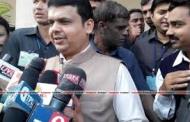
Mumbai: As Maharashtra Chief Minister Devendra Fadnavis is set to join Prime Minister Narendra Modi in Hannover on Monday, he has several priorities in focus, including setting up a manufacture facility for German auto giant Volkswagen and attracting Swedish aerospace and defence company Saab to invest in the state.
Besides, Fadnavis will also meet top officials of bus manufacturing company VOLVO and Swedish engineering group Sandvik for expanding their base in Maharashtra.
The Hannover Trade Fair in Germany, to be held between April 13 and 17, will be jointly opened by Modi along with German Chancellor Angela Merkel.
India is partner country at Hannover Mess 2015, the world’s largest industrial trade fair.
“Till now, companies like Volkswagen used to be in a semi-knocked down state where they import every part of the car and assemble it in the country to save customs duty. This does not create value addition, nor does it bring in investments for us.
“Thus, we have asked Volkswagen to manufacture cars here. Maharashtra will be the place in India where Volkswagen will manufacture its car engines,” Praveen Pardeshi, Principal Secretary to the Chief Minister told PTI.
Pardeshi said another important aspect of Fadnavis’s trip will be to pursue Volkswagen to set up a network of suppliers of automobile parts in India.
“We want all the sub-parts and ancillaries of the car to be made in Indian units,” he said.
Explaining the current working of Volkswagen, Pardeshi said the company is currently assembling around 1,30,000 vehicles a year and gives employment to about 3,500 people.
“They are now planning to expand by around Rs 38 billion, making it the largest German investment in the country. While this will also generate direct employment, companies making ancillary units which supply them parts, will thus enable further employment,” he said.
According to him, this trip is aimed at mobilising additional Rs 1,500 crore in the next 3-5 years.
He said aerospace and defence company Saab is being pursued to collaborate with Indian industries like Larsen and Toubro (L&T), Godrej Aerospace, TATAs, so that they can invest in Nagpur, Mumbai and Nashik.
“Saab is a big manufacturer of aero defence. They have collaborations in India. They produce aeronautics, dynamic electronic defence systems and security systems,” Pardeshi said.
“They have not yet invested in India. We are asking them to combine with Indian industries like L&T, Godrej Aerospace, TATAs, so that they can invest in Nagpur, Mumbai and Nashik. These are the places we have suggested to them but no decision has been made as yet,” he added.
Pardeshi claimed that Saab is likely to be the first major defence foreign collaboration after the opening of defence and aerospace sector in India.
“Along with Saab, we will manufacture advanced defence components in Maharashtra. We can then export aeronautics from here. Till now we have only been importing and not manufacturing. This will lead to import substitution,” he said.
Fadnavis will also be meeting top executives of Engineering company Bosch and visit retail giant IKEA.
“While IKEA sells products here, it does not source products from India. Our aim is that the company should not just open retail stores here, but source furniture and other products in India and thereby generate employment,” Pardeshi said, adding the Continental group is also looking forward to further investment in the state.
“We are also meeting VOLVO officials. The company is already based in Chennai and we now too are pursuing them. So there is a chance they will further expand their manufacturing in Maharashtra,” he said.
After the CM’s visit, the government may also see Swedish engineering group Sandvik expand its base in Maharashtra, he added.
PTI

Aurangabad (Mah): The city crime branch on Monday seized foreign liquor worth about Rs 10 lakhs stocked allegedly for distribution during municipal poll campaigning here, police said.
Acting on a tip-off, police raided a godown of a bar in MIDC Waluj area in the wee hours today.
They seized the liquor stocked for being distributed during the campaigning for Aurangabad Municipal Corporation elections, scheduled to be held later this month, Deputy Commissioner of Police Sandeep Aatole said.
The owner of the bar, Rajendra Salampure, has been arrested and a case was registered against him, police Inspector Avinash Aghav said.

The CPI(M) wants a broad-based opposition unity to check the aggressive Hindutva campaign with the “patronage” of the BJP-led government and to oppose its ‘neo-liberal’ economic agenda.
Tipped to be the front-runner for the party’s top post of General Secretary at the six-day Congress beginning tomorrow in Vishakhapatnam, senior leader Sitaram Yechury is cautious about a truck with Congress at this stage. But he welcomes the coming together of the Janata Parivar and its implications on an anti-government front in Parliament.
“Broad-based opposition unity is needed to prevent the ‘Trimurti’ of neo-liberal reforms, aggressive Hindutva and the authoritarian trend of the BJP-led government from becoming a ‘Trishul’ to damage common man’s interests and the country’s secular, democratic fabric,” the 62-year-old leader said in an interview to PTI.
The CPI(M), whose political importance has vastly reduced after the last year’s Lok Sabha elections, is expected to work out the strategy and tactical line on the opposition unity at its 21st Party Congress, the first after it lost power in its erstwhile bastion of West Bengal.
To questions on the decline of the party, Yechury said, “The basic question before the party is to strengthen itself by looking at the objective reality.
“Ten years ago, the party was deciding who will form government at the Centre and now we have been reduced to single digits in both Houses of Parliament. We have lost in West Bengal and Kerala and our political presence in these and other state assemblies have gone down,” he said.
Outlining the challenges before it and the national politics, Yechury said, “The biggest challenge is to stop this ‘Trimurti’ from becoming a ‘Trishul’ that can rupture the people’s livelihood and the foundations of the secular, democratic Indian republic.”
Yechury said the first challenge was to counter the Narendra Modi government’s moves to pursue the ‘neo-liberal’ agenda “more vigorously than the Manmohan Singh regime, posing more burdens on the common man.”
The second challenge was that the government was “providing state patronage for aggressive pursuit of the Hindutva agenda”, through campaigns like ‘ghar wapasi’, ‘love jihad’, replacing history with mythology which were being accompanied by attacks on religious minorities, he said.
Parliamentary norms and procedures are being distorted and violated. The latest instance is the reissue of the land acquisition ordinance. These are ominous authoritative trends,” Yechury said, adding that these three major challenges constituted what he termed as the ‘Trimurti’.
“Our primary focus will be to build a front of Left and democratic forces who are willing to join and strengthen people’s struggles on all these three counts,” he said.
He parried questions on joining hands with Congress on joint opposition campaign against the government, saying he cannot answer questions on the political line ahead of the party Congress.
In this context, he referred to the recent unity of opposition parties in Parliament over the Land Acquisition Bill when they jointly marched to meet the President and said, “On specific issues, we shall continue to unite with all parties in the Opposition as we did recently.”
Replying to a question on how his party viewed the unification efforts of the Janata Dal grouping, Yechury said historically, there have been two Left streams in Indian politics–the communist Left and the socialist Left.
“The socialist Left unfortunately got divided and became very disparate — from sections supporting the BJP to those supporting the Congress. Their disarray was much more than the divisions in the communist Left.
“If they are making efforts at reforging their unity, it is good. However, this unity should be based on policies, principles and a programme. Mere unity for tactical electoral considerations cannot meet this objective,” he said.
On beefing up the party, Yechury said efforts would be made, first to strengthen the organisation, second to strengthen the unity of Left parties and forces and thirdly, “on this basis, forge the unity of Left and democratic forces to eventually form a Left-Democratic front.”
Asked about speculation that he was the front-runner to take over the reins of CPI(M) as a General Secretary from Prakash Karat at the Congress, Yechury said, “I am a member of the outgoing Central Committee. Hence I can’t answer any questions concerning the new leadership.”
He said his party vigorously followed an intense procedure of inner-party democracy. “Not only are our resolutions subjected to thorough and intense inner-party discussion, comrades being assigned responsibilities are also decided on the basis of a thorough-going collective exercise.”
Observing that the party Congress is the highest decision-making body attended by delegates chosen from the lowest level onwards, he said “these delegates elect a Central Committee till the next Congress. The newly-elected CC in turn elects the General Secretary and the Politburo.
While CPI(M) membership has remained stagnant at around 11 lakh members, some of its mass organisations’ strength has declined in the past year.
“The challenge under these circumstances is to regain the strength of the party and reverse this situation, because it is only on the basis of CPI(M)’s independent strength and activities, can its Parliamentary strength exist,” Yechury said, adding that this challenge was formidable.
However, a “ray of hope” was that more and more youths were joining the party whose composition has started changing “which is natural and healthy. India is today predominantly young and more and more youths have come forward to take up responsibilities in the party,” Yechury said.
“These are encouraging signs which will also find reflection is the Party Congress,” the CPI(M) leader said.
While CPI(M) membership has remained stagnant at around 11 lakh members, some of its mass organisations’ strength has declined in the past year.
“The challenge under these circumstances is to regain the strength of the party and reverse this situation, because it is only on the basis of CPI(M)’s independent strength and activities, can its Parliamentary strength exist,” Yechury said, adding that this challenge was formidable.
However, a “ray of hope” was that more and more youths were joining the party whose composition has started changing “which is natural and healthy. India is today predominantly young and more and more youths have come forward to take up responsibilities in the party,” Yechury said.
“These are encouraging signs which will also find reflection is the Party Congress,” the CPI(M) leader said.












Recent Comments