

New Delhi: A Delhi girl, M Gayatri has topped this year’s Central Board of Secondary Education or CBSE Class XII examinations, scoring 496 out 500 or 99.2 per cent in the Commerce stream. The CBSE announced the results on Monday afternoon.
Overall, girls have done better than boys in 2015, the board has announced. In the top three are two girls – topper M Gayatri is from the New Greenfield School in Delhi’s Saket and Mythili Mishra of Amity School, Noida, has tied for second place with B Arjun of Kendriya Vidyalaya Pattom, in Thiruvananthapuram, the region that has the most successful result with almost 96 per cent students pass in the examination.
Related
CBSE to Declare Class XII Exam Results Today
She Worked as Domestic Help in 5 Bengaluru Houses, Still Scored 84% in Class 12 Exam
CBSE Should Include Chapters on Icons Like Maharana Pratap: Rajnath Singh
Both Mythili and Arjun have scored 495 out of 500.
Prime Minister Narendra Modi has congratulated students for passing the exam and wished them the best for their future.
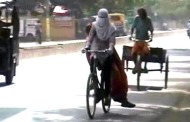
Hyderabad: As Andhra Pradesh continues to reel under heatwave, Chief Minister Chandrababu Naidu on Saturday announced a compensation of Rs 1 lakh each to the kin of those who have died of sun-stroke.
We are announcing Rs 1 lakh as compensation for each victim of heat wave,” ANI quoted Naidu as saying.
He further said, “The toll so far due to heat wave in Andhra Pradesh may be over 100.”
However, officials have so far confirmed that the heatwave has claimed at least 223 lives.
While 128 persons have died in Telangana, the toll increased to 95 in Andhra Pradesh, where 15 more persons succumbed to the heatwave, senior officials said.
Earlier in the day, severe heat wave conditions have been reported in both Andhra Pradesh and Telangana.
According to officials, 40 persons lost their lives in Prakasam district of Andhra Pradesh followed by Visakhapatnam 12 and Srikakulam eight while in Telangana, 28 persons died due to heat wave in Nalgonda district followed by 22 deaths in Karimnagar and nine in Khammam district.
The toll pertains to the period from May 18 till last evening for Andhra Pradesh and April 15 till the last evening for Telangana, the officials added.
Severe heatwave conditions prevailed over parts of Adilabad, Warangal, Hyderabad, Khammam, Mahabubnagar, Nalgonda, Nizamabad and Karimnagar districts of Telangana.
Elderly people, daily wage labourers, beggars and people living on footpaths have been the worst hit.
The Hyderabad Meteorological Centre has warned that severe heat wave conditions may continue for three more days in both the states.
Khammam in Telangana today sizzled at 48 degrees Celsius, the highest temperature in the state this season. This also broke a 68-year-old record in Khammam when the town had recorded 47.2 degree Celsius in 1947.
Nalgonda, Nizamabad and Ramagundem also sizzled at 47 degrees Celsius. Mahabubnagar and Adilabad recorded 45 degrees and Hyderabad 44 degrees.
The south coastal Andhra region bore the brunt with many places recording three to five degrees higher temperature than normal. A maximum temperature of 47 degrees was recorded at Nandigama and Vijayawada.
The heatwave, attributed to dry winds blowing from the north, has badly hit normal life in both the states. Streets in many towns wore a deserted look as people preferred to stay indoors to escape the sun’s fury. Traffic was thin on the roads of Hyderabad during day time.
Heatwave conditions, Thursday, prevailed over some parts in the districts of Krishna, Guntur, Prakasam and Nellore of Coastal Andhra Pradesh and Chittoor of Rayalaseema.
The maximum temperature of 46 degrees Celsius was recorded at Nandigama, they said, adding heat wave conditions would continue till tomorrow.
Meanwhile, Delhi recorded its hottest day of this summer at 44.5 degrees Celsius, five notches above the normal. However, the weatherman hinted at the likelihood of some relief in the form of dust storms or thunderstorms tomorrow across northern India.
The heatwave also intensified in Odisha as the mercury inched above the 40-degree mark at 19 places in the state while three more deaths due to the sweltering conditions were reported today, taking the toll to 26, said the office of the special relief commissioner.
Titlagarh recorded the highest maximum in the state at 46.2 degrees while Jharsuguda and Bhawanipatna recorded highs of 46 degrees. The Odisha state capital of Bhubaneswar sizzled at 42.7 degrees.
Back in the northern plains, Uttar Pradesh saw the mercury cross the 41 degree mark in most of the districts. Allahabad recorded the highest maximum in the state at 47 degrees, which was five notches above the normal, followed by Banda at 46.6 degrees, Varanasi (45.8 degrees) and Sultanpur (45.6 degrees).
UP capital Lucknow saw the maximum touch 44.4 degrees even as weather officials forecast rain/thundershowers at isolated places along with dust storms and thunderstorms accompanied by squalls tomorrow at other areas of the state.
The two neighbouring states of Punjab and Haryana, too, reeled under the heatwave.
Bhiwani in Haryana witnessed a high of 45.2 degrees, four notches higher than the normal, while Hisar saw the maximum go up to 44.7 degrees.
The Union Territory of Chandigarh, which was hit by a dust storm this evening, recorded the season’s hottest day so far at 43.4 degrees.
In Punjab, Amritsar saw the mercury settle five notches above the normal at 43.6 degrees while Ludhiana sweat it out at 43.5 degrees.
The MeT office has forecast dust storm/thunderstorm accompanied with squalls at wind speeds exceeding 45-kmph at isolated places in Haryana and Punjab over the next two days.
The desert state of Rajasthan saw Jaisalmer recording the highest maximum at 46.5 degrees followed by Kota with a high of 45.4 degrees as heat wave conditions prevailed at a few places in the Kota and Bikaner divisions and in isolated areas of Jodhpur division.
The heat wave conditions are likely to continue in isolated pockets of Rajasthan even as a thunderstorm is likely at some places in the state in the next 24 hours, the MeT office said.
There was slight respite from the heatwave in the Vidarbha region of Maharashtra as the temperatures dropped in several areas even though Chandrapur recorded a high of 47 degrees. Chandrapur had yesterday recorded a maximum of 47.6 degrees.
Nagpur, which had recorded a high of 47 degrees for two consecutive days earlier this week, today saw the mercury settle at 45.1 degrees.
Raise your hands and bless me. Tell me if I have fallen short: PM.
– We will get rid of poverty, make our nation economically stronger, make our nation proud globally: PM Modi.
– Every moment of my life, every strength in body is dedicated to you. My government will take this country to new heights: PM.
– Didn’t I promise I would not take a vacation, I would not rest? Have I let you down, PM Modi asks people.
– I cannot do anything for those on whom bad days have come. Let them shout: PM Modi.
– Are you unhappy with me, PM asks people at the rally.
– My government’s schemes are for the poor and not rich industrialists, emphasises PM Modi.
– If I try and go through all the decisions that this government has taken in 365 days, it will take more than 365 hours: PM.
– We will eradicate poverty together. We will also take this country to new heights: PM.
– I have also decided that by 2022 every poor in this country will have a house of their own. I am developing a team which who will fight poverty: PM.
– Both rivers, Ganga and Yamuna are my mothers. We will clean them: PM Modi.
– We started the Clean India mission. Its not the rich who suffer due to unhygienic conditions. Its the poor who suffer from dirty environment and fall ill. I want to end that: PM.
– Its sad that our mothers and sisters have to wait for dark in order to go to toilet. My dream that there should be toilet in every village: PM.
– I want small businessmen to have access to bank loans, hence we thought of the Mudra Bank to give loans from Rs 10,000 to 10 lakhs: PM.
– Big corporates don’t generate a lot of employment. It is the small traders and businessmen who provide the maximum employment: PM.
– If India has to fight poverty, the youth of the nation must get employment opportunities: PM Modi.
– Compared to last year 6 lakhs more tourists have come to India. Tourism creates job opportunities: PM.
– The world is now trusting India and this is bringing investment in India: PM.
– We have been able to control the rising prices: PM.
– If you had not elected this government, then we don’t know what would have happened to price rise and inflation: PM Modi.
– PM Modi appeals to audience to use the insurance scheme for servants, drivers and other employees.
– We want to create an environment where there is a sense of social security within people. For this we have introduced Atal pension yojana. Did you ever imagine that a farmer in our nation could get pension after 60 years?, asks PM.
– During last elections I had said, that if I had my way I would end one law every day. Laws which have lost relevance will be scrapped, that will make many processes smooth. In the coming days 1300 laws will be abolished: PM.
– My government provided bank accounts to poor people and is committed to provide opportunities to them. More than 12 crore people get gas subsidy benefits directly in their accounts: PM.
– There were so many people who never got pension. Ours is a government dedicated to the poor and we have decided to give adequate pension: PM.
– The government won’t keep one rupee of yours. We will send every rupee to the deserving employee: PM Modi.
– For years 27 thousand crores was lying idle and rotting with the government in the treasury. That money was of the poor. People used to change job, his money was cut but he did not know about it. Now there is a unique identity number, so whenever you quit a job, the unique ID number is transferred and so is the money: PM.
– We have done away with the necessity to get documents attested by government officials. We have taught India to trust its citizens: PM.
– Earlier citizens of this country had to get photocopy of their documents signed by MLA or corporator, why, are citizens of my nation is not truthful, asks PM.
– I had promised ‘maximum governance, minimum government’ and I have fulfilled that promise. I have brought change: PM.
– Jan Dhan Scheme has removed middle man from MNREGA: Modi.
– PM Modi says they have started putting ‘neem coating’ on fertilisers to prevent urea theft.
– Urea production is going to increase by 20 lakh tonnes: PM Modi
– We have decided that in the next five years rivers will be interlinked, water harvesting will be done and through many such things we will give water and electricity to every farmer in the next five years. The amount of electricity that was generated in one year was not done in the last 30 years: PM Modi.
– The farmer will then know about the condition of his land: PM.
– In the past 60 years more than 3 lakh farmers have committed suicide but we do not want to do politics on it. The farmer knows how to work hard. We decided that we will give every farmer in the next three years soil health card: PM.
– We opened bank accounts for the poor. The poor were not given the opportunity to enter the banks for so many years: PM.
– I did not promise good days for those who looted the country: PM.
– I have barred power brokers from the corridors of power. These were the people who ruled for 60 years. They are history now, there is no place for such people. I will not let anyone loot the country. I am your pradhan sevak: PM.
– Good days have come for the people of India but those on whom bad days have descended are troubled as power has been snatched from them: PM.
– In the previous regime no work was done for the poor. I have made sure that things are back on track: PM.
– Are bad days over or not, PM Modi asks the people.
– Coal mines were given to a select few….keep looting…this was what was followed: PM
– Every day there were scams, remote controls ran the government, officers were jailed, leaders were jailed, coal was stolen: PM
– You tell me have you heard of any of my minister involved in corruption. Has not the country been rid of loot and corruption: PM.
– Would things have changed had you allowed the previous government to continue: PM.
– You tell me has the situation not changed in the country. The change that has taken place in the last year, Modi has not brought but you have: PM.
– During UPA rule, there were scams and corruption – coal scam and 2G scam and what not. The country was in bad shape: Modi.
– Today there is a positivity in the air and feeling of change in the country. If elections had not been held in 2014 but a year later, this country would have been destroyed: PM.
– Three thoughts shaped us in the last several years – that of Mahatma Gandhi, Lohia ji and Deendayal ji: PM.
– A year back the people of India chose a government with absolute majority. We could have held celebrations in Delhi or any other town with a huge population. But I didn’t want that. I had said in Parliament that this government was of the poor. After 365 days in office, I had wanted that the man who had inspired us to work for the poor, I should go to his birthplace and pay tribute to him. That is why I have come here: PM.
New Delhi, May 23 (ANI): Minister of State in the Prime Minister’s Office Jitendra Singh on Saturday rejected the charge that the government is delaying the appointments of the chiefs of the Central Information Commission (CIC) and Central Vigilance Commission (CVC).
“I think this thing has been time and again reiterated both inside and outside the Parliament. As somebody looking after the department of DoPT, I can testify that there has been no delay, if at all, on account of any reason from Government or DoPT. For example, as far as the CVC was concerned, there was an intervention from the court that every step of the process has to be brought in the notice of the court, and therefore, we were bound to wait for the date of the appearance,” Singh told ANI.
“As far the CIC is concerned, earlier the practice was that whenever the chief information commissioner was retired, the senior most information commissioner would automatically become the CIC. But in order to bring in more transparency, we have decided to put out an advertisement so that seniority is not the only basis, and other considerations, based on calibre, aptitude etc are also taken into account,” he added.
Singh’s clarification came shortly after Prime Minister Narendra Modi discussed the issue with key ministers and opposition Congress leader Mallikarjun Kharge at his official 7, Race Course Road residence.
“Suggested that a short list be made, on which a discussion can happen. Another meeting shall be called in the first week of June,” said Kharge.
Besides Kharge, Union Home Minister Rajnath Singh, Union Finance Minister Arun Jaitley, Minister of State for PMO Jitendra Singh attended the meeting.
The post of the Chief Information Commissioner has been lying vacant for over nine months after Rajiv Mathur’s term ended in August last year. There is also a vacancy of three Information Commissioners in the CIC while previous Central Vigilance Commissioner Pradeep Kumar completed his term in September last year. (ANI)

Taipei, May 23 (AP) Negotiators from Taiwan and China have met for talks on a range of issues in an attempt to maintain momentum for the forging of closer ties in the face of a skeptical Taiwanese public.
Today’s talks resulted in no firm agreements but underscored Taiwanese President Ma Ying-jeou’s determination to prove that engagement with China can help the local economy.
Ministerial-level officials from both sides met on the tiny Taiwan-controlled island of Kinmen, just off the Chinese coast, where the rivals fought bloody military battles in the 1950s and 1960s.
Taiwan’s Cabinet-level negotiating body, the Mainland Affairs Council, said topics discussed included controlling the illegal excavation of sand from the ocean floor, opening outlying Taiwanese islets to more China-based tourism and letting Chinese tourists make transit stops in Taiwan.

London, May 23 (ANI): Police have launched an incest investigating after it was alleged that a 17-year-old boy blackmailed his mother to have sex with him.
Pennsylvania State Police stated “that a 17-year-old child had stated that he had blackmailed his mother into having sex with him,” however, the authorities are considering the boy a victim in the case, the Daily Star reported.
According to the cops, the incident took place on Broad Street in the borough of Williamstown in Dauphine County.
Pennsylvania has laws against marriage, cohabitation or have sexual intercourse, with a parent, child, sibling, aunt, uncle, nephew or niece.
The ones found guilty are likely to face a second degree charge, meaning up to 10 years in prison and life on the sex offender register. (ANI)

Kathmandu, May 23 (PTI) The death toll following the two devastating earthquakes that have struck Nepal has reached 8,635 with over 300 people, including 89 foreigners, still missing.
At least 79 foreigners, including 49 Indians have been killed in the devastating earthquakes, according to a statement by the Nepal police.
About 240 Nepalese nationals and 89 foreigners have still been missing since the April 25 earthquake, police said.
Of the total number of foreign military personnel deployed from 18 countries for rescue and search operations, 2,509 people, including 851 Indians, have already left the country after completing their assignments.
However, 1,807 foreign military personnel,?including 564 Indians, are in the process of returning to their home countries, according to a statement by the Nepal Army.
The 7.9-magnitude earthquake which struck Nepal on April 25 and another measuring 7.3 on the Richter Scale on May 12 have left 8,635 people dead, 21,845 injured and destroyed or damaged tens of thousands of houses.
Five aftershocks measuring between 4 to 5 on the Richter Scale were recorded yesterday. Over 255 aftershocks of over 4 magnitude have been recorded in the country since the April 25 earthquake.
Eight MI-17 helicopters and five ALH choppers from India, 3 MI-17 choppers from China, 3 UH1Y and 4 MV-228 choppers from the US have conducted their flights in search and rescue works, airlifting injured people, managing debris and supplying relief materials to various earthquake-hit areas.
Meanwhile, Nepal is facing a crunch of labourers in the aftermath of the devastating earthquake of April 25 as some 20,000 Nepali migrant labourers have left the country in the past one month.
After two earthquakes and a series of aftershocks, a large number of migrant workers have again started returning to foreign countries, which makes it difficult for the government to implement its plan to employ around 1,00,000 volunteers in rebuilding the quake affected districts, experts said.
Kathmandu, the capital city is also facing labour crunch as many skilled and semi-skilled Indian nationals, who were working in different service sectors have returned to their homes after the earthquake.
There is a shortage of barbers, plumbers, vegetable vendors and carpenters in Kathmandu these days as most of the labourers come from across the border, mainly from Uttar Pradesh and Bihar.

Panaji, May 23 (PTI) Goa Chief Minister Laxmikant Parsekar today refused to reduce the value added tax (VAT) on petrol.
“We will not reduce the VAT on petrol prices. There is no demand from people to reduce it. If VAT is reduced, petrol will cost lesser than diesel which is not a good situation,” Parsekar told reporters on the sidelines of an IT convention.
The BJP-led government had abolished VAT on petrol when it came to power in 2012 reducing the prices by Rs 11.
Later, the then Chief Minister Manohar Parrikar had imposed a VAT of 3.5 per cent on it which was later increased twice by Parsekar to 15 per cent.
Parsekar had said VAT would be reduced if petrol prices cross Rs 60 per litre mark.
The hike in petroleum prices last week had raised the petrol prices to Rs 63.50 per litre in the state.
Parsekar ruled out review of VAT on petrol products and said the increase in taxations was to compensate the losses due to mining closure.
The mining industry in the state has been closed since last more than two years.
Her conviction in a corruption scandal last year had cut short her fourth term as the chief minister, but earlier this month, an appeals court cleared her.
She will take oath on Saturday morning, officials said.
Her replacement O Panneerselvam quit on Friday, paving the way for her return.
Jayalalitha, a former actress, is one of India’s most colourful politicians.
She has been a leading figure in south Indian politics for three decades.
Ms Jayalalitha was convicted and sentenced for four years by a trial court last September.
She was found guilty of amassing unaccounted-for wealth of more than $10m (£6.4m) and had to quit as the chief minister.
The appeals court ruling earlier this month paved the way for her returning as the head of Tamil Nadu government.
On Friday morning, Tamil Nadu Governor K Rosaiah’s office said in a statement that Mr Panneerselvam, party leader and loyalist who was heading the government in her absence, resigned along with his cabinet ministers.
The governor accepted the resignations and invited Ms Jayalalitha to form a government “at the earliest”, the statement added.
Later in the afternoon, Ms Jayalalitha called on the governor and accepted his invitation to form the government.
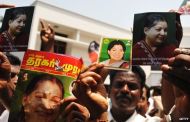
Thousands of supporters flashed victory signs and threw flower petals at her car as it sped through the streets of Chennai.
Earlier, legislators belonging to her regional AIADMK party met and elected Ms Jayalalitha as the leader of the legislature party.
“This is the happiest day of our life,” former minister Sellur K Raju told the NDTV news channel.
Former actress who appeared in more than 100 films
Chief minister of Tamil Nadu on four occasions – from 1991-96, briefly in 2011, 2002-06 and 2011-14
Has alternated in power with her great rival, 90-year-old DMK party leader M Karunanidhi
Feted by various Indian prime ministers over the last 20 years trying to win her support
Critics accuse her of establishing a personality cult, but supporters praise her poverty relief efforts
Known for her extravagant lifestyle – police once discovered more than 10,000 saris and 750 pairs of shoes in a raid on her premises.
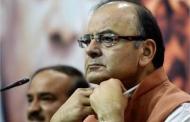
New Delhi, May 23 (PTI) Attacking Congress over dual power centres during UPA’s reign, BJP today said its rule has restored the credibility, dignity and stature of the post of Prime Minister, who has the last word in this government.
“UPA’s attempt to reduce the stature of Prime Minister’s position by setting up power centre outside the government, we always felt such a system cannot continue in a democracy and we have reversed that,” senior BJP leader and Finance Minister Arun Jaitley said at a press conference to mark the first anniversary of Narendra Modi government.
“The last year has restored the credibility, dignity and stature of the Prime Minister’s Office. In this government, the last word belongs to the Prime Minister and that is how it should be,” he said.
Jaitley asserted that the party has become the central pole of Indian politics and the national polity will now be guided along pro-BJP and anti-BJP lines.
BJP also announced a host of programmes including 200 big rallies and 5,000 public meetings across the country to mark the first anniversary of its government which all Union and state ministers, party MPs and office bearers will address.
Jaitley also said minorities in the country were safe and in the last one year, government has made attempts to ensure there is no social tension.
On provocative statements made by BJP leaders, he said they were told not to do so and some incidents like attacks on churches were found to be law and order issues.
“Today all such religious institutions have been provided with security, which was never there in the past,” he said.
He said the party and the government together displayed a lot of coordination and there is enthusiasm among party workers across the country. “Our party and our cadres are proud of our performance,” he asserted.
“Policy paralysis has been replaced by quick decision- making process, reluctance has been replaced by decisiveness.
There is clarity of direction in the government. A very big change is that corruption has been replaced by transparent governance.
Crony capitalism has been replaced by liberal policy-based governance,” he said



Recent Comments