






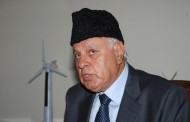
JAMMU: India and Pakistan must hold their dialogue in a neutral country, former Jammu and Kashmir chief minister Farooq Abdullah said on Sunday after the collapse of the NSA-level talks.
“I think the way forward is they can’t talk in this country or in Pakistan. They have to find another third neutral country where they can talk,” the National Conference leader told the media.
“Otherwise I don’t see there is going to be ever any breakthrough between these two countries,” he said.
Islamabad on Saturday axed the talks between the Indian and Pakistani national security advisers after New Delhi strongly opposed to any meeting by the visiting Pakistani officials with Kashmiri separatists.
The former chief minister also said Pakistan needed to realise how terrorism was affecting it.
He said everybody was hoping that something better would come out of the NSA talks in New Delhi and bombing on the Kashmir border would stop.
“I think Pakistan does not realise that how terrorism is eating its own land.
“Every day they also have incidents where lots of people die. If they do not want to stop terrorism, India cannot help,” Abdullah added.
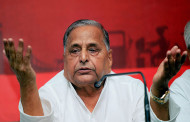
Mahoba (UP), Aug 21 (PTI) Taking suo motu congnisance of his recent remarks on rape, a local court has summoned Samajwadi Party supremo Mulayam Singh Yadav on September 16.
Civil Judge (Junior Division) of Kulpahad Tehsil Ankit Goel took congisance of Yadav’s statement on rape on August 18 in Lucknow, where he had said while one man commits rape, four are named to “settle scores” and that rape by four persons was not “practical”.
The SP supremo had said there were instances where only one person committed rape but the victim named four people merely to “settle scores”.
The summons have been issued under sections 3 and 4 of Indecent Representation of Women (Prohibition) Act, 1956 and under IPC sections 504 (intentional insult with intent to provoke breach of the peace), 505 (statements conducing to public mischief), 509 (word, gesture or act intended to insult the modesty of a woman), 116 (abetment of offence punishable with imprisonment).

New Delhi, Aug 21 (PTI) After a long “dormancy”, the country’s investment cycle is showing signs of recovery and to sustain this trend the government needs to step in as “investor and enabler”, a Standard Chartered report said today.
“Our analysis of the recent Centre for Monitoring Indian Economy (CMIE) data, shows initial signs of recovery, particularly in infrastructure investment, after years of dormancy,” Standard Chartered said in a research note adding that “we expect the investment cycle to recover in FY16, albeit at a gradual pace.”
According to the global financial services major, an investment recovery seems to have begun as investment remained on an upward trend in the first quarter of this fiscal year.
The global brokerage said reviving the investment cycle is crucial to put India’s growth on a higher and more sustainable trajectory and in order to support the recovery, government has to play the “dual role of investor and enabler”.
The government is driving the current investment recovery, while private-sector investment remains soft, it said.
The report noted that recovery in private-sector investment will be gradual and halting given high corporate -sector leverage, a weak banking sector, and low capacity utilisation in sectors to which the private sector has high exposure.
“Since these issues will take time to resolve, a pick-up in private-sector investment is still two to four quarters away, in our view. We expect India’s investment growth to improve to 7.2 per cent in FY16 from 4.6 per cent in FY15,” the report said.
As per the report, land acquisition hurdles, lack of funding, weak and environmental clearances are key bottlenecks to investment.
“The impact of global developments on domestic investment also needs to be monitored. The recent sharp decline in global metal prices, for example, is likely to curb private-sector investment in the metal sector, delaying its recovery,” the report added.

WARSAW, Poland: Two men in Poland claim they have found a legendary Nazi train that according to local lore was loaded with gold, gems and valuable art and vanished into a system of secret tunnels as the Germans fled advancing Soviet forces at the end of World War II.
Historians say the existence of the train has never been conclusively proven, but authorities are not passing up this chance at possibly recovering treasures that have sparked the imaginations of local people for decades.
“We believe that a train has been found. We are taking this seriously,” Marika Tokarska, an official in the southwestern Polish district of Walbrzych, told The Associated Press on Thursday.
She said her office has received two letters this month from a law firm representing the men, a Pole and a German who are remaining anonymous, saying they are seeking 10 percent of the value of the train’s contents for revealing its location.
She says that hiring a law firm gives credibility to the two men’s claims, as do indications that they are familiar with the train’s contents.
Already, the district governor has convened a meeting of firefighters, police and others to explore how they can safely handle the train if it is located. Not only could it be armed with explosives, but methane gas underground could add to the risk of an explosion.
“It could be dangerous,” Tokarska said.
The train is said to have gone missing in May 1945. Legend says it was armed and loaded with treasure and disappeared after entering a complex of tunnels under the Owl Mountains, a secret project known as “Riese” — or Giant — which the Nazis never finished. At the time the area belonged to Germany but now lies in Poland.

A Pakistani-American girl, Amna Farooqi, who is a senior at the University of Maryland has been elected as president of the national student board of a pro-Israeli group called J Street U.
The girl was elected as the president during the group’s ‘Summer Leadership Institute’ in Washington. The four-day event was attended by around 120 U student leaders. The group consisits of 4,000 active participants from almost 75 campuses in the United States.
Talking about the Palestine-Israel conflict and how the issue personally affects her, Farooqi during the conference said, “Growing up in a household sympathetic to the Palestinian cause, the Palestine-Israel conflict was always the elephant in the room. This conflict evoked a level of anger and emotion in me, and I needed to learn more. Everything I was learning about the conflict made me not want to be pro-Israel. … As someone who wanted to contribute to ending this conflict I knew I needed to understand all sides.”
She also said that she “fell in love with Zionism” while taking up a course in college which dealth with issues in Israel. Further commenting obout Zionism she added, “ecause Zionism became about taking ownership over the story of one’s people. If Zionism is about owning your future, how can I not respect that?”
Amna Farooqi is a local resident of suburban Washington DC and has grown up in a ‘fairly religious Muslim home’ with several Jewish friends.

NEW DELHI: Exiled Bangladeshi author Taslima Nasreen’s visa was today extended for a year by the home ministry.
The decision has been taken following an intervention of home minister Rajnath Singh as Taslima has been requesting the Indian government to further extend her visa.
The 52-year-old writer’s visa was granted for a year with effect from July 23, a Home Ministry official said.
Reacting to the decision, Taslima told PTI that she was very happy even though she was expecting her visa to be extended by more than a year.
“Anyway, this is always a welcome news. I am yet to be officially conveyed (the government decision) and you are the one who broke the news to me,” she said.
Taslima, living in exile since she left Bangladesh in a cloak of secrecy in 1994 in the wake of threats to her by fundamentalist groups, was given a one-year visa by the government in 2014.
Taslima, a citizen of Sweden, has been getting Indian visa on a continuous basis since 2004.
She has also stayed in the US and Europe in the last two decades. However, on many occasions she had expressed her wish to live in India permanently, especially in Kolkata.
The writer had to leave Kolkata in 2007 following violent street protests by a section of Muslims against her works.
Taslima said if she is not able to stay on in India she will suffer from an “identity crisis” which will affect her writings and championing the cause of women’s rights.

NEW DELHI: The NIA on Friday arrested the truck driver who had allegedly helped Pak terrorist Naved Yakub, involved in Udhampur terror attack.
Naved, alongwith an accomplice, had attacked a BSF convoy in J&K’s Udhampur.
While the accomplice was killed by a BSF jawan, Naved was captured alive by villagers as he fled after the terror attack.
Naved, was brought to Delhi by NIA and made to polygraph test.
He was also taken to various places during which he identified some of the people who had helped him during his stay in the Valley.
NIA has also released two sketches of LeT terrorists, who were claimed to have infiltrated Jammu & Kashmir’s Gulmarg sector with Naved.
NIA has also taken DNA and voice samples of Naved. Sources said the DNA sample would come in handy to prove the militant’s Pakistani nationality.
While Naved has told his interrogators he is from Faislabad in Pakistan’s Punjab province, Islamabad has been insisting he is not a Pakistani national.
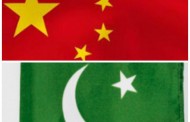
Is Pakistan being pushed into a corner by China with regard to the recently signed bilateral economic corridor deal? It certainly appears to be so, with highly placed sources saying the pact has run into rough weather.
According to them, China has reportedly placed Pakistan in a financial bind, with the latter apparently failing to comprehend the finer aspects of the agreement linked to the landmark project.
These highly placed sources say that to begin with, the funding from China will be in the form of loans offered at very high rates of interest, in most cases, higher than other commercially available options.
ppears to have been overwhelmed by real politick.
The sources further state that China not only wants better than market returns for the money being invested in the proposed China Pakistan Economic Corridor (CPEC), but also wants Islamabad to select only Chinese firms for all CPEC-related contracts.
For instance, business rivals of China are being quoted, as saying that Beijing is putting pressure on Pakistan to make sure that work related to the Gwadar Port Development Project is given only to a Chinese company selected by Beijing.
Officials in Pakistan have reportedly railed against such interference, but the missive from China appears to be clear, no Chinese company means no project, and therefore, no money.
According to the highly-placed sources, Pakistan, as a result, has been left with no option except to hold up the tendering process which was to conclude on July 30.
With the process halted because of the Chinese firms only clause, the other contenders for the proposed economic corridor, including those from the United States, the Gulf and South East Asia, are in commercial limbo not of their making.
The sources say that Pakistan has lost face in the matter is of no consequence to China, and it is more than obvious that Beijing won’t countenance the possibility of a likely American presence at the strategically important Gwadar Port. Pakistan, therefore, can be expected to nominate a Chinese company sooner than later.
The CPEC was announced by China and Pakistan with much fanfare in April this year, during the visit of Chinese President Xi Jinping.
The CPEC is a 3000-km-long network of roads, railways and pipelines that will eventually link China’s Xinjiang Uygur region with Pakistan’s Gwadar Port.
This Belt and Road initiative is aimed at reviving the ancient trade routes that once spanned Asia, Africa and Europe.
Then, the leaderships of both countries were being wholeheartedly praised. China, especially, was being looked upon with awe for committing over $45 billion for the project.
India, on the other hand, was worried about projects in Pakistan-occupied Kashmir. Prime Minister Modi is reported to have mentioned his concerns with President Xi Jinping when he visited Beijing in May 2015.
Among the questions doing the rounds is why will a wily China commit such a huge amount of money with a country as unstable as Pakistan.
If looked at from Beijing’s perspective for instance, its access to the deep sea port of Gwadar in Balochistan, which is located at the mouth of the Persian Gulf, just outside the Strait of Hormuz, is beneficial, as it serves as the gateway for about 20 percent of the world’s oil.
Through Gwadar, China gains access to oil from the Middle East, and would be in a position to transport it via land or railway to the northwestern Chinese city of Kashgar, which located about 3000-kilometers away.
China has secured the right to operate the Gwadar Port for 40 years, and observers here are of the view that this has strong military possibilities for Beijing.
Operating out of Gwadar, also gives China access to Gulf countries, and a chance for it to consider building a naval base on the Arabian Sea in the future, sources have said.
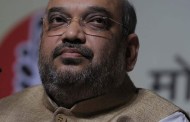
BJP President Amit Shah and three other senior leaders were trapped in the lift of the state guest house here for around 40 minutes, throwing the security and party officials into a tizzy.
“The lift got stuck between the two floors and its metal doors also got jammed at around 11.30 PM last night. There was no lift operator or person capable of handling such emergency around. The mobile phones of those trapped inside were also out of range as they were in a closed box,” BJP state President Mangal Pandey said. The incident happened when Shah was going from the ground floor of the state guest house to the first floor along with party in-charge for Bihar Bhupendra Yadav, Secretary Nagendra Ji and General Secretary Saudan Singh and a couple of security personnel.
He was ultimately rescued by CRPF personnel who were present there as part of his Z+ security cover. They had to tear apart steel doors of the elevator to pull out Shah and other leaders trapped inside. Recounting the horror, Pandey said all attempts to open the doors of the lift failed. The caretaker of the place was also not of much use in the situation and people waiting on the ground and first floors of the guest house became anxious about the condition of those trapped inside.
“Nothing worked and around 40 minutes passed. It was then that CRPF was asked to break open the doors. It did so and Shah and other leaders were rescued,” Pandey said, adding “Once the doors were broken, the trapped persons came out”. “It is a gross dereliction of duty and irresponsibility shown by the people responsible for facilities at the state guest house. There was nobody present there to deal with such emergencies despite the fact that a person having Z+ security cover was staying there,” he said.
No government officials are available for comments. Meanwhile, Shah left for New Delhi by flight this morning. He came to Patna on Thursday to participate in a forum organised by a vernacular daily. He was staying at the state guest house and was conducting meeting with party leaders in view of the forthcoming Assembly polls in Bihar.

Google announced at its I/O earlier this year, that they would be looking to add features that cater to countries where fast internet connections are not the norm, and they officially demonthe fruits of that effort at their Google House event earlier today.
As Sandeep Menon, Google Country Marketing Director explains “Indians are coming online from mobile devices at an incredibly rapid rate — six to seven million new mobile internet users every month. Today’s event is about showcasing how we’re working to make our products relevant and useful for India, and how smartphones have evolved to become the best personal assistant you’ve never had.”
One demonstration was that of the new instant translation feature in Google Translate. Recently launched in Hindi as well, it helps you instantly translating printed text like, street signs or ingredient lists, by opening the app on your phone and pointing your camera at the text. There was also a deeper look at the new Google Photos app, which automatically backs up photos and videos across all your synced devices. Google Photos also offers unlimited, free storage for life, and automatically organises your folders.
There have been recent updates to Search as well, like faster and lighter search results for people accessing the web from a mobile device with a slow connection like 2G, and voice search updates to the Google app which has been optimised for English in the Indian accent and in Hindi. In addition, there are a few offline features as well, like the ability to save Maps for when you don’t have an internet connection available, or YouTube Offline, which gives you a way to possibly download videos over a WiFi connection, and later watch them without chewing through your phone data.


















Recent Comments