




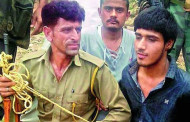
NEW DELHI: The NIA on Friday arrested the truck driver who had allegedly helped Pak terrorist Naved Yakub, involved in Udhampur terror attack.
Naved, alongwith an accomplice, had attacked a BSF convoy in J&K’s Udhampur.
While the accomplice was killed by a BSF jawan, Naved was captured alive by villagers as he fled after the terror attack.
Naved, was brought to Delhi by NIA and made to polygraph test.
He was also taken to various places during which he identified some of the people who had helped him during his stay in the Valley.
NIA has also released two sketches of LeT terrorists, who were claimed to have infiltrated Jammu & Kashmir’s Gulmarg sector with Naved.
NIA has also taken DNA and voice samples of Naved. Sources said the DNA sample would come in handy to prove the militant’s Pakistani nationality.
While Naved has told his interrogators he is from Faislabad in Pakistan’s Punjab province, Islamabad has been insisting he is not a Pakistani national.
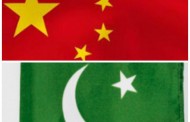
Is Pakistan being pushed into a corner by China with regard to the recently signed bilateral economic corridor deal? It certainly appears to be so, with highly placed sources saying the pact has run into rough weather.
According to them, China has reportedly placed Pakistan in a financial bind, with the latter apparently failing to comprehend the finer aspects of the agreement linked to the landmark project.
These highly placed sources say that to begin with, the funding from China will be in the form of loans offered at very high rates of interest, in most cases, higher than other commercially available options.
ppears to have been overwhelmed by real politick.
The sources further state that China not only wants better than market returns for the money being invested in the proposed China Pakistan Economic Corridor (CPEC), but also wants Islamabad to select only Chinese firms for all CPEC-related contracts.
For instance, business rivals of China are being quoted, as saying that Beijing is putting pressure on Pakistan to make sure that work related to the Gwadar Port Development Project is given only to a Chinese company selected by Beijing.
Officials in Pakistan have reportedly railed against such interference, but the missive from China appears to be clear, no Chinese company means no project, and therefore, no money.
According to the highly-placed sources, Pakistan, as a result, has been left with no option except to hold up the tendering process which was to conclude on July 30.
With the process halted because of the Chinese firms only clause, the other contenders for the proposed economic corridor, including those from the United States, the Gulf and South East Asia, are in commercial limbo not of their making.
The sources say that Pakistan has lost face in the matter is of no consequence to China, and it is more than obvious that Beijing won’t countenance the possibility of a likely American presence at the strategically important Gwadar Port. Pakistan, therefore, can be expected to nominate a Chinese company sooner than later.
The CPEC was announced by China and Pakistan with much fanfare in April this year, during the visit of Chinese President Xi Jinping.
The CPEC is a 3000-km-long network of roads, railways and pipelines that will eventually link China’s Xinjiang Uygur region with Pakistan’s Gwadar Port.
This Belt and Road initiative is aimed at reviving the ancient trade routes that once spanned Asia, Africa and Europe.
Then, the leaderships of both countries were being wholeheartedly praised. China, especially, was being looked upon with awe for committing over $45 billion for the project.
India, on the other hand, was worried about projects in Pakistan-occupied Kashmir. Prime Minister Modi is reported to have mentioned his concerns with President Xi Jinping when he visited Beijing in May 2015.
Among the questions doing the rounds is why will a wily China commit such a huge amount of money with a country as unstable as Pakistan.
If looked at from Beijing’s perspective for instance, its access to the deep sea port of Gwadar in Balochistan, which is located at the mouth of the Persian Gulf, just outside the Strait of Hormuz, is beneficial, as it serves as the gateway for about 20 percent of the world’s oil.
Through Gwadar, China gains access to oil from the Middle East, and would be in a position to transport it via land or railway to the northwestern Chinese city of Kashgar, which located about 3000-kilometers away.
China has secured the right to operate the Gwadar Port for 40 years, and observers here are of the view that this has strong military possibilities for Beijing.
Operating out of Gwadar, also gives China access to Gulf countries, and a chance for it to consider building a naval base on the Arabian Sea in the future, sources have said.
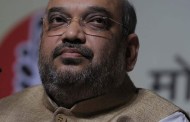
BJP President Amit Shah and three other senior leaders were trapped in the lift of the state guest house here for around 40 minutes, throwing the security and party officials into a tizzy.
“The lift got stuck between the two floors and its metal doors also got jammed at around 11.30 PM last night. There was no lift operator or person capable of handling such emergency around. The mobile phones of those trapped inside were also out of range as they were in a closed box,” BJP state President Mangal Pandey said. The incident happened when Shah was going from the ground floor of the state guest house to the first floor along with party in-charge for Bihar Bhupendra Yadav, Secretary Nagendra Ji and General Secretary Saudan Singh and a couple of security personnel.
He was ultimately rescued by CRPF personnel who were present there as part of his Z+ security cover. They had to tear apart steel doors of the elevator to pull out Shah and other leaders trapped inside. Recounting the horror, Pandey said all attempts to open the doors of the lift failed. The caretaker of the place was also not of much use in the situation and people waiting on the ground and first floors of the guest house became anxious about the condition of those trapped inside.
“Nothing worked and around 40 minutes passed. It was then that CRPF was asked to break open the doors. It did so and Shah and other leaders were rescued,” Pandey said, adding “Once the doors were broken, the trapped persons came out”. “It is a gross dereliction of duty and irresponsibility shown by the people responsible for facilities at the state guest house. There was nobody present there to deal with such emergencies despite the fact that a person having Z+ security cover was staying there,” he said.
No government officials are available for comments. Meanwhile, Shah left for New Delhi by flight this morning. He came to Patna on Thursday to participate in a forum organised by a vernacular daily. He was staying at the state guest house and was conducting meeting with party leaders in view of the forthcoming Assembly polls in Bihar.

Google announced at its I/O earlier this year, that they would be looking to add features that cater to countries where fast internet connections are not the norm, and they officially demonthe fruits of that effort at their Google House event earlier today.
As Sandeep Menon, Google Country Marketing Director explains “Indians are coming online from mobile devices at an incredibly rapid rate — six to seven million new mobile internet users every month. Today’s event is about showcasing how we’re working to make our products relevant and useful for India, and how smartphones have evolved to become the best personal assistant you’ve never had.”
One demonstration was that of the new instant translation feature in Google Translate. Recently launched in Hindi as well, it helps you instantly translating printed text like, street signs or ingredient lists, by opening the app on your phone and pointing your camera at the text. There was also a deeper look at the new Google Photos app, which automatically backs up photos and videos across all your synced devices. Google Photos also offers unlimited, free storage for life, and automatically organises your folders.
There have been recent updates to Search as well, like faster and lighter search results for people accessing the web from a mobile device with a slow connection like 2G, and voice search updates to the Google app which has been optimised for English in the Indian accent and in Hindi. In addition, there are a few offline features as well, like the ability to save Maps for when you don’t have an internet connection available, or YouTube Offline, which gives you a way to possibly download videos over a WiFi connection, and later watch them without chewing through your phone data.
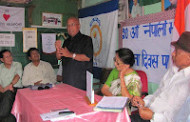
MUKESH SHARMA| Kalimpong: The Nepali Language Bhasa Manyata Diwas was today observed all across the Hills. Different school, organisation and political parties of the Hills today assembled to mark the completion of the 20years of the recognisation of the Nepali language. The Bharitya Gorkha Parisangh Kalimpong Branch under the Chairmanship of President Dr.Saroja Rai today celebrated the day where the Gorkha Dukh Niwarak Sammelan, Nepali Sahitya Adhyan Samiti, Kalimpong Sanrakshan Samiti and the representatives of the other several organisations were also present.The day stressed on the use the language in the Governmental offices which has got its constitutional recognisation long back. The language from today has to be used in every offices said that BGP President Dr Anos Das Pradhan. He also said that a clear definition of being a Gorkha and Nepali has to be sort out first. Slamming the Government, he said that the Nepali Language which got its recognisation in the Indian Constitution has not been used practically in every sphere. He also appealed that the newly formed Gorkhaland Territorial Administratio (GTA) Sabha to emphasis on the matter thereby adopting all the documentation and all forms of work in Nepali language. They have sent a memorandum to the GTA Executive Chief Bimal Gurung through the Sub Divisional Officer on the regard. Further the party has appealed the setting up of Nepali Bhasa Cell.Stressing more he also went back to the history that agitated for the recognisation of the language, which today has been enshrined in the Indian Constitution.Similarly Kalimpong Primary Government School at Chandralok also observed the day where the former Principal BR Chettri was present as the Chief Guest. Different programmes relating to the Nepali languages were staged on the day. The day was observed at different places in Kalimpong Sub-division is learnt.

An auto ride in Mumbai turned into a nightmare for 23-year-old Srishti Singh on Tuesday night when the auto driver started masturbating in front of her. The incident comes on the heels of similar one that took place in Colaba on Monday.
At about 8.20 pm, when Singh was travelling in an auto from Malad station to Rizvi Colony, after reaching the destination, the driver stopped the auto and masturbated in front of her.
“At first, when I was in the rickshaw, I saw him doing something, I thought something must be itching. But what I saw after I got down is the most torturous thing and probably every girl’s nightmare,” said Singh.
Singh had walked out of the station from a side where not a lot of share rickshaws were present. After being refused by 4-5 drivers, this man agreed to take her.
Singh claims that the auto driver purposely took her on a longer route. “He took me from the Raheja’s Govind Nagar road, which is usually dimly lit and deserted. He said he did it to avoid traffic, but after the incident I realise what he was actually trying to do,” she said .
On reaching Rizvi Colony, Singh got down and looked for money in her purse. It’s when she looked up, she saw what the driver was up to all this while. “As soon as I started yelling at him, he hurriedly turned his rickshaw, threw the money out, almost dashed into a wall and fled.” said Singh, who has managed to note down the number of the plate. In an attempt to stop him, Singh almost got run over.
In the morning when Singh tried to find the guy through a government website, it crashed. “The website showed errors. So I will go to the police station. I will not at any cost let him get away with this. I will file an FIR and make sure he gets due punishment,” Singh said.
Though Singh’s friends have raisesd concerns over taking action, she refuses to be cowed. “My friends tell me that sometimes these people take revenge by throwing acid and all. But I’m determined. I will make sure others stand against such heinous incidents, which all the girls go through but never complain about,” she said.

LOS ANGELES, CA – Playboy magazine today released its list of “America’s 25 Sexiest Cities,” as featured in its September 2015 issue.
New York took the list’s top spot, and was described by the magazine as a city where “the people are hot, the sex is prime quality and the frequency is high, averaging 138 times per year.” NYC was also recognized for having “the best and most nightlife” of the ranked cities, and for having “a touch of the forbidden.” In the magazine’s survey of the top five cities, New York respondents were the most interested in kink, with nearly two thirds open to experimentation and almost a quarter into BDSM.
The following is Playboy magazine’s complete list of “America’s 25 Sexiest Cities”:
1. New York
2. Los Angeles
3. Chicago
4. Miami
5. San Francisco
6. Boston
7. Seattle
8. Las Vegas
9. San Diego
10. Portland
11. Dallas
12. Philadelphia
13. Austin
14. Minneapolis
15. Denver
16. Tampa
17. Atlanta
18. Phoenix
19. Washington, D.C.
20. Charlotte
21. Orlando
22. Houston
23. Pittsburgh
24. New Orleans
25. Santa Barbara
Playboy’s list was determined by results from two customized polls conducted exclusively for the magazine and other metrics such as “hot locals, cool nightlife, a great setting and an undercurrent of desire.”
Survey results voted Detroit the “unsexiest city in America.”
Bollywood celebrities Shekhar Kapur, Rajat Kapoor, Hansal Mehta and Resul Pookutty criticised the arrest of five students of Film and Television Institute of India (FTII) from its campus on charges of rioting.
The arrest comes after a group of striking students had on Monday gheraoed the institute director, Prashant Pathrabe, protesting against “irrational and unjustified” assessment of the incomplete diploma projects.
Filmmaker Shekhar took to Twitter and wrote, “There was a time #FTII was considered one of the best film schools in Asia and produced some brilliant talent. What happened?.” Oscar-winning sound engineer Pookutty, who earlier expressed his displeasure over appointment of Gajendra Chauhan as FTII chairman, said, “Police arrive in the middle of the night at #FTII, arrest 40 students. So are they really anti nationals?!or are Police implementing orders.” “
Bangkok, Thailand (CNN)The chief suspect in the deadly bombing of Bangkok’s popular Erawan Shrine is “an unnamed male foreigner,” according to an arrest warrant issued Wednesday by a Thai court.
A Thai motorbike taxi driver who believes he picked up the suspect shortly after the blast also said he did not seem to be Thai.
Driver Kasem Pooksuwan, 47, told CNN that the man — who spoke an unfamiliar language on his cell phone during the short ride — didn’t speak to him at all but showed him a piece of paper with the name of a central city park written in English.
“When I dropped him, he still appeared very calm, just like (a) normal customer. He seemed not in a hurry at all,” Kasem said.
Thai police spokesman Lt. Gen. Prawut Thavornsiri earlier said police had questioned the motorcycle taxi driver but did not give details of what the man had told them.
Police believe the man suspected of carrying out the deadly bombing in the heart of the Thai capital probably had accomplices.
Examination of surveillance video footage from the Erawan Shrine indicates at least two others were helping the main suspect in the attack that killed 20 people and wounded more than 120 Monday evening, police officials said at a news conference Wednesday.
Authorities are hunting for the man seen on a surveillance video putting a backpack under a bench in the shrine and then walking away shortly before the blast went off.
Beyond the yellow T-shirt and dark-framed glasses he was wearing, little is known so far about the man who police say they are “very sure” is the bomber.
Thai Prime Minister Prayuth Chan-ocha appealed on Wednesday for the chief suspect to turn himself in to authorities. Addressing reporters, Prayuth said he feared the suspect “might be silenced by killing” and that if he wanted to be safe, he should surrender.
Here’s where things stand with the investigation into the attack, which authorities have described as a deliberate act of terror:
The chief suspect
Police say they don’t yet know the suspect’s identity but do now appear to have concluded that he’s a foreigner.
They are studying more than 10 days’ worth of closed-circuit TV footage from the scene.
The surveillance footage shows the suspect in the yellow shirt sitting down on a bench in the shrine at 6:52 p.m. Monday and hiding the backpack under the bench, said Prawut, the police spokesman. The man left without the backpack, and the blast went off minutes after he set it down.
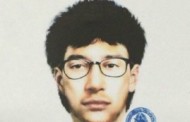
Police have released a sketch of the suspect, who is described as a dark-haired man with glasses and light facial hair.
Thai police have released a sketch of the suspect in the shrine bombing.
Thai police have released a sketch of the suspect in the shrine bombing.
Police also said the suspect had material wrapped around his forearms, which they say could indicate he had previously suffered some kind of injury.
A reward of 1 million Thai baht ($28,000) is being offered for information leading to the suspect’s arrest, he said.
Kasem told CNN he thinks the suspect “is not Thai,” although he admitted he did not look at his whole face. He said he remembers a long chin and white pale face very well, however.
“I wish I looked at his face more, but I really didn’t know what happened yet at that time. Normally I would not stare at my customer’s face,” he said.
Kasem, who has been a Bangkok taxi driver for a little more than two years, said he did not think the unfamiliar language spoken by the man was English. He dropped his passenger at Lumpini Park, by which time he was no longer on the phone, he said. It wasn’t clear whether he placed the call or received it.
The suspected accomplices
After studying surveillance footage from the shrine, police have zeroed in on two men they think could have been working with the man in the yellow shirt, said Prawut.
One was wearing a red shirt and the other a white shirt. The pair can be seen standing in front of the chief suspect as he places his backpack under a bench shortly before the explosion.
Police want to speak to both men as to whether they stood there to shield the yellow-shirted man’s actions from view.
The device
The blast was caused by a pipe bomb containing wheel bearings, according to police.
nvestigators say they think the device was assembled in Thailand because many parts, including the pipe, were made in the country, Prawut said.
CNN security and intelligence analyst Bob Baer said it was unusual for a pipe bomb to kill so many people and cause so much damage.
“It would be a very sophisticated pipe bomb,” he said.
Another blast that struck near a river pier in Bangkok on Tuesday was caused by a similar device, Prawut said. That explosion went off in the water and didn’t hurt anyone, but it was still “quite big,” he said.
Royal Thai Police Commissioner Gen. Somyot Poompanmoung said Wednesday that investigators were so far unable to establish a link between the two explosions, adding they have no leads on who might have been behind Tuesday’s blast.
The motive
There has been no claim of responsibility for the shrine bombing, and comments from Thai officials so far have been vague.
Investigators hunt for motive in Bangkok bombing
Investigators hunt for motive in Bangkok bombing 03:19
“From this incident, it is apparent that there are active individuals or groups that harbor the intention to damage Thailand, who may be pursuing political gain or other intentions by damaging the economy and tourism,” the Prime Minister said Tuesday.
Analysts have speculated about a wide range of groups — including opponents of military rule in the country or a rogue faction in the army or police — but there is so far no evidence to link the attack with any of them.
Asked if there was any information on a possible motive, police spokesman Prawut said earlier this week it was too soon to reach any conclusions.
Bangkok shrine bombing: The search for a motive
The victims
Many of those killed were from other countries.
The shrine is a popular tourist site and sits at a busy intersection near a big shopping mall.
China’s state-run news agency reported that six Chinese citizens, two from Hong Kong, were killed. Malaysia’s national news agency Bernama said that four Malaysian citizens, all from the same family, were among the dead.
Officials have said that five Thais, a Briton and a Singaporean also died.
Police had put the overall death toll at 22, but on Wednesday they revised it down to 20, saying confusion arose from the number of body parts scattered at the scene.
Bodies thrown, bikes mangled and a vibrant city on edge
The shrine
Monks in orange robes chanted and prayed for departed souls Wednesday at the shrine, which bore the scars of the powerful blast.
A golden statue of the four-headed Hindu god Brahma was missing most of one of its jaws. Fresh concrete had been poured over the crater caused by the explosion.
Tributes of flowers were piled on a table and pinned to the railings outside. “Rest in peace” read one paper sign attached to a barrier.
Some people prayed, while others took photos.
The site is popular among Buddhists as well as Hindu and Sikh members of Thailand’s Indian community.
CNN’s Kocha Olarn reported from Bangkok, while Jethro Mullen wrote from Hong Kong and Laura Smith-Spark from London. CNN’s Saima Mohsin, Pamela Boykoff and Elizabeth Joseph and journalist Kiki Dhitav contributed to this report.

When Kawasi Hidme, a young adivasi woman from Sukma, Bastar district, Chhattisgarh, was released after eight years in Dantewada jail as an undertrial on false charges, her lawyer told her that Bastar’s IG, SRP Kalluri had ordered all his men to look for any case in any thana with the name Hidme on it. Allegedly, the name was all he needed to send her back in jail, on the very day she got out.
Hidme’s story is one that encapsulates the war on adivasis that seems to be going on in parts of India, where adivasi communities are slowly being driven out of their lands and forests. And Kalluri plays a big part in that, given his alleged involvement in assaults, murders, kidnappings. Hidme was picked up when she was 15, shuttled between thanas in Sukma, Dantewada, Bhansi, beaten relentlessly, raped, and after eight years acquitted when the charges of ‘naxal activities’ against her proved false. In jail, Hidme befriended adivasi activist Soni Sori, who has also borne the brunt of state brutality, and post her acquittal has been staying with, which is how she could be in New Delhi on Tuesday, accompanied by Sori and the latter’s nephew Linga Kodopi, to tell the mainstream press just what has happened to her and countless other women at the hands of the police. A writ petition with her video testimony is also being prepared to present in the Supreme Court.
In 2008, on her way to a fair, Hidme was picked up by the police in a case involving the killing of 23 policemen. Senior lawyer, Vrinda Grover, part of the panel that spoke on Tuesday, said that the initial FIR did not have Hidme’s name in it’s long list of suspects. Her name was added five months later. Hidme says that it was given by a woman from her village was had been with the Salwa Judum. On arrest, she was taken to the local thana, then to Dantewada thana, and the next day to Bhansi thana. There, in Bhansi, she was kept tied, blindfolded, her sari and gold ornaments were taken away. She was raped by the policemen and then beaten for six days relentlessly. “It was only when they realised I was going to die, did they give me some water,” said Hidme.
She was hit on the head, her body swelled up so much so she could barely walk, and, she narrated, she was left only in her petticoat, without a sheet to cover herself with or lie down on. She was tortured by electric shocks. “Only when she was sent back to Sukma, was she given her clothes. The policemen there helped get her treated but warned her to not tell the magistrate she had been beaten if she ever wanted to go home. She was not the only one by far. Numerous other women were and are systematically abused in jails, said Hidme, who came across cases similar to hers behind bars.
For years, Hidme was transferred between the Raipur and the Jagdalpur jail, her health deteriorated rapidly, with multiple operations required to treat her. Getting each operation was a task, by her account, as often jail authorities would say they didn’t have enough guards on duty to the hospital.
Grover told the press that this excuse, of a lack of armed guards is also used to make undertrials miss their dates in courts, which is why their cases stretch on for years.
“The actual conviction rate in Chhattisgarh for undertrials is 1 per cent to 3 per cent. A majority of cases are then proved to be false,” said Grover. She added, “one the police puts the tag of a ‘naxal case’, which is not a legal term, on a person, they can carry out any sort of extraordinary treatment without anyone questioning them. Right now, Chhattisgarh’s jails are the most overcrowded according to NCRB data, 260 per cent over crowded.”
On her acquittal, Hidme was received by Sori at the Dantewada jail. However Sori was first stopped by a strange man who insisted he had been sent by Hidme’s family to collect her. By the time Sori stalled him, went inside to bring Hidme out, the man had disappeared. Neither Hidme, nor anyone in her family knows who he is.
The involvement of Salwa Judum in such cases is especially pertinent given talks of its return. This, according to all activists on the panel, has frightened villagers, who are certain they will not survive a return of those horrific years.
Activist Arundhati Roy pointed out that all this is driven by the agenda to acquire land for industrialisation, that adivasis inhabit. She was backed in her claim by activist Himanshu Kumar, driven out of Bastar by state forces, who said that Kalluri once told a lawyer that he was doing what he did to get land. “Kalluri told this lawyer that he would shoot people if he had to, but he would not stop,” related Kumar.
This loss of home is perhaps, the most heartbreaking part of Hidme’s story, as she no longer recognises her village, nor does anyone there know her. She lives with Sori for now, eight years have not only robbed her of a physical and emotional strength but her home as well.
“I need to give her strength again,” said Sori, “I want her to fight. Perhaps we can do something for all women who come out of jail but are still unhappy, to be help them get their lives back.” “Who knows,” Sori added, ” perhaps Hidme can become the strongest fighter of us all.”






Recent Comments