




Congress leader Sachin Pilot on Friday met party chief Sonia Gandhi amid speculation over Cabinet reshuffle and organisation rejig in Rajasthan.
His meeting came a day after Rajasthan Chief Minister Ashok Gehlot met Gandhi here and the two leaders are learnt to have discussed the political situation as well as the impending cabinet reshuffle in the state.
Speaking with reporters after meeting Gandhi, Pilot said, “Whatever the Congress party wants me to do, I am more than happy to do. In the last 20 years, whatever job has been assigned, I have done it diligently and now also whatever the party decides, what role I have…I am happy to do it.”
“I am happy Mrs Gandhi took feedback from all of us. I think at the right time, AICC general secretary Mr (Ajay) Maken will take an appropriate decision viz-a-viz Rajasthan,” the former deputy chief minister said.
A major reshuffle is on the cards in Rajasthan in the next few days and various modalities are being worked out by adopting the “one man, one post” formula while considering appointments in the cabinet, according to sources.
Pilot for long has been demanding that Cabinet expansion should happen and appointments to boards and corporations in the state be made soon. He has been asserting that Congress workers and leaders working closely with him for the party should be given their dues.
Pilot and the MLAs supporting him had revolted against Gehlot last year over his style of functioning, after which Pilot was removed from the posts of the state party chief and the Rajasthan deputy chief minister.

Vuln!! Path it now!!

kaizer
Mumbai Mayor Kishori Pednekar on Tuesday said a third wave of the COVID-19 pandemic had already arrived, only to issue a clarification a few hours later.
“Third wave is not coming, it is already here,” she told reporters at a function.
“In Nagpur, it has been already announced and everyone should take care,” she said.
Later, her office issued a press statement saying what she meant was that the third wave of COVID-19 was on the “threshold of Mumbai”.
“Given the experience of the first two waves, it is in our hands to to stop it,” she was quoted as saying.
She was not going to invite anyone home during Ganesh festival nor would she visit anybody’s house during this period, the mayor said, noting that in Kerala, around 31,000 cases were added daily after the Onam festival.Mumbai Mayor Kishori Pednekar on Tuesday said a third wave of the COVID-19 pandemic had already arrived, only to issue a clarification a few hours later
“Third wave is not coming, it is already here,” she told reporters at a function.
“In Nagpur, it has been already announced and everyone should take care,” she said.
Later, her office issued a press statement saying what she meant was that the third wave of COVID-19 was on the “threshold of Mumbai”.
“Given the experience of the first two waves, it is in our hands to to stop it,” she was quoted as saying.
She was not going to invite anyone home during Ganesh festival nor would she visit anybody’s house during this period, the mayor said, noting that in Kerala, around 31,000 cases were added daily after the Onam festival.
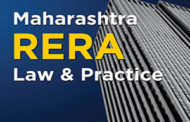
Mumbai, Sep 7 The Taxmann’s ‘Maharashtra RERA Law & Practice’ by Western India
Regional Council (WIRC) of Institute of Chartered Accountants of India (ICAI) was on Tuesday
released by MHADA chairman Dr Vinod Ghosalkar and ICAI president CA Nihar Jambusariya
and WIRC chairman CA Manish Gadia.
The huge book includes the provision of RERA Rules, Regulation, Notification, Circulars and the
relevant case authored by over 100 industry experts by forming study group, headed by CA
Ramesh Prabhu as convener and editor, and CA Kuashik Sampat as co-editor under the
guidance of MahaRERA officials.
It has also covered the peripheral and most important legal provisions affecting the real estate
transactions such as Income Tax, GST, IBC, FEMA, PMLA, MRTP, DCPR, MOFA, Transfer of
Property Act, stamp duty, registration, Consumer Protection Act, etc.
This book incorporates the perspectives of the various stakeholders including representatives of
Self-Regulating Organisations and others.
The contents of this book are from various 10 perspectives including promoter, general, agent,
allottees, professional, redressal, Income Tax, GST-Taxation, GST and Stamp Duty and
Registration, Allied Laws-Other Allied Laws like MRTP, DCPR, IBC, consumer protection,
Miscellaneous topics related to Real Estate Ruling & Redevelopment Act and Rules Act, Rules,
Notification and MahaRERA Order and circulars.
WIRC’s Maharashtra RERA Law & Practice covers the Real Estate Regulating Authority Act (RERA) along with Rules, Regulations, Notifications, Circulars & relevant Case Laws for complying with the provisions of RERA. The book aims to organise the learnings of RERA implementation (since its inception) & correlating the legal provisions (such as Circulars, Orders, etc.) to give a complete picture of the law
This book incorporates the perspectives of the following stakeholders:
Representatives of Self-Regulating Organisations
Brihanmumbai Developers Association
CREDAI-MCHI
NAREDCO
Builders Association of India
Representatives of Association of Allottees & Professional Bodies
PEATA
Bar Association of MahaRERA & MahaREAT
Members of WIRC of ICAI
Mumbai Grahak Panchayat
Confederation of Residents Welfare Association
Maharashtra Cooperative Housing Federation Ltd.
Maharashtra Societies Welfare Association
Mumbai District Cooperative Housing Federation
Women Legal Forum for CHS
Engineers Associations
This book will be helpful to the following:
Chartered Accountants
Advocates
Promoters & Investors
Real Estate Agents
Allottees (including Association of Allottees), Flat Purchasers
Policy Makers, RERA Authorities & Officials from the RERA Appellate Tribunal
Engineers
Contractors & Architects
Project Management Consultants
Developers & Development Managers
The Present Publication is the 1st Edition, authored by the study group of industry experts & representatives from all stakeholders, edited by CA Ramesh S. Prabhu & co-edited by CA Kaushik Sampat, reviewed under the guidance of Hon’ble Shri S.S. Sandhu, Shri. Gautam Chatterjee, Shri. Sumant Kolhe, Shri. B.D. Kapadnis & Shri. D.R. Hadadare, with the following noteworthy features:
[Coverage of each aspect of Real Estate Transactions] with the following:
Necessary legal provisions
Steps & prescribed procedures for compliance (Standard Operating Procedures)
The consequential risk of violation and inviting penal actions
FAQs and the Judicial Rulings have been included to make the manual relevant and practice-oriented
Covering representation aspects of appearing before the Real Estate Regulatory Authority, Adjudicating Officer, Real Estate Appellate Tribunal
[Practical Manual in Simple Language] with the discussion of the provisions along with Rules, Orders, Regulations, and applicable Circulars for each particular chapter
[Practical Ready Referencer] The various formats, drafts and specimen are included in the manual, where the practitioner may accordingly decide to change the draft considering the facts and the relief claimed
[360° Coverage] This book covers the legal and practical aspects of Maharashtra RERA along with other legal provisions affecting the real estate transaction such as:
Income-tax Act
Goods & Services Act
Insolvency & Bankruptcy Code
Consumer Protection Act
Maharashtra Ownership Flats (Regulation of the Promotion of Construction, Sale, Management and Transfer) Act
Maharashtra Apartment Ownership Act
Transfer of Property Act, Stamp Duty & Registration
Prevention of Money Laundering Act
Foreign Exchange Management Act
Monopolistic and Restrictive Trade Practices Act
Development Control and Promotion Regulation
The detailed contents of the book are as follows:
General – Applicable to all Stakeholders
Overview of RERA, 2016
Journey & Implementation of RERA
Objective and Purpose of RERA
Real Estate Sector Deficiencies Addressed by RERA
The Authorities to Implement the Act
Powers and Functions of Real Estate Regulatory Authority
Powers and Functions of Adjudicating Officers
Central Advisory Council – Establishment and Functions
Real Estate Appellate Tribunal and its Functions and Powers
Promoter – From the Promoters Perspective
Promoter under RERA
Functions and Duties of Promoter
Registration of Real Estate Project – Legal Framework
Documents Required and the Process of Registration
Operation of RERA Designated Bank Account
A Financial Planning for Real Estate Projects
Project Updates to be Done by the Promoters
Procedure to Extend the Period of the Registration
Procedure for Amendment or Modification in the Sanctioned Plans
Transfer of Real Estate Project to Third Party
The Transfer of Title
Force Majeure and COVID Impact on Real Estate Sector
Advertising and Marketing Post RERA
Importance of End Date/Completion Date and Date of Possession under RERA
Change in Process and Procedure of Real Estate Business post-RERA
Car Parking Space and MahaRERA Circular
RERA Compliance Report by Chartered Accountant
Agent – From the Real Estate Perspective
Registration of Estate Agents – Legal Framework
Process to Obtain Registration for Real Estate Agent
Functions of the Real Estate Agent
Impact of RERA on Estate Agents
Changing Business Landscape for Realtors post RERA
Allottees – From the Allottees and the Association of Allottees Perspective
Revocation of Registration of the Project
Stalled Real Estate Projects and Revival
Alternative Investment Fund for Real Estate including SWAMIH FUNDS
Rights and Duties of Allottees
Association of Allottees
Remedies for Conveyance and Deemed Conveyance
Allottee Due Diligence before Purchasing Property
Professional – From Professional Perspective for CAs, Advocates, Engineers, Architects
Title Certificate
Allotment Letter, Agreement for Sale and Sale Deed
Role and Responsibilities of Architect under RERA
The Roles and Responsibilities of a Civil Engineer and Issue of Form 2 under RERA
Quality Assurance and Defect Liability under RERA
Certificate in Form 3 by Chartered Accountant
Audit by Chartered Accountant under MahaRERA (Form 616 No. 5)
Guidance Note on Accounting for Real Estate Transactions 668 (Revised 2012) and Revenue from Contracts with Customers (Ind AS-115)
Key Audit Challenges – Real Estate Sector
Real Estate Collaborations & Significance of Corporate Due Diligence
Redressal – Redressal System: Complaint, Appeal, Second Appeal, Conciliation
Source Complaints against Unregistered Projects for Registration
Complaint Filing and its Procedure
Process of an Inquiry by the Authority or Adjudication Officer
Appeals under RERA
Second Appeal before High Court
Execution of Orders of MahaRERA and Adjudicating Officer
Execution of a Decree under Code of Civil Procedure, 1908
Complaints by Association of Allottees
Offences and Penalties
MahaRERA Conciliation and Dispute Resolution Forum
MahaRERA Conciliation Forum Role Model of ADR in Real Estate Sector
Income Tax, GST – Taxation: Income Tax, GST, Stamp Duty and Registration
Income-tax Applicable on Real Estate Transactions
Overview of GST Implications of Real Estate Sector
Stamp Duty and Registration
Allied Laws – Other Allied Laws like MRTP, DCPR, IBC, Consumer Protection, etc.
Real Estate Laws of India
Salient Features of Maharashtra Ownership Flats Act, 1963 (‘MOFA’)
Comparison between MOFA and RERA
Overview of Maharashtra Apartment Ownership Act, 1970
Development Control Regulations and MahaRERA
Consumer Protection and RERA: Best Recourse to Allottees
Draft Format/Specimen of Consumer Complaint
Landmark Judgments of the Consumer Courts
Insolvency Resolution Process in Real Estate
Interplay of PMLA, Benami, FEMA with RERA
Miscellaneous – Topics Related to Real Estate Rulings & Redevelopment
Constitutional Validity of RERA
Analysis of Judgments
Society Redevelopment and RERA
Act and Rules – Act, Rules, Notifications, MahaRERA Orders and Circulars
The Real Estate (Regulation and Development) Act, 2016
Maharashtra Real Estate (Regulation and Development) (Registration of Real Estate Projects, Registration of Real Estate Agents, Rates of Interest and Disclosures on Website) Rules, 2017
Maharashtra Real Estate Regulatory Authority, Chairperson, Members Officers and other Employees (Appointment and Service Conditions) Rules, 2017
Maharashtra Real Estate (Regulation and Development) (Recovery of Interest, Penalty, Compensation, Fine Payable, Forms of Complaints and Appeal, etc.) Rules, 2017
Maharashtra Real Estate Appellate Tribunal (Members 1405 Officers and Employees) (Appointment and Service Conditions) Rules, 2017
Maharashtra Real Estate Regulatory Authority (Form of Annual Statement of Accounts and Annual Report) Rules, 2017
Maharashtra Real Estate Regulatory Authority (Recruitment and Conditions of Service of Employees) Regulations, 2017
Maharashtra Real Estate Regulatory Authority (General) Regulations, 2017
Maharashtra Real Estate Regulatory Authority (General) (Amendment) Regulations, 2019
Maharashtra Real Estate Regulatory Authority (General) (Second Amendment) Regulations, 2019
Constitution and Operations of Real Estate Regulatory Fund
MahaRERA Orders and Circulars (Selected and Important)
Maharashtra Real Estate Appellate Tribunal Regulations, 2019
Circulars – Appellate Tribunal (Selected and Important)
Ramesh S. Prabhu
CA. Ramesh S. Prabhu is a highly qualified Mumbai-based Chartered Accountant with CISA (USA) practising for over the last 22 years and a well-known public figure. He is hailed as the Architect of Deemed Conveyance. His area of specialisation has been the Cooperative Housing sector. He has authored around 60 books on various issues on Housing society functioning like conveyance, transfer of flats, parking, repairing, collection of dues from members, income tax, service tax for housing societies etc. All of these books were released by the Ministry of Cooperation, Govt of Maharashtra, under the hand of the Cooperative Secretary at the Housing Society Expo, held in Mumbai during 2006.
CA. Ramesh Prabhu has compiled 101 Judgment Series Books for the Office Bearers and Members of Housing Societies on different topics. He was appointed as a Member of the Committee by the Govt. of Maharashtra in 2008 to frame the law pertaining to Deemed Conveyance. The Govt. has since passed the Bill on Deemed Conveyance which has been signed and endorsed by the President of India.
Kaushik Sampat
CA Kaushik Sampat has a comprehensive experience of more than three decades in all aspects of finance, accounts, commercial operations, budgeting, administration, MIS reporting, statutory compliance with astute planning & organisational skills in real estate and infrastructure companies. He has expertise in engineering construction industry with detailed knowledge of working capital management, cash flow & project management, along with handling accounting & cost control simultaneously of multiple projects of various nature and sizes.
Broadly familiar with the framework of laws governing the real estate industry, including an understanding of regulatory approvals sequence & processes, and proficient in MahaRERA.
S.S. Sandhu
Hon’ble Shri S.S. Sandhu is an administrative member of MahaREAT
Gautam Chatterjee
Shri Gautam Chatterjee is a retired IAS officer of the Maharashtra cadre and is Chairperson of the Maharashtra Real Estate Regulatory Authority (Maha RERA). A Gold Medallist in M.Sc. Mathematics from Patna University also holds a PG diploma in Urban Planning and Housing from The Netherlands. Mr. Chatterjee has held several important assignments in the Government of Maharashtra and Government of Bharat, including Joint DG of Foreign Trade in the Ministry of Commerce, CEO of Maharashtra Housing and Area Development Authority, CEO of Slum Rehabilitation Authority, and Principal Secretary of Maharashtra Housing Department.
Sumant Kolhe
Shri. Sumant Kolhe is a former Judicial Member of MahaRERA
Free Shipping in India on order Click Link
https://www.taxmann.com/bookstore/product/7138-maharashtra-rera-law-and-practice

apan marked the 76th anniversary of its World War II surrender on Sunday with a sombre ceremony in which Prime Minister Yosihide Suga pledged for the tragedy of war to never be repeated but avoided apologising for his country’s aggression.
Suga said Japan never forgets that the peace the country enjoys today is built on the sacrifices of those who died in the war.
We will commit to our pledge to never repeat the tragedy of the war, he said in his first speech at the event since becoming prime minister.
Suga did not offer an apology to the Asian victims of Japanese aggression across the region in the first half of the 20th century — a precedent set by the country’s previous leader, Shinzo Abe, who was frequently accused of trying to whitewash Japan’s brutal past.
In a largely domestic-focused speech, Suga listed damage inflicted on Japan and its people, including the US atomic attacks on Hiroshima and Nagasaki, the firebombing of Tokyo and other cities and the fierce battle of Okinawa, and mourned for them.
Emperor Naruhito, in contrast, expressed deep remorse over his country’s wartime actions in a carefully nuanced speech that followed the footsteps of his father, who devoted his 30-year career to making amends for a war fought in the name of Hirohito, the current emperor’s grandfather. Naruhito also said he hoped that people can put their hearts together to overcome the difficulty of the pandemic while seeking happiness and peace for all.
Amid Tokyo’s surging coronavirus infections, about 200 participants, reduced from about 6,000 before the pandemic, mourned for the dead with a minute of silence. Masks were required, and there was no singing of the national anthem.
Suga vowed to cooperate with the international community in tackling global issues under proactive pacifism , a vision that Abe promoted to allow Japan to play a greater military role in international conflicts.
Beginning 2013, Abe stopped acknowledging Japan’s wartime hostilities or apologize in his August 15 speeches, scrapping a nearly 20-year tradition that began with the 1995 apology of Socialist leader Tomiichi Murayama.
On Sunday, before attending the ceremony at Tokyo’s Budokan hall, Suga laid flowers at a nearby national cemetery for unknown soldiers. While Suga stayed away from controversial Yasukuni shrine, he did send a religious offering to the shrine, Japanese media reported.
Victims of Japanese actions during the first half of the 20th century, especially the Koreas and China, see the shrine as a symbol of Japanese militarism because it honours convicted war criminals among about 2.5 million war dead.
Abe, who stepped down as prime minister last year, prayed at the shrine Sunday, and so did three other members of Suga’s Cabinet. Two other ministers visited the shrine Friday.
The visits sparked criticism from China and South Korea.
On Sunday, South Korea’s Foreign Ministry in a statement urged Japanese officials to show sincere remorse through action so that the countries could develop future-oriented ties .
China’s Ministry of Foreign Affairs also said they had lodged stern representations with the Japanese side in Tokyo and in Beijing over the visits to the Yasukuni shrine, noting Suga’s religious offering. Spokeswoman Hua Chunying called on Japan to take actions that would win the trust of its neighbours.

Vuln!! Path it now!!
The Delhi High Court Friday declined to grant interim protection from arrest to Navneet Kalra, seeking anticipatory bail in connection with alleged black marketing of oxygen concentrators, agreeing with the reasons given by the trial court while denying him the relief.
A sessions court had on Thursday dismissed Kalra’s anticipatory bail plea, saying the allegations against him were serious and his custodial interrogation was required to “unearth the entire conspiracy”.
“I am persuaded by the reasons given by the trial court which is a valid ground for me not to grant any interim protection now,” Justice Subramonium Prasad said while listing the matter for hearing on May 18.
The observation came after Kalra’s lawyers — senior advocates Abhishek M Singhvi and Vikas Pahwa — urged the court to grant some interim protection if the matter was going to be adjourned till May 18 on the request of Additional Solicitor General (ASG) S V Raju.
Singhvi told the court that the police was actively searching for Kalra and was visiting the homes of its relatives and close friends and it ought not to be done when the high court was hearing his plea for anticipatory bail.
He said he was not in a “begging game” with the authorities and was relying on the high court to protect his client’s rights as the police was out looking for him with a “fanaticism” as if he were a “trophy”.
When the hearing commenced on Friday afternoon, ASG Raju urged the high court to hear it on Tuesday, May 18, as he had a lot of material, like information with regard to shell companies, which he needed to place before it and would require some time.
Heavens would not fall if the matter is taken up on May 18, Raju said, adding that there was no need for giving such a preference, like hearing the case on a holiday, to Kalra as his plea for anticipatory bail is just like that of anyone else seeking the same relief.
Singhvi opposed the contention saying it was an attempt to embarrass the court.
He said one of the charges against his client was that he had overcharged for the concentrators and to investigate it, Kalra’s arrest was not required.
He said that under the Drug Price Control Order (DPCO) 2013, there is a provision for adjusting the overcharged amount or refunding it.
The high court said a number of concentrators were seized from his properties and price stickers, including blank ones, were found at the site.
“Therefore, the question is would it be a violation of the DPCO 2013,” the court said, adding that if so, then can the Essential Commodities Act, under which the DPCO comes, be given the go-by.
It is Kalra’s contention the Essential Commodities Act is not applicable in the instant case as no price was fixed for oxygen concentrators imported from abroad.
The high court also asked Kalra how many concentrators were sold by him prior to seizure of the 105 units from two of his restaurants.
It also said that according to the trial court, Kalra had sold spurious and inferior concentrators at a higher price.
Singhvi said he will provide data regarding sale of the concentrators on the next date.
He also told the high court that if according to the state, the concentrators his client had sold were substandard, then why were the seized units donated to COVID care centres.
The senior lawyer also told the high court that only under ideal conditions would a concentrator give an output of 80-90 per cent, otherwise in normal conditions, it gives around 60-70 per cent.
He also said that his client did not say to any of his buyers that the equipment was of German make and added that most of the concentrators in the market are of Chinese origin,
Kalra had moved the high court for anticipatory bail on May 13 late evening after a sessions court denied him the relief.
After a hearing which went up to 10.00pm, the high court had listed the matter on Friday.
During the previous day’s hearing, the high court had asked Kalra how he could hold on the concentrators or even sell them when he did not have a valid license to manufacture, store, import or sell the same.
While the sessions court denied him anticipatory bail, a magisterial court on May 13 granted bail to an employee of upscale restaurant ‘Town Hall’, owned by Kalra, in connection with the case.
Four employees of Matrix Cellular company, including its CEO and vice president, who were also arrested in the case are also out on bail.
During a recent raid, 524 oxygen concentrators were recovered from three restaurants owned by Kalra — Khan Chacha, Nega Ju and Town Hall — and he is suspected to have left Delhi along with his family. The concentrators are crucial medical equipment used for COVID-19 patients.
Kalra had bought the concentrators from Matrix Cellular which had imported them.
On May 5, a case was registered against Kalra under Section 420 (cheating), 188 (disobedience to order duly promulgated by public servant), 120-B (criminal conspiracy) and 34 (common intention) of the Indian Penal Code.
The FIR, also registered under Essential Commodities Act and Epidemic Diseases Act, for black marketing of oxygen cylinders prescribes maximum punishment for seven years.PTI

The water level in many dams
across Kerala showed a rising trend on Sunday even as cyclone Tauktae moved away from the state’s coast after wreaking havoc.
India Meteorological Department (IMD) has issued orange alerts –a warning indicating heavy to very heavy rain– on Sunday in three districts-Ernakulam, Idukki and Malappuram.
The catchment areas of many dams in the central Kerala districts have reported heavy rains, prompting the authorities to sound alert warnings before upping their shutters.
The Thrissur district administration said spillway shutters of the Peringalkuthu dam will be opened if the water level crosses the permitted limit of 419.41 metres.
In a statement, the administration has urged the people living on the banks of Chalakudy river to be cautious.
Shutters of Malankara dam in Idukki district will be opened on Sunday, as the water level has increased, the district authorities said.
The administration has directed those people living on the banks of Thodupuzha river, Muvattupuzha river and their tributaries to be cautious.
In the coastal areas, high tidal waves continued to wreak havoc.
Hundreds of families living in coastal areas and low lying areas of the state have been shifted to relief camps.
Indian Navy on Sunday deployed its diving and quick reaction teams in the coastal village of Chellanam in Ernakulam district, which was heavily hit by tidal waves.
The teams, braving harsh weather conditions, undertook rescue and rehabilitation of people who got trapped in houses.
They were shifted to a relief camp at St Mary’s High School in Chellanam, a Navy official has said.
Besides Chellanam in Ernakulam district, rough sea and high tidal waves had wreaked havoc in Kaipamangalam, Chavakkad and Kodungallur in Thrissur, Pallithura in Thiruvananthapuram, Thrikkannapuzha in Alappuzha and Beypore and Koyilandy in Kozhikode districts.
Hundreds of houses were damaged in coastal belts across the state as sea water seeped in following high waves.
According to the state government, at least nine districts have been severely affected by the sea incursion.
A large number of people were shifted to relief camps in various districts, arranged in adherence to COVID-19 protocols.
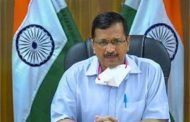
Delhi Chief Minister Arvind Kejriwal welcomed the decision to cancel CBSE class 10 board exams and postpone class 12 exams in view of surge in COVID-19 cases, saying it will provide a great relief to students and their parents.
“I am glad that the exams have been cancelled/postponed. This is a great relief for lakhs of students and their parents, Kejriwal tweeted.
The Central Board of Secondary Education (CBSE) on Wednesday cancelled class 10 exams and postponed class 12 exams in view of surge in COVID-19 cases.
The decision was taken at a high level meeting chaired by Prime Minister Narendra Modi.
The exams were scheduled to be held from May 4.
Kejriwal and his deputy Manish Sisodia had on Tuesday appealed to the Centre to cancel board exams, saying going ahead with it can contribute to large scale spread of coronavirus infections






Recent Comments