


A container transporting 20 tons of Parle-G biscuits overturned near Kharegaon Toll Naka in Kalwa, spilling diesel and disrupting traffic on the Nashik-Mumbai highway. No injuries were reported, and the road has been cleared.
Thane, March 3: A major traffic disruption occurred on the Nashik–Mumbai highway early Tuesday morning after a heavy container overturned near the Kharegaon Toll Naka in Kalwa. While the accident led to a diesel spill on the busy corridor, no casualties or injuries were reported.
The incident
The accident took place at approximately 4:09 AM on March 3, 2026. According to officials from the Regional Disaster Management Cell (RDMC) of the Thane Municipal Corporation (TMC), an Ashok Leyland container (MH 46 AF 1009) was en route from Nashik to Nhava Sheva, Navi Mumbai.
The vehicle, owned by Mr Ramesh Zhagade and driven by Raees Ahmed, was transporting 20 tons of Parle-G biscuits. As the vehicle approached a sharp curve near the Kharegaon Toll Naka, the driver lost control, causing the massive trailer to turtle on the Mumbai-bound lane.
Emergency response
Upon receiving information from Traffic Police Constable Mr Bawdhane, a coordinated relief operation was launched. The following teams were dispatched to the site:
Thane Fire Brigade: One rescue vehicle.
RDMC: One pickup utility vehicle and specialised personnel.
Local Police: Two heavy-duty crane machines to clear the wreckage.
Hazard mitigation and traffic impact
The impact of the crash caused the container’s fuel tank to rupture, spilling a significant amount of diesel across the highway. To prevent secondary accidents caused by skidding, fire brigade jawans and RDMC staff promptly covered the oil slick with layers of soil.
While the Nashik–Mumbai traffic was initially reduced to a crawl, the situation was brought under control within a few hours. The overturned container was successfully uprighted and moved to the shoulder of the road using cranes.

An eco friendly Green Holi celebration was organised at Rajawadi Garden in Ghatkopar, promoting natural colours and water conservation. Mumbai Mayor Ritu Tawade attended the event, where residents celebrated Holi of Flowers in the presence of MLA Parag Shah, highlighting sustainability and community participation.
An eco friendly Holi celebration brought colour and cheer to Rajawadi Garden in Ghatkopar, as residents gathered to mark what was described as a Green Holi in the heart of nature. Mumbai Mayor Ritu Tawade was present at the event and shared glimpses of the initiative on social media.
The celebration moved away from the usual chemical colours and water intensive festivities, choosing instead a more sustainable approach.
Holi Of Flowers And Natural Colours
Organisers encouraged participants to bid farewell to synthetic colours and embrace a Holi of Flowers. The garden came alive with fragrant petals and the use of only natural colours, creating a vibrant yet environmentally conscious atmosphere.
Children, senior citizens and families joined in, celebrating without the fear of skin irritation or excessive water usage. The emphasis remained firmly on protecting the environment while preserving the festive spirit.
MLA Parag Shah Attends Event
MLA Parag Shah attended the programme as the chief guest, adding to the enthusiasm of the gathering. His presence was warmly acknowledged by attendees, who said such initiatives help spread awareness about responsible celebrations.
Holi greetings were extended to all present, with organisers expressing hope that more neighbourhoods would adopt similar eco friendly practices. The event stood as a reminder that tradition and sustainability can go hand in hand, offering joy without harming the environment.

By Harinder Mishra
JERUSALEM: (Mar 3) Prime Minister Benjamin Netanyahu on Tuesday said that Israel and the US struck Iran because Tehran had restarted its nuclear programme and it would have gone “immune within months.”
Netanyahu told Fox News early Tuesday that an attack against Iran was urgently needed because Tehran was building new underground sites to shield its missile and nuclear programmes from attacks.
“They started building new sites, new places, underground bunkers that would make their ballistic missile programme and their atomic bomb programme immune within months. If no action was taken now, no action could be taken in the future,” he said.
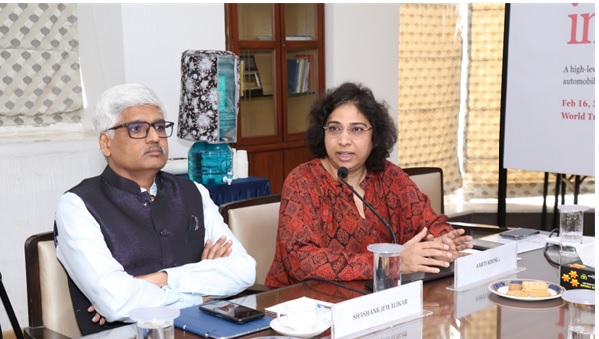
Mumbai, 16 February 2026: World Trade Center Mumbai, in association with Climate Trends, hosted a high-level roundtable on “Urban Heat Stress and Its Growing Impact on India’s Economic Sectors and Public Health” as part of Mumbai Climate Week. The discussion highlighted how rising temperatures and frequent heatwaves are increasingly affecting productivity, worker safety, electricity demand, and supply-chain efficiency across Indian cities.
Addressing the session, Vijay Kalantri, Chairman of World Trade Center Mumbai and President of the All India Association of Industries, stated that urban heat is no longer just an environmental issue but a serious development challenge. He noted that many Indian cities are already experiencing temperatures 3–8°C higher than surrounding rural areas due to the Urban Heat Island effect. With India’s urban population projected to cross 40% by 2030, rising temperatures are expected to significantly impact public health, urban liveability, and economic productivity, particularly among vulnerable communities. He also highlighted that India could lose around 5.8% of total working hours by 2030 due to extreme heat, while the World Bank has warned of potential GDP losses of up to 4.5% without adequate adaptation measures.
Aarti Khosla, Founder and Director of Climate Trends, emphasized that climate action lies at the intersection of public health and economic growth. She noted that investing in resilience is economically beneficial, as every dollar invested in climate resilience can generate significantly higher savings by preventing future losses. She also stressed the need for practical financial models that support MSMEs and protect vulnerable workers, especially those in India’s large informal workforce.
Vishwas Chitale, Head of Climate Resilience at the Council on Energy, Environment and Water (CEEW), highlighted that rapid urbanisation is contributing as much to rising urban heat as climate change itself. He stated that higher temperatures and humidity levels are already affecting productivity and industrial output, making climate-resilient adaptation measures both an environmental necessity and a sound economic investment.
The roundtable brought together representatives from industry, finance, healthcare, sustainability, and policy institutions, who agreed that urban heat is emerging as a major economic and development challenge requiring coordinated planning, integrated policy frameworks, and actionable resilience strategies for Indian cities.
COLOMBO: (Feb 15) Indian skipper Suryakumar Yadav did not shake hands with his Pakistan counterpart Salman Ali Agha during toss of their T20 World Cup clash in Colombo on Sunday, maintaining the status quo since the Asia Cup in Dubai last year.
“The No handshake Policy will continue,” a BCCI official in Colombo confirmed to PTI an hour before the game.
There will also be no handshake between players and support staff of two teams after the end of the match, a norm that has been followed by Suryakumar as a mark of respect for the families of the victims killed in the Pahalgam terror attack and solidarity towards Indian Army in the aftermath of Operation Sindoor.
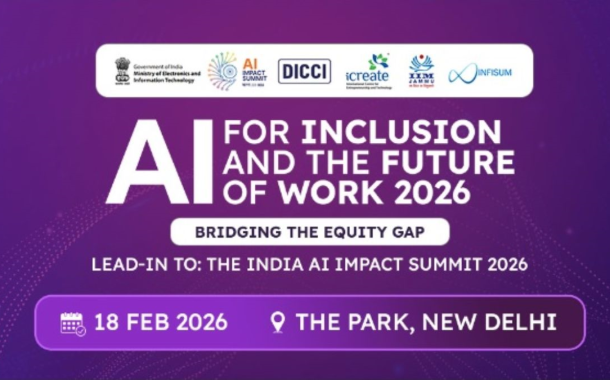
New Delhi [India], February 13: The Dalit Indian Chamber of Commerce and Industry (DICCI) will convene the International Conclave on AI for Inclusion and the Future of Work 2026: Bridging the Equity Gap on 18th February 2026 at The Park, New Delhi. The conclave is being organised in partnership with iCreate, Indian Institute of Management Jammu, Infisum and the Entrepreneurship Development Institute of India (EDII), and will serve as a precursor to the India AI Impact Summit 2026.
Supported by the Ministry of Electronics and Information Technology, Government of India, the conclave will bring together senior representatives from the Union and State Governments, global policymakers, industry leaders, economists, academic experts and social sector practitioners. Discussions will focus on aligning artificial intelligence with the goals of equity, livelihood security and inclusive economic growth.
As AI rapidly reshapes productivity, service delivery and business models, the conclave will examine emerging risks around concentration of capital, compute infrastructure and intellectual property, and their potential to deepen structural inequalities. Deliberations will explore policy and market interventions required to ensure equitable access to AI through infrastructure development, responsible data governance and inclusive skilling frameworks.
Key agenda areas include AI inequality in global development, governance frameworks for responsible AI deployment, formalisation pathways for MSMEs and informal workers, and the role of digital public infrastructure in expanding access to AI systems. Special emphasis will be placed on enabling participation of Scheduled Castes, Scheduled Tribes, women entrepreneurs, gig workers, sanitation workers, artisans and first-generation business owners in emerging AI value chains.
A key outcome of the conclave will be the Delhi Declaration on Inclusive AI and the Future of Work, which is expected to outline national principles for equity-by-design, worker transition frameworks, portable social protection mechanisms, multilingual AI skilling pathways, inclusive data governance standards and strengthened Centre–State coordination. The Declaration will inform deliberations at the India AI Impact Summit 2026.
Dr. Milind Kamble, Founder Chairman, DICCI & Conclave Chairman, Conclave on AI for Inclusion and the Future of Work stated, “Artificial intelligence will define the next phase of economic expansion. The central question is whether this growth will remain concentrated or become participatory. This conclave is anchored in six pillars — education, small business formalisation, financial literacy, future-ready agriculture, AI for speedy justice, and AI for empowering informal workers. Inclusion must be embedded at the design stage of AI systems and governance frameworks to ensure durable social mobility.”
Padma Shri awardee Mr. Ravi Kumar Narra, National President, DICCI, added, “Economic empowerment delivers impact when policy intent is matched with institutional execution. AI must be deployed with similar discipline to enhance productivity in the informal economy, expand market access for small enterprises and enable credible worker transition pathways. Inclusion must be measurable, not aspirational.”
Through this conclave, DICCI aims to institutionalise inclusion as a foundational principle within India’s evolving AI policy ecosystem, advancing structured dialogue and actionable commitments that align artificial intelligence with equity, employment and national development priorities.
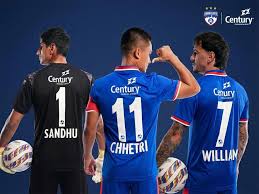
Bengaluru, 13th February 2026: Bengaluru FC has entered into a strategic partnership with Century Real Estate, onboarding them as one of the club’s Principal Sponsors, while also featuring the real estate major as a back-of-jersey partner. The brand’s logo will appear on the back of the team’s match jersey for the upcoming Indian Super League season. The partnership brings together two Bengaluru-based institutions with shared legacy and deep-rooted connections to the city.
The addition of Century Real Estate marks a significant milestone in Bengaluru FC’s partner ecosystem. The club continues to align with organisations that reflect its long-term vision and professional standards. Since its inception, the Blues have established themselves as one of India’s most reputed clubs, and the team’s growth has been supported by consistent on-field performance and one of the most passionate fan bases in Indian football.
For Century Real Estate, the partnership reflects a natural extension of its longstanding commitment to Bengaluru, offering a powerful platform to connect with the city’s vibrant community. With a legacy spanning over five decades, the organisation has played a defining role in the city’s urban evolution. The association reflects a shared investment in the city’s sporting and cultural landscape.
Ravindra Pai, Managing Director, Century Real Estate, said, “At Century Real Estate, Bengaluru has always been at the heart of what we do, and this partnership with Bengaluru FC is a reflection of that shared connection to the city. BFC represents the passion, ambition, and community spirit that Bengaluru stands for. Our association goes beyond brand presence on the jersey and is about supporting a club that continues to inspire the city and its people. We are proud to come on board as a principal sponsor and exclusive back of the jersey partner for the ISL season, and we look forward to building a meaningful journey together.”
Karan Yadav, Chief Commercial Officer, JSW Sports said, “Bengaluru FC represents the energy, resilience, and pride of this city. As a club, we have grown alongside Bengaluru and remain deeply invested in its future. Partnerships like these allow us to connect meaningfully with the community and with fans across generations. We see every association as a long-term commitment that goes beyond visibility – it is about celebrating Bengaluru and strengthening a platform that inspires the city’s youth.”
The partnership will extend across stadium branding, fan engagement zones, and integrated digital campaigns throughout the season. Century Real Estate’s jersey presence will anchor sustained brand visibility among football audiences across Karnataka and national markets, reinforced through match day integrations, digital storytelling, and immersive fan initiatives designed to drive deeper engagement beyond the stadium environment.
The Indian Super League is one of India’s most-watched sporting properties, offering partners high broadcast visibility and national reach. As Bengaluru FC prepares for the upcoming ISL campaign, the partnership signals strong brand visibility. It also reflects a shared intent to champion the city on the national stage while deepening engagement with the community that continues to support both Institutions.
Friday, Feb 13, 2026 17:02:36 | Royal Stag BoomBox
In its Season 4, the celebrated IP travels to Kolkata, Vizag, Mumbai and Mohali uniting fans for a one-of-a-kind live music experience.
New Delhi, Delhi, India – Business Wire India
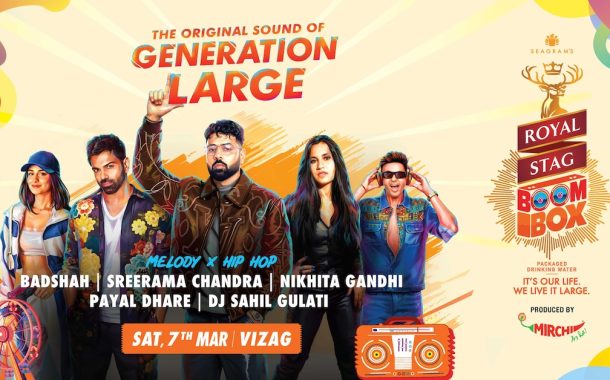
Seagram’s Royal Stag BoomBox, the iconic experiential music festival that blends Bollywood’s timeless melodies with the pulsating beats of hip-hop, is back with its much-anticipated Season Four. Building on the phenomenal success of previous editions, this year’s Royal Stag BoomBox is set to be the most ambitious, with an extraordinary line-up of the most celebrated Indian and International musical talents and a multi-city tour across four vibrant youth hubs – Vizag, Kolkata, Mumbai, and Mohali.
Royal Stag BoomBox is known for offering audiences with a unique experience that combines subcultural elements that straddle across the passion points of today’s youth, The Generation Large- Music, Fashion, Food and Gaming.
Season 4 kicks off on 21st February, 2026, in Kolkata, followed by Vizag (March 7), Mumbai (March 14), and Mohali (March 28). Since its inception, the festival has redefined India’s live music landscape through electrifying collaborations between iconic Bollywood voices and dynamic hip-hop acts. This year’s power-packed line-up features rap superstar Badshah, chart-toppers Armaan Malik and Divine, along with the melodious Neeti Mohan, Nikhita Gandhi, Rashmeet Kaur, Sreerama Chandra, and the legendary band Fossils. Adding to the excitement are hip-hop heavyweights Raftaar and Dino James, and DJ Sahil Gulati, promising an unforgettable journey of chart-topping hits and pulsating performances. And that’s not all—fans can also gear up for an adrenaline-pumping gaming face-off with the gaming sensation, Payal Dhare, making this season a truly immersive cultural extravaganza.
Royal Stag BoomBox is renowned for creating immersive, multi-sensory experiences that blend spectacular sound and lighting with interactive fan zones and vibrant cultural showcases, each capturing the unique essence of its host city.
Ticket sales for all four cities are now available on Skillbox. Book yours now at the link below:
Link: https://www.skillboxes.com/events/business/royal-stag-boombox
About Royal Stag
Seagram’s Royal Stag is the flagship brand of Pernod Ricard. Royal Stag has been a consistent star since launch, and a brand credited to have changed the rules of the game. It is for the young, daring, confident, progressive, and inspiring individuals who embody self-belief. The brand has been inspiring the youth of India through its communication around the philosophy of “It’s Our Life. We Live It Large.”
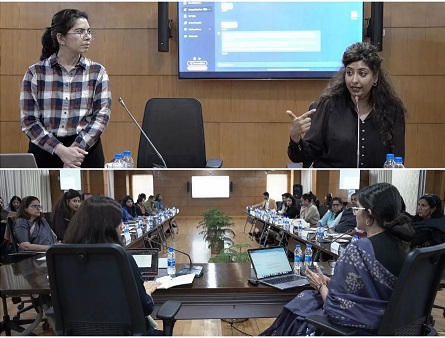
New Delhi [India], February 14: Infiheal, an IIT Bombay mental health startup, has launched DuoChat, described as the world’s first AI relationship coach designed to help two people communicate together in real time and build stronger relationships.
The product was introduced at the official pre-summit hosted by Infiheal and IGAP leading up to the India AI Summit 2026 in New Delhi, where senior leaders from major technology firms, public policy institutions, healthcare systems, international organizations, academic research centers, and regulatory authorities gathered to shape the future of responsible artificial intelligence.
DuoChat’s release comes just ahead of Valentine’s Day, a time when conversations around love, compatibility, emotional connection, and relationship health naturally take center stage. While the season often focuses on celebration, mental health experts note that it also highlights communication gaps and unresolved tensions in partnerships — making early-stage support tools particularly relevant.
Over the past decade, digital mental health tools have largely focused on individuals — offering support for anxiety management, emotional regulation, and personal resilience. However, research increasingly underscores that emotional well-being is deeply relational.
A 2023 survey by the American Psychological Association found that nearly 60 percent of adults reported significant stress linked to friendships, family dynamics, or workplace communication — stressors that directly affect relationship quality.
Despite this awareness, relationship support often remains reactive. Couples therapy is frequently sought only during crises, and access barriers — including cost, stigma, and long waitlists — can delay intervention. Many individuals attempt to resolve conflict independently, without a shared framework for constructive dialogue.
Building a Shared AI-Facilitated Space
Infiheal previously launched Healo, an AI mental health companion offering guided emotional support and therapist matching. Within just over a year, Healo grew to more than one million users, with 91 percent reporting improvement in how they felt after using the platform.
During that expansion, the team observed a consistent pattern: a majority of user conversations centered on relationships — romantic, familial, and social. Users frequently uploaded screenshots of difficult exchanges, asking the AI to interpret tone and intent. While this offered individual clarity, it did not address the relational dynamic itself.
DuoChat was built to bridge that gap.
The platform creates a private, confidential chat environment where two participants engage simultaneously. The AI functions as a facilitator — not a replacement for communication. It introduces structured prompts, reflection cues, and perspective-building interventions designed to reduce defensiveness, prevent escalation, and clarify misinterpretations. Drawing from established relationship science and evidence-based therapeutic frameworks, the system intervenes selectively — primarily when conversations become heated or when guided reflection may restore empathy and understanding.
Early-Stage, Preventative Support
Globally, demand for counseling continues to outpace supply, leaving many couples and families waiting weeks or months for professional support. During these gaps, emotional distance can deepen.
DuoChat positions itself as early-stage support — not therapy, but a preventative tool aimed at encouraging healthier dialogue before disconnection becomes entrenched.
“We’ve built AI platforms to optimize productivity, entertainment, and even shopping. But we haven’t focused enough on leveraging AI to help people understand each other,” said Srishti Srivastava, Founder and CEO of Infiheal. “DuoChat is our attempt to shift AI toward strengthening human relationships, not replacing them.”
India-Led Innovation in Mental Health AI
Founded by Srishti Srivastava and Utkarsh Srivastava, Infiheal develops clinically validated AI models for mental healthcare within responsible AI frameworks, emphasizing safety and trust. The company has been recognized by Narendra Modi, in Mann Ki Baat and has showcased its work at global platforms such as the World Economic Forum in Davos.
With DuoChat launching around Valentine’s Day, the startup expands its mission to make mental health support accessible, affordable, and stigma-free — while reframing AI not just as a tool for individual optimization, but as a bridge for stronger human connection.
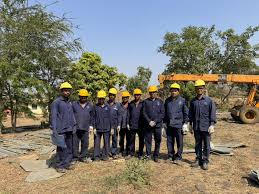
Mumbai, February 13th, 2026: Jyoti Structures Limited (JSL), a listed Engineering, Procurement and Construction company specialising in power transmission infrastructure, reported steady operational performance in 2025, supported by stable project execution and consistent site-level outcomes across its active portfolio.
JSL grew its workforce in 2025 by onboarding over 70 engineers, increased women representation to 39 employees, and expanded overall employee strength to more than 750 personnel. During the same period, the company conducted 53 internal workshops focused on technical and functional capability building and implemented three CSR initiatives supported through employee participation.
The company also advanced its execution readiness through manufacturing expansion and governance frameworks. In 2025, JSL commissioned galvanisation operations at its second Nashik manufacturing unit, adding 33,000 MT of annual capacity and increasing aggregate tower manufacturing capability at Nashik to approximately 69,000 MT, supporting fabrication accuracy, scheduling control, and delivery predictability across transmission projects .
Speaking about this, Rajesh Kumar Singh, CEO, Jyoti Structures Limited, said, “Execution at scale depends on disciplined systems, capable teams, and consistent supervision across project environments. In 2025, our emphasis was on ensuring predictability in delivery and consistency in on-ground performance across projects. As grid expansion accelerates across the country, we remain focused on execution reliability, financial discipline, and continuous improvement across our operations.”
During the year, JSL conducted 37 job-specific safety training webinars through its corporate Health, Safety and Environment (HSE) team and 897 job-specific safety training sessions through site HSE teams across active project locations. These efforts were supported by structured Quality, Health, Safety and Environment audits, along with external certification audits across JSL’s corporate offices, manufacturing facilities, and project site.
Independent ISO audits completed during the year reinforced JSL’s certified management systems covering quality management, environmental management, and occupational health and safety. These certifications reflect the company’s structured approach to execution discipline, compliance, and operational risk management across engineering, manufacturing, and site operations .
Alongside execution priorities, JSL continued employee-led CSR initiatives across project regions, providing in-kind support to community institutions through structured engagement with local organisations, aligned with the company’s responsible operations framework .
About Jyoti Structures Ltd (JSL)
Jyoti Structures Ltd (JSL) is a listed global Engineering, Procurement and Construction (EPC) company specialising in power transmission and distribution projects, with operations across 50+ countries. Incorporated in 1974, JSL has a legacy of over four decades in executing turnkey projects across the power transmission value chain, including design and engineering, consulting, tower testing, manufacturing, construction, and project management. The company also undertakes high-voltage underground cabling and optical fibre ground wire (OPGW) installations, supporting grid expansion and system reliability.
(Disclaimer: The above press release comes to you under an arrangement with NRDPL. PTI takes no editorial responsibility for the same.)










Recent Comments