

Mumbai | April 15, 2026 | Real News of India
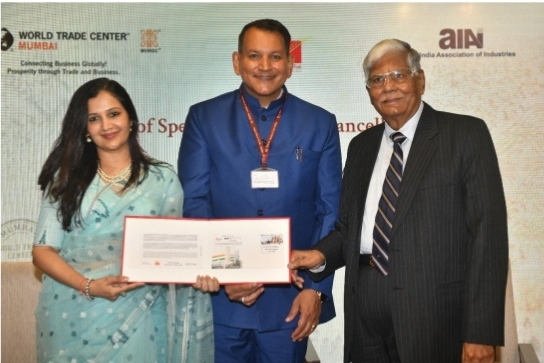
In a significant recognition of India’s growing global trade presence, India Post has released a Commemorative Special Postal Cover honoring the remarkable contribution of World Trade Center Mumbai (WTC Mumbai). This prestigious acknowledgment marks over five decades of the institution’s pivotal role in strengthening India’s trade and industry ecosystem.
The special event, organized in Mumbai, celebrated WTC Mumbai’s long-standing legacy in connecting Indian businesses to international markets and promoting economic partnerships across the globe. The initiative reflects the institution’s continued commitment to advancing India’s position as a global trade hub.
A Legacy Rooted in Vision and Nation-Building
Speaking on the occasion, Chairman Dr. Vijay Kalantri highlighted the visionary foundation of WTC Mumbai, inspired by M. Visvesvaraya, who believed in nation-building through innovation, planning, and enterprise.
He also recalled the historic role of Morarji Desai, under whose leadership the land for the center was allotted and later inaugurated, marking a milestone in India’s trade infrastructure development.
“WTC Mumbai has continuously adapted to changing global dynamics while supporting MSMEs and contributing to India’s economic growth,” Dr. Kalantri stated.
India Post’s Expanding Role in Trade Facilitation
Chief Postmaster General, Maharashtra Circle, Amitabh Singh, emphasized the importance of institutions like WTC Mumbai in fostering trade collaborations. He also highlighted the evolving role of India Post as a logistics powerhouse, supporting commerce through expanding infrastructure and strategic partnerships.
Symbol of National Recognition
The release of the Special Postal Cover serves as a historic symbol, documenting WTC Mumbai’s contribution to India’s trade and industrial development. Such commemorative covers are issued by India Post to mark significant milestones and achievements of national importance.
Director of Trade & Investment Promotion, Priya Pansare, expressed gratitude to the Department of Posts and reiterated WTC Mumbai’s commitment to sustainability, innovation, and global collaboration.
Looking Ahead
As WTC Mumbai moves forward, it aims to strengthen its mission of inclusive growth, global connectivity, and economic progress. With a strong legacy and forward-looking vision, the institution continues to play a crucial role in shaping India’s future in global trade.

Mumbai, April 4, 2026: In a commendable initiative, Mumbai Police’s Zone-8 successfully returned stolen and recovered property to its rightful owners during a special event held at the BKC Police Station.
According to official sources, a total of 287 items worth ₹84,43,479 were handed back to citizens. The recovered property included mobile phones, gold and silver ornaments, two-wheelers, four-wheelers, and cash.
These items were seized in connection with various criminal cases registered across multiple police stations under Zone-8, including BKC, Kherwadi, Nirmal Nagar, Vakola, Vile Parle, Sahar, and Airport areas. Notably, 277 mobile phones were traced and recovered using the CEIR (Central Equipment Identity Register) system, showcasing the effective use of technology in policing.
The distribution program was conducted in the presence of the Deputy Commissioner of Police (Zone-8), along with other senior police officials and staff. All items were returned following proper legal procedures.
Citizens expressed immense relief and happiness upon receiving their lost belongings and appreciated the efforts of Mumbai Police. The initiative has further strengthened public confidence in law enforcement.
Conclusion:
This action by Mumbai Police highlights their efficiency, transparency, and commitment to serving the public, reinforcing a sense of safety and trust among citizens.
Reporter S.M.Fanus
Real News of India
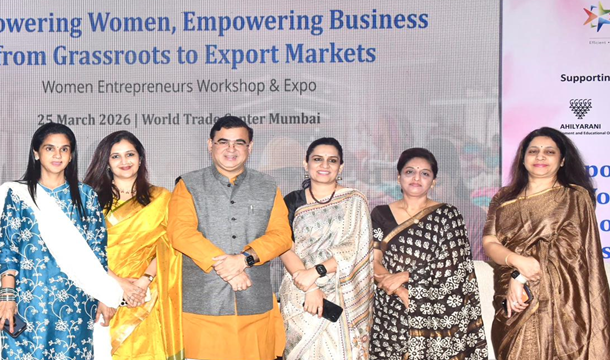
In the Picture (L to R): Ms. Sangeeta Jain, Senior Director, All India Association of Industries; Ms. Priya Pansare, Director, Trade and Investment Promotion, WTC Mumbai; Shri Jaykumar Rawal, Minister of Marketing and Protocol, Maharashtra State; Smt. Nidhi Choudhary (IAS), Director – National Gallery of Modern Art, Ministry of Culture, Government of India; Dr. Megha Phansalkar, Founder of Tisser Artisan Trust; Smt. Shwetali Thakare, Chairperson, Maharashtra Water Resources Regulatory Authority, Government of Maharashtra at the event.
Mumbai, 25 March 2026: In a significant initiative to strengthen women-led enterprises and integrate them into global trade ecosystems, World Trade Center Mumbai, in association with the All India Association of Industries (AIAI) and the Government e-Marketplace (GeM), hosted a high-impact event titled “Empowering Women, Empowering Business – From Grassroots to Export Markets.” The event brought together senior government officials, industry leaders, women entrepreneurs and MSME’s on a common platform to address the critical gap in the country’s growth story enabling women-led businesses to scale beyond local markets and participate meaningfully in global trade.
In his address, Shri Jaykumar Rawal, Minister of Marketing and Protocol, Maharashtra State, said “from MSMEs to large-scale industries, Maharashtra has made a significant contribution to the nation’s economy. Women are increasingly becoming a driving force across manufacturing, services, and agriculture, thereby promoting inclusive development.”
“Under the leadership of Hon’ Chief Minister Shri Devendra Fadnavis ji, the Government of Maharashtra is fully committed to strengthening women entrepreneurship. We are focused on improving market linkages, expanding digital access, enhancing financial inclusion, and building skills that enable women to scale their enterprises.” said Shri Rawal.
Shri Rawal added “Initiatives such as Umed Malls under the Maharashtra State Rural Livelihood Mission are creating permanent, district-level retail ecosystems that provide assured, year-round market access for women Self-Help Groups. By eliminating intermediaries, these platforms empower women directly ensuring no middlemen, no barriers, only opportunity. Our vision is to build a strong enabling ecosystem where women entrepreneurs can confidently participate, compete, and lead in both domestic and global markets.”
Dr. Vijay Kalantri, Chairman, World Trade Center Mumbai and President, All India Association of Industries, said “It is truly encouraging to see how women are becoming an integral part of India’s growth story. Today, female labour force participation has crossed 42%, nearly doubling over the past six years, while literacy among women has risen from about 53% in the early 2000s to over 75% today. With more than 20% of MSMEs now led by women, their contribution is both visible and impactful. As we move towards the vision of Viksit Bharat, women will undoubtedly be at the heart of this transformation.”
“The future of India’s economic growth is closely linked to the empowerment of women entrepreneurs. The presence of over 150 women here reflects their strong commitment not only to manufacturing, but also to go global. By connecting grassroots enterprises with global opportunities, we are fostering inclusive growth while strengthening India’s position in international trade,” added Dr. Kalantri.
Shri Satya Narayan Meena, Additional CEO, Government e Marketplace (GeM), “GeM has brought transparency, efficiency, and inclusivity to public procurement, enabling over 2 lakh women-led enterprises to directly access government buyers and scale their businesses nationwide. With procurement exceeding ₹5.4 lakh crore last year, GeM is not just a digital platform, but a powerful engine driving growth, opportunity, and national recognition for MSMEs and women-led enterprises.” He added that through technological advancements and a transparent marketplace, GeM is strengthening India’s public procurement ecosystem and contributing to the nation’s economic progress.
Smt. Nidhi Choudhary (IAS), Director – National Gallery of Modern Art, Ministry of Culture, Government of India, said “The numbers clearly reflect the growing strength of women in India’s entrepreneurial ecosystem. Over 2 crore MSMEs are owned by women, contributing nearly 21% of the sector, and more than 45% of startups today have at least one-woman director. Initiatives such as PMEGP, CMEGP, Mudra Yojana, and the Women Entrepreneurship Platform by NITI Aayog are playing a vital role in supporting this growth.
In Maharashtra, the State Innovation Mission’s dedicated women’s wing is also further empowering women to scale their ventures. When women-led enterprises grow, the impact goes far beyond economics; it drives meaningful social change.” added Ms. Nidhi.
Smt. Shwetali Thakare, Chairperson, Maharashtra Water Resources Regulatory Authority, Government of Maharashtra said, “India represents nearly 18% of the world’s population and today stands around a $4 trillion economy. Even amid global uncertainties, India continues to be one of the fastest-growing economies. In this journey, it is essential that women have equal access to opportunities, resources, and platforms to grow because when women progress, the nation leads with purpose.”
Ms. Wang Awei, Deputy Consul General of the People’s Republic of China, highlighted the growing role of women in global economic development and said “Technology is profoundly transforming the world, and e-commerce has opened new opportunities for women to grow and scale their businesses. With greater collaboration and shared learning, there is immense scope to further empower women entrepreneurs globally.”
Dr. Megha Phansalkar, Founder of Tisser Artisan Trust, emphasized that the challenge lies not in empowerment, but in access. “Our vision is not just to break barriers ourselves, but to enable thousands of women to rise alongside us. The real issue lies in access to markets, opportunities, and platforms. Once these barriers are overcome, it will unlock immense progress for the nation,” she remarked.
Ms. Priya Pansare, Director, Trade & Investment Promotion, WTC Mumbai, said, “Enabling women entrepreneurs to access global markets is critical for India’s growth. This requires structured support through policy, capacity building, and stronger international linkages. Empowering women-led enterprises will not only drive inclusive development but also contribute significantly to sustainable economic growth,”
Ms. Sangeeta Jain, Senior Director, All India Association of Industries, said “Women are playing an increasingly important role in shaping India’s economic progress. Strengthening their participation requires greater focus on digital platforms, financial inclusion, and skill development to help women-led enterprises scale effectively. Enhancing women’s participation is essential to accelerating the nation’s growth trajectory.
The program also saw participation from representatives of the Ahilyarani Women’s Development and Educational Organization. The event reinforced the need to move beyond participation towards global competitiveness, and highlighted how aligning government initiatives, institutional support, and international partnerships can help build a robust ecosystem where women entrepreneurs successfully transition from grassroots enterprises to global exporters.
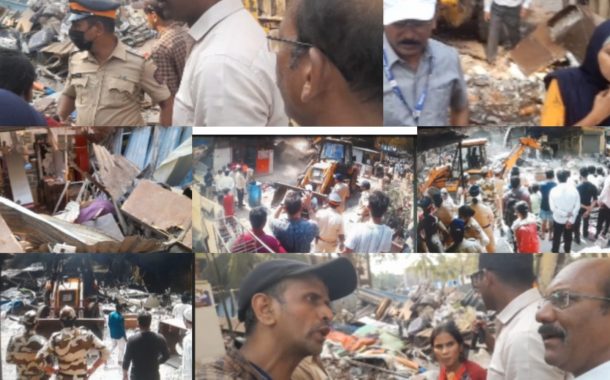
MUMBAI, March 25, 2026 – In a brazen display of bureaucratic overreach and utter disregard for the rule of law, the Slum Rehabilitation Authority (SRA) and local administration carried out an illegal demolition drive on March 11, 2026, at Maharashtra Nagar, Kalimata Temple Area, Bharat Nagar Road, Bandra (East), leaving 30 families destitute and stranded on the streets.
The affected settlement, bearing Cluster ID H/East – 104, now lies in rubble, while the families who once called it home are left to fend for themselves under the scorching sun, with the looming threat of pre-monsoon rains adding to their misery.
A DEMOLITION BUILT ON VIOLATIONS
The demolition, according to a detailed complaint filed by the Real Voice Foundation led by President Mr. S. M. Fanus, was not just heavy-handed but patently illegal on multiple counts. The complaint, submitted to Chief Minister Shri Devendra Fadnavis and Deputy Chief Minister Shri Eknath Shinde, lays bare a shocking litany of procedural and legal violations.
1. No Survey, No Action
Perhaps the most staggering revelation is that the demolition was carried out without conducting any survey of Cluster H/East – 104. As per the SRA Act and government norms, a survey is the foundational step to determine eligibility and establish the existence of a slum. Skipping this step renders the entire demolition null and void.
2. Government Resolutions Flouted
The administration conveniently ignored the mandatory provisions of Government Resolutions dated May 16, 2015, and May 16, 2018:
-
The 2015 GR protects slum dwellers who have existed since before January 1, 2000. Affected families possess documents (ration cards, voter IDs, electricity bills) proving their existence from before this cut-off date.
-
The 2018 GR provides for paid rehabilitation for families existing since before January 1, 2011.
Despite these clear provisions, officials conducted no document verification, no site inspection, and no computerized record preparation before swinging the bulldozers.
3. Denial of Natural Justice
The SRA had issued notices under Section 3(Z-2) of the Maharashtra Slum Areas Act, 1971. The affected residents filed their replies in a timely and proper manner. Yet, the authority conducted no hearing, issued no speaking order, and proceeded directly to demolition. This is a flagrant violation of the fundamental principle of Audi Alteram Partem – the right to be heard – repeatedly upheld by the Supreme Court of India.
4. Documents Buried, Lives Destroyed
In the haste to demolish, residents were given virtually no time to salvage their belongings. Essential documents – ration cards, voter ID cards, Aadhaar cards, bank passbooks, educational certificates – now lie buried under the debris. This has rendered the victims incapable of even proving their eligibility, creating a Kafkaesque nightmare where they are punished for a crime they did not commit and then stripped of the means to defend themselves.
5. An Attack on Faith
Compounding the injustice, the demolition was carried out during the holy month of Ramadan, a time of fasting, prayer, and reflection for the Muslim community. By forcing fasting families onto the streets during this sacred period, the administration has not only committed a legal wrong but has also hurt religious sentiments, displaying a shocking lack of basic human sensitivity.
THE HUMAN COST
The demolition has brought unimaginable suffering:
-
Medical Emergency: Medicines of tuberculosis (TB) patients were buried in the debris, putting their lives at risk.
-
Destruction of Public Assets: The local Kalimata Temple, a centuries-old place of worship, and a community gymnasium run by Real Voice Foundation for local youth were also razed.
-
Current Plight: With no shelter, the affected families are living on the streets, lacking access to food, clean water, sanitation, and medical facilities. Women, children, and the elderly are the worst affected.
DEMANDS OF THE AFFECTED FAMILIES
The Real Voice Foundation, on behalf of the victims, has put forth the following five urgent demands:
| # | Demand |
|---|---|
| 1 | Immediate Temporary Accommodation – Transit camp or hall until eligibility is verified through the Competent Authority under the 2/4 application process. |
| 2 | Permanent Rehabilitation – As per government rules once eligibility is established. |
| 3 | Suspension & Inquiry – Immediate suspension of responsible SRA and local administration officers pending a thorough investigation. |
| 4 | Compensation – Adequate financial compensation for loss of belongings, documents, business materials, and damage to religious places. |
| 5 | FIR – Registration of criminal case against officials involved under relevant sections of the Bharatiya Nyaya Sanhita (BNS) for illegal entry, housebreaking, causing mental distress, and obstruction of government work. |
📣 APPEAL TO THE STATE GOVERNMENT
A copy of the complaint has also been forwarded to local public representative Shri Varun Sardesai.
Mr. S. M. Fanus, President of Real Voice Foundation, stated:
“This is not just a demolition of structures; it is a demolition of people’s lives, their dignity, and their faith in the system. We have followed every legal procedure. We have the documents. Yet, we were treated like criminals. We urge the Chief Minister and Deputy Chief Minister to intervene immediately and ensure justice is served. We are looking at them as our last ray of hope.”
The affected families are now waiting for the state government to act. With the law on their side and the weight of Supreme Court judgments protecting the right to hearing and due process, they are determined to fight for their rights.
The protest will be led by S.M. Fanus, President of Real Voice Foundation, along with nearly 30 affected families, who have decided to stage a peaceful demonstration outside the SRA office in Bandra on March 24, 2026, at 10:00 AM.
According to the protesters, the demolition was carried out in violation of Government Resolutions dated May 16, 2015, and May 16, 2018. It is further alleged that no eligibility verification of residents was conducted, no hearing was granted, and no temporary or alternative rehabilitation arrangements were provided before carrying out the demolition.
As a result, around 30 families have been rendered homeless. The action, which took place during the holy month of Ramzan, has caused severe hardship, especially to women, children, and elderly residents.
The protesters have raised key demands, including immediate temporary shelter for all affected families, permanent rehabilitation under SRA for eligible residents, strict action against the officials responsible for the demolition, and adequate compensation for the losses suffered.
The protesters have clearly stated that they will continue their protest until their demands are fulfilled and have warned that the agitation may intensify if immediate action is not taken by the concerned authorities.
The protest is being organized under the banner of Real Voice Foundation, highlighting growing public anger against the actions of SRA and Competent Authority–2.
S.M. Fanus
President, Real Voice Foundation

Mumbai, March 12, 2026: In a controversial and allegedly illegal demolition drive carried out on March 11, 2026, hundreds of slum dwellers in the Maharashtra Nagar area of Bandra (East) have been rendered homeless. The action, conducted by the Slum Rehabilitation Authority (SRA) and local administration, has sparked outrage among residents and activists who claim the demolition violates multiple government resolutions and basic legal principles.
The affected cluster, located near Kalimata Mandir on Bharat Nagar Road (Cluster ID H/East-104), comprises families who have been living in the area for decades. According to S.M. Fanus, President of the Real Voice Foundation and the voice leading the affected residents’ struggle, most residents possess documents predating both January 1, 2000, and January 1, 2011—making them eligible for rehabilitation under Government Resolutions (GRs) dated May 16, 2015, and May 16, 2018.
Despite this, authorities proceeded with the demolition without following due process.
“This is not just illegal; it is inhuman,” said an emotional S.M. Fanos while speaking to the media. “The SRA issued a 3(2) notice, our residents submitted their replies, but no hearing was conducted. No speaking order was issued. They directly demolished our homes during the holy month of Ramadan, leaving people—including TB patients, elderly, and children—on the streets without any transit accommodation.”
The demolition has resulted in the destruction of personal belongings, essential documents, medicines, and food grains. The local Kalimata Mandir and a community gym run by the Real Voice Foundation were also razed.
Legal Violations Cited:
-
Maharashtra Slum Act 1971: Violation of Section 3(2) by not conducting a hearing or issuing a speaking order.
-
GR May 16, 2015 & GR May 16, 2018: Eligibility verification process was completely ignored.
-
Principles of Natural Justice: Residents were denied the right to be heard.
-
No Rehabilitation Provided: No alternative or transit accommodation was arranged.
Demands of the Affected:
-
Immediate suspension and inquiry against responsible SRA officials.
-
Immediate provision of transit accommodation.
-
Permanent rehabilitation under the applicable GRs.
-
Compensation for loss of property and essential items.
-
Legal action against those responsible for the illegal demolition.
Local MLA Varun Sardesai and Ambernath MLA Balaji Kinikar have been urged to intervene. The residents, led by the Real Voice Foundation, have vowed to continue their struggle until justice is served and their fundamental right to housing is recognized.

A container transporting 20 tons of Parle-G biscuits overturned near Kharegaon Toll Naka in Kalwa, spilling diesel and disrupting traffic on the Nashik-Mumbai highway. No injuries were reported, and the road has been cleared.
Thane, March 3: A major traffic disruption occurred on the Nashik–Mumbai highway early Tuesday morning after a heavy container overturned near the Kharegaon Toll Naka in Kalwa. While the accident led to a diesel spill on the busy corridor, no casualties or injuries were reported.
The incident
The accident took place at approximately 4:09 AM on March 3, 2026. According to officials from the Regional Disaster Management Cell (RDMC) of the Thane Municipal Corporation (TMC), an Ashok Leyland container (MH 46 AF 1009) was en route from Nashik to Nhava Sheva, Navi Mumbai.
The vehicle, owned by Mr Ramesh Zhagade and driven by Raees Ahmed, was transporting 20 tons of Parle-G biscuits. As the vehicle approached a sharp curve near the Kharegaon Toll Naka, the driver lost control, causing the massive trailer to turtle on the Mumbai-bound lane.
Emergency response
Upon receiving information from Traffic Police Constable Mr Bawdhane, a coordinated relief operation was launched. The following teams were dispatched to the site:
Thane Fire Brigade: One rescue vehicle.
RDMC: One pickup utility vehicle and specialised personnel.
Local Police: Two heavy-duty crane machines to clear the wreckage.
Hazard mitigation and traffic impact
The impact of the crash caused the container’s fuel tank to rupture, spilling a significant amount of diesel across the highway. To prevent secondary accidents caused by skidding, fire brigade jawans and RDMC staff promptly covered the oil slick with layers of soil.
While the Nashik–Mumbai traffic was initially reduced to a crawl, the situation was brought under control within a few hours. The overturned container was successfully uprighted and moved to the shoulder of the road using cranes.

An eco friendly Green Holi celebration was organised at Rajawadi Garden in Ghatkopar, promoting natural colours and water conservation. Mumbai Mayor Ritu Tawade attended the event, where residents celebrated Holi of Flowers in the presence of MLA Parag Shah, highlighting sustainability and community participation.
An eco friendly Holi celebration brought colour and cheer to Rajawadi Garden in Ghatkopar, as residents gathered to mark what was described as a Green Holi in the heart of nature. Mumbai Mayor Ritu Tawade was present at the event and shared glimpses of the initiative on social media.
The celebration moved away from the usual chemical colours and water intensive festivities, choosing instead a more sustainable approach.
Holi Of Flowers And Natural Colours
Organisers encouraged participants to bid farewell to synthetic colours and embrace a Holi of Flowers. The garden came alive with fragrant petals and the use of only natural colours, creating a vibrant yet environmentally conscious atmosphere.
Children, senior citizens and families joined in, celebrating without the fear of skin irritation or excessive water usage. The emphasis remained firmly on protecting the environment while preserving the festive spirit.
MLA Parag Shah Attends Event
MLA Parag Shah attended the programme as the chief guest, adding to the enthusiasm of the gathering. His presence was warmly acknowledged by attendees, who said such initiatives help spread awareness about responsible celebrations.
Holi greetings were extended to all present, with organisers expressing hope that more neighbourhoods would adopt similar eco friendly practices. The event stood as a reminder that tradition and sustainability can go hand in hand, offering joy without harming the environment.

By Harinder Mishra
JERUSALEM: (Mar 3) Prime Minister Benjamin Netanyahu on Tuesday said that Israel and the US struck Iran because Tehran had restarted its nuclear programme and it would have gone “immune within months.”
Netanyahu told Fox News early Tuesday that an attack against Iran was urgently needed because Tehran was building new underground sites to shield its missile and nuclear programmes from attacks.
“They started building new sites, new places, underground bunkers that would make their ballistic missile programme and their atomic bomb programme immune within months. If no action was taken now, no action could be taken in the future,” he said.
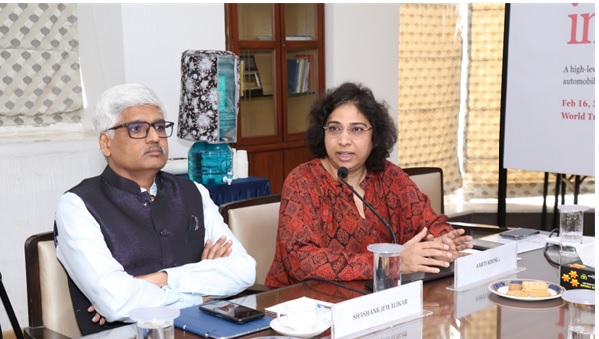
Mumbai, 16 February 2026: World Trade Center Mumbai, in association with Climate Trends, hosted a high-level roundtable on “Urban Heat Stress and Its Growing Impact on India’s Economic Sectors and Public Health” as part of Mumbai Climate Week. The discussion highlighted how rising temperatures and frequent heatwaves are increasingly affecting productivity, worker safety, electricity demand, and supply-chain efficiency across Indian cities.
Addressing the session, Vijay Kalantri, Chairman of World Trade Center Mumbai and President of the All India Association of Industries, stated that urban heat is no longer just an environmental issue but a serious development challenge. He noted that many Indian cities are already experiencing temperatures 3–8°C higher than surrounding rural areas due to the Urban Heat Island effect. With India’s urban population projected to cross 40% by 2030, rising temperatures are expected to significantly impact public health, urban liveability, and economic productivity, particularly among vulnerable communities. He also highlighted that India could lose around 5.8% of total working hours by 2030 due to extreme heat, while the World Bank has warned of potential GDP losses of up to 4.5% without adequate adaptation measures.
Aarti Khosla, Founder and Director of Climate Trends, emphasized that climate action lies at the intersection of public health and economic growth. She noted that investing in resilience is economically beneficial, as every dollar invested in climate resilience can generate significantly higher savings by preventing future losses. She also stressed the need for practical financial models that support MSMEs and protect vulnerable workers, especially those in India’s large informal workforce.
Vishwas Chitale, Head of Climate Resilience at the Council on Energy, Environment and Water (CEEW), highlighted that rapid urbanisation is contributing as much to rising urban heat as climate change itself. He stated that higher temperatures and humidity levels are already affecting productivity and industrial output, making climate-resilient adaptation measures both an environmental necessity and a sound economic investment.
The roundtable brought together representatives from industry, finance, healthcare, sustainability, and policy institutions, who agreed that urban heat is emerging as a major economic and development challenge requiring coordinated planning, integrated policy frameworks, and actionable resilience strategies for Indian cities.












 and Competent Authority–2 following the alleged illegal demolition carried out on March 11, 2026, in Maharashtra Nagar, Ambedkar Nagar, Bandra (East), Mumbai.)
 During Ramadan Leaves Hundreds Homeless; Residents Accuse SRA of Illegal Action)


Recent Comments