
By AI-Powered PMC Akbar Jiwani, Special Correspondent – Real Estate, Realnewsofindia.com
India’s residential real estate market showed resilience rather than retreat in the second quarter of 2026, with the country’s top eight cities recording 91,729 home sales even as headline numbers dipped from a year ago, according to the latest quarterly market reports. The data paints a picture of a sector settling into a more mature, selective phase of growth rather than one in decline — a distinction industry watchers say matters for homebuyers, developers and policymakers alike.
THE HEADLINE NUMBERS
Across the eight major markets — Mumbai Metropolitan Region (MMR), Bengaluru, Pune, Hyderabad, Chennai, Delhi-NCR, Kolkata and Ahmedabad — developers sold 91,729 units in Q2 2026, a sequential dip of 4.4 percent and a year-on-year decline of 6.1 percent from 97,674 units in the same quarter last year. New launches followed a similar pattern, with 89,161 units introduced during the quarter, down 4.2 percent quarter-on-quarter but still up 6.0 percent compared to a year earlier.
The average sales-weighted price across these markets rose to Rs 10,153 per square foot, a modest 1.0 percent increase over the previous quarter — evidence that even as unit sales softened, pricing power held firm in most micro-markets.
A CITY-BY-CITY PICTURE
The national numbers mask sharply divergent stories at the city level.
Hyderabad was the standout performer, with home sales rising 14.6 percent year-on-year to 13,196 units, supported by a 21.6 percent jump in new launches — a sign that developers remain confident in the city’s demand fundamentals.
Chennai posted the sharpest sales growth of any major market, up 36 percent year-on-year to 7,183 units, even as new launches there fell 43.3 percent annually, pointing to pent-up demand being absorbed against constrained new supply. Prices in the city rose 4.4 percent.
The Mumbai Metropolitan Region remained the country’s largest market by volume, with 24,112 units sold, though this was down 7.0 percent year-on-year. MMR also commanded the highest average price among the eight cities at Rs 15,422 per square foot, up a striking 20.4 percent from a year ago — underscoring how affordability pressures are building even as absolute sales cool.
Bengaluru and Pune, both closely tied to the technology sector, saw sales decline 9.2 percent and 20.8 percent year-on-year respectively. Bengaluru’s average price nonetheless climbed 26 percent annually to Rs 9,931 per square foot, while Pune crossed the Rs 8,000 per square foot mark for the first time in its history, at Rs 8,084.
Delhi-NCR and Ahmedabad both saw sales fall roughly 7-20 percent year-on-year, though Ahmedabad recorded the strongest quarter-on-quarter price gain of any city at 7 percent, while remaining the most affordable major market at Rs 5,295 per square foot. Kolkata’s sales dipped 8.6 percent annually but rose 22 percent sequentially — the strongest quarter-on-quarter recovery among the eight cities.
WHAT’S DRIVING THE SLOWDOWN — AND THE RESILIENCE
Analysts point to a mix of global and sector-specific headwinds behind the softer sales numbers, particularly in technology-heavy cities such as Bengaluru and Pune. AI-led workforce restructuring across the IT and technology sector has weighed on buyer sentiment and hiring-linked home purchases, while broader global uncertainty — including the fallout from the US-Iran conflict — has added caution to big-ticket discretionary spending in tech hubs.
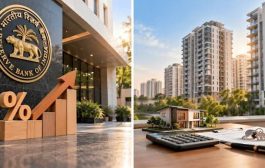
Yet the market has had genuine tailwinds to lean on. The Reserve Bank of India has kept its repo rate steady at 5.25 percent, providing predictability on home-loan interest rates at a time when affordability is already stretched in top-tier markets. Meanwhile, recent GST rationalisation on key construction materials has offered developers some relief on input costs, support that should filter through to project viability and, over time, to pricing.
Industry voices have been quick to frame the quarter as one of maturation rather than weakness. As one developer executive summarised: “Q2 2026 confirms India’s residential market is maturing, not weakening. Prices held above Rs 10,000 per square foot despite selective buying.”
THE GOVERNMENT’S PARALLEL PUSH ON STALLED HOUSING
The quarter’s sales data arrives alongside continued government efforts to address one of Indian real estate’s most persistent problems: stalled housing projects. The Special Window for Affordable and Mid-Income Housing Investment Fund (SWAMIH), launched in 2019 and managed by SBICAP Ventures, has now completed more than 58,000 homes across 146 projects in 20 cities and 12 states, unlocking over Rs 49,500 crore in capital and creating more than 30,000 jobs in the process. The fund is on track to deliver over 1 lakh homes in total, benefiting an estimated 2.38 lakh people.
Building on that track record, the Union Budget for 2025-26 announced SWAMIH Fund 2, a new Rs 15,000 crore blended-finance vehicle backed by the government, public sector banks and LIC, aimed at completing a further 1 lakh stalled units. Together with steady interest rates and GST relief on construction inputs, the SWAMIH initiative forms a key plank of the government’s strategy to keep housing delivery on track even as headline sales volumes moderate.
THE OUTLOOK
Taken together, the Q2 2026 numbers suggest an Indian housing market that is recalibrating rather than reversing course: sales are down from last year’s highs, but prices are largely holding or rising, government-backed liquidity support for stalled projects continues to scale up, and pockets of strong demand — Hyderabad and Chennai chief among them — point to underlying confidence that remains intact. For homebuyers and investors watching the market, the message from this quarter is one of selective opportunity rather than either euphoria or alarm.