






New Delhi, Nov 9 (IANS) Budget carrier AirAsia’s Indian arm Sunday launched a week-long sale offer for its entire network with one-way tickets at prices as low as Rs.699, including taxes.
The offer comes as part of the Malaysia-based parent company’s ‘Big Sale’ with three million promotional seats on its network from Kuala Lumpur, with the starting fare of Rs.2,599 for international flights operated by AirAsia Berhad and Thai AirAsia, the airline said in a statement.
AirAsia’s offer of Rs.2,599 would be available on flights from Chennai, Kochi, Kolkata, Bengaluru, Tiruchirappalli and Hyderabad to Kuala Lumpur operated by AirAsia Berhad and Chennai to Bangkok flown by Thai AirAsia, the release added.
AirAsia India is offering an all inclusive one-way fare starting from Rs.699 for flights from Bengaluru to Chennai, Kochi, Goa, Jaipur and Chandigarh and vice versa.
Tickets can be booked on Airasia’s website from Sunday night till Nov 16, for travel period from June 10 next year to Jan 17, 2016, the company said.
“The ‘Big Sale’ offer would allow our guests to plan their travel early with extremely low fares,” said AirAsia India chief executive Mittu Chandilya.

If you’ve been wondering where ‘TV Queen’ Mona Singh has disappeared, we’ve got news. Last heard she was having ‘Zed Plus’ security cover as someone had splashed a bucket of cold water on her face!
Hang on; we are talking about Zed Plus a film by Dr Chandraprakash Dwivedi in which Mona has a pivotal role. More importantly, for Mona it has been a dream come true to be part of a song in which water has been splashed on her face in slow motion.
“As a child, I was always mesmerized when water was thrown on a heroine’s face in slow motion. It has been my dream to feature in a sequence like that. It was a trend started by choreographer Bhushan Lakandri in 1942 A Love Story,” says Mona.
Not only has Mona been able to fulfil her dream but the song in which she has been featured, has been choreographed by Bhushan Lakandri himself! Working with the legendary choreography was an added bonus for Mona.
Zed Plus is not your typical Bollywood film with ‘zero plot’, dancing around trees and digitalized fight sequences; it’s a political satire in which the ‘Dancing Diva’ has a rustic role.
Mona is not saying anything more than this at this stage, but she assures us that this one is going to be a laugh riot.
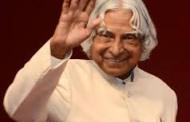
New Delhi: Former president of India APJ Abdul Kalam`s office on Monday rejected reports of his ill health saying that the 82-year-old is absoutely fine.
A news report quoted Kalam’s private secretary saying that the rumours have been doing rounds about the nuclear scientist ill health. He rejected the reports and said someone is playing mischief.
Meanwhile, Kalam has been awarded an honorary degree by Scotland`s prestigious University of Edinburgh for his contribution to science and technology.
“The award presented by University Principal and Vice Chancellor Timothy O`Shea is in recognition of Dr Kalam`s outstanding contribution to science and technology, and his commitment to helping transform India into a developed nation by 2020,” it said.
Kalam, who served as the president of India from 2002 to 2007, received the degree during a dinner held in his honour on May 15, the varsity said.
The 82-year-old is regarded as the father of his country`s space programme and in recent years, has campaigned to highlight the plight of India`s rural poor, advocating the use of technology to address social and economic inequalities.

Imagine living in a nation where you, a member of the majority, are unable to read the label of the medicine you must give your child, the menu at a local restaurant or even the warning signs of the road; a place where you are unable to comprehend the government document officiating your driver’s license, tax filing or marriage. This is the world that hundreds of millions of Indians live in simply because the elite prefer English. This discrimination has become so systemic that the elite and middle classes send their children to English private schools while the vast poor send theirs to the government schools of their mother tongue. One need not mention that universities and even government jobs require fluency in English, as mandated by the ruling elite. Therefore, a person’s socioeconomic status in Indian society is approximately in line with his or her fluency in the language. In other words: a new caste system.
It is incomprehensible that the majority of people in India are being oppressed by the mere lack of knowledge of a language. By not having medical instructions, food ingredient labels and nutritional information, government forms, access to the courts and politicians, street signs, and even movie tickets in their mother tongue, they are being harmed in the most discriminatory of manners. This goes beyond a basic democratic right to just being inherently illogical and prejudiced. Make no mistake, simply because an auto driver, a maid or a store employee knows his or her numbers, colors and a few other cursory words in English does not mean they truly speak it, let alone read it. Moreover, the academic conversation on this matter is controlled by those in the cities while the situation is much more dire in the towns, villages, hamlets and tribal regions.
Why English has become the language of the elite
There is an enormous range of nuanced reasons as to why English has become the language of the elite and of governance in India, even putting aside the original Macaulyism. It remains that Indians have come to believe that their nation’s prosperity, as well as their own, is wholly dependent upon not just learning English, but exclusively learning it as a first language. It began with the travelled elite, boomed within the middle class that was hired by multinational companies, and trickled to the vast majority hoping to escape their destitution but unable to afford private English education. Curiously, many states in India have attempted to make English the medium of instruction for all schools in an attempt to assuage the demands of the poor; however, the shortage of teachers who can even speak English is surreal. All of this while the vast majority is able to communicate in their respective mother tongues.
The most spoken languages in India, according to India’s census data, are Hindi (422m), Bengali (83m), Telugu (75m), Marathi (71m), Tamil (60m), Urdu (51m), Gujarati (46m), and Punjabi (29m). As such, the states in India are generally drawn on linguistic lines with each state having a history of literature, art, dance, politics and value system that is its own; being similar to the European Union in this regard. Take Andhra Pradesh and Telangana, for example, where Telugu is the local language: These two states combined have a larger population than France, South Korea and Turkey. However, unlike these nations, the language of the majority is falling into disarray because of strict English use with a prejudice due to governments and companies needlessly conducting intrastate business (with great difficulty) in English when they could reach far more people in the local language. While it is true that English is integral for communication between states, the Central Government and foreign companies, is it really necessary to use it within a state where most people have the same mother tongue? To be perfectly clear, no reasonable person could advocate that English should not be taught. In fact, it would be imprudent not to teach the modern lingua franca (or inglese if you so please) but there is no reason to believe that people could not be fluent if they learn it from their early years onwards as a second language. That is what is done in so many other nations like Sweden, Germany, Japan, Thailand, Greece, Finland, Italy, Egypt, and so forth.
Only about 30% can speak English
The statistics on English speaking ability tends to be unreliable for a host of political reasons, but it is generally accepted that somewhere in the range of 30% are able, to varying degrees, speak English—though only a third have some semblance of reading and writing aptitude. Still, it is unadorned disenfranchisement and an embarrassing plight for the other 70-80% of Indians. Contextually, this would mean anywhere from 770-900 million people are being oppressed on a daily basis. Even if one subtracts the 25-30% who are illiterate (another matter entirely), this is still about 577-630 million. For argument’s sake, let us say that this affects only 200 million people: this is still thrice the population of the U.K. Is this acceptable for a purportedly “socialist democracy?” Of the myriad of India’s social constructs this is possibly the simplest matter to amend and remedy.
To explore the matter at a more foundational level, all development begins with education, and education, of course, stems from language. Yet, language is much more than a means of communication; it determines the books one reads, the television programs one watches, the ideas one is exposed to, the values one holds, one’s personal interests, and one’s career opportunities. In essence, it defines our identities. Therefore, what is perhaps most damning is that because of this favoritism afforded to the English language the cultures of India are dying as they lose out on generations of authors, activists, actors, artists, playwrights, innovators, orators, and businesspersons who would have otherwise contributed to, and enriched, their own language.
What the private sector is doing to help
What is most fascinating in all this is that it is companies like Google, Facebook, Microsoft and Samsung which are reaching out and providing the tools to the people and the state governments to advance the local languages. Consider that Google revamping Andhra Pradesh’s IT system to make it Telugu input friendly or that Samsung is leading the charge in providing phones with local language capabilities even while local leaders post their campaign signs in English.
It seems evident that in the case of India and elsewhere, multiple languages ought to be taught and be taught well to allow individuals not only to operate in a globalized world but to also bring together local communities that have been fractured and segregated by the economics of language. It remains the obligation of the local governments to guarantee the enfranchisement of the people, remove the artificial socioeconomic barriers of language, and encourage social mobility. In the mean time, Indians have private sector ingenuity to thank for the advancement of their languages.

Pirates of the Caribbean star Keira Knightley says she does not mind going topless in front of the camera at all.
The 29-year-old actor has recently gone topless for a magazine cover, reported E!Online.
“I’ve had my body manipulated so many different times for so many different reasons, whether it’s paparazzi photographers or for film posters.
“And that (shoot) was one of the ones where I said, ‘OK, I’m fine doing the topless shot so long as you don’t make them any bigger or retouch’. Because it does feel important to say it really doesn’t matter what shape you are,” she said

PUNJAB, India — Here in Khem Karan, a bustling town of 12,000 on the border with Pakistan, young men speed down narrow roads on motorbikes, stopping at street corners where they linger in groups, chain-smoking cigarettes for hours.
This is Punjab’s future — the next generation of husbands and fathers, and three-quarters of the workforce.
These young men suffer from two serious and interconnected problems: unemployment and drug abuse — the latter fueled by cheap, synthetic opiates and heroin smuggled over the border.
Punjab state now has the second most underemployed workforce in the country. Only 448 of 1,000 people are fully employed, according to the Labor Ministry. And experts believe a lack of jobs is feeding rampant drug use, creating a vicious cycle that renders young men incapable of working if jobs ever materialize.
The state government estimates that at least half of its youth are affected by addiction. A study by the Rajiv Gandhi Institute for Contemporary Studies found that 65 percent of the families in the district that includes Khem Karan count at least one drug addict among their members.
Rahul, a good-humored 23-year-old Khem Karan resident, represents this demographic.
A former athlete, he started using heroin at the age of 20, while toiling at a monotonous job at the nearby wheat processing plant. Rahul, whose last name was withheld for protection, said his co-workers were nervous that he — then the only non-user in the group — would report them and eventually convinced him to try heroin.
“I just became happy, I just wanted to sleep,” he said, recalling his first hit.
Sitting in his modest home, old sports awards and medals arranged behind him, Rahul said his personal habit soon turned into a profession. Like his friends, he would sell 15 to 20 grams of heroin daily, taking in up to 25,000 rupees (about $415) per day — more than what he earned in a month selling grain. But that didn’t help his financial status. He habitually squandered his earnings on drugs and new clothes.
Meanwhile, his goal of getting a government job was sidelined.
“I used to think of drugs first thing when I woke up in the morning,” he said.
Young people like Rahul are easy prey for major drug dealers, who are sometimes from wealthy or political families, said Satinder Vir Singh, a district officer for secondary education.
For generations, families in Punjab sustained themselves through the lucrative agriculture industry. As they grew wealthier and children attended school, communities started to place more value on jobs that require less labor. Parents urged the next generation to work in an office or with the government.
But at a town hall meeting in the village of Valtoha, about 8 miles from Khem Karan, the handful of young men present said they couldn’t find a job after graduation. Nineteen-year-old Manpreet Singh said he was asked to give a 500,000-rupee (about $8,300) bribe for a government job. And 22-year-old Lakvinder Singh has been waiting for a response about a Forest Department job for eight months.
Singh, the education officer, said most students are searching for “white-collar jobs” but that the current market can’t absorb the influx of graduates with these goals. Being stuck in this limbo, he said, makes them vulnerable.
“If you’re idle and don’t have a job, if you’re not going to school and not looking for any future prospects, then frustration will come to mind. Idle mind is a devil’s workshop — so this is when drugs step in.”
Many citizens blame the government. There are currently ten government addiction treatment centers in a state of nearly 30 million people, and there’s little education or awareness about the problem.
Law enforcement also falls short. Police only take action to recover large amounts of drugs. Avtar Singh, a police inspector in Valtoha, said his staff don’t file paperwork for anyone they catch selling or using less than five grams of heroin. Singh said most of the reported crimes, like theft or violence, are now related to addiction. And a study from Guru Nanak Dev University found that narcotics-related crimes in Punjab are nine times the national average.
“Parents come to the police when it’s extreme. Usually they try to protect their children at first and then talk about it after it’s out of control,” Singh said.
While communities are pessimistic about the government’s ability to rebuild a faltering generation, some citizens are trying to find solutions.
Pawan Sharma, 26, started volunteering for a nonprofit anti-drug organization, Smile for Life, when his older brother became addicted to heroin after a bad breakup with his girlfriend. Sharma’s middle-class family eventually paid 50,000 rupees — about half the per capita annual income of a Punjab resident — to send his brother to a rehabilitation center.
Sharma said he recognized that few families in Khem Karan could afford the hefty fees of the remote centers. So in recent years he has worked to organize temporary rehab camps focused on counseling and educating youth.
“There is awareness only in cities,” he said. “It should be in villages too.”
Brij Bedi, a longtime activist and educator based in the city of Amritsar, said both Punjab’s drug epidemic and unemployment are symptoms of the same, much larger disease — one rooted in poor governance.
Grey-haired and gruff, Bedi founded the Citizen Forum Vidya Mandir in 1999, an elementary and middle school in Maqboolpura, a neighborhood called the “locality of widows” because of the number of men lost to drug-related deaths. Political greed, he said, had left dismal schools and poor health care in Punjab.
“It’s not drugs that’s affecting the youth,” he said from his office, the noise of children resounding behind him. “It’s lack of infrastructure which is hindering in creating more jobs and opportunities.”
Even so, there are some signs that the government is finally listening: In mid-June, the state government of Punjab announced a plan to offer free medical treatment and to create 22 more detox centers. And within the next year, India will introduce a new education curriculum, the National Vocational Education Qualification Framework, to offer tangible skills training such as retail management and automobile maintenance to anyone enrolled in a public high school.
Meanwhile, young men like Rahul will continue to fight a battle between their broken dreams and the reality they see every day on the street corners and alleys of their neighborhood. After receiving treatment at a nearby drug rehabilitation center, he is back at home and sober. But he has yet to re-enter the workforce.
“I want to go abroad because there’s no good job here,” he said. “The only jobs available here are drugs-related jobs. That’s where the money is.”

NEW DELHI — India is a fast-moving country where millions adopt new technologies overnight, but where age-old problems like human trafficking, bribe paying and female harassment are still rife.
Now campaigners have harnessed the power of smartphones and the internet to solve India’s social problems and help to right the country’s many wrongs.
Take child trafficking, an evil India has not been able to shake off despite years of policing effort, government legislation and the dogged work of NGOs. Every hour, at least 11 children go missing in India, according to the Home Ministry. Millions end up as beggars, prostitutes or modern-day-slaves.
Two techies have come up with Helping Faceless, an app to help combat child trafficking and kidnapping. The idea is simple: Click a picture of a child you see roaming the streets and upload it on the app. Once the picture is uploaded, a search engine tries to match it with any previous records. It uses a mixture of face recognition and crowdsourcing as its tech backbone.
“The matching is handled by the app itself. If a match is found, the app forwards the information about the child’s whereabouts to the relevant NGO who then helps connect these children with their respective families,” says Shashank Singh, one of the app’s creators.
Apps have been created to help keep women safe as well, particularly after the horrific gang rape and death of a young woman in Delhi in December 2012.
A website called safecity.in was set up soon after to help women document their experiences of sexual harassment in public spaces. The perps are not named and women can report the incidents anonymously.
“Most women have faced with some form of harassment or abuse, yet many do not talk about it. They do not even go to the police to make an official complaint. Safecity aims to capture this information and make the problem — which is currently invisible — visible,” says the website’s founder Elsa D’Silva.
Social media, GPS and simple web design tools have been the key drivers of the good Samaritan.
Location tools help to identify patterns, says D’Silva.
“Our website aggregates the data into hotspots or location-based trends, which in turn help to find solutions for women. If we were able to find trends, we can prevent it from happening,” she says.
Bribery is another of India’s long-standing problems. Every year billions of rupees change hands in exchange for getting things done. Ordinary citizens are forced to pay money for almost anything — from doctor’s certificates to police dealings.
People power has been harnessed to combat the issue. A website called ipaidabribe.com invites people to pipe up on any bribe they paid, where they did it and how much it cost.
The site aims for social change on a wider scale.
“We are trying to give an opportunity for Indian citizens to report on bribes they have paid, which has [previously] been in the realm of speculation,” said K Venkatesh, one of the people behind the site.
“We are trying to collect data from citizens so that we can use it push for process reforms and change in attitudes across the board,” said Venkatesh.
It appears that the dream of Gandhian India is well and alive in the 21st century.
“I want to take the spirit of helping others and really scale it on a level where millions of people are looking out for each other,” says Singh.
![Online [Free Watch] Full Movie Geostorm (2017)](http://www.realnewsofindia.com/wp-content/uploads/2014/11/what-republican-190x122.jpg)

Geostorm (2017)
| Release | : | 2017-10-13 |
| Country | : | United States of America |
| Language | : | English |
| Runtime | : | 109 |
| Genre | : | Action,Science Fiction,Thriller |

Synopsis
Watch Geostorm Full Movie Online Free. Movie ‘Geostorm’ was released in 2017-10-13 in genre Action,Science Fiction,Thriller.
After an unprecedented series of natural disasters threatened the planet, the world’s leaders came together to create an intricate network of satellites to control the global climate and keep everyone safe. But now, something has gone wrong: the system built to protect Earth is attacking it, and it becomes a race against the clock to uncover the real threat before a worldwide geostorm wipes out everything and everyone along with it.
Streaming Movie Geostorm
(2017) Online
Incoming search term :
Watch Geostorm Full Movie Online Free Streaming In HD Quality, watch full Geostorm movie, Watch Geostorm 2017
Online Free Viooz, Watch Geostorm 2017 Online Free, Watch Geostorm 2017 Online Putlocker, film Geostorm
online, Streaming Geostorm 2017 For Free Online, streaming movie Geostorm 2017, Geostorm film trailer,
Geostorm movie trailer, live streaming film Geostorm 2017, Streaming Geostorm 2017 Online Free Megashare,
movie Geostorm streaming, Watch Geostorm 2017 For Free online, film Geostorm 2017 online streaming,
download Geostorm 2017 movie now, movie Geostorm 2017 download, watch full movie Geostorm 2017, trailer
film Geostorm 2017, Watch Geostorm 2017 Online 123movies, Watch Geostorm 2017 Online Free 123movie, Watch
Geostorm 2017 Online Free Putlocker, movie Geostorm 2017 trailer, Watch Geostorm 2017 Online Free
netflix, watch Geostorm film online now, Geostorm 2017 movie streaming, Geostorm 2017 Watch Online, Watch
Geostorm 2017 Online 123movie, download movie Geostorm, Watch Geostorm 2017 Online Free megashare, watch
Geostorm movie now, Watch Geostorm 2017 Online Free hulu, Watch Geostorm 2017 Online Viooz, live streaming
movie Geostorm 2017, Geostorm live streaming film online, movie Geostorm 2017, Watch Geostorm 2017 Online
Megashare.

Kolkata: Ringed by a circle of admirers at the crack of dawn Friday, Bollywood megastar Amitabh Bachchan shot for ‘Piku’ at the British-era Howrah Bridge here and thanked the local police for its efficient management.
idge, Kolkata’s iconic landmark that serves as a crucial gateway for the eastern metropolis and ferries hundreds of thousands of vehicles every day, was abuzz with a different kind of excitement Friday.
Big B was seen cruising in a car along the bridge with co-stars Deepika Padukone and Irrfan Khan during the filming.
They were greeted with loud cheers and waves.
“Up at 4 am .. at Howrah Bridge !! Sympathetic crowds, love and affection and the superb management of the local POLICE ! Thank you !,” the 71-year-old actor tweeted.
Over the years, the bridge has become a symbol of Kolkata and featured in numerous films by Satyajit Ray, Ritwik Ghatak, Mrinal Sen, Raj Kapoor, Roland Joffe and Mira Nair.
Shakti Samanta’s Hindi film ‘Howrah Bridge’ featuring the beautiful Madhubala was also a huge box office success.
The 26,500-tonne structure, which finds mention in Rudyard Kipling’s works, was commissioned in 1943 replacing a pontoon bridge linking the two towns.
The steel behemoth, also known as Rabindra Setu, forms the crucial connect between the bustling eastern metropolis and Howrah district over the Hooghly river.
Shoojit Sircar’s ‘Piku’ has generated tremendous curiosity among the public and anticipations run high.

NEW DELHI, India — Here’s a universal truth: kids squirm in sex ed class — even in a country with ancient texts and monuments that celebrate and chronicle all sorts of coital kinkiness.
There are funny words and posters of intimacy and an anatomical exactness that seems less awkward in street slang.
Still, understanding our bodies and most primal urges is serious business, with far-reaching social implications.
Standing outside a makeshift classroom in New Delhi, a quiet 14-year-old said that lessons on sexuality and gender were what his neighborhood needs to learn the most. “I was talking to a girl, we were just working on a school assignment, and people started to gossip about us,” said Shahid Mohammed, a notebook in his hand. “Girls here aren’t allowed to leave the house. They’re scared to go out alone. People still think like they did in the old times.”
Mohammed, a lanky high schooler, was one of twenty teenage students corralled for a sex education class taught by The YP Foundation, a youth-led organization that works on advocacy and education. Organizations like YP Foundation have stepped in to fill a knowledge gap that they say fuels everything from unwanted pregnancies to violence against women.
“I think the biggest mistake people make is to bring their own shame into the classrooms.”
~Nilima Achwal, educator
Demystifying taboo topics is the most powerful way to combat the shame that can contribute to crimes like rape, one of the social diseases that has brought sexual education into the limelight, said Nilima Achwal, a Mumbai-based educator and activist.
After the Nirbhaya case — a highly publicized gang rape of a 23-year-old student in Delhi — the national dialogue has turned toward the safety of women, said Achwal, who founded Yuja, a social venture focused on teaching youth about sexual health and gender equality. And while much of it is about bringing rapists to justice, she hopes her initiative will help “channel the anger into action.”
“I really believe that unless we can talk about sex, we can’t even talk about equality,” said Achwal.
It’s clear that not everyone is having critical conversations about either topic: More than 6 million female fetuses have been aborted since 2000 because of their gender, 2.4 million people are living with HIV and AIDS, and the most common oral contraception for young, unmarried women is the morning-after pill — a high dose of hormones designed only for emergencies. And 72 percent of youth in 2012 said they had practiced unprotected sex, according to the International Planned Parenthood Federation.
Meanwhile, the government has sent conflicting messages. While most states include some meager adolescent health education in tenth grade curriculum, a Supreme Court decision in 2005 stated that sexual education was not a fundamental right. Just this summer, India’s health minister, Harsh Vardhan, reportedly called for a ban on “so-called sexual education” — calling instead for what he deems culturally appropriate education. (The health ministry did not respond to multiple requests for comment for this story.)
That culture factor that Vardhan mentioned makes teaching sex ed somewhat complicated in the mosaic of social and sexual norms in India.
In Mohammed’s class in Delhi, the students’ parents had yet to be told what their kids were learning. It was described as just a health class.
“Our biggest fear is the beginning sessions,” said Shreya Agarwal, one of the YP Foundation volunteers trained to teach sexual education. “A couple of people walk out. The parents might pull their kids out.”
In the back room of a family’s home, the students — barefoot and boisterous — shook off the lessons of their school day. Agarwal and her team of four other volunteers turned on slow Hindi music and hung posters across the freshly painted mint-green walls. They showed two people holding hands, a woman and man going to work, the outline of two growing adolescents. For the next hour the students were asked to reflect on the photos and draw or write their own thoughts.
The volunteers started with broader concepts like equality in the workplace, reserving the explicit topics for later in the course. Agarwal said the nature of the community — comprised mostly of conservative families working as maids and cooks across the city — can require a gradual approach for bringing up sex.
Achwal, the sexual health educator in Mumbai, said it’s just as important to be clear and direct as it is to be culturally sensitive. She and her team at Yuja have taught over 300 children across four low-income schools in the city, and now are starting to work in villages in Maharashtra.
“I think the biggest mistake people make is to bring their own shame into the classrooms,” she said. “I believe in telling them everything. When you omit something, you’re telling them something is wrong with that.”
Like Achwal, it was the Delhi rape that pushed entrepreneur Avani Parekh to put the final touches on her project, Love Doctor, a website and mobile service that allows users to anonymously ask questions about relationships, sex and everything in between.
There’s a lot, Parekh said, in between. Sitting in a cafe earlier this month, the American-born Indian explained the initiative in two ways: First, as an entrepreneur breaking into an untapped market, addressing an older group of 20-somethings who can’t always be reached through schools or youth programs or classrooms. And second, and perhaps more importantly, as a woman who has worked for years with domestic abuse victims, and struggled with her own past trauma.
With this foundation, she and her team of trained volunteers have answered questions ranging from navigating intimacy within a new marriage and college crushes to unwanted pregnancies. And while she gets the occasional jokester testing the surface of Love Doctor, she said most of the 80 or so daily queries she receives are sincere.
“Sometimes people need more technical information, but other times people just want someone to listen to them, to validate them,” Parekh said. “It can be very lonely in this country of one billion people.”
From the anonymous users sending texts to Love Doctor to teens like Mohammed, the first in his family to formally discuss gender equality and sexuality, the efforts to bring awareness to the Indian public are gaining traction.
“These outdated ideas, the violence, it all comes from a place of confusion,” Achwal said. “If you give people education and seeds of being aware, you will create much greater change.”
http://www.globalpost.com/dispatch/news/regions/asia-pacific/india/141024/teaching-billion-bashful-people-about-sex















Recent Comments