





The Supreme Court today sought CBI’s response on a plea by Congress leader Rasheed Masood, who was disqualified from Rajya Sabha after being sentenced to four years imprisonment in a graft case, against rejection of his bail petition by the Delhi High Court.
A bench of justices Dipak Misra and Prafulla C Pant issued notice to the probe agency on the plea of Masood, 68, who had become the first MP to lose his seat after the Supreme Court’s ruling on disqualification of convicted lawmakers.
The former Rajya Sabha lawmaker, in his plea filed through lawyer Archit, sought bail on various grounds including that he is acutely diabetic and taking insulin several times a day besides other medicines for his ailments.
He has challenged the order of the High Court which refused to grant him bail on November 14, last year during the pendency of his appeal against the conviction in the graft case.
“Without expressing any opinion on the merit of the case, lest it would adversely affect the final outcome of the appeal, needless to say the allegations against the appellant (Masood) are very serious in nature in as much as the genuine candidates were deprived of the medical seats because of the appellant in conspiracy with co-accused,” the High Court had said.
The leader had, before the High Court, submitted that the trial was going on against him for the past 17 years.
Masood has also challenged the trial court’s verdict convicting him and sentencing him to a four-year jail term.
He was held guilty by the trial court in September 2013 of fraudulently nominating undeserving candidates to MBBS seats allotted to Tripura in medical colleges across the country from the central pool as Health Minister in the National Front government of 1990.
The trial court had also imposed a fine of Rs 60,000 on him.
Masood’s conviction and sentencing was the first case after the apex court judgement that struck down a provision in the Representation of the People Act, under which incumbent MPs and MLAs could avoid disqualification till pendency of the appeal against conviction in a higher court.
The nine students, who had fraudulently got admission in the medical colleges, were convicted for cheating. Two of them, including Masood’s nephew, were juvenile at the time of the offence and their case had been transferred to the Juvenile Justice Board on January 25, 2007.
The then Tripura Chief Minister Majumdar and the then Health Minister Kashi Ram Reang were also accused in the case.
They passed away during the pendency of the trial.
Masood had between 1990-91 illegally and fraudulently, in conspiracy with the then resident commissioner of Tripura, Gurdial Singh, nominated his nephew, another juvenile and Sachidanand Dwivedi to seats allocated from central pool for students of Tripura.
Sachidanand has also been held guilty for conspiracy, cheating, forgery for purpose of cheating, and under the provisions of PC Act.
CBI had said in the charge sheet that Tripura does not have any medical college of its own.
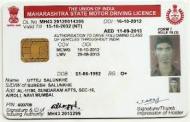
The apex consumer commission has denied insurance claim to a man for his commercial vehicle, saying that at the time of accident the driver was holding a licence for only light motor non-transport vehicle.
National Consumer Disputes Redressal Commission (NCDRC) bench, presided by Justice K S Chaudhari, passed the order while allowing a revision petition filed by ICICI Lombard General Insurance Co Ltd against Karnataka State Consumer Disputes Redressal Commission.
The state commission had upheld an order of district consumer forum asking the firm to pay Rs 2,45,983 to the complainant Mainuddin, owner of the commercial vehicle.
“At the time of accident, driver of vehicle was not possessed with the valid driving licence and in such circumstances, OP (firm) has not committed any deficiency in repudiating claim and district forum committed error in allowing the complaint and state commission further committed error in dismissing appeal.
“Hence, revision petition is to be allowed,” NCDRC said in an ex-parte order as Mainuddin failed to appear before it.
The apex commission noted that the driver was holding licence to drive LMV (light motor vehicle) non-transport, which was not valid for the commercial vehicle he was driving.
In its order, NCDRC also noted that to drive a transport vehicle, licence is issued for three years, whereas for light motor vehicle, licence is issued for 20 years.
Licence was issued to driver, valid from September 20, 2004 to September 19, 2024, but he was not permitted to drive transport vehicle, it noted.
Mainuddin had earlier told the forum that his vehicle, insured with firm, met with an accident in October 2006 and, thereafter, he sought an insurance claim of Rs 2,79,983.
As the claim was not settled, Mainuddin filed a complaint before the district consumer forum.
The insurance firm in its appeal had submitted that the vehicle was a transport vehicle which was driven by a person not holding valid driving licence.
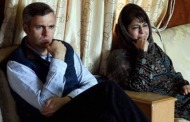
Governor’s rule was imposed in Jammu and Kashmir on Friday after political parties failed to muster the requisite number in the 87-member Assembly for staking claim to form the government.
The decision came after Governor N N Vohra submitted a report to the President last night stating that Omar Abdullah had requested to be relieved of the post of being a caretaker Chief Minister.
The report contained some suggestions including the option of a spell of Governor’s rule in the wake of no party getting the number required to form a government after the highly-fractured verdict in the Assembly elections, official sources said here.
According to section 92 of J&K constitution, the governor doesn’t have to consult either the council of ministers or the President to impose the rule.
J&K elections concluded on December 20 with PDP emerging as the single largest party with 28 seats, BJP with 25 seats, National Conference with 15 and Congress 12 seats. If there is no decision on government formation till January 19, then a governor’s rule is imminent.
Union Home Minister Rajnath Singh had last night forwarded the report to the Prime Minister’s Office for necessary action.
President Pranab Mukherjee is understood to have given his concurrence for Governor’s rule which has been imposed in the state for the sixth time since 1977.
Omar had said the state needed a full-time administrator to deal with the situation along the border with Pakistan and providing relief to flood-affected people in the Kashmir Valley.
He was asked to continue as caretaker Chief Minister on December 24 after his resignation in the wake of defeat of his party, National Conference (NC), in the Assembly poll results declared on December 23.
The new Government was required to be constituted before January 19 when the term of the current Assembly expires. Omar’s decision may have also hastened the Governor’s decision to send a report to the Home Ministry.
The state is witnessing such a stalemate for the second time in 12 years. A similar situation had arisen when Farooq Abdullah had asked the then Governor G C Saxena to relieve him of being a caretaker Chief Minister as PDP and Congress were taking a lot of time in cobbling up numbers to form the government.
Despite intervention by the then Prime Minister Atal Bihari Vajpayee, Abdullah refused to continue as the caretaker Chief Minister and Governor’s rule had to be imposed for a fortnight from October 18, 2002.
– See more at: http://indianexpress.com/article/india/politics/governors-rule-imposed-in-jammu-and-kashmir/#sthash.NIHOB914.dpuf
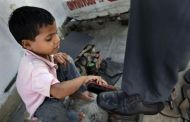
Nobel laureate Kailash Satyarthi today asked the civil society to take collective responsibility towards eradicating child labour, a day after he dedicated the honour to the nation by presenting his medal to President Pranab Mukherjee.
“It is not an honour for me alone, but for the children in the world and an honour to the nation. But when the credit is yours, so is the responsibility,” the Nobel Peace prize winner said at a lecture organised by the Ministry of Defence here.
“I urge the civil society, leaders to do their bit, speak out on violence against children and eradicate child labour,” he said.
Satyarthi also said he has not accepted the prize money given by the Nobel committee for the Peace Prize, which was jointly awarded to him and Pakistan’s Malala Yousafzai on December 10, for their pioneering work on promoting child rights.
“I told the committee that neither I, nor my organisation will accept the prize money. This money will be spent on children,” he said.
Underlining that intolerance among children and youth was on a rise which was leading to violence, he called for concerted efforts to root out the looming moral crisis in the world.
“Every country is bothered about economic growth but what about moral crisis? We live in a world where children are sold like cattle. We cannot even give them a vision to become global citizens.
“There is growing intolerance. In the name of ethics and religion, people are being killed,” he said.
Highlighting that education was the key to development, Satyarthi called for democratisation of knowledge, the benefits of which should reach out to the maximum number of people.
Raising concerns over women’s safety in the country, the founder of Bachpan Bachao Andolan said violence was not only physical, sexual abuse but the environment of fear created for women in itself was equivalent to violence.
Child rights activist Kailash Satyarthi has dedicated his Nobel Peace Prize to the nation by presenting his medal to President Pranab Mukherjee. Visitors to Rashtrapati Bhavan will now be able to get a glimpse of the Nobel Peace Prize.
The medal was dedicated by Satyarthi to Mukherjee at a ceremony held at Rashtrapati Bhavan.
“Satyarthi is doing very good job which has been recognised by the international community and in its recognition he has been given Noble Peace Prize. I thank him on behalf of people of this country,” Mukherjee said during the ceremony.
Satyarthi and Pakistan’s Malala Yousafzai were on December 10, 2014, awarded the Nobel Peace Prize for their pioneering work on promoting child rights.
“I committed the medal to the country today. All eyes of the world are on India. It should be our collective responsibility that children’s rights are protected,” Satyarthi said.
“There is no Nobel medal in country today as those who got it, they are not here or left the country. Rabindranath Tagore’s medal was stolen. This Nobel medal is of the country, of all its people,” he said.
Satyarthi also urged the Parliamentarians to pass a legislation which seeks to ban any kind of labour by child below the age of 14 years, and also prohibits employment of children below the age of 18 years in hazardous industries.
“It was to be passed in the last Winter Session. I hope it will be done soon,” he said.
Satyarthi’s NGO ‘Bachpan Bachao Andolan’ claims to have rescued over 83,000 children from bonded labour and slavery since its inception in 1980.

Stressing the dignity of labour, Human Resource Development Minister Smriti Irani on Tuesday told a conference of state education ministers in New Delhi that she had washed utensils 15 years ago at a hotel in Mumbai.
However, she is not alone. Firstpost brings you a list of celebrities, sports persons and politicians in India who slogged and made it to the top.
Here are some of the inspiring stories.
1. Mamata Banerjee: The first woman Chief Minister of West Bengal, Mamata Banerjee’s rise to power was not an easy one. She was born in Calcutta to a lower-middle class family. Interested in politics from a young age, Banerjee joined the Congress in the 1970s. An NDTVreport says, “From the unknown worker pasting anti-CPM posters to General Secretary of the Congress’ youth wing, Banerjee had a meteoric rise in the Congress. She first contested elections in 1984.” Later in 1997 she broke away from the Congress and started her own party – the Trinamool Congress. Despite her rise to fame Banerjee still lives an austere life and is only seen in cotton sarees and rubber chappals.
2. Rajinikanth: Born Shivaji Rao Gaekwad, the actor had to see much struggle during his initial years an an actor. The Indian Express reports, “At the start of his career, he took up a number of odd jobs including being a carpenter and a coolie. He was later employed by Bangalore Transport Service (BTS), where he worked as a bus conductor.” He also used to take part in many stage plays where he was noticed by Tamil film director K Balachander, and the rest, as goes the popular saying, is history.
3. Irfan and Yusuf Pathan: The brothers were born to a poor family and grew up in a mosque in Vadodara, Gujarat. Their father was a muezzin (the person appointed at a mosque to lead, and recite the call to prayer). While Irfan made his debut for India in the 2003/04 Border-Gavaskar Trophy, Yusuf made his debut in first-class cricket in 2001/02. Irfan Pathan’s father Mehboob Khan was once quoted in an interview as saying, “In India, even the sons of billionaires play cricket, but they don’t get into the national team. What did I have? Nothing but a broom. Destiny is rewarding me.”
4. Nawazuddin Siddiqui: Before starring in critically acclaimed films like Gangs of Wasseypur and Kahaani, and also bagging a national award for his role in Talaash, Siddiqui had worked as a watchman and a chemist. He was born to a farmer in Uttar Pradesh’s Bhudana village. Here’s how Tehelka put his transition in short, “His earliest memories are of waking up at 4 am to help his father on the farm before going to school. He studied science in college and briefly worked as a chemist in a petrochemical company. The boredom of the job brought him to Delhi where he drifted towards theatre, obsessively watching plays for a year and sustaining himself as a watchman in an office.”
5. MC Mary Kom: The first Indian woman boxer to win a medal in the Olympics, Mary grew up helping raise her siblings and farming apart from studying and playing sports. Reader’s Digest in a story about the boxer says, “Inspired by Manipuri boxer Dingko Singh’s gold at the 1998 Asian Games, Mary Kom moved to Imphal, the Manipur capital, to train in athletics. Dressed in torn, shabby clothes, the teenager approached coach K Kosana Meitei at the Sports Authority of India there and asked to be given a chance.” Now she is a celebrity with a film that was based on her life.
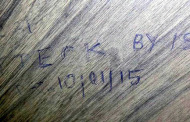
Mumbai: The Central Industrial Security Force on Wednesday is probing threat by Islamic State scribbled on a wall of the Terminal 2 of Chhatrapati Shivaji International Airport. It warned of an attack by IS on January 10.
The note written by a pen on men’s washroom wall read, “ATTECK BY ISIS 10/0/15 (sic).”
Since no CCTV footage was available, the CISF said they were analysing the footage outside the washroom.
So far investigation hasn’t revealed anything. Mumbai Police will also probe the case.
The message was first spotted by a cleaner on Tuesday evening.
Security has been tightened across the country after Pakistani boat explode near Porbandar port in Gujarat.

If you visit the betel shop of Nand Lal, do not be surprised if you are given a packet of condoms for free with you favourite ‘paan’.
From a small wooden shop tucked away in a corner of the bustling Falka Bazar of Katihar district, Lal has been handing out free contraceptives to his customers since November to spread awareness about AIDS and population explosion. “I read about burgeoning population and the increasing incidents of AIDS and realised that every Indian has to do his bit to counter them. So many adults come to my shop… I thought why not provide them condoms with a request to indulge in safe sex and try limit the family to two children,” said Lal.
As the 45-year-old shopkeeper hands a packet of condom to each of his customers, they stop, smile, and listen to his advice. “At first a few of my clients took umbrage at this, but when they understood that I meant well, they started liking it. Today I have no problem with any of them. I also realised that many people do not buy condoms out of shyness. They are very supportive of my move,” he added.
On an average, Lal distributes over 75 packets of contraceptives among the people who visit his shop to buy paan and other tit-bits. But doesn’t he feel any financial pinch over his initiative?
“At first it was difficult to maintain the momentum. Packets of condoms are not cheap. My wife termed it unnecessary expenditure and was dead against it. Lekin usko mana liya (But I placated her). I try to make up for their cost through my daily sales,” Lal added.
Once non-government organisations came to know about Lal’s unique service, they started providing him a few packets on a daily basis to be distributed among the people. The shopkeeper’s noble initiative has become so popular that not only people flock to him, but the state health department has also decided to chip in and provide him with condoms for free.
“This is a positive approach towards spreading awareness about AIDS and family planning. We are with Lal in his initiative, and have decided to provide free packets of condoms to him for distribution among people,” said health department official Dr PK Singh.


Recent Comments