






Amul’s stick ice-cream will be available in most stores in the city; Mother Dairy will be more selective in its approach.
After an eventful entry into Delhi last month, Gujarat Co-operative Milk Marketing Federation (GCMMF), the owners of Amul, one of the country’s best-loved food brands, will launch its premium stick ice-cream, Epic, in the city this week.
The Mumbai leg will be Epic’s second city-specific launch, after it created a stir in Delhi last month by launching the product a day ahead of Magnum, rival Hindustan Unilever’s stick ice-cream, which was slated for rollout on February 18 in the capital.
R S Sodhi, managing director of GCMMF, confirmed the Mumbai launch and said the product would be taken to Bengaluru, Kolkata and Chennai after that.
Meanwhile, rival Mother Dairy, which quietly rolled out its high-end stick ice-cream, called Belgiyum, in Delhi around the same time that Epic and Magnum were launched in the capital, will take it to five more metros, says Subhashis Basu, head of dairy products. “The metros include Mumbai, Bengaluru, Chennai, Kolkata and Hyderabad and it will happen in the next one month,” he says.
Mini-metros such as Pune and Ahmedabad are also on Mother Dairy’s radar but a launch there is expected a little later, he says.
Both Epic and Belgiyum compete head-on with Magnum, and are made of Belgian chocolate like the latter. However, Epic has been priced at less than half of Magnum at Rs 35-40 a stick. Belgiyum is available for Rs 80 a stick and Magnum for Rs 90 a stick.
Sodhi says GCMMF will also continue with its Creme Rich brand of Belgian ice-creams in cups and tubs, launched last summer. “While Creme Rich did help us make inroads into the premium ice-cream market, we needed something strong to compete with the likes of Magnum, which is why Epic. Our price points are competitive because we are not importing Epic (HUL imports Magnum into India). This allows us to keep our costs low,” he says.
The move to fortify its premium ice-cream portfolio comes as Amul is looking to trade up as consumer preferences change. It has 40-41 per cent share of the Rs 2,000-crore organised ice-cream market and has achieved this largely on the back of mass-market products, typically priced at a discount to rivals. Amul has always defended this pricing strategy, saying its co-operative model allows it to economically source raw materials, especially milk, , permitting it to pass on these savings to consumers. The strategy has been no different in other dairy categories such as fresh and flavoured yoghurts, milk-based beverages where it operates.
The premium ice-cream market, in particular, has been expanding on the back of growing disposable incomes and consumers’ desire to try out better products, says Basu of Mother Dairy.
Pegged at Rs 250-300 crore within the overall ice-cream market, the premium segment has in the past few years seen the entry of international brands such as Häagen Dazs, CocoBerry and London Dairy.
While Epic will be available in most stores in Mumbai, Belgiyum will be retailed at select outlets to ensure its premium profile and imagery stays, Basu says. GCMMF is expected to begin marketing activities around Epic in the next few weeks to increase hype as summer sets in. Magnum and Belgiyum could also get its share of voice in the summer, experts tracking the market say.
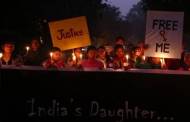
The Indian government is up in arms. It has banned a documentary, India’s Daughter, which includes a reconstruction of the notorious gang rape and murder of a young woman on a bus in Delhi. Ministers can’t stop Leslee Udwin’s film being shown elsewhere – you might have seen it on BBC Four last week – but they would like it to be consigned to oblivion. It reflects badly on India, you see.
The rape of the 23-year-old student took place just before Christmas 2012, bringing thousands of people on to the streets to demand greater protection for women. All of this happened before the current prime minister, Narendra Modi, took office, but he would like the entire subject to just go away. Last month, his government shelved a plan drawn up after the Delhi gang rape to set up 660 rape crisis centres across India; the figure has been slashed to 36 because the Prime Minister believes that the Indian police are “sensitive enough” to deal with rape cases. His confidence in the authorities isn’t universally shared, leading to a dreadful incident in north-east India last month when a suspected rapist was dragged from jail and lynched.
According to some estimates, a rape takes place in India every 20 minutes. The documentary explains why the figure is so high: the quiet dignity of the victim’s parents contrasts with the chilly detachment of Mukesh Singh, who drove the bus and shows not a shred of remorse for the sexual torture and murder of their daughter. The Minister for Parliamentary Affairs believes that the film is an “international conspiracy to defame India”, but what it really does is expose the profoundly misogynist culture that creates men such as Singh. The fact that ministers are more concerned about the country’s reputation than the safety of half the population does the same.
READ MORE: DELHI BUS RAPIST BLAMES DEAD VICTIM FOR ATTACK
INDIA TO INVESTIGATE TV CREW’S INTERVIEW WITH RAPIST
HOW INDIA ATTEMPTED TO SUPPRESS THE BBC DELHI GANG-RAPE DOCUMENTARY
“Honour” is at the heart of this problem, whether it’s that of a country or an individual woman. According to the driver, the student shouldn’t have been out at night with a male friend; once the rape started, she shouldn’t have struggled with her attackers. “A girl is far more responsible for rape than a boy,” he declares in the film. One of the defence lawyers backs him up, making the astounding claim that he would burn his own daughter alive if she “disgraced herself” by going out at night. (The victim, by the way, was returning from an early-evening showing of The Life of Pi when she was targeted.)
India is not the only country with a rape problem. In South Africa, some estimates have suggested that there could be half a million rapes each year, many of them by multiple perpetrators and characterised by extreme violence. In Mexico, rates of rape and murder involving female victims are so high that they have been officially described by the UN as a “femicide”. Similar attitudes can be found in all these countries, proposing that it’s up to women to modify their behaviour if they want to avoid being attacked. When Singh claims in the film that a “decent” girl wouldn’t be out at nine o’clock at night, it brings to mind the Grand Mufti of Australia, who, in 2006, compared women to a plate of uncovered meat. If they would only stay indoors, he argued, nothing bad would happen to them.
It’s easy to dismiss such views as pre-modern, a relic from a period of history before gender equality emerged as one of the most basic rights. Feminists and human rights activists have challenged them in country after country, including India, where the Delhi bus attack is one of a series of gang rapes that are almost too awful to read about. But the reality is that rape culture – an outdated set of ideas about how women should behave – exists everywhere in the world. An integral feature is the habit of disbelieving victims or dismissing their experience as not “real” rape.
Only last week, a serious case review was published into the sexual abuse of hundreds of girls in Oxfordshire. It’s clear that the perpetrators, who were from a predominantly Asian background, thought they could do what they liked because no one would listen to their victims. They were right: the authorities repeatedly failed to recognise that they were dealing with serial rape, falling back on the ludicrous notion that girls of 12 or 13 were making “lifestyle choices” when they had sex with men twice their age. Almost exactly the same thing happened in Rotherham, where at least 1,400 girls were abused.
Then there’s the Ched Evans case. The footballer has been convicted of rape by a jury and hasn’t even finished serving his sentence. (He was released from prison last year after serving half of his five-year tariff and remains on licence.) None of this has discouraged a vile campaign by some of his supporters, who have broken the law by identifying the victim and vilifying her on social media. It’s a classic piece of victim-blaming: she was drunk, she went back to his mate’s HOTEL ROOM, what did she expect?
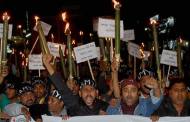
GUWAHATI: -The Nagaland government had failed to appreciate the gravity of last week’s protests in Dimapur, which ended with a mob breaking into a prison, dragging out a rape accused and lynching him, sources in the Union home ministry told NDTV. So far, 42 people have been arrested in the case.
The state police had given permission for the protests to Naga Students’ Federation, NGOs and associated front organisations on Thursday. But the state government asked for additional forces only when the situation had gone out of hand, sources said. The request came in at 3 pm, but within half-an-hour, Syed Sarif Uddin Khan was dead.
In its report to the home ministry, the state government said a large crowd had started moving towards the jail at 1 pm. But though reinforcements were rushed, the police were unable to open fire due to the presence of minors in the crowd.
Curfew, lifted for this morning after three days, has been imposed again in the city. Internet services – which were blocked after videos of the lynching were found to have been widely shared on the web – will be in place till at least 6 pm tomorrow. Phone text message services, which were stopped at the same time, have been resumed
There has been tension in the city after it was rumoured that Khan was an illegal immigrant from Bangladesh. That has been proved wrong. Khan’s brothers are in the Indian Army and his father was in the Air Force.
There are also question marks over the rape case filed against him. The police said the report of the medical test of the woman is still awaited.
The issue found echo in Parliament today, with Congress members from Assam calling the matter a failure of the Nagaland government. Gaurav Gogoi of Congress said the Central forces deployed at the jail failed to protect the accused.
Shiv Sena, an ally of the NDA, said the mob fury reflects people’s anger towards sexual crimes against women. An editorial in Sena mouthpiece Saamna said it would be a mockery to term the incident as a law and order failure, since, the government “does not think of the deteriorating law and order situation when women are raped, but thinks about it when a rape accused in punished in public”.
On Thursday, thousands broke into the Dimapur Central Jail, dragged out Khan, stripped him, beat him up, tied him to a motorcycle and dragged him for 7 km. He died on the way. The mob then hung his body at a roadside roundabout.
Widespread protests took place across Nagaland since, and at Mr Khan’s hometown Karimganj in neighbouring Assam, where his funeral was held on Sunday. Over 10,000 people attended the funeral.
Twenty people were arrested for the crime this morning, taking the total number of arrests to 42. But Khan’s brother Jamal Khan has alleged that most of his killers are still roaming free.
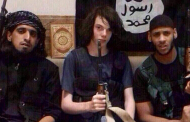
ihadi” is in fact an Australian teenager who converted to Islam, a report said Monday.
A photo of the meek-looking youth, holding a rifle and sitting in between two jihadists with a black IS flag in the background, emerged on Twitter in late December.
At the time the militant group, which has run rampant through swathes of Iraq and Syria, hailed his recruitment as “a major coup” with the British media dubbing him “Britain`s white jihadi”.
Doubts about the authenticity of the picture subsequently emerged after a blogger claimed he had fabricated the image to hoax the British press.
But Australia`s Fairfax Media said the photograph had now been positively identified by friends of the teenager and members of two mosques in Melbourne.
It identified him as a former high-achieving 18-year-old student called Jake, declining to reveal his full name at the request of a family member.
He was described as a maths whiz who attended the Craigieburn Secondary College in Melbourne but dropped out in the middle of last year after converting to Islam and buying a one-way ticket to Istanbul en route to Iraq and Syria.
His identification came after Australia stopped two teenage brothers at Sydney airport believed to be heading to the Middle East to fight, amid growing concern in Western countries over young people joining jihadist groups.
That case followed three British schoolgirls leaving their London homes to join IS in Syria in February.
“He used to come here when we had a big lecture,” Abu Zaid, a committee member of the Hume Islamic Youth Centre in Coolaroo, told Fairfax Media of Jake.
“He was a very quiet guy, he stuck to himself. We weren`t close to him. I didn`t see any of the people (getting) close to him.”
The newspaper said the youth now goes by the Islamic names Abdur Raheem or Abu Abdullah.
It said that two months after his disappearance, he contacted his family to tell them he was in Iraq training for a “martyrdom mission” with a suicide vest.
He later called again to say he was “too scared to do it and he prefers being a soldier” and was planning to travel to Syria.
Around 140 Australians have travelled to fight with IS and other terrorist groups in Syria and Iraq, with another 150 supporting them at home, the government has said.
Prime Minister Tony Abbott said indoctrination was happening in unexpected places and that the government was dealing with the issue.
“Too many Australians, it seems, are being brainwashed online by this death cult,” he said, referring to IS.
“Very importantly, we are about to begin a very big campaign to try to counter the influence that the death cult has, particularly online on vulnerable Australians.”
Abbott did not provide further details, but last month flagged changes to immigration laws to allow the government to revoke or suspend Australian citizenship for dual nationals implicated in terrorism.
There are also plans for returning foreign fighters to be prosecuted or monitored under control orders, while Canberra has pledged a crackdown on organisations that incite religious or racial hatred.
AFP
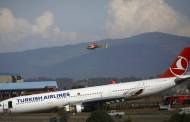
KATHMANDU, 6 Mar 2015: Nepal’s only international airport will remain closed at least till 10 am on Saturday even as the Indian rescue mission tried to remove the Turkish jet that skidded off the surface on Wednesday morning, blocking the runway and stranding thousands of passengers.
The Tribhuvan International Airport (TIA) has extended the shutdown of international flight operations till tomorrow, Ratish Chandra Lal Suman, Director General at Civil Aviation Authority of Nepal (CAAN) said.
“Flight operations won’t resume until 10 am on Saturday as the efforts to move the plane from the current position is in progress and like to take more time,” he added.
Indian Air Force on Thursday sent 11 technical experts and a C-130J Super Hercules transport plane with an aircraft removal kit following requests by the Nepalese government to remove the Turkish Airliner Airbus A-330, for resumption of international flights in and out of the country’s capital.
The Indian technical team has lifted the front portion of Turkish Airliner with the help of lifting airbag, TIA Chief Birendra Prasad Shrestha said, adding, all front wheels of the plane will be changed on Friday.
The grassy land in between the runways broken up by the aircraft has been smoothened with gravel and sand, Shrestha was quoted as saying by Ekantipur.
The Indian team of technicians is expected to complete the clearance work by tomorrow morning, he added.
Nepal’s only international airport had remained shut since Wednesday morning when the Turkish Airliner – with 224 passengers and 11 crew members onboard – skidded off the runway and part of the wing of the plane fell on the runway, blocking movement of other aircraft.
All the passengers were unhurt, but there was some damage to the front of the Airbus 330.
Thousands of passengers and tourists remained stranded at the TIA as flights were cancelled for the third consecutive day, affecting the upcoming tourist season, one of the main source of forex for the Himalayan nation.
Nepal’s high altitude and tricky runways that often suffer from foggy conditions and poor visibility pose a challenge to even the most accomplished of pilots and had been blamed for a string of aircraft crashes in the past.
The European Union had banned all Nepal-based airlines in December 2013 from flying to the 28-nation bloc, citing poor safety standards followed by the airlines in Nepal. PTI [Pic from www.bbc.co.uk]
‘Nepal’s airport to remain closed till today
KATHMANDU, 6 Mar 2015: Nepal’s only international airport will remain closed at least till 10 am on Saturday even as the Indian rescue mission tried to remove the Turkish jet that skidded off the surface on Wednesday morning, blocking the runway and stranding thousands of passengers.
The Tribhuvan International Airport (TIA) has extended the shutdown of international flight operations till tomorrow, Ratish Chandra Lal Suman, Director General at Civil Aviation Authority of Nepal (CAAN) said.
“Flight operations won’t resume until 10 am on Saturday as the efforts to move the plane from the current position is in progress and like to take more time,” he added.
Indian Air Force on Thursday sent 11 technical experts and a C-130J Super Hercules transport plane with an aircraft removal kit following requests by the Nepalese government to remove the Turkish Airliner Airbus A-330, for resumption of international flights in and out of the country’s capital.
The Indian technical team has lifted the front portion of Turkish Airliner with the help of lifting airbag, TIA Chief Birendra Prasad Shrestha said, adding, all front wheels of the plane will be changed on Friday.
The grassy land in between the runways broken up by the aircraft has been smoothened with gravel and sand, Shrestha was quoted as saying by Ekantipur.
The Indian team of technicians is expected to complete the clearance work by tomorrow morning, he added.
Nepal’s only international airport had remained shut since Wednesday morning when the Turkish Airliner – with 224 passengers and 11 crew members onboard – skidded off the runway and part of the wing of the plane fell on the runway, blocking movement of other aircraft.
All the passengers were unhurt, but there was some damage to the front of the Airbus 330.
Thousands of passengers and tourists remained stranded at the TIA as flights were cancelled for the third consecutive day, affecting the upcoming tourist season, one of the main source of forex for the Himalayan nation.
Nepal’s high altitude and tricky runways that often suffer from foggy conditions and poor visibility pose a challenge to even the most accomplished of pilots and had been blamed for a string of aircraft crashes in the past.
The European Union had banned all Nepal-based airlines in December 2013 from flying to the 28-nation bloc, citing poor safety standards followed by the airlines in Nepal.

US actor Harrison Ford has been injured in a small plane crash in Los Angeles.
The 72-year-old star of the Indiana Jones and Star Wars films reported engine failure and crash-landed his vintage plane on a Venice golf course.
He was breathing and alert when medics arrived and took him to hospital in a “fair to moderate” condition, a fire department spokesman said.
His son Ben, a chef in Los Angeles, later tweeted from the hospital: “Dad is OK. Battered but OK!
His publicist said: “The injuries sustained are not life threatening, and he is expected to make a full recovery,”
The nature of Ford’s injuries have not been disclosed but website TMZ, which first reported the story, said he suffered “multiple gashes to his head”.
Shortly after take-off from Santa Monica Airport, he said he was having engine failure with his 1942 Ryan Aeronautical ST3KR and was making an “immediate return”.
He was unable to reach the runway and landed on the Penmar Golf Course, where onlookers pulled him from the plane fearing it could explode.
line
Aerial catastrophes averted
A drone nearly struck a plane as it landed at London’s Heathrow Airport last year
Three planes carrying about 200 people came close to colliding in 2012 at Washington’s Reagan National Airport
In the “miracle of Hudson” of 2009, a pilot had to ditch into New York’s Hudson river after both engines failed. All 155 passengers and crew were saved
Two Japan Airlines jets with almost 700 people on board came within 10m (10 yards) of colliding in 2001, because of air traffic control confusion
The cargo door on a plane leaving Miami airport blew off during takeoff in 1989, but it was able to return safely
A hole blew open in the fuselage of a jet in Hawaii in 1988. A stewardess was sucked out of the plane but it landed safely, with passengers escaping with injuries
line
Officials said the plane had been flying at about 3,000 feet (900m) and hit a tree on the way down.
“It just sounded like a car hitting the ground or a tree or something,” Jeff Kuprycz, who was playing golf told the Associated Press news agency. “He ended up crashing around the eighth hole.”
Christian Fry of the Santa Monica Airport Association said it was “an absolutely beautifully executed emergency landing by an unbelievably well-trained pilot”.
Film producer Ryan Kavanaugh, who also witnessed the accident from his office, told The Hollywood Reporter: “He literally had five seconds, and 99% of pilots would have turned around to go back to the runway and would have crashed.”
“Harrison did what the best pilots in the world would do,” he continued. “He made the correct turn that the plane was designed for with an engine out.”
‘Moderate trauma’
After crash-landing, Ford was initially treated by doctors who happened to be at the golf course.
Later this year, Ford is reprising his role of Han Solo in the latest addition to the Star Wars franchise, Star Wars: The Force Awakens.
He broke his leg in June last year on set at Pinewood Studios while filming a scene involving a door on the Millennium Falcon spaceship.
Ford took up flying when he was in his 50s and is also trained to fly helicopters.
In 1999, Ford crash-landed his helicopter during a training flight in Los Angeles but both he and the instructor were unhurt.
A year later a plane he was flying had to make an emergency landing in Nebraska. Again he and his passenger escaped unhurt.
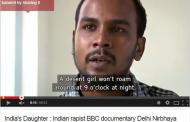
It says the film portrays courage, sensitivity
The Editors Guild of India on Friday urged the government to revoke the ban on the film India’s Daughter to enable people to view “what is a positive and powerful documentary touching on the freedom, dignity and safety” of women.
The documentary was aired on BBC’s Channel 4 on Thursday evening and has been available online since then despite the government securing a court injunction on its screening across media platforms in the country.
In a statement, the Guild found no merit in the government claiming that the film could not be shown because the subject of the documentary — the Nirbhaya gang rape that shook India in the winter of 2012 — is sub judice. “To raise the issue of sub judice now at the stage of final appeal in the Supreme Court and seek to still discussion is absurd. Judges, particularly those in the Supreme Court, are by training and temperament immune to the happenings in the public sphere outside the court, and it is an insult to the Supreme Court to suggest that the airing of the convict’s perverted views would tend to interfere with the course of justice,” the Guild said.
Describing the ban as “wholly unwarranted” and based on a misunderstanding of the power and message behind the documentary, the Guild noted that the film portrays the courage, sensitivity and liberal outlook of a family traumatised by the brutality inflicted on the daughter, the continuing shameful attitudes towards women among the convict and the educated, including lawyers, besides multiple voices in support of women’s freedom and dignity.
Pointing out that the Supreme Court itself has advocated “the broadest freedom to express even the most unacceptable of views,” the Guild said the message that emerged from the documentary was such that it would make people re-examine their own attitudes and the attitudes of people around them.
The Guild’s statement also takes note of the fact that the government seems to have taken the proscription route on the basis of initial expressions of outrage — including by members of Parliament — and without viewing the film in its entirety. “The rationale that the ban was in the interests of justice and public order as the film ‘created a situation of tension and fear amongst women’ and as that the convict would use the media to further his case in the appeal that was sub judice seems to be an afterthought.”
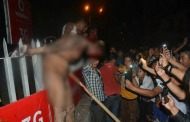
A man, accused of raping a girl, was beaten to death after being pulled out of a jail by a mob at Dimapur in Nagaland. A mass protest rally against the rape was held at Dimapur this morning after which students and angry people forced into the district jail and managed to pull out the accused. The accused had allegedly raped the victim several times on February 23 and was arrested the following day following a complaint lodged by the victim. The police resorted to blank firing and fired tear gas shells but failed to control the situation, officials said.
AP
The accused was dragged naked to the main town and he died of the injuries of beatings by the public, a senior official said. An emergency cabinet meeting was held at 7 pm at the residential office of chief minister to take STOCK of the law and other situation in Dimapur. The cabinet condemned the violent incident whereby the mob took the law into their hands, leading to the death of the accused, said a release issued by CMO Media Cell.
AP
The cabinet also decided to institute a high-level committee to inquire into the incident and find out the circumstances leading to it. The committee would also inquire into the lapses or shortcomings on the part of any public servant in connection with the incident and the person or group of persons responsible for the violence leading to the death of the accused in the hands of the mob. The chief minister, being in New Delhi, the cabinet meeting was chaired by Minister for Social Security & Welfare and Parliamentary Affairs, Kiyanilie Peseyie, the CMO Media Cell added.

Colours ruled the streets today as people of all ages with faces and clothes smeared in myriad of hues celebrated Holi, a harvest festival which marks the onset of spring season.
From youngsters and the elderly to the widows of Vrindavan, the ‘gulal’ spared none as revellers danced to the accompaniment of drums. People exchanged sweets as a mark of bonhomie.
The festival is celebrated to commemorate the Hindu mythological tale of Prahlada emerging unscathed from the flames despite being drawn into the fire by demoness Holika. The Hindu month of ‘Phagun’ ended yesterday with ‘Holika Dahan’ and ‘Chaita’ starting today.
A relatively warm day paved way for a perfect Holi, as coloured water drenched people inside and outside homes, bidding adieu to winter.
President Pranab Mukherjee and Prime Minister Manmohan Singh have greeted people on the occasion of Holi, saying the festival provided an opportunity to strengthen the bonds of unity and friendship.
The Prime Minister yesterday celebrated the festival with his staff for the first time during his tenure in UPA-II.
Congress chief Sonia Gandhi joined the celebrations at her residence here.
Tight security arrangements were also put in place and hospitals made arrangements to deal with any extra rush of people.
In Rajasthan, the festival was celebrated peacefully and no untoward incident took place. Pink city Jaipur erupted in a rainbow of colours as enthusiastic revellers thronged streets.
Chief Minister Vasundhara Raje joined the festivities with her family members in Delhi.
In Patna, political bigwigs including Chief Minister Nitish Kumar and RJD president Lalu Prasad kept away from the celebrations. Their official residences at 1, Anne Marg and 10, Circular Road, respectively wore a deserted look.
In the national capital, police personnel were deployed across the city. Police had issued warning against hooliganism in the guise of revelry. Commuters faced inconvenience in the morning as a handful of buses plied and Metro service resumed only after 2 PM.

Dilip Shanghvi, the billionaire founder of drugmaker Sun Pharma, ended Reliance Industries promoter Mukesh Ambani’s eight-year run as India’s richest billionaire on Wednesday, according to Forbes. The Bloomberg Billionaires Index, formed in 2012, also ranked Mr Shanghvi ahead of Mr Ambani for the first time ever.
According to real time data on Forbes, 59-year old Mr Shanghvi’s net worth at $21.5 billion is $1.1 billion more than Mr Ambani’s net worth of $20.4 Billion. Mr Shanghvi is a self-made billionaire, while Mr Ambani inherited the business from his father the late Dhirubhai Ambani.
Mr Shanghvi added billions to his net worth in the first two months of this year. According to Bloomberg, his fortune went up by $4.5 billion this year, while Mr Ambani’s net worth increased by just $153 million since the start of 2015.
The rapid growth in Mr Shanghvi’s net worth was on account of the stellar MARKET performance of his company Sun Pharma, India’s biggest drugmaker by market value.
Over the last three months, Sun Pharma shares have gained 22 per cent as against a 7.5 per cent drop in RIL. Mr Ambani’s company has underperformed the BSE Sensex as well.
RIL has underperformed because its business model is commodity driven. Refining and petrochemicals contribute up to 95 per cent to the company’s net sales and 85 per cent to its operating profit. The 50 per cent slump in global CRUDE OIL prices has therefore impacted RIL heavily. The December quarter marked RIL’s first profit drop in nine quarters.
On the other hand, Sun Pharma operates in the global healthcare industry, where Indian companies have a pricing advantage over their global peers. The drugmaker derives nearly 60 per cent of its sales from US.
Sun Pharma, with a MARKET cap of Rs. 2.1 trillion, is much smaller than RIL, which has a MARKET value of Rs. 2.92 trillion. The smaller size, however, is not an impediment for Mr Shanghvi because he owns nearly 61 per cent stake in Sun Pharma as compared to the 45 per cent stake the 57-year old Mr Ambani holds in RIL.
Many of Sun Pharma’s recent bets have proved successful aiding its STOCK performance. In April 2014, Sun Pharma acquired its rival Ranbaxy Labs from Japan’s Daiichi Sankyo for $4 billion last year, making it the world’s fifth-largest maker of generic drugs.
Reliance has also been INVESTING heavily in consumer-facing areas like retail and telecom to expand beyond refining and petrochemicals. RIL’s retail business posted its first annual profit last year, but the company is yet to roll out its telecom services despite large investments.

Recent Comments