






Seven girls allegedly pushed into flesh trade were rescued from a bar in Kashimira area here, police said.
The local crime branch of Thane rural police and the anti-human trafficking unit jointly conducted a raid in a bar at Kashmiria at around midnight yesterday and rescued the seven girls from there, senior police inspector Kishore Khairnar said.
The bar owner, identified as Sudhakar Anant Shetty, was arrested, he said.
A search has been launched to nab three other bar employees – Ravi Anna Shetty, Harish Shetty and Sudhakar Lingayat – for their alleged involvement in the offence.
The accused have been booked under relevant sections of Immoral Traffic (Prevention) Act, he said.

Hailing the Delhi high court’s verdict on offloading of Greenpeace activist, Supreme Court lawyer Vrinda Grover today said that the judgement should serve as an “eye opener” to those who seek to misuse state machinery in the name of security.
Priya Pillai’s case had revived memories of the Emergency when similar attempts were made to muzzle the freedom of expression in the country by those in power, she said, while delivering the 10th I G Khan Memorial Lecture here.
The Delhi High Court had on Thursday set aside Government’s decision to offload Greenpeace activist Priya Pillai from an aircraft to London two months back, saying it was “illegal” and that the right to criticise cannot be “muzzled” by the state.
The targeted killings and sexual crimes against women, especially those living in militaristic areas of the country like the North-East, and those who find themselves in spaces of communal conflict, were a blot on Indian democracy, Grover said.
Grover, also a human rights crusader, stated that it was a shame that the state frequently seeks to justify crime against women committed by sections of the apparatus in the name of security of the state.
She recounted that the state machinery in the North-East and Gujarat in 2004 had used similar arguments for justifying crimes against two women in the name of the security.
The Manorama rape case in Manipur and the Ishrat Jahan encounter in Gujarat are two glaring examples of such gross misuse of the security bogey by the state machinery for justifying crimes against women, she said.
The advocate pointed out that the future outcome of Ishrat Jahan encounter case now becomes a moot point since it appears unlikely that police officials, who had earlier given evidence against Gujarat government, would continue to do so in the changed circumstances of the country.
She said that women who are victims of crimes like mass rape find it very difficult to give evidence especially if it pertains to acts committed by state machinery including security agencies.
In such a scenario, it was gratifying that more than half a dozen-odd mass rape victims during the 2013 communal violence in Muzaffarnagar had been able to register cases against the perpetrators of such heinous crimes, Grover said.
The lawyer said that it was only possible because of the courage of human rights organisations and intervention of the Supreme Court.

Bengaluru: Delhi Chief Minister Arvind Kejriwal’s ailments are a “classic case” of faulty and stressful lifestyle but he has been “detoxified” to a large extent now, a senior doctor said on Saturday.
On first day of his medical check-up we observed that this time along with his uncontrolled sugar, he has brought a nagging chronic cough too, which was rather alarming,” said Babina Nandakumar, Chief Medical Officer at Jindal Nature Cure Institute on city outskirts, where Kejriwal is admitted.
She said while traditional naturopathic treatments comprising hydrotherapy, massages, packs and mud therapy have been initiated with great effect in combination with yoga and diet therapy, “We had to address his chronic cough rather differently.”
“Our observation has found it to be a classic case of faulty and stressful lifestyle that included high consumption of aerated drinks, irregular eating habits, high level of pollution leading to the accumulation of toxins in his body, which required immediate attention, by a competent naturopathy regimen,” she said in a statement.
Giving the details of treatment, Nandakumar said “a whole lot of detoxifying treatments were introduced from naturopathy, yoga therapy, diet and their immediate effects were clearly evident.”
She said “He is to a large extent detoxified now and his entire system is rejuvenated. His current sugar level is, fasting at 90mg/dI and post prandial at 130mg/dI and his medication has been reduced to only 30 per cent from his medication level at the time of his admission.”
The 46-year-old Aam Aadmi Party leader was admitted to
the institute, along with his parents, for a 10-day nature cure treatment on March 5. He will be discharged on March 16. Kejriwal’s father suffered from constipation and his mother from diabetes and arthritis.
The AAP leader is here, as he battles an internal turmoil in his party that has taken an ugly turn after its founders Prashant Bhushan and Yogendra Yadav were ousted from the Political Affairs Committee, with sting operations adding dramatic elements to the tale.
Nandakumar said he has been advised a strong follow up for his lifestyle modification, dietary changes and daily practice of prescribed yogasana, pranayama and Kriya. He has also been advised that lifestyle change is the key to natural health, and he shall live a normal healthy life following the Naturopathic way of life.
This was second admission for Kejriwal at the naturopathy institute, the first one being in February 2012, along with his then mentor Anna Hazare.
It appears that during the past two years Kejriwal could not follow the lifestyle changes that he had learnt here, may be due to his busy schedule, Nandakumar said. “This deviation from natural lifestyle has had its toll and his blood sugar level has shot up to the level of 300mg/dI plus.”
“We are given to understand that insulin and oral diabetic medications could not stabilise his blood sugar levels at all,” she added.

WASHINGTON: The US has reminded Pakistan its commitment to bring the perpetrators of 2008 Mumbai terror attack to justice after a court ordered to free LeT operations commander and 26/11 mastermind Zaki-ur-Rehman Lakhvi.
“The government of Pakistan has pledged its cooperation in bringing the perpetrators – financiers, and sponsors of the Mumbai terrorist attacks to justice and we urge Pakistan to follow through on that commitment,” State Depart ..
The government of Pakistan has pledged its cooperation in bringing the perpetrators – financiers, and sponsors of the Mumbai terrorist attacks to justice and we urge Pakistan to follow through on that commitment,” State Department Spokesperson Jen Psaki told reporters yesterday.
“We are monitoring reports that an Islamabad high court judge suspended detention orders for the alleged Mumbai attack mastermind,” she said.
For now he remains in prison,” Psaki told reporters. She said, “Pakistan is a critical partner in a fight against terrorism. We’ve certainly seen these reports (of a court granting bail to Lakhvi), but we can’t speculate on the outcome of an ongoing legal process.”
Islamabad High Court yesterday suspended the detention order of Lakhvi and ordered his immediate release.
An “outraged” India summoned the Pakistan High Commissioner in New Delhi to lodge a strong protest against the court order to release Lakhvi and said freeing him will pose a threat which “cannot be ignored”.
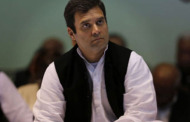
New Delhi: Miffed over the visit of a Delhi Police official to the party office here seeking details of Rahul Gandhi’s physical appearance, the Congress on Saturday criticised the government and said that the party will take up the issue in Parliament.
The Delhi Police, however, said it was a routine security enquiry. As the news surfaced, the Ministry of Home Affairs asked for a report from the Delhi Police in this regard.
Rejecting the allegation of snooping on Gandhi, the Delhi Police said the visit by policemen to his office was a routine practise of being in touch with the dignitaries and there was no malafide in it.
Congress spokesperson Abhishek Singhvi told reporters here that a Delhi Police Assistant Sub Inspector identified by him as Shamsher Singh had enquired about the colours of Rahul’s hairs, eyes, age, height, the shoes he wears and his father’s name and the places he visits.
Singhvi said the Delhi Policeman ASI was “found snooping” and making “unnecessary and weird” enquiries.
The policeman was stopped and accosted by the staff of Special Protection Group, who guard Rahul, at the residence of the Congress vice president, Singhvi said.
The incident gave ammo to Singhvi to launch a sharp attack on the government, saying it is a case of “political espionage and snooping” on rivals.
In a veiled reference to the snooping of a young woman in Gujarat during the tenure of Narendra Modi as chief minister, Singhvi, without naming Modi, said “espionage and surveillance” of political rivals may be a Gujarat model but not Indian model.
“The track record shows this kind of espionage was perfected in Gujarat for political opponents,” he said.
Singhvi added: “India is a proud democracy, not a police state. We are a vibrant democracy. This kind of political espionage is condemnable.”
Senior Congress leader PC Chacko termed it as a “breach of privacy and highly unacceptable.”
Related Videos
Delhi Police enquires about Rahul Gandhi’s appearance
“It is intruding into the privacy of the citizen by Delhi Police without any valid purpose and is highly unacceptable,” he said.
“Who has done this and under whose instructions, we would like to know. If it is true, then senior officials should explain who authorised them to come. Rahul Gandhiji is an MP, all the details are available on Parliament’s website and there is nothing which is secret about him,” he said.
“Every individual has the right to his privacy. They have now started intruding into the private lives of the citizens also….This is highly objectionable,” he added.
Later, Delhi Police Commissioner BS Bassi clarified that such surveys were conducted at the offices of all protected persons from time to time owing to prevention and detection of crime and maintaining of law and order.
“Rahul Gandhi was not targeted by the police. It was a routine activity which is done to keep records of vulnerable personalities. Police also visited houses of Veerappa Moily, LK Advani, K Chandrasekhar Rao among others. There was no malafide intension behind seeking details about Gandhi,” Bassi told reporters here.
The Police Commissioner said police was never asked either by Prime Minister Office or Home Ministry to visit Rahul’s residence and asserted that there was no political pressure on police.
“Two cops went to Rahul Gandhi’s residence. Our beat officer Rameshwar Dyal went to his house on March 12 and sought details about him. As beat officers are not able to directly meet such persons, they contact their office staff and leave performa pertaining to required details,” Bassi said.
According to Bassi, on the same day, Dayal went to the houses of MP Krishan Pal Gujjar, Naresh Agarwal, M Veerappa Moily and Telengana Chief Minister K Chandrasekhar Rao.
Beat officers are instructed to meet the staff of important people living in the area falling under their jurisdiction and keep a personal information about them, he also said.
Bassi added that police keeps details of all vulnerable leaders like Amit Shah, Sonia Gandhi, 7, Race Course Road.
“Such details are also important in many cases… For instance, if there is any protest outside house of any important leader, cops may face problem in locating the house and identifying their staff without any such information,” Bassi said.
Earlier in the day, a Delhi Police team earlier this morning visited the residence of Gandhi to enquire about the incident.
A team, led by Additional Deputy Commissioner of Police (New Delhi) Jatin Narwal, visited Gandhi’s Tughlak Lane residence to enquire about the sequence of events.
The team also checked the pictures of the policemen who had visited Rahul Gandhi’s residence a couple of days ago and enquired about the colour of Congress leader’s eyes and hairs.
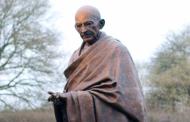
Gandhi is the first Indian and the only person never to have been in a public office to be honoured with a statue at the Square.
A historic bronze statue of Mahatma Gandhi was unveiled at the Parliament Square in London on Saturday, standing adjacent to iconic leaders such as Britain’s war—time Prime Minister Winston Churchill and anti—apartheid icon Nelson Mandela.
A galaxy of political leaders led by British Prime Minister David Cameron and Finance Minister Arun Jaitley were joined by Bollywood legend Amitabh Bachchan and the Mahatma Gandhi’s grandson Gopalkrishna Gandhi at the ceremony to unveil the 9—foot statue of the Father of the Nation.
Gandhi is the first Indian and the only person never to have been in a public office to be honoured with a statue at the Square.
The statue was unveiled jointly by Cameron and Jaitley as chants of “Raghupati Raghav Raja Ram,” a popular bhajan that was Gandhi’s favourite, reverberated in the air.
“This statue is a magnificent tribute to one of the most towering figures in the history of world politics and by putting Mahatma Gandhi in this famous Square, we are giving him an eternal home in our country,” said Cameron.
Quoting some of Gandhi’s famous words, Cameron highlighted how his teachings remain as potent today.
“This statue celebrates the incredibly special friendship between the world’s oldest democracy and its largest, as well as the universal power of Gandhi’s message,” Cameron said.
“Our ties with India have remained close throughout history and continue to go from strength to strength —— through mutual respect as equals, cooperation and trade, and of course through the one—and—a—half million Indians who do so much to make Britain the country it is today, bringing our two countries closer, to the benefit of both,” he said.
Jaitley, invited to the UK especially for the unveiling, said the statue was a tribute to the British sense of civility that they now choose to honour someone who was conventionally regarded as their adversary.
“It is a great tribute to both British liberalism and British democracy that they have now chosen Gandhi to share what is the most prominent public space in this country. It is a great day when two adversaries and contrarian viewpoints converge to appreciate each other,” Jaitley said.
“The statue will help ensure that the legacy of Gandhi lives on for future generations. It also marks an important, historic moment celebrating the strong bond between our two nations. India and the UK share the same values and we are a partnership of equals. This lasting friendship is just one of many legacies left by Gandhi, which I am keen that we work hard to strengthen further,” he said.
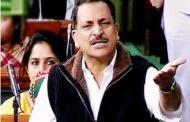
NEW DELHI: The mission of ‘Make in India’ can not become a reality unless we have adequate skilled manpower in the country, Union Minister Rajiv Pratap Rudy said today.
“Students need to be taught entrepreneurial skills to gain confidence and become job creators,” the Minister of State (Independent Charge) for Skill Development and Entrepreneurship Rudy said at the India Today Conclave.
As the market for quality plumbers, electricians and carpenters continues to expand, there is a growing need for vocational and skill training,” he added.
Rudy also said that there should be more emphasis on holistic education rather than on only promoting sciences.
The government is currently in the process of revising the National Skill Development Policy, which had been devised by the erstwhile Congress-led UPA government in 2009.
The skilled workforce in South Korea is 96 per cent, 80 per cent in Japan, 75 per cent in Germany and 70 per cent in Britain. Compared to this, the skilled workforce in India is only two per cent.
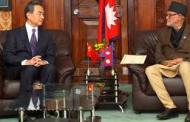
Nepal’s Foreign Minister will visit China next week to hold talks with Chinese leaders on a host of bilateral issues, including efforts to increase trade and investments, a senior official said here today.
Mahendra Bahadur Pandey will visit China from March 17 to 21 at the invitation of his Chinese counterpart Wang Yi, Foreign Ministry spokesperson Hong Lei told reporters here.
Pandey’s upcoming visit is part of activities to celebrate the 60th anniversary of China-Nepal ties, Hong said.
During his visit to Nepal last year, Wang proposed the two sides widen pragmatic cooperation in trade, investment, agriculture, infrastructure, science and technology, interconnectivity and intercommunication, tourism, culture, people to people exchanges, security and law enforcement.
Hong said China hoped to further enhance comprehensive cooperative partnerships through Pandey’s visit.

Imphal: Life remained unaffected despite a 48-hour bandh call by the All Manipur Minorities Students’ Union (AMMSU) in Manipur from midnight Thursday night.
Shops, markets, offices, schools and colleges functioned normally and vehicles plied as usual, officials said.
The bandh was called to air protest against the death of college student Salman Khan (20) in the bomb blast at Imphal Market Complex on Wednesday last.

Nagpur, Mar 13: Even as the Modi government has come under fire from RSS affiliates over the Land Acquisition Bill, the Sangh today said the legislation was not bad but suggested that differences over it be sorted out through dialogue. “I don’t think the bill is bad after the government made some amendments to it,” RSS joint general secretary Dattatreya Hosabale told journalists at a briefing as the three-day brainstorming session of the Pratinidhi Sabha, the highest decision making body of the Sangh, kicked off here. (ALSO READ: Anna Hazare asks parties to unite in Rajya Sabha against Land Acquisition Bill)
The land bill is facing stiff resistance from RSS affiliates like Bhartiya Mazdoor Sangh (BMS) and Bhartiya Kisan Sangh (BKS), whose representatives are also attending the meet. “These (BMS and BKS) are independent entities. We have invited them here because they work with the Sangh’s inspiration. As independent entities they are free to hold their opinion and express it in the way they feel is fit,” he said.
Hosabale said RSS wanted “proper coordination” to be established between the Centre and organisations like BMS and BKS, which have opposed the bill. “RSS will try and inspire both (government and RSS affiliates). Now the goal should be to hold a dialogue to ensure that the farmers get their due. “I think the government will take care of the demands voiced by BMS and BKS and ensure the goals of the legislation are realised on the ground,” Hosabale said.



Recent Comments