






A still-life watercolor painting of flowers by a young Adolf Hitler will be sold at auction in Los Angeles this week, organisers have announced.
The 1912 canvas, painted by the future Nazi leader when he was a struggling artist in his mid-20s, is going under the hammer at the Nate D Sanders auction house on Thursday.
Hitler moved to Vienna as a young man to try to make it as an artist. A Jewish art dealer, Samuel Morgenstern, believed in his talent and sold several Hitler paintings to wealthy Viennese Jewish clients beginning in 1911.
When Hitler swept to power as an anti-semitic Nazi leader in the 1930s, his forces seized Morgenstern’s gallery and deported the owner to the Lodz Ghetto, where he died in 1943, according to the Los Angeles auctioneers.
The painting shows a blue ceramic pitcher holding orange, red and soft pink flowers – an unusual subject at a time when Hitler was focusing more on landscapes and architecture.
Bidding for the canvas will start at $30,000 (£20,000). It measures 34.3cm by 27.3cm (13.5in by 10.75in).

David Cameron has ruled out serving a third term in Downing Street, leading to dismay among senior Tories as he laid the ground for a succession race by naming three senior Conservatives who would provide “a fresh pair of eyes”.
Live Election 2015: Cameron heckled by Age UK audience over state of NHS – live
With 44 days until polling day, follow all the twists and turns of the election campaign with Andrew Sparrow and the Guardian’s reporting team
Read more
Opponents accused Cameron of taking an election victory for granted and behaving in an “incredibly presumptuous manner” by naming Theresa May, Boris Johnson and George Osborne as likely successors in 2020.
The prime minister found himself under fire after he suggested in an unguarded interview with the BBC that it would be mad to hang onto power after 2020. Speaking to the BBC’s deputy political editor, James Landale, mostly in the kitchen of the prime minister’s Cotswolds home, Cameron said: “I’ve said I’ll stand for a full second term, but I think after that it will be time for new leadership. Terms are like shredded wheat: two are wonderful but three might just be too many.”
Asked whether he would stand for a third time, Cameron added: “No. I think I’m standing for a full second time. I’m not saying all prime ministers necessarily definitely go mad or even go mad at the same rate. But I feel I’ve got more to bring to this job, the job is half done, the economy’s turned round, the deficit is half down. I want to finish the job.”
The prime minister then took the rare step for a modern prime minister of naming his likely successors. “There definitely comes a time where a fresh pair of eyes and fresh leadership would be good. The Conservative party has got some great people coming up – the Theresa Mays and the George Osbornes and the Boris Johnsons. There is plenty of talent there. I am surrounded by very good people.”
Analysis Future leadership of Tory party thrown open after Cameron’s surprise remarks
George Osborne believe to be prime minister’s strong personal preference as successor, but naming of Theresa May and Boris Johnson suggests caution over specific endorsement
Read more
The three senior politicians are already the bookmakers’ favourites to be their party’s next leader, perhaps as soon as this year if the Conservatives lose the election. However, their ambitions have never been so publicly acknowledged by Cameron before.
Amid astonishment in the tearoom at Westminster, where Tory MPs accused the prime minister of undermining his own authority by talking of his departure, No 10 was forced to launch a damage limitation exercise.
In an unscheduled appearance on Newsnight, the Tory chief whip, Michael Gove, said the prime minister had given an honest answer to a straight question which amounted to the “bleedin’ obvious” that he hoped to serve a second term in No 10.
Gove said: “It was a statement of the bleeding obvious. I wasn’t surprised by the prime minister saying it. One of the differences between David Cameron and [his] predecessors – Margaret Thatchers, others whom you have had to prise out of Downing Street, their fingernails have been there in the door jamb – David Cameron is not interested in the office for what it can give him. He thinks at the end of two terms, ‘I will have done my job.’”
But one former minister said: “This was peculiar and unnecessary. It does not help the prime minister’s authority.”
One loyalist said: “This was an ‘Oh fuck’ moment. The best you can say is David is straight and honest.”
David Cameron confronts his own shelf-life – and its consequences
Matthew d’Ancona
Matthew d’Ancona Read more
The prime minister, encouraged by his wife Samantha, has often been heard to joke in private that he would like to leave Downing Street before he goes mad, unlike some of his predecessors. Margaret Thatcher famously said after her third election win in 1987 that she would like to “go on and on”. Tony Blair, who was conscious of the dangers of staying in office too long, said towards the end of his second term in 2004 that he would serve a third term and stand down at that election. Blair’s aides say that his declaration, prompted by a minor heart procedure, sapped his authority and emboldened supporters of Gordon Brown who eventually unseated him in 2007.
Douglas Alexander, Labour’s chair of general election strategy, said in response to Cameron’s interview: “The Tories are taking the British public for granted. It is typically arrogant of David Cameron to presume a third Tory term in 2020 before the British public have been given the chance to have their say in this election.”
David Cameron talks breasts, thighs – and third terms
Esther Addley
Read more
A Lib Dem spokesperson said: “It’s incredibly presumptuous of David Cameron to be worrying about a third term as prime minister weeks before the general election.”
Downing Street sources immediately tried to row back on Cameron’s comments, saying he was only rejecting the idea of serving a full third term. One source said: “What happens in five years’ time in 2020? Let’s cross that bridge when we get to it.”
Tory MPs suggested that other leadership hopefuls, such as Sajid Javid and Jeremy Hunt, would have long faces. Boris Johnson joked that the next Tory leader has probably not even been born when he was greeted by television cameras as he returned home. “The next leader of the Tory party is probably a babe unborn. Kids grow up fast these days, folks.”
In the BBC film, which featured the prime minister watching his son play football and preparing food in the kitchen of his Oxfordshire home, his wife Samantha said she thought her husband was “definitely, in my mind, the best man for the job”.
“I hope that me and the family help him to keep things in perspective, keep him grounded and help him pace himself over the next eight weeks,” she said.
His children were also filmed eating a meal at the kitchen table and Cameron spoke of how his daughter, Nancy, has threatened to go on hunger strike unless his friend Jeremy Clarkson is reinstated as presenter of Top Gear. The television star was suspended after allegedly hitting a BBC producer, sparking a petition for him to return.
“I told her this is not necessarily a useful intervention. It is not exactly Gandhi,” Cameron said. Samantha added: “Nancy’s hunger strike this morning lasted approximately five minutes.” The prime minister then joked: “It’s between lunch and tea is the way it works.”
Hyderabad: Amaravathi is one of the towns under the consideration of the Andhra Pradesh government for being being named as its capital in the Vijayawada-Guntur region of the state.
Amaravathi, which derives its name from Amareshwara Temple located in the historic village in Guntur district, falls under the capital region chosen by the state government.
Asked about media reports in a section of the press suggesting that the state government has finalised Amaravathi as the name of the capital city, Advisor (Communication) to the Government, Parakala Prabhakar, said the name is under consideration but no final decision has been taken on the matter yet.
Agriculture Minister P Pulla Rao had said yesterday that Amaravathi, which is located on the banks of river Krishna, has been suggested by many but a final decision is yet to be taken.
Chief Minister N Chandrababu Naidu is expected to announce the name when the foundation is laid for the construction of the capital city slated in June.
Singapore government agencies are preparing master-plan for the core capital region as a “goodwill gesture” towards the state government.
The capital is likely to have three rings — the core capital region, capital area and a larger capital region.
PTI
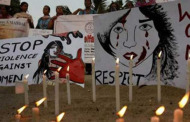
New Delhi: As the ban on the telecast of controversial BBC documentary “India’s Daughter” on the December 16, 2012, gang-rape continues, the Supreme Court on Tuesday sought response from two lawyers for making derogatory remarks against women in the short film.
While hearing the case, the apex court maintained that the matter requires consideration in view of the factual and legal argument made by women lawyers’ association.
“We have heard the argument, pleadings and grievances urged in the petition. The matter requires consideration in view of the factual and legal submissions,” a bench comprising justices V Gopala Gowda and C Nagappan said.
The bench issued notices to the two advocates, ML Sharma and AP Singh, and sought their response in two weeks.
The Supreme Court Women Lawyers Association, in its petition, had sought restriction on the entry of the two advocates in the apex court premises, alleging that their remarks in the controversial BBC documentary were “inhumane, scandalous, unjustifiable, biased, outrageous, ill-minded” and are a “direct affront to and in violation of the dignity of women”, especially those practicing in the Supreme court.
Senior advocate Vibha Datta Makhija, appearing the women’s association, submitted that the Supreme Court has to lead from the front and show zero tolerance for such views.
“We need an environment where we are fearless,” she said and added that the two advocates need to be sensitised.
Senior advocate Dushyant Dave, appearing for SCBA, submitted that there should be a meaningful and proper implementation of gender sensitisation regulation.
He said, “SCBA has taken a unanimous decision to take action against Sharma.”
The petition had sought protection of fundamental rights, guaranteed under the Constitution, of the female advocates practicing in the apex court to work with dignity and without any gender bias.
The documentary is about the gang-rape of a 23-year-old trainee physiotherapist, who was brutally assaulted on December 16, 2012 in a moving bus in Delhi. It kicked up a storm after one of the convicts Mukesh Singh was interviewed in Delhi’s Tihar Jail.
The documentary has comments from the convicts’ counsel AP Singh and ML Sharma, who allegedly made derogatory remarks against women. The banning of the telecast of the documentary in all formats caused an uproar in India.
The Centre on March 3 issued an advisory to ban the broadcast of the documentary and the trial court had on March 4 banned it until further orders.
The Supreme Court in July put on hold the execution of the four convicts in the case. As per social media, the public at large wanted to see the documentary, as within a day of it being put up on YouTube, it was viewed by more 2.86 lakh people, the pleas said.
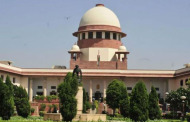
New Delhi: In a landmark ruling, the Supreme Court on Tuesday quashed Section 66 A of IT Act that allowed arrests for objectionable content online.
The apex court, while passing its ruling, observed that the Section 66A of the IT Act was ‘too vague and violative of 19(1)A of Constitution’.
The highest court, while maintaining that Section 66A “affects freedom of expression and speech”, said, “what may be offensive to a person, may not be offensive to others”.
Section 66A of IT Act clearly affects Right to Freedom of Speech and Expression enshrined under Constitution, the apex court ruled. “Public’s right to know is directly affected by Section 66A of Information Technology Act,” the SC further said.
The apex court passed its order while responding to a batch of petitions challenging constitutional validity of certain sections of the cyber law, including a provision under which a person can be arrested for allegedly posting “offensive” contents on websites.
The ruling was passed by the bench of Justices J Chelameswar and RF Nariman, which had on February 26 reserved its judgement after the government concluded its arguments contending that Section 66A of the Information Technology Act cannot be “quashed” merely because of the possibility of its “abuse”.
Additional Solicitor General Tushar Mehta had said that the government did not want to curtail the freedom of speech and expression at all which is enshrined in the Constitution, but the vast cyber world could not be allowed to remain unregulated.
However, the court had said that terms like ‘illegal’, ‘grossly offensive’ and ‘menacing character’ were vague expressions and these words were likely to be misunderstood and abused.
Some of the petitions seek setting aside of Section 66A of the Information Technology Act which empowers police to arrest a person for allegedly posting offensive materials on social networking sites.
The first PIL on the issue was filed in 2012 by a law student Shreya Singhal, who sought amendment in Section 66A of the Act, after two girls — Shaheen Dhada and Rinu Shrinivasan — were arrested in Palghar in Thane district as one of them posted a comment against the shutdown in Mumbai following Shiv Sena leader Bal Thackeray’s death and the other ‘liked’ it.
The direction had come in the wake of numerous complaints of harassment and arrests, sparking public outrage.
It had, however, refused to pass an interim order for a blanket ban on the arrest of such persons across the country.

A plane carrying at least 150 people crashed in southern France on Tuesday en route from Barcelona to Düsseldorf, the French civil aviation authority said.
The Airbus A320 plane was operated by Lufthansa’s Germanwings budget airline, and sent out a distress signal over the French Alps at 10:45 a.m.
A French military helicopter located the wreckage of the plane near the French town of Barcelonnette, Reuters reported.
The conditions of the accident, which are not yet clear, suggest that there might not be any survivors,” French President François Hollande said in a brief Tuesday.
The plane was carrying at least 144 passengers, two pilots and four flight attendants, according to French media. The passenger manifest is currently being verified. According to the French president, a number of the passengers may be German nationals. Spain’s Deputy Prime Minister Soraya Saenz de Santamaria said on Tuesday 46 of the passengers are believed to be Spanish.
An interior ministry spokesman told BFM television that the crash site is at 2,000 meters (6,500 feet) altitude and extremely remote, indicating “an extremely long and extremely difficult” search and rescue operation ahead. Mayor of Barcelonnette Pierre Martin-Charpenel told HuffPost all emergency staff had been mobilized for the search, centering on the area of Méolans-Reve 15 kilometers (9 miles) outside the village.
Aircraft manufacturer Airbus and the airline said they were still working to confirm what happened to the plane. “We do not yet know what has happened to flight 4U 9525,” Lufthansa said in a statement. “If our fears are confirmed, this is a dark day for Lufthansa. We hope to find survivors.“
The A320 is Airbus’s best-selling jet family, with more than 6,000 planes in operation. In December, another A320, Indonesia AirAsia 8501, crashed into the Java Sea, killing all 162 passengers and crew.

Archaeologists believe ruins found in a remote jungle region may be the remains of a hideout built by Nazis to flee to in the event of defeat in the second world war.
Researchers are studying the remains of three buildings located in the Teyu Cuare park in northern Argentina near Paraguay, the Clarin newspaper reported.
University of Buenos Aires researchers found five German coins minted between 1938 and 1941 and a fragment of porcelain plate bearing the inscription Made in Germany.
“Apparently, halfway through the second world war, the Nazis had a secret project to build shelters for top leaders in the event of defeat – inaccessible sites in the middle of deserts, in the mountains, on a cliff or in the middle of the jungle like this,” the archaeologists’ team leader, Daniel Schavelzon, said.
In the end, though, the hideout was never needed. Thousands of Nazis, and Croatian and Italian fascists, arrived in Argentina with the blessing of president Juan Perón, who led the nation from 1946 to 1955 and again briefly in the 1970s, according to the Nazi-hunting Simon Wiesenthal Center in California.
In 1960 Adolf Eichmann, a key organiser of the Holocaust, was captured in Buenos Aires by an Israeli commando team and taken for trial in Israel, where he was executed. Among other senior Nazis who sought refuge in Argentina were Joseph Mengele, Walter Kutschmann, Josef Schwammberger, Eduard Roschmann and Wilfred Von Oven.
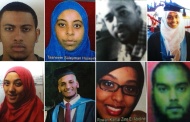
Two of the British medical students who have crossed into Islamic State-held areas are a brother and sister in their early 20s whose family are the latest to join a frantic group of relatives at the Turkish border.
The pair’s father flew to a Turkish border town early on Saturday, and drove to meet the other families who have set up temporary camp in a hotel near Isis-controlled parts of Syria.
The group of parents are trying to convince their children to come home, and many have pledged not to leave Turkey without them. The children have been sending their families regular messages insisting they are well, but have not said where they are.
All of the group, believed to be 11 or 12 strong, had Sudanese roots and were studying medicine or recent graduates from medical school living in Khartoum. A majority are British citizens but a couple are thought to be Sudanese.
The siblings are in their early 20s and their first names are believed to be Tamir and Logain, according to Turkish politician Mehmet Ali Ediboglu, who is helping the parents in their search.
Their names were not included in a list Ediboglu provided of the British medics who had gone across the border, but he said he now thought two of those he originally named may have other nationalities.
The Foreign Office is understood to be helping the families of seven of the students, who have approached it for assistance, and has asked the Turkish police to help search for them.
“We are providing consular assistance to families of British nationals who are believed to be missing after travelling to Turkey,” a Foreign Office spokesman said. “We are also working closely with the Turkish police to try to establish their whereabouts.”
New test for British policy: will the Syria nine be labelled as terrorists?
Mark Townsend
Read more
The Home Office has said the medics would not automatically face prosecution under anti-terror laws if they tried to return to the UK, as long as they could prove they had not been fighting.
The group flew from Sudan to Istanbul then took a bus to the border, and are believed to have crossed over around 14 March. The first of their parents arrived that same day, after one of the students tipped off her sister that she was travelling across the Turkish border.
“Don’t worry about us, we’ve reached Turkey and are on our way to volunteer helping wounded Syrian people,” medical student Lena Maumoon Abdulqadir wrote.
Her father rushed to try to stop her, and also raised the alert among other British Sudanese families with children studying in Khartoum. It soon became clear that several had children among the medical group.
How a WhatsApp message told British families their children had entered Syria
Read more
The UK is believed to be home to the oldest Sudanese diaspora in the west, made up of professionals, business people, academics and students, joined in more recent years by asylum seekers fleeing civil war.
Before the 1970s, the Sudanese community in Britain was small and mostly comprising business people and students.
In recent years, there has been an influx of southern Sudanese refugees. Some have travelled from other EU states, such as Germany and Sweden, drawn to the UK by the desire to join family and friends as well as to live in an English-speaking country.
In 2001, the UK census registered 10,671 Sudanese-born residents, but that number is thought to have grown, and the wider British Sudanese community now includes thousands of people with Sudanese roots who were born and raised in the UK.
According to estimates from the World Bank in 2008, the UK was the fifth most popular destination for Sudanese emigrants in 2005, after Saudi Arabia, Uganda, Chad, and the United States.

NEW DELHI: Government extended the bidding deadline by private firms for management, operation and development of four AAI-run airports due to HR-related and other issues, a top official said today.
There are many issues. There are issues relating to human resources. A concerted decision has to be taken (on such issues). Whatever are the concerns of the employees, they have to be addressed,” Airports Authority of India chairman R K Srivastava told reporters.
He said the service conditions of employees should not be “compromised with” and that the AAI was trying to fast track the privatisation process.
We have to now formulate the Request for Proposal,” he said, adding, “We are ensuring that all timelines are met.”
The AAI, which had invited Request for Qualification (RFQ) to handover the management, operations and development of Kolkata, Chennai, Jaipur and Ahmedabad Airports last year, had last week extended the RFQ submission date from March 24 to May 26. It had, however, not given any reason for pushing the deadline at that time.
The union had given a strike call on March 11 to protest the move, which it deferred till further notice following the intervention from the chief labour commissioner.
The CLC has fixed March 30 as the next date of meeting between the union and the management.
The Government is now contemplating to incorporate a 100 per cent manpower absorption clause for the bidders to pacify the union on the issue.
In the earlier OMDA (operations, management and development agreement) with the GMR and GVK group, who now operate Delhi and Mumbai airports, the provision was for 60 per cent absorption of AAI manpower by private operators.
Corporates including Tata and Adani groups and existing airport operators GMR and GVK groups besides some foreign players have shown interest in the these airports following the RFQ.
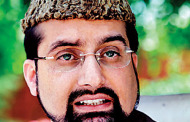
New Delhi: Justifying their consultations with Pakistan High Commissioner Abdul Basit here, Kashmiri separatist leaders on Monday said they were trying to assist India and Pakistan in resolving the “complex” issue of Kashmir which needed a political approach.
They also downplayed Basit’s invitation to them for attending Pakistan’s National Day celebrations.
Chairman of Hurriyat Conference Mirwaiz Umar Farooq, who met Basit yesterday, said the “complex” Kashmir issue needed a “political approach”.
“Hurriyat’s main agenda is that stakeholders involved — India, Pakistan and Kashmiris — will have to move together to solve the problem…. It is the only way out to avoid killing of innocent civilians and army men and other destruction.
“They (the stakeholders) have to find a solution to the problem. All of us understand one fact that there cannot be a military solution and there can be no solution through violence. So, how do we move forward? We try to engage with everyone,” he said while wondering why his meeting Basit was being portrayed negatively.
Echoing similar sentiments, Jammu and Kashmir Liberation Front (JKLF) Chief Yasin Malik said he has been attending the Pakistan National Day celebrations over the past 22 years.
“I am here just to attend the function as so many other people here will be… Indian politicians, Indian journalists will be there. It’s a function I am attending for the last 22 years,” he said.
The Mirwaiz along with Abdul Gani Bhat, Maulana Abbas Ansari, Bilal Gani Lone, Aga Syed Hassan, Mussadiq Adil and Mukhtar Ahmad Waza had gone to Basit’s residence yesterday night for talks.
India had called off foreign secretary-level talks with Pakistan last year after Basit held consultations with Hurriyat leaders on the eve of the official talks.
This meeting comes a fortnight after Basit had gone to the Delhi residence of hardline Hurriyat leader Syed Ali Shah Geelani and updated him about the visit of Indian Foreign Secretary S Jaishankar to Islamabad and issues discussed during his meetings there.
While meetings between Pakistani diplomats and Kashmiri separatist Hurriyat leaders have been a regular practice for the last 30 years, the issue has always irked India, which has maintained that resolution of Indo-Pak issues including Jammu and Kashmir have to be done bilaterally between the leadership of the two countries.
PTI


Recent Comments