





Mumbai: Maharashtra Chief Minister Devendra Fadnavis on Wednesday said the proposed Metro 3 car shed project at Aarey Colony has been temporarily put on hold and a committee has been set up on shifting the project away from the colony.
The government has also proposed three alternate locations to relocate the project from Aarey colony, city’s green belt.
Fadnavis, while replying to a query during the Question Hour, informed the Legislative Council that a total of 2,298 trees will have to be felled for the proposed car shed, of which 2,044 trees will be replanted.
“The Tree Authority has suggested that of 2,044, 800 trees can be planted in the same area and the rest somewhere else. Remaining, 254 trees cannot be planted,” Fadnavis informed the House.
He, however, conceded that people residing in the area are against the construction of the Metro car shed and said that all efforts are being made to shift the project to a more suitable place.
“I’m aware of people’s sentiments. They do not want green spaces to be hacked. Respecting people’s sentiments, we have constituted a committee that is seeing if this project can be shifted somewhere else. We will take a final decision based on their report,” Fadnavis said.
“We have even proposed three alternate places for this project and the committee has also been asked to suggest more suitable places,” he said.
Fadnavis also said no decision regarding not requiring to take forest department’s permission to undertake infrastructure projects can be taken by the government.
PTI

Mumbai: A local court today remanded in police custody the police constable in connection with the recovery of 12 kilograms of mephedrone drug from his cupboard inside his police station in the city.
“The accused constable Dharmaraj Kalokhe has been remanded in police custody till April 1,” public prosecutor Wajid Sheikh said.
Sheikh said that the police sought his custody on the ground that they want to know from where he sourced the drug and who were the intended recipients.
“We also sought his custody saying that we want to unearth the entire nexus of the cartel,” Sheikh told PTI.
Meanwhile, Kalokhe’s lawyer told the court that there was a possibility of the accused being tortured in the custody to shield a senior IPS officer and some Customs officials who were also involved in the case.
Kalokhe’s lawyer also moved an application saying that the accused should be interrogated in the presence of his lawyers and also be allowed to speak to them. Sheikh said that the application will be heard on March 27.
Head Constable Kalokhe, posted at Marine Drive police station, was arrested on March 9 after 110 kg of mephedrone drug, whose market value police claim runs into crores of rupees, was seized from his residence in a village under Khandala taluka in Satara district.
The next day, 12 kg of mephedrone was seized from Kalokhe’s locked cupboard at the Marine Drive police station here, along with Rs 30,000 cash.
The procedure to dismiss the constable from service is also underway.
An FIR was registered against Kalokhe at Marine Drive police station under Narcotic Drugs and Psychotropic Substances (NDPS) Act. One kg of mephedrone, popularly known as meow-meow and M-Cat, costs Rs 20 lakh.
PTI

Mumbai: In a bid to attract foreign tourists, Maharashtra government today announced year 2017 as “Visit Maharashtra” year along with organisation of ‘international travel mart’ in September this year.
We are also trying to host the meeting of SAARC tourism ministers in the state,” Chief Minister Devendra Fadnavis, who also holds Tourism portfolio, told the Legislative Assembly in the reply to a debate on the budgetary demands of the department.
Fadnavis said a ‘single window scheme’ would be created for the hospitality industry and number of permissions would be drastically cut down from about 140 to 20.
The draft is being prepared and all departments would be taken on board before finalising it, he said.
Fadnavis told the House that a new tourism policy would be unveiled soon and that Aurangabad will be declared as a tourism district.
He said tourism in the state will be developed through a transparent public-private-partnership (PPP) model and an integrated tourism development plan for Ratnagiri and Sindhudurg will be submitted for inclusion in the Central government’s coastal tourism project.
Plans are also afoot to develop sea forts in Konkan region, he added. Fadnavis said his government would aggressively market the tourism sector and strive to develop Maharashtra as a tourism brand.
A proposal to declare the Lonar crater in Buldhana district as a mega destination project is being prepared. Similarly, the Nagpur-Bhandara-Chandrapur area would be developed for lake tourism, the chief minister said.
He said the sea world project in Sindhudurg district in Konkan and the phase-III of Ajantha-Ellora preservation project will be vigorously pursued.
PTI
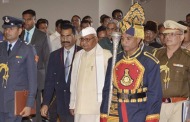
Madhya Pradesh Governor Ram Naresh Yadav’s son Shailesh Yadav, who was wanted in connection with the MPPEB scam, reportedly died of brain hemorrhage in Lucknow on Wednesday morning.
Both the Governor and his son are accused in the scam that broke nearly two years ago and involves several other accused from Uttar Pradesh.
While the Governor had challenged the FIR against him, his son was on the run and notices issued to him by the Special Investigation Team (STF) could not be served over last several weeks since his name appeared in a supplementary chargesheet filed in a local court. The Raj Bhavan in Bhopal had refused to accept a notice saying Shailesh did not live there.
READ: Governor named in exam scam, Centre asks him to step down
The investigating agency was reportedly preparing grounds to attach the properties owned by Shailesh in UP. Veerpal Singh, an accused arrested in November 2014, had alleged that Rs 3 lakh in cash was given to Shailesh in Raj Bhavan to ensure that 10 candidates from Bhind cleared the examination for contractual teachers. None of the 10 candidates were eventually appointed because they did not hold a diploma or a degree in education.
Madhya Pradesh’s octogenarian governor was admitted to a hospital in Bhopal a few days ago. Calling Shailesh’s death suspicious, the Opposition Congress has demanded a probe.
Lucknow: The population of Uttar Pradesh will reach 45 crore in the next 20 to 25 years, the Uttar Pradesh Assembly was informed today.
While replying to a question by Suresh Kumar Khanna of BJP on population control policy of the state government, Minister of State for Health and Family Welfare Shankh Lal Majhi said that the state policy was launched in 2000 on the lines of the national policy.
“As per the state policy, the birth rate by 2016 has to be brought down to 2.1 which stood at 3.4 (per couple) in 2011,” the minister said, adding that in 2012 it came down to 3.3 and in 2013 to 3.2 (per couple).
Though the fall of 0.1 looks very meagre but when translated to the number of children it is quite impressive, he said.
Going by the present rate, the population of the state will rise to 45 crore in the next 20 to 25 years, he said.
He stressed the need to control population growth, adding, that the rate at which population is growing will affect all development works.
Meanwhile, Leader of Opposition Swami Prasad Maurya asked whether government will take effective action against sadhus and sadhvis associated with a political party asking people to bear four to eight children, apparently referring to BJP MP Sakshi Maharaj’s remark that every Hindu woman should bear four children.
PTI
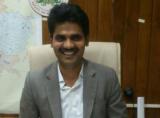
In a new twist to the mysterious death of IAS officer D K Ravi, his father-in-law today alleged that the CID probing it has deleted sensitive evidence before the case was handed over to CBI.
The CID has deleted some of the CCTV footage in the digital video recorder installed at his residence, Hanumanthrayappa claimed.
Facing rising public anger over the death of an upright IAS officer with growing clamour for a CBI probe, Chief Minister Siddaramaiah had on Monday announced the government’s decision to handover the case to the central agency, saying it had nothing to hide and was not protecting anyone.
Hanumathrayappa, a local Congress leader, said CID had taken the CCTV footage two days after Ravi’s death and returned it on March 23 and he was surprised to see some portions deleted.
“Two days after Ravi’s death, the CID took away the footage and returned it on March 23. I was shocked to see the footage recorded before 10.30 AM on March 16 was deleted,” Hanumnthrayappa told PTI.
On March 16, the IAS officer was found hanging from a ceiling fan at his Koramangala apartment.
Asked to throw light on what could be the vital contents in the deleted footage, Hanumanthrayappa said, “I would be able to tell only after I can get to see the deleted portion.”
However, Hanumanthrayappa said he has heard and read in newspapers that the deleted footage shows Ravi shouting over a telephonic conversation to someone at the other end.
Questioning the intentions of CID in deleting the footage, he said, “I want to know why did the CID delete the footage recorded before 10.30 AM on March 16? What is their intention?”
Hanumanthrayappa said he has asked his technician to help him retrieve the deleted footage, which is possible.
“My technician is not in town. He is out of Bengaluru and expected in a couple of days. He told me it is possible to retrieve the deleted video footage,” he said.
Asked whether he suspected the intentions of the state government, which allegedly is trying to give a different angle to Ravi’s death, Hanumanthrayappa said, “I do not want to comment on it for now because the investigation is on. However, I would make a comment once I watch the retrieved video footage which was deleted by the CID.”
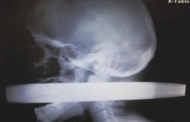
A 50-year-old man, who was battling for life after a bullet pierced through his skull, survived after undergoing a complex brain surgery at a city hospital here.
Kanpur based Hakim Singh, a katha-vachak (a narrator of scriptures) by profession, was injured during air-firing during a Shri Madbhagwat katha-vachan in Jhansi on January 10 and was rushed to a nearby hospital. Since the hospital lacked facilities to treat such a serious condition, he was taken to a bigger centre in Gwalior.
“Doctors at the hospital in Gwalior told us that father needs to be taken to a good neuro surgical centre. Thus we came to AIIMS Delhi but due absence of beds, they did nod admit my father there and suggested us to take him to Apollo hospital,” said the patient’s son Abhay Pratap.
Almost 27 hours after the incident, Singh was admitted to Indraprastha Apollo Hospital.
“He was brought in a critical state. The bullet had entered the head through one side and exited through the other side.
“The CT scan of head revealed extensive brain injury with depressed fracture in frontal region as the bone was broken at multiple places. The damage to the brain was severe as the right frontal lobe had multiple pieces of bone lying inside it along with numerous cerebral contusions,” said Dr Pranav Kumar, Senior Consultant of department of Neurology at the hospital.
In a complex surgery that lasted five hours, doctors removed the bone pieces lying inside the brain and treated the cerebral contusions. Repair of brain living membrane was carried out to to deal with dural tear.
“The patient had a long (about 13 mm) linear tear in the superior sagittal sinus which is the principal drainage channel of brain which caused heavy bleeding.
The tear was repaired through surgery and four units of blood transfusion were given to the patient during and after the surgery to make up for the intense blood loss. A tracheostomy was also carried out to allow direct access to the breathing tube,” explained Dr Kumar.
The patient was kept under intensive care and on anticonvulsant and other supportive medications. After 3 weeks of therapy and treatment, the patient was discharged from the hospital.
“His speech is close to normal with normal cognitive abilities and movement,” said Kumar.
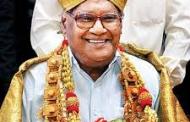
Eminent scientist CNR Rao today said the quality of science in India was “lousy”, adding if the country wants to have a future it should improve on quality.
Critical of lack of infrastructure in the scientific field, Rao, a recipient of Bharat Ratna, also rued the lack of investment in this sector.
Underlining the need for better scientific infrastructure in the country, Rao said India does not have “a single institution” that can match the best abroad even as he cited the example of China to call for more investment in science.
It was difficult to bring development in the country with the “lousy” quality of science, Rao said while delivering a lecture ‘Celebration of Science’ at Jamia Milia Islamia here.
“If India has to have a future, it has to improve in quality. The main thing in India is that everything from the corporate (sector) and education to science needs to have quality. Our Prime Minister (Narendra Modi) says development with quality improvement because with the lousy quality we have, it is difficult to have development,” he said.
Ruing the lack of investment in the scientific sphere, he said it “is so bad that it is less than one per cent of the GDP. Everyone is promising 2 per cent of the GDP (as investment), but that is not happening”.
Highlighting the example of neighbouring China, he said that for every Indian scientist, there are 100 scientists in the neighbouring country.
“This is unbelievable. They (China) invest a huge amount of money. They are producing 30,000 Ph.D students and, next year, will produce 50,000 Ph.D students,” Rao said.
“There is not a single institution in India which has facilities equal to the best institutions abroad. At least one, at least two… We don’t have even that. So, we got to have that. I think we need to have overall better infrastructure to do well in science,” he said.
Rao also emphasised the need for freedom and a better academic environment for students to excel in the country.
“Our young boys and girls go to America. They suddenly start doing good. Not because their brain is tuned in a different way after going there. What do they have? Freedom and the environment. India’s future depends on that,” he said.
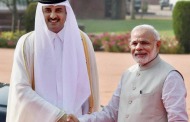
India and energy-rich Qatar today signed six agreements including one on transfer of sentenced prisoners as the two countries sought to inject a fresh momentum in their bilateral ties.
The pacts were signed after Emir of Qatar Tamim Bin Hamad Al Thani held extensive talks with Prime Minister Narendra Modi during which both the leaders discussed a range of issues including enhancing cooperation in energy sector and boosting trade and investment.
Under the provision of the pact on transfer of sentenced persons, Indian prisoners convicted in Qatar can be brought to India to serve the remaining part of their sentence. Similarly Qatari citizens convicted in India can be sent to their home country to serve jail term.
According to official figure, 96 Indians are currently languishing in various jails in Qatar which is home to around 600,000 Indians.
The other five MoUs will provide for cooperation in areas like information and communication technology, atmospheric and ocean sciences and media.
Qatar is an important country for India in the Gulf region. It supplies 86 per cent of India’s Liquified Natural Gas (LNG). The bilateral annual trade is around USD 16 billion.
The MoU in the field of information and communication technology would provide enhanced business opportunities for Indian IT industry in Qatar.
Qatar has embarked on an ambitious programme for overall development as part of its Qatar 2030 vision and has created a dedicated Ministry of Information and Communication Technology for capacity building in ICT.
Another MoU was signed between Ministry of Earth Sciences and Qatar Meteorological Department for cooperation in the field of atmospheric and ocean sciences.
A separate MoU was inked between Diplomatic Institute of Qatar’s Foreign Ministry and Foreign Service Institute of External Affairs Ministry to facilitate exchange of faculty members and experts.
The two sides also finalised a pact to encourage regular exchange of radio and TV programmes and content between Prasar Bharati and Qatar Media Cooperation.
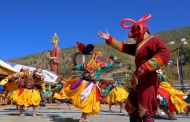
Bhutan – land of happiness, magic and myth – is now welcoming DJs, street artists and dancers, beatboxers and creative thinkers from across the world for a collaborative 10-day festival.
It’s mid-afternoon in Clock Tower Square in the Bhutanese capital, Thimphu. Prayer flags flutter in the breeze against an ice-blue sky, mountain peaks melt into the horizon and the crowd, complete with crimson-clad monks, jostles for space on the stone steps. As the sound of hip-hop fills the air, dance troupes with names like Urban Boomers and Half Dead Guys take to the stage. Bhutan’s first-ever street dance battle is under way and it’s serious stuff.
It may not be the first thing you’d expect in this remote Himalayan kingdom – a mystical Buddhist nation that famously measures gross national happiness instead of GDP – but the show is part of the brand new Annual Bhutan International Festival. A 10-day programme of art, music, film and food, held for the first time in February, it’s all about collaboration between nations and across genres. London choreographer Jade Shaw has been working with local youngsters, who had previously relied on YouTube to learn dance moves, weaving in messages about leadership and respect along the way. It’s a triumph. Rapturous laughter and applause erupt from the audience, most of whom have never seen anything like this.
Bhutan map
Landlocked between giants India and China, tiny Bhutan is one of the most intriguing countries in the world. Tourism was not permitted until 1974 (it remains tightly controlled) and the country’s ancient culture thrives almost intact. The street dance session is held on the birthday of much-loved King Wangchuck and the crowd – the men all wearing a gho, a tunic with big white sleeves, the women in colourful ankle-length kira dresses – have already enjoyed a morning of traditional celebrations, with masked dances, strong-man races and archery competitions in the town’s stadium.
But with the arrival of the internet (television was only allowed in 1999), a curious young population (60% of the country is under 25) is dipping its toe into the world outside.
Advertisement
“Bhutan hasn’t been open very long,” says festival co-founder Thinley Palden Dorji. “We’ve protected our culture, but change is inevitable. The influence of the world is there: it’s now a question of how we engage with it. The festival aims to give the youth a platform to express themselves, learn from international artists and share ideas.”
In a world saturated with festivals, this one is set apart by more than its unusual, beautiful location. It’s the first project from EdenLAB, a new creative touring initiative from Cornwall’s Eden Project. More than 100 international artists, performers and thinkers have been brought in to work alongside 200 local artists, with the aim of creating a lasting legacy, providing funding for the arts and setting up ongoing workshops and long-term relationships. Smaller events are planned throughout the year to maintain the momentum. And with Queen Jetsun Pema on board as patron, it has had a very big Bhutanese thumbs-up.
“The vision is for a world-class festival that’s unique in its focus on collaboration and community,” says co-director Ginny Galloway. “It’s about youth and legacy and the fusion of a culture that’s so intact with that of the modern world.”
February is low season for tourism, so boosting visitor numbers and injecting cash into the economy is part of the plan, too. And though lacking the colours of spring or the lushness of the late summer, it’s is a time of crisp, days and freezing, star-filled nights – and the king’s birthday and Buddhist new year celebrations are the same week.
Arriving in Bhutan was an adventure in itself. The flight into Paro airport skims the Himalayas: all faces were glued to the windows for a glimpse of Everest. Then it was an hour’s winding drive past paddy fields and lost-in-time villages to the capital.
It doesn’t take long to get the lie of the land in Thimphu, population 100,000. The Wang Chhu river skirts its western edge and, on a hilltop, a 51-metre-high gilded Buddha, one of the largest in the world, overlooks the city. This is the only capital in the world with no traffic lights: white-gloved police direct traffic from a prettily painted stand in the main roundabout. There’s an almost medieval feel about the old centre, with its wooden-shuttered buildings; the vibe is remarkably laid-back and the people gentle.
It’s a short walk between festival venues, and Coronation Park, by the river, is the site of most of the art programme. I watch sculptors from Cornwall crafting a huge snow leopard and a horse out of bamboo and paper; artists from VAST Bhutan, the country’s only contemporary arts centre painting people’s portraits; and potters from South Africa swapping techniques with local artists.
Most intriguing perhaps is Dance Spectroscopy, an art-meets-science affair which makes invisible particles in the atmosphere around you visible on a big screen, and creates a soundscape as you move. A group of children giggle and play, fascinated by the shapes and music. In a dome tent next door, British sonic artist Mileece has crafted a musical Eden, where plants play tunes when touched.
For those made peckish by all that art, Clock Tower Square is full of food stalls offering Bhutanese regional specialities (buckwheat pancakes from Haa in the west, yak skin stew from northern Gasa, jomja rice patties from Paro). Los Angeles chefs Roxana Jullapat and Daniel Mattern are here too, learning about Bhutanese fare and running workshops for local chefs.
As the days unfold, a constant stream of talent takes to the stage – monks from Majuli, in the Indian state of Assam, perform a mesmerising dance, then Bhutanese rock band Flying Kik scream out Rage Against the Machine covers. Other surprises are the beatboxers – MC Xander and Bellatrix from the UK, and Chesney Snow from the US, and rapping from BBC4 Poetry Slam champion Dizraeli.
As darkness and the temperature falls, the action moves to Mojo Park, a bar and music venue where visitors might catch musicians from the Harvard-Radcliffe Orchestra jamming with Bhutanese guitarists and beatboxers – or Indian pop star Lucky Ali and Mercury-nominated UK indie folk artist Nick Mulvey treating fans to an intimate gig before their stadium turn. Later, night owls head to Vivacity, a nearby club with guest DJs each night. In such an intimate setting it feels like one big party. There’s a constant buzz in the air – the Bhutanese hosts and artists excited to have the festival in town, visitors simply excited to be here.
Another thing that’s different from your average festival is that everyone stays in hotels. My base is the brand new Le Meridien, the biggest in Thimphu with 78 rooms, and a major festival sponsor. It’s here that the film events take place (Woodstock Film Festival is an adviser) and there are TEDx and TEDx Youth talks to coincide with the festival. Inspiring speakers muse, appropriately, on the theme of happiness, and eloquent Bhutanese children tell of the reality of life here – with, as everywhere, problems of drugs, depression and suicide.

Recent Comments