







Even after 20 years of launch of mobile services in the country, around 55,669 villages do not have mobile coverage till now.
“It is estimated that there are about 55,669 villages in the country that do not have mobile coverage,” Telecom Minister Ravi Shankar Prasad said in a written reply to the Rajya Sabha.
Asked if even after 20 years of launching the mobile services in the country, there are around 56,000 villages where mobile telephone service has not reached so far, the Minister said “Yes”.
Prasad said mobile service to uncovered villages in the country are likely to be provided in a phased manner over a period of five years with funding from universal service obligation fund (USOF).
“Detailed project report consisting of technical framework and cost estimates for Himalayan states (Himachal Pradesh, Jammu and Kashmir and Uttarakhand) is under preparation,” he said.
The Minister added that providing mobile coverage to 8,621 uncovered villages in the North Eastern region has been included in the comprehensive telecom development plan for the region approved by the government.
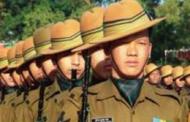
Pathankot: Hundreds of serving and veteran officers on Friday celebrated bicentenary of the first battalion of Gorkha Rifles (1/1 GR) with vigour and zest at Pathankot.
Veterans, serving officers, junior commissioned officers and other ranks both from India and Nepal attended the event, a defence spokesman said.
Unit’s bicentenary celebrations commenced with a solemn memorial service in honour of the martyrs. Thereafter, a Guard of Honour was presented to Lt Gen Ravi Thodge, Colonel of the Regiment, the spokesman said.
He also addressed a Special Sainik Sammelan and released a befitting First day cover to commemorate the landmark occasion.
The Battalion was raised on April 24, 1815 from the remnants of Gorkha General Amar Singh Thapa’s forces who valiantly fought the British at the Malaun Fort near Shimla.
The raising of battalion signalled the birth of present day Gorkha Brigade, he said.
Veer Naris and Gallantry Awards winners were also felicitated during the event.
Over the last two centuries of the battalion’s existence, it has time and again proven it’s worth by gallant actions in various fields of battle across the world, through the two World Wars, the Indo-Pak wars and in the conflicts of the sub-conventional realm, he said.
The event was a reunion for erstwhile comrades-in-arms who travelled from across the globe to be together at this momentous once-in-a lifetime occasion, he said.
The spirit of bonhomie and espirit de corps was on display during the course of the reunion was emblematic of the strong ties forged between officers and men alike, in the face of adversity, baptised by fire and having yet emerged triumphant time and again, the spokesman said. PTI
PTI

New Delhi, Apr 24, (PTI) The number of HIV positive cases reported annually in the country has declined by 57 per cent to 1.16 lakh in 2011 as compared to 2.74 lakh in 2000, Lok Sabha was informed today.
Union Health Minister J P Nadda, in a written reply to a question, told Lok Sabha that “according to the assessment of performance of various schemes for prevention, care and treatment of HIV/AIDS patients done by the government under National AIDS Control Programme (NACP), the HIV prevalence at national level has declined from 0.41 per cent in 2001 through 0.35 per cent in 2006 to 0.27 per cent in 2011”.
The minister said there has been no cut in the budgetary provision for NACP.
“There has been no cut in the funds for NACP. The budgetary estimates for 2015-16 is Rs 1,397 crore as against revised estimates of Rs 1,300 crore for the year 2014-15,” he said.
Speaking on financial assistance to the dependants of patients died of HIV/AIDS, Nadda said the government provides financial assistance as part of the general social security network.
“Widows of people who die due to HIV/AIDS are linked to the existing Widow Pension Scheme in states. Additionally, financial assistance is provided to children who are orphaned by HIV/AIDS in states of Delhi, Bihar, Karnataka, Tamil Nadu, Andhra Pradesh, Gujrat, Himachal Pradesh, Rajasthan and Maharashtra,” he said.
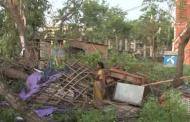
The toll in the killer nor’wester in Bihar rose to 48 as reports of six more deaths came from the 12 ravaged districts today.
A report compiled by the state disaster management department on the Tuesday late night nor’wester said Purnia bore its brunt with a maximum of 32 deaths.
Seven lost their lives in Madhepura, three in Madhubani, two in Katihar, 2 in Sitamarhi and one each in Darbhanga and Supual, the report said.
Over 80 people were seriously injured in the storm and are being treated at various government hospitals, it said.
Chief Minister Nitish Kumar made an aerial survey of Bhagalpur and neighbouring storm hit area this morning and held a meeting with officials at Bhagalpur, CMO sources said.
He said there was no forecast about the storm which took the state by surprise and left a trail of devastation.
Union Home Minister Rajnath Singh would tour the affected districts by air tomorrow, Principal secretary to the disaster management department Vyas Jee said.
After telephonic talks between Prime Minister Narendra Modi and the Chief Minister, the Centre had promised all assistance, official sources said.
Governor Keshari Nath Tripathi today expressed profound grief at the human casualties and damage to dwellings in Seemanchal and Koshi regions of the state.
He asked the state government to pay Rs 4 lakh compensation to family members of the victims immediately and take up relief and rehabilitation work expeditiously, a statement issued by Raj Bhawan said.
The Governor also asked the state government to restore transport facilities, electricity and communication network in the affected areas at the earliest, it said.
Vyas Jee said district magistrates of the affected districts have been directed to provide one quintal food-grain, Rs 1,800 for buying clothes, Rs 2,000 for purchase of utensils besides Rs 2,000 cash to citizens whose dwellings perished in the high velocity storm.
The DMs, he said, have been told to give priority to villages badly affected in the storm.
After an aerial survey yesterday, Kumar had said maize crops had been flattened and others severely damaged.
The affected districts are Purnea, Araria, Kishanganj, Katihar, Madhepura, Supaul, Saharsa, Bhagalpur, Samastipur, Darbhanga and Madhubani in north and north eastern parts of the state.
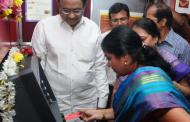
Chandigarh, Apr 24 (PTI) The first postal ATM in Punjab and Union Territory of Chandigarh was opened at General Post Office (GPO) here today.
“The ATM would fulfil the long pending demand of the public for ATMs in post offices. A total of 26 ATMs would be made operational in Punjab and Chandigarh this financial year,” Director Postal Services (Headquarters) Punjab and Chandigarh, Manisha Bansal Badal said after inaugurating the ATM.
The second postal ATM would be made operational in Amritsar GPO this month, she said.
The sector 19 post office of Chandigarh will have the second ATM in the first phase, she said, adding that the ATM facility will be available at other head post offices or post offices including Ropar, Ludhiana, Model Town, Ludhiana, Khanna, Jagraon, Patiala, Rajpura, Sangrur, Tarn Taran, Golden Temple, Bathinda, Faridkot, Moga, Ferozepur, Gurdaspur, Batala, Hoshiarpur, Dasuya, Jalandhar City, Jalandhar Cantt, Nawan Shahar, Kapurthala and Phagwara.
As many as 50 ATM cards have been issued to the SB Account holders by GPO Chandigarh and this facility could be availed by all the customers of post offices having core banking facility, Manisha said.
She said that more than 85,000 Sukanya Samridhi Accounts have been opened in Punjab Circle till date as a part of ‘Beti Bachao Beti Padhao’ campaign.
Girls born on or after December 3, 2003 are eligible for opening accounts under Sukanya Samridhi Yojana upto December 1, 2015.
With the launch of the postal ATM in the city today, customers will get all the facilities available in core banking like cash withdrawal, mini statement, fast cash, balance enquiry, PIN Chandigarh, fund transfer within own post office, Saving Accounts and transfer of funds to other accounts of post office, Manisha said.
A maximum of Rs 10,000 can be withdrawn at one time, she said, adding that with the launch of the ATM, all modern and core banking facilities have been made available at the post office
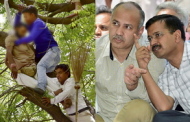
New Delhi/Jaipur, Apr 24 (PTI) Facing criticism for his “insensitivity” in going ahead with his speech at the rally where a farmer from Rajasthan committed suicide, Delhi Chief Minister Arvind Kejriwal today acknowledged his “mistake” and tendered an apology, which was “rejected” by the family of the deceased.
The family of farmer Gajendra Singh, 41, who ended his life by hanging himself from a tree at a rally called by AAP on Wednesday, rejected the apology and demanded a CBI probe into the incident.
“I was to deliver an hour-long speech but I wrapped it up in 10-15 mins. I think that was my mistake. Probably I should not have spoken. If that has hurt anynone’s sentiments I would like to apologise,” an under-fire Kejriwal said.
He, however, insisted that the focus should not deviate from the “real” issues being faced by the farmers.
“I am guilty. Blame me. I feel the rally should have been called off. But please focus on the real issue of the farmers and desist from politicking. Whoever is guilty hang him but the focus of the debate should be on why the farmers are committing suicide,” Kejriwal said.
The Delhi CM had drawn flak for making a 20-minute speech at his Jantar Mantar rally even after the incident had taken place. Not even caring to reach the spot where Gajendra’s lifeless body had fallen after his death, Kejriwal had ranted against Prime Minister Narendra Modi, accusing him of working for the “super rich”.
Senior AAP leader Kumar Vishwas had said the incident was an attempt to sabotage the rally and sully the party’s image, unwittingly implicating Gajendra Singh in a sinister plot to discredit his party.
In another comment considered “crass” by many, another senior AAP leader Ashutosh had said the next time anybody tries to commit suicide he would tell Kejriwal to rescue him.
“If Arvind had stopped his speech midway, there would have been a stampede-like situation. And why are we being blamed? What did the policemen do? Not even a single policeman moved despite repeated requests by the CM.
“The next time anyone tries to commit suicide, I will ask the Delhi CM to climb the tree and save him,” he said but later apologised for his remarks.

A veteran freedom fighter, who served in Netaji’s Indian National Army, died after a brief illness at his native Manethi village near here, his family said today. He was 92.
Nand Lal Bharti was a soldier of Netaji Subhash Chander Bose’s INA infantry, active during the Second World War. The freedom fighter was also imprisoned several times during his service with the INA.
Bharti died on the night of April 21 after a brief illness. The mortal remains of Bharti were consigned to the flames yesterday with full state honours in the village, about 30 km from from Rewari.
Policemen along with district authorities fired 21-round salute in the air as a mark of respect for Bharti.

A suicide note in Hindi dropped by the man from the tree before he hung himself said he had nothing to look forward to in life as his entire crop had been destroyed by unseasonal rains.
NEW DELHI: A farmer from Rajasthan, his crops ruined by rains, hanged himself from a tree at an AAP rally here on Wednesday just before Delhi Chief Minister Arvind Kejriwal addressed thousands against the controversial land ordinance.
The dramatic death of Gajendra Singh, a father of three, immediately turned into a political drama, with the Aam Aadmi Party blaming Delhi Police and the BJP and the Congress attacking Kejriwal and the AAP.
Shortly after doctors at the Ram Manohar Lohia Hospital declared the man dead, Home Minister Rajnath Singh told Delhi Police, which reports to him, to hold an inquiry into the death.
The sensational incident took place at Jantar Mantar in the heart of the city where thousands from Delhi and other states had turned up to denounce the land bill at a mass meeting called by the AAP.
Three AAP activists who saw the man hanging climbed the tree and tried to bring him down. But as they untied the scarf the farmer had tied to a tree branch to hang himself, his body fell with a loud thud.
As chaos gripped the venue, an IANS reporter at the site saw that the man was barely breathing. His tongue was protruding.
One of the AAP activists who had climbed the tree fainted on the branch. Others then clambered up and brought him down after sprinkling water on his face.
A suicide note in Hindi found at the spot said the man was taking his life because untimely rains had destroyed his crops and ruined him. He ended the note with “Jai Jawan, Jai Kisan, Jai Rajasthan”.
As emotionally charged AAP activists raised anti-police slogans, the man was rushed to the Ram Manohar Lohia Hospital where he was declared dead.
Kejriwal was told of the incident — it wasn’t clear then whether the man was alive or dead — by some volunteers on the dias. Thinking that the man was probably alive, the chief minister said he would call on him affer the rally.
After a hard-hitting speech in which he accused the Narendra Modi government of trying to snatch farmers’ land to give it to the “super rich”, Kejriwal and Deputy Chief Minister Manish Sisodia drove to the hospital.
By then, Delhi Congress leader Ajay Maken had visited the hospital and remarked that both the AAP and police should have taken steps to avoid the suicide.
At his party office, BJP spokesman Sambit Patra asked: “Why didn’t the AAP leaders stop the farmer from committing suicide?”
Congress vice president Rahul Gandhi also visited the hospital. He later told the media: “We are with the farmer’s family. We will help them.”
Earlier, Kejriwal vowed to organise farmers all over the country on the issue.
Modi had betrayed the trust of the farmers after taking their vote and forming a government, Kejriwal told the protesters.
When the farming community voted for Modi in the Lok Sabha election, they were confident that he would be able to end suicides by farmers.
“But today farmers have realized that this is not a government of farmers, it is a government of anti-farmers,” he said to loud cheers.
“This is ‘super amiron ki sarkar (a government of the super rich).”
Kejriwal questioned the need to enact an ordinance to make land takeover easy.
“What is the urgency? Is there a big emergency? What is the compulsion? Is some major project stalled? Our farmers want to know.”
The chief minister said farmers all over the country were protesting against the land bill.
He declared that he would not allow land to be taken away from farmers in Delhi without their consent.
Farmers would stop killing themselves in the country only when farming was made profitable, the chief minister said. He said he would write to all the chief ministers on the issue.

The leader of Islamic State, Abu Bakr al-Baghdadi, has been seriously wounded in an air strike in western Iraq, sources have told the Guardian.
A source in Iraq with connections to the terror group revealed that Baghdadi suffered serious injuries during an attack by the US-led coalition in March. The source said Baghdadi’s wounds were at first life-threatening, but he has since made a slow recovery. He has not, however, resumed day-to-day control of the organisation.
Baghdadi’s wounding led to urgent meetings of Isis leaders, who initially believed he would die and made plans to name a new leader.
Two separate officials – a western diplomat and an Iraqi adviser – confirmed the strike took place on 18 March in the al-Baaj a district of Nineveh, close to the Syrian border. There had been two previous reports in November and December of Baghdadi being wounded, though neither was accurate.
The diplomat confirmed an air strike on a three-car convoy had taken place on that date between the village of Umm al-Rous and al-Qaraan. The attack targeted local Isis leaders and is believed to have killed three men. Officials did not know at the time that Baghdadi was in one of the cars.
Hisham al-Hashimi, an Iraqi official who advises Baghdad on Isis, told the Guardian: “Yes, he was wounded in al-Baaj near the village of Umm al-Rous on 18 March with a group that was with him.”
US officials were unable to confirm the report. “We have nothing to confirm this report,” said a Pentagon spokesman.
Baghdadi is understood to have been spending much of his time in al-Baaj, about 200 miles west of the Isis stronghold of Mosul. “He chose this area because he knew from the war that the Americans did not have much cover there,” said a source privy to some of Baghdadi’s movements. “From 2003 (the US military) barely had a presence there. It was the one part of Iraq that they hadn’t mapped out.”
Al-Baaj, a Sunni tribal area, has long remained outside of state control even under ousted Iraqi leader Saddam Hussein’s regime, and was considered a safe haven for jihadists from 2004 onwards.
Residents have long used smuggling networks as well as small valleys and tracks to import goods from nearby Syria and to other parts of Sunni areas of Iraq in Nineveh and Anbar. Al-Qaida in Iraq and all its subsequent incarnations, including Isis, had largely unfettered access to the routes until al-Baaj became a focus of US surveillance earlier this year.
Baghdadi had at least one earlier brush with death when US jets attacked a two-car convoy on the outskirts of Mosul on 14 December. His close aide Auf Abdul Rahman al-Efery was killed when a rocket fired from a war plane hit one of the cars. Baghdadi was believed to be in the second car, which was not hit.
Isis: the inside story
Read more
In recent months, air strikes have been increasingly effective in targeting the Isis leadership. Baghdadi’s deputy, Abu Muslim al-Turkmani, and the head of the group’s military operations in Iraq were both killed in early December.
After seizing control of a large chunk of Iraq and Syria last June, and threatening Baghdad and Irbil, Isis has recently lost substantial ground in both countries. An offensive led by Shia militias and the Iraqi military took back Iraq’s fourth city, Tikrit, last month, as well as close to 7,000 sq km in the centre of the country.
A Kurdish push from the north in January reclaimed close to 20,000 sq km. Both offensives appear to be paving the way for an assault in Mosul, which is not expected before the autumn. Isis remains in full control of Mosul, as well as Anbar province and much of eastern Syria.
The border between the two countries is largely redundant and, despite air strikes, the group remains in control of six crossing points that allow a ready flow of funds, fighters and weapons. Baghdadi had declared the swath of land from eastern Aleppo to central Iraq to be part of a caliphate that he leads.
While Baghdadi invokes authority as a religious leader, the constant threat from the skies has led to some of its command and strategic decisions being made by other members of the leadership. Since Baghdadi’s wounding, Isis’s military and Shura councils have become increasingly prominent in decision-making, the source close to the organisation revealed.

Prosecution says Jeffrey Okafor, accused of murdering Carl Beatson Asiedu in 2009, phoned a woman and told her he had been involved in a ‘madness’
A man accused of stabbing a CBBC presenter to death confessed to a girlfriend and then fled to Nigeria on his brother’s passport, a court has heard.
Jeffrey Okafor, 24, of East Dulwich, south-east London, is accused of murdering 19-year-old Carl Beatson Asiedu outside a nightclub in the summer of 2009.
Opening the trial, Sarah Whitehouse QC, prosecuting, told Woolwich crown court that the stabbing had taken place after a crowd of young people spilled out of Club Life near Vauxhall station in south London.
Three people were specifically targeted, including Asiedu, who appeared in the CBBC children’s series MI High.
Two of them survived but, Whitehouse said, “Carl Beatson wasn’t so fortunate.” She said Okafor was part of a larger group who attacked a smaller group during the incident on 1 August 2009.
As well as appearing in the CBBC show, Asiedu had also helped to form a music group called Kid’n’Play and was known as Charmz. The musician, whose group was often booked to play at nightclubs in London and Leicester, performed with his friend at Club Life that night at an event called Summer Vibz.
After their performance, they stayed and had some drinks. Whitehouse told the jury the victim had had very little alcohol and said it did not appear that drink had played any part in the violence that unfolded when they left the club.
Asiedu was attacked after leaving the club. Efforts to revive him were unsuccessful and he was pronounced dead at the scene, the court heard. A pathologist concluded the cause of death was a single stab wound to the front of the chest.
“After the attack, Jeffrey Okafor actually confessed to a girlfriend that he had stabbed Carl Beatson,” Whitehouse said. Within about an hour of the attack, he phoned a girlfriend and told her he had been involved in a “madness”, the court heard.
A few days later he allegedly told the same woman he had stabbed Charmz in the stomach and gave her a pair of black gloves, asking her to look after them. Whitehouse said those gloves had been passed to police, and DNA which may have come from the victim was on one of the gloves.
The defendant also phoned and asked the woman to put a T-shirt “into a plastic bag and put it into a bin in the road”, the jury heard.
Later that day, when he returned home, Okafor seemed agitated and said: “I’m going down” and “The Feds are going to be on to me”, Whitehouse told the court.
On 13 August police went to his home address, planning to arrest him and search the house for any evidence relating to the murder. But Okafor was not at the address, having escaped as the police arrived, the jury heard.
Whitehouse said he had lain low for a time and then early on 17 August 2009 he took a flight from Heathrow to Lagos, using his brother’s passport.
He was extradited from Nigeria in November 2014. He denies murder.
The trial was adjourned until Wednesday morning.

















Recent Comments