
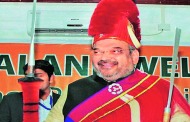
A Dimapur-based Christian organisation has asked BJP chief Amit Shah, who made his maiden visit to Nagaland on Friday, to look into the foreign funding for both Hindu and Christian religious groups and publish the details for the “good of the nation”.
The Dimapur Christian Forum, which wrote an “open letter” to Shah, also dismissed allegations by made by various Sangh Parivar outfits about Christian missionaries wooing tribals, and said it was “deprivation” that had prompted tribal communities to embrace Christianity.
“We like BJP to understand that our ancestors were not Hindus, because they did not worship Lord Ram, Shri Krishna, Hanuman or any other deities of the Hindu pantheon. They accepted Christianity. There was no inducement, but only deprivation, because our forefathers who became Christians were expelled from their villages,” the open letter signed by Dimapur Christian Forum secretary Father Chacko Karinthayil said.
Related
The Forum also wanted to know why no “Hindu missionary” came to tell the tribals of the Northeast about the Hindu gods. “One relevant question is, why no ‘Hindu missionary’ came to tell us about Lord Ram, although we were living as neighbours for three millennia or more?
The Hindu missionaries went only to palaces of the kings, like those of the Ahoms and Meiteis. They did not come to us because we were considered as mlechchas (barbarians). The Christian missionaries came because Jesus taught them to call all human beings brothers and sisters,” the letter said.
But the Forum made it clear that it was not BJP as such which have been complaining about the Christian missionaries. “We are aware that the there has been no official accusations from BJP on any aspects of our Christian faith. We thank you and the party for it. The accusations have been from your constituents, viz RSS, VHP etc, who made you what you are. We are not listing the accusations here. But they boil down to one thing, that Christianity is a foreign thing, Christian faith is suspect, traitorous, anti-national, and so to be destroyed,” it said.
On the oft-repeated allegations about foreign funds flow to Christian missionaries, the group asserted that churches do not use funds for any anti-national activities. Instead, it asked Shah to study the foreign funding details of both Hindu and Christian religious organisations and make those public.

Prime Minister Narendra Modi’s visit to Canada has generated business worth more than 1.6 billion Canadian dollars, according to official figures released by the Harper government here.
Sixteen commercial agreements and announcements were made by Canadian and Indian companies and organisations during Prime Minister Modi’s visit this week.
The commercial agreements and announcements have a combined value of over 1.6 billion Canadian dollars, Canadian Prime Minister Stephen Harper’s office said in a statement.
Related
Canada to supply uranium to energy-starved India from this year
Canada hopes for ‘new era of partnership’ with India
Canadian PM to visit India next week,N-deal on agenda
The announcements cover a wide range of sectors, including aerospace and defence, education, energy, mining, infrastructure, sustainable technologies, information and communications technology.
The agreements further demonstrate the significant growth taking place in the Canada-India bilateral commercial relationship, the statement said.
“One commercial agreement involving Saskatchewan-based Cameco will see the company supply India with over seven million pounds of uranium over the next five years. This deal was made possible due in part to the Canada-India Nuclear Cooperation Agreement negotiated by our Government,” it said.
Harper also welcomed Prime Minister Modi’s announcement that India will issue visas upon arrival, which will make it easier for Canadians to travel to India.
Harper and Modi welcomed the progress made on negotiating a Bilateral Foreign Investment Promotion and Protection Agreement and agreed to intensify discussions to finalise all outstanding issues.
The two Prime Ministers also participated in several cultural events where they met with members of Canada’s vibrant Indo-Canadian community.
During these events, Harper paid a tribute to the tremendous contributions the Indian-origin community continues to make to Canada’s social, cultural and economic landscape.
“With its expanding population and impressive economic growth, India represents tremendous opportunities for Canadian companies. But we have only begun to scratch the surface of our true commercial potential. That is why Prime Minister Modi and I were pleased by the scope and volume of
bilateral initiatives and commercial agreements that took place during his visit,” Harper said.
“These initiatives will help to further strengthen our relations. Canada and India enjoy a special friendship, underpinned by a vibrant Indo-Canadian community, which continues to make tremendous contributions to our nation’s cultural and economic fabric,” he said.
“It was a pleasure this week to meet with Prime Minister Modi and members of the Indo-Canadian community to further cement the strong bonds that unite our countries,” he added.
During the visit, Harper and Modi committed to elevate the bilateral ties to a strategic partnership and further broadened its scope through a number of important initiatives.
The two leaders also saw the completion of memoranda of understanding in a range of areas, including civil aviation, rail regulation, education and skills development, space cooperation, and projects focused on maternal, newborn and child health.
Canada and India also finalized all steps necessary for the entry-into-force of the Social Security Agreement, which will take place on August 1, 2015, the statement added.
The publication said among the lessons that can be drawn from the ‘2015 TIME 100 list’ is that Asia has a crop of strong leaders.
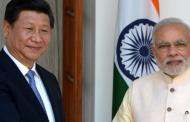
Both India and China are today run by “forceful leaders” eager to put their “stamp on history”, with Prime Minister Narendra Modi working to lead from the front after Manmohan Singh’s decade of “increasingly listless rule”, according to TIME magazine.
Mr. Modi was named by TIME among the 100 most influential people in the world in its annual list on Thursday, with U.S. President Barack Obama penning a flattering profile of him.
The publication said among the lessons that can be drawn from the ‘2015 TIME 100 list’ is that Asia has a crop of strong leaders after years of being run by not-so-dynamic politicians.
“China and India may be two of the most dynamic countries in the world, but for years their leaders were anything but,” TIME said, adding that from 2002 to 2012 China was run by the “colourless and cautious” President Hu Jintao, though most decisions were made not by him alone but through consensus among the top tier of the Communist Party.
In India, Prime Minister Manmohan Singh presided over a decade of “increasingly listless rule”, ending in 2014 when he left office at the age of 81.
But today, both China and India are run by forceful leaders eager to put their stamp on history,” it said.
TIME referred to Mr. Modi’s rock-star reception at the Madison Square Garden during his visit to the U.S. last year, saying not many world leaders can get the kind of audience he commanded at the iconic city arena.
Unlike many of his predecessors, Mr. Modi has “worked to lead from the front, and he’s already carved out an impressive international profile — not too many other international leaders can pack Madison Square Garden for a speech, as Mr. Modi did last September”.
Mr. Obama notes that Mr. Modi has “laid out an ambitious vision to reduce extreme poverty, improve education, empower women and girls and unleash India’s true economic potential”.
TIME said that Chinese President Xi Jinping “is even more powerful” and more determined to exert direct control of his country.
In the ‘TIME 100’, former Australian Prime Minister Kevin Rudd writes that Mr. Xi is now “likely to be China’s most powerful leader since Mao”.
“That’s not always a good thing. While Xi is carrying out reforms that are needed to make China’s economy more sustainable, he’s also ruthlessly cracked down on civil society and challenged the U.S. for global leadership,” said the magazine.
![Online [Free Watch] Full Movie A Gentleman (2017)](http://www.realnewsofindia.com/wp-content/uploads/2015/04/kashmir-190x122.jpg)

A Gentleman (2017)
| Release | : | 2017-08-25 |
| Country | : | India |
| Language | : | हिन्दी |
| Runtime | : | 132 |
| Genre | : | Romance,Comedy |

Synopsis
Watch A Gentleman Full Movie Online Free. Movie ‘A Gentleman’ was released in 2017-08-25 in genre Romance,Comedy.
Gaurav dreams of settling down with Kavya, the woman of his dreams, but she prefers a man who’s more adventurous and willing to take risks. He soon stands to lose everything when a case of mistaken identity rocks his once-happy life.
Streaming Movie A Gentleman
(2017) Online
Incoming search term :
Watch A Gentleman Full Movie Online Free Streaming In HD Quality, watch full A Gentleman movie, Watch A Gentleman 2017
Online Free Viooz, Watch A Gentleman 2017 Online Free, Watch A Gentleman 2017 Online Putlocker, film A Gentleman
online, Streaming A Gentleman 2017 For Free Online, streaming movie A Gentleman 2017, A Gentleman film trailer,
A Gentleman movie trailer, live streaming film A Gentleman 2017, Streaming A Gentleman 2017 Online Free Megashare,
movie A Gentleman streaming, Watch A Gentleman 2017 For Free online, film A Gentleman 2017 online streaming,
download A Gentleman 2017 movie now, movie A Gentleman 2017 download, watch full movie A Gentleman 2017, trailer
film A Gentleman 2017, Watch A Gentleman 2017 Online 123movies, Watch A Gentleman 2017 Online Free 123movie, Watch
A Gentleman 2017 Online Free Putlocker, movie A Gentleman 2017 trailer, Watch A Gentleman 2017 Online Free
netflix, watch A Gentleman film online now, A Gentleman 2017 movie streaming, A Gentleman 2017 Watch Online, Watch
A Gentleman 2017 Online 123movie, download movie A Gentleman, Watch A Gentleman 2017 Online Free megashare, watch
A Gentleman movie now, Watch A Gentleman 2017 Online Free hulu, Watch A Gentleman 2017 Online Viooz, live streaming
movie A Gentleman 2017, A Gentleman live streaming film online, movie A Gentleman 2017, Watch A Gentleman 2017 Online
Megashare.
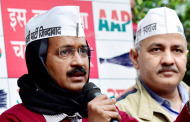
Delhi Chief Minister Arvind Kejriwal and two other AAP leaders including Deputy CM Manish Sisodia are likely to appear in a court on Tuesday which is scheduled to pronounce its order on the issue of framing of charges against them in a criminal defamation complaint.
Metropolitan Magistrate Muneesh Garg had earlier directed Kejriwal, Sisodia and Yogendra Yadav, who were released on bail after they had appeared in the court on June 4 last year in pursuance to summons against them, to be present in person tomorrow.
The court, which had earlier reserved order for February 11, had granted exemption to the three AAP leaders from personal exemption for that day and had given them a last opportunity to positively appear before it on March 17.
Kejriwal had earlier sought exemption from personal appearance for that day on the ground that he had to meet Union Home Minister Rajnath Singh in view of Delhi Assembly elections results which were announced on February 10.
The summons were issued on the complaint of advocate Surender Kumar Sharma under sections 499, 500 (defamation) and 34 (common intention) of the IPC, with the court, saying there was prima facie material to summon the accused.
While issuing summons against AAP leaders, the court had said, “The press release published in newspapers as well as testimonies of witnesses reflect that defamatory remarks were published in the newspaper which affected the reputation of the complainant in the society and lowered his reputation in the eyes of other members of the society.” The court, however, had rejected the complainant’s plea that AAP leaders had conspired and cheated him, saying in the absence of the very element of deception, there was no prima facie material against any of the accused for the offence of cheating and criminal conspiracy.
Sharma had alleged that in 2013 he was approached by volunteers of AAP who had asked him to contest Delhi Assembly election on a party ticket saying Kejriwal was pleased with his social services.
He filled up the application form to contest the polls after being told by Sisodia and Yadav that AAP’s Political Affairs Committee had decided to give him the ticket. However, it was later denied to him.
On October 14, 2013, the complainant claimed that articles in leading newspapers carried “defamatory, unlawful and derogatory words used by the accused persons” which have lowered his reputation in the Bar and the society.
By: Web Desk | New Delhi | Updated: April 18, 2015 1:45 pm
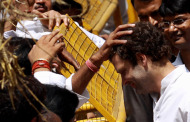
Back after an eight-week break from active politics, Congress vice-president Rahul Gandhi today met a delegation of farmers from the states of UP, Rajasthan, Haryana and Punjab on the land acquisition bill. This is his first public appearance on Saturday after his return from a sabbatical.
(SEE: Photos of Rahul Gandhi meeting the farmer delegation)
The delegation is believed to include farmers from the twin Uttar Pradesh villages of Bhatta Parsaul from where Rahul had launched a “padyatra” in 2011 against forcible land acquisition of farmers, a protest that had culminated in passage of Right to Fair Compensation and Transparency in Land Acquisition, Rehabilitation and Resettlement Act, 2013.
The Congress is gearing up for a major show of strength during a farmer’s rally in Delhi on Sunday which Rahul will address.
The party is pulling out all stops to ensure a huge turnout at the rally and has held countless meetings to take stock of the preparations.
Senior leader Digvijaya Singh on Friday met all AICC secretaries to take stock. Almost all the top leaders have been given targets for bringing people to the rally.
The neighbouring state units of Haryana, Punjab, Rajasthan, Uttar Pradesh and Madhya Pradesh besides Delhi have been entrusted with the job of filling up the Ramlila Maidan, venue of the Kisan Rally.
The party, meanwhile, attacked Prime Minister Narendra Modi accusing him of promoting crony capitalism. “You will find three common names in every CEOs forum which the Prime Minister has directly constituted. All the powers stand concentrated in the PMO… On one hand you have the mounting NPAs of the banks, huge debts runnng into Rs 17,000 to Rs 19,000 crores and the PMO is facilitating the loans by the public sector banks, agreements with other companies in other countries,” senior Congress spokesperson Anand Sharma alleged.

It’s not just the heroines, this pornstar-turned-Bollywood heroine is also standing at par with the leading men of film industry because of this decision of hers. Read on to find out what it is…
Deepika Padukone, Anushka Sharma, Priyanka Chopra and Sonam Kapoor are Bollywood’s top actresses. These A-list heorines charge a bomb for their movies and endorsements. Not that the amount isn’t justified, it’s just that B-town actors follow a completely different format as far as their payment is concerned. However, there is something that none of these listed actresses could do, that Sunny Leone has done. And this smart move of hers has put her in the league of the leading men of the film industry.
Sunny Leone has recently changed the way she is paid for the films that she does. She has started following the profit sharing model of payment, most Hollywood actors follow, and many B-Town leading men have started doing more recently. She has thereby reduced her base fee for signing a film, which makes her more approachable for filmmakers. A source close to Sunny Leone informs, “The films that she works on are being promoted, marketed and sold on her name itself. So why not giver her some credit for the same? Heroes do get paid the same way as filmmakers sell the movie on their name and they earn millions out of the movie’s profits.” Sounds justified. Hai na?
With Sunny Leone’s films doing well at the ticket window, we feel this should work in favour of the sexy actress. She would end up getting better roles from filmmakers as they wouldn’t be worried about her signing base amount and at the same time Sunny too would be benefiting out of the success of her film. Well, looks like Ms Leone has a business acumen and is just making the right moves in tinsel town.

NEW DELHI (AP) — Every morning just before dawn, hundreds of trucks loaded with buffaloes trundle into New Delhi’s sprawling slaughterhouse complex where young men rush to unload the bellowing cargo. Skidding on heaps of fresh dung, they pull the animals out of the trucks, herding them for the daily auction and eventual slaughter. The work is hard and the money at the end of it, poor.
But the business is big. Despite Hindu beliefs that cows are sacred — and the fact that their slaughter is banned in most of the country — India is the world’s fifth-largest consumer and second-largest exporter of beef. The meat, which in India comes from bulls and buffaloes, is widely eaten in some communities, particularly by low-caste Hindus and millions of Muslims and Christians.
With the victory of Prime Minister Narendra Modi’s Hindu nationalist Bharatiya Janata Party last year, hard-line Hindu groups are pushing to expand the slaughter ban to include all types of cattle, male or female. Meat traders, many of whom have carried their trade for generations, are worried about their jobs.
“This is a political decision,” said Mohammed Aqil Qureshi, president of the Buffalo Traders Welfare Association in Ghazipur, the New Delhi neighborhood where the slaughterhouse complex is located. “They want to gratify the Hindus and harass the Muslims.”
A beef ban would hit the poor the most, Qureshi said.
“This is poor people’s food and is a key source of nutrition for millions of people,” he said.
Beef is far cheaper than most meat in India, often just half the price of chicken, making it a key food for people struggling with poverty.
Fears among meat traders grew last month when India’s second-most-populous state, Maharashtra, extended the slaughter ban to include bulls. While buffalo was not mentioned in the new law, buffalo meat quickly disappeared from most of the state’s butcher shops, amid fears of communal violence if it was confused with cow meat.
The ban carries a stiff punishment: Bail is not allowed and anyone convicted of selling or possessing beef faces a 5-year jail term and a $200 fine, a huge sum for poor Indians.
Within days of the ban, the red-meat business in Mumbai, the state capital, was forced underground, leaving restaurants and eateries scrambling for alternatives. Meat traders in Maharashtra have challenged the ban in court, saying tens of thousands of people have lost their jobs.
The state’s decision did not come as a surprise. During his election campaign, Modi promised a countrywide ban on cow slaughter, and that has emboldened Hindu hardliners.
Other states ruled by Modi’s party have promised to follow Maharashtra’s example. The government in Haryana state, bordering New Delhi, is considering laws making cow slaughter comparable to murder. Offenders would face a life term for killing a cow or bull if the state adopts the planned legislation.
Many Hindus regard the cow as the living symbol of their religion. Hindu welfare organizations run “gaushalas,” or cow shelters, in many cities where abandoned cows found wandering the streets are given food and shelter. Feeding a cow is seen by many Hindus as a way to appease the gods and get one’s wishes fulfilled.
“Hare Krishna, Hare Krishna,” chanted Minu Aggarwal, a housewife, as she fed soaked lentils and leafy greens to a cow at a New Delhi shelter. The chant means “Lord Krishna,” a popular Hindu god.
As she bent down in obeisance near the animal, a shelter worker touched her head with the cow’s tail — a blessing, Aggarwal said.
Pankaj Bansal, a New Delhi businessman feeding pieces of bread to a cow nearby, praised the bans.
“The cow is our mother,” he said. “The ban should be imposed all over the country.”
In recent decades, as millions of Indians traveled abroad for study and work, tastes have slowly changed. Today, many restaurants and small eateries serve steak and kebabs made from buffalo meat. Many people who in the past would not have eaten the meat at home in deference to strictly vegetarian parents and older relatives now openly broil buffalo meat.
Economists say a complete ban on cow slaughter could prove counterproductive as farmers would abandon their animals once they stop giving milk. Worse, farmers may consider it economically impossible to keep cows altogether if they must feed the animals for the rest of their lives, said Harish Damodaran, an economic analyst.
“The cow has a future only in the states that at least permit selective culling,” Damodaran wrote in the Indian Express newspaper, bolstering his argument with figures that showed farmers switching to buffaloes in states that did not allow cow slaughter.
The ban could also spell disaster for India’s beef exports, which have grown quickly over the past decade, increasing annually in recent years at 17-19 percent. This year, exporters were expecting a 25 percent increase. They hope they won’t be hit hard, but they are anxious.
“With such a ban, meat exports are going to suffer badly,” said an official at the state-run Agricultural and Processed Food Products Export Development Authority. He spoke on condition of anonymity as he was not authorized to speak to the media.
Nearly $5 billion worth of buffalo meat was exported in 2013, with most headed to Southeast Asia and Persian Gulf countries.
“It’s not just meat exports, but leather and leather goods, tallow, bone meal and other animal product exports that will also suffer,” said D.B. Sabharwal, director of Allanasons, India’s biggest exporter of buffalo meat.
For many Indians, a ban would be an unwelcome government intrusion into their personal lives.
“Is the government going to tell us what we can eat and what we cannot eat? We’ve been eating beef for generations,” said Danish Qureshi, a young trader at Ghazipur. “It’s like telling people they can’t eat sugar. This ban won’t work.”

LONDON (Reuters) – Rolls-Royce (RR.L) has won a $9.2 billion deal to supply engines for 50 A380 aircraft for Dubai’s Emirates airline [EMIRA.UL], the largest order in its history and giving it a boost after a torrid year of profit warnings.
Shares in the British company rose an initial 2 percent after Friday’s announcement, which Rolls-Royce said was the biggest order placed with a British company outside the defence sector.
It is the first time the Gulf carrier has ordered Rolls-Royce engines for its superjumbo fleet, the rest of which is powered by Engine Alliance, a joint venture of General Electric (GE.N) and Pratt & Whitney (UTX.N).
Announcing the deal at a press conference attended by Rolls-Royce Chief Executive John Rishton and Emirates President Tim Clark, the companies said the aircraft in question would enter service from 2016.
Though a shift in engine supplier is rare, the deal had been flagged by Clark in March, when he said he was considering Rolls-Royce engines for the aircraft. The selection could raise hopes that Rolls will win more orders from Emirates.
Emirates, the leading buyer of the A380 jet with 140 orders, has said that if Airbus (AIR.PA) goes ahead with a revamp of its A380 superjumbo it would place a big order for that model.
Clark has said he expected any so-called A380neo to be powered by Rolls-Royce engines based on its Trent XWB engine.
“As far as the neo is concerned, we await the deliberations from Toulouse,” Clark told reporters on Friday, referring to Airbus headquarters.
Rolls-Royce was also awaiting Airbus’s decision on the A380 upgrade, the CEO said. “We have said that if they do, we will support that. We think that we can find a business case for it.”
The contract signed on Friday for the classic A380 includes a long-term “Totalcare” package, which means Rolls-Royce will also provide service and maintenance to Emirates.
Rolls-Royce is the world’s second-largest maker of aeroengines after GE, but its outlook has been hit by cancelled orders in other parts of its business, where it makes power systems for the oil and gas, marine and industrial sectors.
It warned in February that profits this year could fall by as much as 13 percent, on top of an 8 percent drop last year, saying the low oil price had increased uncertainty.
In its aerospace division, the company is in the throes of a cost-cutting programme, aiming to shed 2,600 jobs to try to improve profitability. Rishton said the new order would help secure jobs but the 2,600 planned cuts would still go ahead.

A white rhinoSudan, the last male white rhino left in the entire world, is under 24-hour protection by armed guards at the Ol Pejeta Conservancy in central Kenya, CNN reports. The entire species depends on his ability to reproduce with the two other females there.
Sudan, however, is no spring chicken. At 42, he may no longer be able to “naturally mount and mate with a female,” the conservancy’s deputy veterinarian George Paul told CNN. He also has a low sperm count.
To make matters worse, the older of the two females has weak legs and may not be able to support Sudan. The conservancy has been trying to coax a conception, but so far, it’s had no luck.
Usually, species can’t interbreed. For example, a northern white rhino can’t mate with a black rhino. There’s a chance, however, that a northern white rhino could mate with a southern white rhino, the only rhino species not on the endangered list.
If the entire population disappears from the globe, the result could spell catastrophe for African savannas — and potentially the whole world.
Poaching and habitat loss seriously threaten the rhino population. In 2013, 1,004 rhinos were poached in South Africa. That’s a terrible number considering only about 20,000 Southern white rhinos and 5,000 black rhinos still inhabit South Africa. Other species of rhino fare even worse:



Recent Comments