





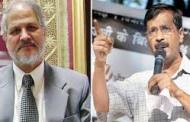
New Delhi: The Arvind Kejriwal-led Aam Aadmi Party (AAP) Government on Friday accused Lieutenant Governor Najeeb Jung of acting in an unconstitutional manner by issuing instructions directly to the Secretary (Services) to give the additional charge of Chief Secretary of Delhi to senior bureaucrat Shakuntala Gamlin.
The Lieutenant Governor by-passed the elected Government, the Chief Minister and Deputy Chief Minister (who also acts as the Minister in-charge of Services department). Hon’ble Lieutenant Governor does not have the extra-ordinary powers under the Constitution to bypass the elected Government and issue instructions directly to the Secretaries, whatever be thein a statement.
“The Government of NCT of Delhi had certain reservations about the conduct of Gamlin because of which the Government was hesitant to given the additional charge of Chief Secretary to her,” the statement added.
The statement further said that Gamlin was perceived to be extremely close to electricity companies in Delhi and was “lobbying for their interests within the government”.
“However, the Hon’ble Lieutenant Governor, in a completely unconstitutional manner appointed Smt Shakuntala Gamlin, to this position. The hon’ble Lieutenant Governor has acted against the Constitution, GNCT of Delhi Act and the Transaction of Business Rules,” said the statement.
Jung had earlier today appointed Gamlin as the acting Chief Secretary of Delhi despite Kejriwal’s reluctance. provocation,” the Delhi Government said
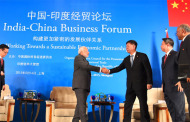
Shanghai: Indian and Chinese firms signed 21 agreements officials said were worth a total of more than USD 22 billion in Shanghai on Saturday, witnessed by visiting Prime Minister Narendra Modi.
“Let us work together in mutual interests,” Modi told executives from 200 Chinese and Indian companies at the signing ceremony. “Now India is ready for business.”
The nationalist leader was on the final day of a three-day trip to his fellow Asian giant, as the two jockey for regional influence and India`s trade deficit with China balloons.
Despite his hardline reputation Modi has moved to engage with Beijing since his election last year, and he was looking for an economic boost from the visit, seeking to deliver on election promises for foreign investment.
China is India`s biggest trading partner with two-way commerce totalling USD 71 billion in 2014. But India`s trade deficit with China has soared from just USD 1 billion in 2001-02 to more than USD 38 billion last year, Indian figures show.
Indian embassy trade counsellor Namgya Khanpa said the agreements signed at the Shanghai event were “worth over USD 22 billion”, with another five exchanged earlier.
A list circulated by Indian officials showed many of the contracts were for Chinese banks to finance Indian firms, and also included deals in the telecom, steel, solar energy and film sectors.
The two countries have followed significantly different economic paths in recent decades, with China rising to become the world`s second-largest economy while India has lagged behind, although Modi`s election raised hopes for reform among investors.
“I strongly believe that this century belongs to Asia,” he told a business forum ahead of the signing, as he sought to stress historical links between the two countries.
He welcomed Chinese investment in sectors including housing, renewable energy, high-speed rail, metro, ports and airports, adding that India was eager to draw on China`s expertise in mass manufacturing.
“We are keen to develop areas in which China is strong,” he said. “We need your involvement.”Earlier during Modi`s visit Chinese President Xi Jinping welcomed him in Xian, the capital of his ancestral home province Shaanxi, in what his host said was an unprecedented gesture.
But relations between the world`s two most populous nations are soured by a long-running border dispute that saw them fight a brief war in 1962, and on Friday Modi told Chinese Premier Li Keqiang that Beijing needs to “reconsider its approach” to their ties.
“Our relationship has been complex in recent decades,” Modi said, adding there were issues that “trouble smooth development of our relations”.
His comments stood out from the usual public declarations by diplomatic visitors to Beijing, who normally stick to uninterrupted pledges of friendship and good relations.
Related Stories
PM Modi meets top Chinese CEOs, invites them to ‘Make in India’
Chinese CEOs in ‘full support’ of ‘Make in India’ initiative
PM Modi addresses India-China Business Forum, makes strong pitch for ‘Make in India’
India ready to do business, says Modi
Take advantage of winds of change: PM Modi to Chinese investors
India, China working together will create opportunities: Infosys CEO
Airtel clinches $2.5 billion Chinese financing deals
Both countries are members of the BRICS grouping of major emerging economies, but Beijing has vowed to pour investment into India`s arch-rival Pakistan, as it rolls out infrastructure development plans across Asia, much of which bypass India.
Chinese contracts to build or manage Indian Ocean ports have raised concerns it is seeking to establish a “string of pearls” in the region.
Li acknowledged on Friday that “we do not deny that there are some disagreements between us”, but added: “We have far more common interests than differences.”
AFP
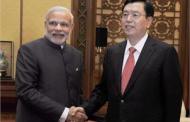
hanghai, May 16 (PTI) Calling for a ‘harmonious partnership’ between India and China, Prime Minister Narendra Modi today said it was essential for economic development and political stability of Asia.
Addressing CEOs at the India-China Business Forum here, Prime Minister Modi said both India and China have potentials of growth and problems of poverty “which we can tackle together. I am personally committed to take the co-operative process forward”.
Highlighting the significance of a sound relationship between two of Asia’s major economies, he said: “Harmonious partnership between India and China is essential for economic development and political stability of the continent.”
He further said: “This industrial partnership of China and India can bring about greater investment, employment and satisfaction of our people.”
As many as 21 agreements were signed between Indian and Chinese firms worth USD 22 billion at the India-China Business Forum.
Asking Chinese companies to take the “historic opportunity” to invest in India, Modi said: “We have committed ourselves for creating and improving the business environment.
I can assure you that once you decide to be in India, we are confident to make you more and more comfortable.”
Many Chinese companies have the possibility of investing in India to take advantage of India’s potentials. The potential lies in manufacturing, processing as well as in infrastructure, he added.
Highlighting the steps taken up by his government to improve ease of doing business, he said: “We are making the taxation system transparent, stable and predictable. We have removed lot of regressive taxation regimes.” .
Post your comments
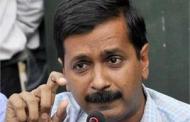
New Delhi, May 11 (PTI) Delhi Chief Minister Arvind Kejriwal, Deputy Chief Minister Manish Sisodia and four other AAP leaders, accused of violating prohibitory orders here and obstructing public servants in discharge of their duty during an agitation, were today directed to appear before a Delhi court on May 15.
Metropolitan Magistrate Akash Jain was irked that Kejriwal and other accused had not appeared before it even on the last date of hearing and said there was “no justifiable ground” for their exemption from personal appearance.
Advocate Rishikesh Kumar, who appeared for the accused, assured the court that Kejriwal, Sisodia and other accused would positively appear before it tomorrow.
“Kindly give us time for tomorrow. They (accused) all will appear. I am giving undertaking that they will appear before the court tomorrow,” the counsel said.
“It has been submitted that accused number one (Kejriwal) and accused number two (Sisodia) are Chief Minister and Deputy Chief Minister of Delhi and remaining accused persons are senior members of the AAP and could not appear today due to their busy schedule. Perusal of the records shows that accused persons did not appear on the last date of hearing,” the court said.
“No justifiable grounds for exemption is made out….Put up for appearance of accused persons and arguments on charge on May 15,” the magistrate said.
Kejriwal, Sisodia and AAP leaders Sanjay Singh, Rakhi Birla, Somnath Bharti and Ashutosh were chargesheeted by the Delhi Police in connection with the case. All the accused were earlier granted bail by the court.
Kejriwal and other leaders had staged a ‘dharna’ outside Rail Bhavan demanding action against police officials who had refused to carry out a raid on an alleged drug and prostitution racket in South Delhi in January last year.
The six accused were chargesheeted by the police for allegedly violating prohibitory orders under Section 144 of the CrPC and also obstructing public servants in discharge of their official duty.
The police had chargesheeted them under various sections of the IPC, including 145 (joining and continuing in an unlawful assembly), 147 (rioting), 186 (obstructing public servant in discharge of his public function), 353 (assault or use of criminal force to deter a public servant from discharge of his duty). .
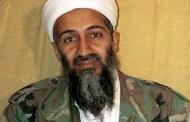
Islamabad, May 11 (PTI) A former Pakistani intelligence officer disclosed the hideout of Osama bin Laden to CIA in exchange for USD 25 million bounty on the head of the al-Qaeda chief, who was living as prisoner under ISI protection in the garrison town of Abbottabad, according to a report.
“In August 2010 a former senior Pakistani intelligence officer approached Jonathan Bank, then the CIA’s station chief at the US embassy in Islamabad. He offered to tell the CIA where to find bin Laden in return for the reward that Washington had offered in 2001,” the Dawn reported, citing American investigative journalist and author Seymour M Hersh.
The intelligence official, Hersh said, was a military man who is now living in Washington and working for the CIA as a consultant. “I cannot tell you more about him,” he said.
The US confirmed the information provided by the official and put the compound under satellite surveillance. Americans later informed the ISI which set up a cell in Ghazi, Tarbela, where “one man from the SEALs and two communicators” practised the raid before executing the operation, Hersh said, adding that it was difficult decision but Pakistan was ultimately taken on board and told about the script to kill Osama.
Hersh said that whatever the Obama administration told about the operation to kill Osama was part of fiction and the real story was totally different.
“The most blatant lie was that Pakistan’s two most senior military leaders ? Gen Ashfaq Parvez Kayani (the then army chief) and Gen Ahmed Shuja Pasha (the then ISI chief) ? were never informed of the US mission,” he told Dawn.
When the Americans contacted the Pakistani government and asked for Osama, the ISI insisted that he be killed and his death should be announced a week after the operation.
Hersh said the Saudi government also knew about Osama’s presence it Abbottabad and had advised the Pakistanis to keep him as a prisoner. “Osama was an ISI prisoner and never moved except under their supervision,” he said.
The Americans were required to say that the al-Qaeda chief was found in a mountainous region in the Hindu Kush so that neither Pakistan nor Afghanistan could be blamed for keeping him, Hersh said, adding that the ISI wanted him dead because “they did not want a witness”.
Hersh said President Barack Obama did not consult Gen Kayani and Gen Pasha before releasing the cover story that he shared with his nation in a live broadcast.
“The cover story trashed Pakistan. It was very embarrassing for them,” said Hersh. “Pakistan has a good army, not a bad army, but the cover story made it look bad.”
Hersh also said that Dr Shakil Afridi, the physician now jailed in Peshawar for helping CIA trace down Osama’s hideout, was a CIA asset but he did not know about the operation.
Afridi was used as a cover to hide the real story, he said.
Osama was killed in Abbottabad on the night of May 2, 2011, in a covert raid conducted by US Navy Seal.
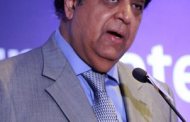
New Delhi, May 11 (PTI) Eminent banker K V Kamath will be the first president of USD 100 billion BRICS Bank which will provide infrastructure loans to emerging nations, rivalling multilateral lenders such as World Bank and IMF.
Kamath, 67, will have a five year term at the bank, which is likely to be operationalised within one year as ‘New Development Bank’ being set up by the five nation grouping, BRICS, Finance Secretary Rajiv Mehrishi said.
“The appointment will be effective when he becomes free from his current assignment. I think he is on some boards. It may take couple of days,” he said.
Kamath is the non-executive Chairman of the India’s largest private sector bank ICICI. Besides, he is also the non-executive chairperson of the IT bellwether Infosys.
“There is no final decision on his tenure. But it is likely to be 5 years. We got ratification from President of India,” he said, adding it has to be ratified by all the member nation.
Leaders of the emerging economies of Brazil, Russia, India, China and South Africa (BRICS) had last year reached an agreement to establish the New Development Bank, with its headquarters in Shanghai. As per the agreement, India got the right to nominate the first president.
The BRICS nations account for nearly USD 16 trillion in GDP and 40 per cent of the world’s population.
India is hoping to get more funds for infrastructure development from BRICS bank, he said.
The bank will start with an initial paid-in-capital of USD 50 billion with each BRICS country contributing USD 10 billion, while its authorised capital is USD 100 billion.
Equal capital contribution has been decided so that the development bank does not fall into the ownership pattern of IMF and the World Bank, with a distorted shareholding.
Post your comments
New Delhi, May 11 (PTI) The government expects that all MPs will rise above party line to unanimously support changes proposed in Whistle Blowers Protection Bill, which was tabled in Lok Sabha today, Union Minister Jitendra Singh has said.
He said the decision to introduce the bill reflects government’s commitment to eliminate corruption, ensure adequate protection to the complainant reporting corruption and at the same time, also strengthen the safeguards against disclosures which may have a prejudicial effect on the sovereignty and integrity of the country.
The Whistle Blowers Protection (Amendment) Bill, 2015, introduced in Lok Sabha today, amends existing Whistle Blowers Protection Act, 2011.
The bill is therefore only an attempt to complete the unfinished task of the past government and the amended provisions incorporated as safeguards against disclosures affecting the security, sovereignty and integrity of the nation are nothing new but only inspired by Section 8 of Right to Information Act, which forbids such disclosures, the Minister said.
“It is, therefore, hoped that all sections of the House, rising above party lines, will unanimously support the bill in the larger interest of efficient governance, transparency and sovereignty which are virtues cherished by every political party,” said Singh, Minister of State for Personnel, Public Grievances and Pensions.
Refuting unsubstantiated observations in certain quarters that the government was not in favour of transparency in governance, he said, the facts, on the contrary, prove that the present dispensation has gone one step further to bring in more transparency without compromising its commitment to the sovereignty and integrity of the country.
Singh said, the story of Whistle Blowers bill is indeed a “tale of travesty”.
The bill was introduced in the Lok Sabha on August 26, 2010 and passed on December 27, 2011. Later, when it was introduced in the Rajya Sabha, the then Leader of Opposition in the Upper House, Arun Jaitley had suggested certain amendments to ensure safeguards against disclosures affecting sovereignty, integrity and security of the nation, he said.
“These suggestions and amendments were, by and large, agreed upon by all sections of the House, including the then ruling party.
“However, in spite of this, the bill was passed in the Rajya Sabha in a haste in February, 2014 because the UPA government was in a hurry to take credit for having passed the bill before its rule came to an end,” the Minister said.
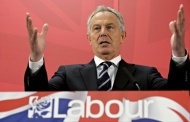
Tony Blair has insisted that Labour can recover from its disastrous general election defeat only if it reoccupies the centre ground of British politics, proudly championing a pro-business agenda and bold new ideas to reform public services.
As the party attempts to come to terms with a devastating result that saw the Conservatives returned to office for five more years with an unexpected Commons majority, the former prime minister and three-times election winner said Labour has to be “for ambition and aspiration as well as compassion and care”.
While generous about Ed Miliband – praising him for showing “courage under savage attack” and campaigning brilliantly – Blair made clear in an article in the Observer that he believes Miliband’s left-of-centre agenda alienated the business community and failed to appeal to those wanting to get on in life. In an unashamed call for the party to return to the approach of New Labour which Miliband abandoned, Blair wrote: “The route to the summit lies through the centre ground.
“The Labour party has to be for ambition as well as compassion and care. Hard-working families don’t just want us celebrating their hard work; they want to know that by hard work and effort they can rise up, achieve. They want to be better off and they need to know we don’t just tolerate that, we support it.”
His intervention sets the stage for weeks of bitter arguments over the direction the party should take as it seeks a new leader who can take the party into a 2020 election and ensure it does not spend three terms out of office.
Seeking to avoid any impression that he is stoking conflict at a low point in the party’s history, Blair made the striking admission that Miliband was right to champion the cause of inequality and accepted that during his two-and-a-half terms as prime minister he paid the issue insufficient attention.
“Ed was absolutely right to raise the issue of inequality and to say that Labour should focus anew on it. This will stand as his contribution to the party’s development. In so far as this was an implied rebuke to my politics, I accept it. But we still need ways relevant to today and tomorrow, not yesterday, to tackle it.”
He said that Labour could be convincing in advancing the case for greater equality only if it does so within a wider pro-business agenda. “We have to conduct the big argument on the wealth-creating potential of the macro-economy, not only the targeted campaign on the injustices of it. So we were proud in 1997 to put forward the case for Britain’s first minimum wage. But we could never have an election on it unless set within a broader framework. The same is true with zero-hours contracts.”
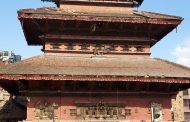
A Facebook post suggests that all heritage site have not been demolished. The five storeyed temple in Bhaktapur is still intact so are other temples in Patan and Bhaktapur. A lot still can be seen in Kathmandu apart from the damage done due to the deadly earthquake.
Roads connecting to and from Kathmandu are still operational. The local people at this time of great difficult request tourist to visit Nepal as a support to the damage and victims of the earthquake.
Actually this is the right time for tourists to see world heritage sites in Nepal, and also visit and help the people of the devastated villages in rural areas of Gorkha, Rasuwa, Sindhupalchowk and other districts.
As a proof of this statement this photograph clicked on 5th May proves it all.
Kolkata: Sovan Chatterjee on Friday took oath as the mayor of Kolkata for a second successive five-year term at the historic Town Hall here.
Chatterjee, who has already served his first five-year innings from 2010-15, was renominated for the post by his party, Trinamool Congress, which achieved a landslide win in the recent Kolkata Municipal Corporation polls.
He becomes the first city mayor to be sworn in at the Town Hall.
Chief Minister Mamata Banerjee attended the event alongside hed cabinet ministers and frontranking party leaders.
Mala Roy, who returned to the Trinamool from the Congress last month, was administered oath as the KMC chairperson.
A number of dignitaries, diplomatic corps and bureaucrats attended the brief function.


Recent Comments