






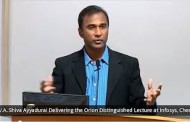
Dr. V.A. Shiva Ayyadurai argues that innovation in India cannot take place in any substantive way until the feudal culture persistent in its scientific institutions is addressed. His observations come from being an insider serving at the top-most scientific position in 2009 at the Council of Scientific and Industrial Research (CSIR). Dr. Shiva was appointed in 2009 by the Prime Minister of India to the highest scientific position attainable in India within CSIR to unleash innovation. As an insider, he observed many core dysfunctions, which he published in an honest report. The contents of that report were released to the press for which he was subsequently dismissed and threatened, leading to him having to flee India. On the Innovation Demands Freedom website, he shares the details of this journey.
Dr. V.A. Shiva Ayyadurai’s central critique and complaint of India’s scientific infrastructure and subculture concerns the blockages within India’s social infrastructure to rising innovators and entrepreneurs based on a feudal hierarchy. Emigrating to the United States at age seven in 1970, Dr. Shiva returned decades later in 2009 to India on a Fulbright to study the links of eastern medicine with modern biology. Concluding his year-long Fulbright grant, Dr. Shiva was asked to join the CSIR where he found himself at odds and at the center of controversy concerning the council’s leadership. Issuing a report to deploy innovation across India, VA Shiva identified and critiqued India’s backward feudal hierarchy as a detrimental barrier to innovation. Issuing a direct critique of the CSIR’s insufficiencies insofar as leading toward the creation of an India with greater innovative freedom and integrity of scientific organization, VA Shiva was dismissed from the Council and returned to MIT where he has since written compellingly concerning the power of freedom of thought and scientific inquiry that must necessarily exist alongside a supportive infrastructure for the generation of innovation.
Know the Truth:
What did Dr. V.A. Shiva Ayyadurai Accomplish in India?
While at CSIR, Dr. V.A. Shiva Ayyadurai spoke to nearly 1,500 scientists and soon found strong echoes of agreement that CSIR was in fact an organization corrupted by its own management, suffocating ingenuity and innovation and suppressing the voice of India’s scientific community from achieving its largest potential. Seventy years following Britain’s occupation of India- there have been zero Nobel prize winners in India in any category of science or medicine and even prior to that. Ironically, under British occupation, two Indians received Nobel Prize awards. Facing public outcry concerning lack of performance of India’s scientific facilities and of India’s scientific community at large, Dr. Shiva was brought into the organizational fold and hired at least in theory to ignite a sustained trajectory of innovation in India. Sadly enough, however, the internal agenda of the CSIR’s management had in reality only brought in Dr. Shiva as a palliative solution to a tired and corrupt organizational infrastructure, plagued by nepotism and failure to deliver on its organizational promises and intentions.
Find Your Way:
The Honest Report
Within three months of his extended stay in India, Dr. V.A. Shiva Ayyadurai had organized a new model for India’s innovation, as approved by India’s Former Stock Exchange Board chairman and as hailed by “nearly all the scientists across India.” Dr. Shiva’s model for innovation was based on driving hands-on entrepreneurship, such as encouraging scientists to find real customers for their laboratory innovations. Recall the original intention of CSIR was to be a translational institute, converting ideas to tangible products for the Indian masses. Dr. Shiva’s report provided a bold new model for implementing that vision, which had not existed in the 70-year history of CSIR.
In spite of the acceptance of his model among scientific scholars, the CSIR did not permit Dr. V.A. Shiva Ayyadurai to deploy his model.
Dr. Shiva comments:
“(Doing so) would mean they would have to demonstrate more transparency, openness, and meritocracy within a fundamentally feudal organization.”
(Source: Innovation Demands Freedom)
Meanwhile, Dr. Shiva’s own boss was under investigation for potentially embezzling 35 million dollars. During this investigation in July of 2009, half of the CSIR central headquarters sustained a major fire in which a bookkeeper who would have been an important witness in the investigation was also killed.
Be the Light:
The Effect of Distributing an Honest Report
Following the dissemination of an honest report to India’s 4500 scientists, within hours, Dr. V.A. Shiva Ayyadurai’s email was shut-down and he was dismissed, evicted from his house, and issued multiple threats to his life, forcing his having to leave India. Dr. Shiva exited India through Nepal, escaping the crushingly negative feedback- all for just writing a singularly accurate report. One of India’s most eminent scientists, PM Bhargava, a former chief scientific advisor to Indira Gandhi, wrote to the Prime Minister of India, urging him to meet with Dr. Shiva.
The long arduous route taken by VA Shiva while fleeing New Delhi in India.
Following the events of Dr. V.A. Shiva Ayyadurai’s persecution, there is now a growing anti-corruption movement, spurring people to become more emboldened in demanding transparency, the fundamental thesis of Dr. Shiva’s report. Back in the United States, Dr. Shiva has now launched the Innovation Corps, which looks to spur innovation any where, any time, by any body. Innovation Corps recognizes that be it institutions such as CSIR or inner cities such as Newark, NJ, where VA Shiva invented the first email system, millions of creative people exist, who simply need the right infrastructure so their ideas can be translated to tangible innovations.

Chennai, India: Reports have surfaced regarding security officials of Chennai Metro Rail Limited who allegedly ordered a Sikh man to remove his dastar (turban) inside the metro on Tuesday 1 September 2015.
Tandeep Singh, a resident of Chennai, decided to take his first ride on the metro when he was allegedly asked to remove his dastar (turban) at the Vadapalani station. Despite telling the officials that removing the dastar went against his faith and he cannot be asked to do it, the guards said that those were the instructions given to them.
“This is not the first time something like this has happened to me, unfortunately. Let me tell you I’ve traveled in and around USA as well and I’ve never been asked to take my turban off. However this ridiculous request is made only in India. I’m shocked and appalled by this. I thought Chennai has actually changed and finally we are moving on as a city and be more accepting of different cultures and races.”
“I had to be quite stern with him. I asked him to get the supervisor. Then he relented and let me go,” he added on the post.
Singh expressed his concern over such incidents stating “I don’t blame the security guy for this instance, it is nothing but pure ignorance. CMRL (Chennai Metro Rail Limited) you are at fault here, you need to educate your staff more about such issues. I was in two minds to throw a raging fit there and make a scene. I refrained from doing so, because that is what my culture, my faith teaches me to do. To be patient and understanding with the ignorant.”
“This issue must be looked into right away. It is bad enough Chennai as a city has such an unfriendly reputation from most of India. It’s time to be more welcoming and accepting,” he added.
Chennai Metro Rail Limited are understood to have contacted and apologised to Singh, after the incident came to light. An official said that they were sorry for the incident and would look into the issue. However the official response to Tandeep Singh is unknown.

While Europe’s politicians flounder in the face of an unprecedented wave of refugees and migrants seeking shelter — many of them from war-torn Syria — some individuals have decided to take matters into their own hands.
Using digital means, they are taking practical steps to offer desperate men, woman and children a place to stay in their own homes, or seeking to pressure their own governments into offering sanctuary to more of those in need.
In Iceland, author and professor Bryndis Bjorgvinsdottir has set up a Facebook page to call for her country’s government to increase the number of refugees it was planning to accept from a reported 50 — prompting a big response and wide media interest.
And in Germany, a website has been running for months which aims to match offers of accommodation in private homes — ideally shared rental apartments — across the country with individual refugees in need of a place to stay.
The website, Refugees Welcome (Fluechtlinge Wilkommen,) has already placed dozens of refugees who otherwise might be placed in overcrowded migrant centers or struggle to put a roof over their heads at all.
Such direct action couldn’t be more needed.
Migrants are pouring over Europe’s borders in record numbers this year, according to the EU border agency Frontex, many of them fleeing conflict in Syria, Iraq and Afghanistan. In July alone, a record 107,500 were detected at EU borders, it said.
‘Refugees are our future spouses, best friends’
In Reykjavik, Bjorgvinsdottir’s inspiration came from a friend who posted a status update on Facebook — addressed to Iceland’s Minister of Welfare Eyglo Hardar — saying he wanted to take five Syrian refugees into his own home, she said.
With just that gesture, her friend pointed out, the number Iceland took in could increase to 55, Bjorgvinsdottir told CNN’s “The World Right Now.”
Struck by his idea, she thought that she could offer to pay for the flights. “Then I got this idea that maybe more people want to join in and give food or clothes or even offering their houses or extra bedrooms — and I did that just to see how much we could raise the number from maybe 50 to 100 or 200,” she said.
The idea took off and the page already has 12,000 members, Bjorgvinsdottir said — no mean feat given the country’s population is only about 300,000. Proportionately, that equates to some 12 million people signing up in the United States.
A post on her Facebook page says, “Refugees are human resources, experience and skills. Refugees are our future spouses, best friends, our next soul mate, the drummer in our children’s band, our next colleague, Miss Iceland 2022, the carpenter who finally fixes our bathroom, the chef in the cafeteria, the fireman, the hacker and the television host. People who we’ll never be able to say to: ‘Your life is worth less than mine.'”
Bjorgvinsdottir hasn’t yet been able to sort through the comments posted on the page to calculate how many offers of places to stay there are. But with the help of volunteers she hopes to pass that information on to the government in the near future, in the hope it can be put to concrete use.
The war in Syria has been dragging on for years, she said, and Icelanders don’t understand why they are not seeing more refugees being given sanctuary in their country.
“People just really want to help and they really want to see actions — and actions taken immediately, right now, because time matters a lot in this situation,” she said.
Inspired by the Icelandic example, a U.S. group has also been set up on Facebook, called “Americans Supporting Syrian Refugees: Open Homes, Open Hearts.”
Berlin host: ‘Fantastic’ experience to help a migrant
In Germany, Katie Griggs, a Briton who’s been living in Berlin for several years, is one of those who responded to the call of Refugees Welcome and registered with the website in March.
She and her husband own their apartment, so couldn’t provide an apartment share, but could offer a guestroom for emergency accommodation.
Just a few weeks after they signed up, they welcomed a pregnant woman from Nigeria into their compact, two-bedroom flat in Berlin’s hip Kreuzberg district, Griggs told CNN by phone from Berlin.
The woman, whom Griggs refers to as Alyssa on her blog to safeguard her privacy, had been referred to Refugees Welcome by another group in Berlin which helps trafficked women. Realizing she was pregnant and in a worsening situation, Alyssa had left Greece — where she’d spent two years after traveling from Nigeria — and made another perilous overland journey to Germany in search of help, Griggs said.
“Of course we had worries and then other people throw worries at you,” said Griggs of her initial reaction on being asked to host Alyssa in May. Those concerns included questions over the penniless 24-year-old’s health and their own personal security.
But, Griggs said, “The actual experience was brilliant, it was absolutely fantastic. We got to learn about Africa just in our own living room. She was lovely, she was so positive the whole time, even though she was on her own, a pregnant woman.
Alyssa told how she’d left school at 11 because there was no money to pay for her education, Griggs said. Griggs tried to help their guest with German and with learning about the baby she’s expecting in November.
“But she also gave us lots back — we learned about Nigerian food, about Nollywood, she would do a bit of dancing for us, teach us about African music and culture,” said Griggs.
Six weeks later, Alyssa felt able to lodge a formal asylum claim and was whisked off by train to a center in western Germany the same day, clutching her meager belongings in a plastic bag. Since then, Alyssa has stayed in touch by phone — and Griggs says she misses having her in their home.
Berliners lend a Syrian refugee a bike
Horrified by the images she’s seen of conflict and the tragic deaths of Syrian refugees seeking to reach Europe, Griggs has also tried to help Syrian refugees in Berlin.
She signed up to a Berlin-based Facebook bicycling group set up by a Syrian refugee, Monis Bukhari, to help fellow Syrians arriving in the city adjust to their new lives.
It asks Berliners to lend bikes for one-day bike tours, so that the newly arrived refugees can meet fellow residents of the city, German or other nationalities, stay active and get to know their way around — all helping them to integrate into the community.
The cycling group brings together mostly people aged 25 and under, Bukhari said, with similar interests — important when so many of the Syrians coming to Germany are young.
And it’s not a one-way street.
Bukhari, who arrived in Berlin two years ago and has recently been granted a German passport, is using Facebook to organize a “Thank you Germany” event on October 10, in which Syrians will hand out flowers randomly to Germans at stations across the country and play music for free for their enjoyment.
Bukhari, who’s part of a wider volunteer group within Germany called Syrian House which seeks to help new arrivals navigate German laws and bureaucracy, told CNN that the event has a dual purpose.
“First of all, we as Syrians, we think that German people deserve to be thanked because they are supporting us and helping us, and they showed so much sympathy,” he said. This is true even when the people involved share no common language, he said.
“The other side is that we in Syrian House think that this way of thanking will help or, let’s say, push the people who refuse refugees to accept them, to accept the idea of welcoming refugees.”
Bukhari, who ran his own design studio and publishing firm in Damascus, knows how vital that welcome can be. He first fled Syria for Beirut and then Jordan after he was accused by the Syrian authorities of being a spy and sentenced to death in absentia. He was invited to work in Germany on a project and has stayed there since after Jordan declined his return, he said.
Next month Syrian House will launch a photography exhibition and book by Syrian photographers documenting the refugee experience in Germany, and the kindness of some people they encounter, Bukhari said.
Another Facebook page advertizes the first concert by the Syrian Expat Philharmonic Orchestra — which describes itself as “the first symphony orchestra for the Syrian professional musicians who live in European Union countries” — on September 22, in the German city of Bremen.
Merkel: Germany must show ‘flexibility’
Amid the turmoil of recent months, as European nations — particularly Greece and Italy — struggle to cope with the migrants reaching their shores, Germany has stood out as one of the more welcoming EU members.
Germany’s government said last month it expected up to 800,000 asylum seekers to come this year — four times more than in 2014.
German Chancellor Angela Merkel said Monday that her country — where some are opposed to taking in asylum seekers — must show “flexibility” when it comes to dealing with the crisis.
For the most part, the public supports Merkel.
Local football clubs hoisted “welcome” banners over the weekend. Villages held “refugee welcome” parties for the newcomers. And a recent news poll estimated that 60% back Merkel’s warm welcome.
But not everyone in Germany feels the same way. There have been xenophobic protests, and a planned asylum center was burned down last month.
Police in the town of Cottbus have arrested a suspect in an attack on about 40 asylum-seekers at a shelter in Brandenburg on Tuesday evening in which some kind of spray was used.
It’s not clear what the substance was or what triggered the attack but several people, including children, were brought to the hospital for treatment. None are in serious condition, police said.

Viktor Orban’s comments come as refugees are forced off train headed towards Austria and taken to refugee camp.
Hungarian Prime Minister Viktor Orban has said that his country does not want to take in large numbers of Muslims, in defence of Hungary’s response to the surge in refugees trying to enter the country.
“I think we have a right to decide that we do not want a large number of Muslim people in our country,” Orban told journalists outside the EU headquarters at Brussels.
“We do not like the consequences,” he said, referring to the country’s 150-year history of Ottoman rule during the 16th and 17th centuries.
Orban said those fleeing conflict in countries such as Syria should not try to cross into Hungary, as he defended the country’s decision to erect a fence along its border.
“Please don’t come… It’s risky to come. We can’t guarantee that you will be accepted,” Orban said in Brussels, adding that it would not be humane or morally right to “falsify” people’s dreams.
Refugees detained on Austria-Hungary border
“We Hungarians are full of fear, people in Europe are full of fear because they see that the European leaders, among them the prime ministers, are not able to control the situation,” Orban said.
His comments came as refugees who boarded a train bound for the Austrian border clashed with Hungarian police as they were forcefully unloaded and taken to a refugee camp.
Clinging to railway tracks
Thousands of refugees had been sleeping rough outside the Budapest train station as police blocked them from entering for two days.
In Pictures: A night of protest at the train station
After they were eventually let in on Thursday morning, a packed train departed bound for Sopron, a town near the Austrian border.
But Hungarian police stopped the train before its destination, with police forcing refugees off and directing them onto buses to take them to a refugee camp, state news agency MTI reported.
Some families clung to railway tracks after trying to run away from police.
About 50 riot police were lined up as a replacement train allowed non-refugee passengers to continue their journey, Reuters reported.
Orban’s chief of staff said police would stick to the EU’s Schengen rules and make all checks needed on refugees travelling on domestic trains towards the country’s western border.
Hungary has been widely criticised for its way of handling the flow of refugees to Europe.
A fence on the border with Serbia is one of several measures under way to make it more difficult for refugees to enter and stay in Hungary. The government is also tightening asylum laws, introducing penalties for illegal border-crossing, and planning to close permanent refugee camps.
Why Al Jazeera will not say Mediterranean ‘migrants’
EU President Donald Tusk, meanwhile, warned that divisions between western member states and their newer eastern partners were complicating efforts to solve the deepening refugee crisis.
“There is a divide … between the east and the west of the EU. Some member states are thinking about containing the wave of migration, symbolised by the Hungarian [border] fence,” Tusk said.
Source: Al Jazeera and agencies
[Share via Facebook] 8042 [Share via Twitter] 1803 [Share via Reddit] 11All Social
[Email] [Print] [Send Feedback]

Philadelphia couple Ross Cohen and Blair Delson were taking a few pictures to immortalise the biggest day of their life when 3000 naked cyclist photobombed them, reports Associated Press.
Before getting married on the evening of August 29, Cohen and Delson were taking a few romantic photo at Dilworth Plaza, next to City Hall in Philadelphia when this herd of 3000 bicyclists approached them.
Delson decided she would like this moment to be more memorable and grabbed her dress and hurried towards the cyclists. Cohen lifted Delson and twirled her around, and together they high-fived the nude cyclists, who serenaded them with cheers.

An alleged sex video of pro-Patel reservation crusader Hardik Patel has been doing the rounds on social media and was sent to all media organisations recently. While it is extremely unlikely that the video is of Hardik Patel, this is not the first time that leaders who have gone against the establishment or tried to disturb the apple cart have been defamed by sexual slur.
Sanjay Joshi:
Sanjay Joshi was the link between RSS and BJP in Gujarat. Increasingly, he was becoming a threat to the ruling leadership in Gujarat with his sound organizational skill. In 2005, a sex video was leaked that virtually rocked Sanjay Joshi’s political career. RSS did get him back in their fold in 2007, but he never regained his old clout. Sanjay Joshi currently remains a lonely figure, brutally shorn of his past prominence.
Sanjeev Bhatt:
IPS officer Sanjeev Bhatt has had a history of taking on the Gujarat government post the 2002 riots. He has been serving suspension from 2011. On August 14, 2015 , he was served a show-cause notice to explain his alleged relationship with an unknown woman. The show-cause was given on the basis of a sex video leaked online. Bhatt on his part categorically denied that he was in the video and asked for a detailed probe to clear his name. Bhatt has been now expelled from service.
Digvijay Singh:
Digvijay Singh has had a habit of getting under the skin of his opponents. He is one of the most outspoken Congress leaders who has never backtracked from speaking his mind. Some time ago, pictures of Digvijay Singh with a much younger lady flashed on social media. It caused much embarrassment to the veteran Congress leader. However, going by his outspoken nature, the pictures have not dented Digvijay’s stature too much.
Abhishek Manu Singhvi:
During the worst phase of UPA rule, Abhishek Manu Singhvi was one spokesperson who was articulating Congress’ views very ably. Point by point, he was puncturing holes in the opposition’s claim about how inept the UPA government was. Then suddenly out of the blue, an MMS purportedly of Singhvi caught in a compromising position surfaced. Congress had to temporarily withdraw him from appearing on TV. He is back now, but Congress is no longer in power too.
Are all these merely coincidental or is there a larger force behind it? We will probably never know, but it is intriguing nonetheless.

Sheena Bora, the Mumbai girl allegedly murdered by her own mother, was a troubled teenager and fought for acceptance and love and care of her parents. The diary entries Sheena made as a young girl in Guwahati first expresses her love for Indrani, and then later in life, her hate for her mother.
In her diaries, accessed by dna, Sheena jotted down study notes, slam notes from friends, phone numbers and letters to her father. It is apparent that she was sad about not being around her biological father Siddhartha Das and repeatedly urged him to come and visit her. This is contrary to what Siddhartha Das told the media about his correspondence with Sheena Bora being barely in touch with him.
In fact, in one of her earlier entries, she writes that she is angry with him. “Daddy, I am very angry with you. O.k. I didn’t get any time to write any letter to you but you should have written to me. Very mean ha! Well, even I am sorry for not writing any letter to you. In Class X, we have to work very hard. In the morning at 7.30. We have to go to school and again I have to attend my maths coaching class 3 O’clock to 4.30 pm and again from 6 O’clock to 8 O’clock my science coaching class. I reach home at about 8.30 pm. Hope you can imagine how hard I’m working.”
Sheena started writing her diary sometime in 2003, when she was in standard X. Her letters to her father reflects that she had great expectations from him. It seems that she first drafted letters to her father in diary and then posted them to him.
She writes: “Daddy, I’ve cut my nails and I haven’t grown them long. I’m following your advice – first studies then style. I know you have a lot to tell me but daddy don’t write anything in any of your letter. I hope you’ll come once before my HSLC exams. Why don’t you make a trip to Guwahati in December. Then you can tell me everything you wanted me to know.”
In another ‘draft’ letter, Sheena enquires from Sidharth which caste she belongs to! “Daddy actually I’m facing a problem. For my HSLC, I’m to fill up some forms and there we are to write to which caste we belong. Daddy, I’m really very confused for I am not sure about my caste. We have got the options – Schedule/OBC/…,” she writes.
In another entry, from the time when she had just appeared for her pre-boards, usually held by the school, she writes that she was sick and could not study much, and that she scored 84%. She even kind of scolded her father for depending on her maternal uncles. She pleaded that he should not start a new venture with two of her mamas, because one of them is looking for a job and will jump the gun the moment he lands a good one. “Don’t you have the capability of starting something from (sic) your own instead of depending upon others,” she asks. She further asks him to give up the job at HITACHI KK and look for a better one.
But then, in the same letter to her father, she turns sheepish. “Oh! It seems as if I am trying to guide you,” she writes.
Sheena then asked him to try and get a certificate, “because this certificate could provide me with scholarships for my further studies,” she writes. She tells him that there are lot of expenses, and that he should do this for her future. The diary entry is marked June 28, 29 and 30.
Given the contents of the letters to her father, it seems that she was in touch with Siddharth Das. An old classmate of Sheena, who now lives in North India, corroborated the same. “I met him in Sheena’s house in 2001, when we were in the eighth standard. She introduced him to me as her father,” said the friend.
In one of her later entries, which looks like it was written when she was studying for the board exams in the tenth standard, after her pre-board exams, she said that she does not know how to look for envelopes, and so has been unable to send letters. In the entry, in which she looks like she is unhappy with her grandparent’s attitude towards Siddharth, she tells him that she wants to talk with Siddharth but cannot ring him up. “They say you are no good, and they don’t like you. But my conscience does not allow me to believe them,” she wrote.
She goes on to say that she does not know much about her mother. She writes that she doesn’t know whether her mother remembers her or not, but because Indrani is her mother, she “is I the corner of my heart,” she writes. It must be added here that Sheena also kept clippings of news reports of her mother. News reports of INX media launching new channels, of Indrani being considered WSJ’s most powerful women with Indra Nooyi and others, etc. were kept by Sheena in a folder.
But she was very lonely as a child. She writes: “Oh! Happy Birthday to me! But I am not happy. It seems as if I have got nothing in my life. Nothing! My future seems very bleak to me. Just depression has encircled me from all sides. Disgusting life it is. I hate my mother, that bloody b***h. She is not a mother. She is a witch…”
Sheena was also not happy when Indrani married Peter Mukerjea. “And now she got married with that old man (Peter Mukerjea). Her this act to Aita & Kaka (Sheena’s grandparents) seems very prestigious, very wise, but not in case of me (Read: my grandparents may find this prestigious or wise, but not me). I hate her. I wish her soul gets condemned and even in hell. I have much grief, much tears to flow but when, where and in front of whom.”
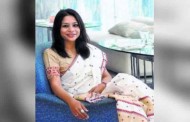
Mumbai: Ten days after being grilled by the Mumbai Police over her role in the murder of her daughter Sheena Bora, TV tycoon Indrani Mukherjea is said to have admitted to her role in the murder. Police sources say that Indrani has told the police of the circumstances behind Sheena’s murder.
Indrani has been accused of murdering Sheena along with her ex-husband Sanjeev Khanna and her driver Shyam Rai.
A local court had earlier extended the police custody of the three accused – Indrani, Sanjeev Khanna and Shyam Rai – till September 5.
Peter Mukerjea, who has been married to Indrani for 13 years and set up a media company with her, had first said that he was unaware that Sheena was his wife’s daughter and that Indrani had introduced her as her sister.
A few days after Indrani’s arrest, Peter amended his version to say Sheena did inform him that she was his step-daughter, but he had no reasons not to believe his wife Indrani’s denial of that claim though he found it “difficult to digest”. He claimed that the same thing was communicated to him by his son Rahul Mukerjea, but he had not believed him as well.
Peter maintained that he vaguely remembered the date when he was told about the fact and it was sometime in 2011.
Sheena Bora was in a relationship with Rahul, Peter Mukerjea’s son from an earlier marriage, when she was allegedly murdered on April 24, 2012. The 24-year-old was allegedly strangled in a car, then her body was burnt and dumped at a forest in Raigad, about 84 km from Mumbai.
Her purported remains were found a month later and buried by the police, which treated the body as unclaimed. For three years, Indrani Mukerjea told her family and friends that Sheena had shifted to the US.
CPI leader Atul Kumar Anjan has stoked a controversy by saying that a condom advertisement featuring former porn star Sunny Leone will destroy people’s sensibility and lead to more rapes in India.
Speaking at a rally in Ghazipur district of Uttar Pradesh on Tuesday, the senior leader of the Communist Party of India also sought to blame Leone, a former star of X-rated films from Canada, for the spread of porn in the country.
“Now there is an advertisement with her (Leone), have you seen it? She is lying down…and a man comes to her. (They show the advertisement) in the morning, at night…an advertisement for condoms, it is such a dirty and horrific advertisement that develops your sexuality and destroys your sensibility,” he said to cheers from the crowd.
“If such advertisements for condoms appear in the country’s TV channels and newspapers, then incidents of rape will increase. It needs to be stopped,” Anjan added.
name is Karenjit Kaur Vohra – during his speech though he wrongly said she came to India from Australia.
“If you switch on the TV, there is a woman named Sunny Leone, she has been the heroine of films with the most nudity. She has come from Australia to India and she was brought into films by Mahesh Bhatt. For five years she has been around and now she has become a heroine in films,” he said.
Anjan said he had been told by people about Leone’s “dirty movies”. He added: “I don’t want to speak about this before my sisters, they are porn films. I had never watched one till now, so I watched this porn.
“After watching just two minutes, I kept vomiting. They are showing everything and selling everything.”
Several Indian politicians have triggered rows with their remarks on rape. Samajwadi Party chief Mulayam Singh Yadav said last month it is not “possible” for four men to sexually assault the same woman.

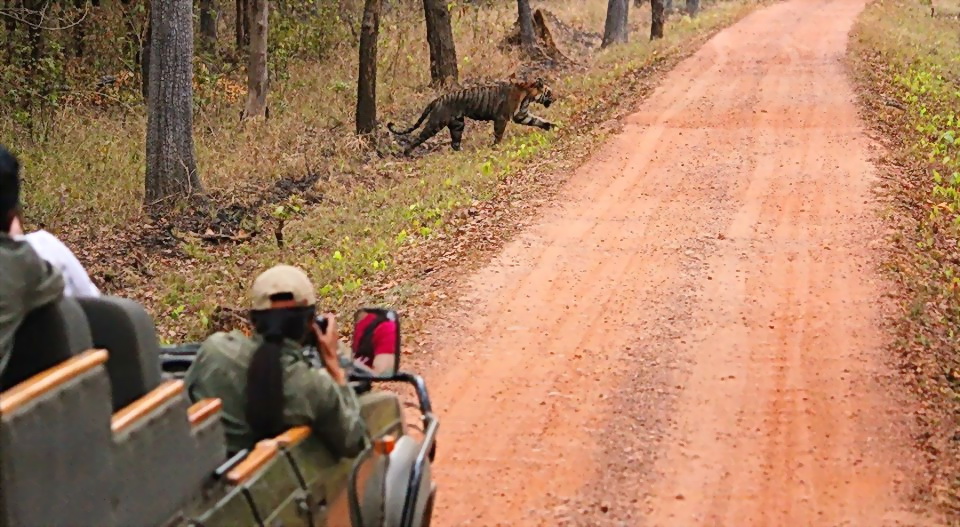
Ratna Singh the daring girl who chose to become a naturalist in spite of having a degree in International Law. Perhaps the surroundings of Bandhagarh National Park where she was brought up brought her back to nature. She truly loves nature and in the course of conversation she stresses that the comfort of the cities with internet, wifi Skype is not available but the fresh aroma and air of the jungles and its animals is no comparison to these materialistic things.
Tara Singh started her career as Safari Guide in 2006 when she was the first lady in the profession. In a question as to how difficult it was as a female to join this profession she says her immediate family members had no objection but the far off relatives were a bit apprehensive. But later on as she progressed everything settled down. She here also makes it a point that the gender issue in the cities is more prevalent than in the villages and tribal people. The tribals have gender equality. At first the tribals were a bit apprehensive too but as time went by and the activities like tracking animals that she showed in her performance they were impressed. In fact because of her performance she was more respected than her male counter parts.
When RealNews of India asked how difficult it is to work in the jungles. Prompt came the reply you have to understand the nature and the jungle. She further added the caution is required. We have to check the ground for snakes, feel the smell of animals and guess the distance. She even shared a scary incident to Real News. After attending a party she was returning back to her quarters she felt a big shadow of a leopard appear in front of her. She remained still. With animals if you move or start running they will come after you. So she remained still for ten minutes and was a bit relieved. Just to ensure more of her safety she added ten more minutes then she heard footsteps first, at slow space then becoming faster and more distant. She now knew that the leopard and left and now she was safe.
As a naturalist she encourages city people to visit such wildlife sanctuaries to be away from the wild traffic, the congestion and time bound life. She says you have to feel the fresh air and the surrounding and you will love it Ratna further says.
She along these years has also imparted training to a number of females. Ratna says women become better naturalist as they are more hardworking and patient.
Comparing wildlife to Africa and Australia Ratna defines that they are much better in terms of variety and the laws relating to wildlife is stricter in India. However there are two rare species that others do not have, that is the tiger and bear. The tiger and deer are found in Central and North India.
In a question as to how these wildlife sanctuaries effect the fast moving development of a country Ratna says it is a difficult equation for the government, but if we cannot breathe then what sense does modernization make, Ratna says, making the whole world wake up and realize.

















Recent Comments