


The National Green Tribunal has taken exception to non-submission of status report on quality of water supplied to households in the national capital by the Delhi government despite repeated directions.
Noting that not even a single report has been filed till date, the bench headed by NGT Chairperson Justice Swatanter Kumar summoned the Environment Secretary of Delhi government with the report on the next date of hearing – September 9.
“Vide our judgment dated December 10, 2015, orders dated May 31, 2016 and July 27, 2016 we had granted last opportunity for filing the report, no report has been filed till date. We direct Secretary, Environment, NCT of Delhi to be present in person with complete records of the Committee proceedings on September 9, 2016,” the bench said.
The appalling picture of water supply in the capital had last year prompted the tribunal to seek the response of the city government in the matter.
The green panel had taken suo moto cognisance of a newspaper report, which had revealed that the “stinking and dirty” water flowing through water supply lines and the borewells were pumping out contaminated water.
Later, it had constituted a committee comprising Secretary Environment and representatives from Central Pollution Control Board, Delhi Pollution Control Committee, Delhi Jal Board, Central Pollution Control Board and all municipal corporations and asked them to submit a complete and comprehensive report.
“The Committee will ensure that samples of the water from different areas are collected, analysed and reports be placed before it before submission of the final report,” it had said.PTI
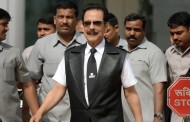
Sahara chief Subrata Roy today offered in Supreme Court to pay an additional Rs 300 crore to Security and Exchange Board of India (SEBI) but said the amount should be adjusted as bank guarantee.
A bench headed by Chief Justice T S Thakur directed that the matter be listed next week after senior advocate Kapil Sibal, appearing for Roy, mentioned the matter before it.
“I am ready to pay additional Rs 300 crore but this amount should be adjusted as a bank guarantee,” Sibal told the bench that also comprised Justices A M Khanwilkar and D Y Chandrachud.
On August 3, the Supreme Court had extended the parole of Roy till September 16 with a condition that he has to deposit Rs 300 crore with SEBI.
Roy’s parole, granted on humanitarian grounds following the death of his mother, was extended after he had deposited Rs 300.68 crores, giving him the opportunity to raise the remaining amount to secure bail in the case.
The apex court had allowed the Sahara group to go ahead with sale and alienation of their properties to raise an amount of Rs 5,000 crore as a bank guarantee which they have to deposit in addition to Rs 5,000 crore to get bail for Roy.
For Roy’s interim bail, the court had put conditions like depositing Rs 5,000 crore in cash and a bank guarantee of equal amount and tough terms, including payment of the entire Rs 36,000 crore, which includes interest, to be paid back to the investors.
The Sahara chief had earlier told the court that by December, the group would be in a position to fulfill all the conditions and talks were going on with Canara Bank for Rs 1,500 crore bank gaurantee.
The apex court had passed an order on March 29 stating that SEBI would also not sell any property owned by the beleaguered group for a price less than 90 per cent of the circle rates for the area in question without the permission of the court.
While granting parole to Roy, the apex court had said they were free to meet prospective buyers of properties and move within the country under police escort.
The apex court had earlier asked SEBI to initiate the process of selling “unencumbered” properties of Sahara group, whose title deeds are with the market regulator, to generate the bail money for release of the group chief.PTI

Congress leader Rahul Gandhi today told the Supreme Court that he had never blamed RSS as an institution that killed Mahatma Gandhi but had stated that a person associated with it was responsible for his assassination.
A bench comprising Justices Dipak Misra and R F Nariman, which was hearing the petition filed by Gandhi challenging the summons issued to him as an accused in a defamation case, said it will dispose of the petition if the complainant agreed.
The bench noted that the Congress leader had filed an affidavit in the Bombay High Court while seeking quashing of the defamation complaint against him stating that, at an election rally, he had not blamed RSS as an institution for the assassination of Gandhi but a person associated with it.
The bench, which posted the matter for September 1, asked the complainant’s counsel and senior advocate U R Lalit to seek instruction whether the complainant was ready to end the case if Gandhi’s statement is taken on record.
Senior advocate Kapil Sibal, appearing for the Congress Vice President, drew the attention of the bench to the affidavit filed in the high court.
The bench, which heard the matter for about half-an-hour, said “what we understand is that the accused never blamed RSS as an institution that killed Mahatma Gandhi but the person associated with it.

The Madras High Court today declined to grant an interim stay on suspension of 79 DMK MLAs from the state Assembly but issued notice to the state Chief Secretary on petitions filed by leader of the opposition M K Stalin and another DMK member.
The petitions challenged their en masse suspension from the Assembly and sought a direction to declare all proceedings and actions taken as illegal, ultra vires and unconstitutional.
Declining to pass an interim order, the First Bench, comprising Chief Justice Sanjay Kishan Kaul and Justice R Mahadevan, said, “Since it is a matter of function of the House and the order has been passed by the Speaker, we are not inclined to pass interim orders.
“But there will be no question of making the prayer infructuous as ultimately the validity of the resolution would have to be decided as it may have other ramifications,” it said.
The bench directed the petitioners-Stalin and DMK MLA Thiagarajan– to serve private notices to the Speaker, P Dhanapal, and the Tamil Nadu Legislative Assembly Secretary, and posted the matter for further hearing to September one.
When the matter came up, senior counsel for Stalin, Mohan Parasaran submitted that it was for the first time in the history of the Assembly that a resolution had been passed suspending en masse all opposition DMK MLAs.
In his plea, Stalin sought an interim direction to permit him and other suspended members to attend and participate in the present session.
He submitted that the blanket resolution to suspend all DMK members, who had signed the attendance register on the dat,e was without any basis or material. He said the majority of DMK members, including he himself, were not in the House when the resolution was passed by voice vote.
He submitted that the resolution was later modified to include the DMK members who had been present and those who had not signed the attendance register and alleged that the Speaker’s action was “unprecedented, motivated and biased which completely undermines democracy”. PTI.

Five doctors, including the CEO of L H Hiranandani Hospital, were today granted bail by a local court in connection with the alleged kidney transplant racket.
The Andheri metropolitan magistrate court, which had on Tuesday reserved its order till today on their applications granted bail to CEO Sujit Chatterjee, medical director Anurag Naik, Mukesh Shetye, Mukesh Shaha and Prakash Shetye, on the condition that they attend Powai police station till September 26. They were also directed against leaving the country.
All the accused had moved for bail on August 13 after the court remanded them to 14-day judicial custody till August 26.
On Tuesday, their lawyers Aabad Ponda and Pranav Badeka had told the court that the case against the doctors and the hospital authorities was only of procedural lapses and negligence. Also, several other accused in the case including the donor and recipient are on bail.
They also told the court that the case against the doctors was not under Indian Penal Code but under the Organ Transplant Act and the money which allegedly exchanged hands for the transplant has been recovered.
The doctors were arrested under the Transplantation of Human Organs Act on the basis of a report by the Director of State Health.
The racket was exposed after the police were tipped off that a kidney transplant operation had been scheduled on July 14 at the privately-run Hiranandani Hospital in Powai, where donor and recipient were not related.
Following the bust-up, 14 people, including five doctors, the donor, receiver and agents were arrested.
The operation on Brijkishor Jaiswal, the recipient, was stopped at the last moment as police found that the woman who was donating the kidney to him was not his real wife, contrary to the papers submitted by the duo.
The woman had pretended to be Jaiswal’s wife only to be able to donate him the kidney for monetary gains, according to the police.
Last week, a local sessions court had rejected the anticipatory bail pleas of two doctors – Veena Swelikar (a general surgeon) and Suvin Shetty (a consulting pathologist) in the case after Powai police said that their interrogation was needed to unearth the entire racket.PTI…

The Supreme Court today said that youth below 18 years of age cannot participate in the Dahi Handi ritual, part of the Janmashtami festival, in Maharashtra and the height of the human pyramid for it cannot exceed 20 feet, a limit fixed by the Bombay High Court.
A bench comprising justices A R Dave and L Nageswara Rao, which decided to hear the revived petition in October this year, however suspended the operation of two other directions passed by the High Court to regulate the Dahi Handi festival.
The High Court directions, which have been suspended by the apex court, relate to amending the existing law to bar children below 18 years of age from participating in dangerous performances.
It also suspended the direction pertaining to 15 days prior approval from the authorities concerned to check the date of birth certificates of ‘Govindas’ to ensure that no underage children take part in it.
During the hearing, the bench agreed with the High Court directions with regard to the minimum age of participants and the maximum height of the pyramid.
The Supreme Court had, on August 10, revived a plea challenging a Bombay HC order restricting the height of human pyramids to 20 feet for ‘Dahi-Handi’ ritual, saying it needs to hear the PIL petitioner before passing any order.
The court had sought reply of Swati Sayaji Patil, a social worker, who had filed a petition for initiation of contempt proceedings against Maharashtra government in high court for failure to comply with the HC order.
The Maharashtra government had earlier approached the apex court seeking clarification on its 2014 order by which it had stayed the high court decision banning participation of those below 18-years in a popular ‘Dahi-Handi’ ritual.
The high court had on August 11, 2014, while hearing a petition filed by Patil, ordered that the height of human pyramids should not exceed 20 feet and that children below the age of 18 years should not be allowed to participate.
The state government had then challenged the high court order in the Supreme Court which had initially suspended the HC order and later dismissed the petition challenging it.
The Maharashtra government had taken a stand that since the apex court had not expressed any opinion on restriction imposed by the HC on the height of human pyramids, it was not bound by its earlier order.
The high court, however, had asked the state government to seek clarification from the Supreme Court on the aspect that its earlier order would be in force unless it had been set aside by the apex court.PTI
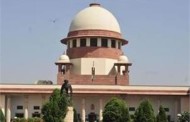
The Supreme Court has allowed an estranged couple’s plea for divorce by mutual consent by waiving the waiting period of six months, exercising its powers under the Constitution to do “complete justice”.
A bench of justices Kurian Joseph and Rohinton Fali Nariman granted the relief to the couple after taking into consideration their several years of litigation, separation after a few days of marriage, and both parties’ desire to move on with life.
The bench also noted that they had amicably settled their disputes and the monetary part of the settlement had been complied with, and all that remained were the criminal cases against each other and the plea for divorce by mutual consent.
Taking on record the submissions made by the parties that they have to move on with their respective lives, the bench said, “We are of the view that it is a fit case to invoke our jurisdiction under Article 142 of the Constitution of India and grant a decree of divorce by mutual consent by waiving the statutory period of waiting.”
The bench was also of the view that since the parties had settled their disputes amicably, “the interest of justice would be met, in case, the whole disputes are also finally settled” and quashed the criminal cases the couple had lodged against each other and their respective family members.
The couple had submitted before the court that they had lived as husband and wife only for a few days in 2010 when they were married and that “they have exercised their free will and have taken a conscious decision to part and put an end to all other litigation as well”.
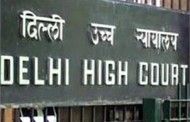
Trial court judges are expected to “remain sensitive” while recording statements of children and required to take active part within the boundaries of law to elicit truth, the Delhi High Court has said.
Justice S P Garg observed this while dismissing an appeal filed by a man challenging a judgement passed by a trial court last year which had sentenced him to five-year jail under the Protection of Children from Sexual Offences (POCSO) Act for sexually assaulting a five-year-old girl.
“The presiding officer is expected to remain sensitive particularly when a child of tender age is under examination.
While conducting trial, court is not required to sit as a silent spectator but to take active part within the boundaries of law to bring on record the relevant facts for the purpose of eliciting truth,” the court said.
The court said that sentence awarded to the 42-year-old man was based upon “fair reasoning” and the crime committed by him was “horrible” as he had “ravished” the child who was like his own daughter.
“The accusations are very specific, certain and clear.
What else can be expected from a child aged around five years? Her statement on material and vital facts remained unchallenged,” the judge noted in his order.
According to the police, the man had sexually assaulted the child in April 2014 when she had gone to his house.
During the trial, he had denied the allegations and claimed that he was falsely implicated in the case.
His counsel argued before the high court that trial court had ignored the inconsistencies in the statements of the prosecution witnesses and overlooked the fact that child was not competent to depose and she had given the statement at her mother’s behest.
While dismissing his appeal, the high court said there were no valid reasons to suspect the version of the girl and to discredit her testimony.
“The appellant (man) exploited her (child’s) innocence and betrayed the trust of her family members as neighbour. The appeal lacks in merits and is dismissed,” the court said.PTI
The Delhi High Court has put on hold an order and a public notice issued by two SDMs prohibiting lawyers from practicing or appearing before them in marriage registration matters.
While staying the order and public notice, Justice Sanjeev Sachdeva made it clear that no advocate shall solicit work or cause any harassment to people going to SDM office for registration of marriages.
“It is directed that till the next date of hearing, the operation of the impugned public notice and the impugned order shall remain stayed. The respondents (SDMs) are directed not to deny entry or prevent bona fide advocates from functioning and assisting their clients for the purpose of registration of their marriages.
“It is however, clarified that no advocate shall solicit work at the office of the SDM or cause any harassment to the people who are coming for registration of marriages in contravention of the Standards of Professional Conduct and Etiquette as prescribed by the Bar Council of India,” the court said and listed the matter for hearing on September 20.
It also issued notice to and sought response of the two Sub Divisional Magistrates (SDMs) of Punjabi Bagh and Hauz Khas, appointed as the marriage officers of their area, on a plea by some lawyers challenging the prohibition.
The lawyers, in their plea, have said that registration of marriages is mandatory as per Delhi (Compulsory Registration of Marriage) Order, 2014, issued pursuant to directions of the Supreme Court.
Advocate Gaurav Sharma, who appeared for the petitioners, contended that lawyers assist their clients in getting marriages registered as there are various legal formalities to be performed for registration in the form of submission of applications, documents and affidavits.
He said there were no rules or guidelines whereby such a notice or order could have been issued prohibiting advocates from entering the office of the SDMs for the purpose of assisting their clients in getting their marriages registered.PTI

A Vaishali district court today ordered registration of an FIR against BSP president Mayawati and three other party leaders for allegedly making inflammatory speeches last week spreading animosity in the society.
The three other BSP leaders are its national general secretary Nasimuddin Siddiqui, Uttar Pradesh unit president Ram Achal Rajbhar and state secretary Mewa Lal.
Chief Judicial Magistrate Jairam Prasad took cognizance of a complaint filed by Hajipur resident Ajit Singh and directed that an FIR be lodged against the four in Town police station.
The petitioner, through his advocate, claimed that he felt aggrieved by the inflammatory speeches made by Mayawati and her partymen which have affected unity and integrity of the country.
At a public meeting in Lucknow on July 21, Mayawati instigated her party workers to target expelled BJP leader Dayashankar Singh’s mother, wife and daughter during a protest in the wake of Singh’s unsavoury remarks against the BSP chief, the petitioner alleged.
They case was lodged against them under various Sections of the IPC including 153(a) (promoting enmity between groups), 295(a) (deliberate acts intended to outrage religious feelings), 120(b) (criminal conspiracy), and POSCO Act.PTI







Recent Comments