

The Delhi High Court today sought response of ANI Technologies, which runs app-based cab service under the name of Ola, on its competitor Uber’s plea seeking Rs 49.61 crore as damages from Ola for allegedly interfering in its business by making fake accounts to book rides and then cancel them.
Ola denied the allegations made by Uber and told the court it has no intention of indulging in any of the actions attributed to it by its competitor.
In view of the submission made by Ola, Justice Vipin Sanghi directed Ola to abide by its statement and listed the matter for further hearing on September 14.
“Defendants (Ola and its subsidiary Serendipity Cabs) emphatically deny the allegations. Counsel for defendants states they have not done anything to interfere with plaintiff’s (Uber) business as alleged, or its system by making false accounts, bookings or cancellations… nor has any intention of doing so.
“Defendants, their agents and employees shall abide by this statement…,”the court said, and issued notice to Ola and Serendipity asking them to file their written statement, reply and submit documents within four weeks.
Uber was asked to file its rejoinder to Ola’s reply in another four weeks and the matter was listed for hearing on September 14.
Uber in its plea alleged that Ola’s employees have created over 93,000 fake accounts across India on Uber’s platform and were using them to make false bookings which were later cancelled and thus, causing loss to Uber which has to pay the cancellation charges.
It has claimed to have paid over Rs five lakh as cancellation charges and alleged that by making false bookings, Ola was “squatting” on cabs associated with Uber.
Ola, on the other hand, contended in the court that Uber’s plea is an “offshoot” of the contempt petition filed against it by Ola for allegedly not complying with court directions to phase out diesel cabs.
It also argued that Uber’s plea was based on assumptions that Ola’s employees were creating the false accounts to make bookings and then cancel them.
It also said Uber was not paying any cancellation charges as the customer is charged if he/she does not cancel booking within five minutes of making it.PTI
The Delhi High Court today told the DDCA it “cannot control” what ICC is saying over the issue of lack of completion certificate for the old house club of Ferozshah Kotla ground which may lead to shifting of the semi-final match of World T20 from here.
A bench of justices S Muralidhar and Vibhu Bakhru also clarified to the cricketing body that requisite clearances for hosting the match would be subject to the compliances and DDCA should talk to International Cricket Council (ICC) about it.
“We cannot control what the ICC is saying. You (DDCA) have to take it up with the ICC. You tell this to ICC. It has nothing to do with this court,” the bench told the counsel appearing for Delhi and District Cricket Association (DDCA).
Senior advocate Sandeep Sethi, representing DDCA, then told the bench he would withdraw the petition which sought a direction to South Delhi Municipal Corporation (SDMC) to issue the requisite certificate for the R P Mehra block.
Sethi also told the bench that DDCA would make appropriate representation on the issue after which the petition was “dismissed as withdrawn”.
Justice Mudgal, appointed by the high court to oversee the functioning of DDCA, has asked the cricketing body not to sell tickets of semi-final match for R P Mehra block, having a capacity of around 2,000, and that it be used only for the broadcasters and the media.
During the hearing, Sethi told the bench that ICC has taken an objection to it and is saying that if any of the blocks remain vacant then the semi-final match would be shifted to other venue.
“Justice Mudgal says that let it (R P Mehra block) be occupied by press and commentators only. We have no problem with it but the ICC says that if the block would not be entirely occupied then the semi-final match may be shifted,” Sethi told the court adding that media and commentators cannot fill the entire block.
When the lawyer said DDCA has no problem with what Justice Mudgal was saying, the bench said, “your only problem is the ICC.”
“We cannot give you the permission. It has to be in terms of the earlier order passed by this court,” the bench observed, adding DDCA cannot have the permission without all the requisite clearances.PTI
The Supreme Court today referred to the Chief Justice pleas raising the question as to when lawmakers facing criminal trial would stand disqualified for setting up a constitution bench, saying such issues needed to be decided by larger benches.
A three-bench headed by Justice Ranjan Gogoi said the petitions be sent to Chief Justice T S Thakur for constituting a five-judge bench to deal with the matter.
The court said the larger bench would deal with the question as to when can a legislator be disqualified.
“Can a legislator facing criminal trial be disqualified at conviction or at the framing of charges in the case?” the bench asked.
The court was hearing a petition filed by NGO Public Interest Foundation on the issue.
BJP leader and advocate Ashwani Kumar Updhaya has also filed a plea seeking a direction to the the Centre and others “to bring in electoral reform and to make rules… and Code of Conduct for de-criminalization and de-communalization of politics and for eradication of corruption, casteism and nepotism from electoral system.”
Earlier, the apex court had set a deadline of one year for lower courts to complete trial in criminal cases involving sitting MPs and MLAs.
It had also said that all such proceedings involving lawmakers must be conducted on a day-to-day basis.
In order to expedite proceedings against lawmakers who continue to enjoy membership of a legislative body during the pendency of case, the court had also said that lower courts will have to give explanation to the Chief Justice of the respective high court if the trial is not completed within a year.
The Law Commisison had recommended that such trials be concluded in one year.
“We direct in cases of sitting MPs and MLAs who have been charged for offences under Sections 8(1), 8(2), 8(3)of Representation of People Act, the trial is to be conducted as expeditiously as possible but not later than one year from the date of framing of charges,” it had said.PTI
The Madras High Court here has held that a wedding between minor girl and boy will not become void automatically without either of them obtaining a decree of divorce from family court within two years of their attaining the legal age for marriage.
A division bench here comprising justices S Manikumar and C T Selvam gave the ruling while setting aside the order of a lower court in Tirunelveli in April last refusing to take on file a woman’s divorce petition on the ground that she was a minor while getting married in 1995 and hence the wedding had automatically become void then itself.
The bench said that though the Hindu Marriage Act, 1955, prescribed a minimum age for marriage, the breach of the Act would render the marriage void under Section 11 or Section 12.
However, section 13 of the act, which lists out grounds for divorce, states that every child marriage shall be voidable at the option of the contracting party, provided that such marriage, whether consummated or not, was repudiated within two years of either of them attaining the marraige age — 18 for women and 21 for men.
This anomaly was taken note of by a full bench of the high court, which had expressed hope that Parliament would carry out necessary amendments to avoid complications, the division bench noted.
It was apparent that the Tirunelveli court was under the mistaken impression of a marriage involving a child being void.
Hence, it directed the Family Court in Tirunelveli to number the divorce petition and proceed in accordance with law.PTI

The Delhi High Court today asked Chief Minister Arvind Kejriwal and suspended BJP MP Kirti Azad to file their written statements in a civil defamation suit of Rs 5 crore filed by DDCA for their alleged remarks against the cricket body regarding its functioning and finances.
Joint Registrar Anil Kumar Sisodia directed Kejriwal and Azad to submit their statements within 30 days after they failed to file it today on the ground that the two had not received the fully copy of the suit.
“The counsel for the defendent number 1 and 2 (Kejriwal and Azad) appeared on the summons issue to them and submitted that they have not received the full documents. Plaintiff (DDCA) is directed to supply the copy to the defendants within a week from today.
“The defendants shall file their written statements (to the suit filed by DDCA) within 30 days after receiving the full documents. The DDCA will file replication (the response of a plaintiff to the defendant’s plea in an action at law, or to the defendant’s answer in a suit) within four weeks thereafter. The parties shall file the original documents from ten weeks from today after exchanging the same,” the court said.
It also directed that the affidavit of admission/ denial of documents shall be filed within 12 weeks from today and put up the matter for completion of pleadings and admission/denial of documents on July 7.
The court’s direction came during hearing of Delhi District Cricket Association (DDCA)’s civil defamation suit in which Kejriwal and Azad were issued notice on January 15 for filing their written statements.
DDCA, through its counsel advocate Sangram Patnaik, had said that Kejriwal “with prior motive, indulged in certain false, shocking, scandalous, defamatory, baseless, slanderous, malicious, disgraceful and outrageous statements which are defamatory against them”.
The counsel had said that Azad also indulged in making such statements, “which were made solely with an agenda to defame and cause harm to the plaintiff(DDCA), for self-serving and motivated reasons”.PTI

TERI Executive Vice Chairman R K Pachauri, facing sexual harassment allegations by an ex-woman colleague, today moved Delhi High Court seeking action against some media houses for “deliberately” disobeying its earlier orders restraining them from publishing averments against him.
The contempt petition, which also sought directions to ensure compliance of two orders passed in February last year, will be heard by a bench of Justice J R Midha on March 3.
In his petition, Pachauri referred to some recent media reports claiming “he is being subjected to unfair and illegal media trial” and in these circumstances his fundamental right to get a fair trial would be violated.
“The present case is one of such glaring examples wherein one party to the proceedings before this court is deliberately and contemptuously flouting the orders of this court. It is submitted that in order to maintain the majesty of this court the respondents deserve to be dealt firmly for deliberate and wilful violation of the injunction granted by high court,” the plea, filed through advocate Ashish Dixit, said.
It alleged these media houses were repetitively flouting the directions of high court and were publishing incorrect and misleading reports with some ulterior motives.
The plea claimed that contents of the articles which were being published and aired by these media houses, were highly defamatory and prejudicial to Pachauri’s case.
The FIR in the case was registered on alleged charges of sexual harassment under the IPC sections 354, 354(a), 354(d) (molestation) and 506 (criminal intimidation).
Delhi High Court today said that no untoward incident should occur in any school in future like the ones in which the two kids died after falling into water tanks of their respective institutions here even as it sought suggestions to frame guidelines to prevent such incidents.
A bench of Chief Justice G Rohini and Justice Jayant Nath further said the authorities concerned should give suggestions to the court so that it can give an order to prevent such kind of incident.
“We would like to invite suggestions from the authorities concerned, so that on basis of which a court direction can be given to avoid such incidents in future,” the judge said.
It also said that on basis of the suggestion it will make an order, which has to be complied by all the schools of the national capital, so that no further untoward incident happen with the children of schools in future.
The court’s direction came during hearing of a PIL by Col (retd.) Devinder Sehrawat, MLA from Bijwasan constituency, through advocate Kamlesh Kumar Mishra, who has sought judicial inquiry into the deaths of the children and also called for disaster management assessment of all schools here.
Divyansh Kakrora, a six-year-old Class I student of Ryan International School in Vasant Kunj here died after falling in a tank in his school on January 30.
In a similar incident on January 27, five-year-old Ankit died after falling into an open septic tank in an MCD school in Kapashera area of south Delhi.
Sehrawat also sought direction for payment of Rs 50 lakh each as compensation to families of the children, which was complied by the Delhi government.
The plea urged that urgent steps be taken to “ensure that such ghastly incidents do not reoccur” in future.
Meanwhile, Delhi police informed the court that it was the case of negligence and the people have been arrested.
It, however, told the court that the postmortem reports of two boys can not be made public as it can harm the probe into the case.
Haryana government today told the Supreme Court that the army has taken control over all the three points from where water is supplied to Delhi and it has resumed supplying approximately 1200 cusec water to the national capital.
Taking note of the submission, a bench comprising Chief Justice T S Thakur and Justice U U Lalit disposed of the PIL, filed by Delhi Jal Board, that had sought a direction for ensuring uninterrupted supply of water which was hit owing to violent Jat quota stir in Haryana.
The counsel for Haryana said that though Munak Regulator and barrages at Khubru and Mandora village in the state had been hit by the violence, but engineers and others are working to to get back to the earlier situation so that the water supply becomes normal.
The repairing of damaged Munak canal, which supplies water to Dwarka here, may take a fortnight, he said adding that efforts are on get it done as early as possible.
The bench rejected the submission of Haryana that Delhi government be asked to contribute in the repair work.
“Why should Delhi pay for it. Your people damaged them then you tell, who will pay for them?,” the bench, which later asked both governments to co-operarate and resolve, said during the hearing.
The bench, while disposing of DJB’s PIL, said that it was not an “adversarial” litigation and asked Haryana government to take efforts to ensure resumption of normal and usual supply of water to Delhi.
“We hope and trust that the Governments of Haryana and NCT of Delhi co-operate with each other and make a joint effort to ensure supply of water to Delhi at the earliest to avoid any inconvenience to the people living in Delhi. We are indeed happy to note that there is no adversarial element in this litigation as both the Governments appear to be willing to cooperate with each other in every respect,” it said.
Earlier, the court had asked the Centre to take “steps to ensure that the proper security is provided to the three barrages at Munak, Mandora and Khubru to prevent any further mischief affecting supply of water to Delhi at the three points.PTI
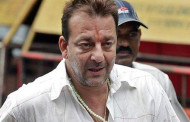
The remission granted to Sanjay Dutt besides other concessions like parole are as per the prison manual rules, says a former TADA court judge who had sentenced the Bollywood actor to five years’ imprisonment in 2007 in the Mumbai serial blasts case.
Dutt is slated to walk out of Yerawada prison near Pune on February 25 after getting remission (reduction) of sentence.
According to the Maharashtra Home Department, he was given remission on account of the good conduct.
“Like any other citizen, Dutt is also entitled to these concessions,” said Pramod Kode, who retired as a judge of the Bombay High Court.
As a special TADA court judge, Kode presided over the 1993 Mumbai blasts trial which went on for 14 years.
Dutt was granted concessions not because he is a celebrity but as per the rules, Kode said.
The frequent parole or furlough availed by Dutt had come in for criticism.
Dutt also has the right to carry out his duties towards his family within the legal parameters, Kode told PTI.
The former judge said he wasn’t aware about Dutt’s conduct in the prison. “But I feel his conduct must have been good, otherwise the jail authorities would not have granted him such concessions,” he said.
According to Kode, the court awards sentence to a criminal to remove the criminal instincts in him or her. But the law also provides for concessions like temporary release on parole to enable the prisoner to carry out family duties and other obligations.
Kode had convicted 100 accused in the blasts case, 12 of whom were awarded death penalty (the Supreme Court eventually upheld the death only for Yakub Memon).
Dutt was sentenced to five years for illegal possession and destruction of an AK-56 rifle. The rifle was a part of the cache of weapons and explosives smuggled into India by the blasts conspirators.
His release on February 25 will be 103 days ahead of the end of his full prison term. Before the Supreme Court upheld his conviction in 2013, he had spent 18 months in jail during the investigation and trial phase.PTI
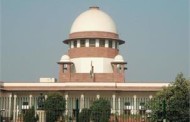
The Supreme Court has agreed to hear tomorrow a plea seeking contempt action against jailed JNUSU president Kanhaiya Kumar, former DU lecturer SAR Gilani and few others on the ground that they allegedly termed the execution of Afzal Guru as “judicial killing”.
A bench of Chief Justice T S Thakur and Justices R Banumathi and U U Lalit fixed the contempt plea for hearing on Monday when the plea alleged that by terming the execution as “judicial killing”, Kumar and others have committed contempt of the court which had delivered the verdict.
The plea, filed by lawyer Vineet Dhanda, refers to the apex court verdict, pronounced on August 4, 2005 in the case, by which Guru was handed down death penalty for being part of the conspiracy in the attack on Parliament.
“The so-called cultural event’s pamphlets spoke about the judicial killing of Afzal Guru. The main topic of the ‘cultural event’ organised was judicial killing of Afzal Guru which outright tantamount to criminal contempt as the respondents are calling the judges of the apex court as killers who have been projected to have committed judicial killing of Afzal Guru,” the plea said.
“Afzal and Yakub Memon were no martyrs as projected by the group of students of JNU. The Supreme Court has already passed a detailed judgement in both cases after giving due consideration as per law after going through the evidence,” it further said.
Pamphlets were allegedly distributed during the “so- called” cultural event held at JNU on February 9 that termed death sentence to Guru and Maqbool Bhatt as “judicial killing”, the plea said.
The students, who organised the event, also used social media platforms and “tarnished” the image of Supreme Court, it alleged.
Besides Kanhaiya and Gilani, the plea has sought contempt action against Umar Khalid, Lenin Kumar, Anirban Bhattacharya, Shehla Rashid Shora and Ali Javed.





Recent Comments